The Pennsylvania Native Tree That Provides Privacy Without Constant Pruning
Privacy trees are one of those landscaping investments that can either solve a problem for decades or create a new set of ongoing maintenance headaches, depending entirely on what you plant.
Most of the popular privacy tree choices require regular shaping to look their best, stay within their designated space, and maintain the dense coverage that was the whole point of planting them in the first place. There’s a native Pennsylvania tree that skips that cycle entirely.
It grows with a natural form that provides genuine privacy without requiring you to stay on top of it with pruning shears every season.
It fills in beautifully, holds its structure, and delivers the screening most homeowners are looking for without the constant intervention that turns a privacy planting into a long term chore.
And because it’s native to Pennsylvania, it supports local wildlife, fits naturally into the local ecosystem, and handles the state’s climate without demanding the kind of attention that more exotic privacy plantings often require.
Here’s the native Pennsylvania tree worth knowing about if you want real privacy with minimal ongoing work.
This Native Tree Provides Privacy Without Constant Pruning
Not every tree earns the title of workhorse, but eastern redcedar (Juniperus virginiana) comes pretty close.
Native to Pennsylvania and much of the eastern United States, this evergreen has been used for generations as a natural privacy screen, windbreak, and property boundary marker. It is the kind of tree that grows quietly and steadily without demanding much in return.
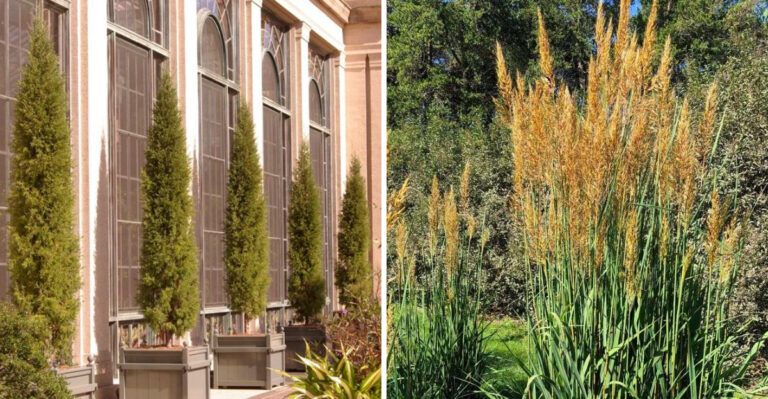
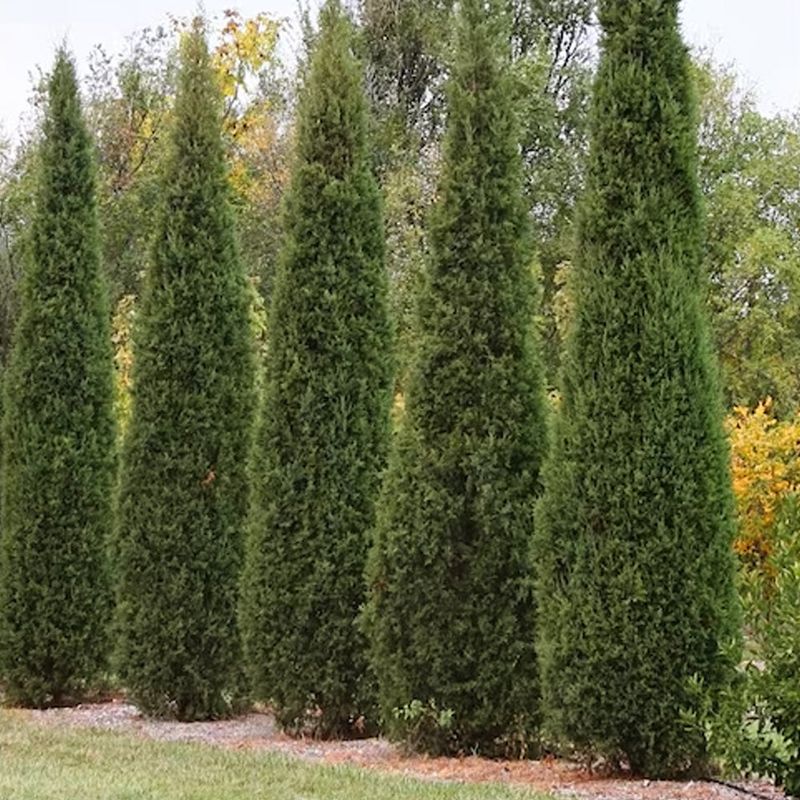
Eastern redcedar develops a naturally dense, pyramidal shape as it matures. That tight, cone-like form means the tree fills in on its own without needing you to constantly grab the hedge trimmers.
The branches grow close together, creating a solid wall of green that blocks views from neighbors, passing cars, and busy roads.
One of the biggest advantages is that the foliage stays on the tree all year long. Unlike a row of burning bushes or arborvitae that can thin out or drop leaves, eastern redcedar keeps its privacy value through every season, including winter when bare deciduous plants leave gaps.
It is a low-maintenance alternative to a formal clipped hedge that needs reshaping several times a year.
Homeowners who want a clean, structured look often spend hours pruning boxwood or privet into tidy shapes. Eastern redcedar skips that whole routine.
You plant it, give it some water while it gets established, and then mostly let it do its thing. For busy families or anyone who wants a beautiful yard without constant upkeep, that is a genuinely refreshing option worth considering seriously.
Why It Creates An Effective Privacy Screen
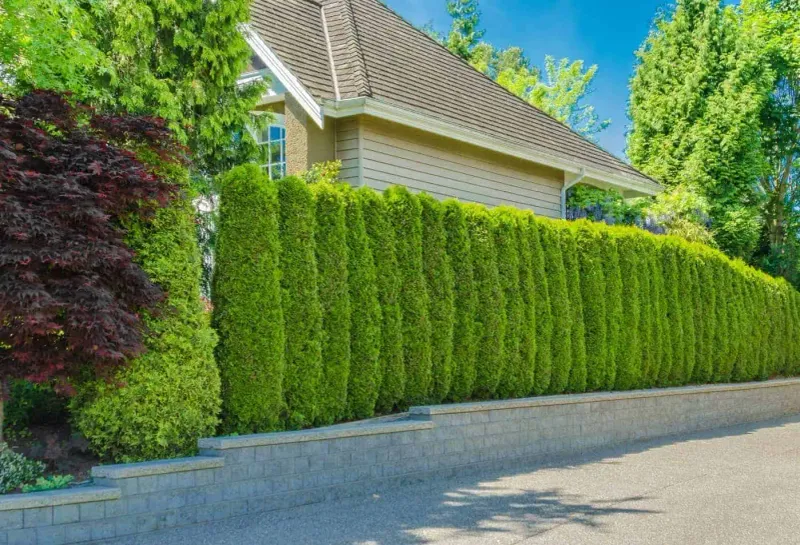
Picture a solid green wall standing between your backyard and the street. That is exactly what a well-placed row of eastern redcedars can deliver.
The branches on these trees grow densely packed with scale-like foliage that overlaps and fills in naturally over time. Wind, noise, and wandering eyes all have a harder time getting through a mature redcedar screen.
Your Pennsylvania Garden Changes Every Week. Your Plan Should Too.
Gardening in Pennsylvania changes quickly throughout the season. Every Friday you’ll receive a simple weekly plan showing exactly what to plant, prune, fertilize, harvest, and protect so you never miss the right timing.
Planting several trees in a staggered or straight line creates a living screen that only gets better with age. Young trees may look a little sparse at first, but within a few growing seasons they start to fill out and connect with each other.
By the time they reach full maturity, that row of trees can feel more like a solid hedge than a group of individual plants.
Unlike many popular screening plants, eastern redcedar does not lose its privacy value when autumn arrives. Deciduous trees and shrubs drop their leaves and suddenly leave your yard exposed for four or five months out of the year.
Redcedar stays full and green straight through December, January, and February, which is exactly when you might want that extra buffer from the cold wind too.
Another practical bonus is that you can allow the tree to keep its natural shape instead of shearing it into a box or cylinder. Constant shearing weakens many plants over time and creates extra yard work every single season.
Eastern redcedar handles its own shape with very little help, making it one of the most sensible screening choices available to Pennsylvania homeowners today.
Give It Enough Room To Reach Its Natural Size
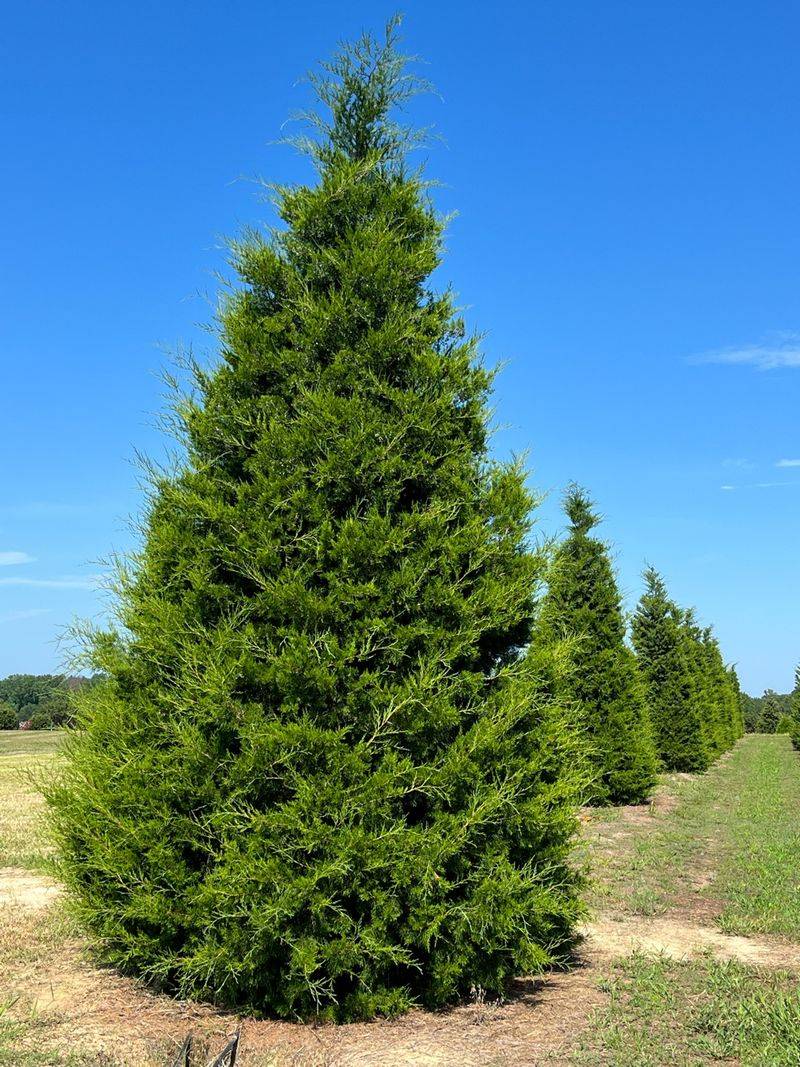
Eastern redcedar is not a shrub. People sometimes forget that when they are standing in the nursery looking at a three-foot-tall potted tree.
Left to grow freely, this species can reach anywhere from 30 to 60 feet tall depending on the site conditions and the specific cultivar you choose. That is a serious tree, and it needs serious space to match.
As the tree ages, it does not stay narrow forever. Younger redcedars tend to have that tight, pencil-shaped look, but over the years the crown broadens and rounds out.
A tree that looked perfectly slim at ten years old can develop a much wider spread by the time it reaches twenty or thirty years of age. Squeezing it into a narrow planting strip will cause problems down the road.
Spacing trees according to the expected mature width of the cultivar you select is really important. Some named cultivars stay narrower and are better suited to tighter spaces, while straight species trees need more elbow room.
Ask your local nursery or extension office what mature width to expect before you start digging holes in a straight line.
Avoid planting eastern redcedar directly beneath utility lines or too close to buildings, driveways, and neighboring property lines. Roots can spread, and a large canopy pressing against a structure or fence creates maintenance headaches later.
A little planning at planting time saves a lot of frustration over the following decades. Give this tree the open space it deserves and it will reward you with decades of dense, reliable coverage year after year.
Plant It In Sun And Well-Drained Soil
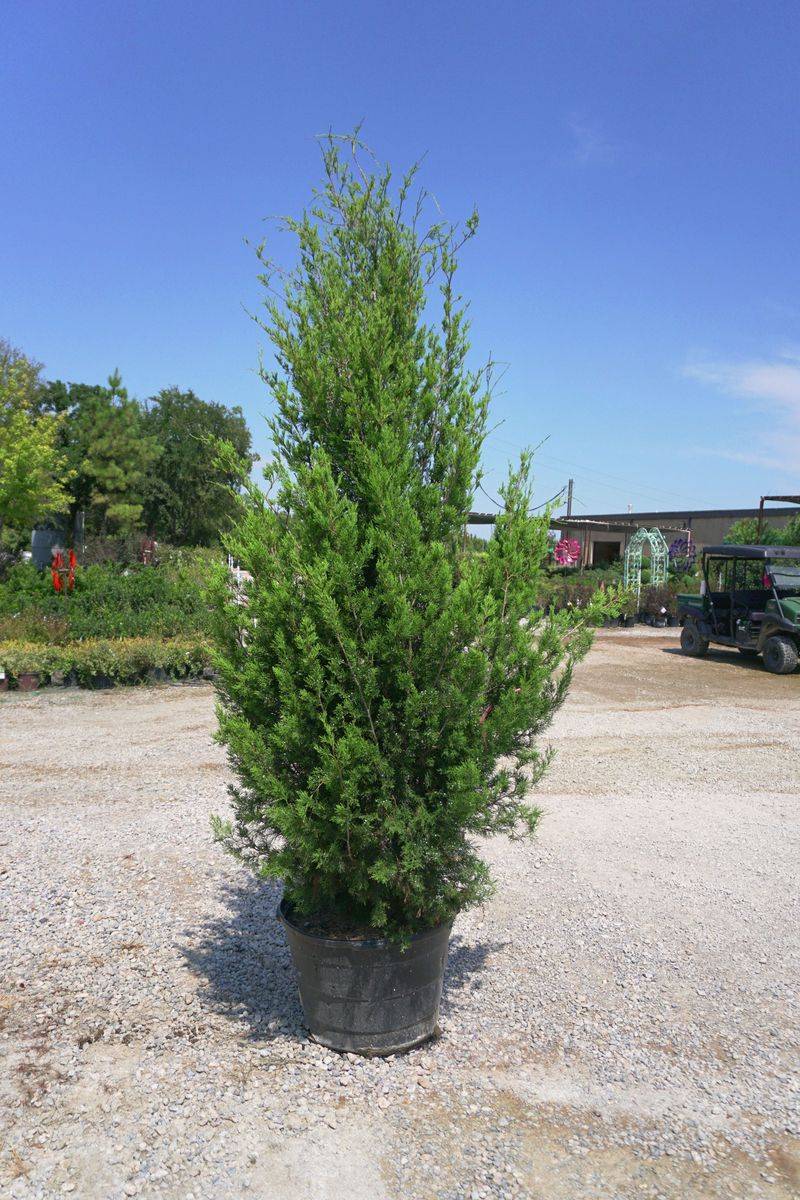
Tough as nails is a phrase that gets overused, but eastern redcedar actually earns it. Full sun produces the densest and healthiest growth, so pick a spot that gets at least six hours of direct sunlight per day.
The tree can tolerate some partial shade, but shaded trees tend to grow looser and less full, which weakens the privacy effect you are going for.
Soil quality is honestly not much of a concern with this species. Eastern redcedar handles dry soil, extended drought, compacted ground, road salt, and urban air pollution far better than most evergreens you will find at a garden center.
Arborvitae, Leyland cypress, and Norway spruce all have their weak spots. Redcedar just keeps growing through conditions that would stress or damage those other species.
Did you know eastern redcedar is one of the first trees to naturally colonize abandoned fields and roadsides in Pennsylvania? That pioneer spirit tells you a lot about its toughness.
It thrives in places where other trees struggle to get started, including rocky slopes, dry ridges, and compacted suburban lots that have been graded and disturbed by construction equipment.
The one soil condition to avoid is standing water. Low areas with persistently wet or poorly drained soil are not a good match for eastern redcedar.
Soggy roots over a long period can lead to root rot and a slow decline in health. If your yard has a low, wet spot, choose a different location or a different species altogether.
On well-drained ground, though, this tree is nearly impossible to stop once established.
Minimal Pruning Keeps It Looking Natural
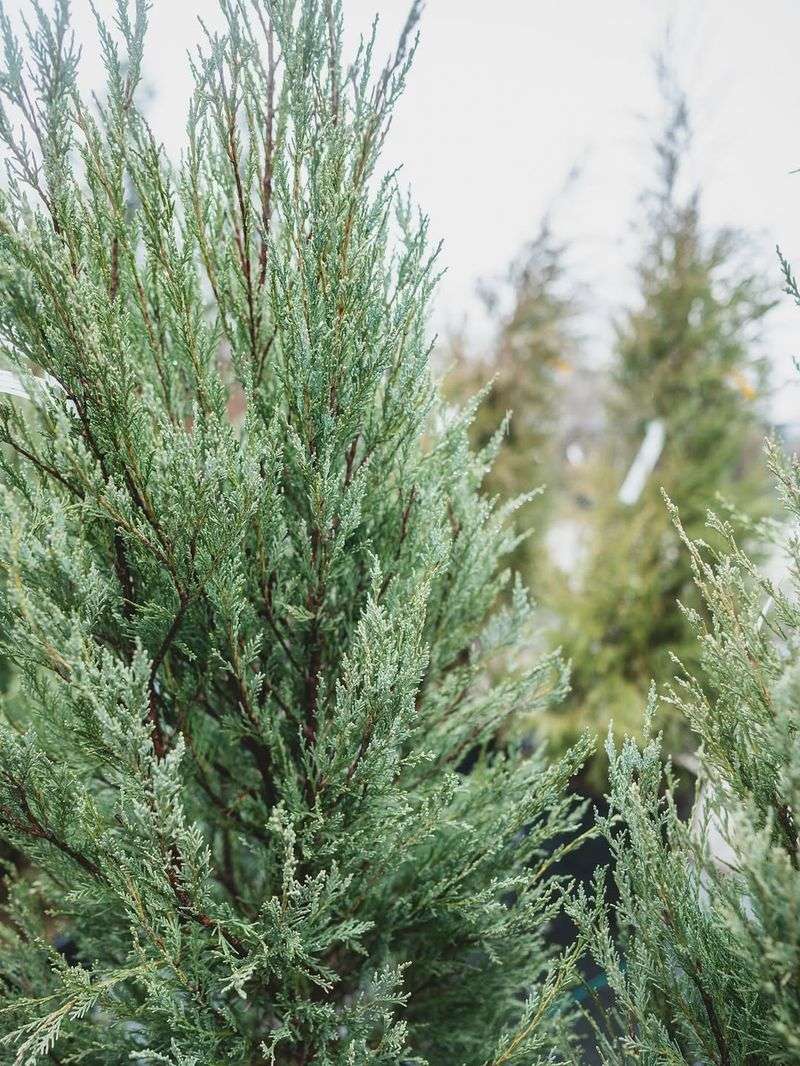
One of the most appealing things about eastern redcedar is how little it asks of you once it gets going. The tree has its own game plan.
It builds that classic pyramidal outline on its own terms, and your best move as a homeowner is mostly to stay out of the way. Fighting the tree’s natural shape by shearing it into a formal hedge creates more work and often results in a less attractive plant over time.
When pruning is needed, keep it light and purposeful. Remove dry, broken, diseased, or crossing branches when you spot them.
Those kinds of cuts improve airflow and the overall structure of the tree without forcing it into an unnatural form. A pair of clean, sharp hand pruners or loppers is usually all the equipment you need for routine maintenance on a young or medium-sized tree.
Here is something important to keep in mind about junipers in general: avoid cutting deeply into old wood that has no green foliage on it. Unlike yews or boxwood, junipers typically will not push new growth from bare, leafless sections of a branch.
If you cut back too far into the gray inner wood, that section may stay bare permanently. Always cut back to a point where you can still see green growth.
Young trees still need some attention during their first couple of years. Regular watering during dry spells and keeping weeds and grass away from the base of the trunk helps the roots establish more quickly.
Once the tree is settled in, your maintenance schedule gets very short. An occasional inspection and a few snips per year is usually all it takes.
Consider Cedar-Apple Rust Before Planting
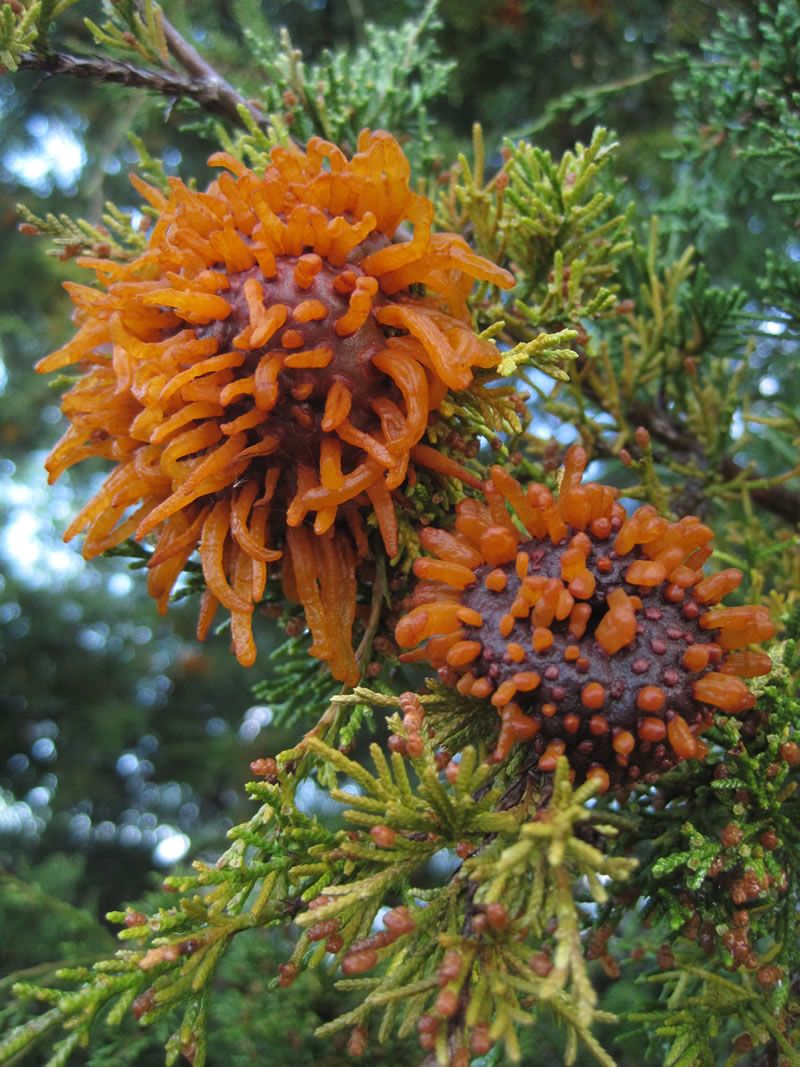
Eastern redcedar has one notable quirk that is worth knowing about before you start digging. It serves as an alternate host for cedar-apple rust, a fungal disease with a fascinating and slightly complicated life cycle.
The disease needs two different host plants to complete its cycle, and eastern redcedar is one of them.
In spring, you may notice orange, jelly-like growths appearing on redcedar branches after a rain. Those are the spore-producing structures of the fungus.
The spores released from redcedar can travel on the wind and land on nearby apple trees, crabapples, hawthorns, and serviceberries.
On those plants, cedar-apple rust causes orange or yellow spots on leaves and fruit, which can reduce fruit quality and weaken the plant over several seasons.
If you have a beloved apple tree or a row of ornamental crabapples in your yard, placing redcedars close to them may cause repeated problems every spring.
The practical advice here is straightforward. If you are growing apples for fruit or have ornamental trees that are highly susceptible, either choose rust-resistant cultivars of those trees or put some distance between them and your redcedar planting.
Local cooperative extension offices in Pennsylvania can tell you which apple and crabapple varieties hold up best against cedar rust in your specific area.
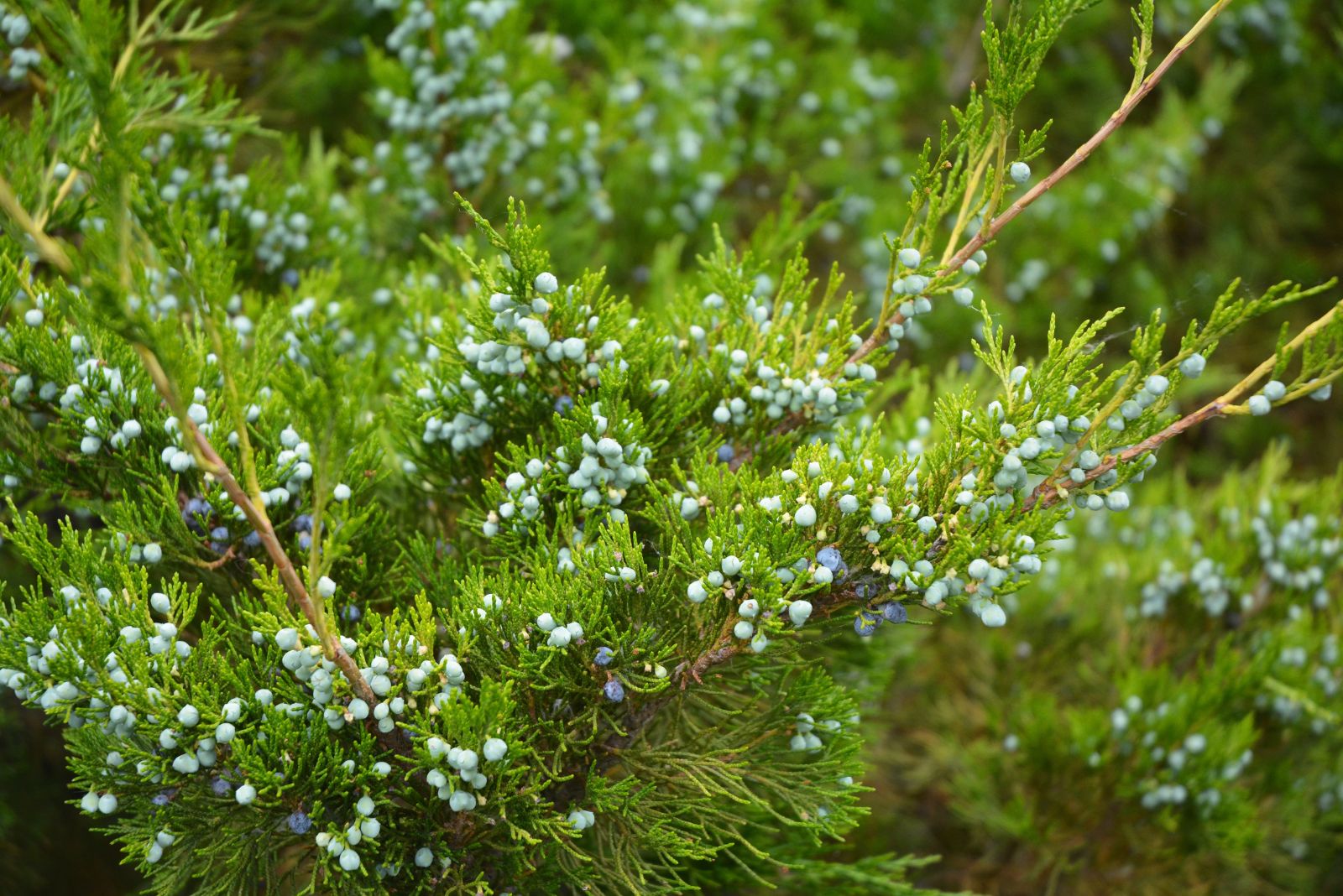
Beyond that one consideration, eastern redcedar brings a lot of wildlife value to the yard. Its dense branches offer excellent nesting sites for songbirds, and the small berry-like cones that appear on female trees are an important winter food source for cedar waxwings, robins, and many other bird species.
The tree gives back in ways that go well beyond just privacy.