The Real Reason Deer Keep Getting Into California Gardens Despite Every Barrier
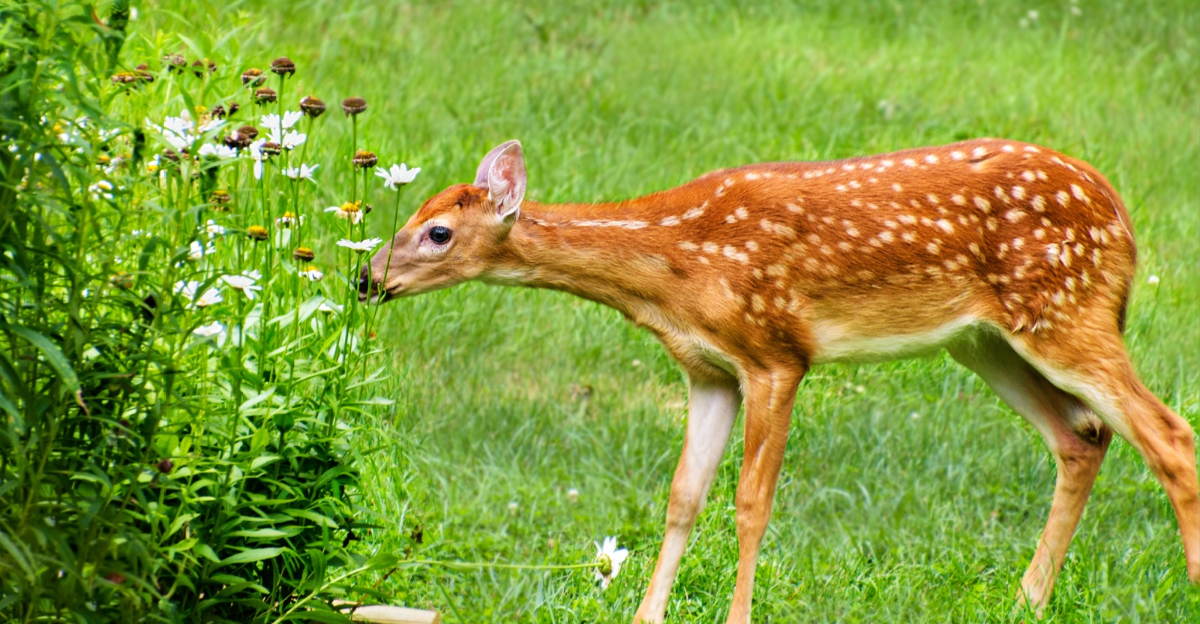
Deer have absolutely no respect for the effort you put into your garden. None.
They will walk right past your repellent spray, duck under your netting, and help themselves to your roses like they paid for them. If that sounds familiar, you are in very good company across California.
The frustrating reality is that there is rarely one simple fix that handles deer pressure on its own.
These animals are smart, adaptable, and when California summers get dry and food outside your yard gets scarce, a well-watered garden basically looks like the best restaurant in town.
Fences, repellents, and scare devices all have a role to play, but none of them work particularly well in isolation.
Understanding why each approach falls short on its own is actually the most useful place to start before building something that genuinely holds up.
1. The Fence Is Not Tall Enough
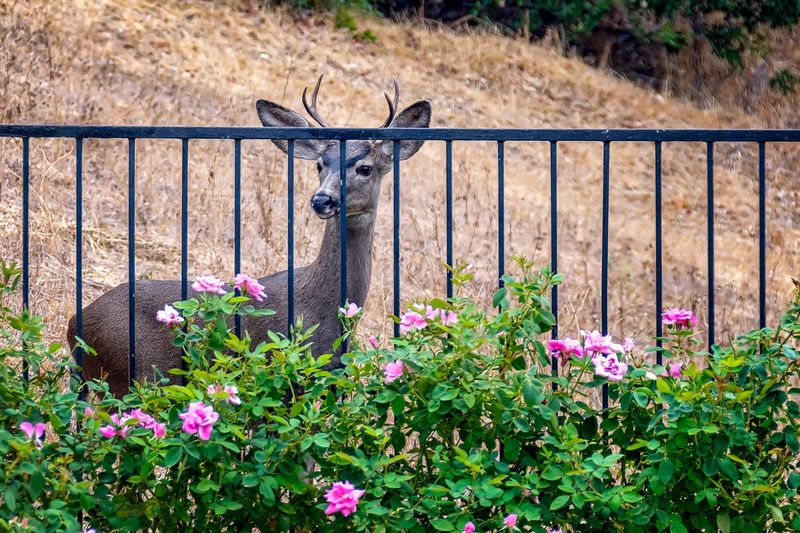
Chewed leaves along the top of a shrub and hoofprints pressed into soft soil right beside a fence panel are two of the clearest signs a fence is simply not doing its job.
Most standard fences sold at home improvement stores stand somewhere between four and six feet tall, and that height sounds reasonable until you watch a healthy mule deer clear it without much effort.
In California foothill communities and suburban neighborhoods near open space, deer regularly encounter fences and test them when food is worth the jump.
Research from wildlife and cooperative extension programs suggests that a fence should reach at least eight feet in height to reliably keep deer out of a garden.
Some gardeners in low-pressure areas have success with shorter fences combined with other deterrents, but height alone is one of the most important factors in exclusion.
A fence that worked fine for several seasons may suddenly feel inadequate as local deer populations grow or drought pushes animals into neighborhoods more often.
Checking fence height against current deer activity in your yard is a smart starting point before adding other barriers.
Adding fence extensions or switching to taller panels can make a significant difference in how well the perimeter holds up over time.
2. Gaps At The Bottom Let Deer Slip Under
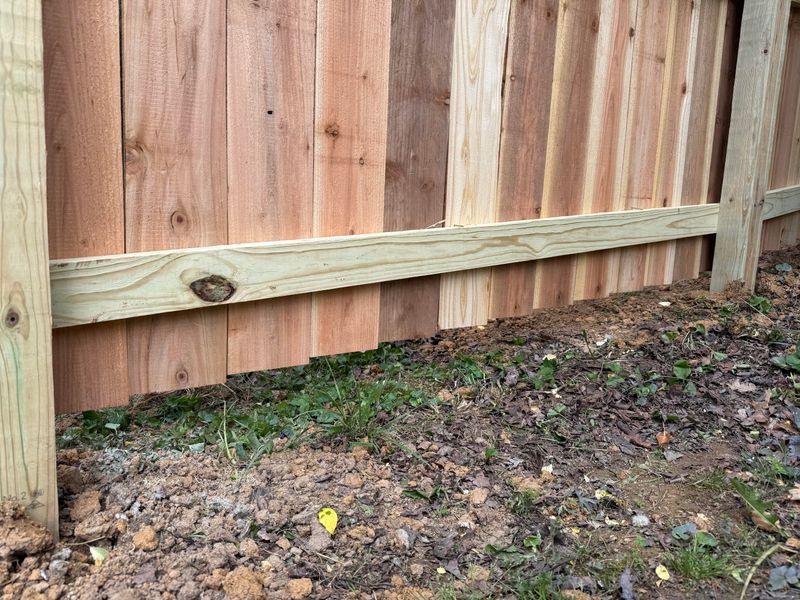
Most gardeners focus on fence height and never think to look down, but the gap between the bottom of a fence and the ground can be just as much of a problem as a fence that is too short.
Fawns and young deer are surprisingly flexible and can squeeze through openings that look far too narrow for an animal their size.
In California yards where the ground is uneven, slopes, or where fence posts have shifted over time, gaps along the base of a fence can open up without the homeowner ever noticing.
Even a gap of eight to ten inches can give a determined deer enough room to push under and access the garden.
Over time, deer may also dig or scrape at soft soil beneath a fence to widen an existing gap.
Your California Garden Changes Every Week. Your Plan Should Too.
Gardening in California changes quickly throughout the season. Every Friday you’ll receive a simple weekly plan showing exactly what to plant, prune, fertilize, harvest, and protect so you never miss the right timing.
Walking the full perimeter of your fence and checking where the bottom rail sits against the ground is one of the most useful things a California gardener can do after deer signs appear.
Blocking gaps with landscape fabric stapled tightly to the base, buried wire mesh, or L-shaped hardware cloth bent outward along the ground can help close these entry points.
Combining a secure fence bottom with adequate height gives the barrier a much better chance of working consistently.
3. Gates Create The Weakest Opening
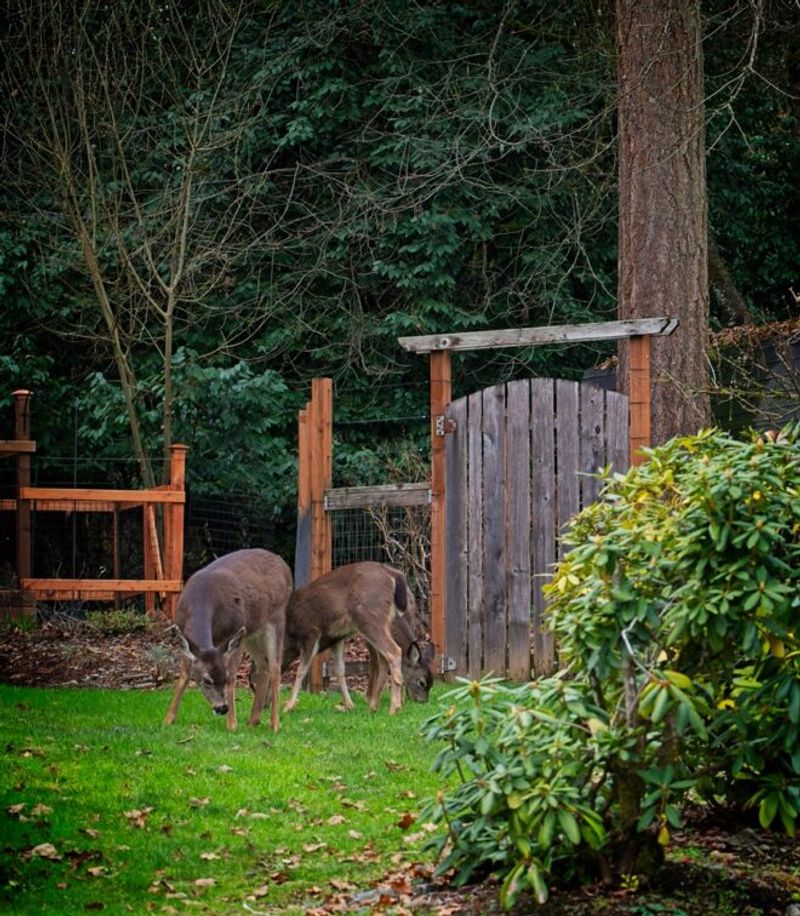
A narrow side-yard path with a gate that swings open on its own during a breeze is one of those small details that can quietly undo an otherwise solid deer fence.
Gates are almost always the weakest point in any perimeter, and deer that probe a fence line will find them.
In California gardens, gates are often installed for convenience rather than security. They may sag after a few seasons, leaving gaps along the side or bottom.
Latches can loosen, springs can wear out, and gates left open even briefly during yard work give deer a clear invitation. A gate that fits poorly or hangs at an angle creates a gap that a curious deer will investigate and may eventually push through.
Checking that a gate closes flush, latches securely, and has no significant gap along the bottom or sides is an important part of maintaining a deer-resistant perimeter.
Self-closing hinges and sturdy latch hardware designed to stay shut under pressure are worth the small investment.
In areas with heavy deer pressure, some California gardeners use double-gate systems, meaning a small buffer zone between two gates, to reduce the chance of deer slipping in while equipment or people move in and out.
A gate is only as good as its hardware and its fit.
4. Repellents Wear Off Too Quickly
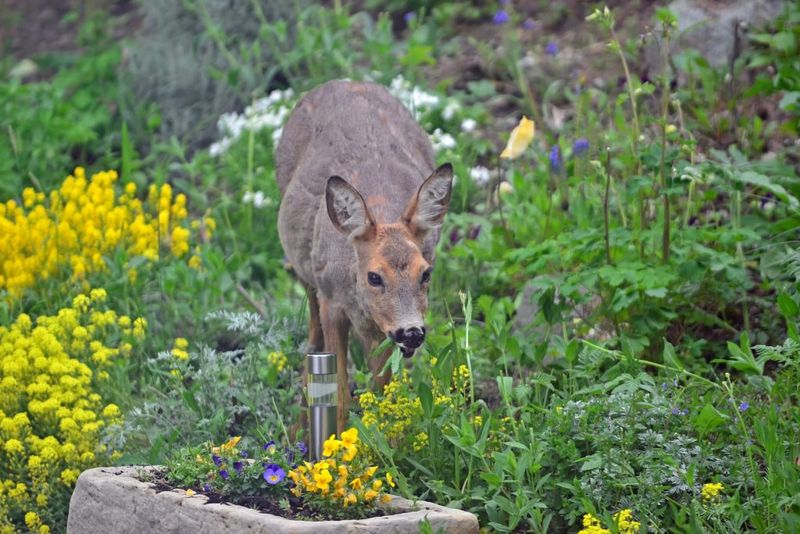
Spray a repellent on Monday and feel confident, then find fresh browse damage by the following weekend. Sound familiar?
Repellents can be a useful part of a deer-management plan, but they come with a shelf life that many gardeners underestimate.
Most commercial deer repellents work by creating an unpleasant scent or taste that discourages browsing.
The problem is that rain, sprinkler irrigation, morning dew, and California’s coastal fog can all wash or dilute a repellent faster than the label suggests.
Heat and direct sun in inland California areas can also break down active ingredients more quickly. New plant growth that emerges after an application is not covered, which means fresh shoots are left unprotected even when treated foliage looks fine.
Repellents need to be reapplied regularly, sometimes every one to two weeks during wet weather or active growth periods, to stay effective. Rotating between different repellent formulas can also help because deer may habituate to a single scent over time.
Repellents work best as a supplementary tool alongside physical barriers rather than as a standalone solution.
In California gardens with consistent deer pressure, relying on repellent alone is unlikely to provide lasting protection, but keeping up with applications as part of a broader strategy can reduce browse damage noticeably.
5. Scare Devices Stop Working Over Time
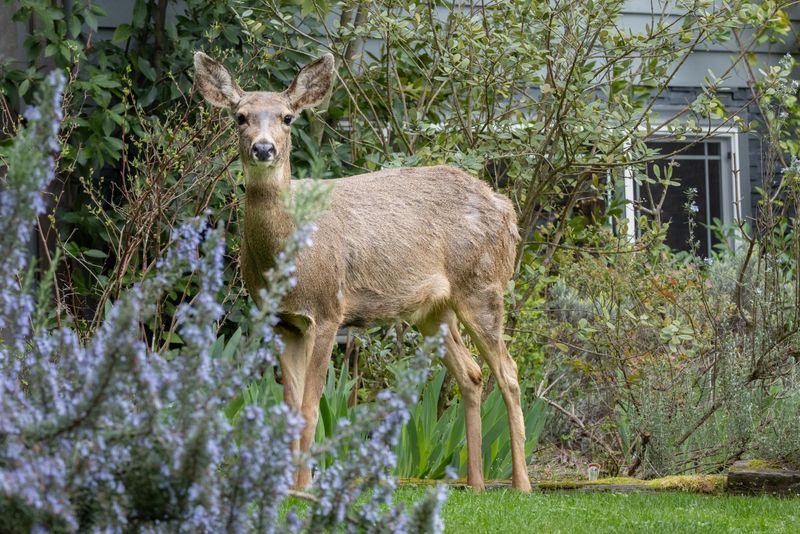
Motion-activated sprinklers, flashing lights, and noise-making devices can feel like a breakthrough when they first go in, but give it a few weeks and the deer often stop reacting entirely.
Wildlife research consistently shows that deer habituate to repeated stimuli that do not result in real harm or consequence.
When a scare device triggers every time the wind blows or a neighborhood cat passes through, deer learn through repeated exposure that the noise or spray is not actually a threat.
In California backyards where deer visit regularly, this habituation can happen faster than most gardeners expect.
A device that sent deer leaping away in week one may barely make them flinch by week four.
The most effective way to use scare devices is to rotate them, move them to different locations every few days, and combine them with other deterrents rather than relying on them alone.
Some California gardeners use motion sprinklers in combination with repellents and physical barriers to create a more unpredictable environment that is harder for deer to learn around.
Keeping scare devices maintained, charged, and properly aimed also matters because a device that malfunctions or covers too small an area provides almost no benefit. Scare tools work best as part of a layered approach rather than as the main line of defense.
6. Favorite Plants Pull Deer Back In
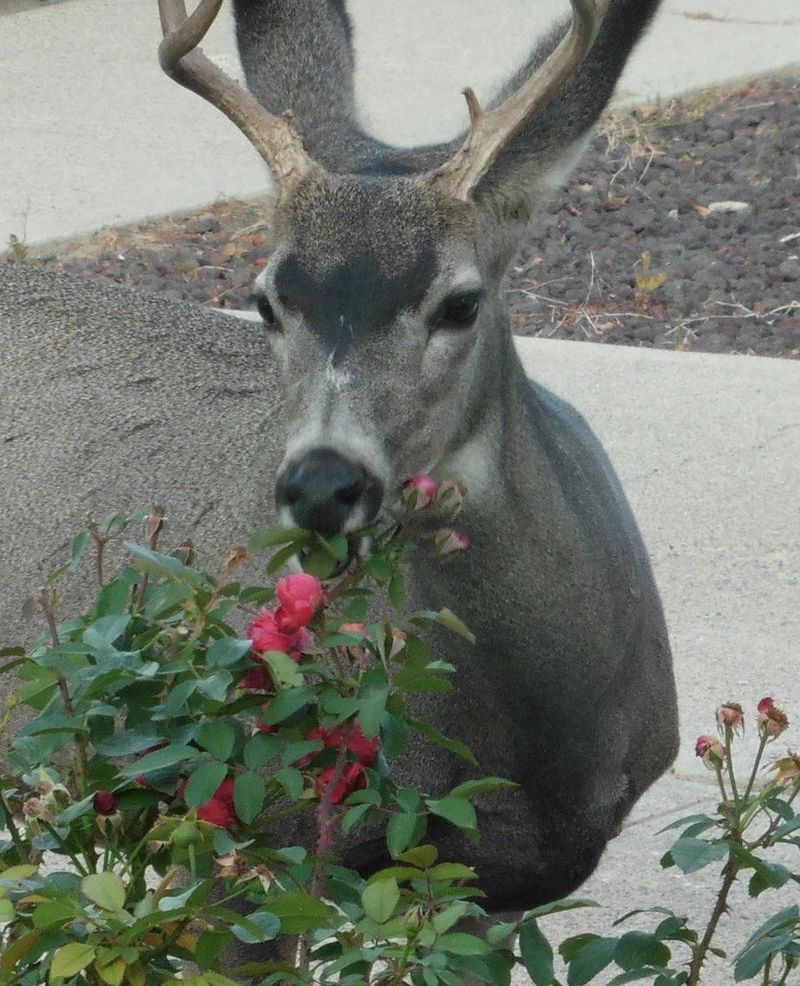
Roses, vegetable seedlings, young fruit trees, and tender perennials have something in common beyond being beautiful: deer find them genuinely irresistible.
When a garden contains plants that deer strongly prefer, the motivation to push past barriers becomes much greater than it would be for a yard full of plants they tend to avoid.
California gardens often mix deer-resistant plants with highly palatable ones, and even a small patch of roses or a few rows of lettuce can draw deer back repeatedly. Lists of deer-resistant plants are helpful, but no plant is completely deer-proof.
Hunger, season, and local deer habits all influence what gets browsed. A plant that deer ignore in one California neighborhood may be stripped bare in another where food options are more limited.
Replacing the most heavily targeted plants with less palatable options is one way to reduce pressure, though it is not always practical for gardeners who grow vegetables or want specific ornamentals.
Protecting high-value plants with individual wire cages or physical covers gives an added layer of defense even inside a fenced yard.
Thinking about which plants are drawing deer in and making those targets harder to reach is a practical step that works alongside perimeter barriers rather than depending on the fence alone to do all the work.
7. Dry Seasons Can Make Gardens More Tempting
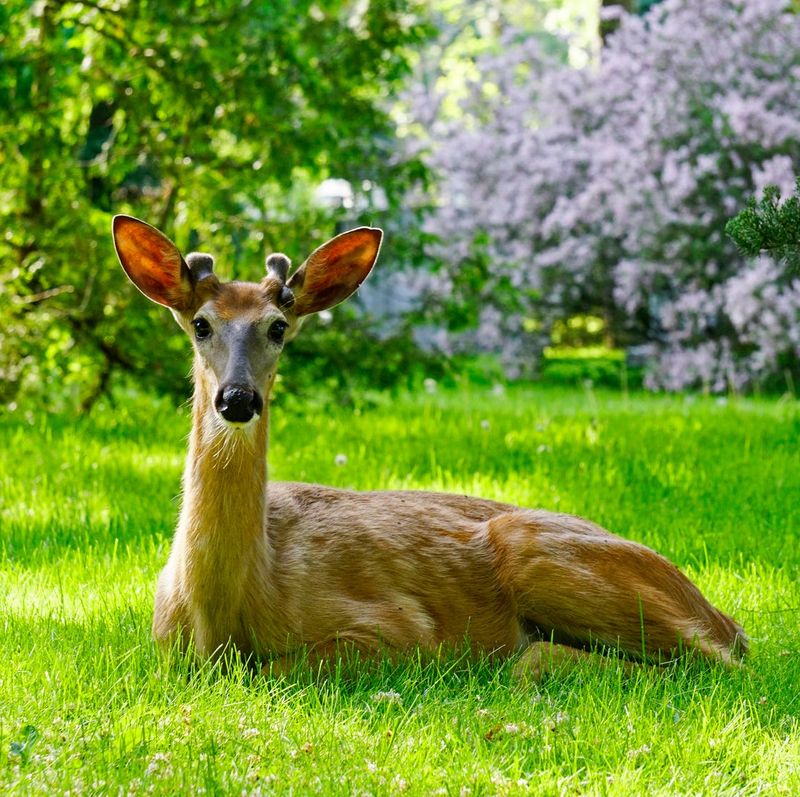
During California’s long dry summers, the hillsides and open spaces that deer normally rely on for food turn brown and offer far less nutrition than they do in spring.
An irrigated backyard garden, by contrast, stays green, moist, and full of actively growing plants well into the season when everything outside the fence has dried out.
This contrast between the dry landscape and a well-watered yard creates a strong pull that can override caution.
Deer that stayed well away from a neighborhood in spring may begin probing fences and testing gates by midsummer when their usual foraging areas can no longer meet their needs.
In foothill communities and suburban areas near wildland edges, this seasonal shift in deer behavior is one of the most consistent patterns California gardeners encounter.
Understanding that dry-season pressure is predictable allows gardeners to prepare ahead of time rather than scrambling to respond after damage appears.
Reinforcing barriers before summer, refreshing repellents more frequently during peak dry months, and being especially watchful in July through September gives a garden better protection during the period when deer motivation is at its highest.
Gardeners in coastal California may see a slightly different pattern depending on local fog and moisture, but the general trend of increased pressure during dry months holds across much of the state.
8. Tender New Growth Draws Browsing
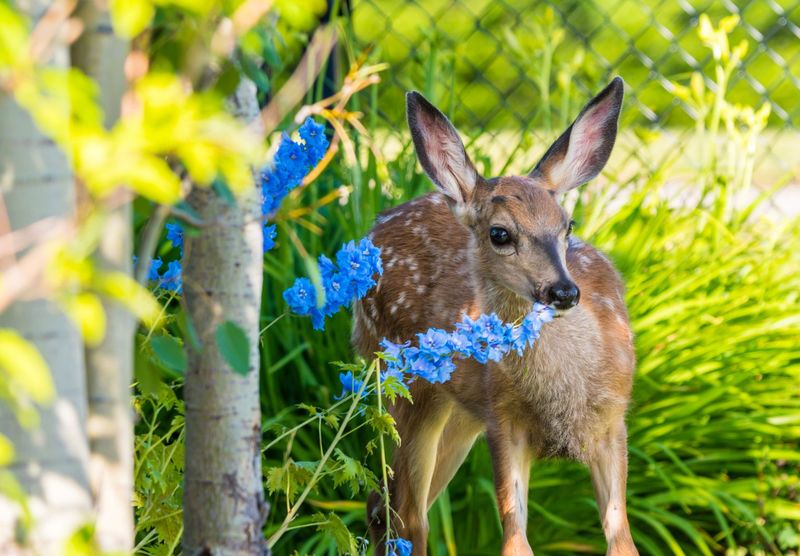
Fresh shoots emerging after pruning, new transplants settling into the soil, and the soft growth that follows a good watering are some of the most appealing things a deer can find in a garden.
Tender new growth is easier to bite off, more digestible, and often higher in moisture and nutrients than older, tougher plant material.
In California gardens, this means that the period right after pruning, replanting, or a significant rainfall can trigger a wave of browsing activity even in yards that had been relatively undisturbed.
Deer seem to notice fresh growth quickly, and what looked like a manageable situation can change within a day or two of new leaves emerging.
Young fruit trees pushing out spring growth, vegetables coming up from seed, and perennials resprouting after being cut back are all especially vulnerable.
Protecting new growth with physical barriers like wire cages or row covers during the first few weeks after planting or pruning can significantly reduce damage.
Applying repellent to new growth as soon as it emerges, rather than waiting until damage appears, is also a more effective timing strategy.
Being attentive to when fresh growth is appearing in the garden and responding proactively gives plants a much better chance of establishing before deer find them.
9. Deer Learn The Garden’s Routine
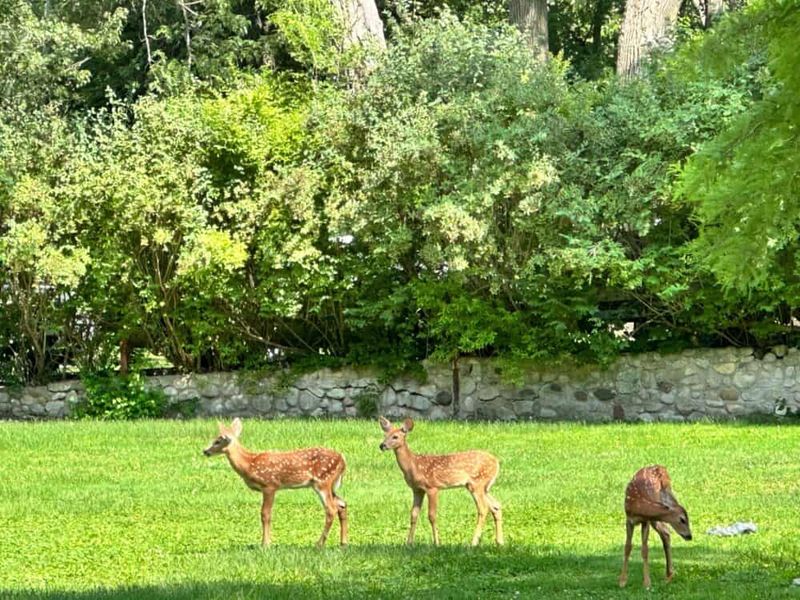
Worn paths along fence lines, repeated entry through the same gate, and visits that seem to happen at the same time of day are all signs that deer have figured out the rhythm of a garden.
Deer are creatures of habit, and once a route into a yard proves safe and rewarding, they tend to use it again and again.
In California neighborhoods where deer are present year-round, animals can learn when sprinklers run, when motion-sensor lights turn on, when the dog is indoors, and when the yard is generally quiet and unoccupied.
Over time, this knowledge allows them to work around deterrents that might have been effective early on.
A deer that has visited a garden dozens of times without consequence becomes increasingly bold and harder to discourage with the same tools that worked initially.
Breaking up predictable patterns is one way to make a garden feel less safe and familiar. Moving scare devices, changing repellent products, adjusting irrigation timing, or adding new barriers in areas deer have learned to navigate can disrupt established habits.
In heavily visited California yards, combining unpredictability with physical exclusion is often more effective than any single deterrent.
Making the garden feel like a less reliable and consistent food source is part of shifting deer behavior over the long term.
10. One Barrier Is Rarely Enough
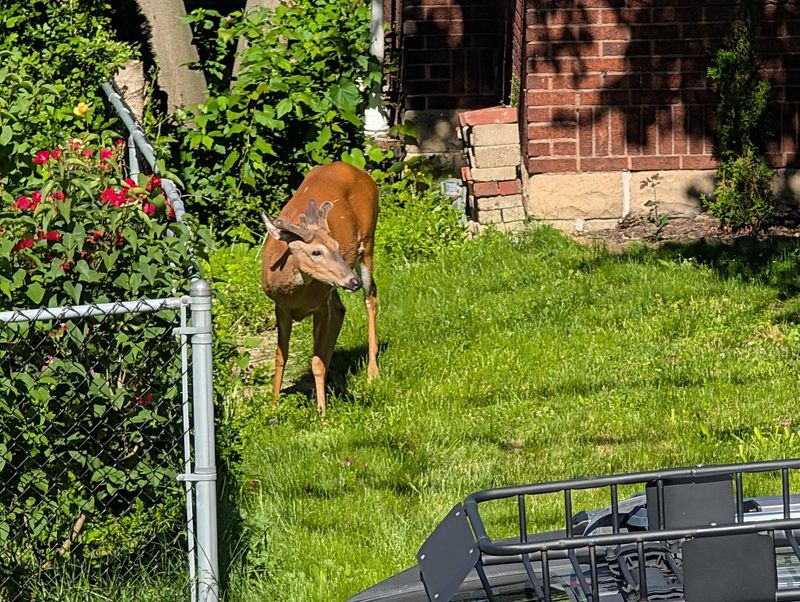
Many gardeners try one approach, see it fail, and feel ready to give up on protecting the garden entirely.
The truth is that no single barrier, whether a fence, a repellent, a scare device, or a plant swap, is likely to solve a deer problem on its own in a California yard with consistent pressure.
Deer are persistent, adaptable, and motivated by real hunger, especially during dry months or when local food sources are limited.
A fence with gaps, a repellent that wears off, or a scare device that has lost its novelty each becomes a solved problem from the deer’s perspective.
Layering multiple strategies so that deer face more than one challenge at a time makes the overall approach significantly more effective than any individual method.
A well-maintained eight-foot fence with a secure gate, combined with regular repellent applications and occasional use of scare devices in rotating locations, gives a California garden a much stronger chance of staying protected.
Adding a thoughtful plant selection that reduces the most tempting targets strengthens that protection even further and makes the overall approach more sustainable over time.
No combination of methods provides a guarantee, but a layered and regularly maintained approach is consistently more effective than hoping one solution will hold.
Revisiting the plan each season and adjusting based on what is and is not working keeps the strategy relevant as deer behavior and garden conditions change.