The Right Time to Prune Clematis Vines for More Flowers Every Season
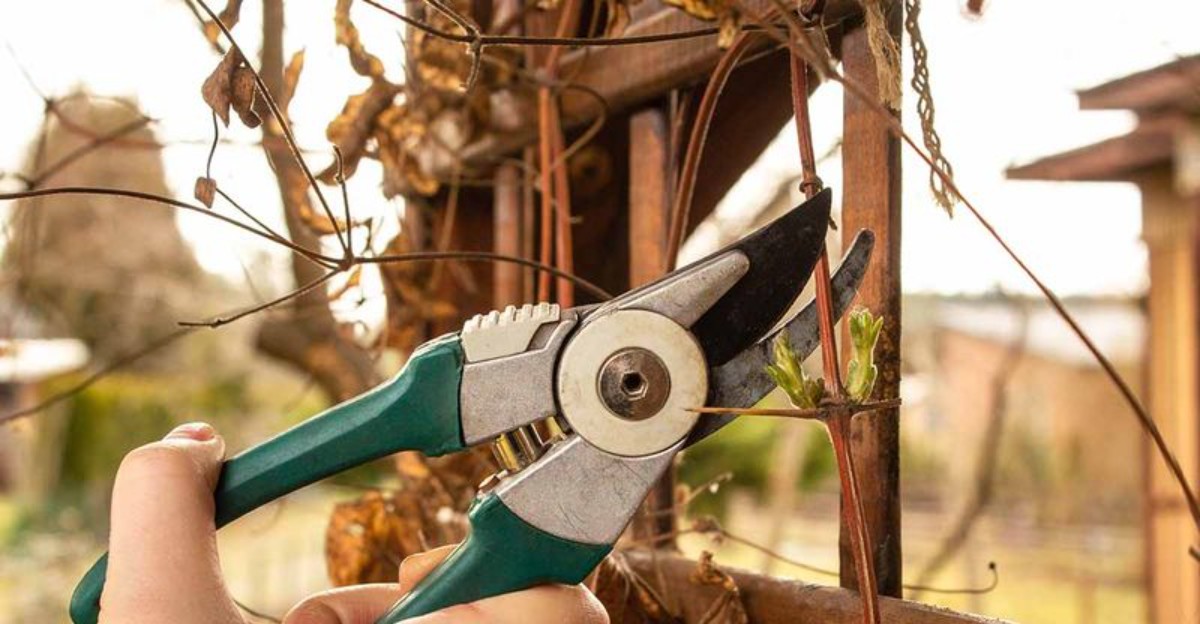
One snip in March can erase a whole spring of flowers before a single bud opens.
I learned the hard way that a certain flowering vine keeps its secrets hidden in last year’s woody stems. Some kinds set their buds months ahead, while others build flowers from scratch every summer.
Truth is, I spent two springs staring at a bare trellis and blaming the soil, the rain, and even the mailbox shade. The plant was fine. My timing was the problem.
Here’s what gets me now. Gardeners have sorted these vines into three simple groups for decades, and each one wants a different calendar date. Your plant tag might hold the whole answer.
So which group is climbing your fence, and when should those pruners come out?
Those Bare Clematis Stems Are Hiding Next Year’s Flower Buds
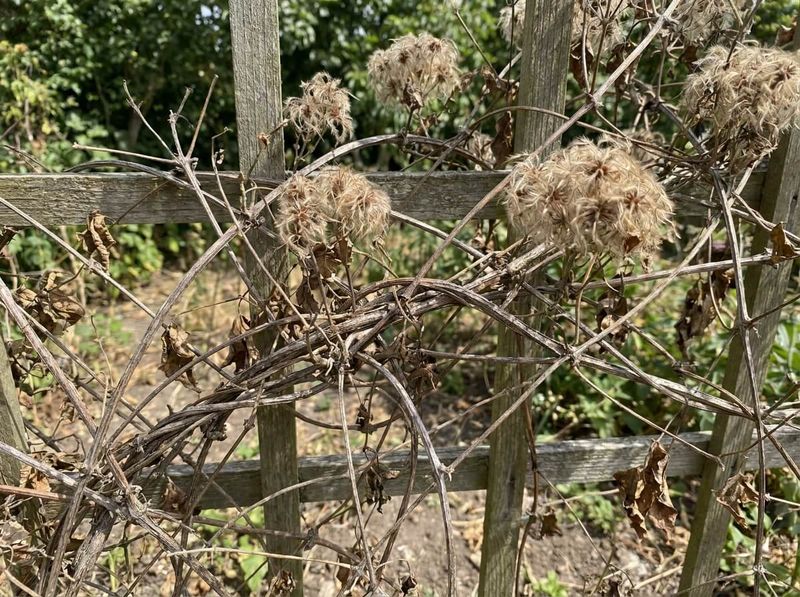
Clematis vines carry their future in plain sight, if you know where to look. Those brown, twiggy stems that look scruffy in winter often hold tiny paired buds at each leaf joint.
Some clematis form flower buds on old wood, meaning stems that grew last year. Others bloom only on new wood, the fresh shoots that grow this spring. A few varieties do both, giving you an early show and a later encore.
Not going to lie, this one fact changed my whole approach. If you cut a vine that blooms on old wood in late winter, you remove the stems that would have flowered. The plant stays healthy, but your spring display shrinks to almost nothing.
On the flip side, leaving a new-wood bloomer alone has its own cost. The vine keeps climbing higher each year, and the flowers end up near the top, far above your head.
A quick bud check tells you a lot. Gently scratch a stem with your fingernail in early spring. Green tissue underneath means the stem is alive and worth keeping. Brown, brittle wood with no swelling buds can usually come off without any loss.
Your Clematis Plant Tag Holds the Pruning Group Number
Gardeners figured out long ago that clematis fall into three pruning groups, often labeled 1, 2, and 3. Some nurseries call them A, B, and C instead, which can be a little confusing at first.
The group number tells you when the vine blooms and when to cut. Group 1 flowers early in spring on old wood. Group 2 opens big blooms in late spring and often repeats later. Group 3 waits until summer and blooms on the current season’s growth.
Trust me on this one, save that plastic tag. Tuck it in a drawer, snap a photo, or zip-tie it to the trellis. Many university extension services, including those in Minnesota and Wisconsin, point to the tag as the easiest way to identify your group.
Lost the tag already? Guilty as charged here too. Watch when your vine blooms this year and jot it down. Early spring flowers suggest Group 1, a May or June show with a second flush points to Group 2, and midsummer color usually means Group 3.
Once you know the number, the rest becomes a simple routine instead of guesswork.
Spring-Blooming Montana and Alpina Clematis Want a Trim After Flowering
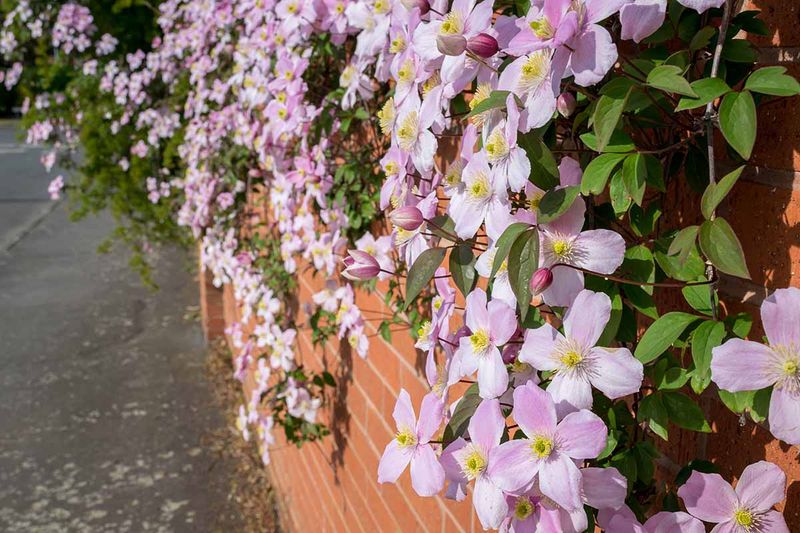
Early birds like Clematis montana, C. alpina, and C. macropetala open their nodding or star-shaped flowers in early to mid spring. All of those blooms come from buds set on last year’s stems.
That makes the timing easy to remember. Prune right after the flowers fade, usually in late spring. The vine then has all summer to grow fresh stems that will carry next spring’s buds.
I’m the first to admit these plants need very little fuss. Many years, you can skip pruning altogether. Just remove broken, weak, or tangled stems, and trim back any runaway shoots that are swallowing a gutter or smothering a nearby shrub.
Montana types grow fast and can reach 20 to 30 feet, so a light shaping after bloom keeps them in bounds. Hard cuts in late winter are the main thing to avoid with this group, since that removes the flowering wood.
One more tip from my own fence line. Alpina and macropetala varieties are quite cold hardy, so they often handle tougher northern winters well. Montana prefers milder climates, roughly USDA zones 6 through 8, and can struggle with harsh freezes.
Big-Flowered Clematis Like Nelly Moser Can Bloom Twice With a Light Touch
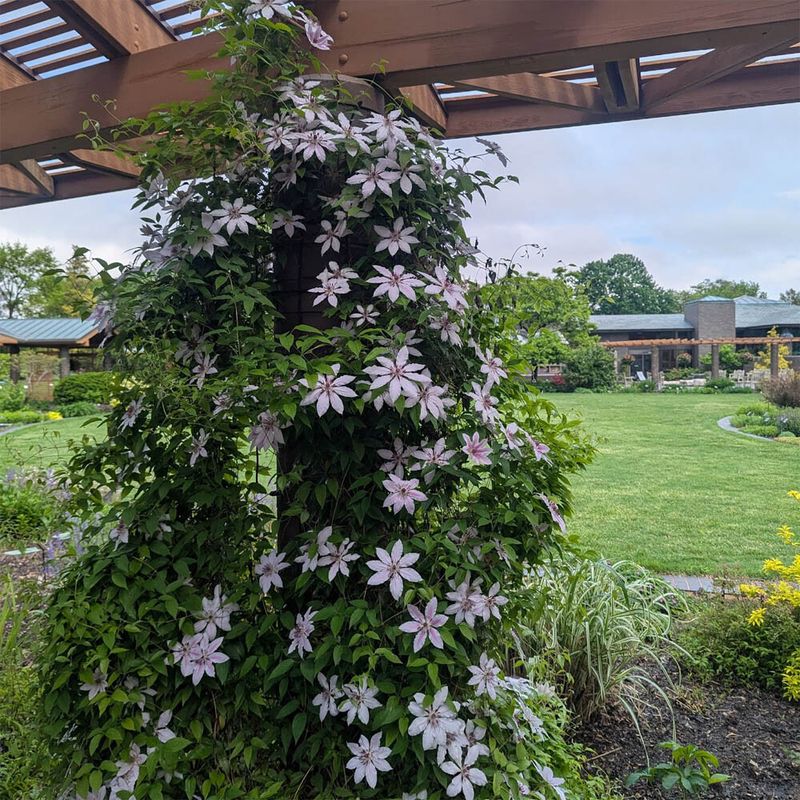
Dinner-plate blooms are the reason many of us fell for clematis in the first place. Group 2 varieties like Nelly Moser, Henryi, and The President produce those huge flowers in late spring to early summer.
Their first flush grows from buds on last year’s wood. A second, smaller round often appears in late summer on new shoots, which feels like a bonus gift.
Go gentle in late winter or early spring, just as buds swell. Remove weak or lifeless stems first. Then trim the remaining stems back to the top pair of plump, healthy buds, leaving most of the framework in place.
After the first wave of flowers fades, snip off spent blooms back to a strong set of leaves or buds. That small cleanup often encourages the later flush.
Fair warning, heavy cuts on this group cost you the early show. If your vine has turned into a tangled mess, you can renew it gradually by cutting about a third of the oldest stems low each year. You keep some flowers while the plant refreshes itself.
Patience pays off with these divas.
Cutting Jackmanii Clematis Down Low Brings Flowers Back to Eye Level
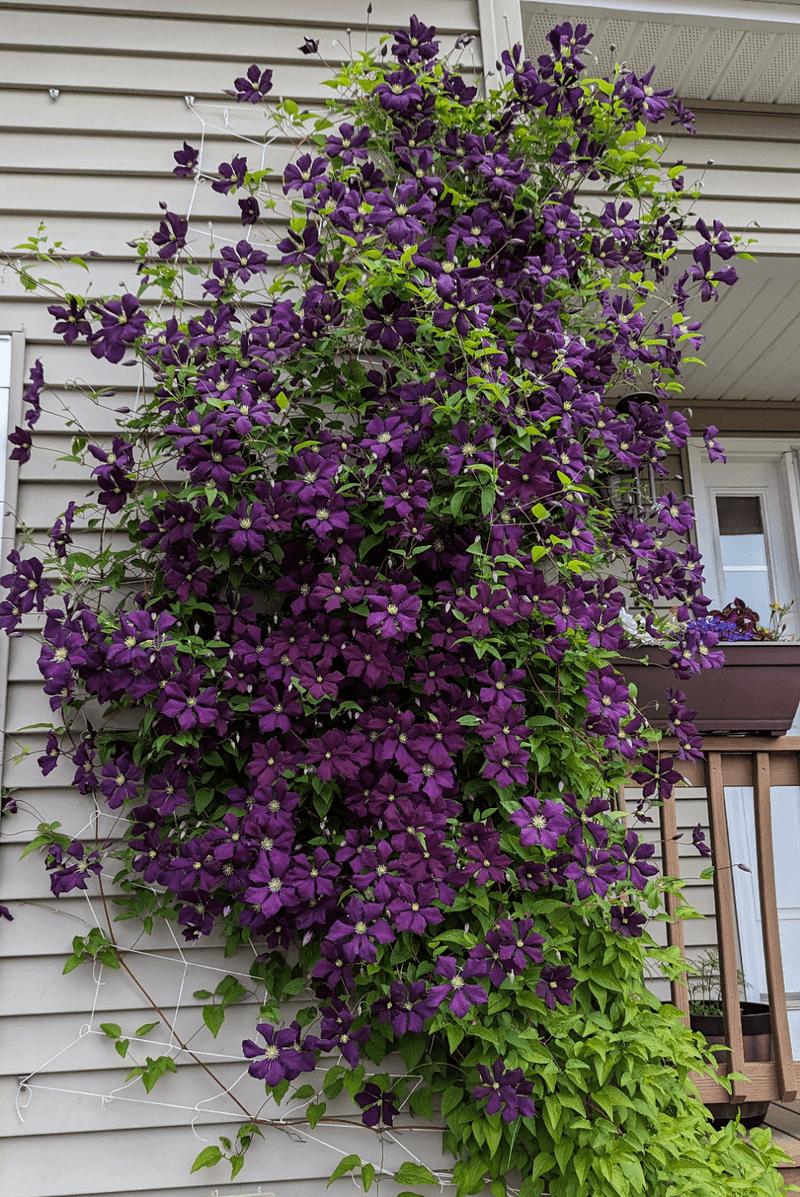
Jackmanii, with its velvety deep purple flowers, is probably the most famous Group 3 clematis. Viticella types, Sweet Autumn clematis cousins, and many texensis hybrids belong here too.
These vines flower on growth made this year, so last year’s stems are mostly just scaffolding. In late winter or early spring, cut every stem back to about 12 to 18 inches above the soil. Make each cut just above a healthy pair of buds.
Don’t laugh, but my hands shook the first time I did this. It looks like you’re giving the plant a crew cut. Within weeks, though, a burst of fresh shoots climbs the trellis, and the summer flowers land right where you can admire them.
Skip this step and Group 3 vines get top-heavy. Bare, woody stems pile up at the bottom while blooms cluster high out of view.
Timing note for colder regions. In northern states, wait until buds start swelling, often March or April. Southern gardeners can usually prune in February.
One caution worth repeating. Sweet autumn clematis from Asia spreads aggressively in parts of the eastern U.S., so native options like Clematis virginiana make a better choice.
A Brand-New Clematis Vine Benefits From One Brave First Cut
New clematis from the garden center often arrive with one or two long, skinny stems taped to a bamboo stake. It’s tempting to leave them alone and hope for fast height.
Many experts, including the Royal Horticultural Society, suggest a different plan. In the first late winter or early spring after planting, cut all stems back to roughly 12 inches, just above a strong pair of buds. This applies to every pruning group.
Why bother? That single cut pushes the plant to send up several new shoots from the base instead of one lanky stem. You trade a few early flowers for a fuller, sturdier vine that blooms better for years.
I didn’t expect such a difference. My unpruned vine stayed thin for three seasons, while a cut one beside it filled the trellis by the second summer.
Planting depth helps too. Set the crown a few inches deeper than it sat in the pot, which encourages extra buds below ground and helps the plant recover from clematis wilt.
Add mulch or low plants over the roots. Clematis like their heads in the sun and their roots kept cool.
Clean Pruners and Careful Clematis Cuts Make Next Season Easier
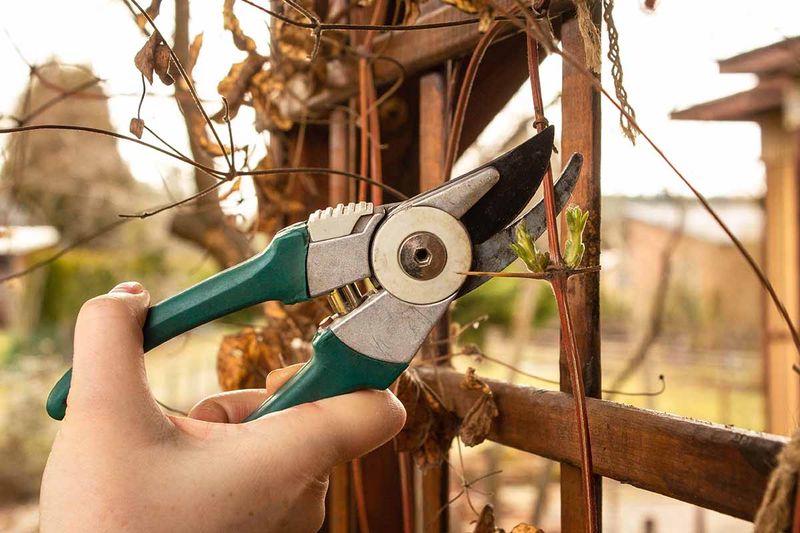
Every fall, I resist the urge to tidy my clematis too much. Most pruning belongs in late winter or spring, so autumn work should stay light, mostly removing broken stems or tying loose ones back up.
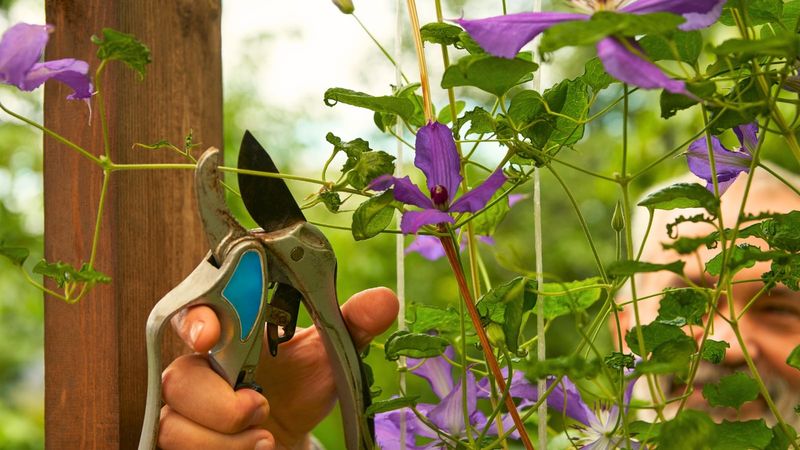
Sharp bypass pruners make clean cuts that heal fast. Wipe the blades with rubbing alcohol or a household disinfectant between plants, especially if you notice spotted or wilting stems.
Clematis stems are surprisingly brittle and tangle easily. Work slowly from the bottom up, untwisting stems by hand before cutting. Yanking a whole mass off a trellis can snap the healthy shoots you want to keep.
After pruning, give your vine a good start for the season ahead. Feed with a balanced, slow-release fertilizer in spring, water deeply during dry spells, and guide new shoots onto supports every week or two. Fresh growth can stretch several inches in a few days.
Keep a small notebook or phone note with each vine’s group, prune date, and bloom time. After a season or two, you’ll have your own personal calendar.
That little record turns pruning into a confident yearly habit, and the flowers keep coming back.