The Right Way To Prune Bougainvillea In Arizona Without Losing Blooms
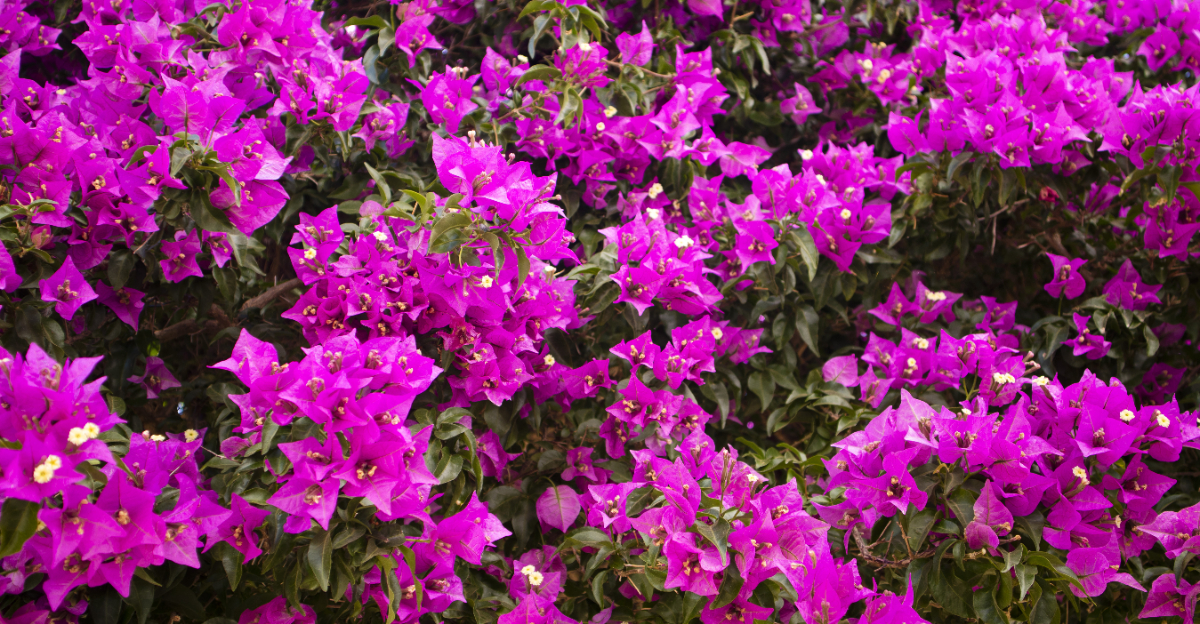
Bougainvillea is one of those plants that stops people in their tracks. Few things in an Arizona landscape are as bold and eye catching as a bougainvillea in full bloom, covered in vibrant color from top to bottom.
But getting that kind of display consistently takes more than just planting one and hoping for the best. Pruning plays a huge role in how well these plants bloom, and this is where a lot of gardeners run into trouble without even realizing it.
Grab the shears at the wrong time or cut back too aggressively and you can easily end up with a plant full of green growth and almost no flowers for an entire season.
That’s a frustrating outcome after putting in the effort to maintain such a beautiful plant.
Bougainvillea has its own rhythm, and once you understand how it grows and when it sets blooms, the whole pruning process starts to make much more sense.
Small adjustments to your approach can lead to dramatically better results come flowering season.
1. Prune Lightly To Avoid Cutting Off Future Blooms
Cutting too much at once is one of the fastest ways to lose an entire bloom cycle on your bougainvillea.
In Arizona, where the growing season runs long and the plant pushes hard between spring and fall, every branch you remove is a potential flowering stem you won’t see again for weeks.
Bougainvillea blooms on new growth, but that new growth needs an established branch to spring from. When you take off too much at once, the plant shifts all its energy into regrowing structure instead of producing those iconic papery bracts.
Light pruning keeps that energy balanced.
A good rule of thumb is to never remove more than one-third of any branch in a single session. Work in passes rather than all at once, stepping back often to check the overall shape before making another cut.
Arizona gardeners who follow this approach tend to see faster rebloom after trimming.
Targeting long, lanky shoots that have already finished blooming is smarter than cutting back healthy, active stems. Those spent shoots can be shortened by about half without triggering a stress response in the plant.
Shorter cuts, done consistently, produce a denser and more floriferous plant over time.
2. Trim After A Bloom Cycle Finishes
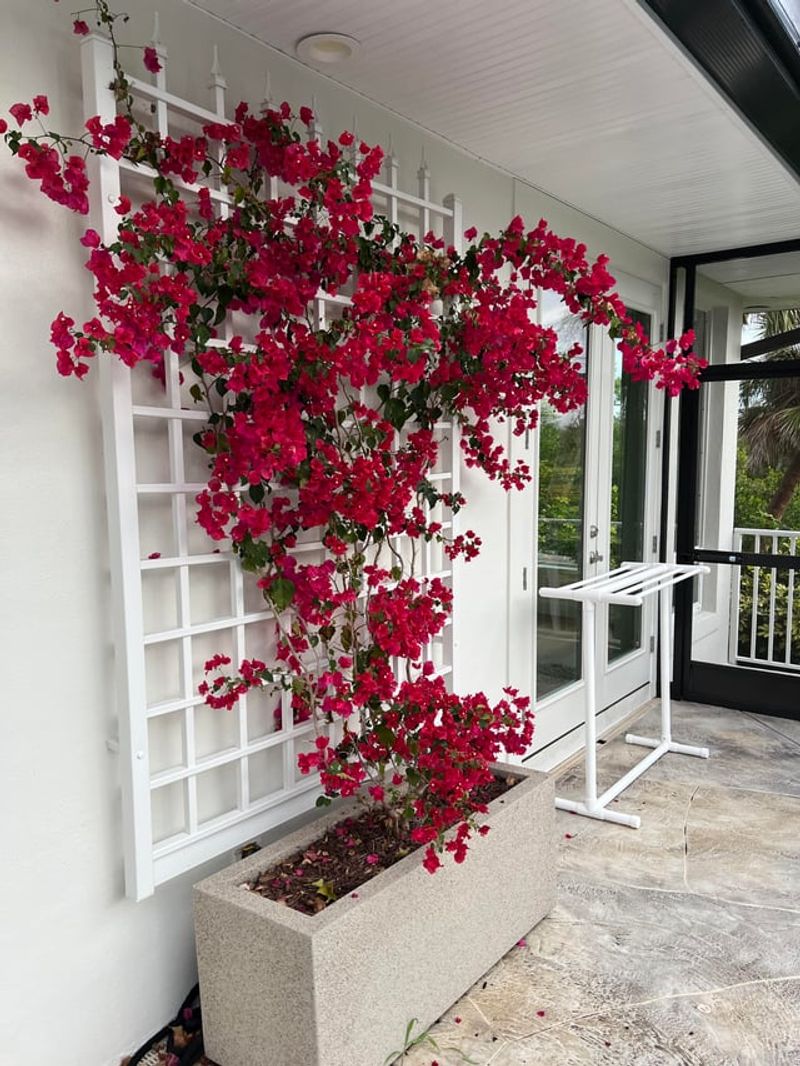
Watching your bougainvillea fade after a peak bloom is actually the perfect signal to pick up your pruning shears. Trimming right after a bloom cycle wraps up gives the plant a clean reset and encourages a faster push into the next flowering round.
In Arizona, bougainvillea typically goes through multiple bloom cycles throughout the year, especially in the lower desert regions around Phoenix and Tucson. Each cycle ends with the bracts drying out and dropping.
That is your window to step in and shape things up without disrupting active flowering.
Cutting into a plant mid-bloom will almost always delay the next cycle. Bracts need time to fully develop on each stem, and interrupting that process confuses the plant’s energy distribution.
Your Arizona Garden Changes Every Week. Your Plan Should Too.
Gardening in Arizona changes quickly throughout the season. Every Friday you’ll receive a simple weekly plan showing exactly what to plant, prune, fertilize, harvest, and protect so you never miss the right timing.
Waiting until the color fades completely before trimming is one of the simplest ways to protect your bloom schedule.
After the bracts drop, look for the stems that carried those blooms and shorten them back by about one-third. New lateral shoots will emerge from just below your cut point, and those laterals are exactly where the next round of flowers will appear.
It is a reliable, repeatable process when timed correctly.
3. Focus On Shaping Rather Than Heavy Cutting
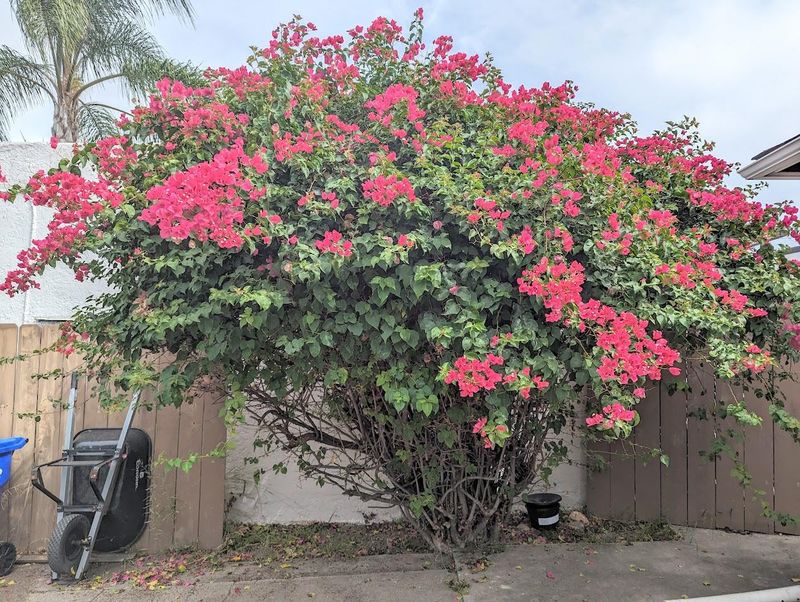
Shaping and heavy cutting might look similar from the outside, but they produce completely different results on a bougainvillea. One builds a strong, blooming plant.
The other sends it into recovery mode for months.
Shaping means working with the plant’s natural growth habit rather than fighting it. Bougainvillea wants to sprawl, climb, or cascade depending on variety and support.
Guiding that growth with light directional cuts gives you control without stripping the plant of the branch structure it needs to flower consistently.
Heavy cutting, by contrast, removes large portions of the canopy at once. In cooler climates this might be manageable, but in Arizona’s high-heat environment, a heavily pruned bougainvillea gets hit with intense sun exposure on previously shaded bark.
That can cause sunscald on stems that were never meant to face direct afternoon sun.
When shaping, focus on three things: removing growth that crosses through the center, shortening stems that extend well past the plant’s intended outline, and pinching back tips on young shoots to encourage branching. These three moves keep the plant tidy without triggering a stress response.
A well-shaped bougainvillea also looks better in the landscape year-round, not just during peak bloom.
4. Remove Weak Or Crossing Branches Early
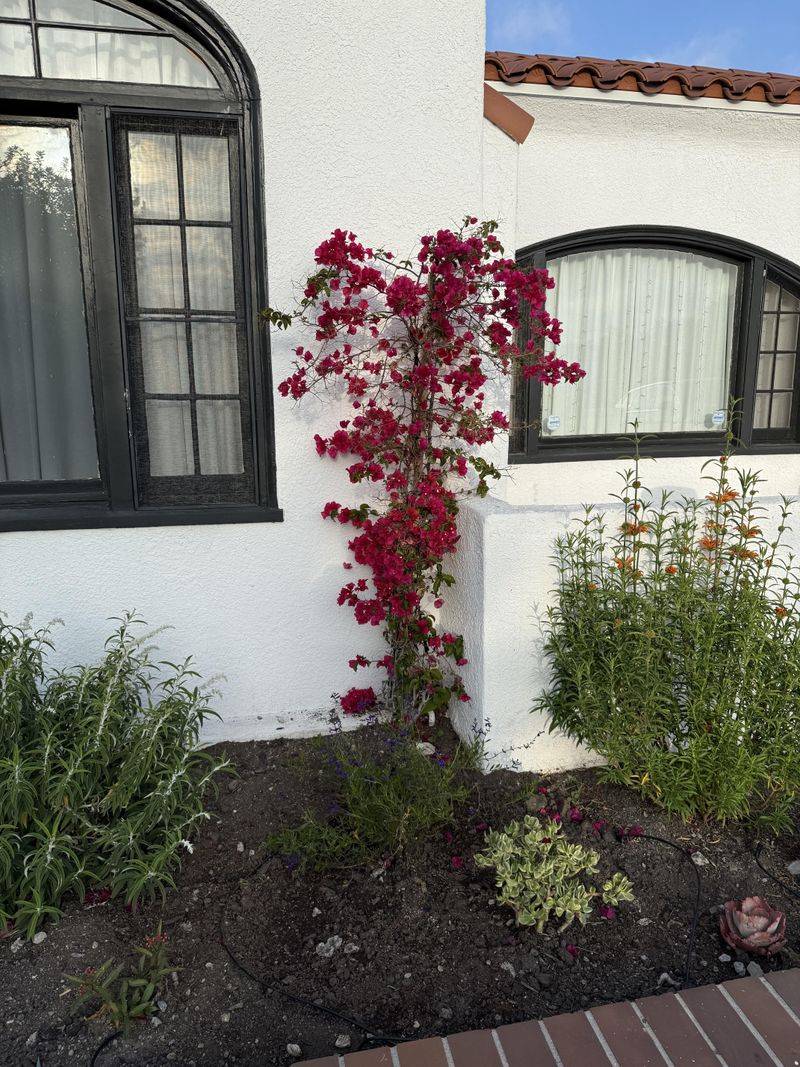
Weak branches are passengers, not contributors. On a bougainvillea, thin stems that lack the structure to hold blooms just drain resources from the stronger canes that actually produce flowers.
Spotting and removing them early keeps the plant focused on what matters.
Crossing branches are a separate but equally important issue. When two branches rub against each other in the wind, which happens constantly in Arizona during monsoon season, they create small wounds that invite pathogens and slow healing.
Removing one of those crossing branches before the rubbing causes damage is always easier than dealing with the aftermath.
Early removal also shapes the plant’s long-term structure. A bougainvillea trained with clean, open branching from a young age develops into a far more manageable and productive plant than one allowed to tangle into a dense mass of competing stems.
Catching problems early takes less than a minute per branch.
Look for branches that are thinner than a pencil, growing inward toward the center of the plant, or running parallel to a stronger nearby stem. Any of these are good candidates for removal.
Always cut back to the point of origin rather than leaving stubs, which can harbor insects or fungal issues in Arizona’s warm conditions.
5. Keep Main Structure Open For Better Light
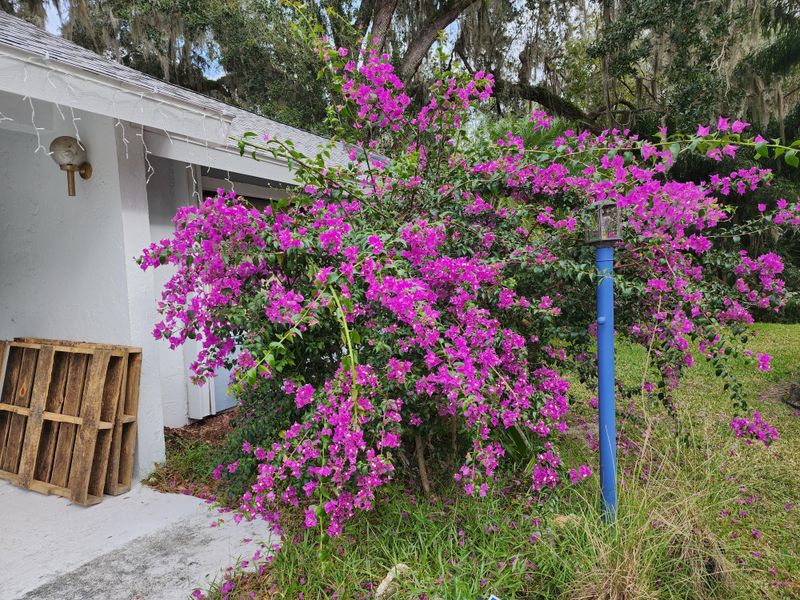
Sunlight is the engine behind every bougainvillea bloom, and in Arizona, there is no shortage of it. But if the plant’s interior is packed with dense, overlapping growth, that light never reaches the branches where it is needed most.
An open canopy structure allows light to penetrate through to inner stems and lower branches. When those interior stems get adequate sun exposure, they develop the strength to carry blooms rather than just sitting in the shade as unproductive filler.
Light access is directly tied to bloom density throughout the plant.
Creating an open structure does not mean stripping the plant bare. It means selectively removing stems that block the center without contributing to the plant’s overall shape.
A few well-placed cuts each season can make a dramatic difference in how evenly the plant flowers from base to tip.
Start by standing back and identifying where the canopy looks the thickest. Trace those dense areas back to a branch junction and remove the least productive stem at the fork.
Repeat this process around the plant rather than focusing all cuts in one area, which keeps the shape balanced.
Arizona’s intense afternoon sun also means that while you want light inside the canopy, you still need outer foliage to protect inner stems from direct western exposure during the hottest months.
6. Avoid Hard Pruning During Peak Heat
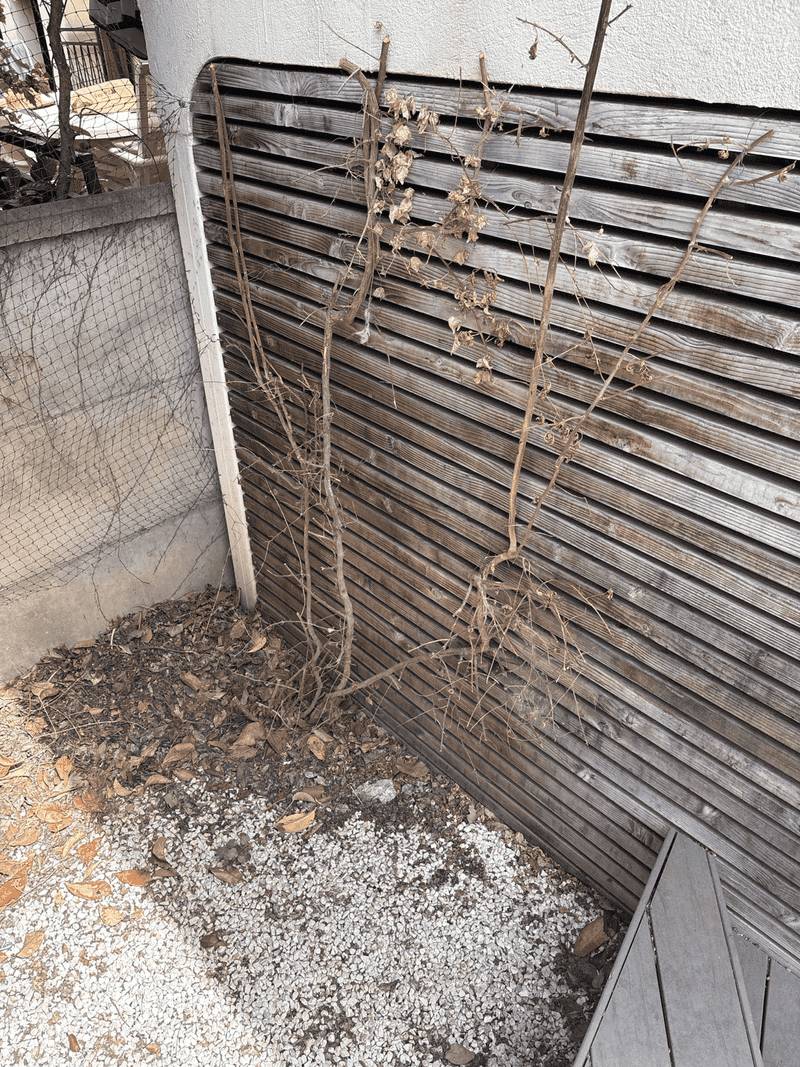
June through August in Arizona is brutal, and your bougainvillea knows it. Temperatures routinely crack 110 degrees Fahrenheit across the Valley, and the plant is already working hard just to maintain itself through that heat.
Hard pruning during this window asks too much of it at the worst possible time.
When you cut back significantly during peak summer, the plant has to redirect energy toward healing those cuts and pushing new growth. New growth during extreme heat is fragile and often gets scorched before it can harden off properly.
What looks like a productive trim in July can easily result in stressed, sunburned stems that set the plant back going into fall.
A better approach is to hold off on anything more than light maintenance pruning from late June through August. Remove obviously spent blooms or stray stems that are getting out of hand, but leave major reshaping for late summer or early fall when temperatures start to drop back below 100 degrees.
September in Arizona often brings a natural rebound for bougainvillea. Monsoon moisture, slightly cooler nights, and reduced UV intensity combine to create ideal conditions for post-summer recovery.
Timing your more significant pruning to coincide with that shift gives the plant the best conditions for pushing strong new growth and a fall bloom flush.
7. Use Clean Cuts To Support Healthy Regrowth
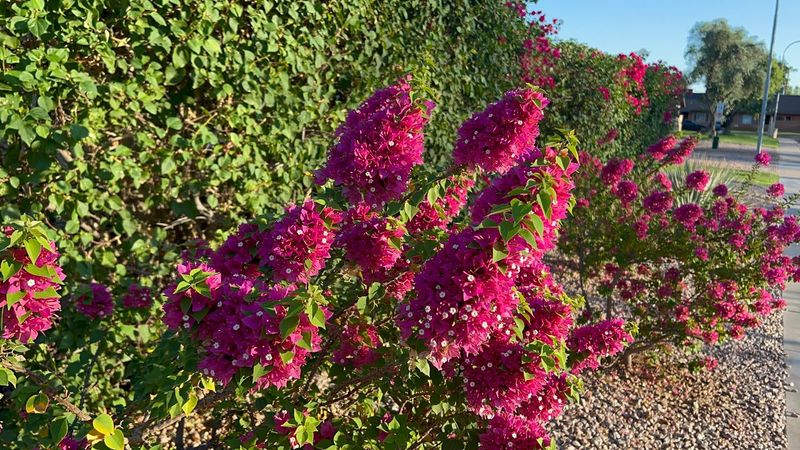
Ragged cuts are not just ugly. On a bougainvillea, a torn or crushed stem creates a larger wound surface that takes longer to seal and opens the door to fungal issues, especially during Arizona’s humid monsoon months when airborne pathogens are more active than usual.
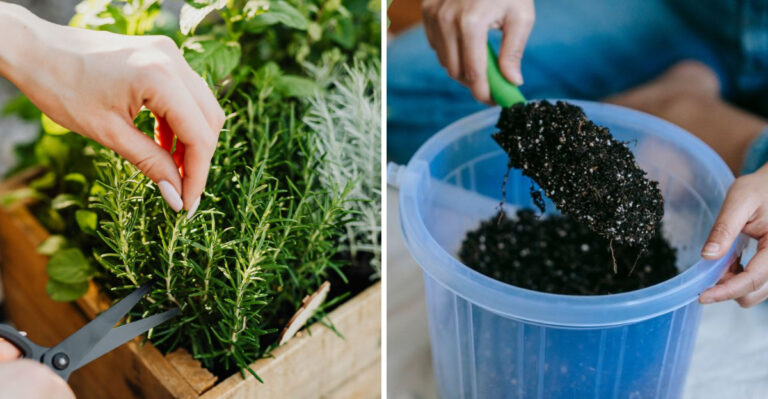
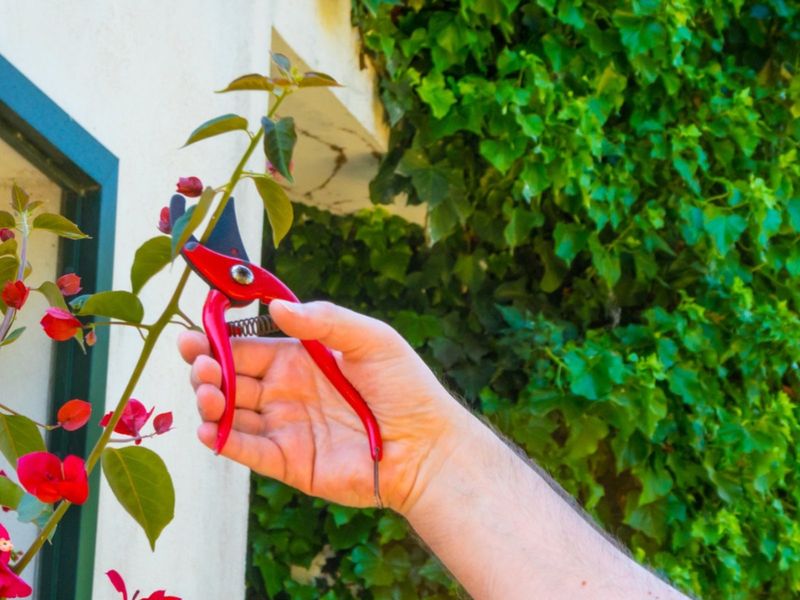
Sharp, bypass-style pruners are the right tool for this job. They slice cleanly through stems without compressing tissue, which is exactly what you want for fast callusing and healthy regrowth.
Anvil-style pruners, which crush the stem as they cut, should be avoided on bougainvillea regardless of how convenient they seem.
Cleaning your tools between plants is a habit worth building. A quick wipe with isopropyl alcohol before moving from one plant to another prevents the transfer of any pathogens between plants in your Arizona yard.
It takes ten seconds and can save weeks of recovery time if something is already affecting one of your plants.
Cut angle matters too. Angled cuts that slope away from a bud allow water to run off rather than pooling at the wound site.
In a place like Tucson or Phoenix where summer rains can be sudden and heavy, that small detail actually helps reduce moisture-related issues on fresh cuts.
Regrowth after a clean cut tends to emerge quickly and grow in a predictable direction, making it easier to guide the plant’s shape over time.