11 Hydrangea Companion Plants Oregon Gardeners Should Try
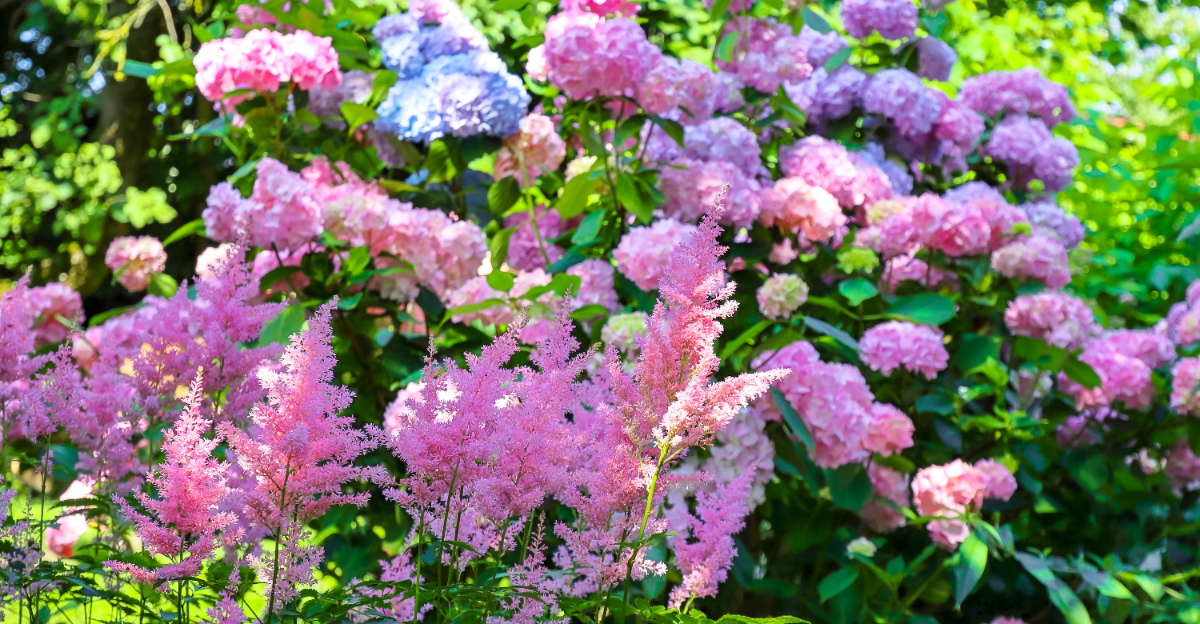
Hydrangeas are already doing a lot for Oregon gardens. The big, billowy blooms, the incredible color range, the fact that they absolutely thrive in the Pacific Northwest’s cool and rainy climate.
It’s easy to just let them be the star and call it a day. But gardeners who have figured out the companion planting game around their hydrangeas are working with something on a completely different level.
The right plants growing alongside your hydrangeas can make the blooms look even more dramatic, extend your garden’s color season well beyond summer, improve soil health, and create that layered, lush, intentional look that makes a garden feel truly designed rather than just planted.
The best part is that Oregon’s growing conditions make it incredibly easy to pull off, and there are some surprisingly perfect plant pairings out there just waiting to transform the way your hydrangeas look all season long.
1. Hostas
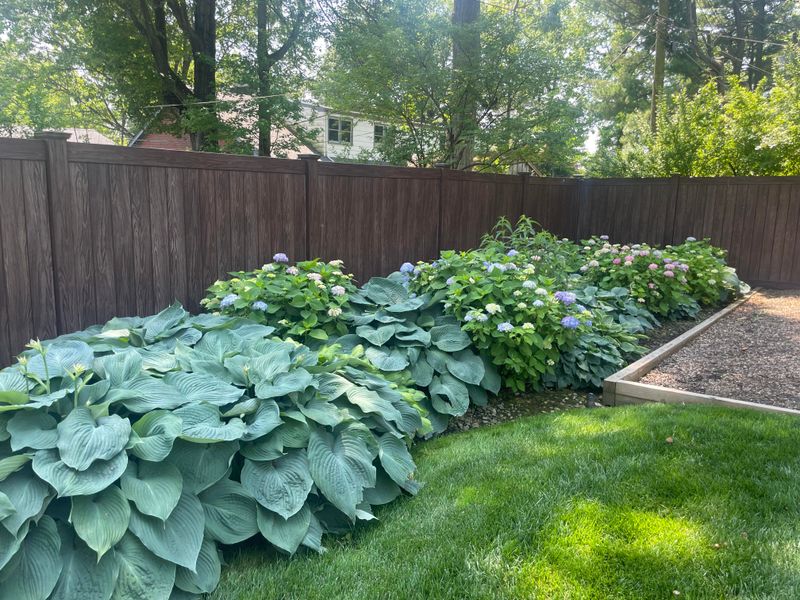
Few plants can match the bold, leafy presence of hostas growing alongside hydrangeas in an Oregon garden. Their wide, ribbed leaves come in shades of green, gold, and blue-gray, creating a stunning contrast against hydrangea blooms.
Hostas thrive in the same shady, moist conditions that hydrangeas love, making them natural partners in the Pacific Northwest landscape.
Oregon’s cool, rainy climate is practically tailor-made for hostas. They grow well under tree canopies and along shaded garden beds where hydrangeas often flourish.
Once established, hostas are low-maintenance and spread slowly to fill in bare spots beautifully.
Plant hostas in front of or beside your hydrangeas for a layered look. Their large leaves help retain soil moisture and suppress weeds around the base of your hydrangeas.
Hostas also come in dozens of varieties, so you can mix and match sizes and colors. From giant Sieboldiana types to compact miniatures, there is a hosta for every Oregon garden space.
They are truly one of the easiest and most rewarding companion choices you can make.
2. Heuchera
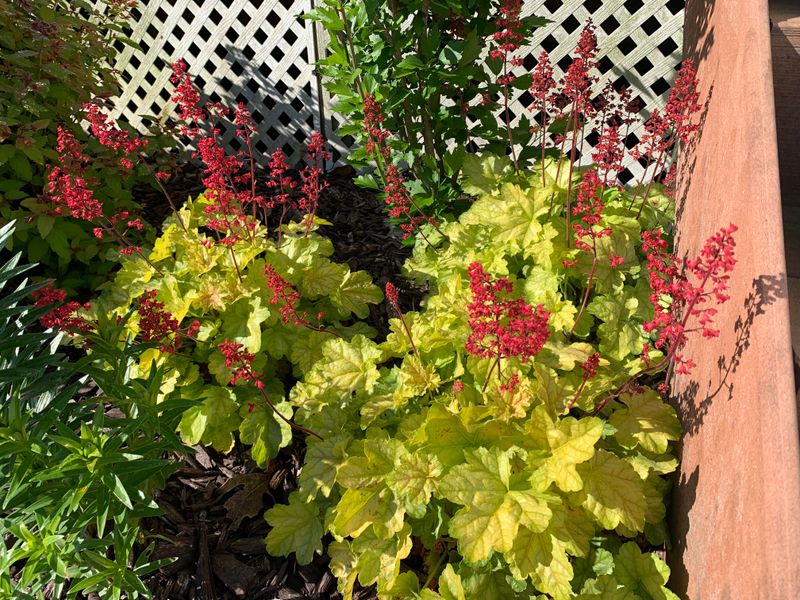
Heuchera, also called coral bells, brings a pop of color that hydrangeas simply cannot provide on their own. With foliage ranging from deep burgundy and copper to lime green and silver, heuchera adds year-round visual interest to any Oregon garden bed.
The contrast between heuchera’s richly colored leaves and hydrangea’s soft blooms is absolutely eye-catching.
One of the best things about heuchera is that it stays attractive even when hydrangeas are not in bloom. In Oregon’s mild winters, many heuchera varieties hold their leaves and keep the garden looking lively.
They grow in neat mounds that tuck nicely around the base of hydrangea shrubs without crowding them.
Heuchera prefers well-drained soil with some shade, which lines up perfectly with what hydrangeas need in the Pacific Northwest. Water them regularly during dry summer months, especially in areas like southern Oregon where summers can get warm.
Plant several different heuchera varieties together for a tapestry effect that makes your hydrangea garden look like something straight out of a magazine. They are a small plant that makes a very big impression.
Your Oregon Garden Changes Every Week. Your Plan Should Too.
Gardening in Oregon changes quickly throughout the season. Every Friday you’ll receive a simple weekly plan showing exactly what to plant, prune, fertilize, harvest, and protect so you never miss the right timing.
3. Ferns
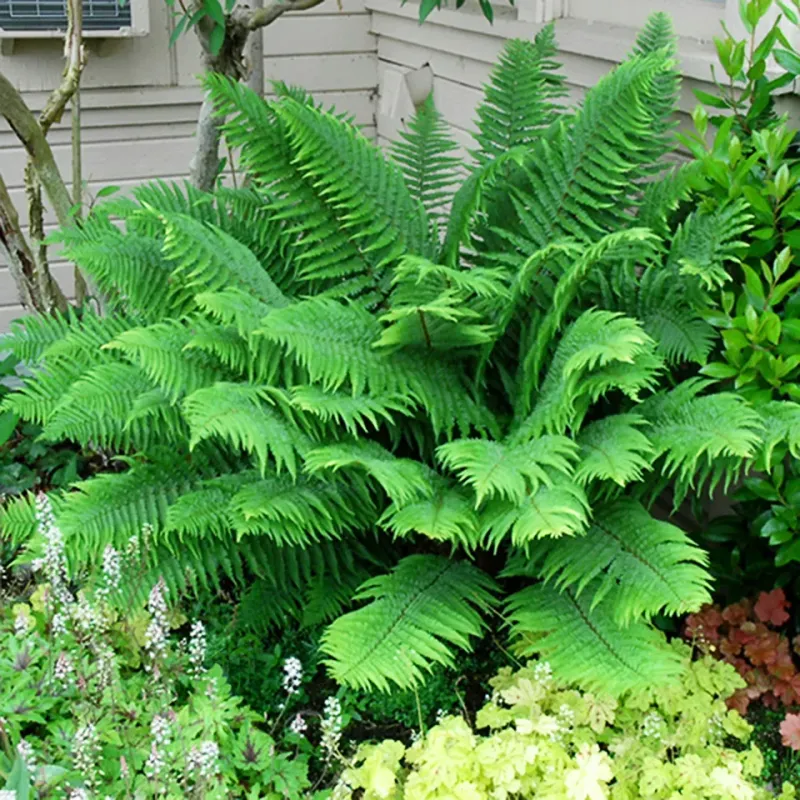
Walk through any Oregon forest and you will almost certainly spot ferns carpeting the ground in layers of feathery green. Bringing that same natural look into your garden is easy when you pair ferns with hydrangeas.
The delicate, arching fronds of ferns create a soft, woodland feel that perfectly complements the bold flower heads of hydrangeas.
Oregon is home to several native fern species, including the western sword fern, which is incredibly tough and easy to grow. These ferns thrive in the shady, moisture-rich conditions that hydrangeas also prefer.
Together, they create a lush, layered look that feels both natural and intentional.
Ferns are especially useful for filling in the shaded areas around hydrangea shrubs where other plants might struggle. They grow well beneath tall hydrangeas and help keep the soil cool and moist during warmer months.
In places like the Willamette Valley, ferns and hydrangeas together can create a garden that looks like a slice of the Pacific Northwest wilderness. Plant ferns in clusters of three or five for the most natural appearance.
They require very little care once they settle in, making them a smart and beautiful choice for busy Oregon gardeners.
4. Astilbe
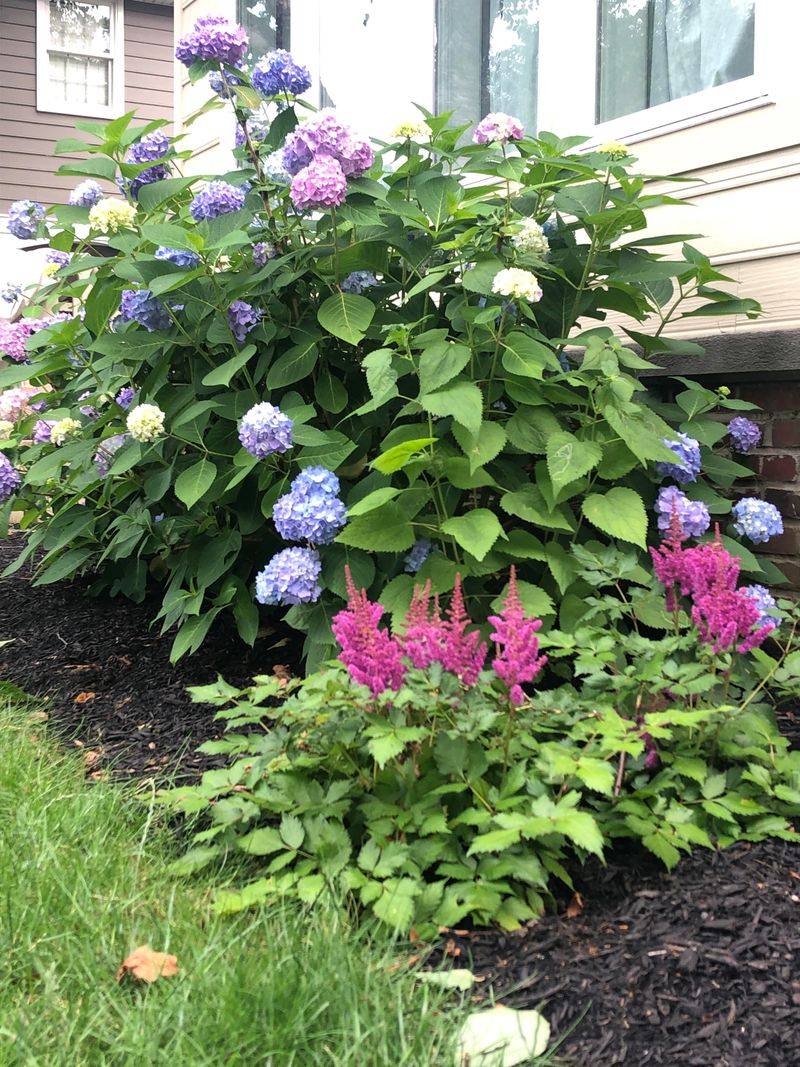
Astilbe is one of those plants that makes people stop and stare. Its feathery plumes of pink, red, white, or lavender flowers rise above ferny foliage and create a dreamy, soft look beside hydrangea blooms.
When both plants are in flower at the same time, the combination is genuinely breathtaking in an Oregon summer garden.
What makes astilbe such a great partner for hydrangeas is that they share the same love of moist, humus-rich soil and partial shade. Oregon’s naturally damp climate suits astilbe very well, especially in the wetter regions west of the Cascades.
They bloom from late spring into midsummer, filling the garden with color right when hydrangeas are just getting started.
Astilbe comes in a wide range of heights, from compact 12-inch varieties to tall 4-foot types. Mixing different heights creates a layered garden that looks full and lush all season long.
Plant them in groups of three or more for the best visual impact. After the flowers fade, the dried seed heads add texture to the garden through fall and winter.
Oregon gardeners who have not yet tried astilbe alongside their hydrangeas are truly missing out on one of the Pacific Northwest’s best plant pairings.
5. Hellebores
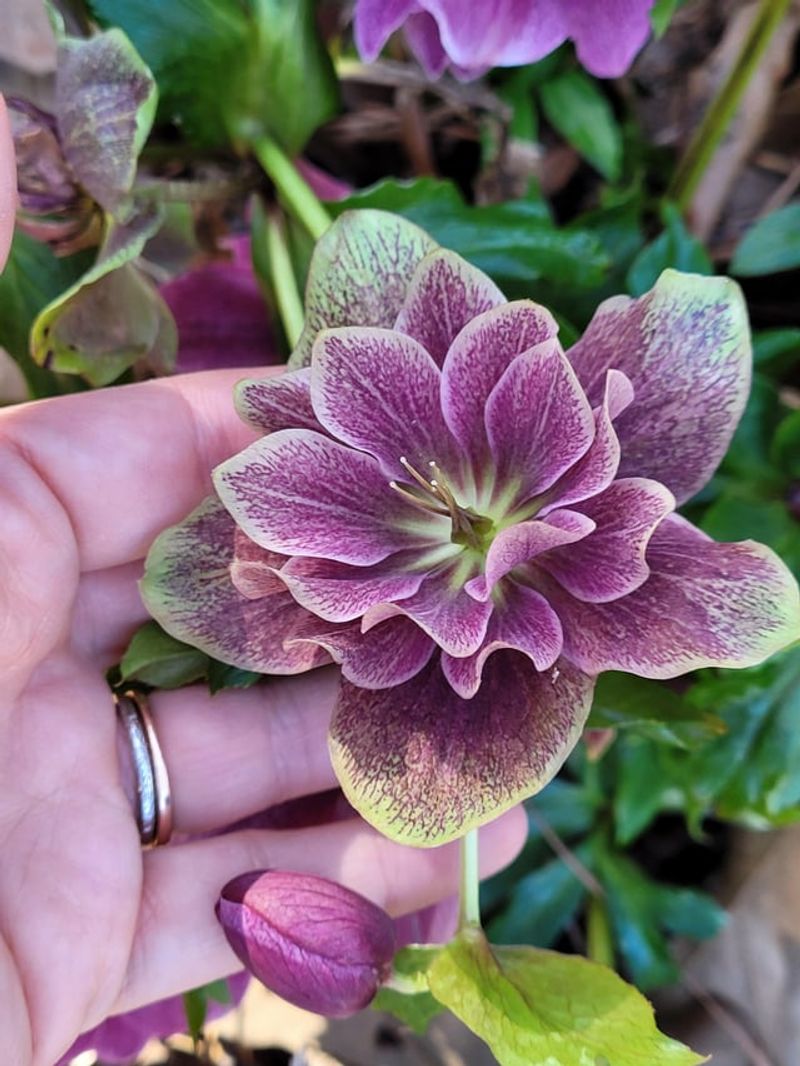
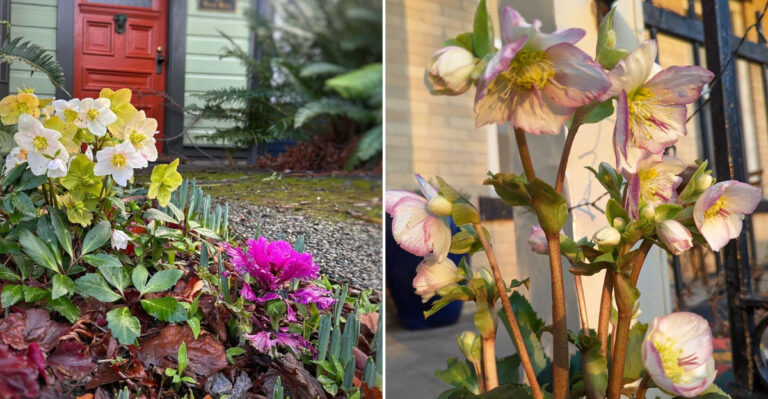
Hellebores are the quiet overachievers of the Oregon garden world. Also known as Lenten roses, these tough perennials bloom in late winter and early spring, right when hydrangeas are still bare and the garden looks sleepy.
Their nodding, cup-shaped flowers in shades of cream, pink, plum, and deep burgundy bring life to the garden during the dreariest months of the year.
Pairing hellebores with hydrangeas is a smart strategy for year-round garden interest. While hydrangeas take center stage in summer, hellebores shine from January through April in Oregon’s mild climate.
They love the same shady, well-drained spots where hydrangeas grow and are remarkably tough once established.
Hellebores are also deer-resistant, which is a huge bonus for Oregon gardeners in rural areas or near forested neighborhoods. They self-seed gently over time, slowly filling in around hydrangea shrubs with minimal effort on your part.
Their leathery, evergreen leaves stay attractive all year, providing ground-level interest even in summer when hellebore blooms have faded. If you want a companion plant that carries the garden through the off-season with grace, hellebores are an outstanding choice for any Oregon garden, large or small.
6. Japanese Forest Grass
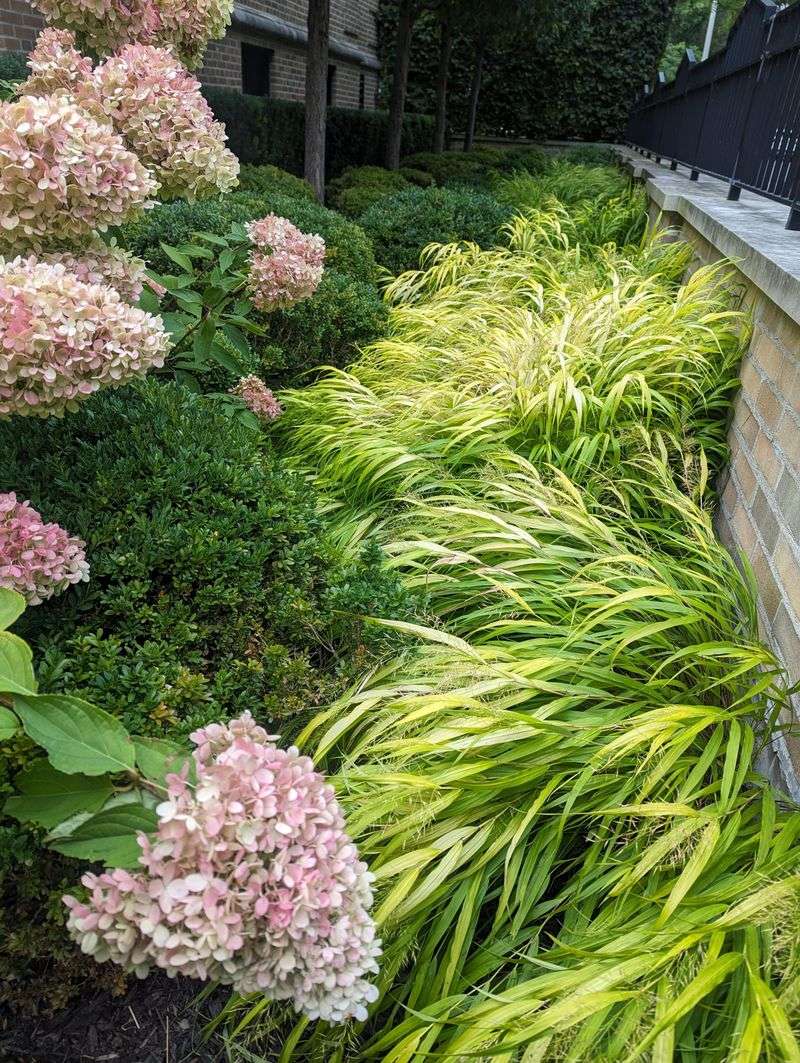
Not all grasses are created equal, and Japanese forest grass proves that point beautifully. Known botanically as Hakonechloa macra, this ornamental grass produces cascading, ribbon-like leaves in shades of gold, green, or variegated yellow and green.
When planted beside hydrangeas, it adds movement and texture that no other plant quite replicates.
Japanese forest grass loves shade and moisture, two things Oregon has in abundance. It grows in graceful, arching mounds that spill elegantly over garden edges and around the base of hydrangea shrubs.
The golden varieties glow warmly even on cloudy Pacific Northwest days, brightening shaded spots that might otherwise look dull.
This grass is slow-growing but very long-lived, making it a worthwhile investment for any Oregon garden. It pairs especially well with blue or purple hydrangeas, where the contrast between warm gold foliage and cool-colored blooms is visually striking.
In fall, the leaves take on beautiful amber and orange tones before fading for winter. Plant Japanese forest grass in sweeping drifts for the most dramatic effect.
It requires minimal care beyond occasional watering in dry spells and looks stunning year after year in Oregon’s forgiving climate.
7. Bleeding Heart
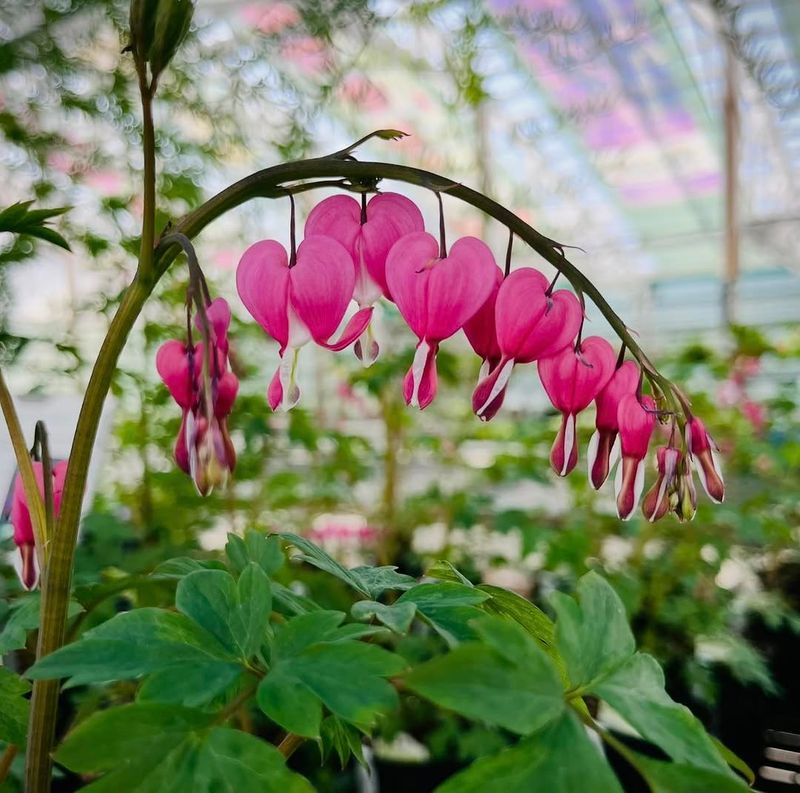
There is something undeniably romantic about bleeding heart. Its arching stems dangle rows of heart-shaped flowers in pink, red, or white, creating a whimsical look that pairs beautifully with hydrangeas in an Oregon shade garden.
Bleeding heart blooms in spring, filling the garden with charm before hydrangeas take over in summer.
Oregon’s cool, moist springs are ideal for bleeding heart. It thrives in partial to full shade with rich, well-drained soil, the same conditions hydrangeas prefer.
After blooming, bleeding heart foliage naturally fades back in summer heat, leaving space for hydrangeas to take the spotlight without any competition.
This natural handoff between bleeding heart and hydrangeas makes them one of the most clever seasonal pairings in Pacific Northwest gardening. Plant bleeding heart behind or beside your hydrangeas so that the hydrangea’s lush summer foliage covers the gap left when bleeding heart goes dormant.
The fringed fern-like leaves of bleeding heart also add lovely texture to the spring garden before they disappear. There are both native and non-native varieties available at most Oregon nurseries.
Both types perform wonderfully in garden beds throughout the state, from the rainy coast to the wetter parts of the Willamette Valley.
8. Columbine
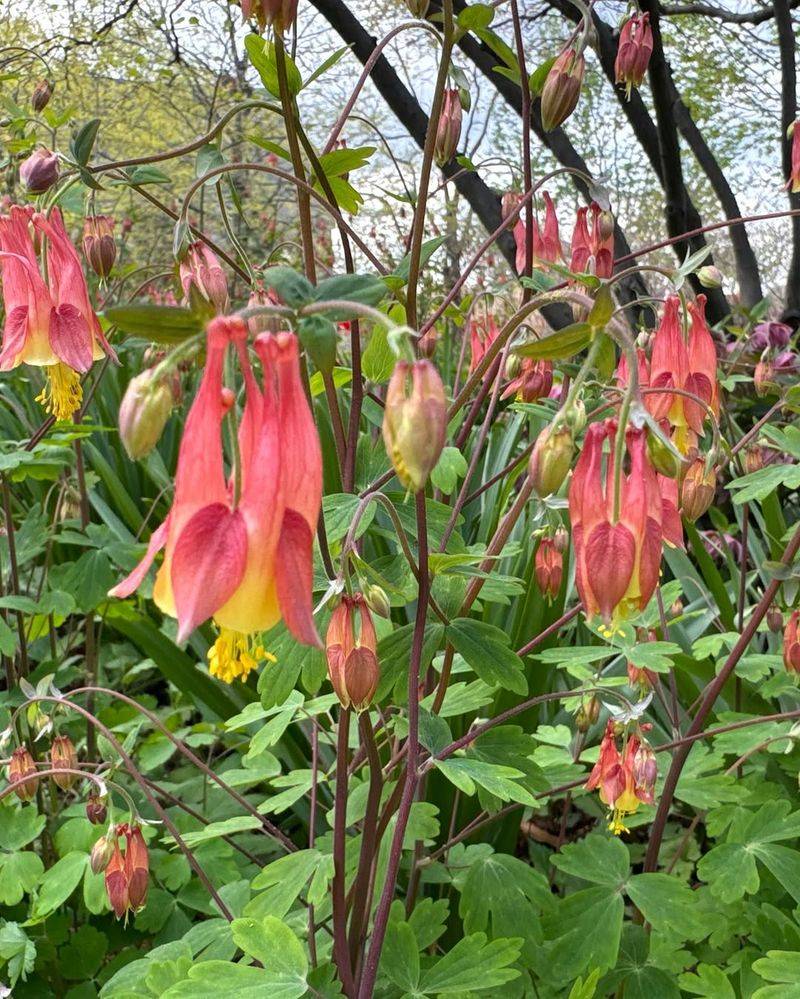
Columbine is one of those wildflower-style plants that brings a cottage garden feel to any space it occupies. Its spurred, nodding flowers come in an incredible range of colors, from deep purple and blue to soft yellow, pink, and bicolor combinations.
Planted near hydrangeas, columbine adds a light, airy quality that keeps the garden from feeling too heavy or formal.
In Oregon, columbine blooms from late spring into early summer, bridging the gap between early spring perennials and the full flush of summer hydrangea blooms. It grows well in partial shade with average moisture, conditions that are easy to find throughout much of the Pacific Northwest.
Columbine also self-seeds freely, so you may find cheerful new plants popping up around your garden each year.
Hummingbirds absolutely love columbine, and planting it near hydrangeas turns your garden into a lively, wildlife-friendly space. Oregon’s native columbine, Aquilegia formosa, is a particularly good choice because it is already adapted to local soils and rainfall patterns.
It grows vigorously without much fuss and looks stunning alongside large-leafed hydrangea varieties. Columbine is short-lived as an individual plant, but because it self-seeds so readily, it tends to stay in the garden for many years on its own.
9. Lungwort
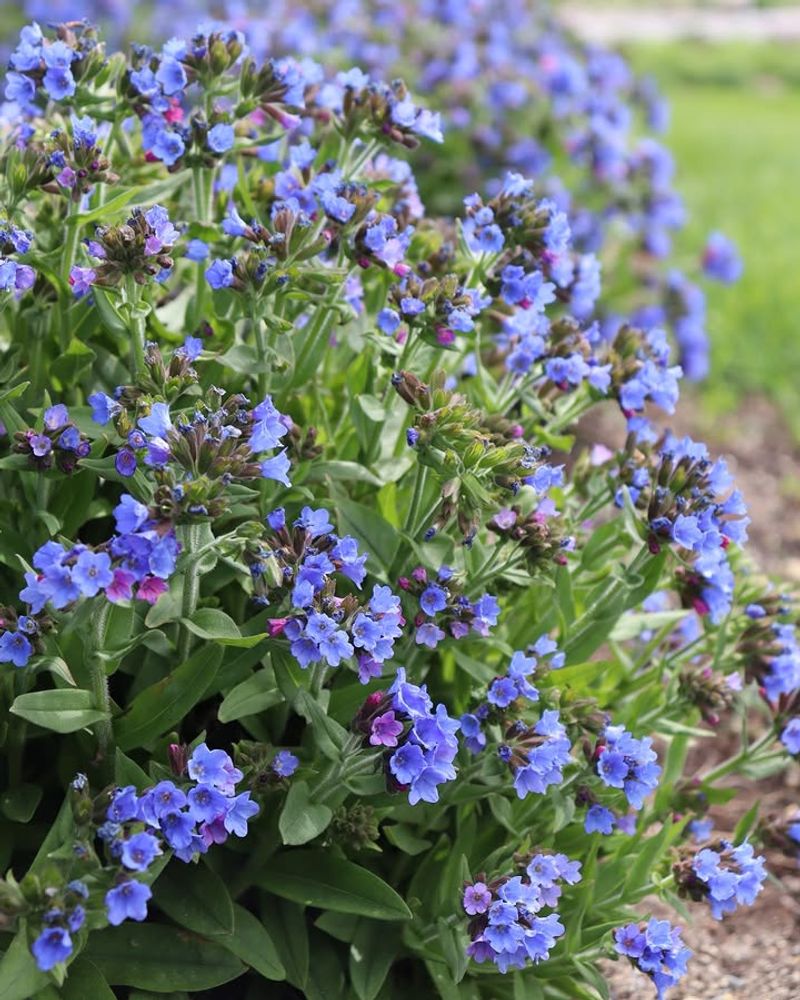
Lungwort might have an unusual name, but it is one of the most underrated shade plants an Oregon gardener can grow. Its leaves are speckled with silver spots on a deep green background, creating a mottled, eye-catching pattern that looks fantastic as a ground cover beneath hydrangeas.
In early spring, lungwort produces small clusters of flowers that open pink and turn blue as they age, a charming color show that happens before most other plants wake up.
Growing lungwort alongside hydrangeas is a practical choice for shaded Oregon garden beds. It spreads slowly to form a dense mat that suppresses weeds and retains soil moisture around hydrangea roots.
Lungwort is also quite drought-tolerant once established, which can be helpful during Oregon’s drier summer months.
The silvery leaf markings of lungwort brighten up dark, shaded corners where hydrangeas often grow. They reflect light beautifully even on overcast Pacific Northwest days.
Lungwort grows best in moist, humus-rich soil with good drainage and does not like to sit in standing water. Trim back the leaves in midsummer if they start to look tired, and fresh new growth will quickly appear.
It is a tough, reliable, and visually interesting companion that earns its place in any Oregon hydrangea garden.
10. Foxglove
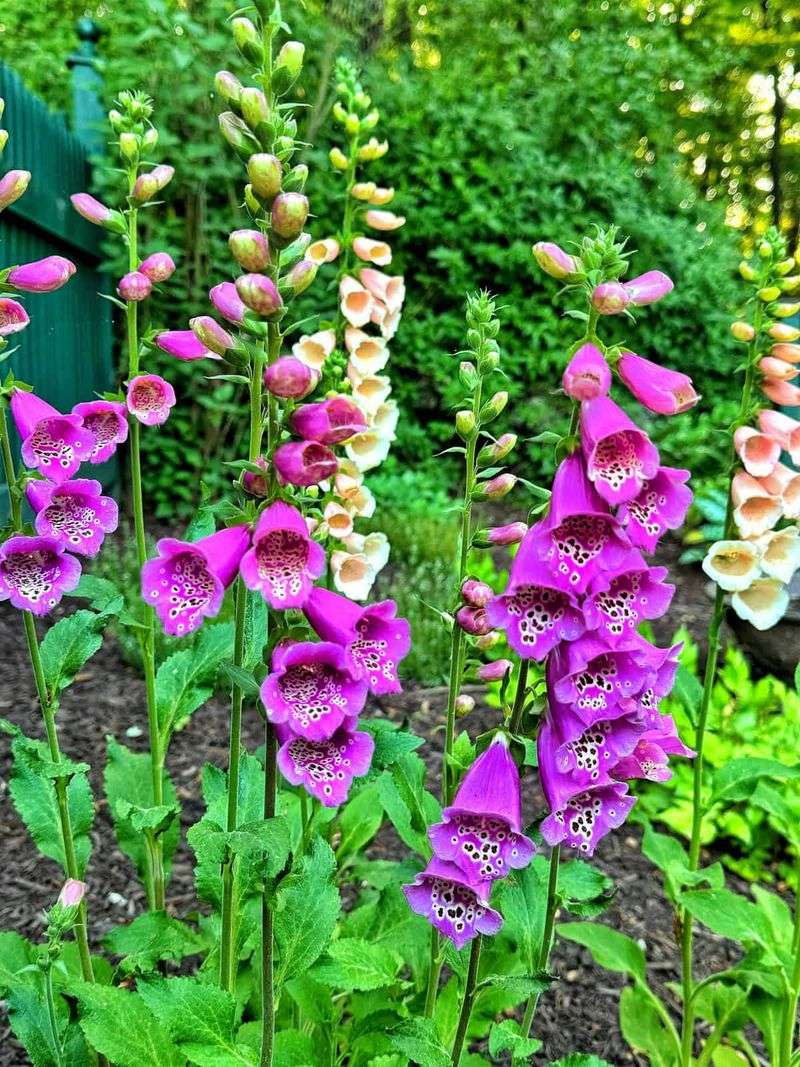
Foxglove is a showstopper in every sense of the word. Its tall, dramatic spires of tubular flowers in purple, pink, white, and cream rise several feet above the surrounding garden, creating a vertical accent that hydrangeas simply cannot provide.
Planting foxglove behind or beside hydrangeas gives the garden a bold, layered look that feels lush and full.
Oregon’s cool, moist climate is perfectly suited to foxglove. It grows wild along roadsides and woodland edges throughout the Pacific Northwest, which tells you just how well-adapted it is to local conditions.
In the garden, foxglove blooms in late spring and early summer, adding height and drama right as hydrangeas begin to leaf out.
Foxglove is a biennial, meaning it grows leaves in its first year and flowers in its second. However, it self-seeds so freely that once you plant it, you will likely have foxglove blooming in your Oregon garden year after year without any extra effort.
Bees and hummingbirds are drawn to foxglove flowers, making your garden a buzzing, lively habitat. Plant foxglove in groups at the back of the border for the most impactful look.
The combination of foxglove spires and hydrangea mounds is one of the most classic and beloved pairings in Pacific Northwest garden design.
11. Oregon Grape
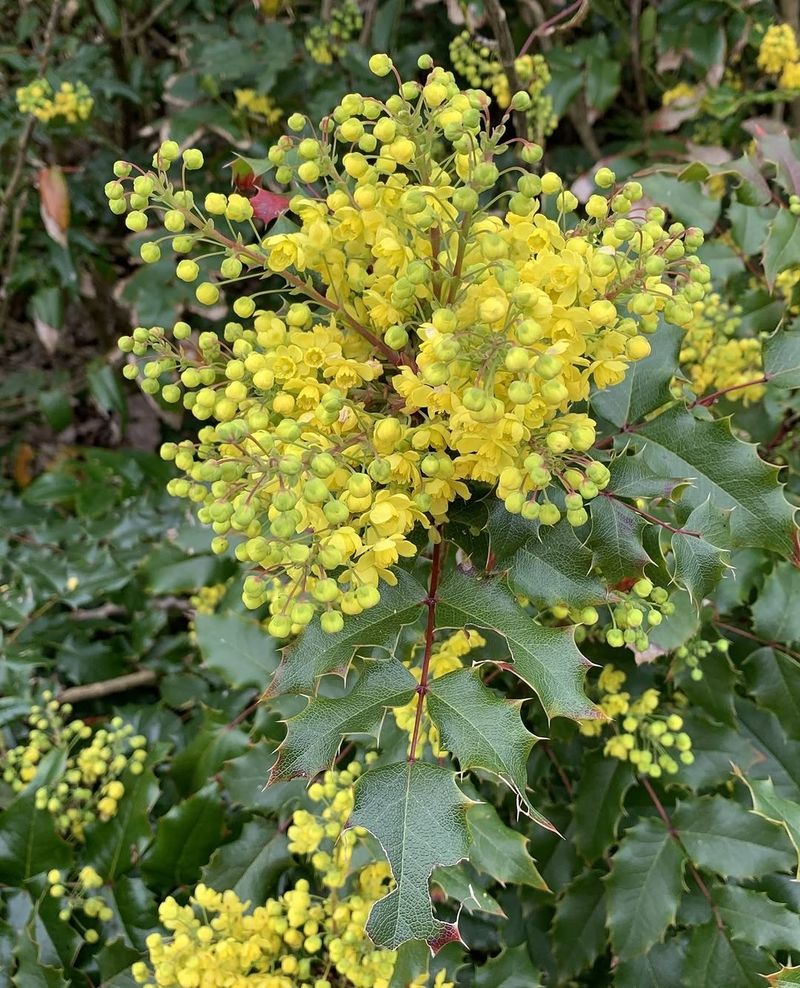
Oregon grape holds a special place in Pacific Northwest gardening because it is the state flower of Oregon. This native evergreen shrub features glossy, holly-like leaves and bright yellow flowers in early spring, followed by clusters of blue-purple berries that birds absolutely love.
Growing Oregon grape alongside hydrangeas celebrates local heritage while creating a garden that supports native wildlife.
Oregon grape is incredibly adaptable and grows well in both sun and shade, making it a versatile companion for hydrangeas in many different garden settings across the state. It tolerates dry shade better than most plants, which makes it useful in spots where other companions might struggle during Oregon’s dry summers.
Its bold, architectural foliage provides strong contrast against the softer, rounder form of hydrangea shrubs.
The low-growing variety, Mahonia nervosa, works especially well as a ground layer beneath taller hydrangeas, while the upright Mahonia aquifolium can grow into a medium-sized shrub alongside larger hydrangea varieties. Both types are drought-tolerant once established and require very little maintenance.
Oregon grape’s year-round interest, from spring flowers to summer berries to glossy winter foliage, makes it one of the most complete and satisfying companion plants an Oregon gardener can choose. It is a true celebration of the Pacific Northwest in plant form.