How To Prune Tomatoes In Ohio For The Biggest Harvest
Most Ohio gardeners treat their tomato plants like a hands-off project. Water them, cage them, maybe toss in some fertilizer, and hope for the best come August.
That approach gets you tomatoes. But pruning gets you the kind of tomatoes that fill a basket, taste like summer, and keep coming until the first frost shuts everything down.
Not every variety needs it, but for the ones that do, pruning can be one of the biggest differences between a tangled, disease-prone plant and one that stays productive longer.
Tomatoes are vigorous growers, and left to their own devices they pour energy into leaves and stems instead of the fruit you actually want.
Ohio’s humid summers make that problem worse, trapping moisture inside dense foliage and giving fungal issues the perfect place to take hold. Knowing your variety and pruning correctly changes the equation completely.
You take control, the plant focuses its energy, and your harvest reflects every minute you spent with a pair of snips in your hand.
1. Identify Your Tomato Type Before Cutting Anything
Before reaching for any tool, flip over that seed packet or plant tag and look for one word: indeterminate or determinate. That single label changes every pruning decision you will make all season long.
Indeterminate tomatoes, like Brandywine, Cherokee Purple, and most beefsteak types, keep growing taller and producing fruit until frost stops them. They tend to get tall, leafy, and tangled, especially during warm, humid summers.
Regular pruning and training help manage their size and improve airflow around the foliage.
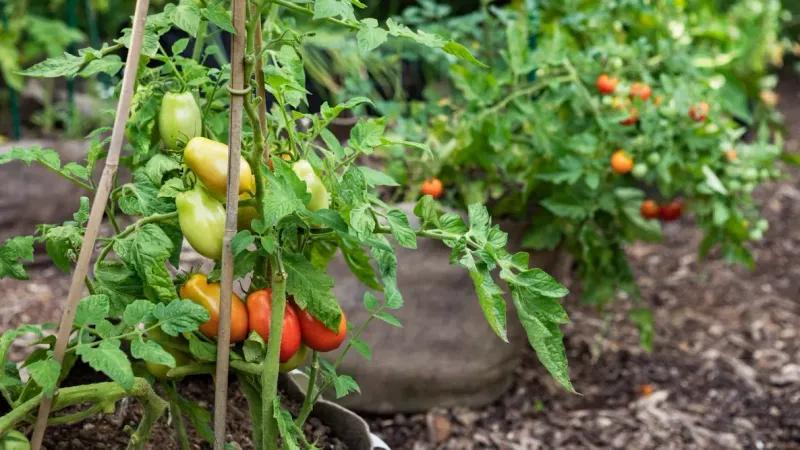
Determinate tomatoes, sometimes called bush tomatoes, grow to a set height and concentrate most of their fruit production over a shorter window.
Many Roma, paste, and patio-type tomatoes are common examples, though you should still check the seed packet or plant tag because some varieties are sold in different growth habits.
Heavily pruning a determinate plant can remove the very shoots that would have produced fruit, which cuts your harvest before it even starts.
If the tag is missing, watch how the plant grows. Indeterminate types keep sending up new leaders and growing taller through summer.
Determinate types tend to stop at a certain height and bush out more evenly. Checking a reliable variety description online or through Ohio State University Extension resources can also help you confirm what you have before making any cuts.
2. Prune Indeterminate Tomatoes More Than Bush Types
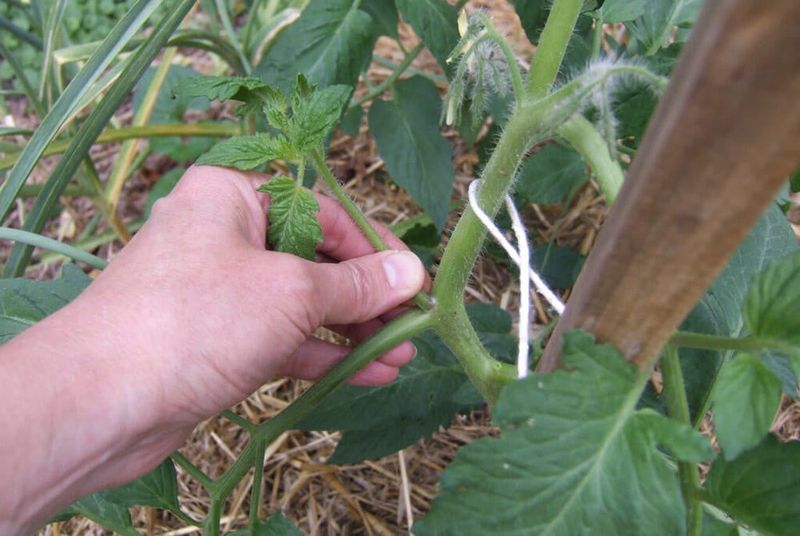
Tall, sprawling, and absolutely relentless, indeterminate tomatoes are the plants that will take over your garden if you let them. By midsummer in our state, an unpruned indeterminate plant can look more like a shrub than a vegetable crop.
Selecting suckers to remove on indeterminate tomatoes helps you guide the plant’s energy toward fewer, stronger stems rather than dozens of thin, tangled shoots. Most experienced growers train indeterminate tomatoes to one, two, or three main stems.
Fewer main stems mean better airflow, easier disease management, and fruit that tends to ripen more consistently.
The goal here is balance, not a bare plant. Leaves are essential for photosynthesis, shading fruit from sunscald, and supporting overall plant health.
Your Ohio Garden Changes Every Week. Your Plan Should Too.
Gardening in Ohio changes quickly throughout the season. Every Friday you’ll receive a simple weekly plan showing exactly what to plant, prune, fertilize, harvest, and protect so you never miss the right timing.
Stripping a plant down to almost nothing in the name of pruning can stress it significantly and reduce fruit set.
Tying stems to stakes, trellises, or sturdy cages works hand in hand with pruning. Ohio summers bring strong storms and heavy rain, so supported plants are far less likely to break or flop under the weight of fruit and water.
Check ties regularly as stems thicken through the season to avoid cutting into the plant.
3. Remove Suckers While They Are Still Small
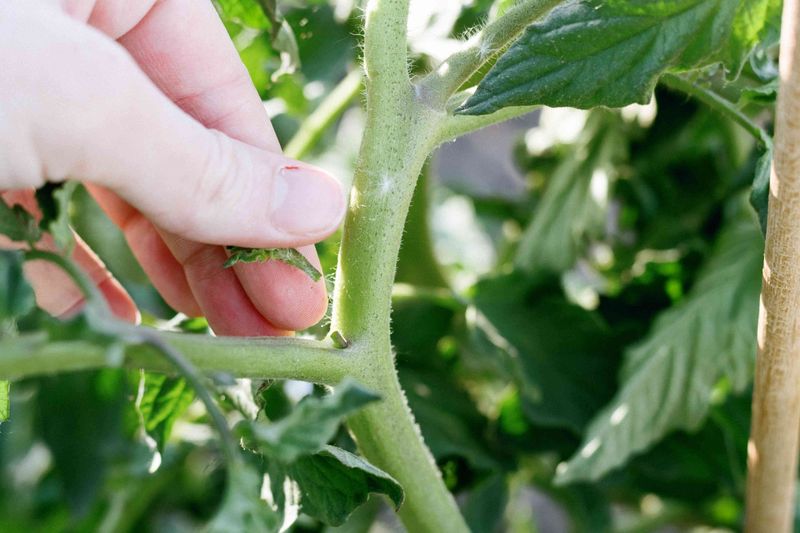
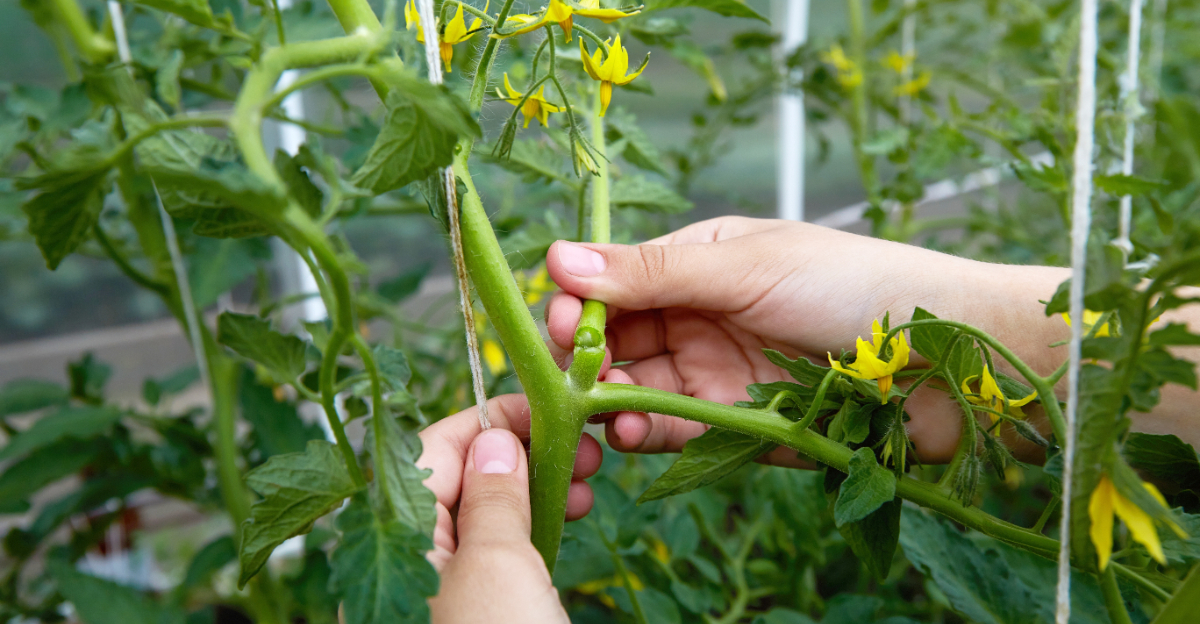
Suckers are the small shoots that sprout in the V-shaped space between the main stem and a branch, called the leaf axil.
Left alone, each sucker will eventually become a full stem with its own leaves, flowers, and fruit, which sounds good until the plant becomes an unmanageable tangle.
The best time to remove a sucker is when it is still small, roughly the size of your finger or smaller. At that stage, you can often pinch it off cleanly with your fingers, which causes minimal stress to the plant and leaves a small, clean wound that heals quickly.
Once a sucker grows thicker than a pencil, pinching becomes harder and messier. At that point, use clean, sharp pruning shears or scissors and make a clean cut close to the main stem without cutting into it.
Larger cuts take longer to heal and can create entry points for pathogens, which matters in Ohio’s humid summer conditions.
Not every sucker needs to go. On indeterminate tomatoes, some gardeners intentionally keep one or two suckers low on the plant to develop as secondary stems.
Check your plant’s overall structure and support system before deciding which suckers to remove and which to train.
4. Leave Determinate Tomatoes Mostly Alone
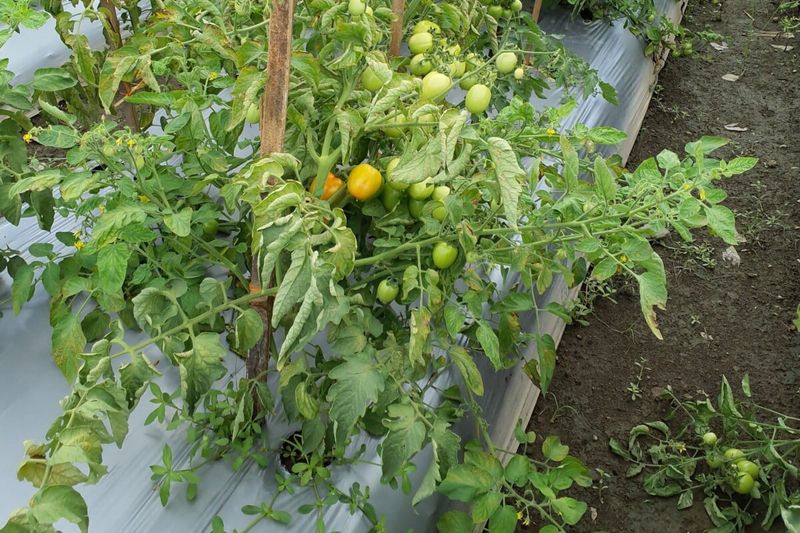
Reaching for the shears every time a new shoot appears on a determinate tomato is one of the most common ways home gardeners accidentally reduce their harvest. Bush-type tomatoes are built differently, and they respond differently to cutting.
Determinate tomatoes set the majority of their crop over a concentrated period. Many of the side shoots on a determinate plant will develop flower clusters and contribute directly to the harvest.
Removing too many of those shoots means fewer flowers, fewer fruits, and a noticeably smaller yield at the end of the season.
The most appropriate pruning on a determinate tomato is limited and targeted.
Removing suckers that grow below the first flower or fruit cluster is generally considered reasonable, as is removing any leaves or stems that are clearly damaged, yellowing, or showing signs of disease.
Beyond that, most healthy side growth should stay.
Gardeners who grow Roma tomatoes for canning, or Celebrity tomatoes for slicing, often rely on that concentrated set of fruit all arriving around the same time.
Aggressive pruning disrupts that pattern and can spread the harvest out in a way that defeats the purpose of growing a determinate variety.
Read the variety description carefully and let the plant do what it was bred to do.
5. Clear Lower Leaves To Improve Airflow
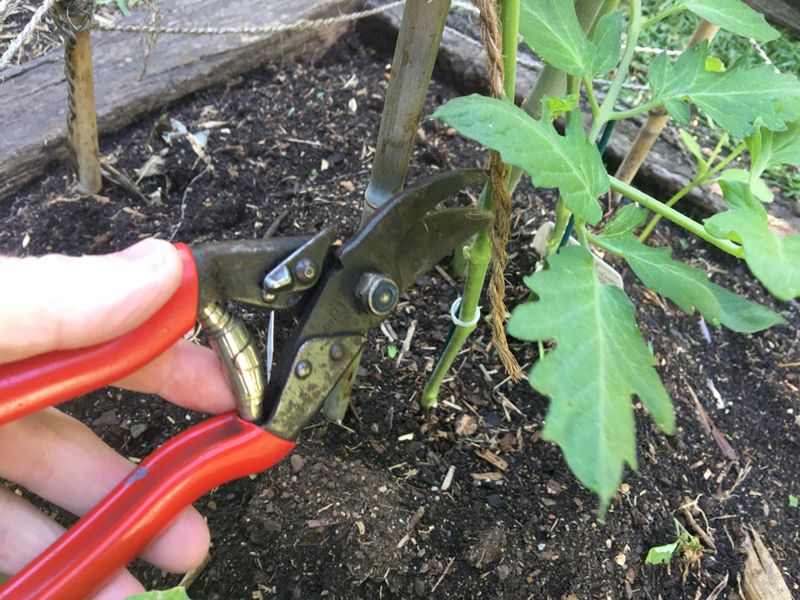
Walk through any Ohio garden after a few days of rain and you will notice how quickly the humidity settles into dense tomato foliage.
Wet leaves that stay wet are an open invitation for fungal diseases like early blight and Septoria leaf spot, both of which are common problems across our state.
Removing some of the lowest leaves on a tomato plant can make a real difference. Leaves that touch the soil are the most vulnerable because rain splashes soil-borne pathogens directly onto them.
Clearing leaves from roughly the bottom six to twelve inches of the stem reduces that splash zone and allows air to move through the base of the plant more freely.
Mulching around the base of the plant after removing lower leaves adds another layer of protection.
A two to three inch layer of straw or wood chip mulch slows soil splash, conserves moisture, and keeps roots cooler during hot stretches in central and southern parts of our state.
Stick to removing only the leaves that are closest to the soil, yellowing, or already showing spots. Taking off too much healthy foliage reduces the plant’s ability to photosynthesize and can expose developing fruit to sunscald during peak summer heat.
A moderate approach works best here.
6. Tie Stems To Supports Before They Flop
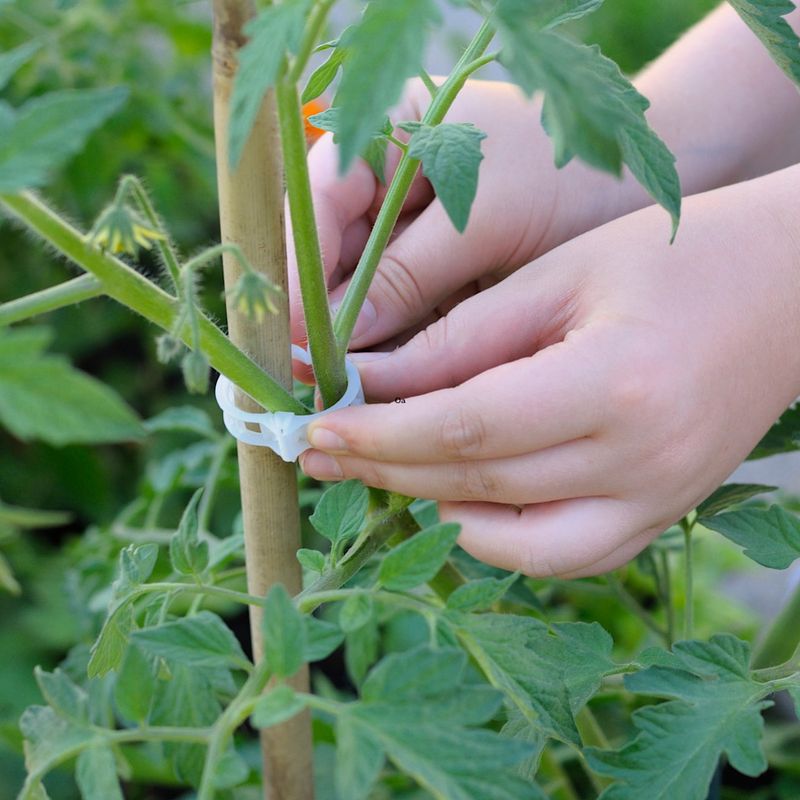
Pruning without support is a little like rearranging furniture in a house with no floors. All the careful cutting in the world will not help much if stems are flopping onto the soil, snapping under the weight of fruit, or trapping moisture against the foliage.
Cages, stakes, trellises, and the Florida weave method are all practical options for home gardens. Sturdy wire cages work well for indeterminate tomatoes in raised beds or in-ground plots.
Tall stakes driven at least a foot into the ground give single-stem trained plants the vertical support they need through summer storms.
The Florida weave, which runs twine back and forth between stakes along a row, is a cost-effective choice for gardeners growing multiple plants in a line.
Tie stems loosely with soft fabric ties, strips of old t-shirt, or purpose-made garden tape. Tight ties can cut into the stem as it thickens, which restricts water and nutrient flow.
Check every tie at least once a week during peak growing season.
In urban gardens and on exposed patios in northern regions of our state, wind can be a bigger threat than most gardeners expect.
A well-supported plant sheds wind more gracefully and stays upright when summer storms roll through, protecting both the plant and the developing fruit.
7. Avoid Overpruning During Hot Ohio Weather
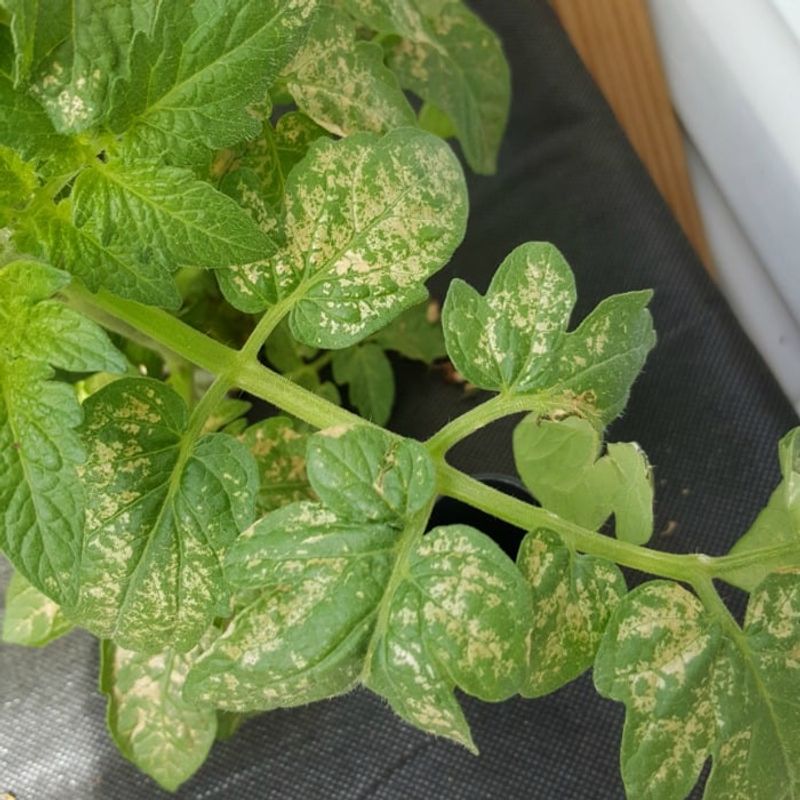
A heat wave rolls through in late July, temperatures climb past 90 degrees, and the instinct might be to open up the plant even more by cutting back foliage. That instinct can backfire quickly.
Leaves do more than just grow. They power the plant through photosynthesis, regulate temperature, and shade developing fruit from direct sun exposure.
When too many leaves are removed at once, especially during hot and dry stretches, tomato fruit can develop sunscald, which appears as pale, papery patches on the side of the fruit facing the sun. Sunscald-damaged fruit is not toxic but it does not store or taste well.
Heat and drought stress also slow a tomato plant’s recovery from pruning wounds. A plant that is already struggling to pull water from dry soil does not have extra energy to heal multiple cuts.
Lighter pruning sessions during heat waves, combined with consistent watering at the base of the plant, help keep the plant stable.
Mulching is one of the most effective ways to protect roots from heat stress. A few inches of straw or shredded leaves around the base keeps soil temperatures more consistent.
It also reduces moisture loss, and gives the plant a better foundation for handling both heat and the minor stress of routine pruning.
8. Stop Late Growth So Green Fruit Can Ripen
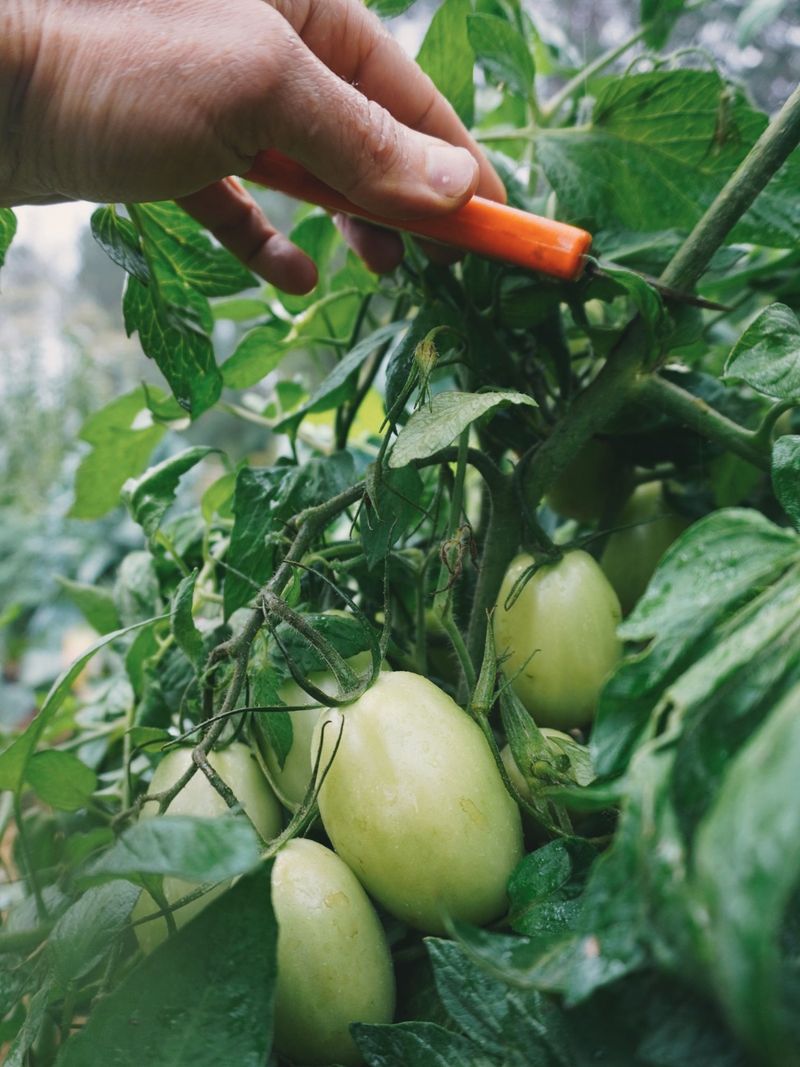
By early September in most of our state, the calendar starts working against you. Frost dates in northern regions can arrive as early as late September or early October, and indeterminate tomatoes do not know or care.
They will keep pushing new flowers and new stems right up until cold stops them.
Topping an indeterminate tomato near the end of the season means cutting off the growing tip at the top of the main stem. Removing that tip stops the plant from investing energy in new growth that will never have time to produce ripe fruit.
Instead, the plant shifts its focus toward maturing the green fruit already on the vine.
Timing matters a lot here. Topping too early in the season removes productive growth and can reduce total yield.
Topping in late August or early September, depending on your local frost date and how many green tomatoes are already on the plant, tends to be the more practical window for most gardens.
Local county Extension offices can provide frost date estimates for your specific area.
Topping is mainly relevant for indeterminate tomatoes. Determinate types wrap up their growth on their own schedule, so late-season topping is generally not needed or recommended for bush varieties.
9. Clean Tools To Reduce Disease Spread
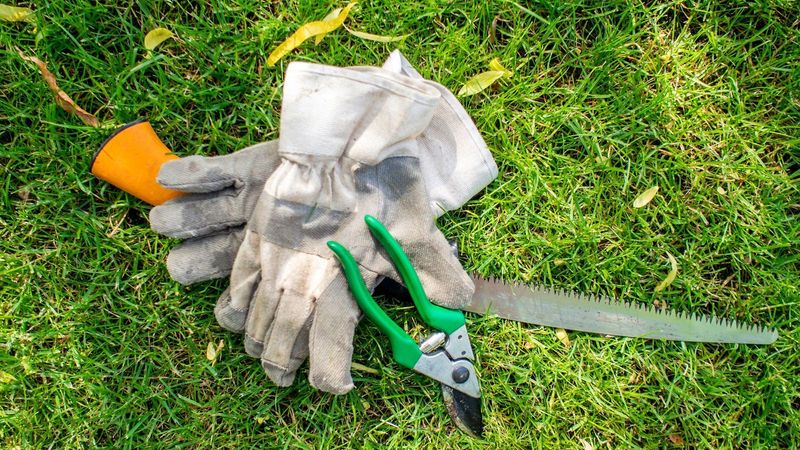
Dirty pruning tools are one of the quietest ways disease moves from plant to plant in a home garden. You might not notice anything wrong until a week or two later, when spots start appearing on leaves that were perfectly healthy before the last pruning session.
Common tomato diseases in our state, including bacterial canker, Septoria leaf spot, and various mosaic viruses, can travel on blades, hands, and even clothing.
Wiping blades with 70% rubbing alcohol or another Extension-recommended disinfectant between plants is a straightforward way to reduce that risk; if you use diluted bleach, rinse and dry tools afterward to reduce corrosion.
Let blades dry or wipe them clean after disinfecting to protect the metal from corrosion.
Prune when foliage is dry whenever possible. Wet leaves and stems are more vulnerable to infection because moisture helps pathogens spread and enter fresh wounds more easily.
Morning pruning sessions, after dew has dried but before the midday heat, tend to work well in Ohio summers.
When removing leaves or stems that show spots, wilting, or discoloration, place them directly into a bag or bucket rather than dropping them on the soil. Diseased plant material left on the ground can harbor pathogens through the season.
Dispose of it in the trash rather than the compost pile to avoid spreading problems to next year’s garden.