The September Palm Cleanup Mistake That Can Turn Storm Damage Into A Bigger Problem In Florida
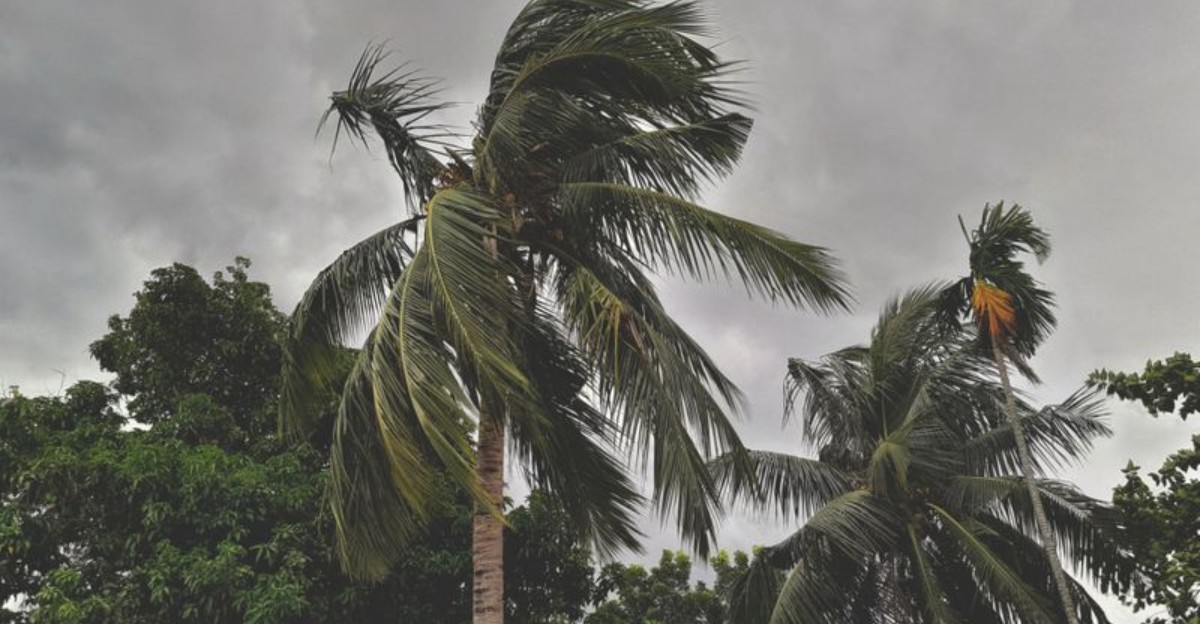
The wind finally quits, the sky turns that washed-out blue, and your Florida yard looks like a giant shook out a dusty rug. Fronds everywhere, shredded and hanging at strange angles.
So you grab the pruning saw and start tidying, because a neat yard feels like control. That instinct is exactly where things tend to go sideways.
September is a strange month for palms, caught between one storm and the next, still trying to feed itself with whatever leaves it has left. Cut too much and the tree pays for it long after the puddles dry.
There is a smarter way to clean up, and it starts with figuring out what your palm actually needs from you right now. Hint: it is less than you think.
The Cleanup Habit That Quietly Sets Palms Back
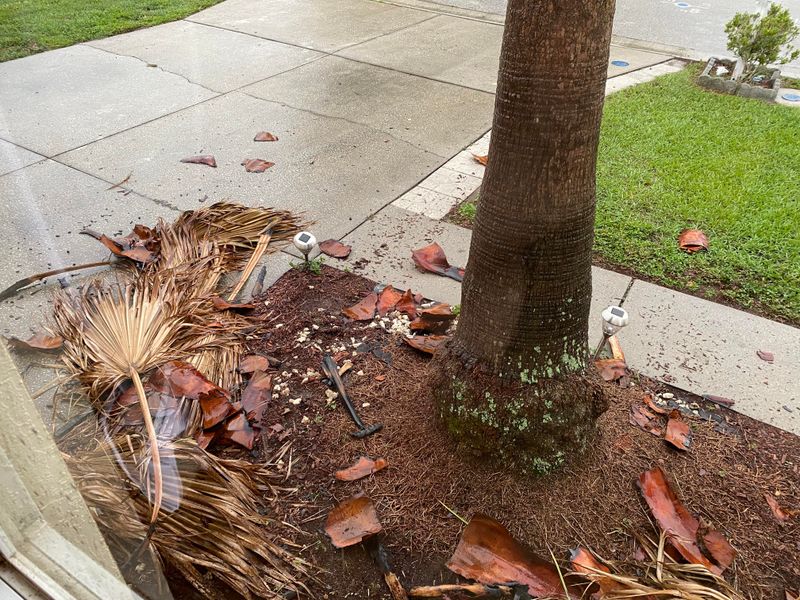
Here is the move that causes the most trouble: stripping a storm-battered palm down to a tidy little tuft of upright green fronds. Landscapers sometimes call it a hurricane cut, and Florida homeowners often ask for it by name after a rough September.
The logic sounds reasonable. Fewer fronds means less wind resistance, so the palm should handle the next storm better. Unfortunately, palms do not work like oaks or maples.
A palm has one growing point at the top of the trunk, and it cannot be replaced if something goes wrong. The surrounding fronds act like a padded helmet, shielding that bud from wind, debris, and sun.
Take those fronds away and you expose the most valuable part of the tree right before the busiest stretch of storm season. Horticulture research suggests over-pruned palms tend to snap and fail more often than palms left with full crowns.
There is a food problem too. Green fronds are the palm’s kitchen, turning sunlight into the energy that builds the next round of leaves and roots.
Strip them and the palm starts spending savings it does not have. New fronds come in smaller, paler, and slower, and the trunk narrows at that point forever.
The tidy look lasts a few weeks. The weakness lasts years.
Storm Season Timing And Why Late Summer Changes Everything
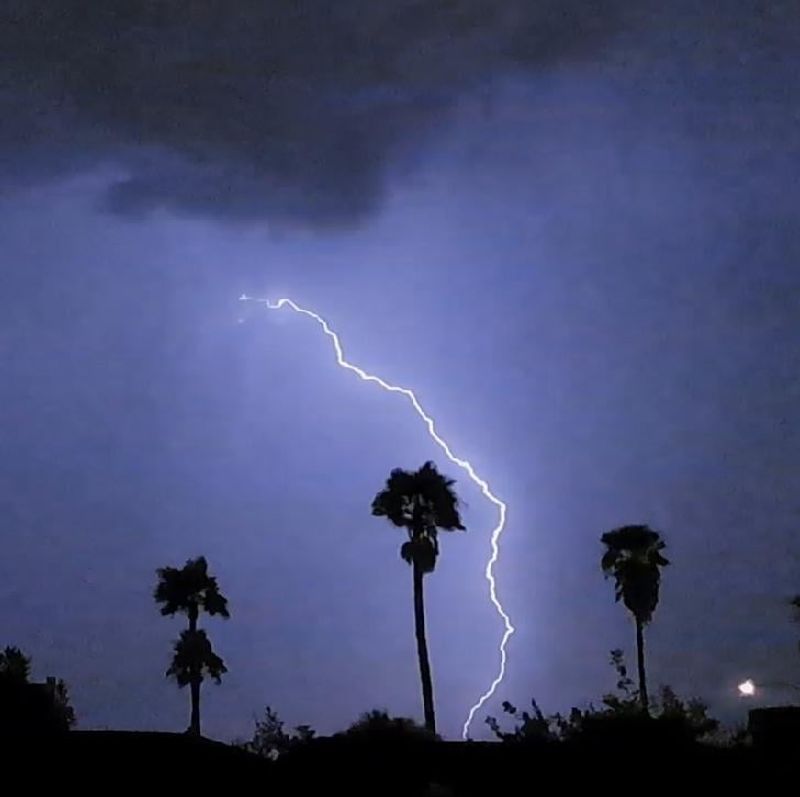
September sits right at the peak of Atlantic storm activity, which is the worst possible moment to leave a Florida palm bare. Statistically, more named storms form in early and mid September than any other stretch of the year.
Palms also slow down as the days shorten. Through spring and early summer, a healthy palm pushes new fronds fairly quickly, sometimes one every few weeks in warm weather.
By late September, growth eases off. A frond removed now may not be replaced until the following spring, so the crown stays thin through fall and winter.
That thin crown matters more than most people expect. Cooler months bring drying winds, occasional cold snaps, and lower rainfall across many parts of Florida, and a palm with half a crown has fewer resources to ride it out.
Root growth quietly matters here too. Palm roots keep working through mild fall weather, but they need energy from the leaves to do it, and anchoring roots are what keep the tree upright when the ground turns soggy.
Your Florida Garden Changes Every Week. Your Plan Should Too.
Gardening in Florida changes quickly throughout the season. Every Friday you’ll receive a simple weekly plan showing exactly what to plant, prune, fertilize, harvest, and protect so you never miss the right timing.
So the timing question is really about patience. Light cleanup in September, with the real assessment saved for late spring once new growth appears, gives the palm its best shot.
Think of it like recovering from a bad flu. You do not run a race the next morning, you rest, eat, and let strength come back gradually.
Reading Storm Damage Before Touching A Saw
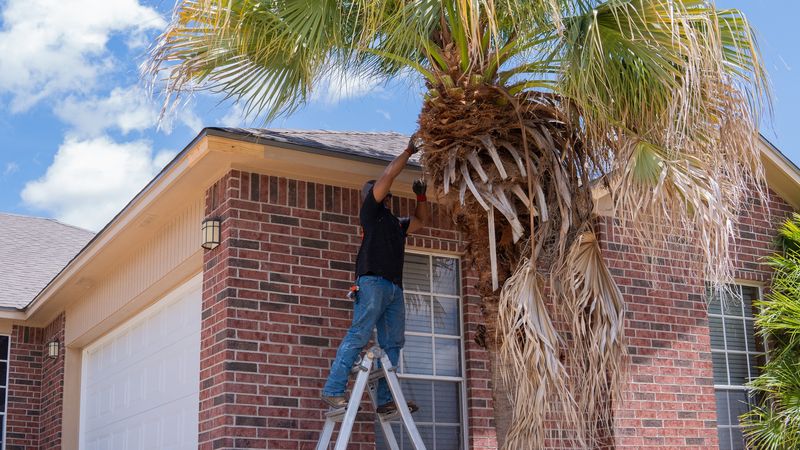
Walk out with your eyes first and your tools second. A shredded frond looks dramatic, but torn leaflets still photosynthesize just fine, and the palm is happy to keep using them.
Look for fronds that have snapped and are hanging loose, especially large ones over walkways, driveways, or parked cars. Those are genuine safety issues and worth removing.
Check the crown color next. Bright green in the center means the growing bud is likely fine, while a mushy, foul-smelling center or a spear leaf that pulls out easily signals a serious problem that needs a certified arborist familiar with Florida palms, not a saw.
Give the trunk a slow look from several angles. Fresh cracks, a lean that appeared overnight, or soil lifted on one side of the base all point toward root or trunk trouble.
Fruit stalks and seed pods deserve attention as well, since loose clusters can drop hard and heavy. Removing those is low risk and takes nothing from the tree’s food supply.
Skip the guessing game on brown fronds. Only the ones that are fully brown and drooping below horizontal have finished their job, and even those can wait a few weeks.
A quick photo on your phone helps more than you would think. Compare it in six weeks and you will see whether new growth is emerging, which tells you far more than any single day’s inspection.
Safe Debris Removal That Protects The Crown
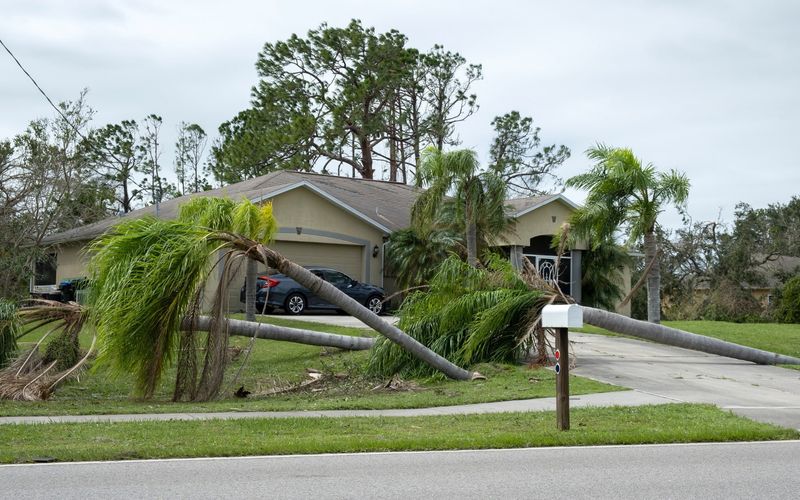
Good post-storm cleanup happens mostly at ground level. Rake and bag the fallen fronds, clear the drains and gutters, and pull soggy debris away from the base of the trunk so air can reach the soil.
When you do cut, follow the nine-to-three rule. Picture a clock face over the crown and leave everything between the nine and three positions, which keeps a protective ring of fronds around the bud.
Cut close to the trunk without gouging it, leaving the frond base intact rather than ripping it away. Torn tissue on a palm trunk does not heal over the way a tree branch wound does, and open wounds invite rot and boring insects.
Clean your blade between palms with an isopropyl solution or a diluted bleach rinse. Several palm diseases, including severe bud rots and wilts, travel on dirty pruning tools from yard to yard.
Leave the climbing to professionals. Florida homeowner falls from ladders spike after storms, and no frond is worth a hospital visit, especially near power lines.
Resist the urge to top-dress with heavy fertilizer right away. A stressed palm cannot use a big nitrogen push, and salty fertilizer near damaged roots can make things worse.
Water deeply instead, once or twice a week if rain stops. Steady moisture and a two-inch mulch ring kept away from the trunk do more for recovery than any dramatic haircut ever will.
Pests And Rot That Move In After Rough Pruning
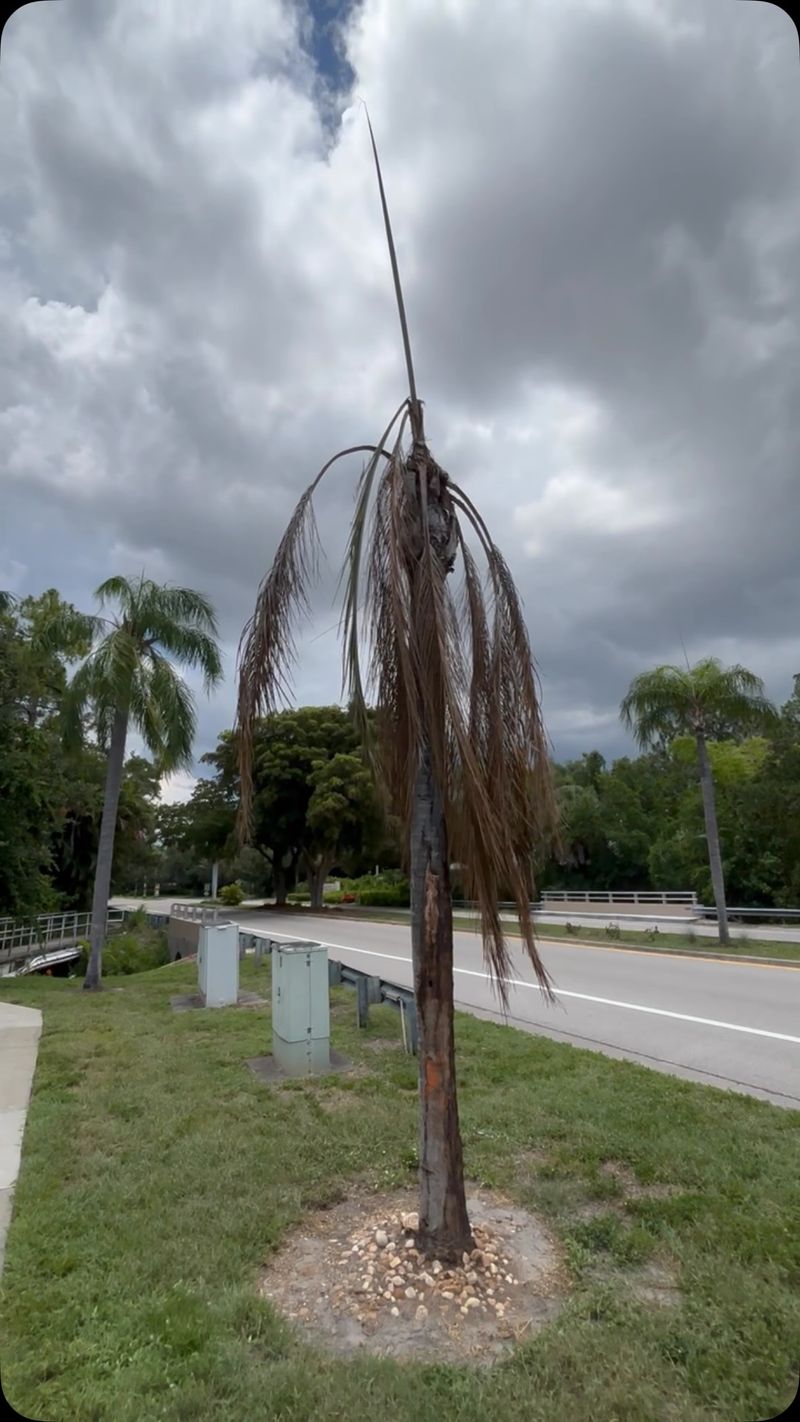
Fresh cuts on a palm send out a smell that certain insects find irresistible. Palmetto weevils, big black beetles with long snouts, home in on wounded and stressed palms and lay eggs near the crown.
Their larvae tunnel straight into the growing bud. By the time the crown collapses, the damage is done, which is why prevention beats treatment every single time.
Rot organisms follow the same road. Thielaviopsis trunk rot and Phytophthora bud rot both enter through injuries, and September’s warm, soaked conditions are exactly what they like.
Ganoderma butt rot deserves a mention too. It shows up as a shelf-like conk near the base and it spreads through wounded trunk tissue, so bumping the trunk with a mower or string trimmer is a real risk.
All of this connects back to over-pruning. Every unnecessary cut is a doorway, and a palm that just lost half its food factory has fewer defenses to slam that door shut.
Practical protection is simple. Prune as little as possible, keep tools clean, avoid trunk injuries, and skip wound paints and sealants since they trap moisture rather than helping.
Watch new palms closely if you replanted after a storm. Recently transplanted and recently pruned palms attract weevils at higher rates, and a preventive insecticide applied by a licensed pro can be worth it in high-pressure areas.
Catch problems early and you often keep the tree.
Building A Palm That Handles The Next Storm Better
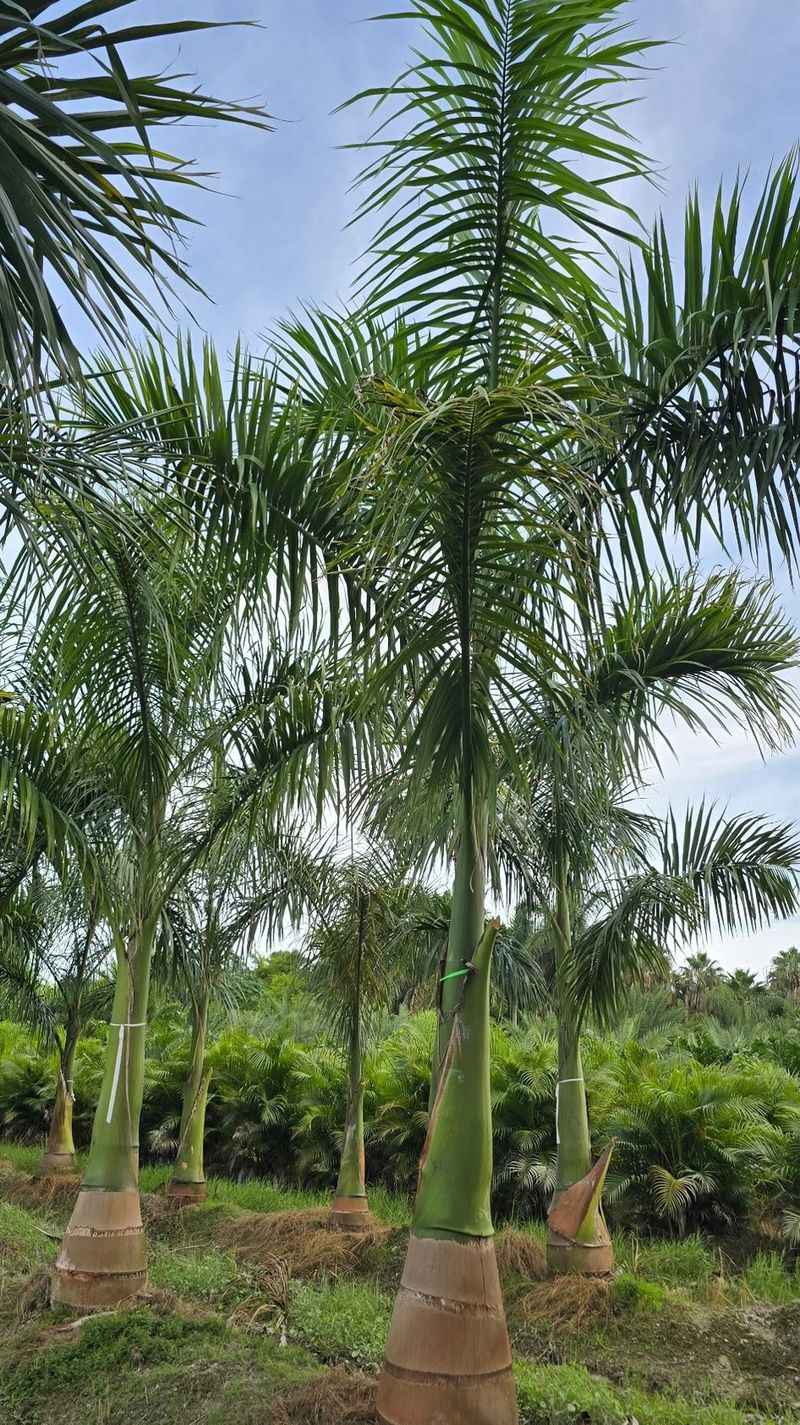
Storm-tough palms are grown, not trimmed into shape. The strongest ones tend to have full round crowns, steady nutrition, and roots left undisturbed by trenching or hardscaping.
Feeding is where most yards fall short. Palms crave potassium and magnesium, and a slow-release 8-2-12 fertilizer applied two or three times a year does more for wind resistance than any pruning plan.
Potassium deficiency shows up as yellow speckling and frizzled frond tips. Weak, undernourished fronds break easily, and a crown full of them means more debris flying around your house.
Species choice pays off long term too. Sabal palms, date palms, and dwarf palmettos rank among the most wind-resistant, while queen palms and Washingtonias tend to struggle more in strong gusts.
Placement counts as well. Planting a palm where it has room and where its mature height stays clear of power lines saves you from decisions you will regret later.
Keep a record of your palms. Note when each was planted, when it was fed, and how many new fronds it pushed each year, because that history makes storm decisions far easier.
The reward is a yard that looks a little wild in September and stands strong anyway. Full crowns, healthy trunks, and one less thing to worry about when the forecast turns interesting.