The September Task That Helps Arizona Bougainvillea Keep Blooming Into Winter
Bougainvillea can look unstoppable in the heat, then lose momentum when the season begins to change. September is when your next move can make a difference.
Arizona gardeners should pay attention now instead of assuming those bracts will keep coming without help. Small changes can still support a stronger display.
Resist the urge to treat early fall like another stretch of summer. Your plant is responding to shorter days, changing temperatures, and new conditions.
This is also the wrong time to push soft growth that may struggle later. Focus on helping the plant use its energy wisely.
Good timing matters more than doing too much. One September task deserves special attention before cooler weather arrives.
Handle it correctly now, and your bougainvillea may reward you with color well beyond fall.
1. September Care Sets The Stage For More Fall Color
September is where the real work happens. Most gardeners think summer is the tough season for bougainvillea, but fall prep is what actually drives that second wave of color.
Bougainvillea blooms on new growth. When you encourage fresh stems in early September, you give the plant enough time to push out new growth before temperatures start dropping.
That timing window matters more than most people realize.
In Arizona, September still brings plenty of heat. Daytime temps can hover near or above 100 degrees in the first few weeks.
That warmth actually works in your favor if you use it right.
Cutting back a few of the longest, unruly stems in early September signals the plant to redirect its energy. New growth follows, and blooms appear on those fresh shoots within weeks.
Skipping September care often means your plant coasts through fall without putting on much of a show. A little attention now pays off with weeks of extra color.
Watch the plant closely after any trimming. If you see new leaf buds forming within a week or two, that is a solid sign the plant responded well and color should follow soon after.
2. Let The Soil Dry Before Watering Again
Overwatering is one of the fastest ways to reduce bougainvillea blooms. Wet soil pushes the plant into leafy growth mode instead of flower mode.
Bougainvillea actually performs better under mild drought stress. When the soil dries out between waterings, the plant responds by producing more flowers.
Consistent moisture keeps it comfortable but not colorful.
In September, the monsoon season is winding down across much of the state. Natural rainfall may still come, so check the soil before adding more water.
Stick your finger a few inches into the ground. If it still feels damp, wait another day or two.
A good general approach is to water deeply and then step back. Let the top few inches of soil dry out completely before watering again.
Deep, infrequent watering encourages roots to grow downward, which improves the plant’s overall resilience.
Container-grown bougainvillea dries out faster than in-ground plants. Check potted plants more often, but still avoid watering before the soil feels genuinely dry.
Your Arizona Garden Changes Every Week. Your Plan Should Too.
Gardening in Arizona changes quickly throughout the season. Every Friday you’ll receive a simple weekly plan showing exactly what to plant, prune, fertilize, harvest, and protect so you never miss the right timing.
Getting the watering rhythm right in September gives the plant just enough stress to push blooms without putting it under serious strain. Adjust based on your specific conditions, since soil type and sun exposure affect drying time.
3. Strong Sun Supports A Better Flower Display
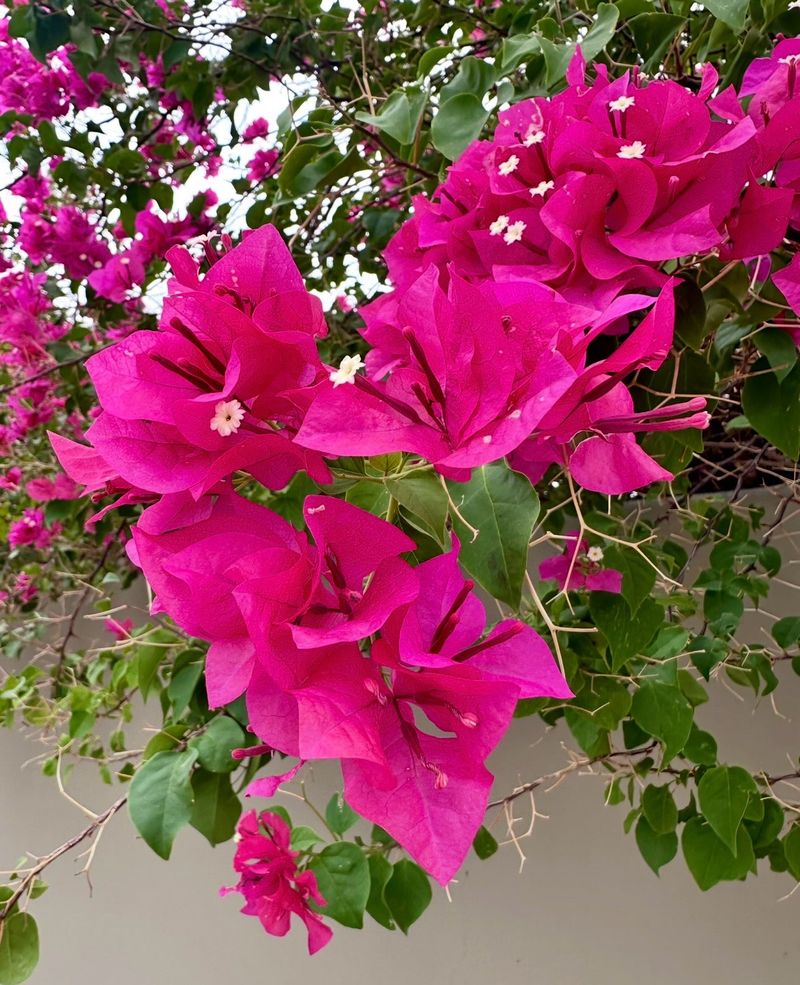
Shade is not a friend to bougainvillea blooms. Six hours of direct sun is considered the minimum, but more is usually better for flower production.
September sun in the desert Southwest is still intense. That ongoing intensity is actually an advantage for bougainvillea growers.
Plants that get full southern or western exposure tend to bloom harder going into fall.
If your plant sits in a spot that gets shaded by a tree, wall, or structure for part of the day, bloom production may be lower than expected. Moving a container plant to a sunnier spot in September can make a visible difference within a few weeks.
In-ground plants are harder to relocate, but you can trim back any nearby shrubs or branches that are blocking light. Even opening up one or two more hours of sun exposure can give the plant a boost.
Bougainvillea uses sunlight to fuel the process that triggers bract development. Bracts are the colorful parts most people call flowers.
Without enough light, that process slows down. Strong, consistent sun from September onward helps the plant stay in active bloom mode longer into the season.
Watch for any signs of shade creep as the sun angle shifts lower in fall, since that shift can reduce light exposure noticeably.
4. Extra Fertilizer May Bring Leaves Instead Of Flowers
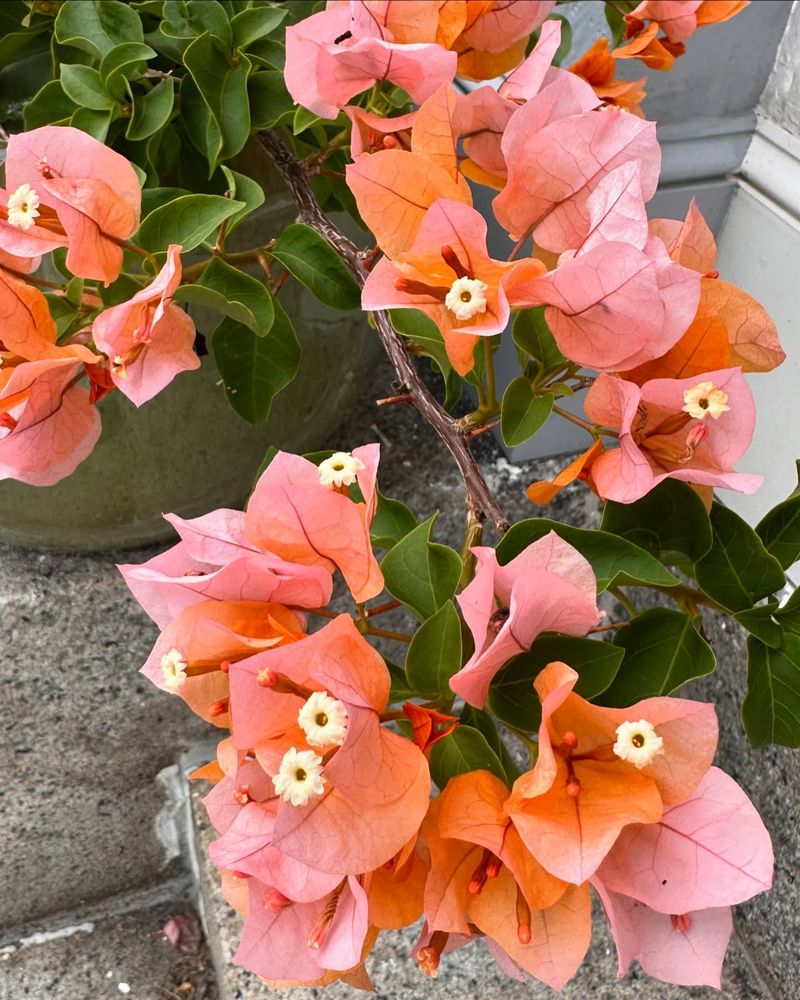
Grabbing the fertilizer bag in September feels like the right move, but it can backfire fast. Too much nitrogen pushes bougainvillea into producing leaves rather than bracts.
High-nitrogen fertilizers are great for lawns and leafy vegetables. Bougainvillea is different.
It responds to lower nitrogen and slightly higher phosphorus inputs when you want more blooms. Check the label before feeding.
A fertilizer with a lower first number and a higher middle number is generally a better fit for bloom encouragement. Products labeled for flowering plants or tropical bloomers often fit this profile, though results vary by plant and conditions.
Feeding frequency matters too. One light application in early September is usually enough.
Repeat feeding every few weeks through fall if the plant shows signs of pale foliage or slow growth, but avoid heavy doses close together.
Compost or slow-release granular fertilizers can work well because they release nutrients gradually. That steady, gentle feeding avoids the sudden flush of growth that liquid fertilizers can sometimes trigger.
Skipping fertilizer in September is not necessarily harmful. Bougainvillea grown in decent soil often blooms well without much supplemental feeding.
If the plant looks healthy and is already putting out new growth, holding off on fertilizer may actually be the smarter call.
5. Light Trimming Keeps Fast Growth Under Control
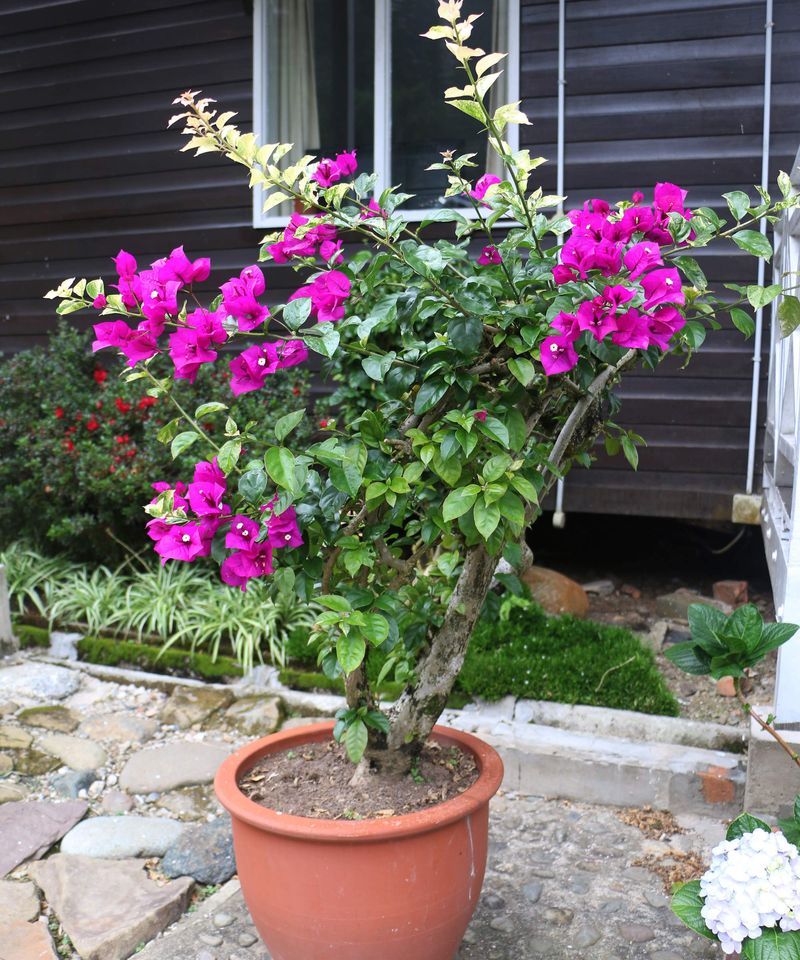
Bougainvillea grows fast, especially after monsoon rains. By September, many plants have long, arching canes that are putting energy into stem length rather than flowers.
A light trim in early September redirects that energy. Cutting back the longest stems by about one-third encourages the plant to branch out.
New side shoots appear, and those fresh tips are where blooms develop.
Avoid heavy pruning in September. Major cutbacks are better saved for late winter or very early spring, when the plant can handle more significant reshaping without disrupting an active bloom cycle.
Use clean, sharp pruning shears. Ragged cuts heal more slowly and can invite problems.
Clip just above a leaf node or bud if you can see one. That spot is where new growth is most likely to emerge.
Thorns are a real consideration with bougainvillea. Thick gloves and long sleeves make the job much safer.
Some varieties have longer, sharper thorns than others, so check before reaching in.
After trimming, watch for new growth over the next one to two weeks. Tiny leaf buds forming along the cut stems are a good sign.
From there, blooms typically follow within a few more weeks, depending on temperature and light conditions in your specific yard.
6. Mild Fall Weather May Keep The Color Going Longer
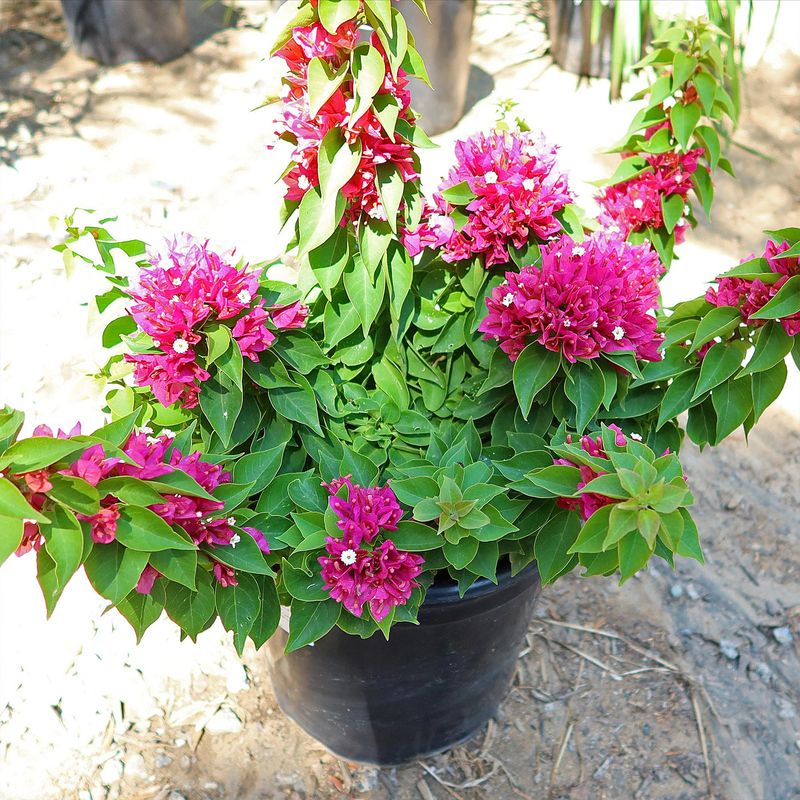
Fall in the low desert is genuinely mild compared to most of the country. Daytime highs often stay in the 80s and 90s well into October, which bougainvillea handles comfortably.
That extended warmth gives plants more time to push out blooms after September trimming and care. In cooler climates, frost can cut the bloom season short by mid-October.
Here, the window is often longer.
Nighttime temperatures are the bigger factor to watch. Bougainvillea prefers nights above 50 degrees Fahrenheit for active growth and flowering.
Once nights regularly dip below that range, flower production tends to slow.
Elevation plays a role too. Gardens at higher elevations in the state will experience cooler nights earlier in the season.
Low desert areas near Phoenix typically stay warmer longer, giving plants more blooming time.
Take advantage of the mild fall window by keeping up with basic care through October. Consistent sun, appropriate watering, and the occasional light trim can stretch the bloom season noticeably.
No specific outcome is guaranteed since weather varies year to year, but the mild fall climate in the low desert does tend to favor extended bougainvillea color compared to most other parts of the country. Enjoy the display while it lasts.
7. Cold Nights Eventually Slow The Flower Show
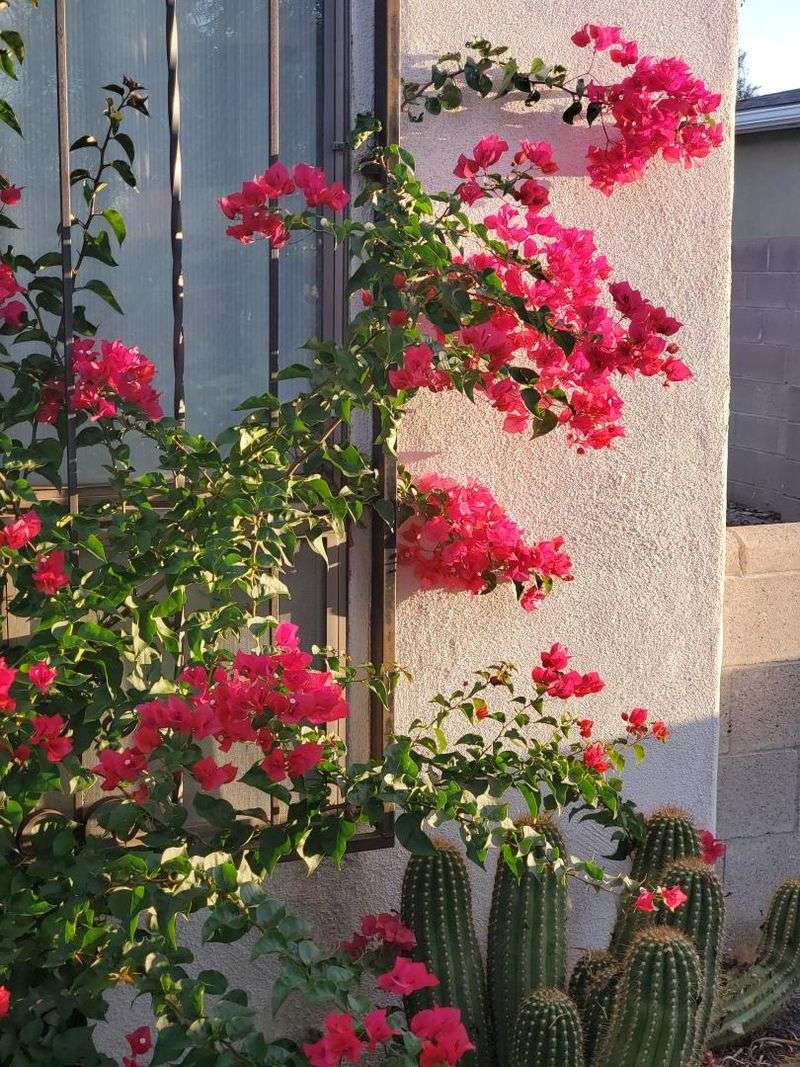
Even in the warmest parts of the state, cooler nights eventually arrive. November often marks the turning point when bougainvillea starts to slow down noticeably.
Temperatures below 50 degrees Fahrenheit at night cause the plant to reduce its growth rate. Bloom production drops off, and some leaf drop may follow as temperatures continue to fall.
That is a normal seasonal response, not a sign of a serious problem.
Container plants have more flexibility in cold weather. Moving a potted bougainvillea to a sheltered patio, garage entry, or covered area can protect it from the coldest nights and extend the bloom season by a few extra weeks.
In-ground plants in low desert areas can usually handle light cold without significant damage. Temperatures below 32 degrees can harm tender new growth and bracts.
A light frost cloth draped over the plant on the coldest nights offers some protection.
Do not rush to prune cold-affected growth right away. Wait until the coldest part of winter passes before assessing what needs to come off.
Removing growth too early can expose the plant to additional cold stress.
Spring will bring a fresh start. Bougainvillea tends to bounce back with strong new growth once warmer temperatures return.
Proper September care helps the plant enter that rest period in better overall condition.