The Small Native Trees That Belong In Western Pennsylvania Front Yards
Western Pennsylvania front yards have a tree problem that most homeowners don’t fully recognize until they’re standing in front of a Bradford pear that’s splitting apart or a Norway maple that’s taken over more space than anyone planned for.
The default tree choices that fill nursery lots across the region look appealing at planting size and then spend the next decade reminding you why matching the right tree to the right space matters so much more than most people give it credit for.
Small native trees are the answer that more western Pennsylvania homeowners should be considering, and the reasons go well beyond just avoiding the mistakes that come with oversized or invasive choices.
These trees were shaped by the specific climate and ecological conditions of the region, which means they establish more reliably, require less intervention once they’re settled in, and contribute to the local ecosystem in ways that ornamental imports simply cannot.
The right small native tree in a western Pennsylvania front yard looks intentional, stays manageable, and gets better every single year.
1. Serviceberry
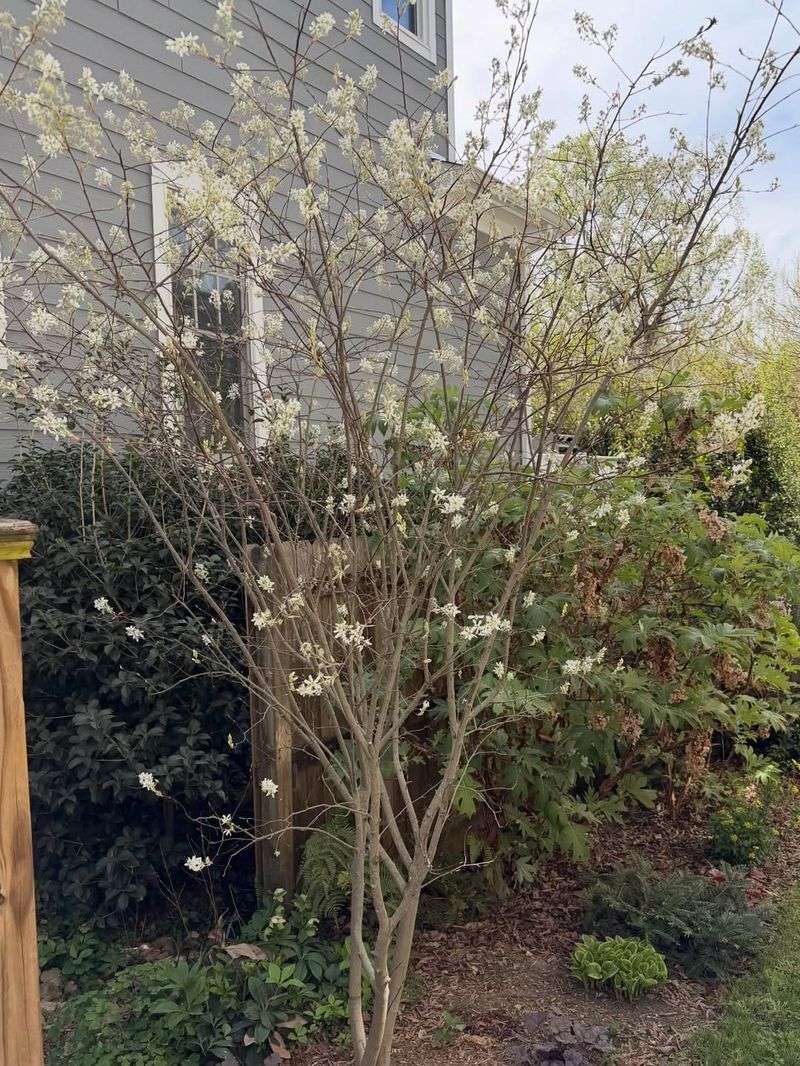
Few trees put on a show quite like the Serviceberry in early spring. Before most other trees even think about waking up, this compact native bursts into a cloud of delicate white flowers.
In Western Pennsylvania, that bloom usually arrives in late March or early April, making it one of the very first signs that warmer days are on the way.
Serviceberry, also known as Amelanchier, stays small enough to fit comfortably in most front yards. It typically reaches between 15 and 25 feet tall, which means it will never block your windows or crowd your roof.
The multi-stem form gives it a graceful, natural look that fits both modern and traditional home styles.
After the flowers fade, small reddish-purple berries appear in June. These berries are edible and taste a little like blueberries.
Birds absolutely love them, so expect robins, cedar waxwings, and other local species to visit your yard throughout the summer.
Fall color is another major reason to plant Serviceberry in Western Pennsylvania. The leaves shift from green to brilliant shades of orange, red, and gold. Few small trees can match that kind of seasonal display from spring through autumn.
This tree handles clay soil and partial shade reasonably well, which is great news for many Pittsburgh-area front yards. It does prefer well-drained spots, so avoid low areas where water tends to pool after heavy rain.
Plant it in a sunny location for the best flowering and berry production. Serviceberry is truly a four-season tree that earns its place in any Western Pennsylvania landscape.
2. Eastern Redbud
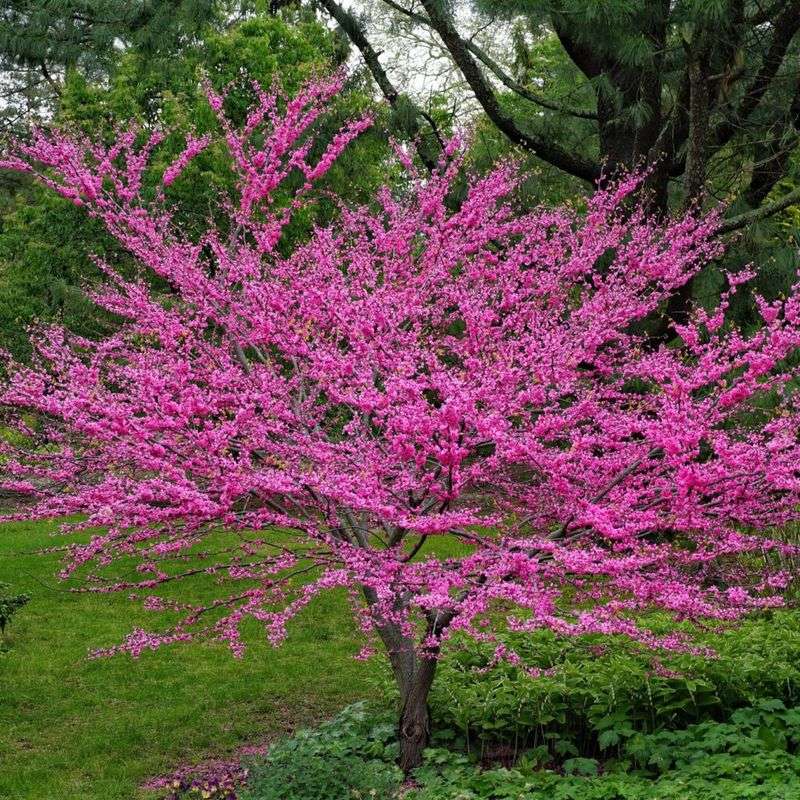
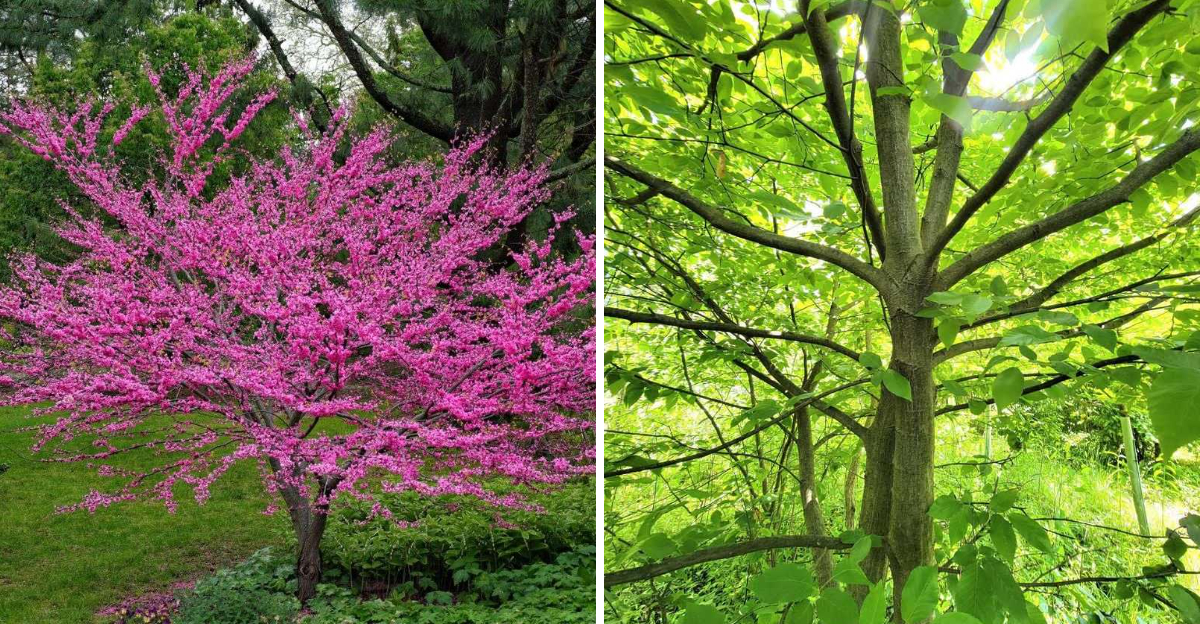
Imagine pulling into your driveway in April and seeing your front yard lit up in bright pink. That is exactly what the Eastern Redbud delivers every single spring.
This native tree is one of the most eye-catching plants you can grow in Western Pennsylvania, and it does it all while staying a very manageable size.
Eastern Redbud grows to about 20 to 30 feet tall at most, often spreading just as wide. Its rounded, layered canopy casts light shade and creates a welcoming feel near a front door or along a walkway.
Your Pennsylvania Garden Changes Every Week. Your Plan Should Too.
Gardening in Pennsylvania changes quickly throughout the season. Every Friday you’ll receive a simple weekly plan showing exactly what to plant, prune, fertilize, harvest, and protect so you never miss the right timing.
The heart-shaped leaves that follow the spring flowers are charming and stay attractive all the way through summer.
One fun fact about this tree: the tiny pink flowers actually bloom directly on the branches and trunk before the leaves appear.
That unusual growth habit, called cauliflory, makes the Redbud look like something out of a fairy tale when it is in full bloom in late March or early April across Western Pennsylvania.
Redbud is also surprisingly tough. It tolerates a range of soil types, including the clay-heavy ground found in many Pittsburgh-area neighborhoods.
Once established, it handles dry spells and cold snaps with ease. It does best in full sun to partial shade, so a spot that gets morning light and some afternoon shade works well.
Wildlife benefits are a bonus too. Bees flock to the early-season flowers, making Redbud an excellent choice for pollinator-friendly yards.
If you want one tree that grabs attention, supports local insects, and thrives in Western Pennsylvania conditions, Eastern Redbud should be at the top of your list.
3. Flowering Dogwood
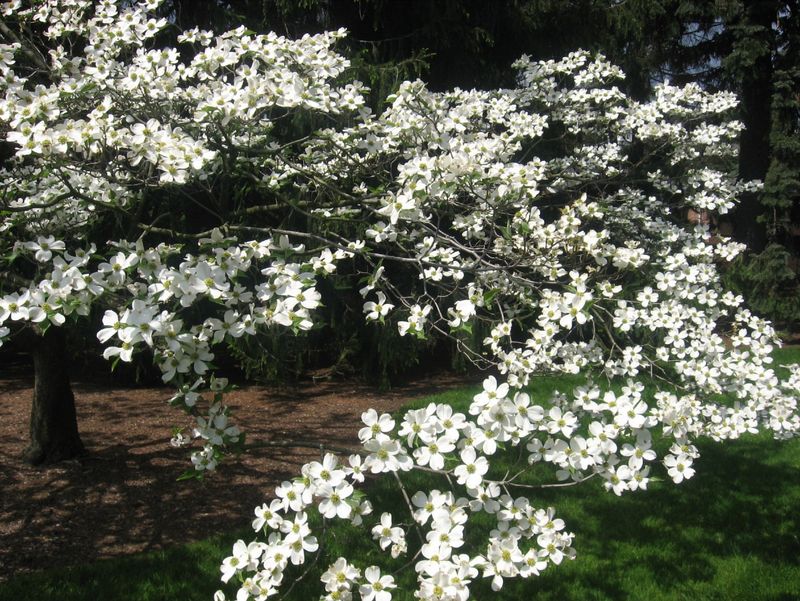
There is something almost architectural about a Flowering Dogwood. The way its branches spread out in flat, horizontal layers gives it a structured, elegant look that no other small tree quite matches.
In Western Pennsylvania, this native beauty has been a beloved front yard choice for generations, and it is easy to see why.
Cornus florida, the Flowering Dogwood, blooms in April and May with large white or pink flower-like bracts that surround tiny true flowers. The display lasts for several weeks and is stunning from a distance or up close.
A mature tree in full bloom in a Pittsburgh-area front yard is genuinely hard to walk past without stopping to admire it.
Beyond spring, Dogwood keeps delivering. The summer foliage is a rich, deep green that holds up well through the heat.
Come fall, the leaves turn a vivid scarlet red and clusters of bright red berries appear on the branches. Those berries are a critical food source for migrating birds passing through Western Pennsylvania in autumn.
Flowering Dogwood prefers a sheltered spot with morning sun and afternoon shade. It does not love harsh afternoon heat or dry, compacted soil.
Planting it on the east or north side of the house often works well in Western Pennsylvania’s climate. Mulching around the base helps keep roots cool and moist.
One thing to keep in mind is that Dogwood can be susceptible to a fungal issue called anthracnose. Choosing disease-resistant cultivars and planting in good air circulation helps reduce that risk.
With a little care upfront, a Flowering Dogwood will reward you with decades of seasonal interest and curb appeal.
4. Witch Hazel
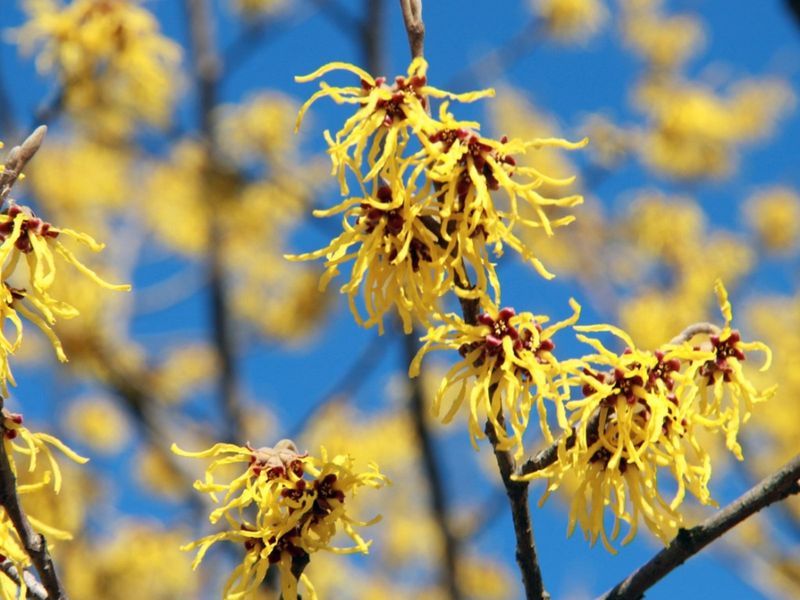
Most trees in Western Pennsylvania are fast asleep by November, but Witch Hazel is just getting started.
This quirky native blooms in late fall or even mid-winter, sending out spidery, ribbon-like flowers in shades of yellow, orange, or red right when everything else looks bare and gray. It is one of the most surprising plants you can add to a front yard in this region.
Hamamelis virginiana, the native American Witch Hazel, typically blooms from October through December. There are also Asian-hybrid varieties that bloom even earlier in late winter.
Either way, having flowers visible from your front window during the coldest months of the year feels like a small miracle. The blooms also carry a pleasant, spicy fragrance that drifts across the yard on mild winter days.
Size-wise, Witch Hazel fits comfortably in most front yard settings. It grows between 15 and 20 feet tall with a similar spread, forming a rounded, multi-stemmed shape.
The fall foliage is a warm golden yellow that adds one more layer of seasonal interest before the flowers take over.
Western Pennsylvania winters can be brutal, but Witch Hazel handles them without complaint. It is fully cold-hardy in this region and adapts well to a variety of soil conditions, including the clay-heavy soils common around Pittsburgh and surrounding areas.
It grows happily in partial shade, which makes it useful under larger trees or along the shaded side of a house.
If you want a conversation starter in your front yard and something that looks alive even in January, Witch Hazel is the tree for you. Plant it where you can see it from indoors and enjoy the winter show from the warmth of your living room.
5. American Hornbeam
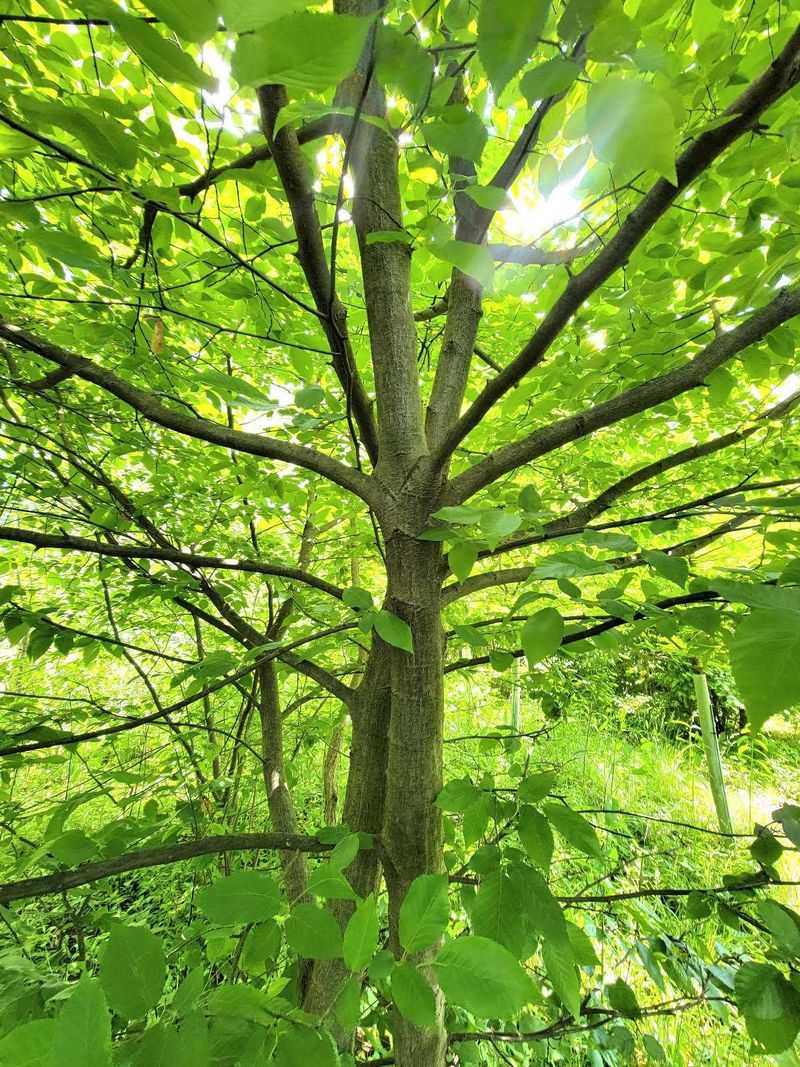
Not every front yard tree needs to put on a flashy flower show. Sometimes the best choice is a tree that simply looks interesting all year long without demanding much attention.
American Hornbeam, also called Ironwood or Musclewood, is exactly that kind of tree. Its smooth, gray, muscle-like bark is one of the most distinctive features of any native tree growing in Western Pennsylvania.
Carpinus caroliniana stays small, usually topping out between 20 and 30 feet with a graceful, irregular shape. It is a true understory tree, meaning it evolved to grow beneath larger forest trees.
That makes it one of the best choices for shaded front yards in Western Pennsylvania, where mature oaks and maples already dominate the canopy.
The seasonal interest does not stop at the bark. American Hornbeam produces attractive hop-like seed clusters in late summer that add texture to the tree.
Fall color ranges from orange to red to a soft yellow-green, and it tends to hold its leaves a little longer than many other native trees in the region.
Low maintenance is one of the biggest selling points here. Once established in a well-chosen spot, American Hornbeam needs very little intervention.
It tolerates wet soils, shade, and the general unpredictability of Western Pennsylvania weather without putting up much of a fight. Deer tend to leave it alone compared to many other landscape trees, which is a real advantage in suburban areas bordering wooded land.
If your front yard is shaded and you have been struggling to find a tree that will actually thrive there, American Hornbeam deserves a serious look. It brings quiet, year-round beauty to spots where flashier trees would struggle.
6. Hop-Hornbeam
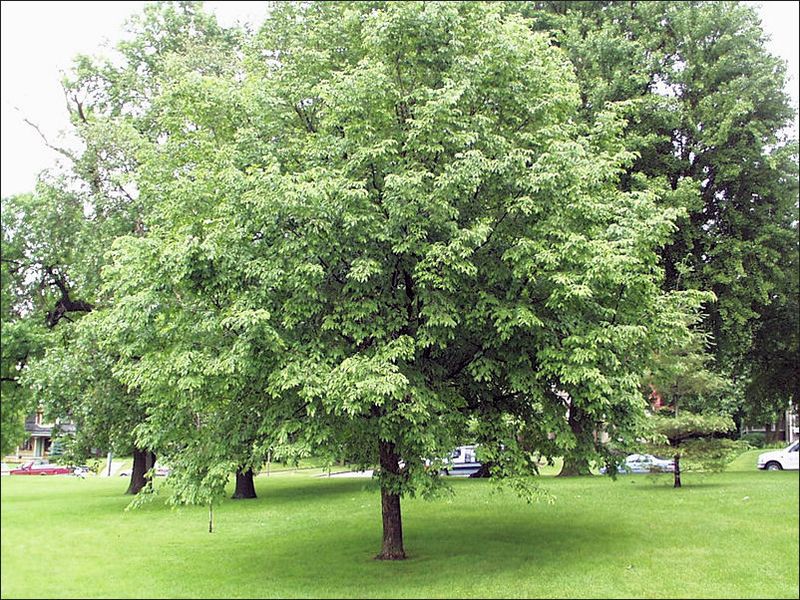
Hop-Hornbeam is probably the least-known tree on this list, and that is a shame. Ostrya virginiana is a rugged, reliable native that handles conditions many other trees would struggle with, yet it rarely gets the credit it deserves.
If you live in a Western Pennsylvania neighborhood with compacted soil, air pollution, or limited space, this overlooked tree might be your best option.
Hop-Hornbeam gets its name from the papery, hop-like seed clusters that hang from its branches in late summer and early fall.
They give the tree a light, airy look and add a unique texture that sets it apart from other front yard trees. The fine-grained, dark green foliage is also quite attractive through the growing season.
In terms of size, Hop-Hornbeam is perfectly suited for smaller front yards. It grows slowly to about 25 to 40 feet tall but takes many years to get there, so it will not outgrow a modest space quickly.
Its narrow, upright form in youth gradually broadens with age, making it easy to tuck into tight spots along a front walkway or near a corner of the house.
Shade tolerance is excellent, matching that of American Hornbeam. But Hop-Hornbeam also handles drier, rockier soils better than its cousin, which gives it an edge in urban and suburban front yards across Western Pennsylvania where soil quality is often poor.
Wildlife value is solid too. Birds and small mammals feed on the seeds through fall and winter.
The bark and foliage also support a range of native insects. Planting Hop-Hornbeam is a quiet act of ecological generosity that happens to make your front yard look great at the same time.