The Storm Washed Away Your Arizona Gravel and Mulch: How to Fix Bare Spots Before Winter
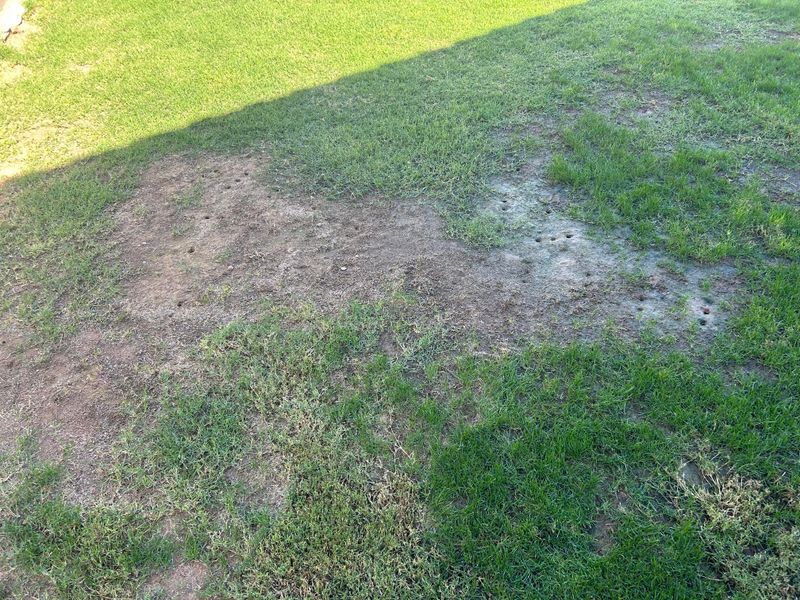
A bare patch in a yard can tell a story, but it does not always name the storm that wrote it. Water moves soil in surprising ways, even in a desert.
Before you buy a single bag of cover, a little detective work in Arizona can save you money and effort. Let’s look at where the water went, what to do about it, and when plants can help.
Trace the Water Before Replacing Cover
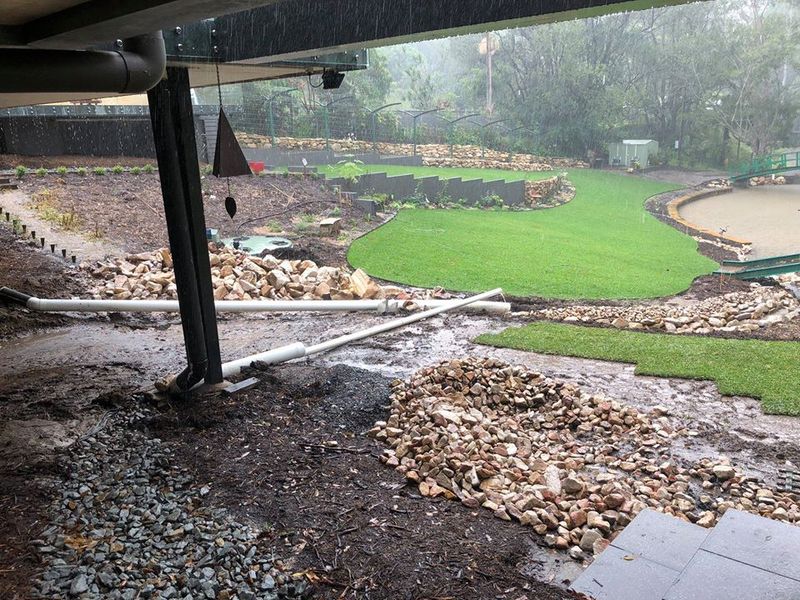
Catching a rainstorm in action is the best clue you can get. Walk the yard when it rains, or look for tracks soon after, and follow the water from where it first enters to where it speeds up and where sand or silt settles.
Roof downspouts, paved driveways, and the slope of the land can all send water toward a planting area. Treat them as clues, not proven causes, because a bare spot alone cannot tell you what happened.
According to University of Arizona Extension erosion guidance, raindrop impact and building surface flow both move soil, and intense rain can outpace what the ground can absorb. Notice small grooves, piles of sediment, and rock that has shifted in one direction.
Guidance on harvesting rainwater for landscape use also points out that roofs, pavement, and contours guide water. Take photos and notes so you can compare them after the next rain.
Address Repeated Runoff Safely
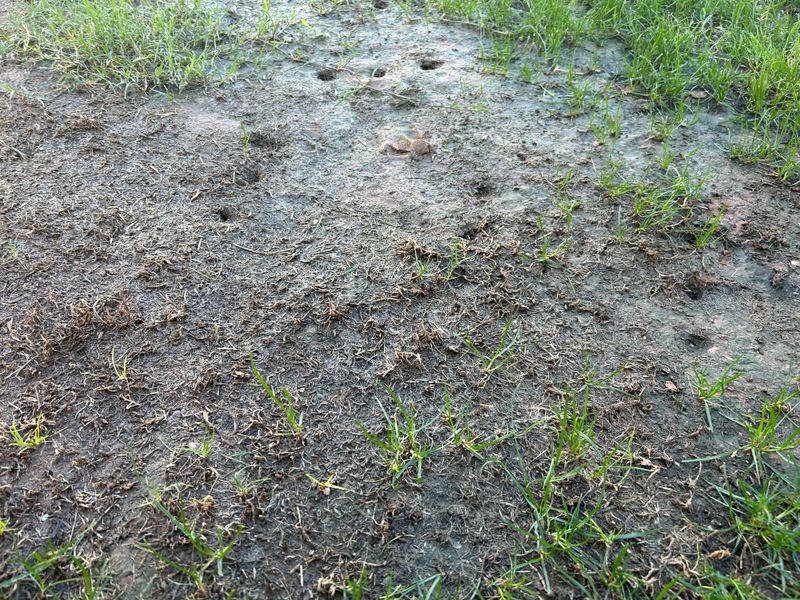
If the same patch washes out again and again, new cover is only a short-term bandage. The water route needs attention first, or the next storm may carry the new material away too.
Basins and swales can slow and spread water, but they are designed features. Guidance from the University of Arizona says these features need an appropriate overflow route, so an improvised dip or berm is not a safe universal fix.
The Tucson water harvesting manual also shows that site conditions shape how water should be guided. Call a qualified drainage professional if water threatens a building, repeatedly cuts into a slope, or crosses a property line.
One more detail: the 72-hour rule of thumb applies only to passively harvested rainwater, because of mosquito concerns. It is not a test for every temporary puddle after a storm.
Match Cover to the Site and Flow
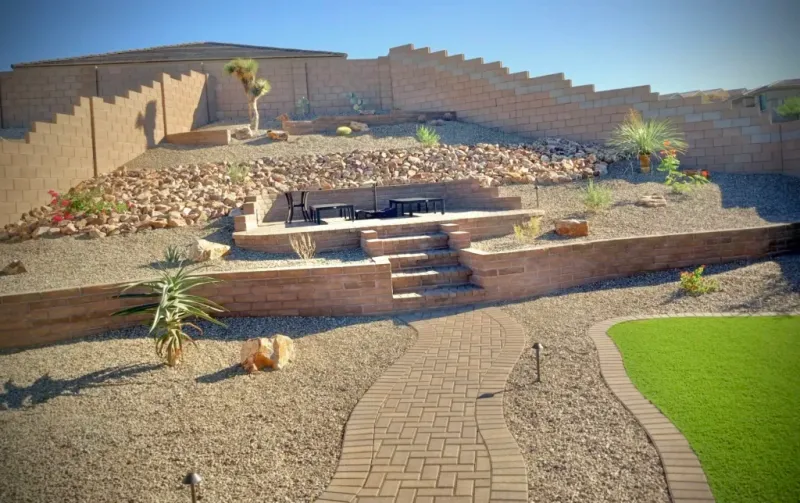
Once you know the water is under control and the bare spot is small and stable, choosing cover gets simpler. Extension lists rock, gravel, wood chips, and bark as covers that reduce raindrop impact and allow water to soak in, so restoring what was there is often reasonable.
The Tucson manual suggests organic mulch in relatively low-flow areas where it will not wash away. It suggests inorganic mulch where faster flow may occur, and that guidance fits the site rather than every yard.
For depth, the Tucson manual gives general figures of 3 to 4 inches for organic mulch. It gives at least 2 to 3 inches for inorganic mulch on berms or steeper slopes.
Keep mulch several inches away from plant bases. Treat these numbers as starting points, since slope, soil, and water speed all matter.
Consider Texture, Not Just Appearance
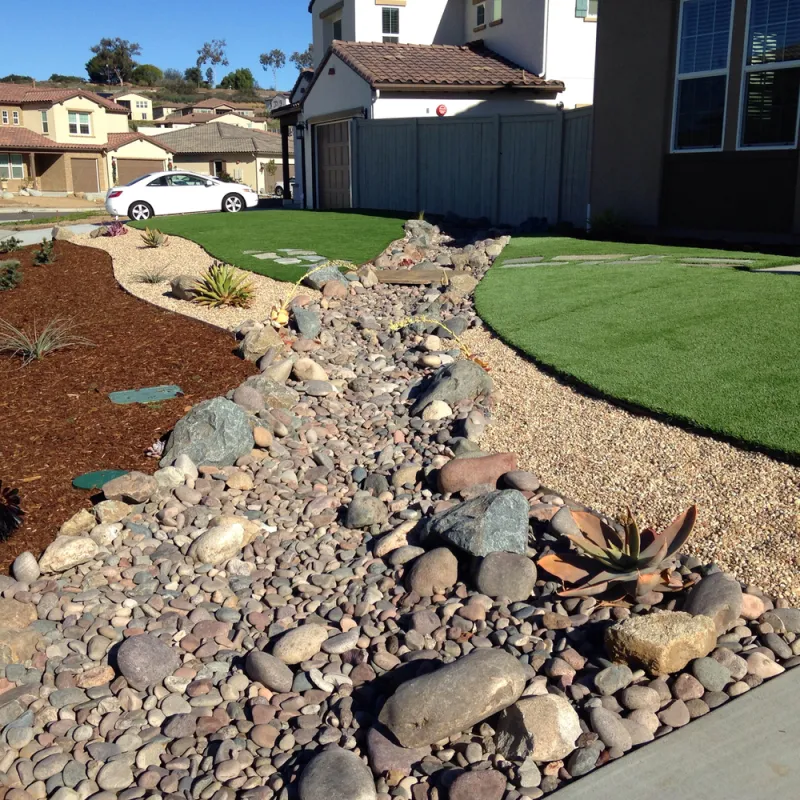
Two covers can look equally tidy and behave very differently when water arrives. Texture changes how easily rain soaks in and how well the surface holds together.
The Tucson manual warns that fine-grained mulch can clog soil pores and slow infiltration. It also notes that cobble-sized cover can leave gaps, where smaller gravel or small-grained organic mulch may help limit erosion.
The same manual treats decorative rock and decomposed granite as separate categories in its mulch guidance, so do not assume they act alike. Check its wording before swapping one for the other.
Rather than ranking materials from best to worst, match each one to the spot you are fixing. A calm corner and a flow path ask for different things.
Use Plants as a Longer-Term Complement
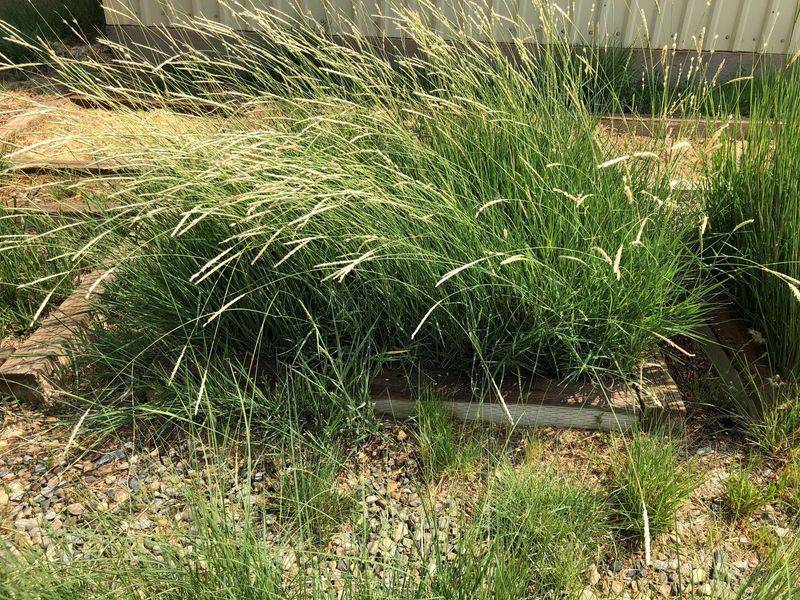
Plants can help hold soil, but they are a slow partner rather than a rescue crew. A newly planted patch will not stop an active washout right away.
University of Arizona Extension explains that perennial native grasses bind soil with fibrous roots. For erosion control, it favors spreading, sod-forming grasses over bunch grasses.
Species and soil suitability matter, so choose local plants that fit your site. Extension describes warm-season grasses as best planted in summer and cool-season grasses in fall.
Not every gravel bed needs grass. Use plants only where they suit the light, soil, and look of the space.
Treat October as a Regional Decision

October does not mean the same thing across the whole state. A warm low-desert yard and a mountain town can be in very different seasons.
The Pima County October guide says trees and shrubs can be planted early in the month in that region. That advice is local and should not be copied to higher elevations.
Extension’s Arizona climate zones resource describes big differences in elevation, minimum temperatures, and growing seasons. Microclimates, such as a sheltered wall or a cold pocket, can matter too.
Check your local frost patterns and ask a county Extension office. Planting before winter will not fix erosion on its own.
Water New Trees and Shrubs for Establishment
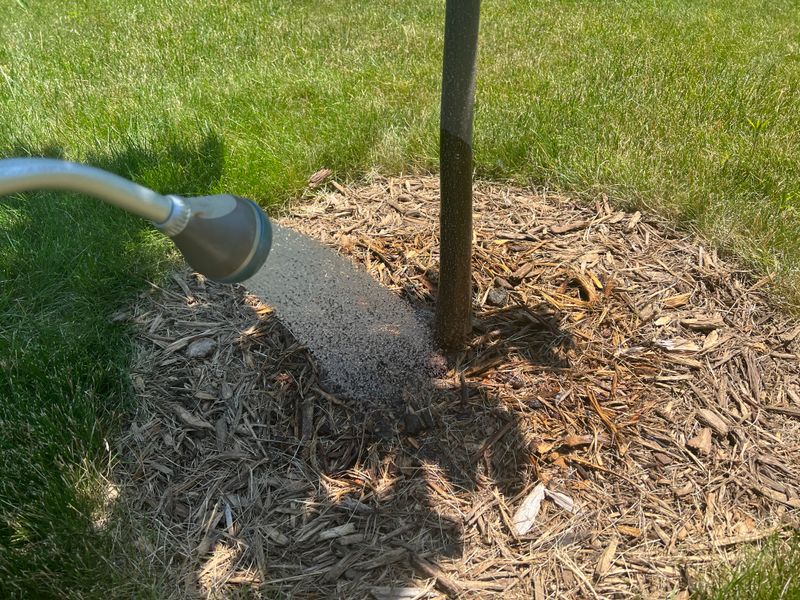
New roots need steady moisture while they settle in. There is no single schedule that suits every plant.
The planting guidelines for container trees and shrubs call for watering the root ball and the disturbed area. After that, adjust irrigation to keep the root ball moist as roots establish.
Needs vary with species, soil, and location, so check the soil near the root ball instead of following a calendar. Sandy soil and heavy clay hold water differently.
This guidance covers container trees and shrubs, not every plant type. Other plants may need different care.
Reassess the Bare Spot After Rain
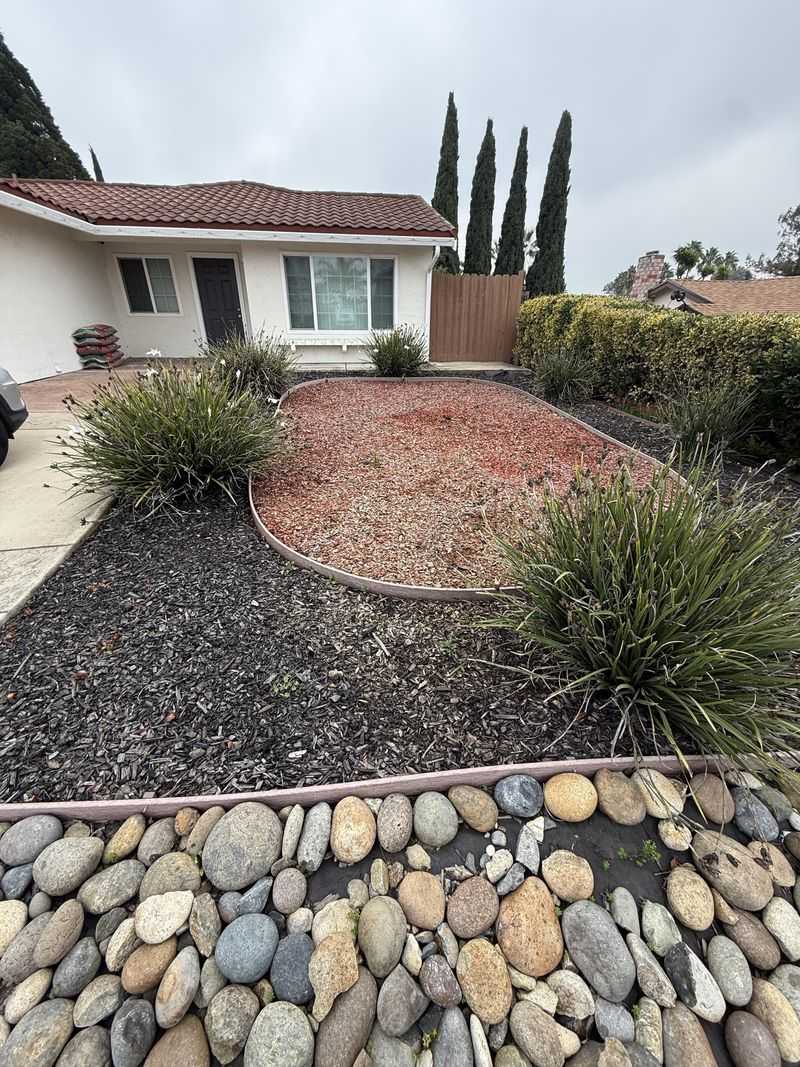
Order matters here. Watch the water, deal with persistent flow safely, and then restore cover that suits the site.
After the next rain, return to the spot and compare it with your notes. As Extension rainwater guidance suggests, watch how water enters, moves, and leaves.
Care for any new plants as they establish. A bare patch is a question, and the rain will help answer it.