Giant Joro Spiders In Georgia Are Laying Hundreds Of Eggs Before Winter
A single spider mom can pack up to 1,500 eggs into one fluffy silk pouch. Some even make more than one pouch before the cold arrives.
I found one of these pouches tucked under my porch railing last fall. It looked like a tiny cotton ball someone forgot to throw away.
I walked right past it twice before I noticed the web above it.
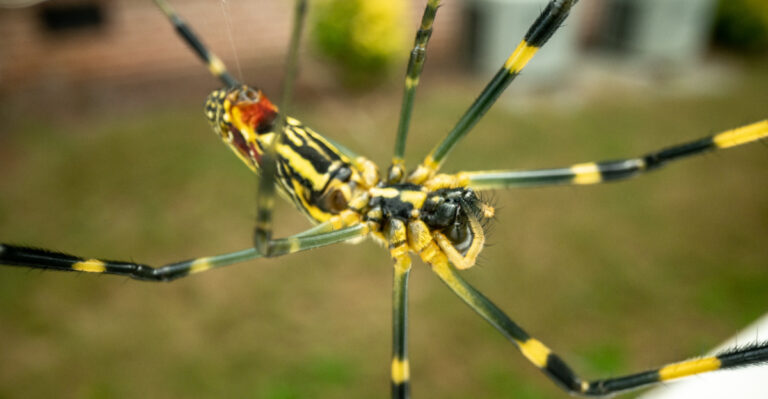
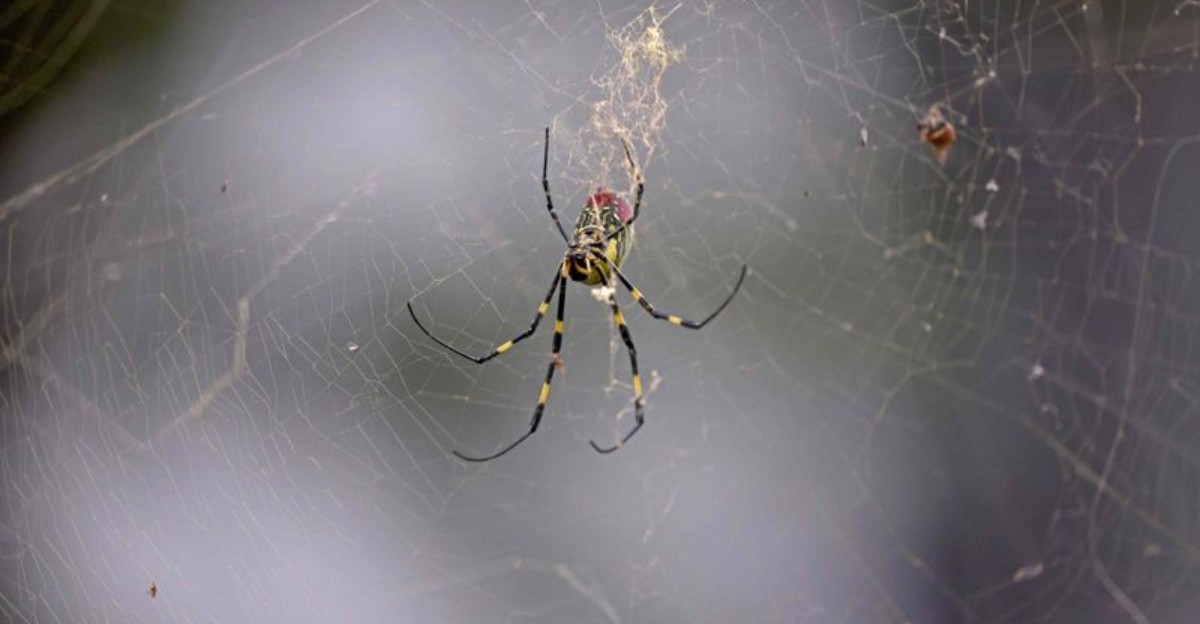
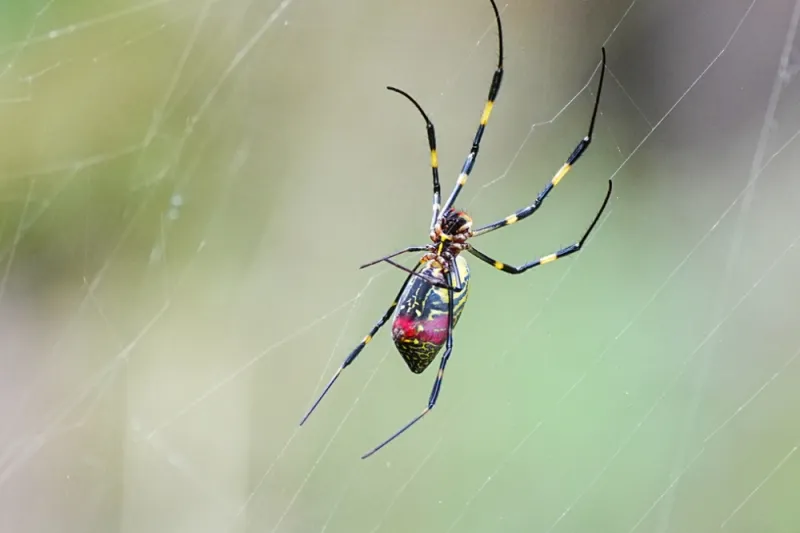
The female who made it was huge, bright yellow, and striped with blue-gray bands. Her legs could stretch across the palm of your hand.
She arrived in Georgia from East Asia, and her family has been spreading across the South ever since.
Right now, gardeners are spotting these pouches on bark, eaves, and fence posts. You need to know what they mean before spring.
Each one could release hundreds of tiny spiderlings when warmer weather returns, bringing a whole new generation into your yard.
1. Those Fuzzy Silk Pouches On Your Porch Have A Secret
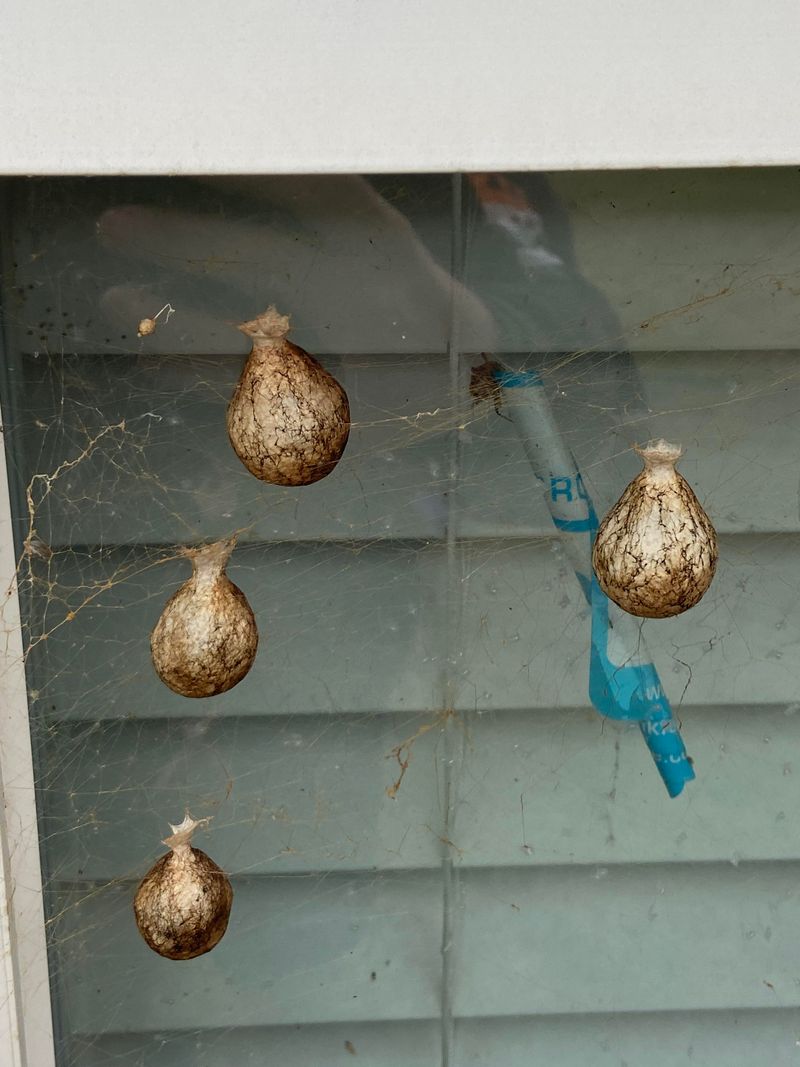
That little cottony lump on your fence post is not lint. It is very likely a Joro spider egg sac, and it holds a whole future generation.
Female Joro spiders spend their final weeks of fall building these pouches. University of Georgia researchers report that each sac can hold roughly 400 to 1,500 eggs.
A busy female may make more than one sac before cold weather ends her season.
The sacs are usually off-white or slightly tan, with a soft, fuzzy texture. Many are about the size of a grape.
You will often find them on tree bark, under leaves, along eaves, beneath deck railings, or on the sides of sheds.
The adults do not survive winter. Their whole job in autumn is to pass the baton to the next crop of spiders.
That is why so many females look sluggish and shrunken by late fall.
Here is a tip I learned the hard way. Look up and behind things, not just at eye level.
Spiders favor sheltered spots that block wind and rain, so check corners near your gutters and the protected side of tree trunks. A flashlight on a cloudy afternoon makes the pale sacs pop right out.
2. Hundreds Of Tiny Joro Eggs Ride Out The Winter Cold
Winter in Georgia can bring frosty mornings, especially up in the mountains. Somehow, those tiny eggs handle it just fine.
The silk wrapping works like a puffy winter coat. It shields the eggs from wind, rain, and sudden temperature swings.
Joro spiders come from parts of Japan, Korea, China, and Taiwan, where winters can be much colder than ours.
Researchers at the University of Georgia found that Joros handle chilly temperatures better than their close cousin, the golden silk orb weaver. They also have higher metabolism and heart rates, which may help them cope with a brief freeze.
Scientists believe this cold tolerance is one reason they could spread far beyond the South.
Eggs inside the sac hatch as the weather warms. Many young spiders stay bundled in the sac until spring rather than leaving in the cold.
So what does this mean for you? A hard winter will probably not reduce the Joro numbers in your yard much.
If you are counting on a freeze to handle the problem, you may be disappointed. Hands-on removal of sacs you can reach is a far more reliable approach for gardeners who want fewer spiders next year.
3. Baby Joro Spiders Float Away On Silk Threads In Spring
Picturing spiders flying sounds like something from a cartoon. Yet that is pretty much what young Joros do every spring.
Once the spiderlings hatch, usually around April and May in Georgia, they climb to a high point. Each one releases a fine thread of silk into the breeze.
The wind catches that thread and carries the little spider away, sometimes a long distance. Scientists call this ballooning.
Ballooning is a big reason Joros spread so fast after they were first confirmed in northeast Georgia around 2014. They also hitch rides on cars, trucks, and shipping materials.
Today they show up in many Georgia counties and in neighboring states like South Carolina, North Carolina, and Tennessee.
Spring spiderlings are very small and easy to miss. You might notice faint strands of silk glinting across your shrubs on a sunny morning.
Those threads are often the first clue that a new batch has arrived.
My advice is simple. Do not panic when you see young spiders in your garden.
They are harmless to people and pets, and many will be eaten by birds, lizards, and other predators before summer ends.
4. Those Huge Golden Orb Webs Are Hard To Miss By Fall
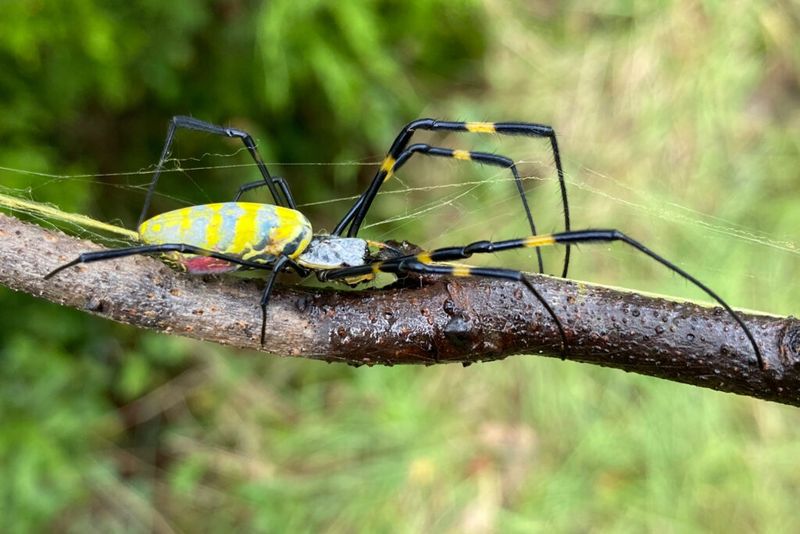
Walk face-first into a Joro web once, and you will remember it for weeks. These webs are big, sticky, and surprisingly strong.
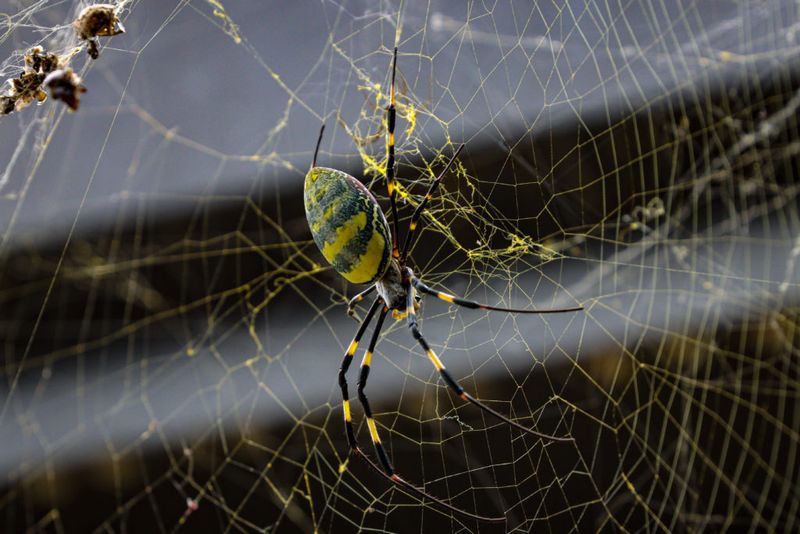
Adult females build orb webs that can stretch several feet across, and some reach close to ten feet when anchored between trees, power lines, or porch posts. The silk often has a golden shine in sunlight.
Look closely and you will see the web has layers, almost like a three-dimensional net.
Spiders grow slowly through summer. By late August through October, the females reach full size, with bodies up to about an inch long and leg spans that can reach three or four inches.
Males are much smaller, brownish, and often hang out on the edges of a female’s web.
Fun fact: the Joro is named after Jorogumo, a spider spirit from Japanese folklore.
Despite their size, Joro spiders are generally reluctant to bite. Their bites are uncommon and typically cause only mild local reactions, although their fangs can penetrate human skin.
If one feels disturbed, it usually freezes or drops away. I keep a broom by the door for clearing paths without fuss.
5. Joro Spiders Snack On Some Garden Pests You Dislike
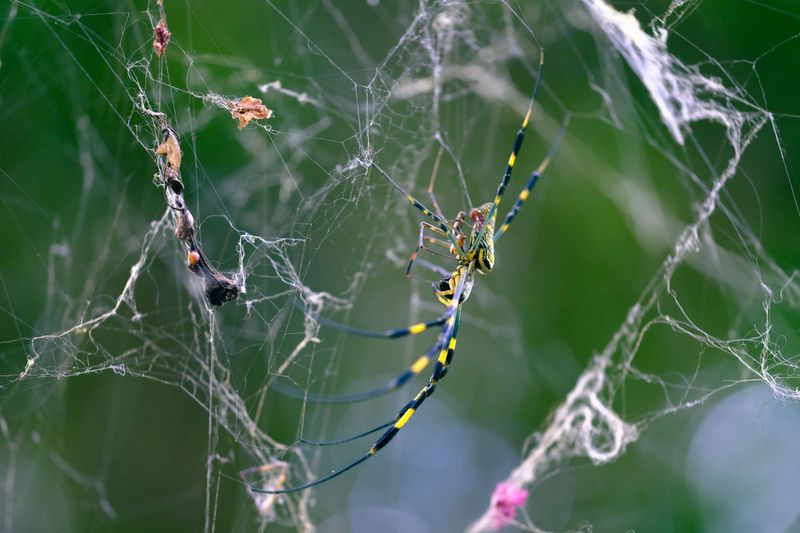
Some gardeners are surprised to learn these big newcomers have a decent appetite for pests. Joros catch whatever flies, hops, or blunders into their webs.
Observations from UGA and other researchers show Joros eating flies, mosquitoes, leafhoppers, and even brown marmorated stink bugs. Stink bugs are a headache for tomato, pepper, and fruit growers.
Seeing one wrapped in silk can feel pretty satisfying.
Still, the full picture is not settled. Joros also catch helpful insects like bees, butterflies, and moths.
Some studies suggest native orb weavers may decline in areas where Joros become common, while others found less direct overlap. Scientists are still studying how Joros affect local food webs, birds, and native spiders.
So how should you feel about them? I land somewhere in the middle.
They are not miracle pest control, and they are not a garden disaster either.
A balanced approach works best. Leave webs that are out of the way, especially near your vegetable beds where stink bugs gather.
Clear webs that block doors, walkways, or pollinator plants you treasure. Keeping a diverse yard with native plants and birds helps every predator, big and small, stay in balance.
6. Skip The Spray And Clear Joro Webs With A Broom
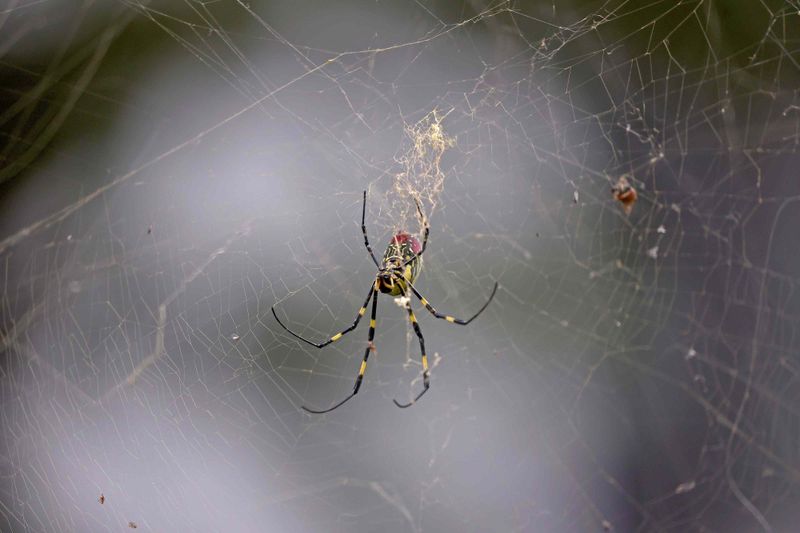
Reaching for a can of bug spray feels tempting when a giant spider camps by your front door. Experts agree that is rarely the best move.
Broad pesticide sprays reach far beyond Joros. They can harm bees, butterflies, ladybugs, and native spiders that help your garden.
Joros also tend to rebuild quickly, so spraying gives a short break at a high cost.
Physical removal is safer and more targeted. A broom, a long stick, or a pole duster lets you wind up webs and move spiders without getting close.
You can also relocate a spider to a tree at the edge of your yard where she bothers no one.
A few habit changes help too:
Trim shrubs and branches away from doors, steps, and paths. Fewer anchor points mean fewer webs where you walk.
Switch porch lights to warm yellow bulbs or motion sensors. Bright lights draw insects, and insects draw hungry spiders.
Check outdoor furniture, grills, and garden tools before storing them. Spiders and egg sacs can hide in sheltered crevices.
Personally, I save my energy for high-traffic areas and let the back corners of the yard stay wild.
7. Scrape Joro Egg Sacs Into Soapy Water Before Spring
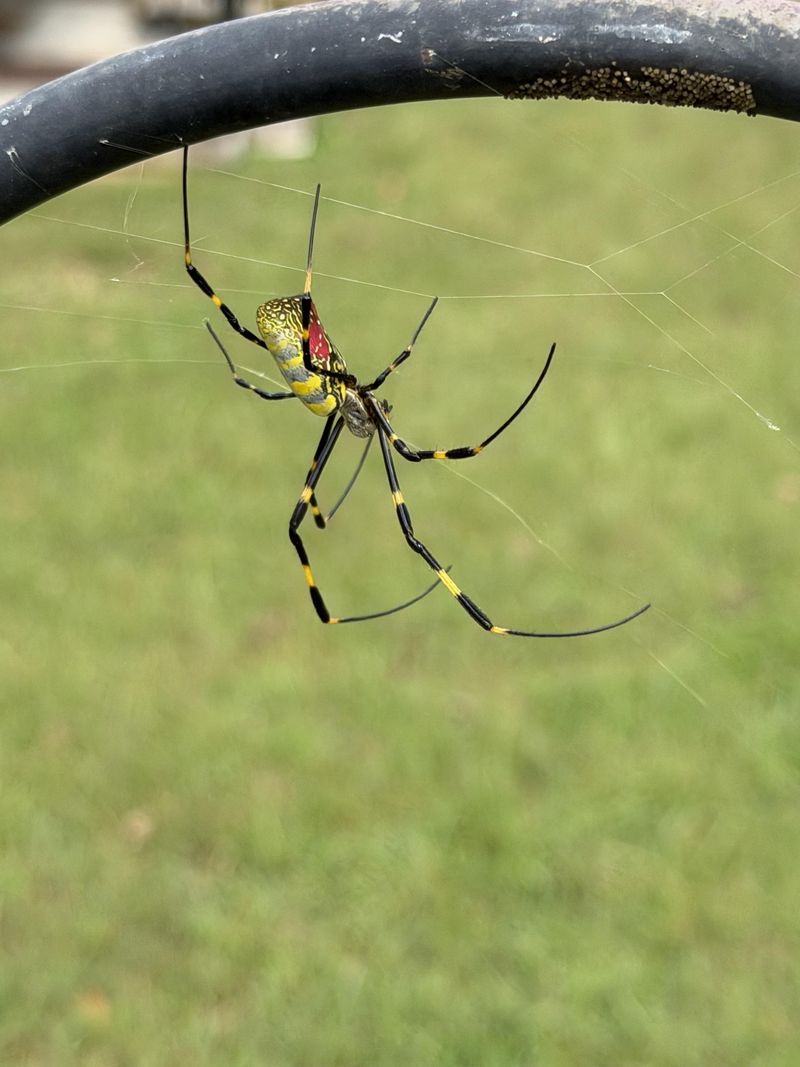
Winter is the perfect time to get ahead of next year’s spider season. Leaves are down, so egg sacs are easier to spot on bare branches and walls.
Georgia invasive species experts suggest a simple method. Use a stick with a rough end, or a putty knife for flat surfaces, and scrape the sac loose.
Drop it into a bucket of warm, soapy water and let it soak for a day or so. The soap breaks down the silk and keeps the eggs from hatching.
Wear gloves if you like, though the sacs are harmless to touch. Avoid crushing them in the open, since you may scatter eggs you cannot see.
Bag and trash the soaked sacs afterward.
Be realistic about your results. Ballooning spiderlings from neighboring yards will likely drift in each spring.
Removing sacs you can reach simply lowers the numbers around your home.
You can also help scientists. Reporting sightings to EDDMapS or the Georgia Invasive Species tools helps researchers track how far Joros travel.
That information shapes future advice for gardeners like us, and it turns a backyard chore into real community science.