The Stunning Virginia Native Tree Most Homeowners Overlook
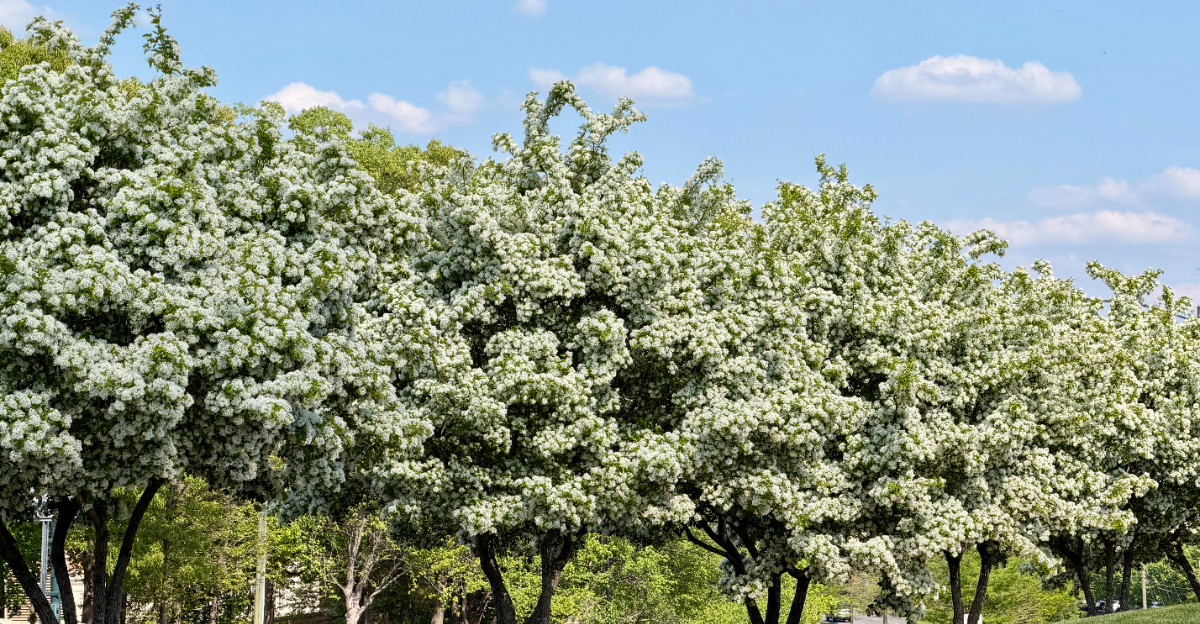
Native trees rarely deliver a show this stunning and truly unforgettable. Virginia hides an incredibly graceful tree deep in America. Something rare blooms into fragrant, delicate flowers each spring.
Nobody expects a native species to outshine pricey imports. This mysterious specimen thrives in soil that troubles Japanese maples. Its resilience gives you drought tolerance without losing flowers.
Gardeners rarely tell you how tough this hidden species truly is. Botanists admire its delicate, ribbon-shaped white petals. Homeowners overlook it while pouring serious money into fragile alternatives.
Few trees reward you with this much beauty for little effort. Roots anchor deep, staying steady through pests and neglect. Branches widen yearly, quietly building shade you will actually use.
Generations of Virginia woodlands have quietly grown this stunning treasure. Patience with this tree pays you back instantly.
Curiosity should already be quietly pulling you toward this discovery. You will not walk away from this unaffected.
Why The Fringe Tree Deserves More Recognition
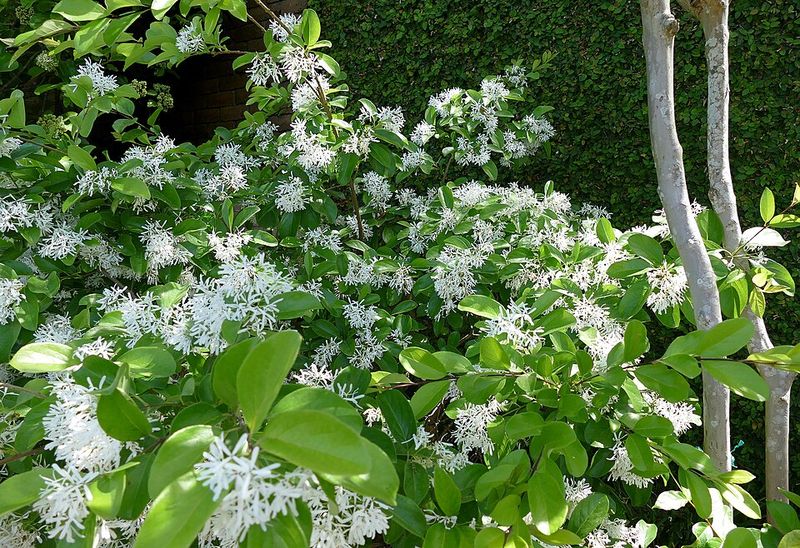
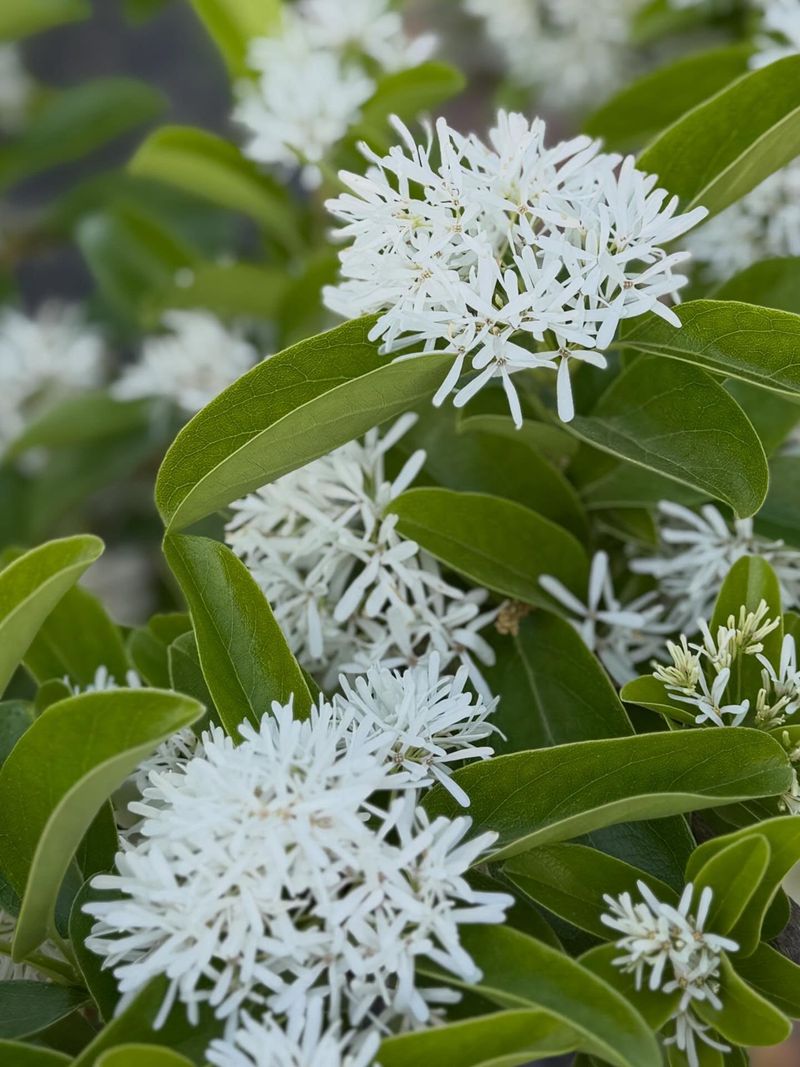
Walk past a fringe tree in bloom and it is hard to miss. Dense clusters of white, feathery flowers cover every branch.
Most people stop and ask what it is. Very few have ever seen one planted on purpose in a neighborhood yard.
That is the strange paradox of this Virginia native tree. It grows wild across the eastern United States, yet nurseries rarely stock it and homeowners rarely plant it.
Botanists have admired Chionanthus virginicus for centuries. Colonial-era plant collectors exported many native American trees to England.
Fringe tree was likely among the species that caught European gardeners’ attention early on.
Back home, though, the fringe tree somehow got skipped over in favor of ornamental cherries and Bradford pears. That is a shame, because those non-native options come with real problems.
Bradford pears split apart in storms and spread invasively. Ornamental cherries get diseased quickly in humid climates. The fringe tree, by contrast, just quietly thrives with almost no fuss.
Native plant experts call it one of the most underused trees in American landscaping. Once you learn what it offers, the lack of attention becomes hard to justify.
Choosing a fringe tree means choosing a plant that belongs here. It evolved alongside local insects, birds, and soil conditions over thousands of years. That deep compatibility shows in how effortlessly it grows.
Spring Blooms That Set It Apart
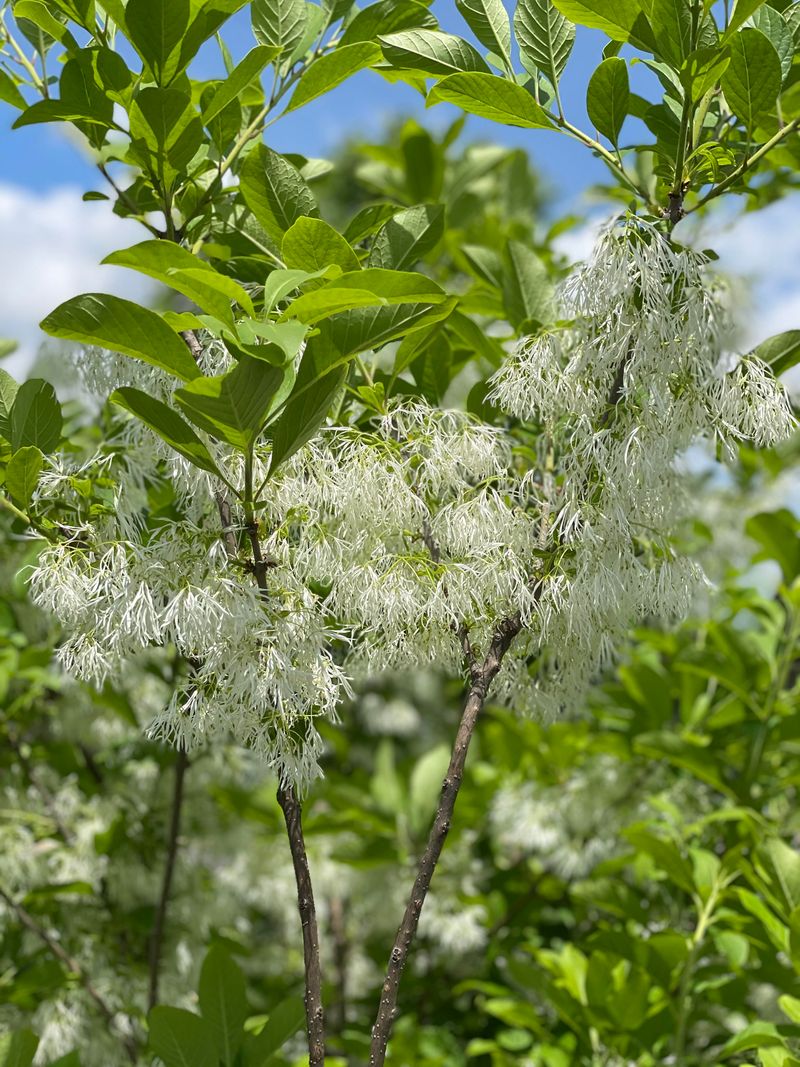
Few spring-flowering trees in the mid-Atlantic region compare to the fringe tree. Its blooms appear in late April or May, right when the landscape wakes up and begs for color.
Each flower is a thin, ribbon-like white petal. Dozens cluster together into drooping panicles that hang from the branches in soft, shimmering rows.
The effect from a distance is striking. The whole tree appears densely covered in white blossoms, and the fragrance is sweet but subtle, nothing overwhelming, just pleasant enough to notice on a warm breeze.
Male trees tend to bloom more showily than female trees. If maximum flower impact is your goal, ask your nursery specifically for a male specimen when shopping.
Your Virginia Garden Changes Every Week. Your Plan Should Too.
Gardening in Virginia changes quickly throughout the season. Every Friday you’ll receive a simple weekly plan showing exactly what to plant, prune, fertilize, harvest, and protect so you never miss the right timing.
The bloom period lasts two to three weeks, which feels short but leaves a lasting impression. Neighbors will remember that tree long after the petals drop and summer green takes over.
After flowering, female trees produce dark blue fruits resembling small olives. Those fruits are not the main event, but they add another layer of seasonal interest through late summer.
One fact most people do not know: the fringe tree blooms after most other spring trees have already finished. That timing means it fills a gap when your yard might otherwise look plain and uneventful.
Planting one near a patio or walkway lets you enjoy both the fragrance and the visual display up close. Few trees deliver that kind of seasonal reward so reliably.
Compact Size Perfect For Small Yards
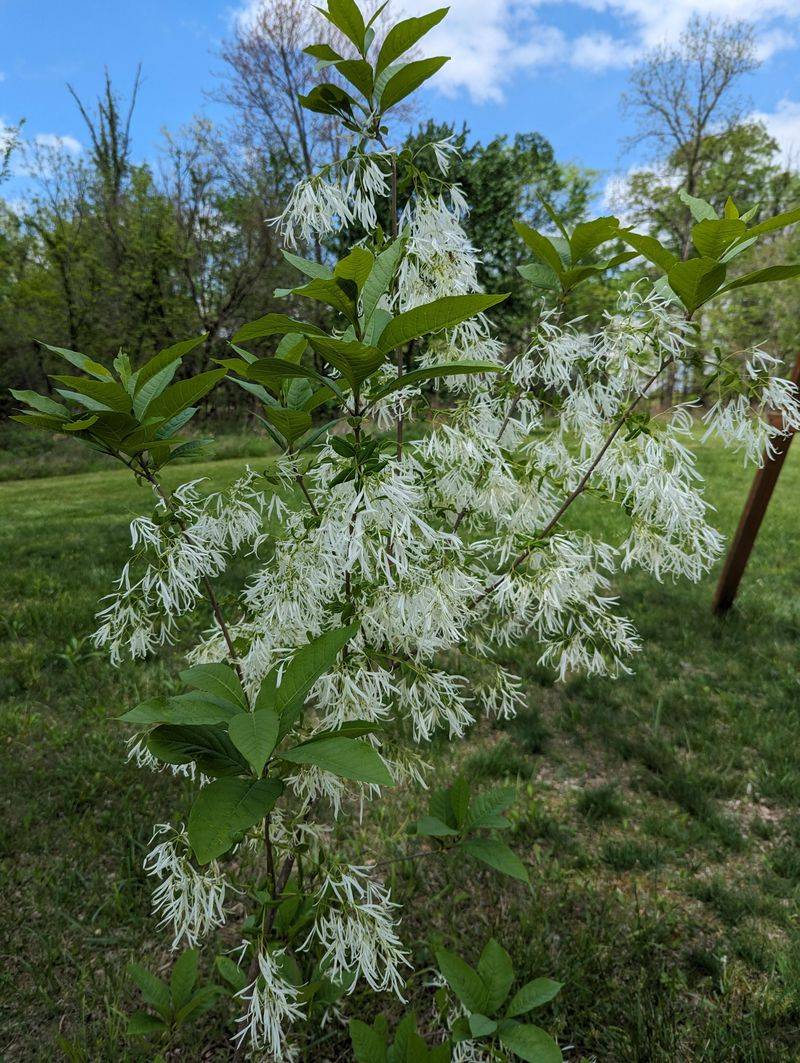
Not every homeowner has acres of land to work with. Many yards in Virginia suburbs are small, and choosing the right tree means thinking carefully about scale.
The fringe tree fits beautifully into tight spaces. Most mature specimens reach only 12 to 20 feet tall, with a similar spread, making it manageable for average-sized lots.
Compare that to an oak or a maple, which can tower 60 feet or more. Those trees are impressive, but they require more space and maintenance than smaller properties can accommodate.
Fringe trees grow slowly, which some buyers see as a drawback. In reality, slow growth means you spend less time pruning and more time enjoying the shape that develops naturally over years.
The branching structure is naturally attractive even in winter. Bare branches have a sculptural quality that adds visual interest long after leaves have fallen and the yard looks otherwise bare.
Because the tree stays small, it works well planted near foundations, fences, or driveways. Just keep it a few feet from structures to allow for healthy root and canopy development.
It also layers beautifully with shrubs and perennials beneath it. The canopy is light enough that shade-tolerant plants like ferns or native wildflowers thrive happily in the ground below.
Landscape designers increasingly recommend this tree for urban gardens and townhouse yards. Its manageable size and seasonal display make it one of the smartest choices for space-conscious gardeners across the region.
Wildlife Benefits Beyond Its Beauty
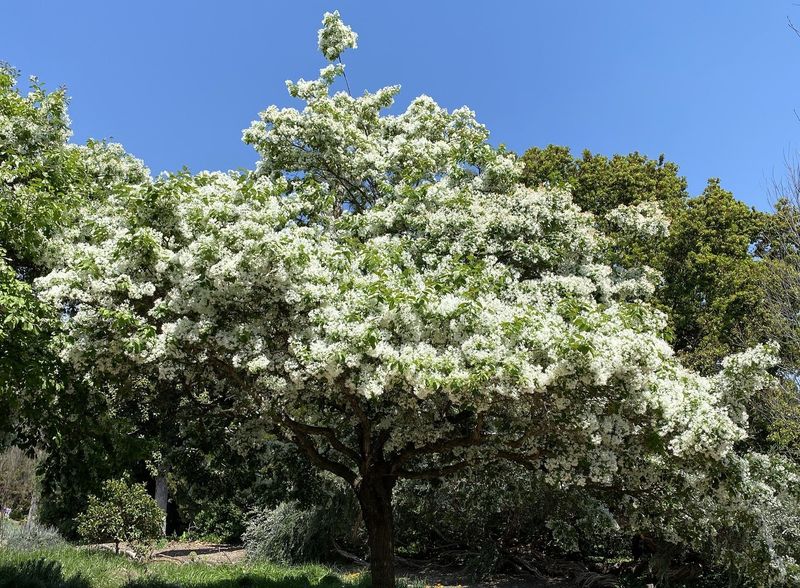
A yard full of life is more satisfying than a yard that just looks pretty. The fringe tree delivers both, and the wildlife activity it attracts is genuinely exciting to watch.
Birds go after the dark blue fruits in late summer with real enthusiasm. Thrushes, catbirds, and mockingbirds are frequent visitors, making the tree a site of frequent bird activity.
The fringe tree also supports specialized native pollinators that rely on its blooms during their brief flowering window, making the tree a meaningful resource for local bee populations.
Generalist pollinators love it too. Bumblebees, honeybees, and various native bee species all visit the blooms during that two-to-three-week flowering window in spring.
Unlike many ornamental trees, the fringe tree has strong ecological connections. It belongs to the olive family, Oleaceae, and shares relationships with local insects that have evolved alongside it for millennia.
Planting one does not just add beauty to your property. It actively strengthens the local food web by providing resources that birds and pollinators genuinely depend on to survive.
Homeowners who track wildlife in their yards often notice a meaningful uptick in activity after adding a fringe tree. The tree consistently attracts species that might otherwise pass a yard by.
Supporting native wildlife does not require a large conservation property. One well-chosen tree in a suburban backyard can make a measurable difference for local ecosystems.
Growing Conditions Across Virginia
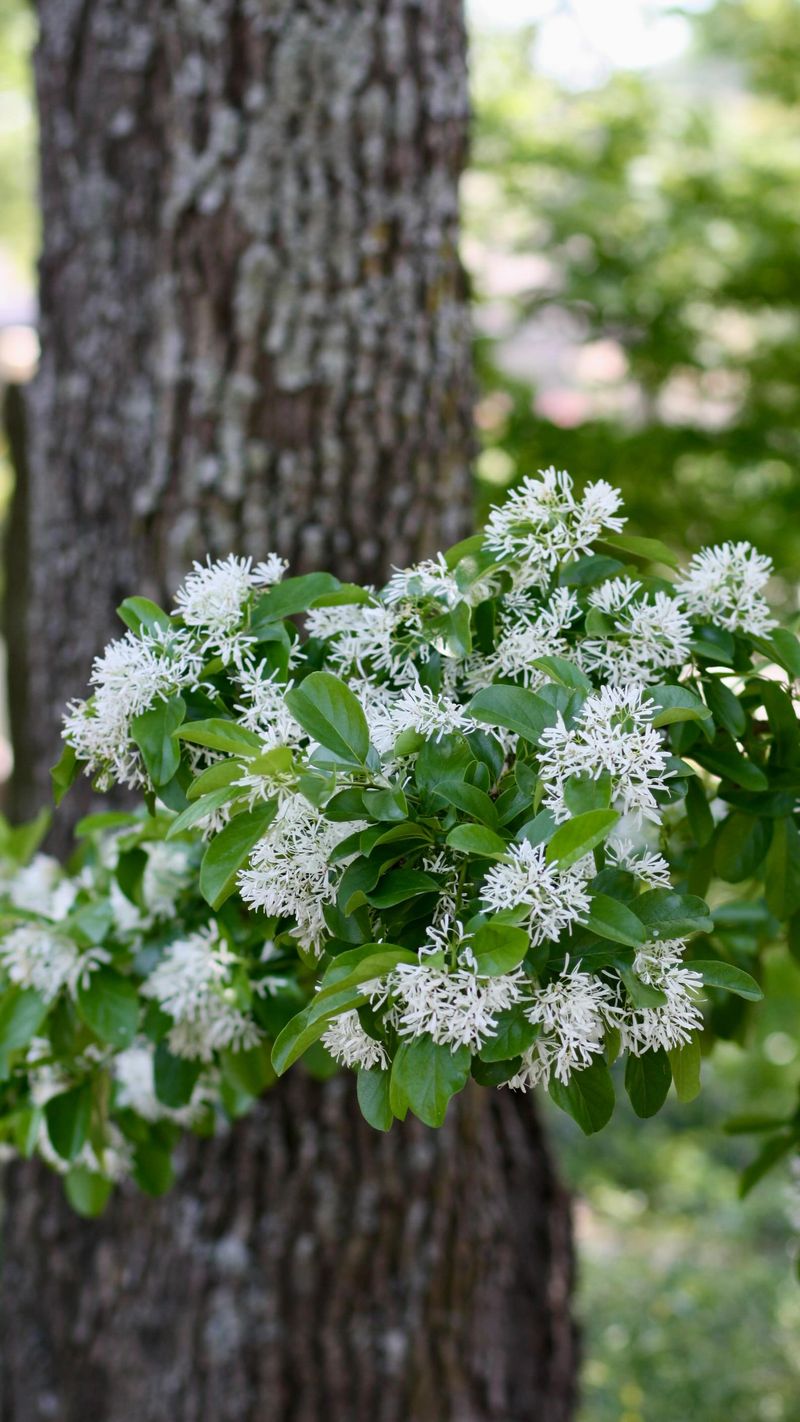
One reason the fringe tree thrives here is simple: it already belongs here. It evolved in the mid-Atlantic region and adapted to local conditions over thousands of years.
In the wild, you find it growing along stream banks, woodland edges, and rocky slopes. That range tells you something useful about its flexibility as a landscape plant.
Full sun produces the best bloom display, but the fringe tree handles partial shade with no complaints. A spot that gets four to six hours of direct light daily works well in most home settings.
Soil preferences lean toward moist, well-drained ground with a slightly acidic pH. If your yard already grows azaleas or blueberries well, the fringe tree will likely feel right at home there too.
Drought tolerance improves significantly once the tree establishes itself, usually after two to three growing seasons.
During that establishment window, regular watering during dry spells makes a noticeable difference in growth rate.
Pests and diseases rarely cause serious problems. The tree has no major insect enemies and resists most fungal issues that plague non-native ornamentals in humid mid-Atlantic summers.
Planting is best done in early spring or fall when temperatures are cooler and roots settle in without heat stress. Mulching around the base helps retain moisture and keeps soil temperatures stable.
From the coastal plain near Norfolk to the mountain foothills near Roanoke, this native tree adapts to a wide range of conditions found across the state.
Rising Popularity Among Native Plant Fans
Interest in native landscaping has grown in recent years, and the fringe tree is benefiting from that shift. Native plant enthusiasm has reportedly grown across much of the country over the past decade.
Social media accounts dedicated to native landscaping are attracting growing attention. Gardeners share photos of fringe trees in bloom every spring, and those posts often draw significant engagement.
Organizations like the Lady Bird Johnson Wildflower Center and the National Wildlife Federation list Chionanthus virginicus as one of the recommended native species for mid-Atlantic homeowners. Their guidance carries real weight with serious gardeners.
Local native plant sales, once small community events, now draw a growing number of buyers interested in species like this one. Some regional nurseries report steadier interest in fringe tree saplings than in past years.
Landscape architects increasingly specify native trees in residential projects. Some report clients asking for native species like the fringe tree by name more often than in the past.
The movement is partly ecological and partly aesthetic. People want yards that look beautiful and function as habitat, and the fringe tree offers both without significant compromise.
Younger homeowners especially are drawn to plants with a story and a purpose. A tree that supports native bees, feeds migratory birds, and blooms beautifully is often seen as a more purposeful choice than a generic ornamental.
The stunning Virginia native tree most homeowners overlook is finally getting the attention it deserves. Plant one now, and over time it could become one of the most memorable features of your yard.