8 Native Shrubs That Replace Bradford Pear in Virginia Yards
Those white clouds of blossoms smell a bit like old fish, and the weak branches split in storms. Those tidy lollipop trees also spread into fields and roadsides across Virginia at a startling, weedy pace.
Swapping one out feels like a big chore, but I promise the payoff arrives faster than you expect. Native shrubs bring bright berries for birds and bold fall color for you on the same patch.
October is a smart month to plant them, with warm soil and cooler air helping roots settle in. I believe the picks below can fill that empty space with more life than the old tree ever offered.
One shrub blooms as leaves drop and then shoots its seeds across the yard with a tiny pop. Each one is native to Virginia, and every pick earns its spot for a different, surprising reason.
1. Virginia Sweetspire
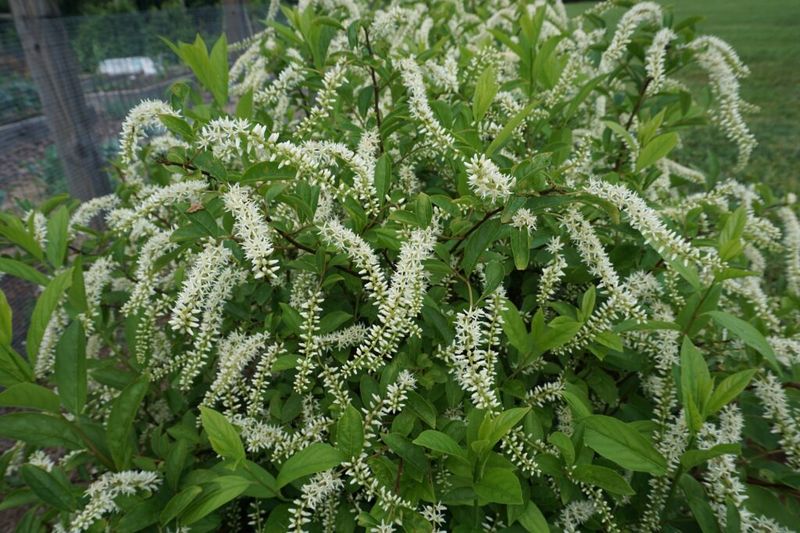
You get a shrub with a state name stamped right on it, and honestly the fall show earns that honor. Leaves turn deep red and wine purple in October, and they often hang on well into winter.
Sweetspire grows about three to five feet tall, so it fits under windows where a big tree once crowded things. It spreads by underground runners, slowly forming a soft colony that hides bare ground and holds soil in place.
Soggy spots rarely bother it, which makes it handy near downspouts or low corners that stay wet after storms. It also handles heavy clay, a common struggle across much of the Piedmont and the coastal plain.
Full sun gives the richest red leaves, but partial shade still produces a pretty, glowing color each autumn. In late spring, drooping white flower spikes smell sweet and draw bees and butterflies looking for an easy meal.
Planting now in early fall gives roots several cool months to grow before summer heat returns next year. Dig a hole twice as wide as the pot, then water deeply once a week until the ground freezes.
A layer of shredded leaves or bark mulch, about two inches thick, helps hold moisture and keeps roots cozy. Keep the mulch a few inches away from the stems so the bark stays dry and healthy through winter.
I like that it rarely needs pruning, although you can trim old stems right after flowering if needed. Where a brittle pear once stood, a sweep of sweetspire gives you fall fire at knee height instead.
2. American Beautyberry
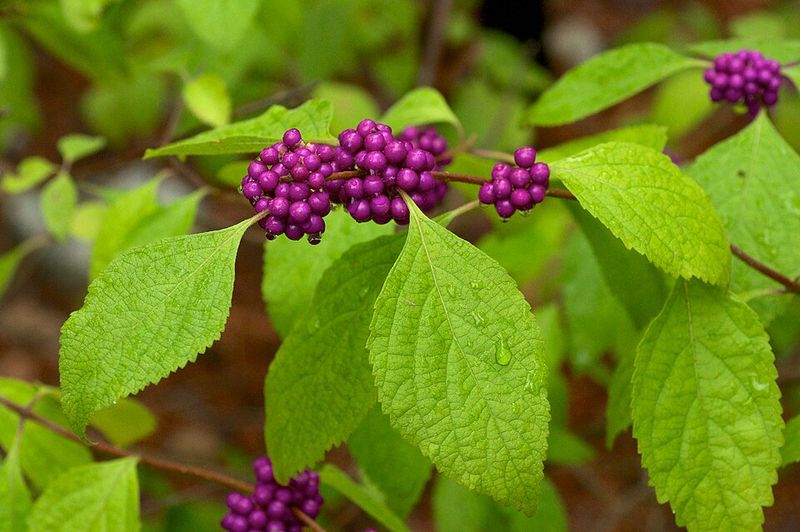
Those berries look so purple and shiny that guests often ask if someone glued fake beads onto the branches. Clusters wrap tightly around each stem in October, stacking up like little candy rings along arching branches.
Beautyberry is native to the southeastern part of Virginia, especially the coastal plain, and it grows well farther inland too. Most plants reach about three to six feet tall and wide, with a loose, relaxed shape that feels natural.
Mockingbirds and robins snack on the fruit, and northern bobwhite also rely on it as food runs low. Leaves turn a soft yellow before dropping, which makes the purple berries pop even brighter against bare stems.
Your Virginia Garden Changes Every Week. Your Plan Should Too.
Gardening in Virginia changes quickly throughout the season. Every Friday you’ll receive a simple weekly plan showing exactly what to plant, prune, fertilize, harvest, and protect so you never miss the right timing.
A fun bit of history comes with this plant, and it makes great small talk at plant swaps. Folks in the South once crushed the leaves and rubbed them on skin to keep biting bugs away.
USDA scientists later studied that old practice and found leaf compounds that do repel some mosquitoes in lab tests. I would still pack regular bug spray, but I love that the folk wisdom had real science behind it.
Pruning is simple, because flowers and berries form on new growth that sprouts each spring from the base. Cut stems back to about a foot tall in late winter, and the plant returns fuller and tidier.
Full sun brings the heaviest berry crop, though partial shade still gives a nice show along woodland edges. Plant it this month in soil that drains reasonably well, and water it weekly until fall rains settle in.
3. Winterberry Holly
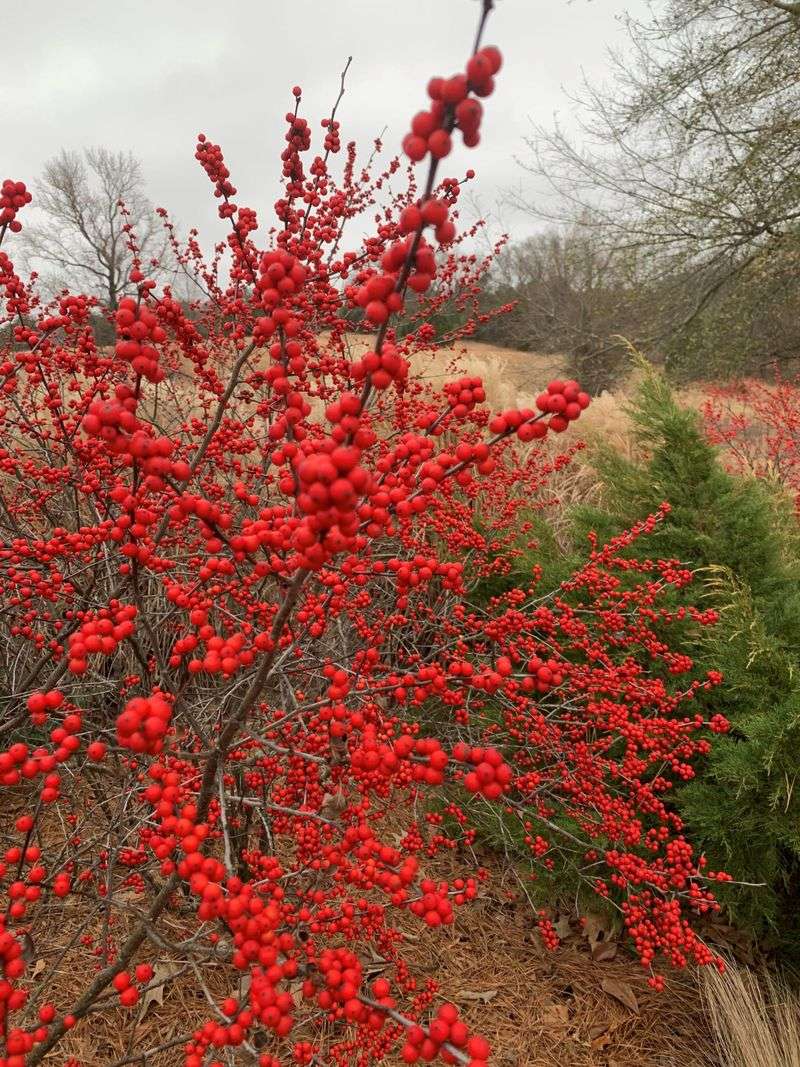
Holly without the prickly leaves sounds almost too kind, yet this native shrub delivers exactly that in your yard. Its leaves drop in late fall, and suddenly every bare twig glows with bright red berries packed tightly together.
Winterberry is a deciduous holly, so it loses its foliage, unlike the glossy evergreen hollies you see at holidays. That bare look actually works in its favor, because nothing hides the fruit from your window or passing birds.
Plants need a partner to make berries, since male and female flowers grow on separate shrubs. One male plant can usually pollinate several females, as long as it grows within about fifty feet of them.
Ask your nursery for a matching male variety, because bloom timing needs to line up for good fruit set. Labels often list the right partner, which saves guesswork and a lot of disappointment next fall.
Wet ground suits this shrub nicely, and it often grows wild along swamps and stream banks across the state. Acidic soil keeps its leaves green and healthy, while very alkaline soil can cause yellowing between the veins.
Most plants grow six to ten feet tall, and they slowly spread wider by sending up new stems. Give them a sunny spot for the best berries, though light afternoon shade still works well enough.
Birds often wait until late winter to eat the fruit, after the berries soften through repeated freezes. I’m sure you will enjoy watching robins and bluebirds arrive just when the rest of the garden looks bare.
4. Arrowwood Viburnum
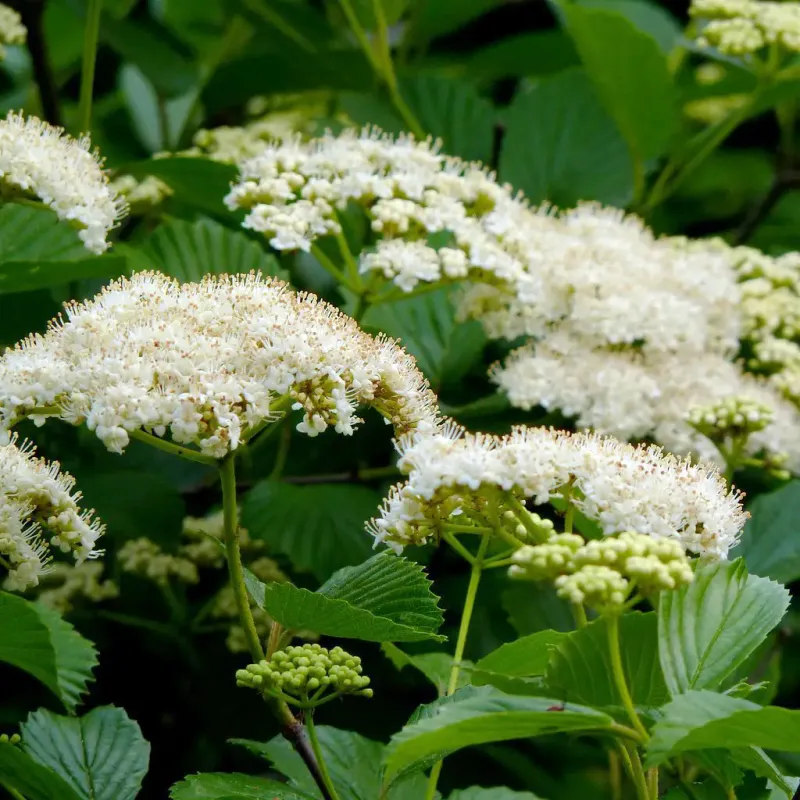
Long before garden centers existed, people chose this shrub for its stems, which grow remarkably straight and strong. Native Americans reportedly used those shoots for arrow shafts, which explains the name you see on nursery tags.
Arrowwood grows about six to ten feet tall and wide, so it makes a fine screen along a property line. A row can block views as well as a pear tree, with far less risk of splitting.
Flat clusters of creamy white flowers open in late spring, and small native bees crowd onto them eagerly. Blue-black berries follow in late summer, and many songbirds strip them quickly as migration ramps up.
Early October brings leaves that shift between glowing red and deep purple, depending on sunlight and soil. No two shrubs seem to color the same way, which keeps a hedge row from looking flat or boring.
This tough plant handles heavy clay and short dry spells once its roots have a season to settle. It grows well in full sun or partial shade, which makes it useful for tricky spots near fences.
Keep an eye out for viburnum leaf beetle, a pest that chews leaves into lacy holes during warm months. Check twig tips in winter for small egg cap rows, and prune those twigs away to reduce next year’s damage.
Plant in October, water deeply, and wait for the shrub to fill in over the next few seasons. I believe few natives give you a sturdier screen, and the birds will thank you every single fall.
5. Common Witch Hazel
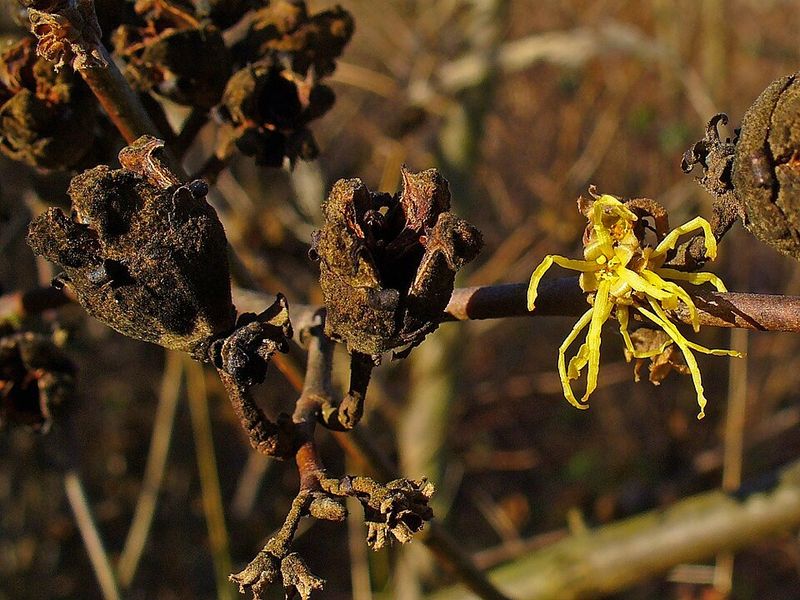
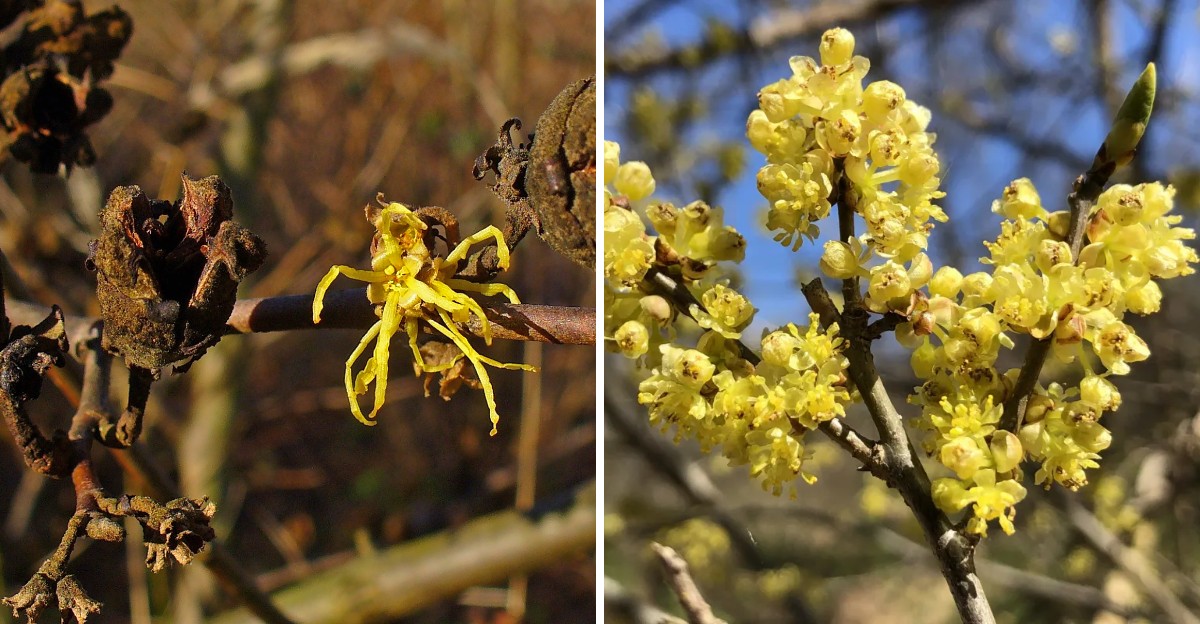
Most shrubs are winding down in October, but this one waits until now to throw its flower party. Spidery yellow blooms with thin, ribbon-like petals open along the branches, often while golden leaves are still attached.
Flowers usually appear from October into December, giving late bees and flies a rare meal when little else blooms. A faint, spicy fragrance drifts from the branches on mild afternoons, so plant it near a path you use.
And now the fun part, because the seed pods from last year ripen right around the same time. Woody capsules split open with a soft snap and fling shiny black seeds as far as thirty feet away.
I can’t imagine a better reason to stand quietly in the yard on a crisp fall afternoon and listen. Kids especially love hearing that a shrub can shoot its own seeds, almost like a tiny slingshot.
Witch hazel often grows fifteen to twenty feet tall, so treat it like a small multi-stemmed tree. It handles shade better than most flowering shrubs and grows wild in woodlands across much of Virginia.
Moist, slightly acidic soil rich in leaf litter suits it best, though it tolerates clay reasonably well. Plant it at the edge of taller trees, where dappled light mimics its natural forest home.
The familiar skin toner sold in drugstores comes from this very plant, distilled from its bark and twigs. Growing your own will not replace that bottle, but it sure makes a better story for curious visitors.
6. Red Chokeberry
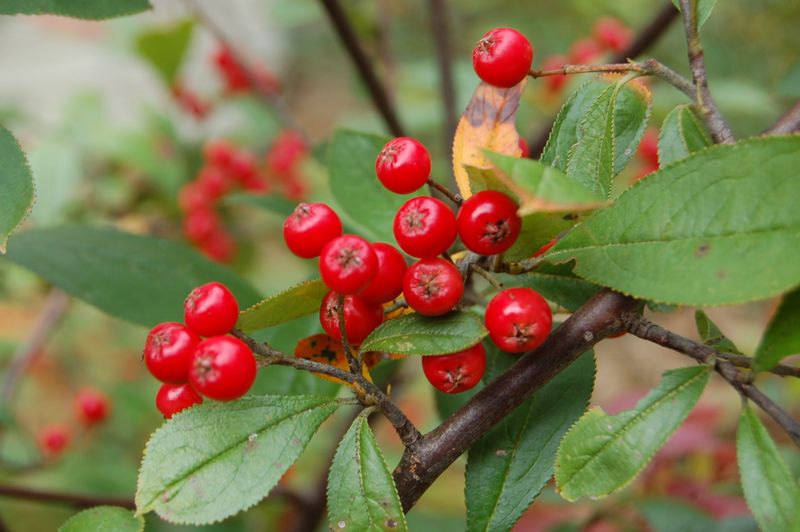
Any plant named chokeberry has a bit of a reputation problem, and the name comes from its puckery taste. Bite a raw berry and your mouth may feel like it just licked a fuzzy sweater for several long seconds.
Visually, though, this shrub deserves nothing but praise, especially during the first few weeks of October. Glossy leaves turn brilliant scarlet and orange, and bright red berries dangle in clusters along the upright stems.
Those berries often cling to branches into winter, after birds have already finished the tastier fruit elsewhere. Hungry robins and cedar waxwings usually clean them up by late winter, once other food sources run thin.
Red chokeberry grows about six to ten feet tall, spreading slowly from the roots into a loose thicket. If you prefer a tidier look, pull or snip suckers at ground level each spring to manage the spread.
Wet soil and sandy soil both suit it, which makes it a dependable pick for awkward problem areas. In the wild, it often grows in bogs and swampy woods, so a rain garden feels like home.
More sun means redder leaves and heavier fruit, though plants in partial shade still put on a decent show. Clusters of small white flowers with pink centers open in spring and attract native bees and other pollinators.
Some gardeners cook the berries into jelly with plenty of sugar, which softens that sharp, drying bite. I’m sure the birds would rather you left a few, so maybe save some for them this winter.
7. Downy Serviceberry
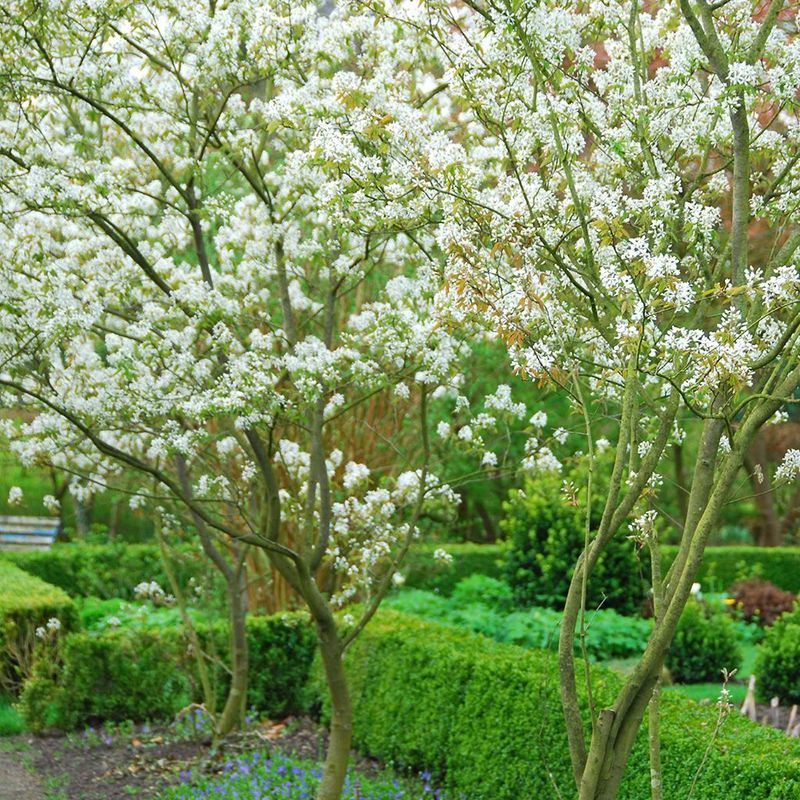
Fans of those white spring blossoms on a pear tree can keep that look without the fishy smell. Serviceberry opens clouds of white flowers in early spring, often weeks before most other trees leaf out.
Old timers called it shadbush, because it bloomed right when shad fish swam up rivers to spawn. That bit of folklore ties this plant to the seasonal rhythms that earlier generations watched very closely.
Right now, in early October, the leaves shift to warm shades of orange and red that glow at sunset. Smooth gray bark stays handsome after the leaves drop, adding quiet texture to the yard all winter long.
Downy serviceberry can reach fifteen to twenty-five feet, so it works as a small tree or large shrub. That size makes it one of the closest swaps for a pear tree on a front lawn.
Small purple fruits ripen in early summer and taste a bit like blueberries with a hint of almond. Cedar waxwings and catbirds race you for them, and the birds usually win that contest without much effort.
It grows best in moist, well-drained soil, and it handles full sun or the partial shade of larger trees. Native from the mountains to the coast in Virginia, it fits nearly every yard in the state.
Planting a balled tree this month gives it a head start, as roots keep growing while the soil stays warm. Water weekly through dry spells, and I believe you will love that first spring bloom on your new tree.
8. Northern Spicebush
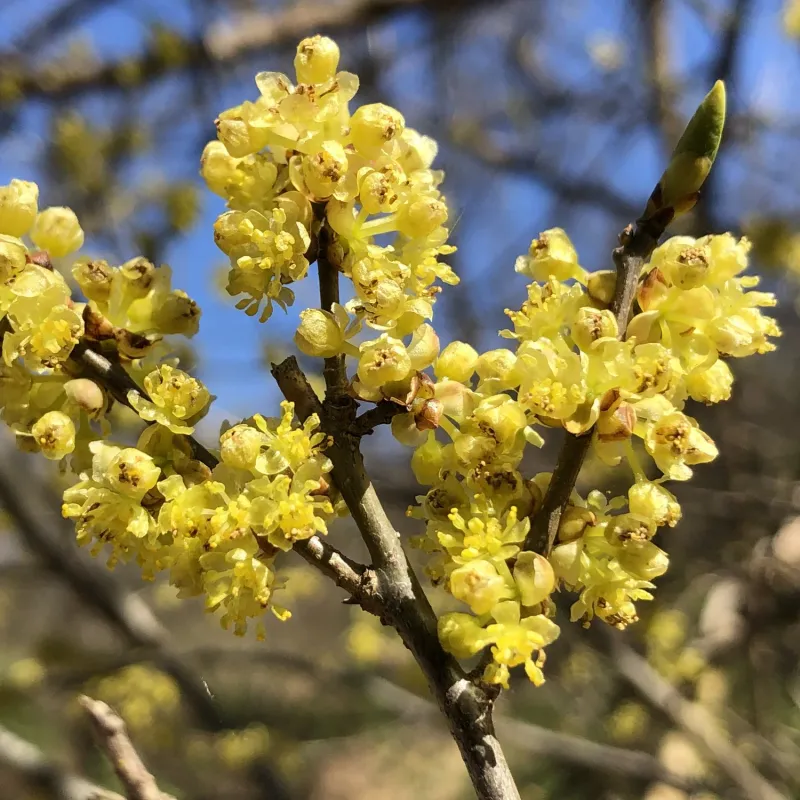
Scratch a twig or crush a leaf, and a bright, spicy scent rises up that smells a bit like citrus. That fragrance gives spicebush its name, and it makes weeding nearby a surprisingly pleasant chore in any season.
October turns the leaves a clear butter yellow, which lights up shady corners where few plants show much color. Female plants also carry glossy red berries, and migrating thrushes gobble them for fuel during their long trips south.
Like winterberry, spicebush has separate male and female plants, so you need both for a berry crop. Buying three or more young shrubs usually gives you a mix, since nurseries often sell unsexed seedlings.
Now for my favorite detail, which involves a caterpillar that looks like a tiny cartoon snake. Spicebush swallowtail larvae feed on the leaves, and their fake eye spots seem designed to scare off hungry birds.
The caterpillars fold leaves into little shelters, so look for curled leaves during the warm months next year. They rarely cause serious damage, and the dark butterflies that emerge later are well worth a few chewed leaves.
Spicebush grows about six to twelve feet tall and thrives in moist, shady spots under larger trees. It grows wild along streams in much of Virginia, and deer usually leave its aromatic leaves alone.
Tiny yellow flowers dot the bare branches very early in spring, giving early bees a welcome sip of nectar. I can’t think of a better shrub for a shady yard that once struggled under a crowded pear canopy.