The Texas Native Vine That Creates Dense Shade On Pergolas Without Dropping Debris
A pergola in Texas is only as good as the shade it provides, and a bare pergola structure in the middle of summer is not providing much. Most homeowners who want real coverage turn to climbing vines, which is the right instinct.
But choosing the wrong vine means trading one problem for another. Messy seed pods, excessive leaf drop at inconvenient times, or aggressive spreading that turns a shading solution into a landscaping project.
There’s a native Texas vine that avoids all of that. It climbs readily over pergola structures, creates genuinely dense shade that makes an outdoor space usable through the heat of the Texas summer, and does it without the constant debris that makes some vines more trouble than they’re worth.
The coverage it provides is clean, the growth is manageable, and the ecological benefits it brings as a native plant are a significant bonus that no ornamental vine from another region can offer.
For Texas homeowners who want real pergola shade without the cleanup that usually comes with it, this native vine is exactly what they’ve been looking for.
The Texas Native Vine Built For The Heat
Some plants just belong in a place, and Crossvine belongs in Texas. Bignonia capreolata has been growing across the southeastern United States and Texas for centuries, long before anyone ever thought about planting it in a backyard.
It is a true native, which means it evolved right alongside the climate, the soil, and the seasons that define Texas gardening.
What makes Crossvine stand out right away is how it climbs. Most vines need wires, staples, or constant training to go where you want them to go.
Crossvine uses small disc-like adhesive pads at the tips of its tendrils to grip surfaces on its own. It can attach to wooden pergola posts, brick walls, metal trellises, and even smooth painted surfaces without any extra hardware holding it in place.
Once it finds a surface to grab onto, it moves quickly. In its first growing season, you will already start to see real coverage spreading across your pergola frame.
By the second or third year, the canopy fills in thick and steady. There is no complicated setup involved, and you do not need to be an experienced gardener to get it going in the right direction.
Crossvine thrives in USDA hardiness zones 6 through 9, which covers most of Texas comfortably. It handles both full sun and partial shade, and it bounces back reliably after harsh winters or extended dry spells.
For Texas homeowners who want a shade vine that actually survives long-term, this plant is a serious contender worth getting to know.
Why Its Foliage Creates Such Dense Shade
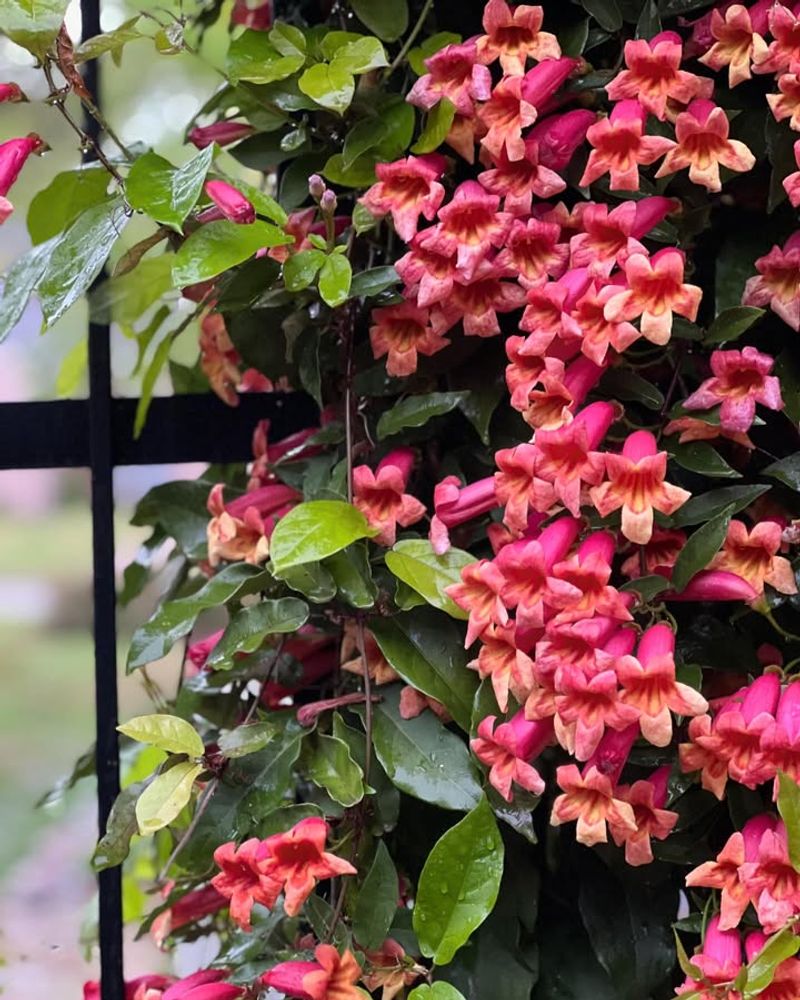
Shade is not created equal, and anyone who has sat under a sparsely covered pergola on a Texas afternoon knows exactly what that means.
Crossvine produces foliage that is genuinely thick, with deeply lobed, glossy leaves that overlap and layer over each other as the vine grows outward across a structure. The result is a canopy that actually blocks sunlight rather than just filtering it.
Your Texas Garden Changes Every Week. Your Plan Should Too.
Gardening in Texas changes quickly throughout the season. Every Friday you’ll receive a simple weekly plan showing exactly what to plant, prune, fertilize, harvest, and protect so you never miss the right timing.
Each leaf pair is made up of two oblong leaflets that grow opposite each other along the stem, and they are large enough to create real coverage without needing hundreds of individual stems to fill a gap.
As the vine matures, new growth continues to layer on top of older growth, which means the canopy gets denser every season rather than staying thin and patchy the way some fast-growing vines can.
Studies on vine-covered pergolas and green roof systems have shown that dense plant canopies can reduce surface temperatures by 10 to 20 degrees Fahrenheit compared to exposed structures. That kind of cooling effect is not just comfortable, it is practical.
It can lower the temperature of the space underneath enough to make a real difference in how long you actually want to sit outside during a Texas summer.
The leaves also stay on the vine through most of the year because Crossvine is semi-evergreen. In mild Texas winters, it may hold its foliage almost entirely.
Even in colder winters, it leafs back out quickly in spring. That means your pergola keeps its shade coverage for more months of the year than it would with a deciduous alternative.
Why It Doesn’t Litter Your Patio With Debris
Patio cleanup is one of the most frustrating parts of owning a shade tree or flowering vine. Some plants drop seed pods the size of bananas.
Others shed fleshy fruit that stains concrete and attracts insects. A few popular shade vines, like wisteria, can drop so much material that you end up sweeping the patio every single day during peak season. Crossvine sidesteps all of that.
Because it is semi-evergreen, Crossvine does not go through a dramatic leaf-drop event the way deciduous trees and vines do.
It sheds older leaves gradually and quietly over the course of the year, so there is no single autumn moment when a pile of leaves buries your furniture.
The leaves it does shed are relatively small and light, and they tend to blow away or break down quickly rather than sitting in wet clumps on your patio surface.
Crossvine also produces seed pods after flowering, but they are long, narrow, and dry. They do not fall in heavy clusters, they do not rot into a sticky mess, and they are easy to remove if any do land on your patio.
Most homeowners report that the seed pods are barely noticeable compared to the cleanup demands of other popular shade options.
The adhesive tendrils are another advantage here. Because the vine grips surfaces directly using its own pads, you do not need wire systems or clip hardware that can loosen, rust, and shed pieces over time.
The vine holds itself in place cleanly, which keeps the overall structure looking neat and reduces the kind of hardware debris that accumulates around other climbing plants.
The Bloom That Makes It More Than Just A Shade Plant
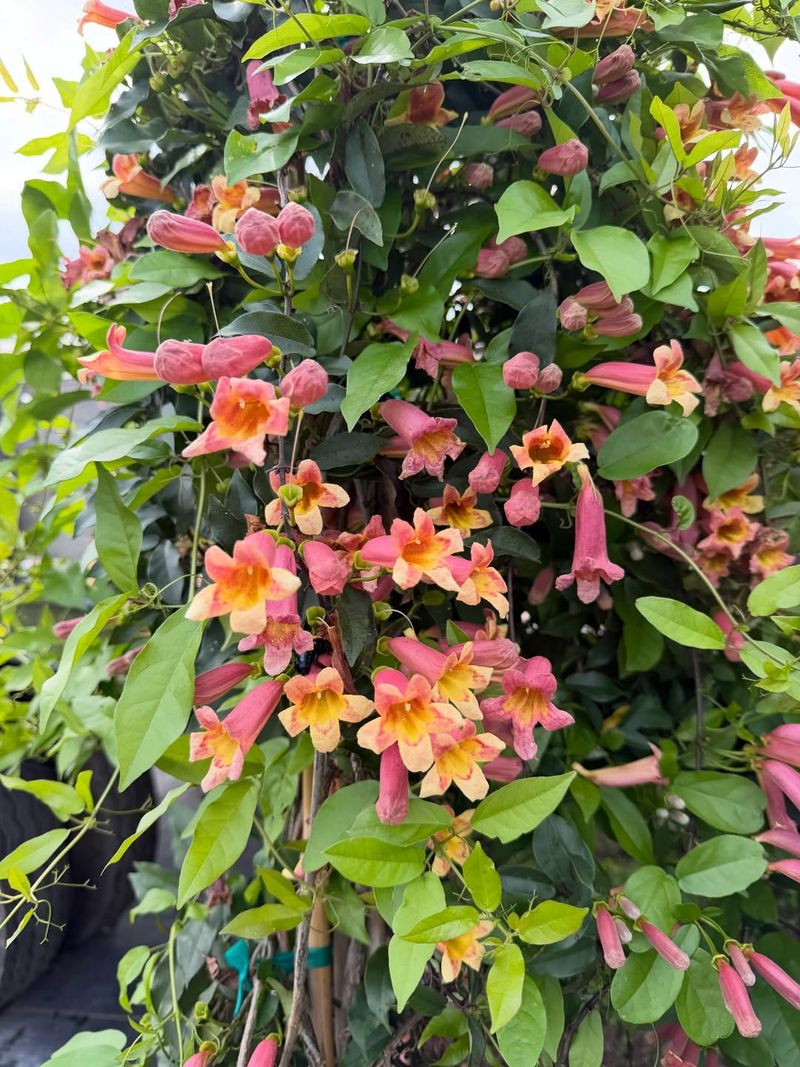
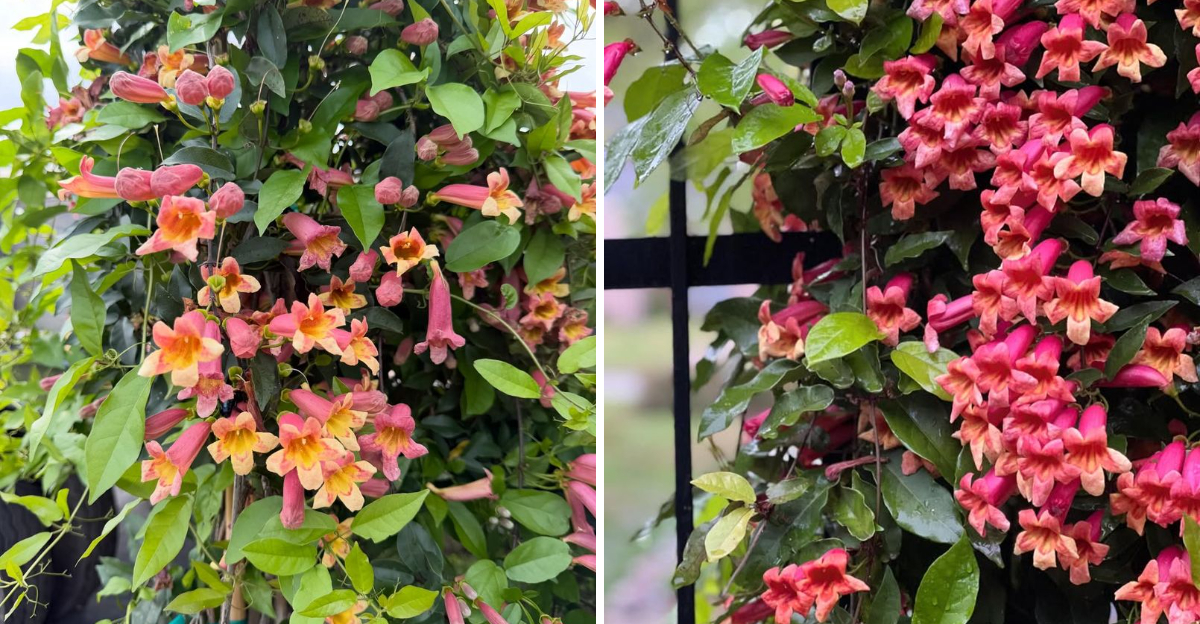
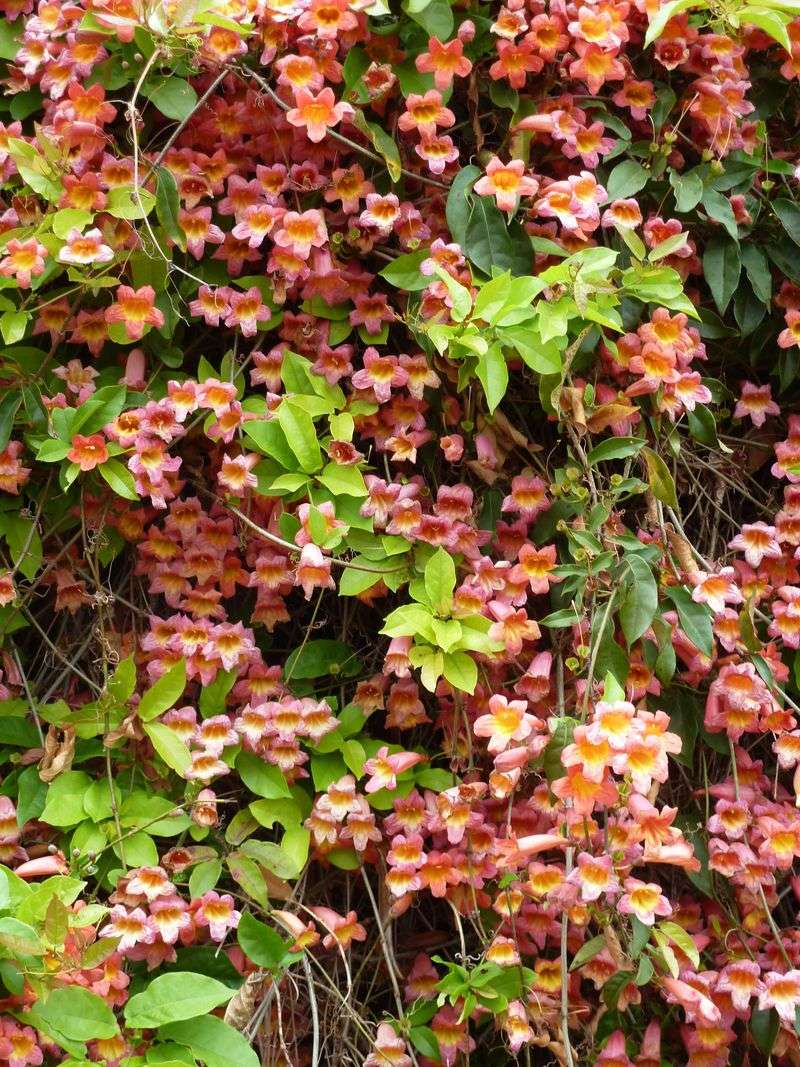
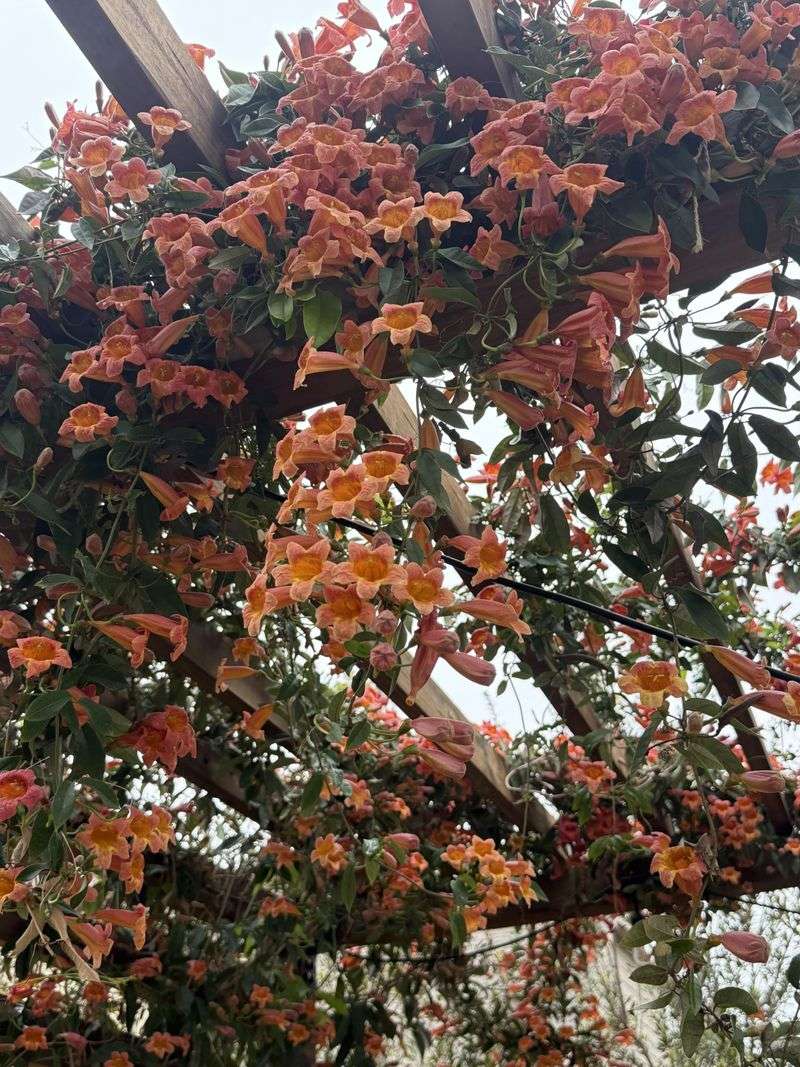
Picture walking out to your backyard in late February or early March, when most of the garden still looks bare and grey, and finding your entire pergola covered in clusters of bright orange and red trumpet-shaped flowers.
That is what Crossvine delivers, and it does it before almost any other flowering vine has even started to show buds. Early spring in Texas belongs to Crossvine in a way that very few plants can claim.
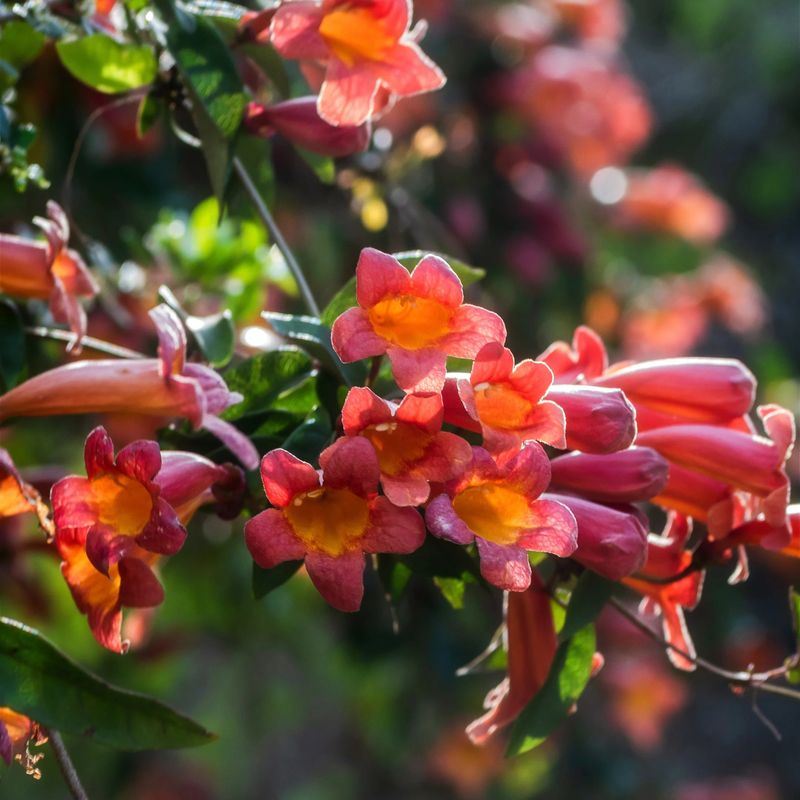
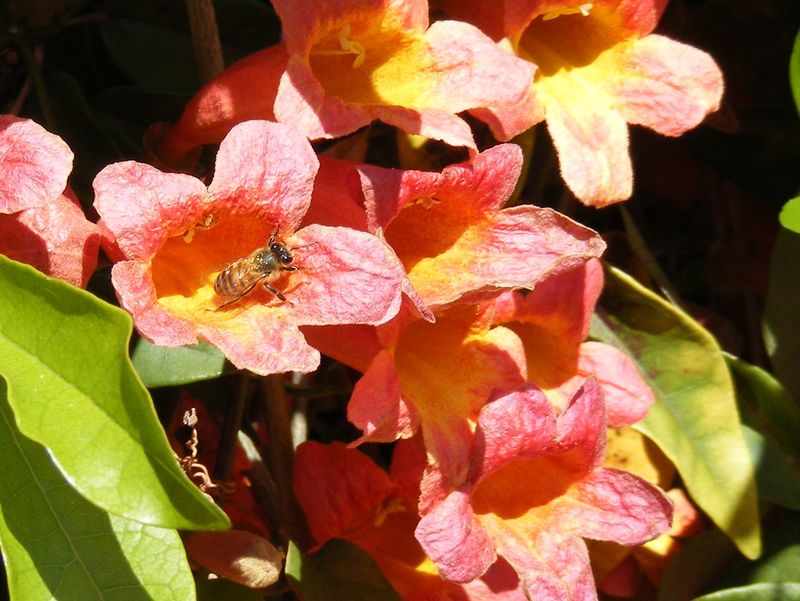
The flowers themselves are about two inches long, tubular, and vivid. The outside of each bloom is typically a deep orange-red, while the inside fades to a softer yellow or orange.
They grow in clusters of two to five blooms per stem, which means when the vine is in full flower, the color is layered and rich rather than sparse. From a distance, a blooming Crossvine pergola looks almost painted.
Flowering typically lasts for several weeks in early spring, and many Texas gardeners report a lighter secondary bloom in late summer or early fall when conditions are right.
That second flush of color is not always as dramatic as the spring show, but it is a welcome bonus during a season when most flowering plants have already finished for the year.
The name Crossvine comes from the cross-shaped pattern you see when you cut through the stem. It is a small botanical detail that adds a little extra personality to an already impressive plant.
Neighbors who see it blooming for the first time almost always stop to ask what it is, and that is a pretty good sign that you made the right planting choice.
How Easy It Is To Grow And Maintain
Not every homeowner wants to spend their weekends managing a high-maintenance plant. Crossvine understands that.
Once it is established in the ground, which typically takes one full growing season, it becomes one of the most self-sufficient plants you can have on your property.
It does not need fertilizing on a strict schedule, it does not demand special soil amendments, and it does not require a complex watering routine to stay healthy and full.
Watering during the first season is the most important step. New plantings need consistent moisture to develop a strong root system, so watering deeply once or twice a week during dry stretches in that first year sets the vine up for long-term success.
After that, established Crossvine plants handle Texas drought conditions on their own. They may slow their growth during extended dry periods, but they bounce back as soon as rainfall returns.
Pruning is really the only regular maintenance task the plant calls for, and even that is optional in many cases. If your pergola has a defined edge and you want the vine to stay within it, a light trim once or twice a year keeps things tidy.
The best time to prune is right after the spring bloom finishes, so you do not accidentally remove the buds that form for next year’s flower show.
Crossvine grows best in full sun but tolerates partial shade without losing its vigor. It is not picky about soil type and does fine in the clay-heavy or sandy soils that are common across different parts of Texas.
Plant it near the base of your pergola, point it in the right direction, and it largely handles the rest on its own.
A Bonus For Local Wildlife – Hummingbirds And Pollinators Love It
A vine that shades your patio, skips the mess, and blooms brilliantly in early spring is already doing a lot of work. But Crossvine has one more thing going for it that puts it in a category of its own.
Those trumpet-shaped flowers are perfectly shaped for hummingbirds, and ruby-throated hummingbirds, which are common across Texas during their spring migration, make a beeline for Crossvine blooms whenever they are nearby.
Hummingbirds are attracted to tubular red and orange flowers because the shape fits their long beaks and the color stands out to them visually. Crossvine checks both of those boxes without any extra effort on your part.
Plant the vine, let it bloom, and the hummingbirds will find it. Many Texas gardeners report their first hummingbird visitors of the season arriving specifically when the Crossvine opens up in late winter or early spring.
Beyond hummingbirds, the flowers also draw native bees, butterflies, and other pollinators that are active during the early spring season. Supporting these insects matters because they pollinate vegetable gardens, fruit trees, and native plants across your neighborhood.
A single Crossvine pergola can become a meaningful pit stop for local pollinators during a time of year when few other nectar sources are available.
Adding ecological value to your backyard without adding extra work is a rare combination. Crossvine delivers shade, beauty, low maintenance, and a genuine contribution to the local ecosystem all at the same time.
For Texas homeowners who want their outdoor space to do more than just look good, this native vine earns every inch of pergola space it covers.