The Visitors Returning To Colorado Towns Follow No Map But Memory
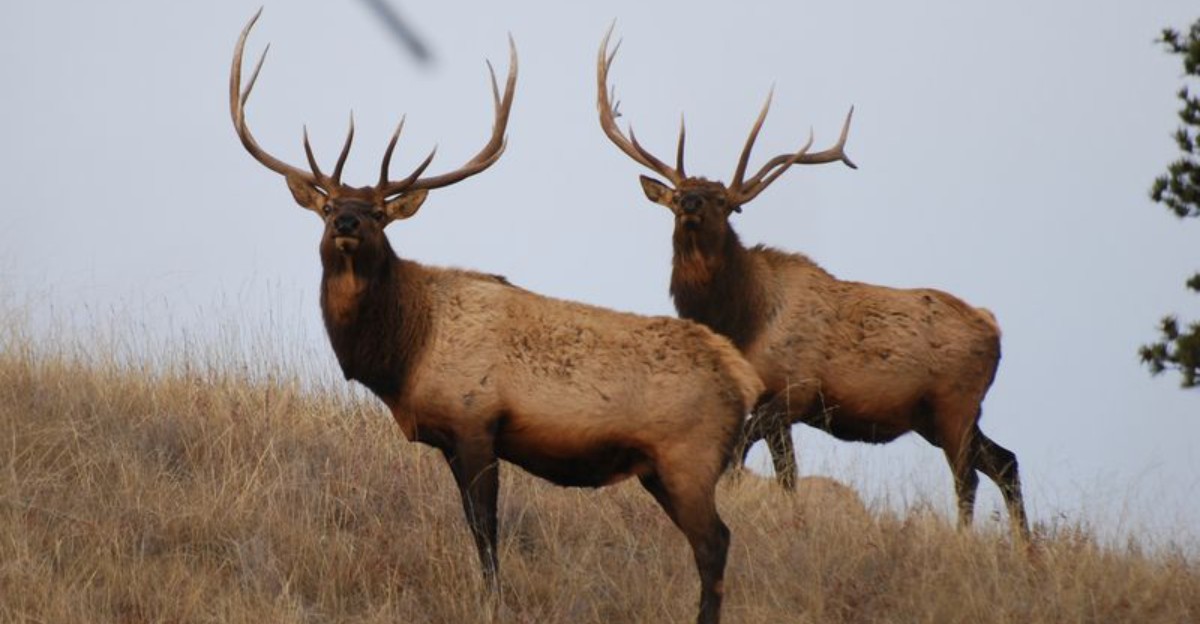
That strange sound at dusk is not random. It signals a shift you can feel in Colorado air. Something enormous is coming down from the peaks toward you. Bulls bugle loudly through canyons while herds shift direction overnight.
Your porch light now suddenly draws different visitors than usual. Elk don’t recognize property lines or manicured lawns. They follow instinct passed down through countless generations.
Cool nights push massive herds toward the valleys near you. Estes Park and Evergreen residents feel this shift each year. Colorado’s high country empties while foothill neighborhoods fill with sound.
Watching antlers move past your window feels almost surreal. Sharing space with these travelers demands respect, not caution alone. Curiosity serves you better than worry ever could.
Patience protects your garden more than any fence. Awareness now separates a peaceful autumn from a messy one. You won’t want to miss what happens next outside your window.
The Bugle That Signals The Season Has Turned
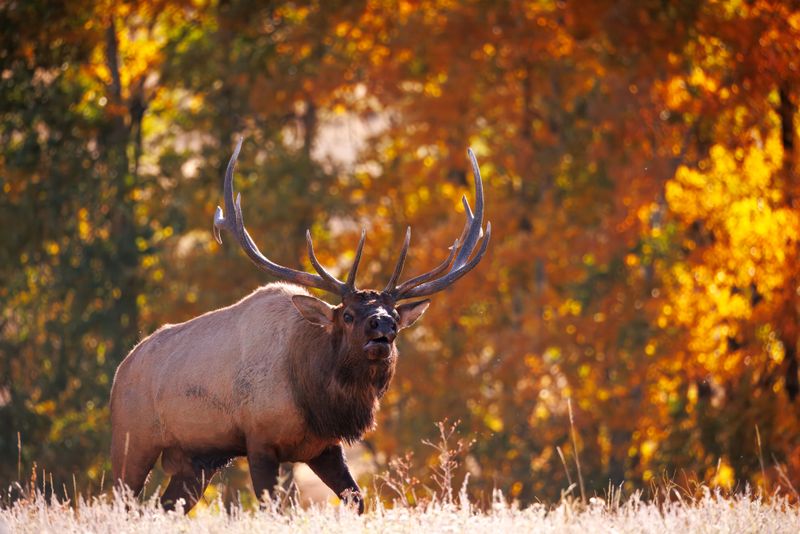
That eerie, whistling call drifting across the valley at dusk is the unofficial start of autumn along the Front Range. Bull elk produce it, and the sound carries much farther than most people expect.
Biologists call it bugling, and it peaks from mid-September into early October. A bull stretches his neck, opens his mouth, and pushes out a rising note that ends in a series of grunts.
The purpose is simple communication: he is announcing his size, advertising to cows, and warning rival bulls to keep their distance.
What surprises visitors is how high-pitched it sounds coming from an 800-pound animal. Researchers think elk rely partly on nasal resonance to hit notes their body size would not normally allow.
Estes Park leans into the moment with its annual elk-themed celebration, and Rocky Mountain National Park meadows fill with parked cars each evening. Closer to home, folks in Evergreen, Golden, and Boulder often hear bugling from their own decks.
If you want to listen, step outside about an hour before sunset. Keep lights low, keep voices down, and let the sound come to you.
One piece of advice worth repeating: bugling means the rut is underway, and bulls are running on hormones. Admire the concert from a window, a porch, or your car, and give any animal you spot a very wide berth during these weeks.
Why Herds Drift Downhill When The Weather Cools
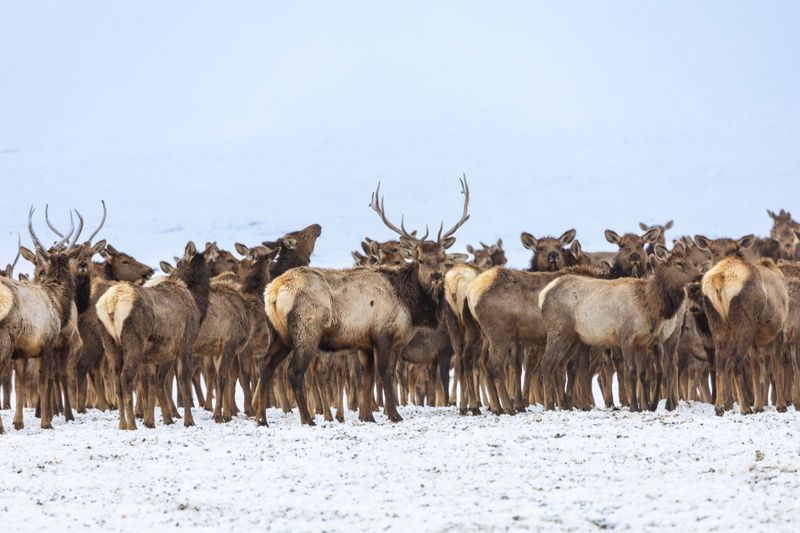
Elk are creatures of altitude. Summer finds them high, often above 9,000 feet, where cool air and lush green forage make life comfortable.
Once September arrives, that arrangement starts to fall apart. Frost hits the high meadows, grasses lose their nutrition, and early snow makes food harder to reach.
The herds respond by walking downhill, sometimes dropping thousands of feet over a few weeks.
Their destinations are the lower foothills and grassy benches where snow stays shallow and food remains reachable through winter.
Those same benches happen to be where Front Range towns were built, which is how a rural migration ends up crossing driveways and greenbelts.
Your Colorado Garden Changes Every Week. Your Plan Should Too.
Gardening in Colorado changes quickly throughout the season. Every Friday you’ll receive a simple weekly plan showing exactly what to plant, prune, fertilize, harvest, and protect so you never miss the right timing.
The routes themselves are old. Elk learn travel corridors from the cows they follow as calves, and those paths get passed down through generations. A fence or a new cul-de-sac rarely erases the memory; the animals simply thread around it.
Weather acts as the trigger. A hard cold snap or the first real mountain snowfall can push a herd down within a couple of days, which is why the timing shifts a little each year.
For homeowners, understanding the pattern makes the fall visits far less startling. Elk are not lost or confused when they appear on your lawn.
They are following a schedule that predates the neighborhood, and they will move on as conditions and appetite dictate.
Front Range Towns Where The Herds Return Each Fall
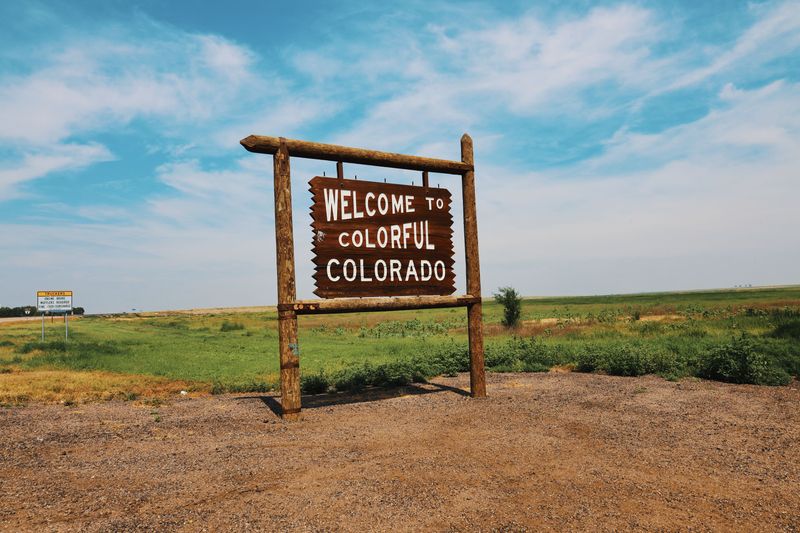
Estes Park may be the headliner, but plenty of other communities host the same guests. Evergreen, Conifer, Bailey, Nederland, Lyons, and the western edges of Boulder and Golden all see hooves on pavement each fall.
Golf courses tend to be the hot spot. Wide, watered turf sits right next to cover, creating appealing habitat for elk.
The Estes Park golf course and Evergreen’s open spaces regularly host bedded herds while golfers wait it out.
School fields, cemeteries, and park lawns attract the same crowds for the same reason. Anywhere grass stays green longer than the surrounding hillsides becomes a magnet.
Traffic changes too. Highway 7, Highway 36, and mountain roads through Evergreen see more animals crossing at dawn and dusk, and collisions spike in October and November.
Local officials often post seasonal signs and reduce speed limits in known crossing zones. Those signs are worth taking seriously, since elk travel in groups and the first one across is rarely the last.
A practical tip for drivers: if you spot one animal near the shoulder, slow down and scan both sides. Cows and calves often follow several seconds behind the leader.
Residents in these towns learn to build the visitors into their routines, allowing extra minutes for the morning commute and keeping cameras handy. The inconvenience is real, but so is the thrill of a hundred elk crossing Main Street.
Protecting Your Yard While Coexisting With Elk
Ask anyone in Evergreen about their aspen saplings and you may get a long sigh. A hungry herd can strip young trees and shrubs in a single visit, depending on herd size and available forage.
Fencing is the reliable answer, though height matters. Experts suggest at least eight feet for a barrier that actually discourages a jump.
For smaller budgets, wrap individual trunks with hardware cloth or plastic tree guards before the rut heats up. Cages around new plantings work well through the first few winters.
Plant choices help too. Elk generally pass over ornamental grasses, lavender, catmint, junipers, and fuzzy or strongly scented foliage.
They gravitate toward tulips, roses, fruit trees, and anything tender and well watered.
Repellent sprays give short-term relief, though effectiveness varies by product and can diminish with rain or irrigation. Reapply every couple of weeks during peak visits.
Skip the temptation to leave out hay or corn. Feeding pulls animals toward roads, spreads illness through crowded groups, and is illegal in Colorado.
Motion-activated sprinklers can nudge a group along without conflict, and they double as a decent lawn watering system.
The realistic goal is coexistence, not constant defense. Protect what you truly care about, accept a few nibbled shrubs, and enjoy the fact that your backyard sits along an ancient highway.
How Close Is Too Close During Rutting Season
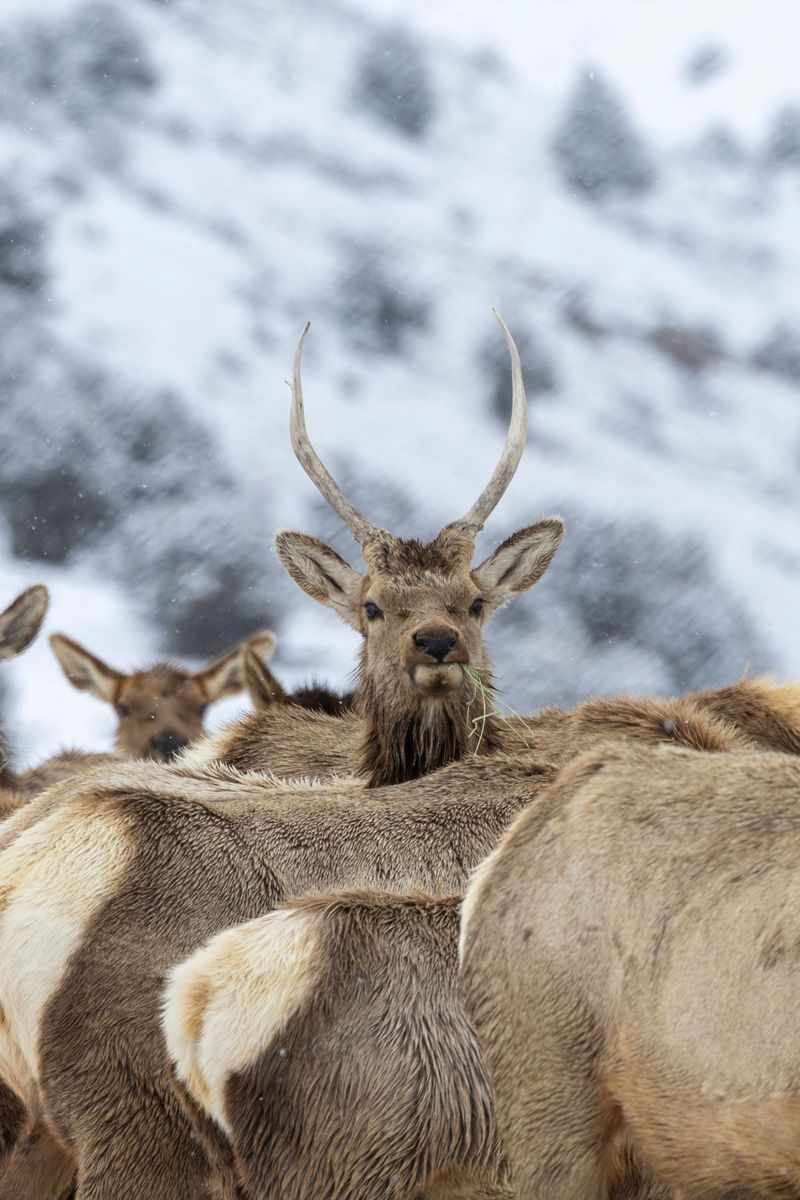
Picture an 800-pound animal with four feet of bone on his head. That is a rutting bull, driven by seasonal hormonal changes, and he does not recognize property lines.
Colorado Parks and Wildlife recommends staying at least 75 feet away, roughly two school bus lengths. In Rocky Mountain National Park, rangers close certain meadows to foot traffic in the evenings during September and October to keep people and elk apart.
Signs of an animal losing patience include a raised head, flattened ears, curled lip, grinding teeth, or pawing at the ground. Any of those means you are too close and should back away calmly.
Cows with calves deserve equal caution. Mothers can charge quickly if they feel their young are threatened, often after subtle warning signs like raised ears or a lowered head.
Keep dogs leashed and indoors when a herd settles nearby. Elk read a loose dog as a predator, and the confrontation rarely ends well for the pet or the owner who runs after it.
The selfie problem is real. Injuries along the Front Range are often linked to people stepping off a path for a better phone shot.
Use a zoom lens, watch from a vehicle, or stand behind a solid structure like a building corner. A parked car makes an excellent viewing blind.
Teach kids the rule early: hold up a thumb at arm’s length, and if the animal disappears behind it, your distance is reasonable. If not, add more space.
Best Spots And Times To Catch The Show
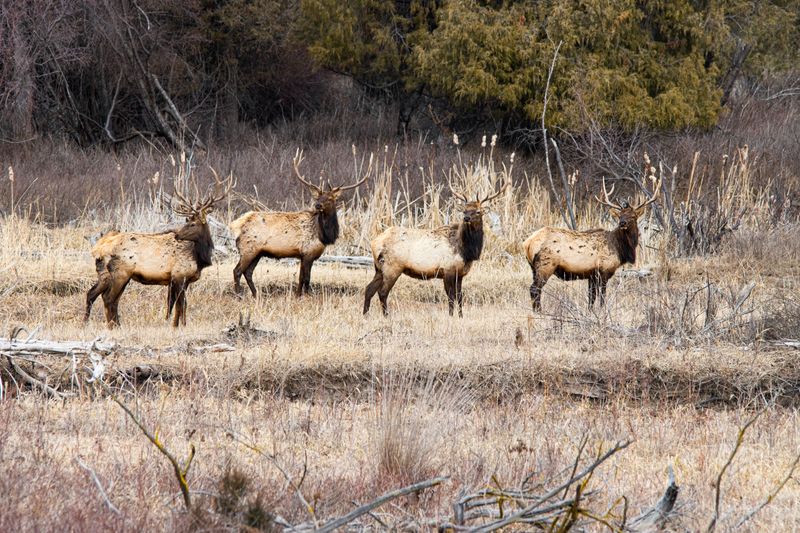
Timing beats luck when it comes to elk watching. Dawn and the hour before sunset deliver the best action, because that is when herds move between bedding areas and feeding grounds.
Moraine Park, Horseshoe Park, and Upper Beaver Meadows in Rocky Mountain National Park draw the biggest crowds for good reason. Wide open meadows plus a backdrop of peaks make for unforgettable evenings.
Expect company. The park runs elk viewing traffic control in autumn, and volunteer rangers help manage parking and keep visitors at a safe distance.
Closer to Denver, try Evergreen Lake, Elk Meadow Open Space, Genesee Park along I-70, and the trails around Lookout Mountain. Boulder County’s Heil Valley Ranch and Hall Ranch also produce solid sightings.
Bring binoculars and dress in layers, since mountain temperatures drop fast once the sun slides behind a ridge. A thermos of something warm makes the wait pleasant.
Photographers should pack a telephoto lens of 300mm or longer and skip the flash entirely. Bright bursts of light stress animals and ruin the mood for everyone nearby.
Stay on established trails and pullouts, and park only in designated areas so you are not blocking traffic on narrow mountain roads.
Here is a fun bit of history: elk were nearly gone from Colorado by 1910, and herds transplanted from Yellowstone helped rebuild the population. The animals grazing outside your window are descendants of that comeback story.