The White Ball The Size Of A Soccer Ball Appearing In Indiana Lawns
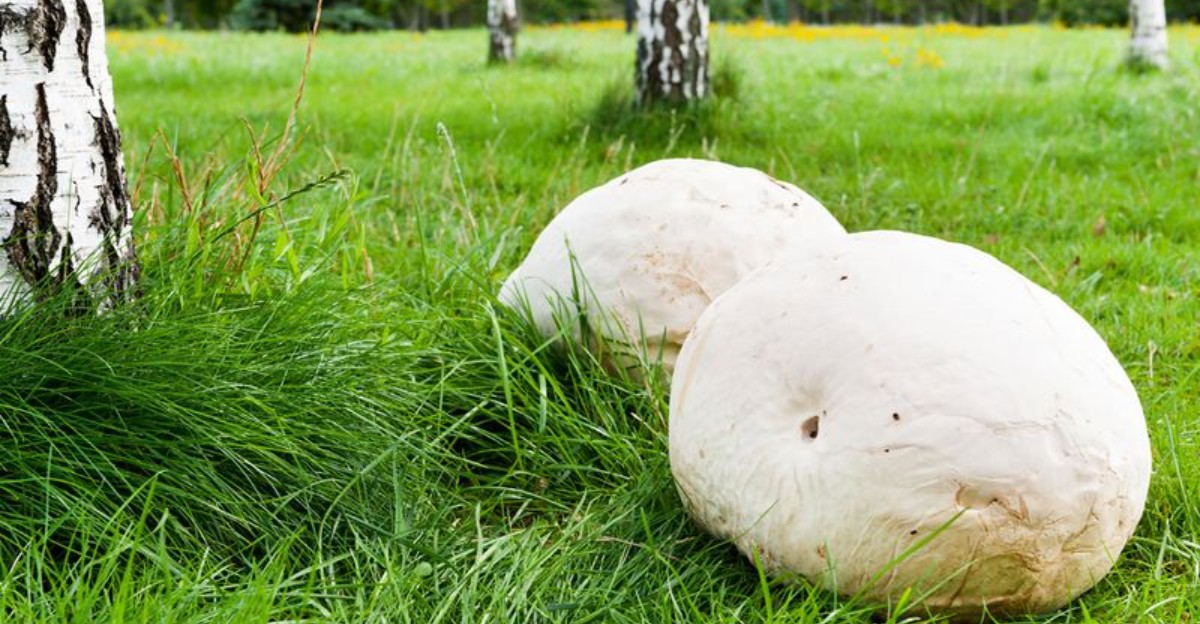
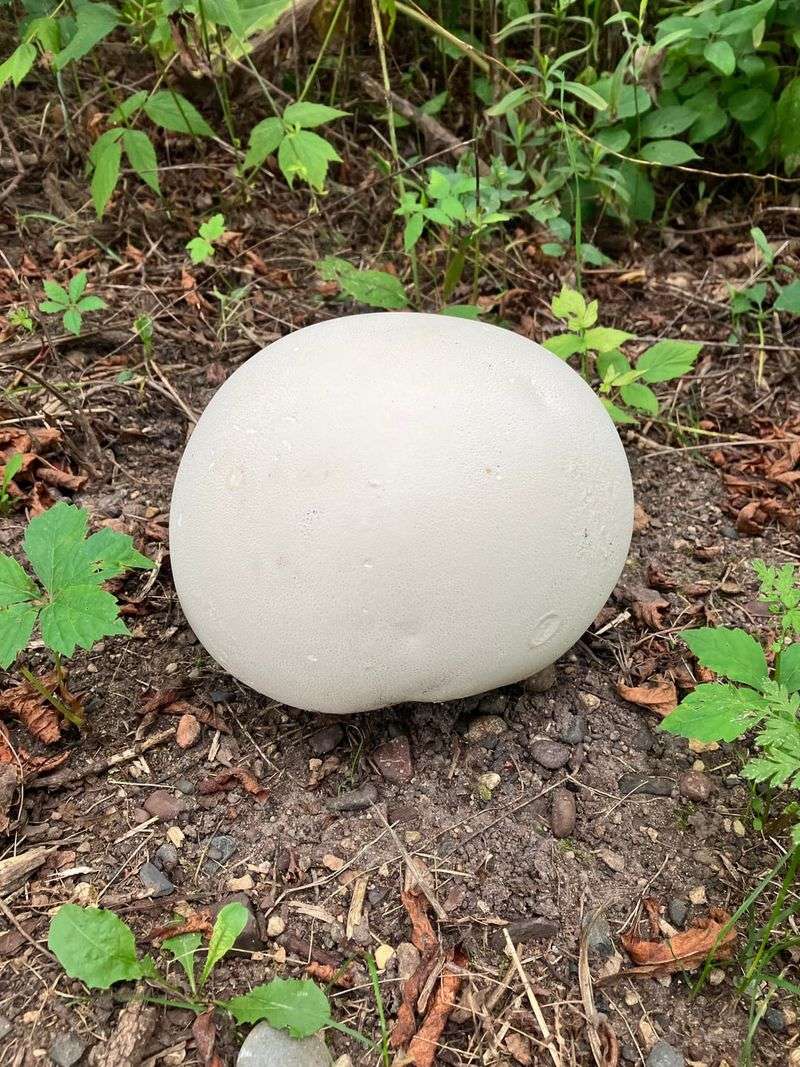
You step outside for the morning paper, and something pale and round is sitting out in the grass. It certainly was not there yesterday, and it is roughly the size of a soccer ball.
Your first guess might be a stray volleyball launched over the fence by the neighbor kids. Then you nudge the thing with your shoe, and it stubbornly refuses to bounce anywhere.
Indiana yards serve up this pale surprise most years in late summer and fall, after soaking rains. Neighbors text blurry photos back and forth, half amused and half genuinely alarmed by the thing.
There’s a name for it, a season behind it, and a fairly simple explanation, though your lawn still ends up owning a beach ball you did not buy.
The Giant Puffball Behind The Mystery
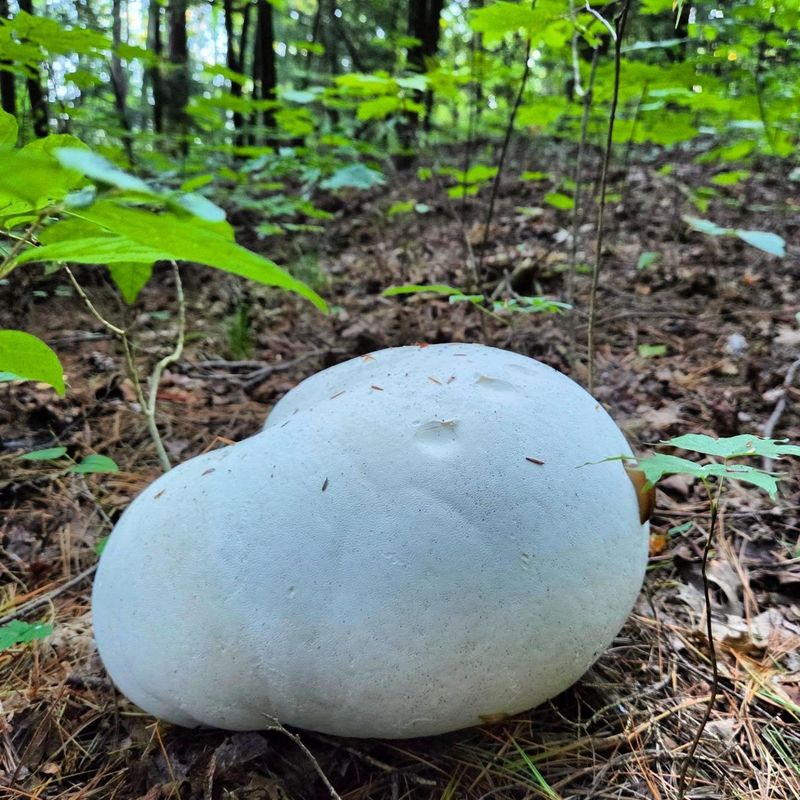
That pale orb in the grass is almost certainly a giant puffball, known to scientists as Calvatia gigantea. It is a fungus, not an egg, not a ball, and not anything from outer space.
The smooth white surface feels a bit like a marshmallow when you press it gently. Inside, a fresh one looks solid white, like soft cheese.
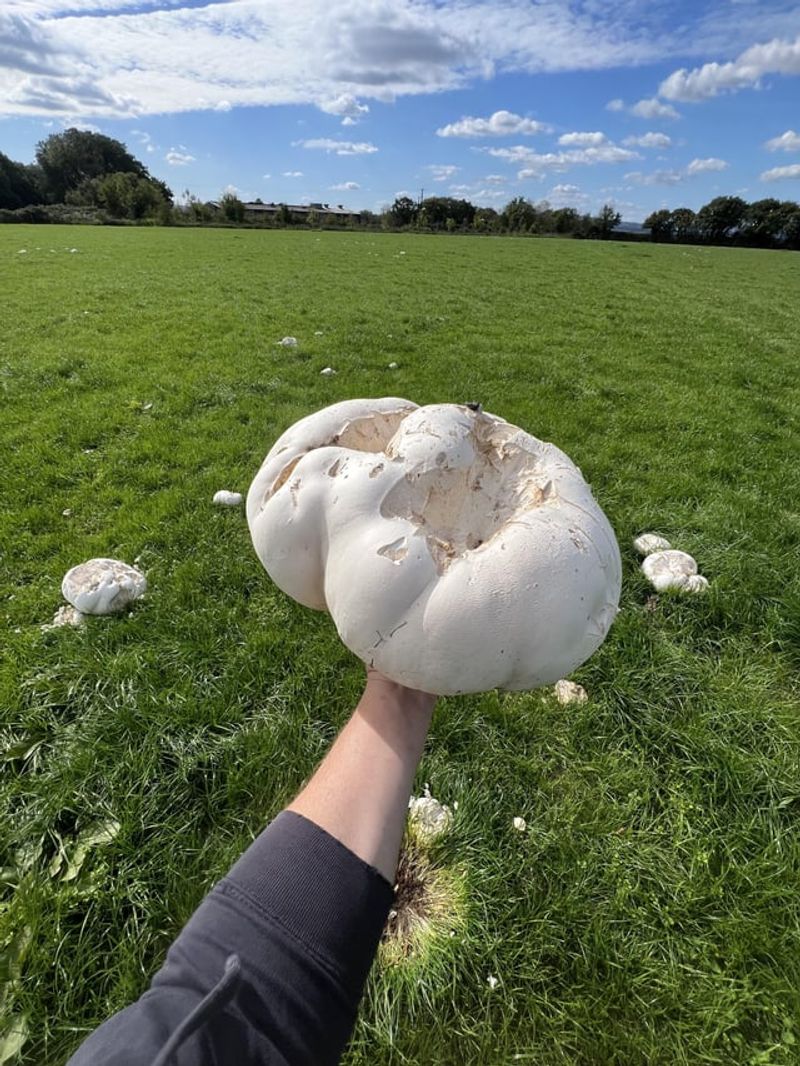
Sizes vary wildly across Indiana yards, from a grapefruit to something bigger than a basketball. Record finds have topped fifty pounds, though most backyard specimens stay far smaller.
Only the fruiting body shows above ground, much like an apple hanging from a tree. The real organism lives underground as a web of thin threads called mycelium.
Its job is simple, and it involves producing an astonishing number of microscopic spores. A single large puffball can hold several trillion of them inside that white flesh.
Indiana homeowners often spot them in open turf, along fence lines, and near old stumps. Pastures, park edges, and untreated lawns across the state make especially good real estate.
Finding one does not mean your yard is sick or that your grass is in trouble. Most of the time it signals soil with plenty of organic material to recycle.
Neighbors may swear someone left a volleyball behind, and honestly, the confusion is fair. One close look at the flat underside usually ends the argument.
Kids love poking these things, so a quick family identification lesson goes a long way. Curiosity plus caution keeps everyone happy and keeps the lawn drama entertaining.
Buried Wood And Rich Soil Feeding A Hidden Network
Under your lawn sits a quiet recycling crew that works year round without asking for anything. Giant puffball mycelium spreads through soil, breaking down old roots, leaves, and buried wood.
Many Indiana neighborhoods were built over cleared woodlots, and stumps were simply buried on site. Decades later, that hidden wood still feeds fungi sitting below the grass.
Rich bottomland soils along rivers such as the Wabash hold plenty of organic matter. Fungi there have a steady food supply, which supports larger fruiting bodies.
Old manure, compost piles, and leaf litter also give the network extra fuel. Heavy feeding underground often shows up later as surprisingly large white orbs above.
Your Indiana Garden Changes Every Week. Your Plan Should Too.
Gardening in Indiana changes quickly throughout the season. Every Friday you’ll receive a simple weekly plan showing exactly what to plant, prune, fertilize, harvest, and protect so you never miss the right timing.
The threads themselves are thinner than sewing thread and nearly invisible to the eye. Scoop a handful of soil and you might see faint white strands running through it.
That network rarely causes any harm to your turf, your trees, or your foundation. Grass roots and fungal threads share the same space without any real conflict.
Puffballs frequently return to the same patch because the mycelium stays alive underground. Homeowners sometimes report a white ball in the same corner for many years running.
Some folks find that comforting, like having a strange but harmless tenant out back. Others just mow around it and pretend the yard came with a decoration.
Either way, the underground half of the story explains far more than the visible ball. Soil health and buried wood are the real headline, not the mushroom itself.
Late Summer Rain And Overnight Growth Spurts
Timing catches people off guard more than size does, honestly. A yard can look normal on Friday and hold a white ball by Saturday morning.
Indiana puffballs usually appear from late July through October, with September being prime time. Warm soil plus two or three inches of rain sets the whole process moving.
Cooler nights following a humid stretch seem to trigger the strongest flushes. Fungal threads pump water into the fruiting body, which expands with remarkable speed.
Growth of several inches in a single day is common under good conditions. That explains the classic story of a ball that supposedly appeared out of nowhere.
Freshness matters if you care about identification or the kitchen. A young specimen stays firm, bright white, and smooth across the entire surface.
Within a week or two, the skin turns yellowish, then brown and papery. Press an older one and a puff of olive brown dust escapes.
Dry spells can pause everything, leaving the network dormant until the next storm. Some summers pass with no puffballs at all, which throws off people expecting them.
Mark the calendar after a big August rain if you enjoy watching for them. Morning walks right after storms tend to produce the best backyard discoveries.
Frost eventually ends the season and the leftovers slowly break apart in the grass. By spring, only a dark spot in the turf remains as evidence.
Neighbors who compare notes usually find their yards flush during the same week. Local weather, not luck, runs the schedule for everyone on the block.
Risky Mix-Ups With Young Amanita Buttons
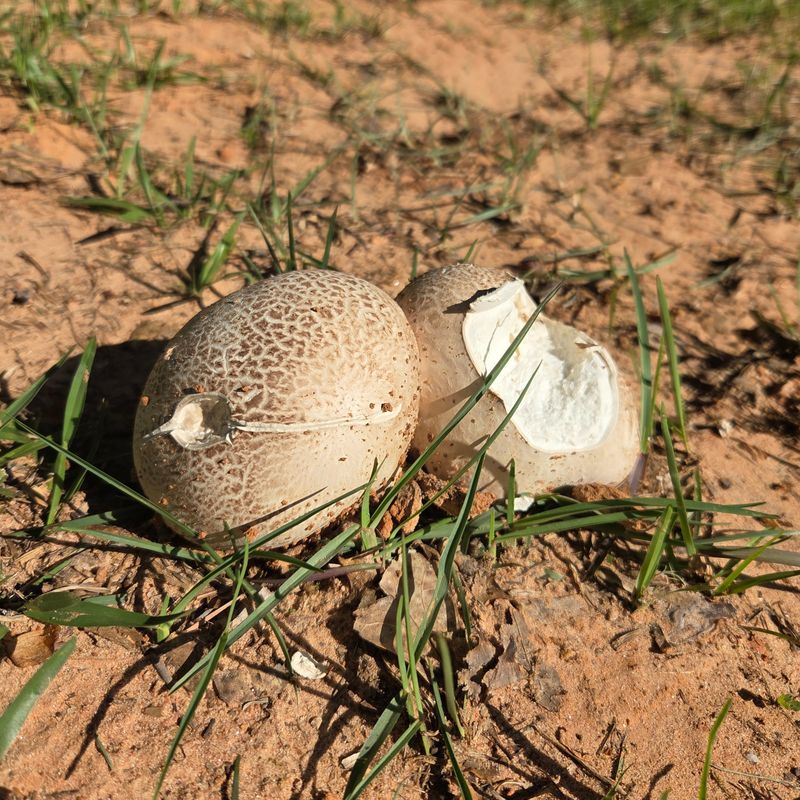
Here is the part that foragers take seriously, and for very good reason. Young Amanita mushrooms start as white egg shaped buttons that resemble small puffballs.
Amanitas are the mushrooms most often blamed for serious poisoning cases, which is exactly why mixing one up with a puffball is a mistake worth avoiding.
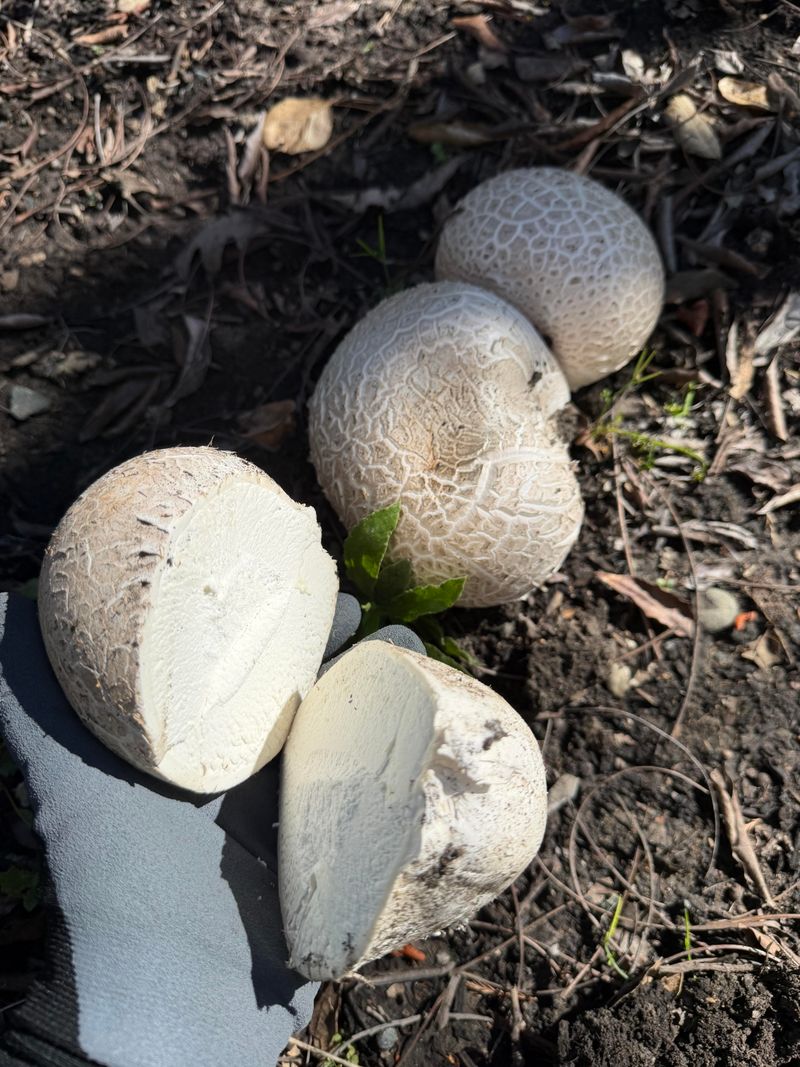
The check takes five seconds and requires nothing but a knife. Slice any suspected puffball from top to bottom, straight through the middle.
A true giant puffball shows solid white flesh with no lines, gills, or shapes. Uniform texture throughout, similar to fresh mozzarella, is the signal you want.
An Amanita button reveals a tiny mushroom outline inside, complete with cap and stem. Any hint of that silhouette means you put the whole thing down immediately.
Yellow, purple, or brown coloring inside also rules out a fresh edible puffball. Darkening flesh simply means spores are forming and the window has closed.
Size helps, since giant puffballs usually exceed four inches across when mature. Small white balls in the lawn deserve much more suspicion than large ones.
Pigskin puffballs are another look-alike, with thick rinds and dark purple interiors. Those cause stomach trouble and grow commonly in Indiana woods and yards.
When anything seems uncertain, the smart move is admiring it and walking away. No backyard mushroom is worth a gamble with your family’s health.
Indiana’s Purdue Extension offices and local mycological clubs help with free identification. Photos, a cross section, and patience solve most backyard mushroom mysteries.
Safe Removal Before The Spore Cloud Bursts
Waiting too long turns an easy chore into a dusty mess. Mature puffballs release clouds of brown spores when kicked, mowed, or stepped on.
Removing one while it stays firm and white keeps the cleanup simple. Slide a shovel underneath, lift the whole thing, and carry it off intact.
Compost piles, brush piles, and yard waste bins all work as destinations. Skip the mower, since blades turn a soft puffball into airborne confetti.
Some people react to heavy spore exposure with coughing or irritated eyes. A dust mask is a reasonable precaution when handling an older, browning specimen.
Gloves keep hands clean, though the fungus itself poses little danger to skin. Wash up afterward the same way you would after any garden project.
Leaving one alone is also a perfectly fine choice for most yards. Rain and insects break it down within a few weeks without any help.
Pets deserve a quick thought, since dogs investigate strange objects with their mouths. Removing the puffball early avoids an awkward call to the veterinarian later.
Cooks who identify a fresh one correctly often slice it thick and pan fry it. The flavor lands somewhere between tofu and portobello, mild and pleasantly chewy.
Refrigeration buys only a couple of days before the flesh yellows and softens. Use it fast or let the lawn keep it, no hard feelings either way.
Mark the spot with a stake if you plan to watch for repeats. Knowing where they favor makes next season’s cleanup much quicker.
Lawn Habits That Discourage A Return Next Season
Full removal of the underground network is basically off the table for homeowners. Fungicides sold for lawns do little against the threads living deep in soil.
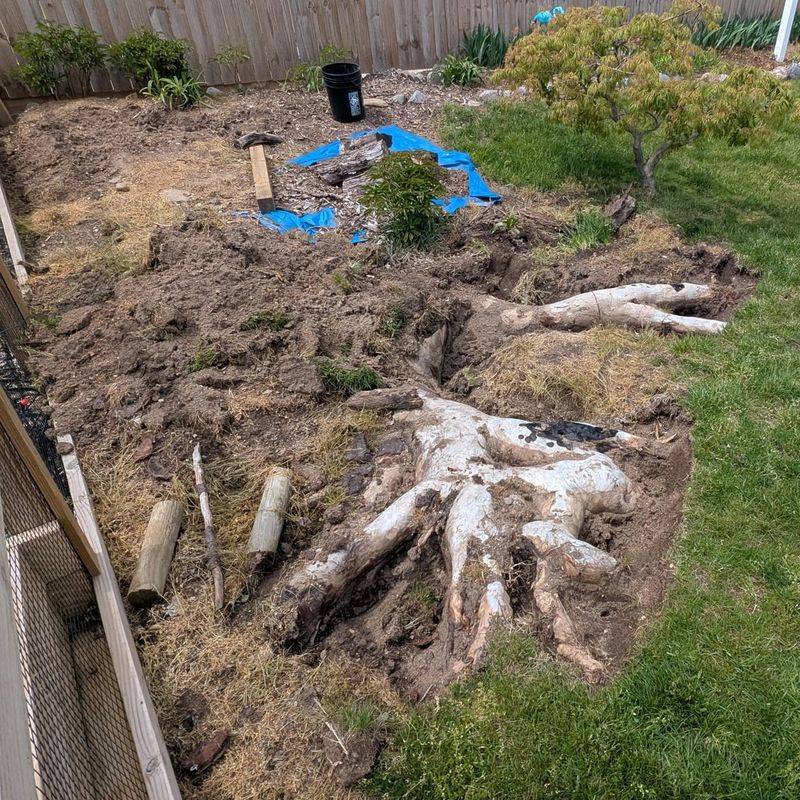
Reducing the food supply is the realistic goal, and it starts with wood. Grind out old stumps, remove buried limbs, and pull big roots when possible.
Thatch thicker than half an inch gives fungi extra material to digest. Core aeration each fall helps break that layer down and improves drainage.
Watering deeply but less often keeps the surface drier between soakings. Constant moisture from daily sprinkler runs encourages fruiting more than anything else.
Proper mowing height, around three inches, supports strong turf that fills gaps. Healthy grass will not stop puffballs, though it makes the yard look intentional.
Nitrogen fertilizer speeds the breakdown of organic matter in the top few inches. Balanced feeding in spring and fall keeps soil biology active and tidy.
Raking heavy leaf drop instead of letting it mat down also helps. Leaves left in thick piles become a buffet for every fungus around.
Honest expectations matter here, because puffballs may return regardless of your effort. Many Hoosier yards host the same patch for a decade or longer.
Plenty of gardeners eventually stop fighting and start photographing them instead. A white ball the size of a soccer ball makes a memorable lawn story.
Neighbors will ask about it, and you will have a decent answer ready. That beats guessing at a mystery object sitting beside the mailbox.