The Worst Places To Hang A Hummingbird Feeder In Your New York Yard
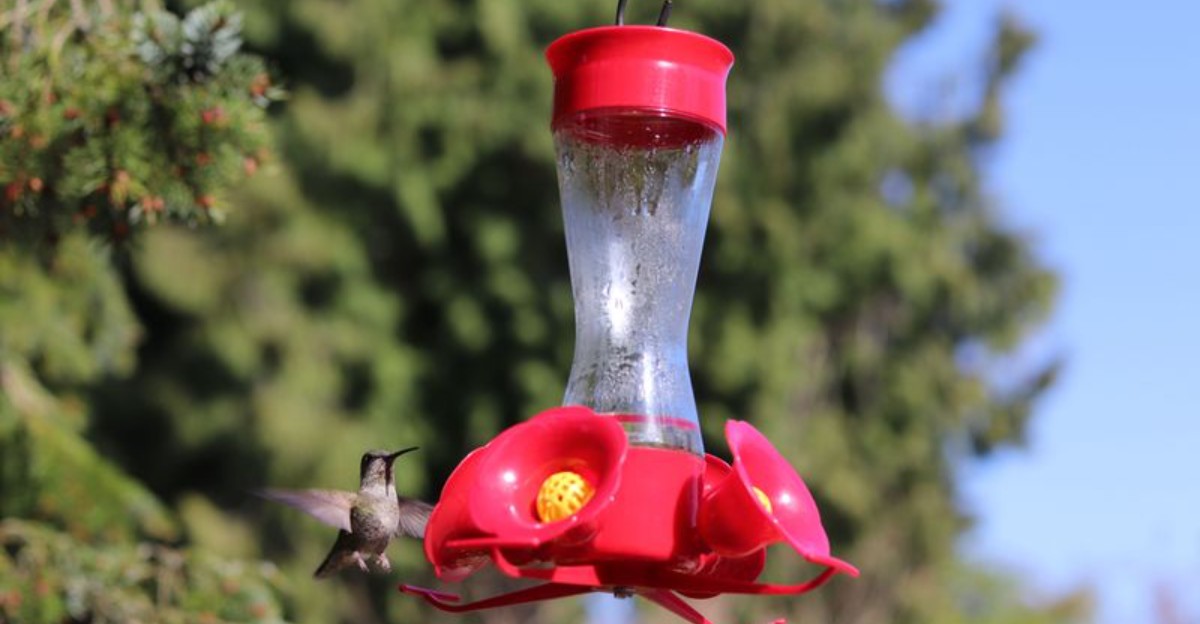
Nothing beats the whir of tiny wings outside your kitchen window on a warm morning. One flash of ruby red, and suddenly your coffee goes cold while you stare.
Hanging a hummingbird feeder seems simple enough. Fill it with sugar water, hook it up, and wait for the show.
Yet the spot you choose can decide whether birds flock in or fly right past. Some locations spoil nectar, invite sneaky predators, or turn a feeder into a sticky headache.
Across New York, ruby-throated hummingbirds arrive each spring hungry after a long journey. A safe, well-placed feeder helps them refuel through the busy summer season.
The spots below cause the most trouble, so steer clear of them before setting up next year. A few small changes could make your yard the neighborhood’s favorite hummingbird hangout.
1. In Blazing All-Day Sun Where Nectar Spoils Fast
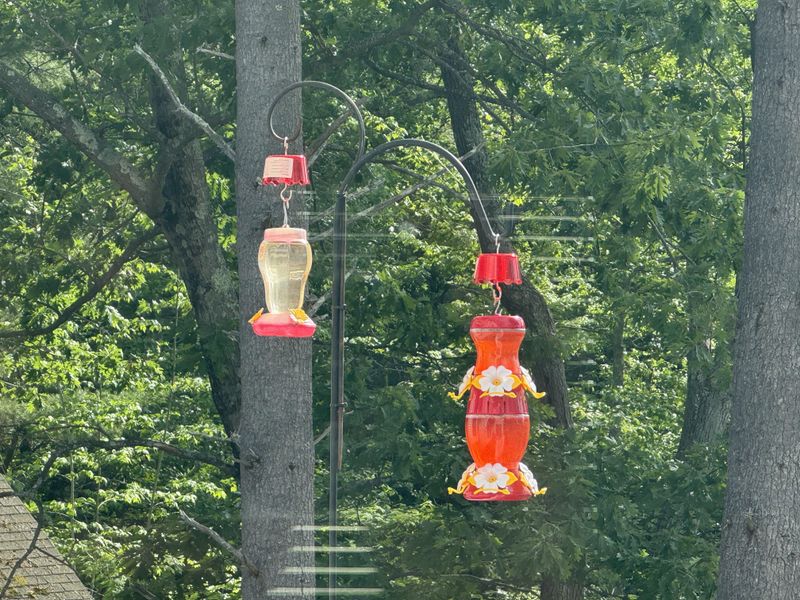
Picture a jar of sugar water sitting on a sunny New York patio in late July. By lunchtime, that sweet treat has started turning into something your hummingbirds should not drink.
Heat speeds up fermentation, which means yeast and bacteria multiply much faster in a warm feeder. Mold can follow close behind, especially in the tiny feeding ports where you rarely look.
Spoiled nectar can upset a hummingbird’s digestion and lead to serious infections. For a bird weighing about as much as a penny, even a small illness is a big deal.
Watch for warning signs like cloudy liquid, a sour smell, black specks, or stringy white bits. Any of those clues means the batch needs to go down the drain right away.
Sun also causes water to evaporate, leaving the mix thicker and less balanced than the classic four-to-one recipe. Birds then burn extra energy darting off to find shade after every sip.
Here is a simple fix that works in most yards. Look for a spot that gets gentle morning sun and cool shade through the hot afternoon.
The east side of a house or the edge of a leafy maple often does the trick. A patio umbrella or small awning can help when natural shade is scarce.
During heat waves, plan to swap the nectar every day or two. Filling the feeder only halfway cuts down on waste and keeps every serving fresher.
Did you know that hummingbirds can visit a feeder dozens of times daily? Fresh, cool nectar keeps those frequent guests healthy and coming back all summer long.
2. A Few Feet Too Far From Windows, Where Collisions Turn Dangerous
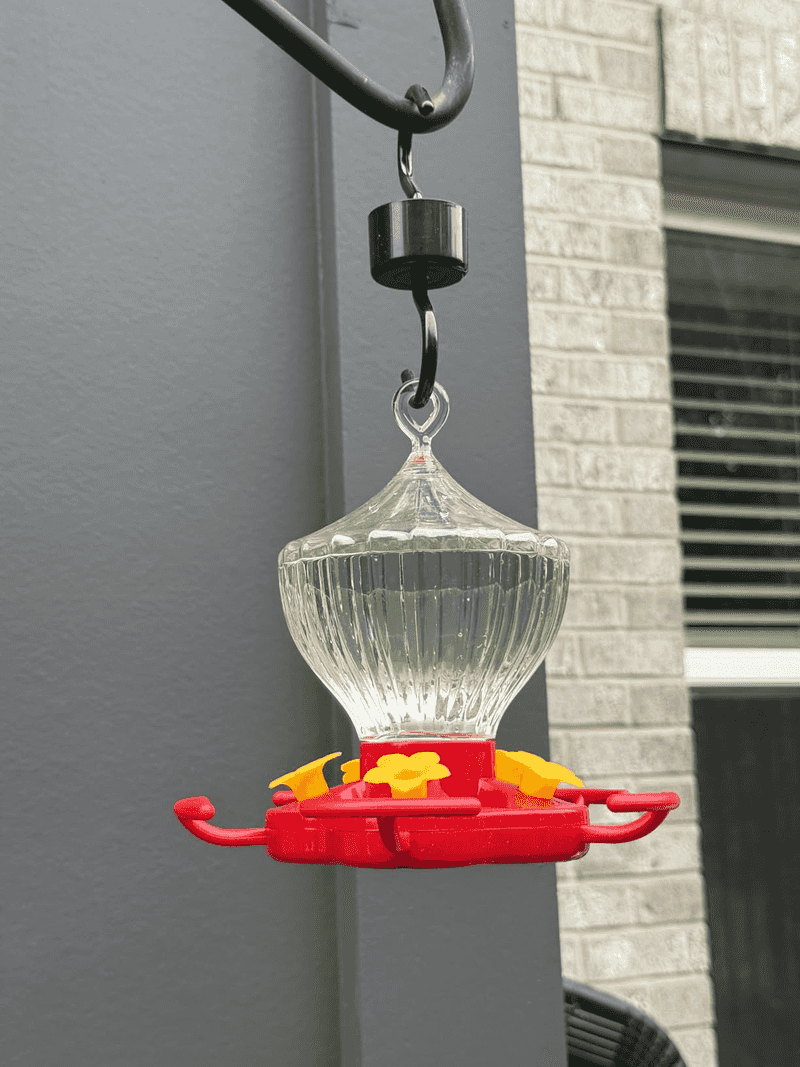
A soft thump against the glass is a sound no bird lover wants to hear. Sadly, feeder placement plays a huge role in how often that happens.
Experts suggest hanging a feeder either within three feet of a window or more than thirty feet away. The trouble zone sits in between, especially around ten to twenty feet out.
Up close, a startled bird cannot build up much speed before reaching the glass. Far away, the window is less likely to look like open sky or a safe path.
Your New York Garden Changes Every Week. Your Plan Should Too.
Gardening in New York changes quickly throughout the season. Every Friday you’ll receive a simple weekly plan showing exactly what to plant, prune, fertilize, harvest, and protect so you never miss the right timing.
Hummingbirds are speedy fliers, reaching around thirty miles per hour during chases. A bird fleeing a rival at that pace can hit a window with real force.
Reflections cause most of the confusion, since glass often mirrors trees, clouds, and garden plants. To a tiny flier, that reflection looks like more yard to zip through.
Many New York homes have big picture windows facing backyards, which makes this a common problem. Take a moment to measure the distance before you pick a hook.
Window decals help, but only when they are spaced closely, about two inches apart. Screens, outdoor netting, or strings of paracord hanging outside the glass also break up reflections.
Want the closest view possible? Suction-cup window feeders let you watch from inches away while keeping birds safely slow near the pane.
Try sitting indoors and looking out at your feeder from different rooms. If the setup feels like a highway aimed at your glass, shift it a few steps.
Moving a feeder costs nothing and takes only minutes. Your hummingbirds will reward that small effort with safer, calmer visits all season.
3. Within Easy Reach Of Cats
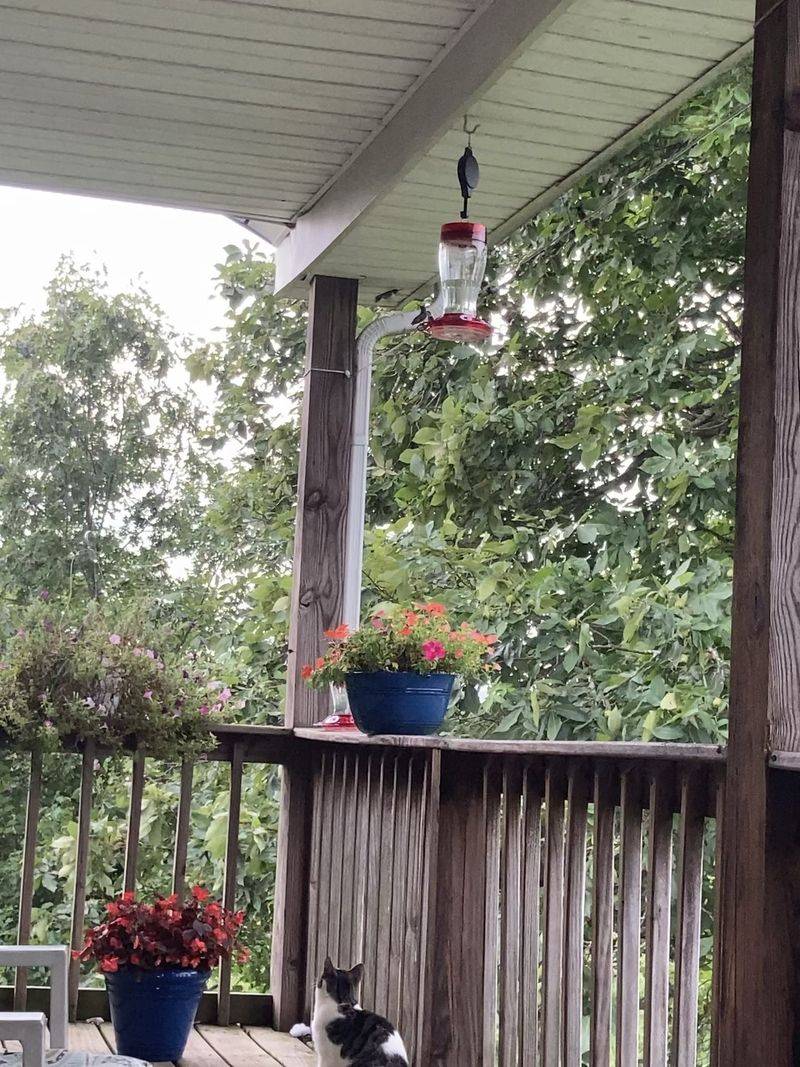
Your neighbor’s orange tabby may look sleepy on the porch, but those eyes are tracking every flutter. Outdoor cats are among the biggest threats to backyard birds across the country.
Hummingbirds hover while feeding, which keeps their attention locked on the nectar port. A crouching cat hidden in tall flowers can launch surprisingly high before the bird reacts.
Low feeders on deck railings or short shepherd’s hooks give cats an easy target. Keep the feeder at least five feet off the ground and away from jumping platforms.
Railings, patio chairs, fences, and grills all work like launch pads for a clever cat. Leave several feet of open space between these objects and your feeder.
Dense shrubs right under the feeder create a perfect hiding spot for an ambush. Trim low branches so you can spot anything lurking before it gets close.
Did you know that cats can leap about five times their own height? Planning for that springy talent helps you pick safer hanging spots.
If your own cat goes outside, consider keeping it indoors or using a secure catio. Many animal groups encourage this for the sake of both pets and wildlife.
A collar with a bright, colorful cover can help birds notice a cat sooner. Some studies suggest these covers reduce bird catches by a noticeable amount.
Stray cats wandering through the neighborhood are harder to control. In that case, height, clear sightlines, and open ground become your best tools.
Watching a hummingbird feed without worry is half the fun. A little smart placement lets you enjoy that show with peace of mind.
4. Right Beside Busy Doors And Walkways
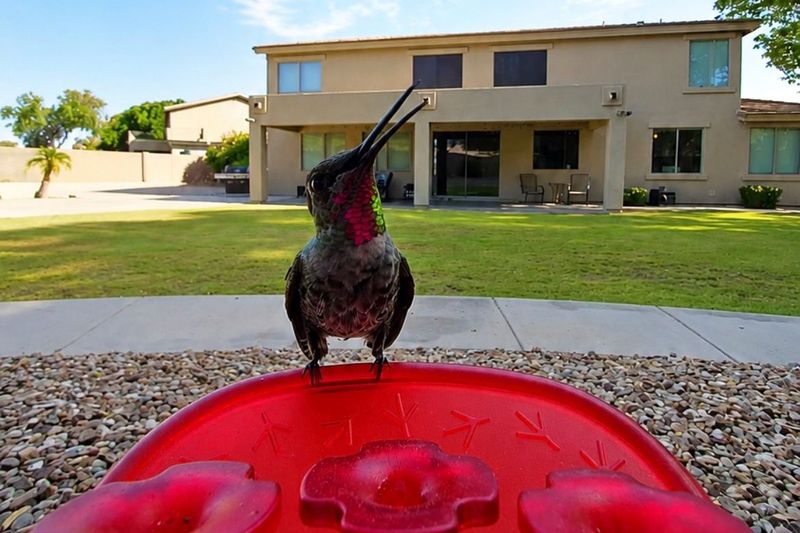
Every time the back door swings open, a tiny bird somewhere nearby gets a jolt. Busy entrances make hummingbirds jumpy, and jumpy birds tend to skip meals.
Kids running outside, dogs bounding into the yard, and grocery trips all create steady foot traffic. For a bird that needs food every few minutes, constant interruptions add up quickly.
Hummingbirds can grow used to people, but sudden motion close to the feeder still startles them. Some may leave for a quieter yard down the street.
People can get startled too! A hummingbird zooming past your ear at the front step feels a lot like a buzzing bee.
Bees and wasps are another reason to keep feeders away from doors. Sugar water attracts stinging insects, and nobody wants a wasp party beside the welcome mat.
Spilled nectar near walkways can also leave sticky spots on steps and patio stones. Those drips attract ants that may soon find their way indoors.
A good rule is to place the feeder about ten to fifteen feet from main paths. You still get a clear view without making birds dodge traffic.
Quiet corners of the yard, near a garden bed or side fence, work nicely. Pick a spot you can see from a favorite window or porch chair.
Many families use their backyards heavily in summer for barbecues and games. Keeping the feeder off the main activity zone helps birds and guests share the space.
Give it a week and watch how often birds visit. More frequent, relaxed feeding usually means you found the right balance.
5. Next To Another Feeder A Bully Can Guard
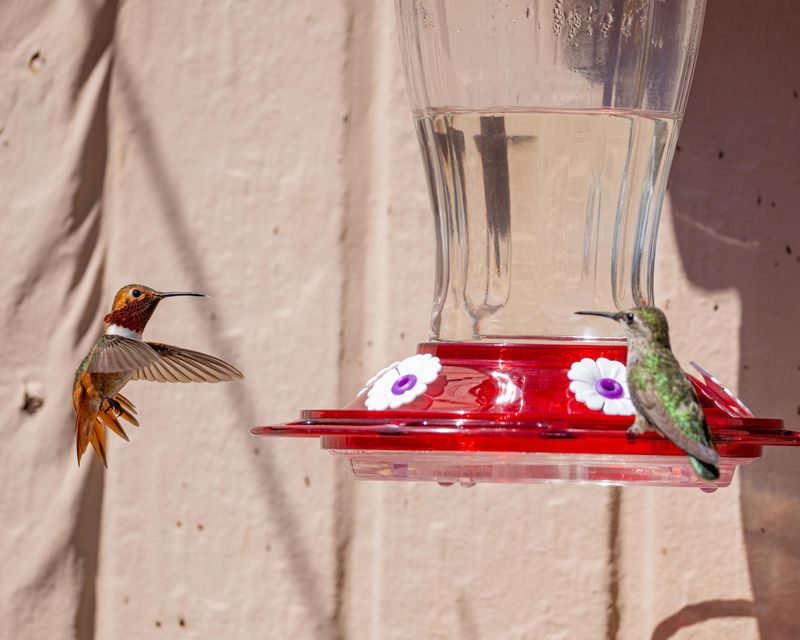
Meet the tiny tyrant of the garden: one male ruby-throated hummingbird perched nearby, ready to chase everyone off. Ruby-throats are the main species you will see in New York yards.
Weighing about as much as a nickel, ruby-throats are still famously territorial. A single bird will guard a food source and dive-bomb anyone who comes close.
Hanging two feeders side by side makes his job easy. From one branch, he can watch both and keep every other hummingbird hungry.
Spreading feeders out breaks that control. Try placing them at least fifteen to twenty feet apart, ideally where one cannot be seen from the other.
Different sides of the house work especially well for blocking sightlines. One feeder in front and another out back gives shy birds a fair chance.
Shrubs, trellises, or a garage wall can serve as natural visual barriers. When the bully cannot see a feeder, he usually cannot defend it.
Late summer brings the biggest showdowns, when young birds and migrants pass through. Extra feeders placed well can turn chaos into a busy but peaceful buffet.
Fun fact: a ruby-throat’s heart can beat over one thousand times per minute during chases. All that fighting burns fuel these birds need for the long trip south.
Patience pays off here, since birds may take a day or two to find new spots. Keep the nectar fresh while they explore.
Watch your yard for a few days after moving feeders. Seeing more than one bird sip at once is a sure sign your plan worked.
6. On Posts Or Branches Ants Can Easily Climb
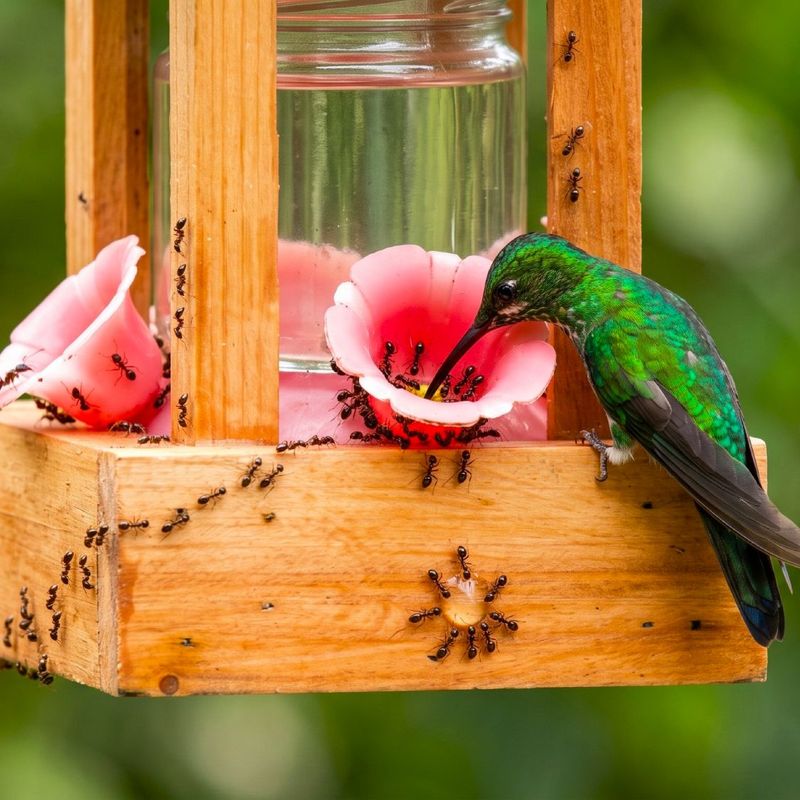
Ever spotted a line of ants marching up a pole like tiny hikers on a mission? They have one goal, and it is your sweet nectar.
Ants are expert sugar hunters, and a bare post or branch gives them a direct route. Once inside, they clog ports, drown in the nectar, and spoil the whole batch.
Hummingbirds often avoid feeders crawling with insects. You might think birds lost interest when really the ants just took over.
Wooden posts, tree trunks, and deck railings are the easiest paths for climbing insects. Branches touching roofs or fences create even more hidden bridges.
An ant moat is the simplest solution. The small cup hangs above the feeder and holds water that ants cannot cross.
Keep the moat filled, especially during hot summer spells when water evaporates fast. Many feeders now come with a built-in moat, which saves you a step.
Avoid smearing grease, petroleum jelly, or sticky products on poles or hangers. Those substances can coat feathers and harm the very birds you want to help.
A clean, dry feeder also helps. Leaky ports drip sugar onto the ground, creating a scent trail that leads ants straight upward.
Try hanging the feeder from fishing line or a thin wire away from branches. Ants struggle on slick, narrow surfaces, and bridges disappear.
Finally, check the base of your pole for anthills now and then. Moving the feeder a few feet from a busy colony can make a big difference.
A little prevention goes a long way here. Your birds get clean food, and you spend less time scrubbing sticky messes.
7. Out In The Open With No Nearby Perches Or Cover
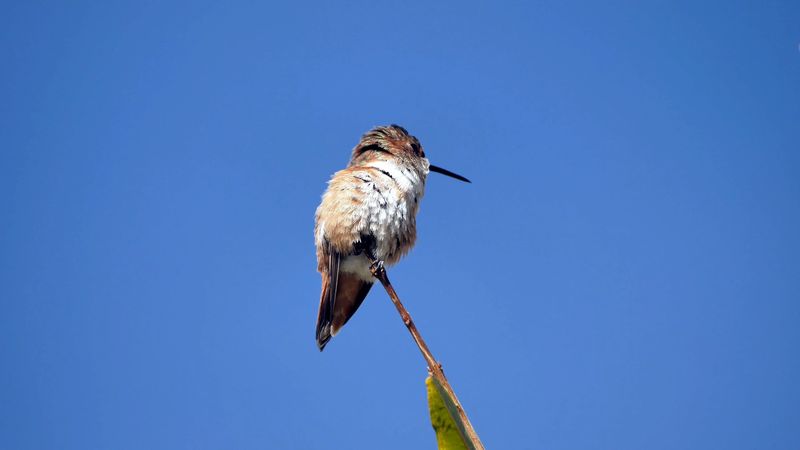
Imagine eating lunch in the middle of an empty parking lot while hawks circle overhead. Hummingbirds feel that same exposure when a feeder hangs far from any shelter.
Hummingbirds spend a surprising amount of time sitting still. They perch between meals to rest, preen, digest, and keep watch over their territory.
Without nearby branches, they must fly back and forth to distant trees, burning precious energy. A feeder in the open may get fewer and shorter visits.
Predators matter too. Sharp-shinned hawks, kestrels, and even praying mantises sometimes target small birds in open spaces.
Aim for a spot about ten to fifteen feet from trees or shrubs. That distance gives cover close by without offering predators a hidden ambush point.
Small trees like dogwood or serviceberry make great resting spots in many New York yards. Native shrubs such as spicebush or viburnum add shelter and attract insects hummingbirds eat.
Did you know hummingbirds eat insects for protein? Nearby greenery gives them tiny gnats and spiders to snack on between sips of nectar.
No trees yet in your new yard? A bare branch stuck in a planter or a thin trellis can work as a perch.
Some feeders include built-in perches, which let birds rest while drinking. Birds often feed longer at these, giving you more time to admire them.
Rain showers pass quickly, but shelter still matters. Leafy cover offers a dry hideout when summer storms roll across the yard.
Keep an eye on where your hummingbirds like to sit. A favorite twig close by is a sign your feeder feels safe and welcoming.
8. Too High Or Awkward To Clean Often
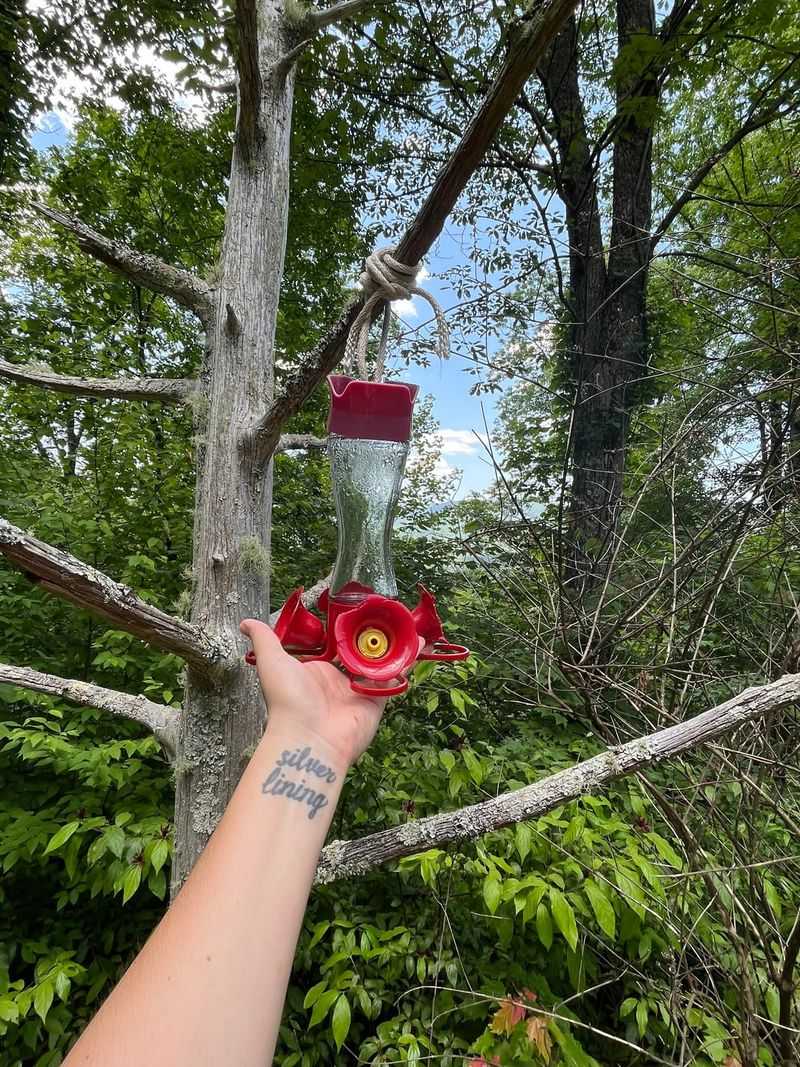
Hanging a feeder at the peak of the roofline might seem clever until cleaning day arrives. Suddenly you are wobbling on a ladder with a sticky bottle in one hand.
Nectar feeders need frequent washing, about every two to three days in warm weather. In cooler spring weeks, you can stretch that to roughly once a week.
A feeder that is hard to reach gets cleaned less, plain and simple. Mold and bacteria then build up in corners and ports birds drink from.
Awkward spots include high eaves, tall tree limbs, and hooks over thorny rose bushes. Anything that requires a stepladder or a stretch over the deck railing is risky.
Eye level is a sweet spot for most people, roughly five to six feet high. It stays above jumping cats while letting you refill without strain.
Pulley systems or telescoping poles can help if you prefer a higher feeder. You simply lower it, clean it, and raise it back up.
Choose feeders that come apart easily and have wide openings. Saucer-style models are often simpler to scrub than tall bottles with narrow necks.
Here is a quick cleaning routine: rinse with hot water and scrub with a small brush. A mild vinegar soak works well for stubborn spots, followed by a careful rinse.
Many birders in New York keep a spare feeder ready to swap in. While one dries, the other stays full, so the birds keep eating without a break.
Convenience matters more than most people expect. A feeder you can reach in seconds is one you will actually keep clean.
9. In Windy Spots Where Nectar Sloshes Out
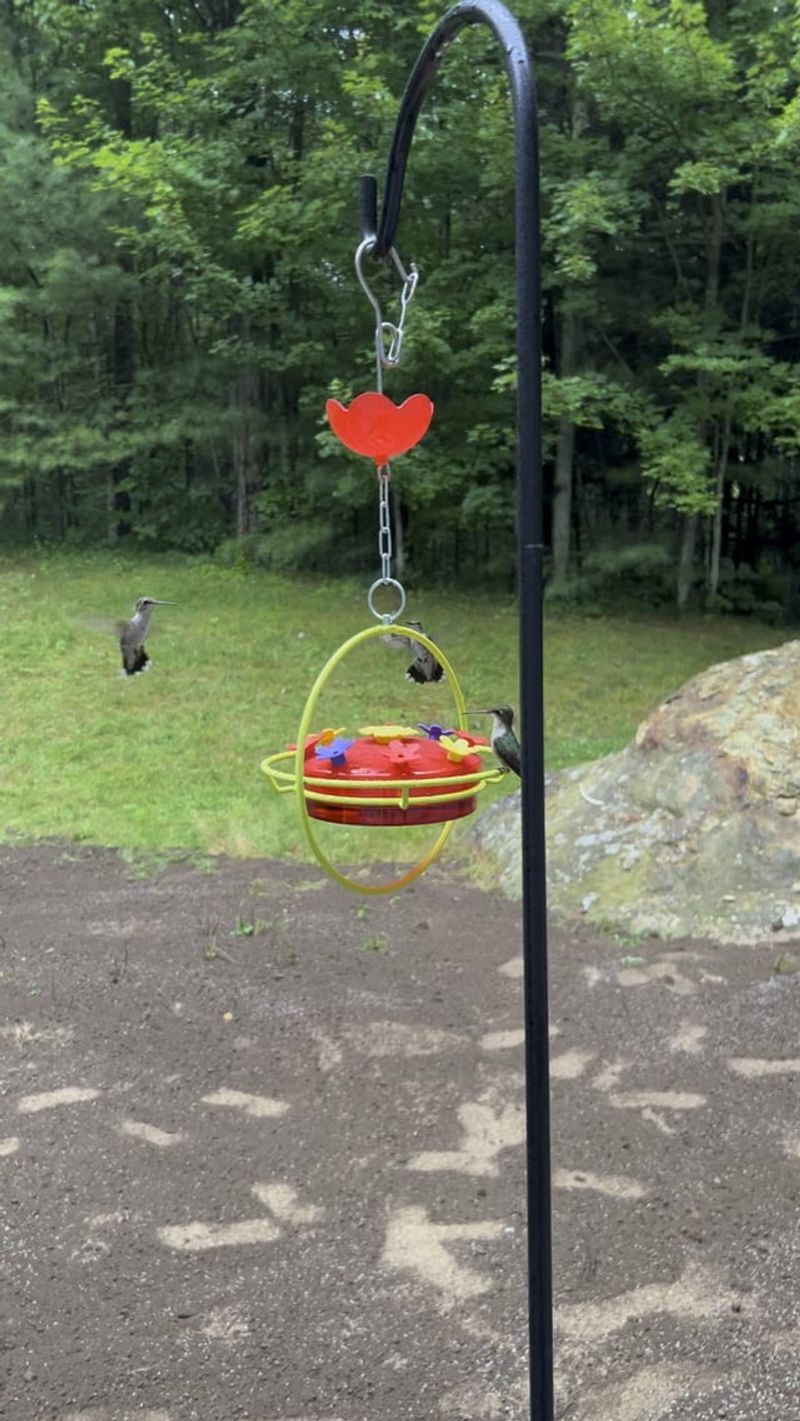
A gusty afternoon can turn a peaceful feeder into a swinging pendulum of sugar water. Drips splash onto decks, attract bees, and leave less food for birds.
Wind tips bottles and saucers, forcing nectar out through the feeding ports. A half-empty feeder by evening may be a spill problem rather than a busy crowd.
Hummingbirds also struggle to hover near a feeder that keeps rocking. Tiny as they are, they must work much harder to line up with a moving target.
Open hilltops, rooftop decks, and exposed corners of a house catch the strongest breezes. Coastal New York areas like Long Island and lakeside spots upstate can get especially blustery.
Look for a sheltered spot on the downwind side of a building, fence, or hedge. Natural windbreaks calm the air without blocking your view.
Short hangers help, too. A long chain lets a feeder swing wildly, while a shorter hook keeps it steadier.
For extra stability, try a feeder with a wide base or one mounted on a pole. Some people attach a second wire below to stop the spinning.
Saucer feeders tend to leak less than inverted bottles in breezy weather. Their design holds nectar below the ports, so tipping causes fewer drips.
After storms, check for damage and refill with fresh nectar. Rainwater can seep inside and dilute the mix, making it less useful for hungry birds.
Fun fact: hummingbirds can fly backward and even upside down for short moments. Still, they appreciate a feeder that holds steady while they sip.