The Yellow Billed Cuckoo Visiting Georgia Yards Has A Surprising Summer Habit
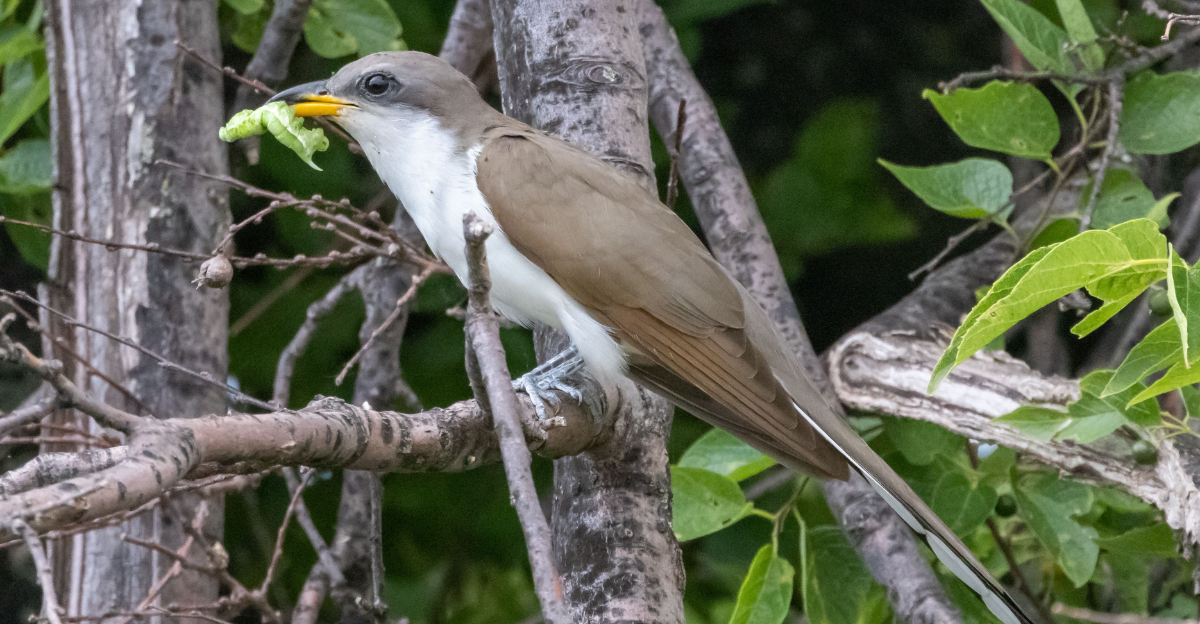
Few backyard visitors are as easy to hear yet surprisingly difficult to spot as the yellow billed cuckoo. Its secretive nature makes an appearance near your home feel especially worth noticing.
Listen carefully when a strange call comes from thick summer foliage. The bird may remain hidden even while something fascinating is happening among the branches.
During Georgia summers, yellow billed cuckoos follow a seasonal habit closely connected with changes happening around them. That behavior can bring them into areas where activity suddenly becomes hard to ignore.
You might have passed beneath one without ever realizing it was nearby. Dense leaves give this slender bird plenty of opportunities to stay out of sight.
Its summer routine is not something most backyard bird watchers expect.
Knowing what drives that behavior makes an occasional visit much easier to understand.
1. Hairy Caterpillars Become A Favorite Summer Meal
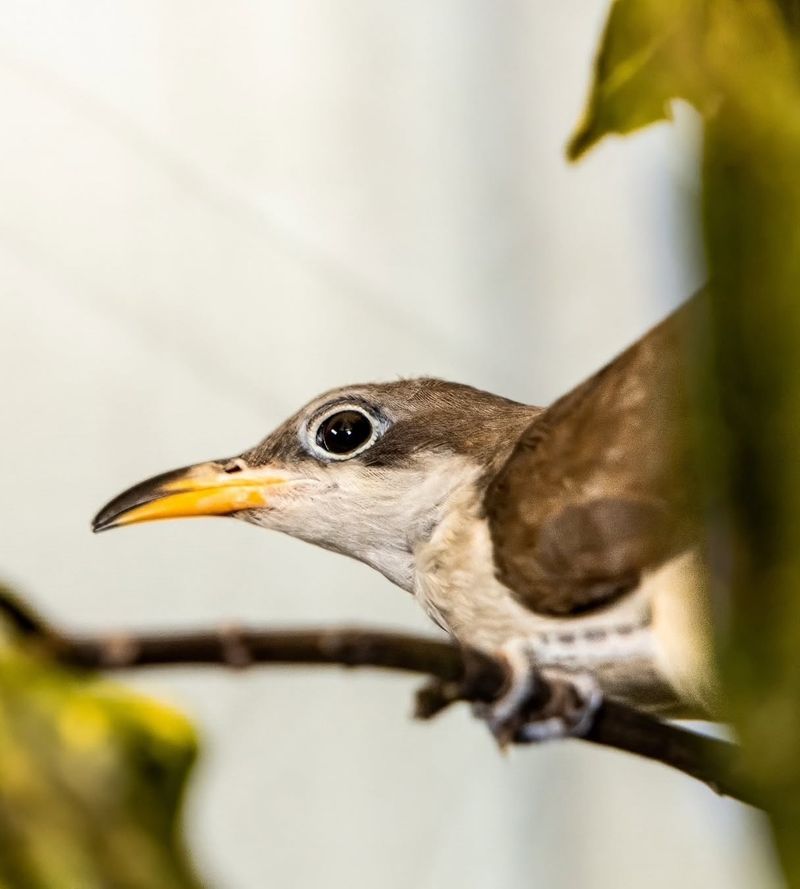
Hairy caterpillars are a meal most birds refuse to touch. Tent caterpillars, fall webworms, and other fuzzy species carry irritating hairs that make them unpleasant for most birds to eat.
Not the Yellow-billed Cuckoo.
This bird actively seeks out hairy caterpillars and eats them in large numbers. It can consume dozens in a single feeding session.
Over time, the swallowed hairs actually accumulate inside the bird’s stomach lining, which eventually gets shed and replaced.
Backyard trees that attract caterpillar outbreaks often draw cuckoos in. Oak trees, wild cherry, and apple trees are common targets for tent caterpillars.
Yards with these trees have a real shot at hosting a cuckoo during summer.
Watching one eat is fascinating. It grabs the caterpillar, beats it against a branch a few times, then swallows it whole.
The process is quick and confident.
Gardeners who notice caterpillar webs building up on their trees sometimes worry about damage. Cuckoos can help reduce those populations naturally, though they cannot handle a severe infestation alone.
Still, having one around is genuinely useful.
Planting native trees that support caterpillar populations indirectly supports cuckoos. It sounds counterintuitive, but a yard with a healthy insect food web tends to attract more interesting birds overall.
2. Warm Months Bring These Cuckoos Into Backyards
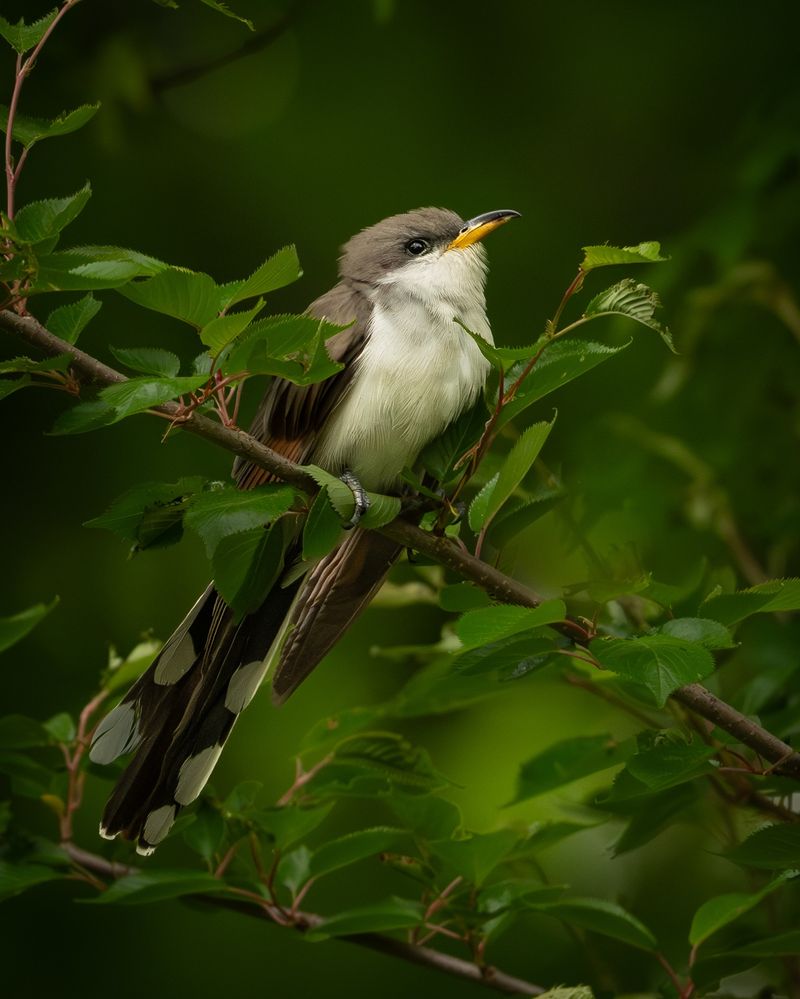
Sometime between late April and May, Yellow-billed Cuckoos begin arriving from their wintering grounds in South America. Georgia sits right in their summer breeding range, making it a reliable stop each year.
Arrival timing can shift slightly depending on weather patterns and how early spring warms up. Some years they show up earlier, others a bit later.
Mild springs tend to bring them in on the earlier side.
Once they arrive, they settle into wooded areas quickly. Suburban yards with mature trees and dense shrubs can attract them just as easily as rural woodlands.
The key is having the right habitat nearby.
Cuckoos are not flock birds. They travel and live as solitary individuals or loosely paired during breeding season.
Spotting more than one at a time is uncommon.
Summer is the window when most backyard birders have a chance to notice them. Activity peaks from June through August when caterpillar populations are at their highest.
Your Georgia Garden Changes Every Week. Your Plan Should Too.
Gardening in Georgia changes quickly throughout the season. Every Friday you’ll receive a simple weekly plan showing exactly what to plant, prune, fertilize, harvest, and protect so you never miss the right timing.
That food availability is a big reason they stay through the warmest months.
By September, most begin heading south again. Catching a glimpse before they leave takes patience.
Learning their call first is honestly the fastest way to know one is nearby before you ever see it.
3. Wooded Yards Offer The Habitat They Prefer
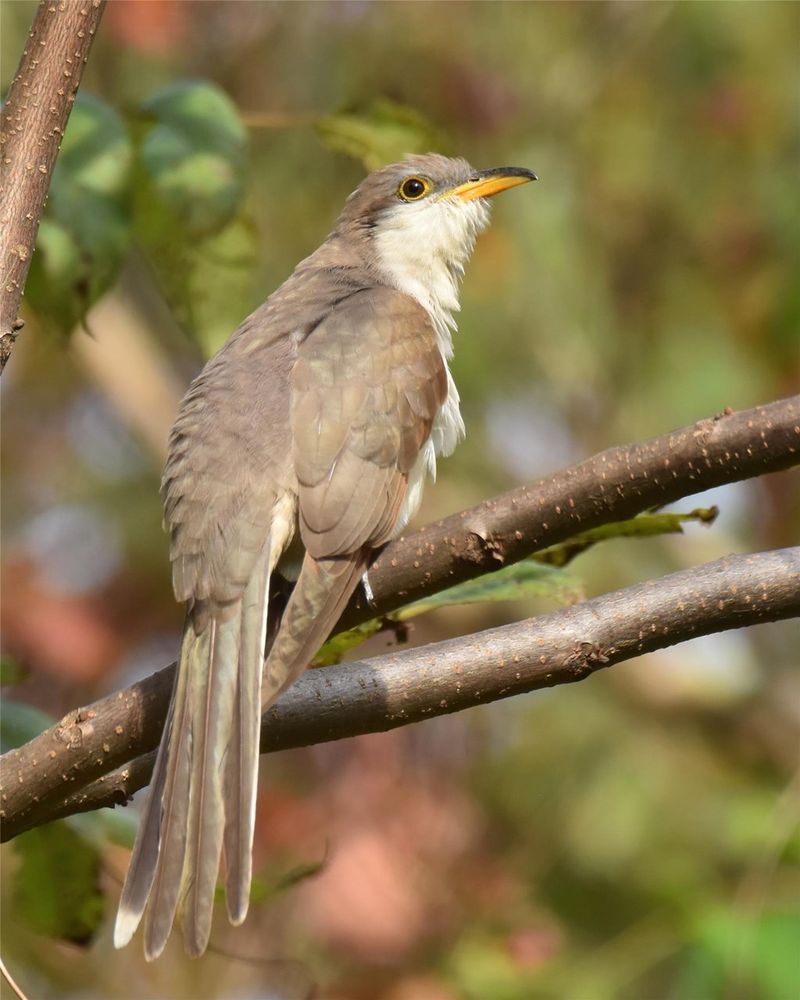
Open lawns with a few ornamental shrubs are not what this bird is looking for. Yellow-billed Cuckoos want structure, specifically tall trees, a layered canopy, and patches of thick vegetation they can move through quietly.
Yards that back up to woodlands or have a tree line along the edge are prime spots. Even a small grove of mature oaks or wild cherries can be enough to attract one during summer months.
Native understory plants matter too. Dense shrubs like beautyberry, elderberry, or native viburnums provide the kind of layered cover cuckoos prefer for moving between feeding spots.
A bare yard with isolated trees rarely offers enough.
Water sources help as well. A birdbath or shallow garden pond near shaded trees gives cuckoos a reason to linger.
They tend to visit water quietly and leave quickly, so patience is needed to catch them.
Avoiding pesticide use is worth mentioning. Yards heavily treated with insecticides reduce the caterpillar and insect populations that cuckoos depend on.
Cutting back on chemical treatments can make a yard noticeably more attractive to insect-eating birds.
Habitat quality matters far more than feeders for this species. Cuckoos do not visit seed feeders.
Building a bird-friendly yard with native plants and mature trees is the most effective approach.
4. Thick Leaves Keep This Bird Hidden From View
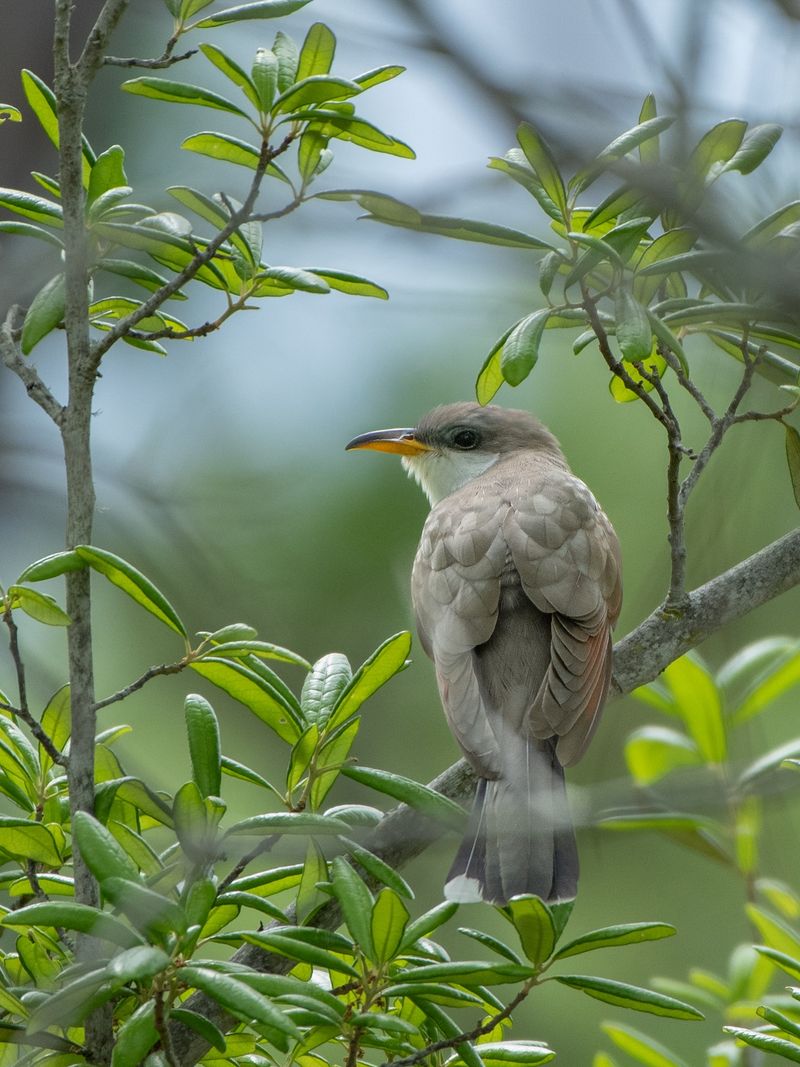
Seeing a Yellow-billed Cuckoo is harder than it sounds. Even when one is actively feeding nearby, the thick summer foliage can swallow it completely from view.
Many people hear one without ever catching a glimpse.
Their coloring works perfectly as camouflage. The brown upper parts and white underside blend into the shifting patterns of light and shadow inside a leafy canopy.
Sitting still, they almost disappear.
Cuckoos tend to move slowly and deliberately through branches. Unlike hyperactive warblers or flashy woodpeckers, a cuckoo creeps along a branch, pauses, watches, then moves again.
That slow movement makes them even harder to track visually.
Binoculars help a lot. Scanning the mid-canopy level, roughly 15 to 30 feet up, is usually the most productive zone.
Look for movement, not color, since the brown and white pattern blends easily with bark and leaves.
Early morning is when cuckoos tend to be most active. Light is softer then, and the bird moves more frequently before midday heat settles in.
Spending 20 minutes quietly watching a wooded edge right after sunrise can pay off.
Patience genuinely matters here. Rushing or moving around too much will push a cuckoo deeper into cover.
Standing still near a tree line and letting the bird reveal itself works far better than actively searching through branches.
5. Loud Calls Often Reveal Its Hiding Place
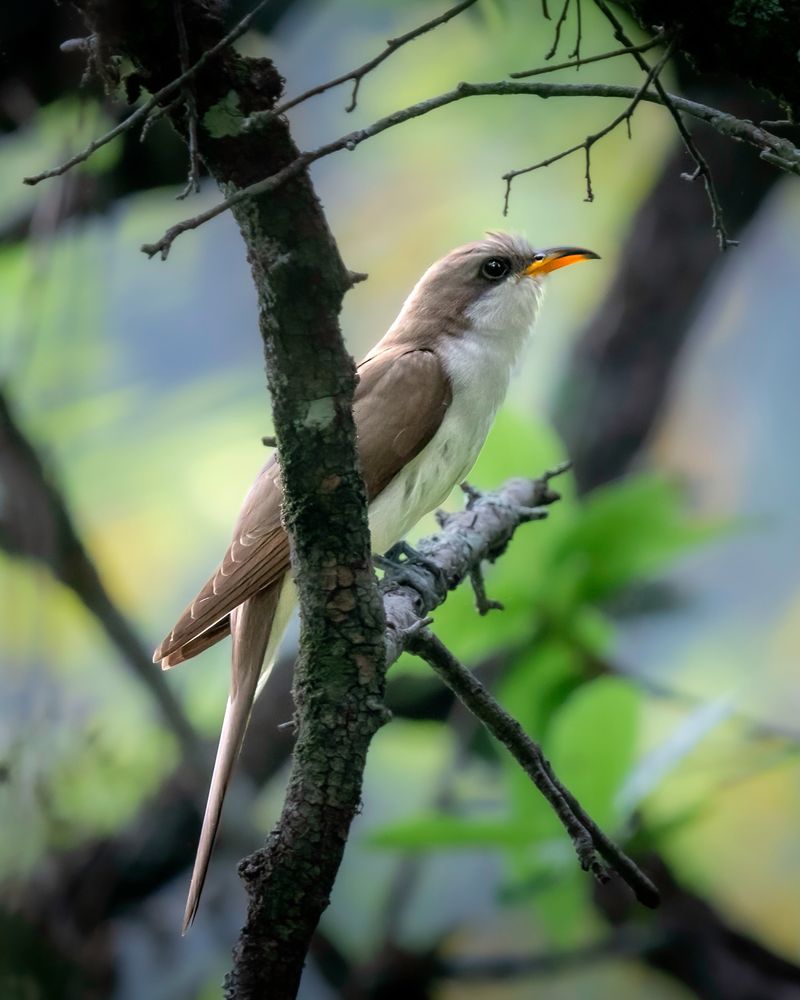
Before you see one, you will almost certainly hear one. The Yellow-billed Cuckoo has a distinctive call that carries well through wooded areas, even when the bird itself stays buried in thick foliage.
The most recognizable sound is a series of hollow, wooden-sounding notes that slow down toward the end, often described as “ka-ka-ka-kow-kow-kow.” Once you learn it, the sound is unmistakable. It does not resemble any common backyard bird.
Cuckoos call most frequently on warm, humid days, and interestingly, they tend to call more before rain. Some older rural traditions nicknamed them “rain crows” for this reason.
Whether that association is perfectly reliable is debatable, but the nickname stuck for generations.
Listening for the call during early morning or late afternoon gives the best results. Midday heat tends to quiet most bird activity.
A cuckoo calling at dusk from a wooded edge is a fairly common summer experience in the Southeast.
Once you hear the call, stop moving and listen for the direction. Cuckoos often repeat the call several times before going quiet.
Pinpointing the sound and then scanning that specific tree slowly with binoculars improves the chance of a visual.
Recording the call on a birding app and playing it softly nearby can sometimes draw a curious bird closer, though this should be done sparingly to avoid stressing nesting birds.
6. Nesting Season Keeps Pairs Busy Through Summer
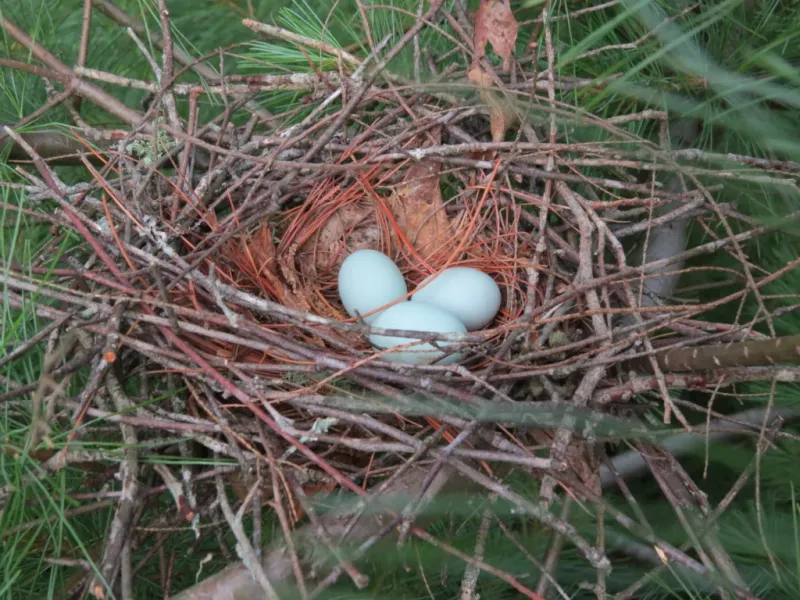
Nesting behavior in Yellow-billed Cuckoos is genuinely unusual. Their nests are famously flimsy, often just a loose platform of sticks balanced in a shrub or low tree branch.
It looks like the whole thing could fall apart in a mild breeze.
Both parents share incubation duties, which is relatively uncommon among songbirds. Eggs hatch in about 9 to 11 days, one of the shortest incubation periods of any North American bird.
Chicks develop rapidly and can leave the nest within a few weeks.
Nesting season stretches across summer, roughly from June into August. Late nesting attempts are not unusual, especially if an earlier nest fails.
That extended season keeps pairs active and visible for a good portion of the warm months.
Unlike some species, Yellow-billed Cuckoos occasionally practice a limited form of brood parasitism, laying eggs in other birds’ nests on rare occasions. Mostly, though, they raise their own young.
Yards with dense shrubs and low-hanging branches near wooded edges offer potential nesting spots. Avoiding heavy pruning through summer helps preserve the kind of cover these birds look for.
If a nest is spotted, keeping a respectful distance matters. Disturbance near an active nest can cause the adults to abandon it.
Watching quietly from a distance with binoculars is the best approach during this sensitive period.
7. Fall Migration Eventually Sends These Visitors South
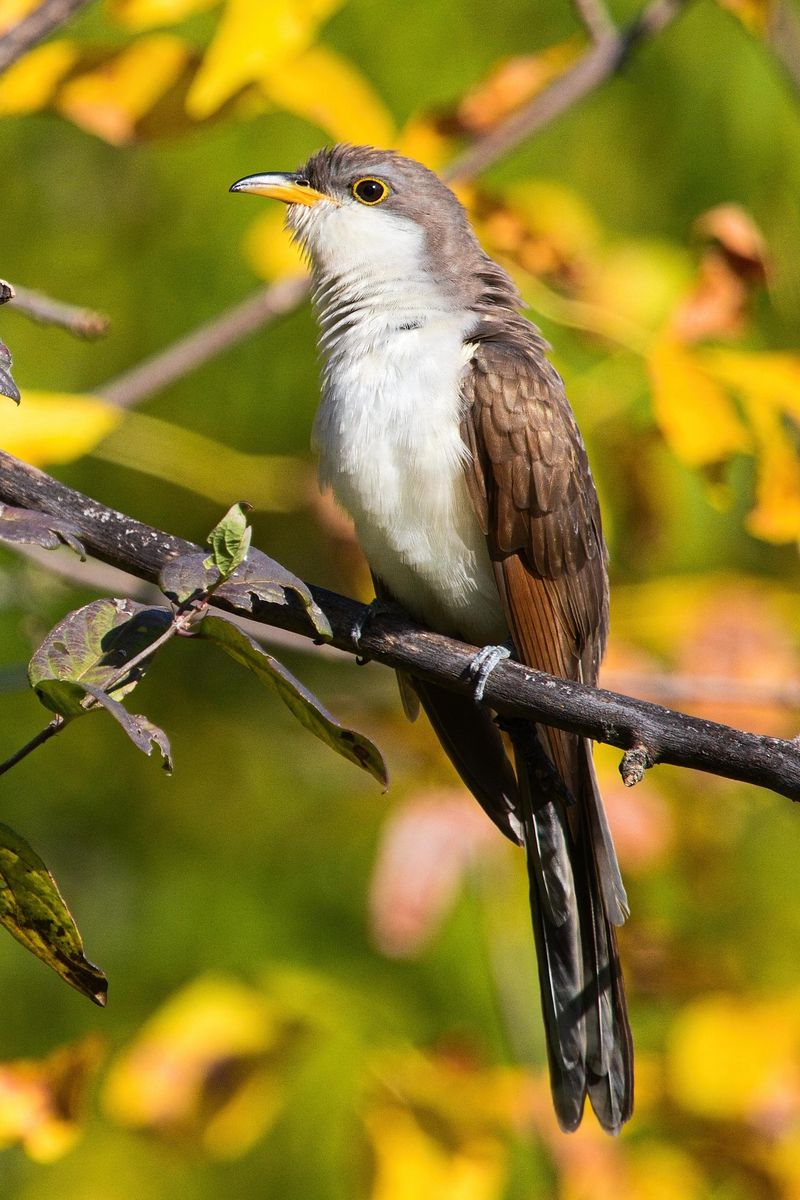
By late September, most Yellow-billed Cuckoos have left their summer grounds and begun the long journey back to South America. The departure is gradual and easy to miss if you are not paying attention.
Activity slows noticeably in late August. Calls become less frequent.
Sightings drop off as the birds begin moving south in small numbers rather than large flocks. Migration for this species is a quiet, solo affair.
Some individuals linger into early October depending on weather and food availability. A warm fall can extend their stay by a week or two.
Cold snaps tend to push them out faster.
Fall migration is actually a good time to spot one that you might have missed all summer. Birds moving through stop briefly in wooded yards to rest and feed before continuing south.
A yard with caterpillar activity in early fall can pull in migrants passing through Georgia on their way out.
Keeping native trees and shrubs intact through fall supports not just cuckoos but a wide range of migratory birds making the same journey. Leaving leaf litter and natural debris on the ground adds insect habitat that fuels migrating birds.
Once they leave, the yard feels a little quieter. Knowing they will likely return next spring makes that silence easier to sit with.
Setting up a good habitat now means a better chance of welcoming them back.