The Most Underrated North Carolina Perennial That Bloomed Through The Drought In Full Sun
Late summer can make a North Carolina flower bed look brutally honest.
Leaves curl. Mulch turns dusty. A few familiar perennials shorten their show, and the brightest patch in June may look tired by August.
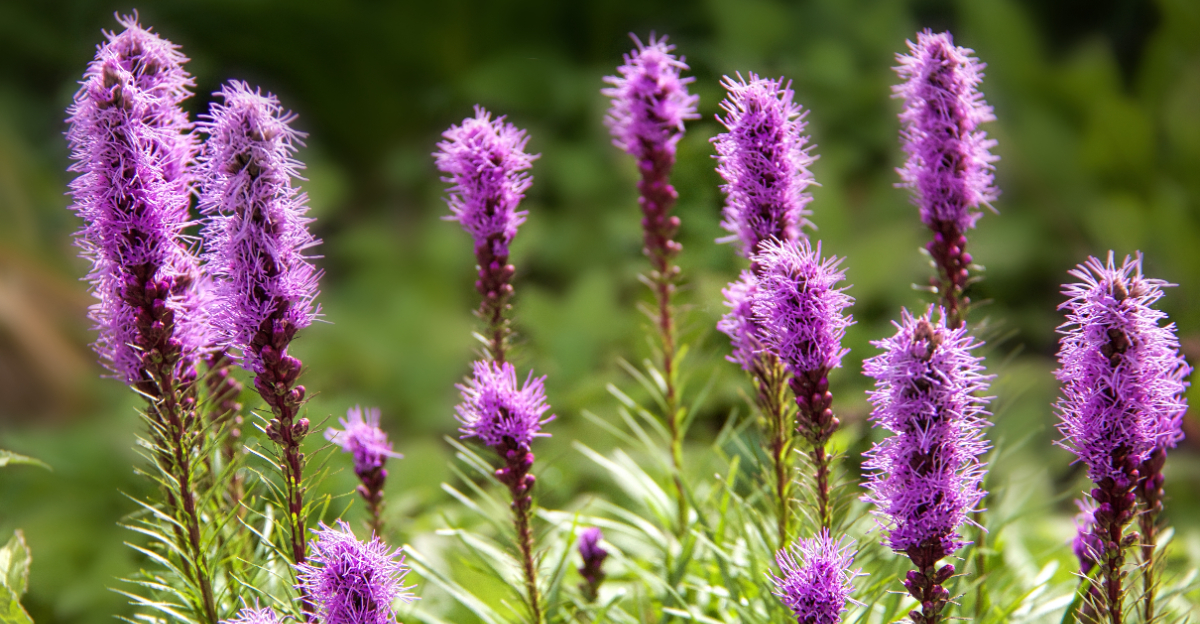
Then one purple spike rises above the dry soil.
Sandhills blazing star, Liatris pilosa, does not need rich ground or constant water to look impressive.
This native perennial prefers full sun, dry sandy or rocky soil, and sharp drainage. Once established, it handles heat, drought, and poor soil with a toughness that suits hard garden spots in the state.
So why does this plant feel like a secret?
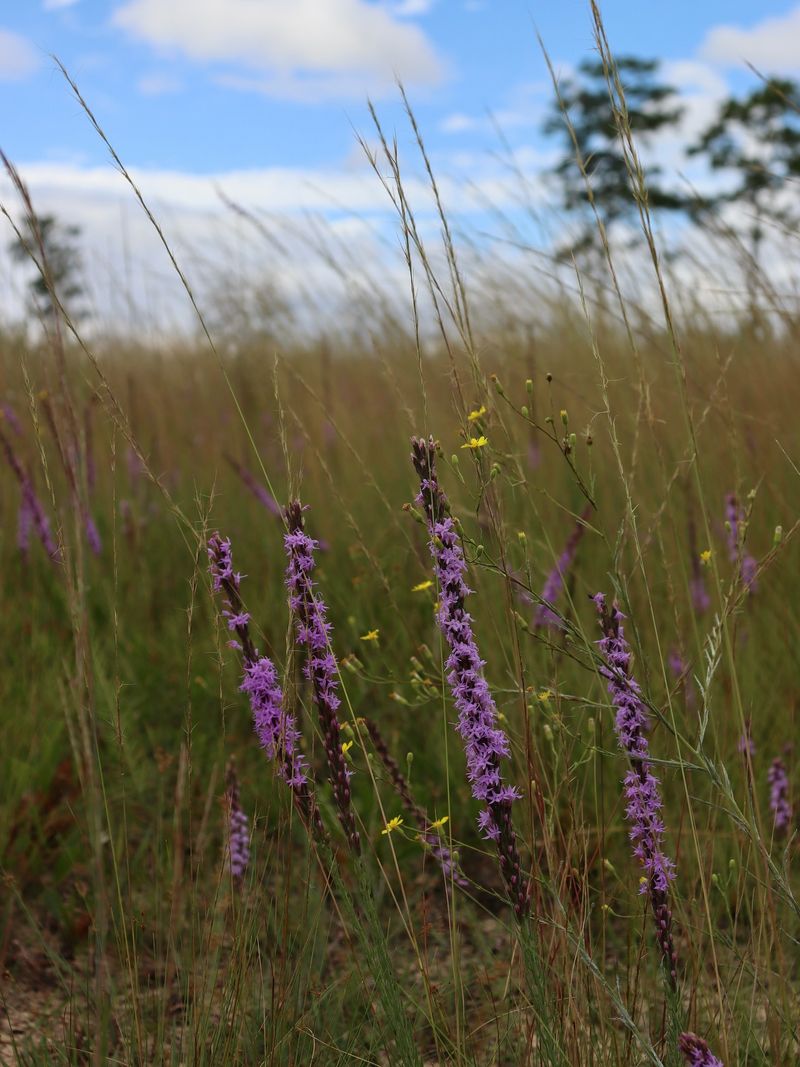
Its grassy leaves look modest before bloom. The real performance arrives from late summer into fall, when pink-purple flowers climb a slender upright stem and pollinators arrive steadily.
That timing gives a sun-baked bed something valuable.
Color returns when the garden needs it most.
Give Sandhills blazing star the dry site it wants, and the plant can turn a difficult patch into one of August’s best surprises.
Meet Sandhills Blazing Star
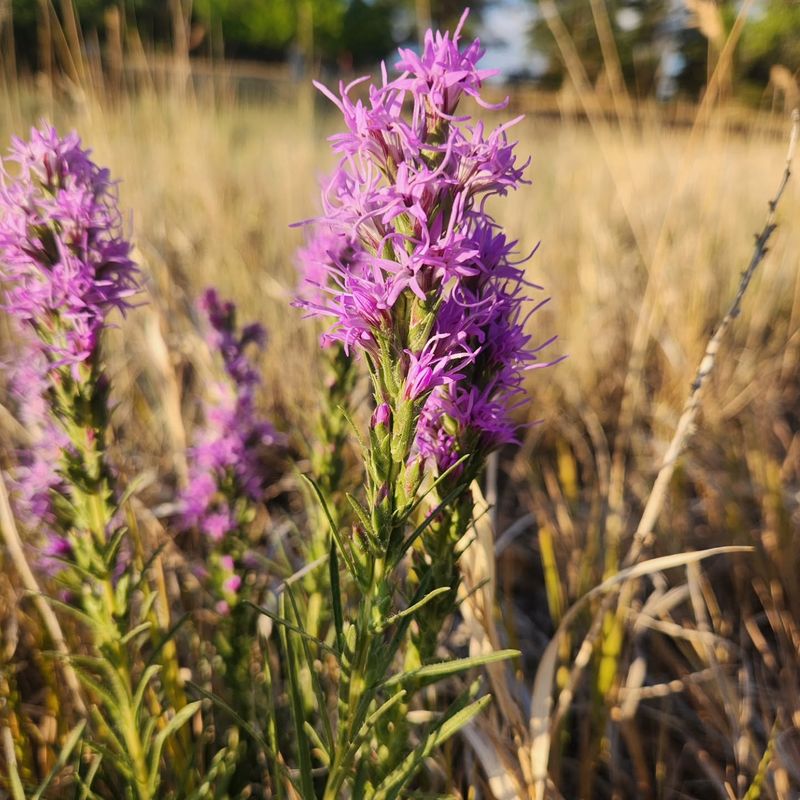
A pot of narrow green leaves can look almost forgettable before the flower stalk appears.
That modest start is part of Sandhills blazing star’s charm. Liatris pilosa is a North Carolina native perennial in the aster family, with upright stems that usually reach about one to three feet tall.
The species occurs in all three North Carolina regions and favors habitats such as longleaf pine sandhills, pine barrens, dry woodlands, fields, and road banks.
The foliage stays fine and grassy near the base, then becomes smaller higher on the stem. By late summer, the plant sends up pink-purple flower heads along a narrow spike.
The flowers open from the top downward, which gives the stalk a distinctive look through the bloom period.
Give that quiet clump a little patience.
The plant fits native gardens, pollinator gardens, butterfly gardens, borders, meadows, and drought-tolerant landscapes. It is also rated low maintenance and resistant to heat, drought, dry soil, poor soil, insect pests, and disease.
That combination explains why the plant can look unusually composed through a rough dry spell after establishment.
Do not confuse tough with indestructible.
Wet soil remains the weak point, and shade can leave the stems lanky.
The nursery pot may not sell itself from ten feet away.
By August, the flower spike handles publicity just fine.
Give It Full Sun From The Start
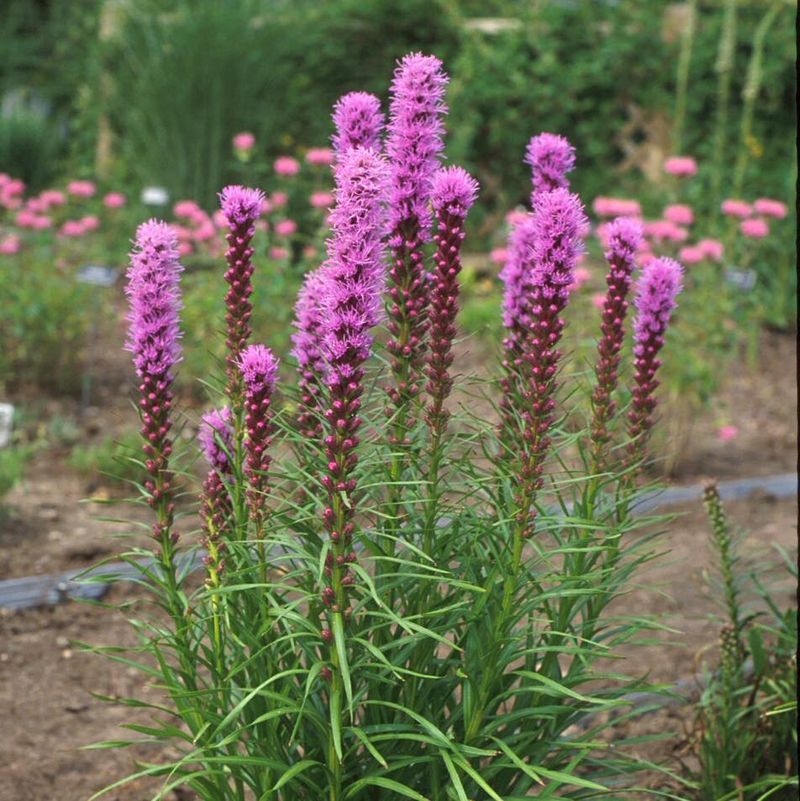
The hottest open bed in the yard may be the easiest place to make this perennial happy.
Full sun suits Sandhills blazing star best. Full sun means six or more hours of direct sunlight each day, and the plant can become lanky in shade. Strong light helps the stems stay upright and supports the flower display that arrives from summer into fall.
Choose the site before nearby shrubs fill out.
A young border can look wide open now, then lose several hours of sun once woody plants gain size. Keep this liatris toward the bright edge rather than tuck it behind a future wall of foliage.
Your North Carolina Garden Changes Every Week. Your Plan Should Too.
Gardening in North Carolina changes quickly throughout the season. Every Friday you’ll receive a simple weekly plan showing exactly what to plant, prune, fertilize, harvest, and protect so you never miss the right timing.
Give the plant room to show its vertical shape.
Its narrow stems work well beside lower native perennials, small bunchgrasses, stones, or an open path where the purple spikes can rise without heavy competition.
Skip a stake as the first solution.
A stem that leans in a shady site says more about light than hardware. Move the next plant toward stronger sun rather than build a tiny support system around a poor location.
South- and west-exposed beds can suit the species where soil drains quickly.
Those exposures intimidate plenty of garden favorites during a dry North Carolina summer. Sandhills blazing star comes with a different résumé.
Give it the bright seat from the start.
The reward is a stronger plant that looks far more at home when August turns the garden thermostat up.
Plant It In Dry Sandy Soil
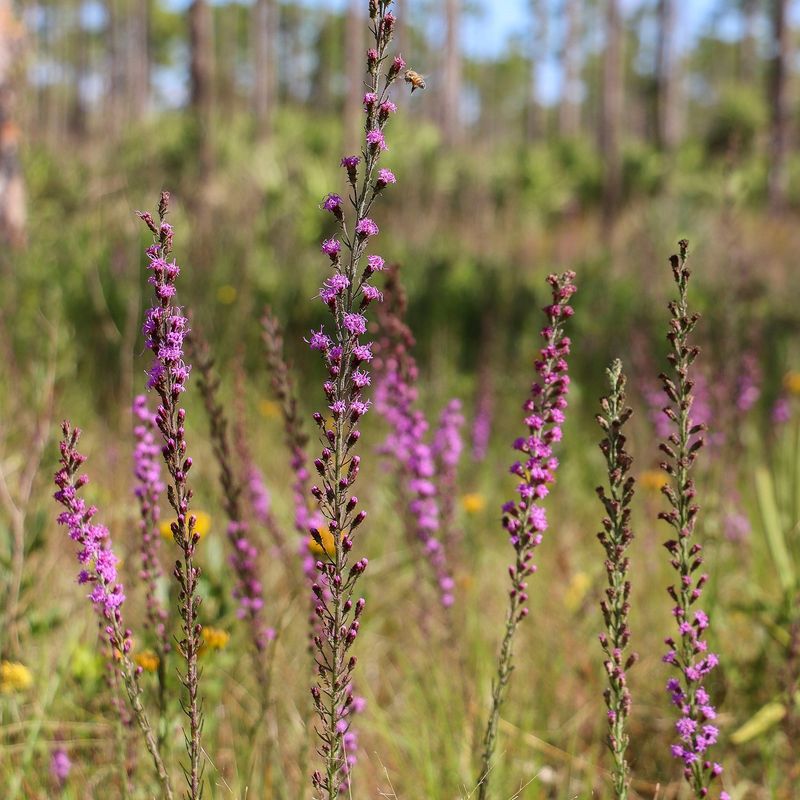
Dry ground can be an advantage here, but only when the water has somewhere to go.
Sandhills blazing star prefers sandy or rocky soil with good drainage. The species also handles drought, dry soil, heat, and poor soil well. That makes lean ground a better match than a rich bed that stays damp for days after rain.
Check the site after a storm.
A patch that drains quickly earns attention. A low spot that holds water does not. The underground corm needs air around the root zone, and the species is specifically intolerant of wet soil.
Do not reach for a bag of sand as a quick clay fix.
Small amounts of sand mixed into heavy clay can create a denser soil rather than the open structure you wanted. A raised mound, berm, rock garden, or naturally fast-drained section is a safer route for a species that dislikes wet feet.
Keep the first season more attentive than the fifth.
A new transplant still needs enough moisture so roots can extend beyond the original root ball. Extra water matters most while drought-tolerant native plants establish, then the amount can decline as roots mature.
Rich fertilizer is not the prize either.
This perennial tolerates poor soil, so a routine fertilizer schedule can solve a problem the plant never had.
Give the corm drainage, sun, and a sensible establishment period.
After that, a dry spell can look less like an emergency and more like home turf.
Let Purple Spikes Carry Late Summer
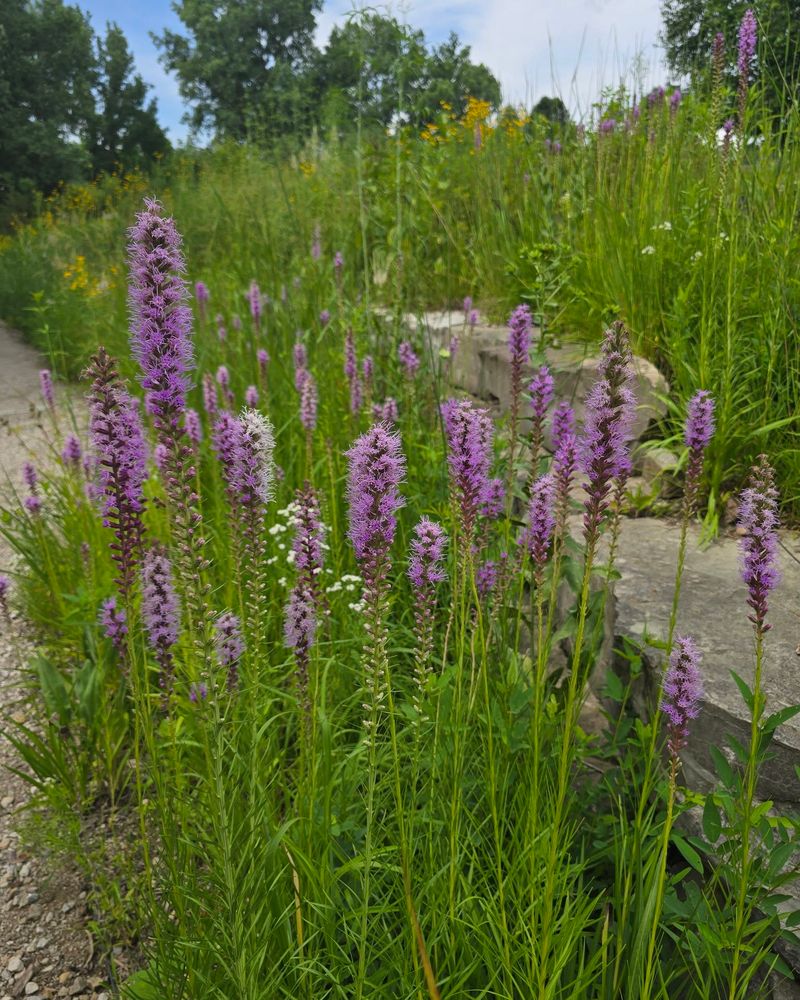
August can leave a perennial border short on fresh color just when this species reaches for the spotlight.
Sandhills blazing star blooms from August into November, with pink-purple flower heads arranged along an upright spike. Each head contains small tubular florets, and the bloom sequence moves from the top of the spike downward.
That order creates an unusual visual effect.
Many flower spikes open from the bottom upward. This one starts high, then works lower, so one stem can carry fresh color at several stages as the season advances.
Use that vertical line on purpose.
Set several plants behind lower mounds or beside fine-textured grasses. The narrow shape adds height without a bulky wall through the bed.
A mass of three or five plants can read more clearly from a path than one lonely stalk tucked behind a shrub.
Cut a few stems for the house when the patch is large enough.
Sandhills blazing star also works as a cut flower, so the plant can earn a place in both the border and a vase.
Leave plenty outside for pollinators.
The late bloom period is part of what makes this perennial useful in a hot, dry garden. It does not rely on a spring-only display to justify its space.
Summer may have worn out half the flower bed.
This native waits for that exact gap, then raises a purple exclamation point above the tired foliage.
Feed Butterflies Through The Heat
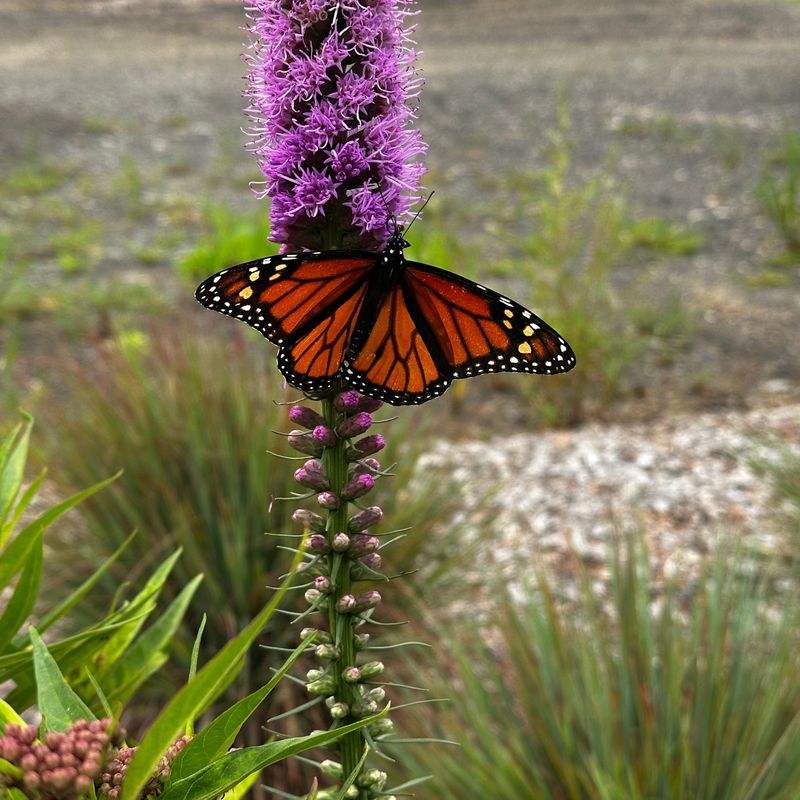
A purple spike covered with visitors can become the busiest square foot in the border.
Sandhills blazing star attracts bees, butterflies, and other pollinators. Long-tongued bees and butterflies can reach the small tubular flowers along each spike.
That late-season timing adds value.
The bloom period stretches from August into fall, so the flowers can provide resources after many earlier perennials have finished their strongest show. A sunny clump near other native flowers creates a broader menu rather than one isolated stop.
Plant several together when space allows.
A visible patch gives pollinators more flowers in one short flight and makes the purple display stronger for you too. Pair the liatris with natives that bloom before or after it so the bed offers resources across more of the season.
Keep pesticide decisions narrow.
A flower full of bee activity is a poor place for a casual broad-spectrum spray. Identify the actual pest first, use nonchemical options where practical, and follow every label restriction around pollinators.
Sandhills blazing star already has another advantage here.
No major insect or disease problems are listed for the species, so a well-sited plant often needs little intervention.
Stand beside the clump on a sunny afternoon and watch for a minute.
The flowers may look delicate from the path.
The traffic around them tells a tougher story, with one dry-site perennial open for lunch long after several neighbors closed the kitchen.
Keep Winter Soil Draining Fast
The first cold wet stretch can test this plant more than a dry August ever did.
Sandhills blazing star tolerates drought, but it remains intolerant of wet soil. That makes drainage a year-round requirement rather than a summer detail.
A corm that handled heat beautifully can still struggle in a low pocket that stays saturated through winter rain.
Walk the bed after a long storm.
Look for pooled water, slick soil, and runoff that collects around the crown. Move future plants toward a slope, raised mound, rock garden, or another section where excess water leaves the root zone faster.
Keep mulch useful rather than heavy.
A light layer can suppress weeds and soften moisture swings, but a thick wet pile around the crown works against the dry-site conditions this species prefers. Leave the base open enough for air and quick drainage.
Clay soil needs site design more than a token amendment.
Do not stir a little coarse sand into one hole and expect the nearby clay to disappear. Sand added to clay can produce tougher conditions rather than the drainage improvement gardeners expect.
Use elevation instead.
A broad raised area gives roots a better escape route and preserves the lean character this perennial handles so well.
The lesson is almost backwards for a drought article.
Summer toughness gets applause.
Winter drainage keeps the plant around for the encore.
Give the corm a place that sheds excess water, and the dry-season strengths get another chance next year.