These Are The Early Spotted Lanternfly Signs Pennsylvania Gardeners Should Be Looking For Right Now
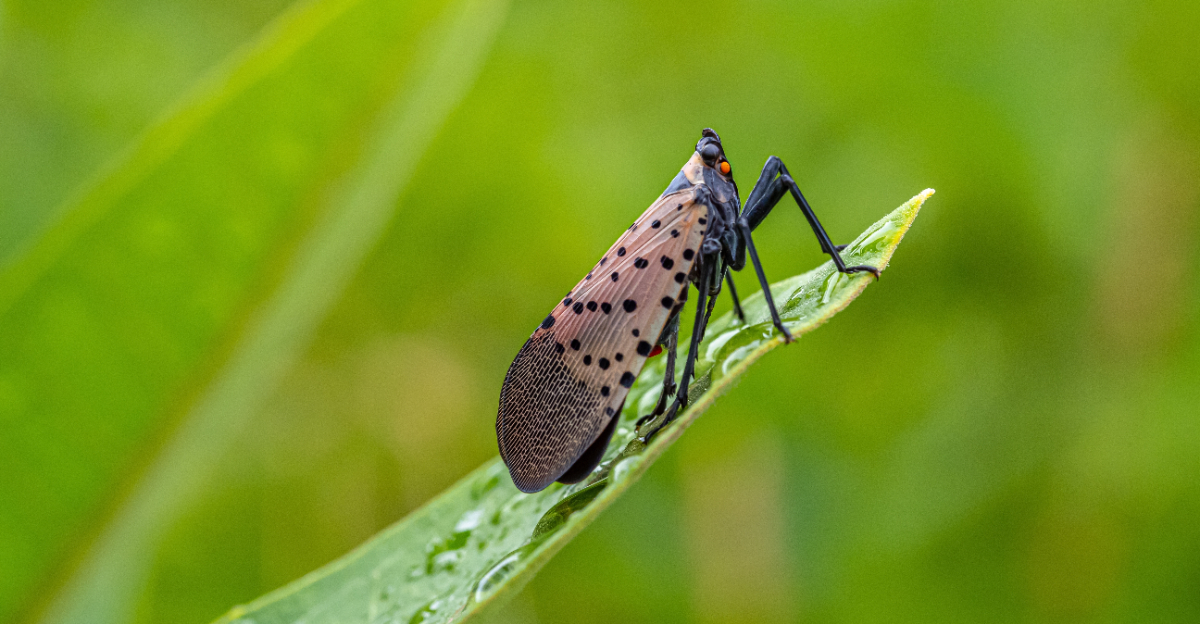
Something is moving through Pennsylvania gardens right now that many gardeners are not trained to see.
Not a disease. Not a nutrient deficiency. Not the usual suspects that show up in spring and announce themselves with yellowing leaves or obvious damage.
This one is small, fast, and easy to mistake for something harmless. By the time most people recognize what they are looking at, the population has already grown considerably beyond what it was when the first signs appeared.
Spotted lanternfly has been spreading across Pennsylvania since 2014 and the early season window, right now, is when the signs are most useful to know.
The nymphs emerging in spring look nothing like the adults most people have seen in photos. The damage they cause shows up in ways that do not immediately point to insects at all.
So, have you walked your garden this week and actually looked closely at the stems, the leaves, the bark?
Eight specific signs show up before populations build. All of them are worth knowing.
1. Spot Black Nymphs With White Dots
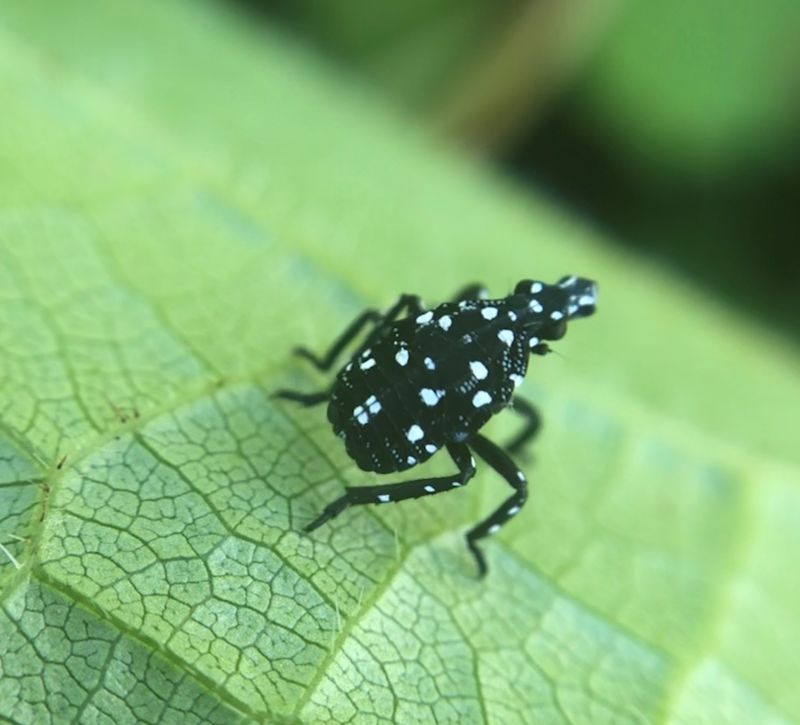
The earliest nymphs are easy to miss. They emerge from egg masses from late April through June measuring roughly a quarter inch long, and many gardeners mistake them for tiny beetles, specks of dirt, or nothing worth investigating at all.
At this first stage, the body is jet black with a neat pattern of bright white dots scattered across the abdomen and legs. No red appears yet.
That comes in the third and fourth instar stages when red patches begin mixing with the black and white pattern. The all-black-with-white-dots appearance is the specific look worth learning for early season identification.
These nymphs stay low. They cluster near the base of stems, along leaf undersides, and in the sheltered spaces where stem meets soil.
A phone camera zoomed in close or a hand lens reveals the pattern clearly at a distance that feels comfortable.
Walk your garden slowly in the cooler morning hours when insects are less active and less likely to scatter before you get a good look.
Check the lower portions of young plants, grapevines, fruit trees, and hops. Getting down to soil level and examining stems carefully often reveals nymphs that would otherwise go entirely unnoticed.
Finding them at this quarter-inch stage, before they grow, disperse, and mature, gives the most options for managing the population before it builds through summer.
The nymph that looks like a harmless speck today is worth a second look. Experience with this pest confirms that.
2. Watch For Jumping Bugs On Tender Growth
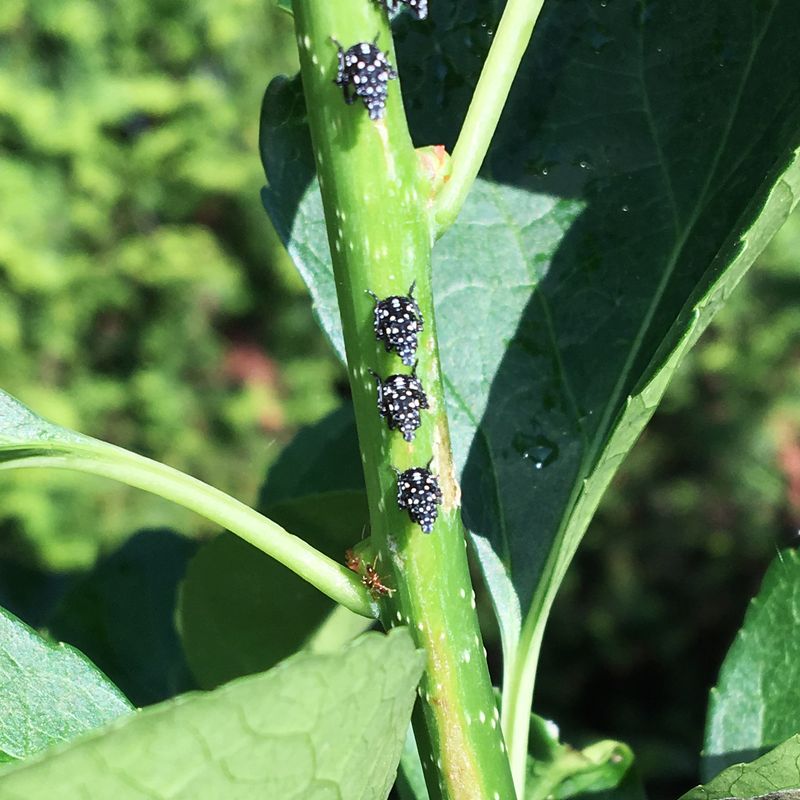
You reach down to check a young grapevine and a cluster of tiny black bugs scatters in every direction like something set off a small explosion at stem level.
That reaction is one of the clearest early indicators that spotted lanternfly nymphs have arrived in the garden.
Aphids do not do this. Most common garden insects stay put or crawl slowly when disturbed.
Spotted lanternfly nymphs jump with surprising speed and distance, and that hopping behavior is one of the most reliable distinguishing features during early scouting.
Your Pennsylvania Garden Changes Every Week. Your Plan Should Too.
Gardening in Pennsylvania changes quickly throughout the season. Every Friday you’ll receive a simple weekly plan showing exactly what to plant, prune, fertilize, harvest, and protect so you never miss the right timing.
Tender new growth is the preferred target. Soft young shoots on grapevines, apple trees, hops, blueberries, and ornamental plants offer the sugary sap nymphs actively seek out.
The pest feeds on over seventy host plant species, which means very few gardens are completely outside its range of interest.
Start scouting new growth as soon as it emerges in spring. Check the tops of young shoots and the undersides of fresh leaves first. Gently touching a stem and watching what happens is a fast field test.
Morning scouting produces better results than afternoon checks. Cooler morning air slows nymph movement just enough to observe them clearly before they reach full jumping speed.
Touch a stem in your garden and watch very carefully for what moves afterward. That two-second test is one of the fastest early detection methods available.
3. Check Tree Of Heaven First

A scraggly fast-growing tree with long compound leaves and a distinctive smell when the foliage is crushed is not just a nuisance plant in Pennsylvania. It is the most reliable indicator of spotted lanternfly activity in any given area.
Tree of Heaven, Ailanthus altissima, is an invasive species from China that spreads aggressively in disturbed areas like roadsides, fence lines, and vacant lots.
It is also the number one preferred host plant for spotted lanternfly throughout Pennsylvania.
Spotted lanternflies can feed on many plants, but tree of heaven remains their favorite gathering spot and one of the best places to scout first.
For early season scouting, Tree of Heaven is always the first stop. Walk the perimeter of your property and check any nearby trunks and stems for nymph clusters.
Look along the bark, around branch junctions, and near the base of the trunk where nymphs gather in sheltered spots with strong sap flow.
The tree does not need to be on your property to matter. Trees along alleys, sidewalks, or neighboring lots serve as launch points for movement into adjacent gardens.
Do you know where the nearest Tree of Heaven stands relative to your yard? Locating it takes five minutes and immediately focuses all subsequent scouting effort on the highest-probability detection zone in the neighborhood.
4. Look For Clusters On Stems
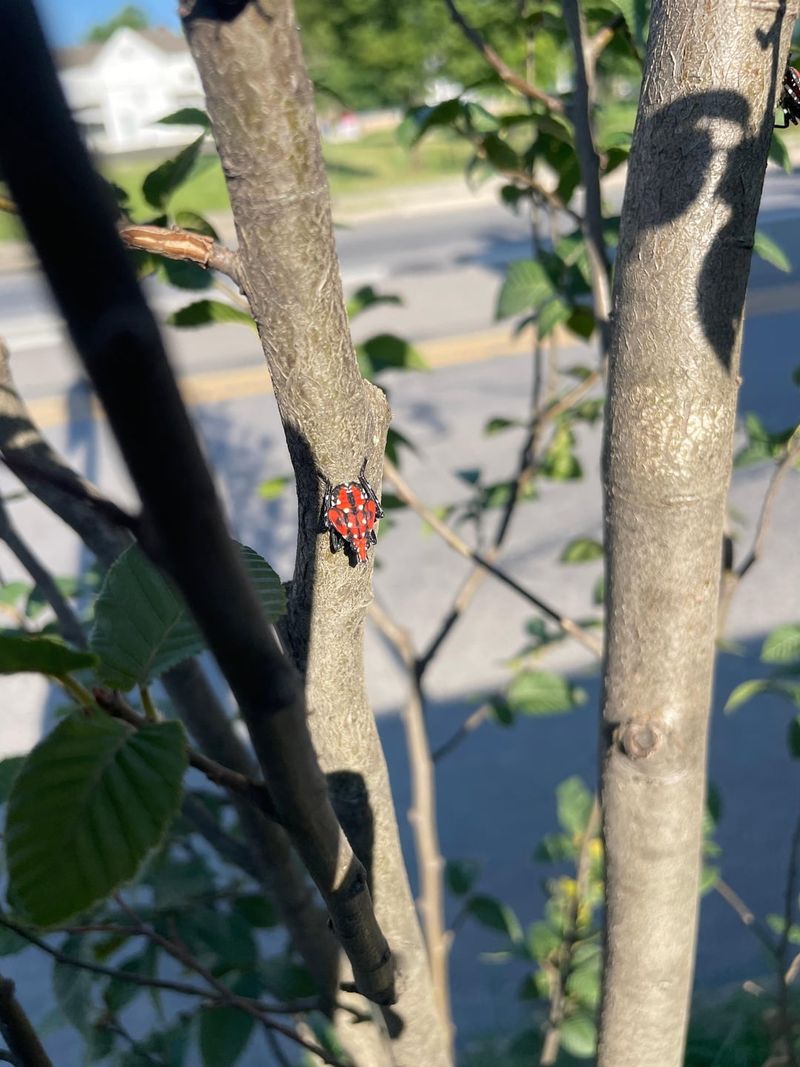
A solitary nymph is one thing. A tight cluster of twenty packed together on a single vine stem is a different conversation entirely.
Spotted lanternfly nymphs are social feeders and group feeding is one of their most recognizable early behaviors.
These clusters form on smooth, thin stems where sap is accessible and the surface offers stable footing. Grapevines are the classic target but rose canes, ornamental shrubs, young fruit tree branches, and hops all attract groupings.
Nymphs insert piercing mouthparts into plant tissue and feed on phloem sap. A cluster of even ten to twenty on a young plant can stress it noticeably over just a few days of sustained feeding.
From a distance, a cluster might look like a dark smudge or an area of slight discoloration on the stem. Getting closer reveals movement and individual shapes. That transition from smudge to identifiable insects is the moment to take action.
Pay particular attention to vines on trellises, young fruit trees with smooth bark, and ornamental shrubs near fence lines. These spots offer the combination of shelter and easy sap access that nymphs consistently prefer.
Morning scouting remains the most productive timing. The nymphs are slower in cooler air and less likely to scatter before you can assess the size of the group you are looking at.
A cluster found early is manageable. A cluster found in July is a different project.
5. Notice Sticky Honeydew On Leaves
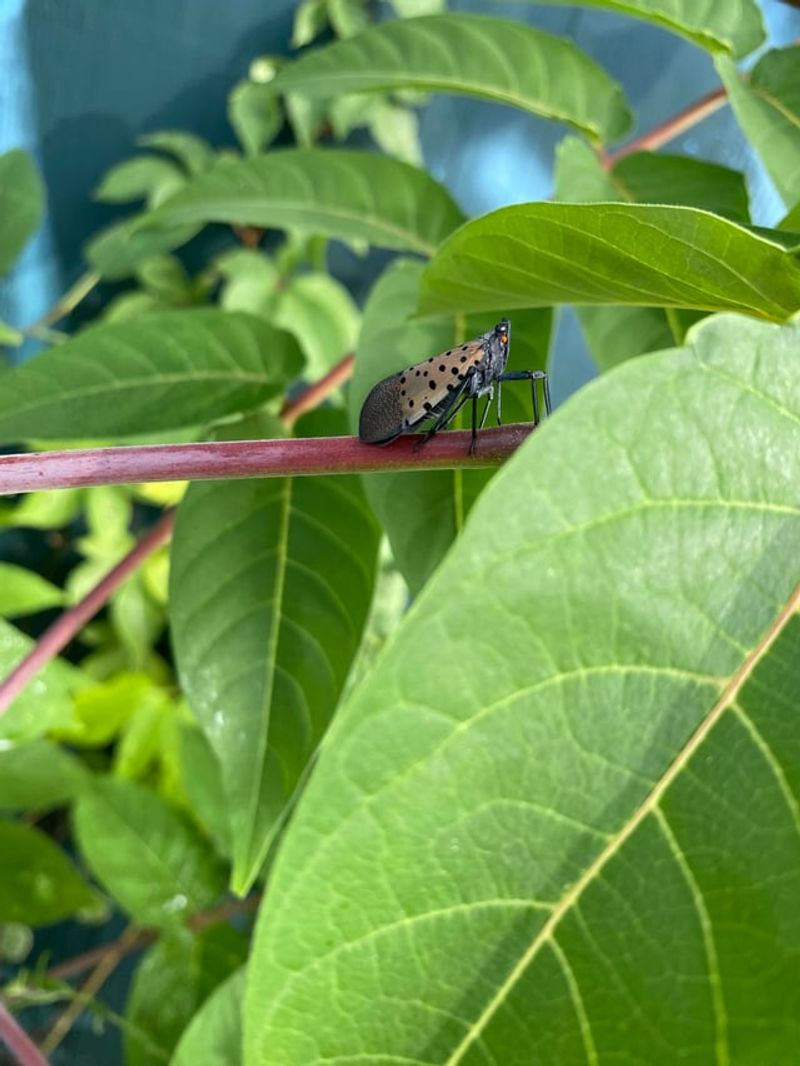
The garden feels strangely sticky. Leaves that should be clean have a glossy coating. Ants are moving up and down stems in numbers that seem unusual for the time of year.
These observations together form a specific pattern worth investigating rather than dismissing as unrelated garden quirks.
Honeydew is a sugary liquid waste product that spotted lanternfly excretes while feeding on plant sap. The insects take in large amounts of sap and expel much of the sugar content, which drips downward onto leaves, stems, and surfaces below the feeding site.
The residue is sticky and slightly shiny, similar to what accumulates under an aphid-infested plant but potentially across a larger surface area.
Ants are powerfully attracted to honeydew and actively seek it out. An unusual increase in ant activity on plants that do not normally attract heavy ant traffic is a reliable early indicator of honeydew production nearby, even before the insects themselves are spotted.
Wasps and bees hovering around plants without an obvious flower source are another indirect sign worth noting.
If you notice any plants in your garden with surfaces that feel tacky when you run a finger across a leaf, check the stems and leaf undersides above and around that sticky zone.
The source of the honeydew is usually within a few feet of where it accumulates most visibly.
6. Watch For Sooty Mold Below Feeding Sites
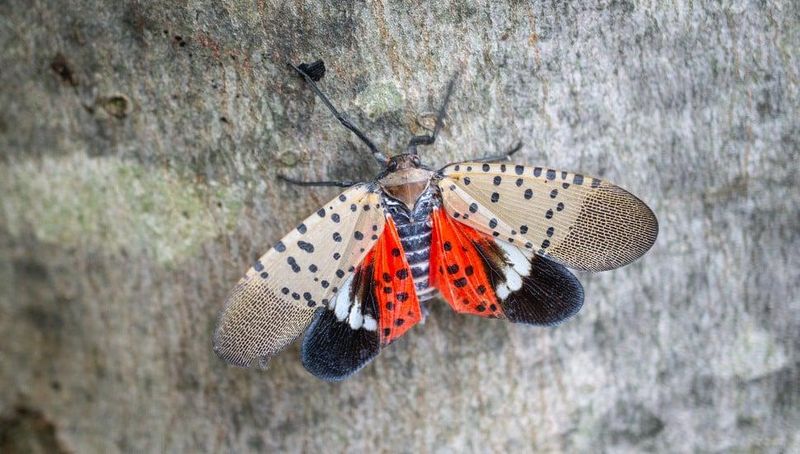
A dark, powdery coating on plant leaves looks like soot from a nearby fire or an environmental deposit of some kind. The actual cause is biological and directly connected to feeding activity above.
Sooty mold is a fungal growth that colonizes honeydew deposits on leaf surfaces and stems. The fungus does not infect the plant tissue directly.
It grows on the sugar residue left by insects feeding above, forming a dark layer that progressively blocks sunlight from reaching the leaf surface underneath.
Reduced photosynthesis from extended sooty mold coverage weakens plant growth and makes foliage look generally stressed in ways that do not immediately suggest an insect source.
Connecting the mold to the feeding population above it is the diagnostic step most gardeners miss.
Sooty mold appears on surfaces directly below active feeding sites because honeydew drips downward. Check the upper surfaces of lower leaves first, then outdoor furniture, patio surfaces, and garden stakes near the affected plants.
Wiping a small patch of mold and watching whether it returns within a few days confirms that honeydew production is ongoing nearby. Fresh mold reforming over clean surface confirms the feeding source is still active.
Finding sooty mold on previously healthy plants that have not shown this symptom before is a strong signal that a feeding population established itself recently.
The mold is not the primary problem. It is pointing directly at one.
7. Scrape Old Egg Masses Nearby
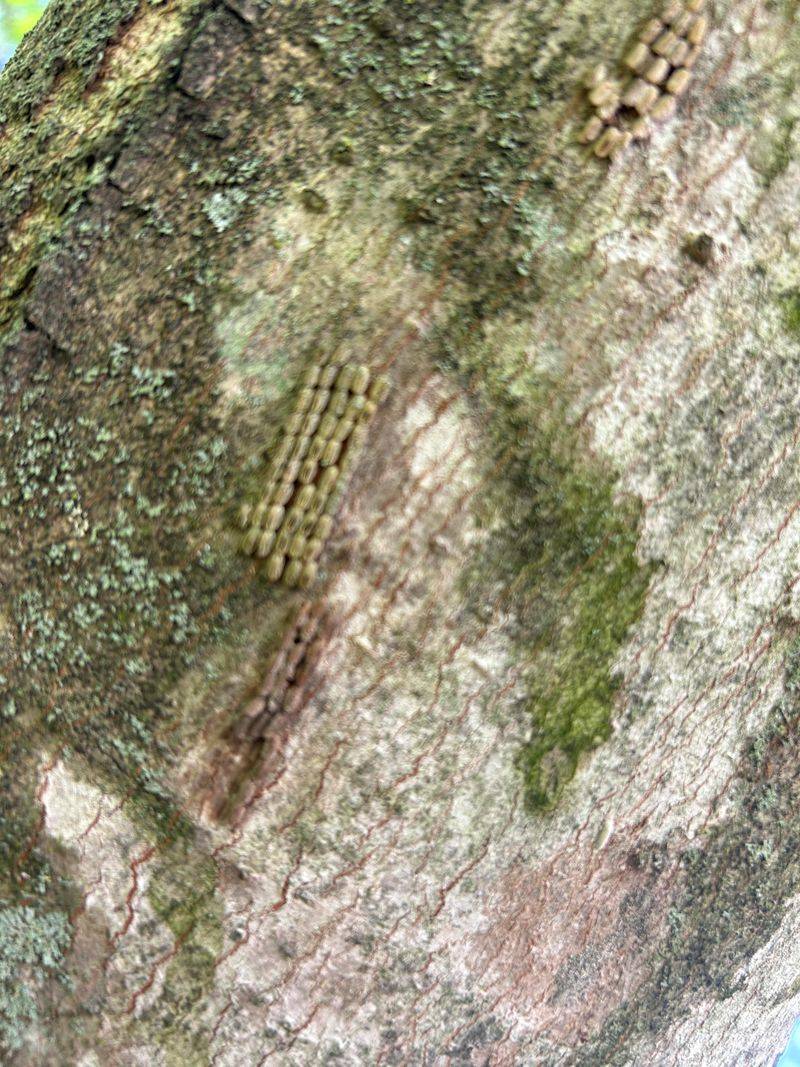
The egg masses look nothing like what most people expect insect eggs to look like.
Fresh masses are covered with a grayish, waxy coating that resembles dried mud and blends convincingly with tree bark, fence posts, stone walls, and outdoor furniture.
The camouflage is effective enough that experienced gardeners walk past them regularly.
Each mass contains roughly thirty to fifty eggs arranged in neat rows beneath that coating. Females lay them from September through November, which means masses found now were laid last fall.
Hatching typically runs from late April through early June in Pennsylvania depending on temperature accumulation.
Even hatched masses are worth removing. Scraping them prevents any late-hatching eggs from adding to the local population. Use a plastic card or putty knife to scrape masses into a sealed bag with hand sanitizer or rubbing alcohol.
Check hard surfaces thoroughly during every scouting walk. Tree trunks, wooden decks, fence rails, outdoor chairs, stone retaining walls, and parked vehicles are all documented egg-laying surfaces.
Vehicles deserve particular attention. Egg masses transported on cars are one of the primary mechanisms by which spotted lanternfly reaches new areas of Pennsylvania.
Has your car been parked near infested vegetation recently? Checking wheel wells and the underside of bumpers before driving into a new area takes under two minutes. Also it is one of the most effective individual actions available for slowing spread.
8. Report New Finds In Untouched Areas
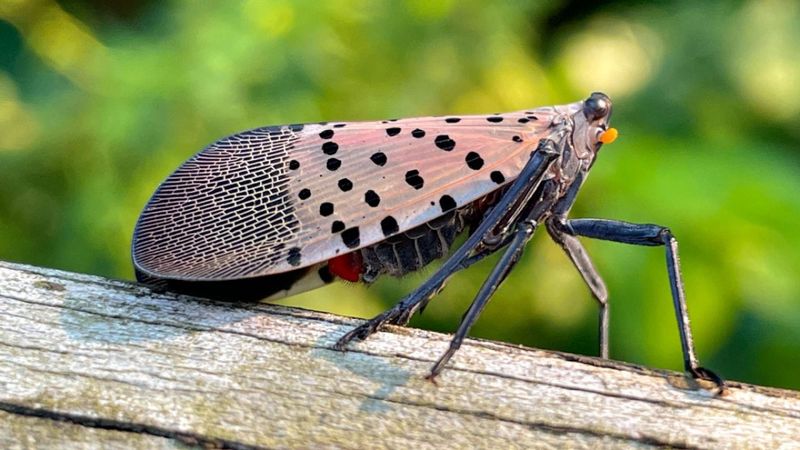
Spotting a cluster of spotted lanternfly nymphs in a Pennsylvania county without confirmed sightings is not just a garden problem worth noting.
It is genuinely useful information for the researchers and officials tracking how fast this pest is moving and where it will appear next.
The Pennsylvania Department of Agriculture actively requests resident reports, particularly from areas outside the current established range.
Submitting a report through the PDA online form or contacting a local extension office provides the location data that improves population mapping across the state.
A clear smartphone photo, the location, and an approximate count are enough to make the report useful.
Citizen sightings have meaningfully contributed to tracking spotted lanternfly spread across Pennsylvania since the initial detection in Berks County in 2014.
The map of confirmed presence areas exists largely because residents reported what they found.
Pennsylvania law requires checking vehicles and outdoor gear before traveling out of established quarantine zones.
The zone has expanded significantly and now covers most of the state, but the checking habit remains relevant.
A brief inspection under bumpers, in wheel wells, and on the underside of trailers before travel takes less than two minutes.
Reporting early finds in new areas is the individual action with the widest potential impact on slowing this pest down.
The spotted lanternfly arrived in Pennsylvania without being invited and has been making itself comfortable ever since. Reporting it every time it shows up somewhere new is a reasonable response to that situation.