These Are The Michigan Shrubs That Produce Berries Birds Can’t Stop Coming Back For
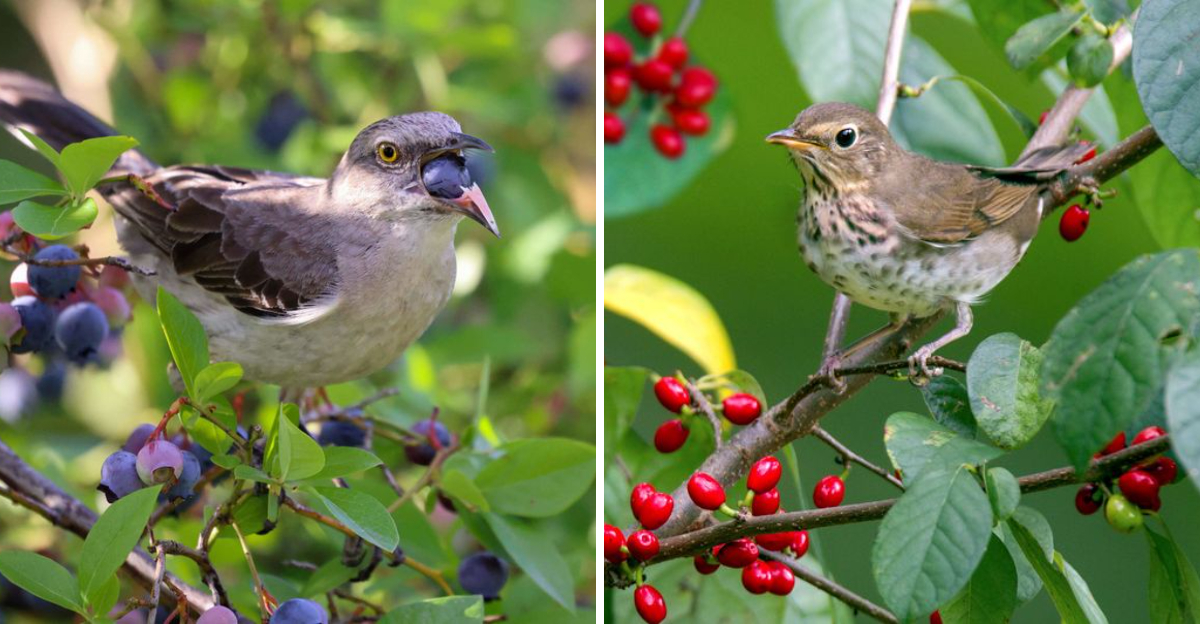
Bird activity in a Michigan yard changes dramatically when the right berry-producing shrubs are in place.
Feeders attract birds on a schedule you control, but shrubs with fruit that ripens across different points in the season bring birds in on their own terms, sometimes in numbers that genuinely surprise gardeners who have never grown them before.
Michigan winters are long and food sources become critical for birds that stay through the cold months, making native berry shrubs more valuable here than in warmer states where other food options remain available year-round.
The shrubs that draw the most consistent bird activity are the ones with fruit that persists into late fall and winter, providing reliable nutrition exactly when it matters most.
Getting a few of these established on your property changes what you see outside the window from one season to the next.
1. Winterberry Holly
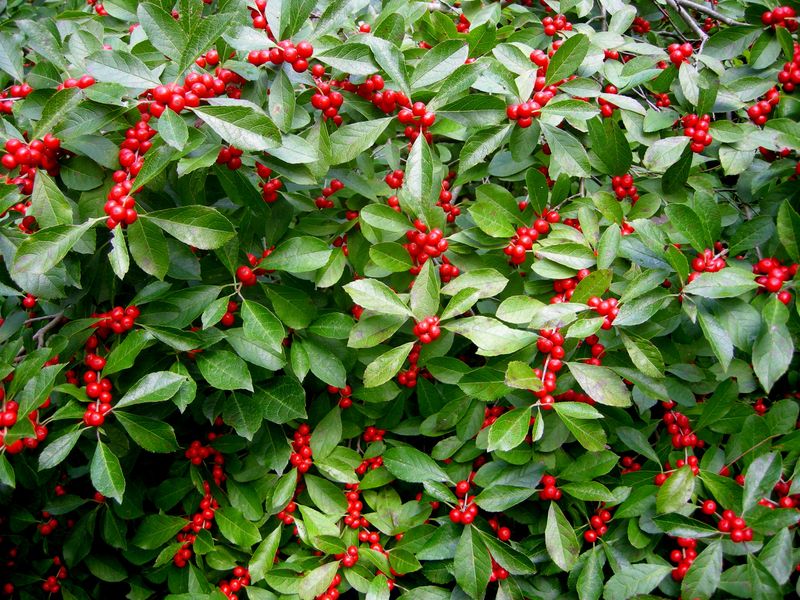
Few sights in a Michigan winter garden stop you in your tracks quite like Winterberry Holly.
Known botanically as Ilex verticillata, this native deciduous holly drops its leaves in autumn and reveals dense clusters of brilliant red berries that practically glow against a snowy backdrop.
Birds like American robins, cedar waxwings, and bluebirds return again and again once other food sources disappear under frost.
One important detail every gardener should know: you need both a male and a female plant for berry production. The female plant carries the fruit, but without a nearby male Ilex verticillata to provide pollen, berries simply will not form.
A single male plant can typically pollinate several females planted within 50 feet.
Winterberry Holly thrives in moist to wet soils, making it an excellent choice for low-lying areas, rain gardens, and pond edges throughout Michigan. Full sun encourages the heaviest berry production, though partial shade works well too.
Plants grow six to ten feet tall and wide, giving birds both food and shelter. Minimal pruning is needed, and once established, this shrub is remarkably tough through Michigan winters.
Adding Winterberry Holly to your yard is one of the most rewarding decisions a bird-friendly gardener can make.
2. Nannyberry Viburnum
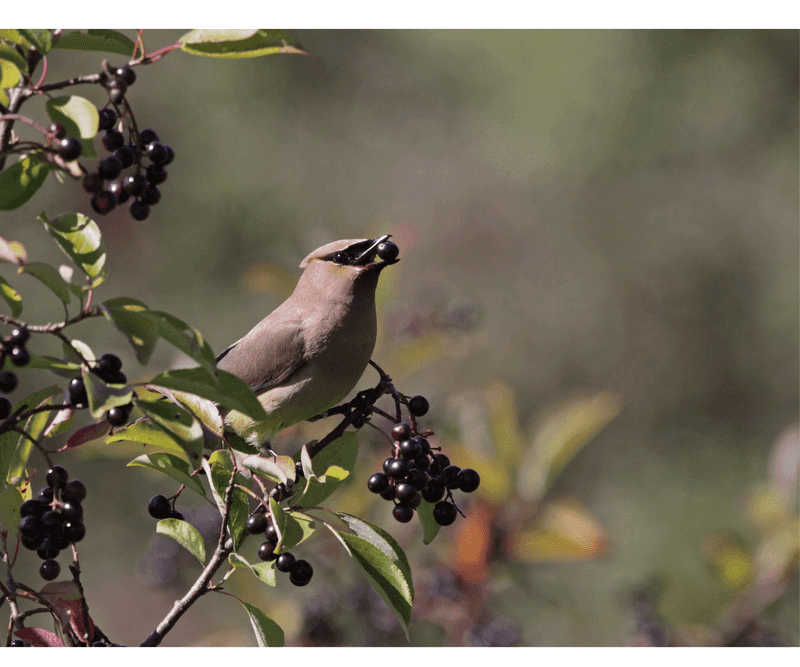
Not every bird-friendly shrub needs a sunny spot to perform beautifully, and Nannyberry Viburnum proves that point better than almost any other native plant.
Viburnum lentago is one of the most shade-tolerant berry-producing shrubs available to Michigan gardeners, making it a natural fit for woodland edges, north-facing yards, and spots under taller trees where other fruiting plants tend to struggle.
By late summer and into fall, Nannyberry produces clusters of blue-black fruit that birds find highly attractive. Robins, cedar waxwings, and various thrush species are especially drawn to the berries, often stripping entire clusters within days of full ripening.
The fruit contains high fat content, which makes it particularly valuable for migratory birds building energy reserves for long flights south.
White flat-topped flower clusters appear in spring and create a lovely visual display before the berries form. Fall foliage turns shades of red and purple, adding another layer of seasonal interest.
Your Michigan Garden Changes Every Week. Your Plan Should Too.
Gardening in Michigan changes quickly throughout the season. Every Friday you’ll receive a simple weekly plan showing exactly what to plant, prune, fertilize, harvest, and protect so you never miss the right timing.
Viburnum lentago grows quite large, reaching ten to eighteen feet tall at maturity, so plan accordingly and give it room. It adapts well to a range of Michigan soils, from moist lowlands to average upland conditions.
Minimal pruning keeps the plant tidy, and removing a few older stems each year encourages fresh, productive growth. Few shrubs deliver this level of wildlife value with this little fuss.
3. American Cranberrybush Viburnum
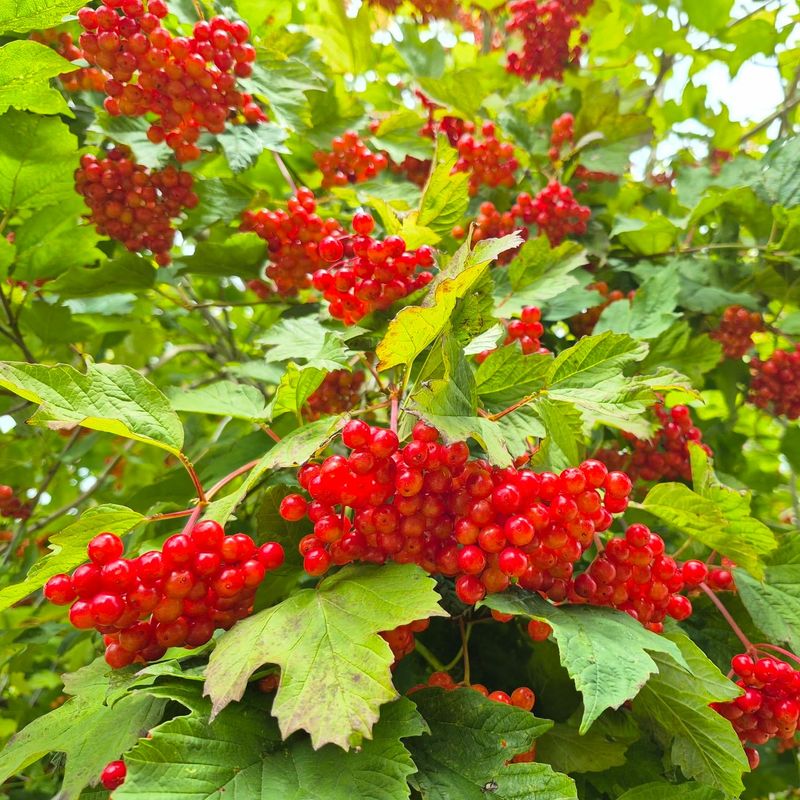
Bright red berries that linger well into winter make American Cranberrybush Viburnum one of the most reliable bird magnets in any Michigan yard. Scientifically called Viburnum trilobum, this native shrub offers something for every season.
Spring brings showy flat-topped white flower clusters that attract pollinators, summer delivers lush green foliage, and fall transforms the plant with fiery red and orange leaf color before the berries fully take center stage.
Birds including ruffed grouse, robins, and thrushes eagerly seek out the persistent red berry clusters during fall and winter months when food becomes harder to find.
The berries are tart and tend to stay on branches longer than many other fruits, which actually works in the birds’ favor since it spreads feeding opportunities across the colder months.
Viburnum trilobum grows eight to twelve feet tall and wide, so give it space to reach its full potential. It performs best in full sun to partial shade and handles a range of soil types found across Michigan, from average garden soil to slightly moist conditions.
This shrub needs very little maintenance once established and rarely requires pruning beyond occasional shaping.
Grouping two or more plants together increases berry production significantly and creates a layered habitat that birds find irresistible throughout the year.
4. Elderberry
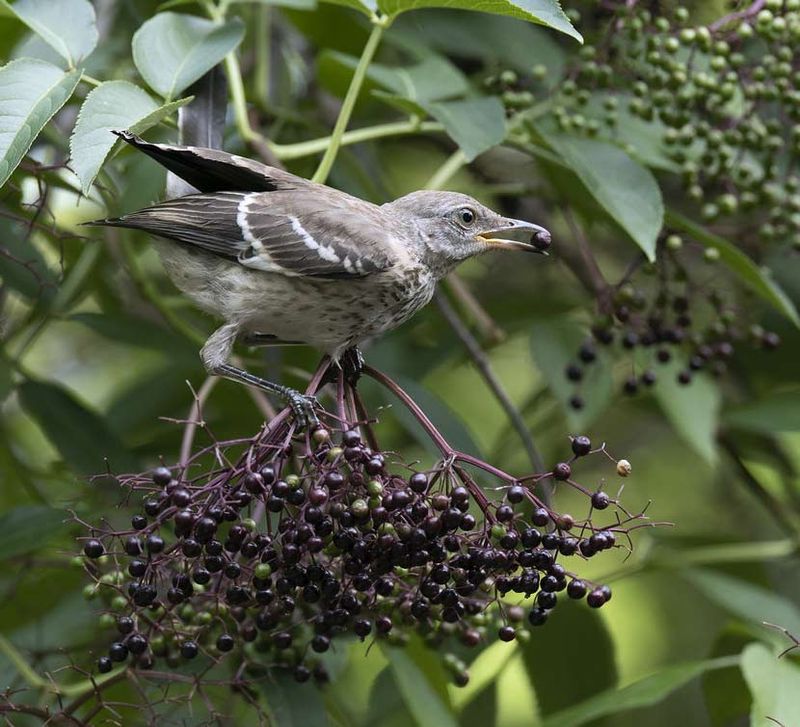
Walk past a ripe Elderberry shrub in August and you will likely hear the birds before you see them.
Sambucus canadensis produces enormous flat-topped clusters of dark, juicy berries that attract an impressive parade of bird species, including Baltimore orioles, gray catbirds, woodpeckers, and dozens of others.
The feeding frenzy that follows ripening is one of the most entertaining wildlife spectacles a Michigan backyard can offer.
Beyond birds, Elderberry earns extra points as a pollinator powerhouse. The large creamy-white flower clusters that appear in early summer attract native bees, butterflies, and beneficial insects in impressive numbers.
Plant two or more shrubs together to maximize cross-pollination and berry production. Sambucus canadensis spreads by root suckers over time, so budget some space or plan to manage its naturally expanding footprint with occasional pruning.
Elderberry prefers moist, rich soils and performs best in full sun, though it tolerates partial shade reasonably well. Plants grow vigorously, reaching six to twelve feet tall, and respond well to hard pruning in late winter if they become too large or woody.
Cutting stems back hard every few years keeps the plant productive and full of fresh growth.
Michigan’s native Elderberry is also valued for its edible berries used in jams, juices, and syrups, making it one of the most rewarding dual-purpose shrubs you can add to your landscape.
5. Black Chokeberry
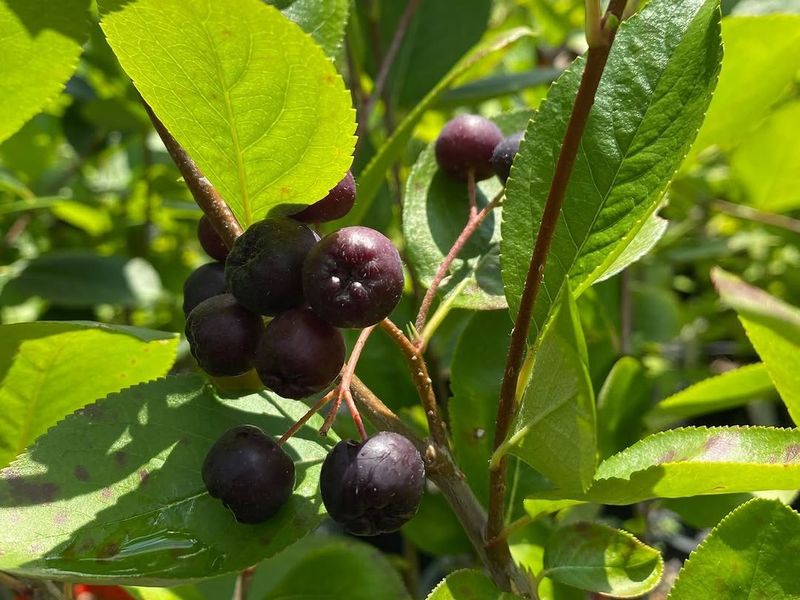
Tough, adaptable, and genuinely underrated, Black Chokeberry earns its place in Michigan gardens through sheer versatility. Aronia melanocarpa handles wet soils, average soils, and even occasionally dry conditions without complaint.
That kind of resilience is rare, and it makes this native shrub a go-to choice for challenging spots in the landscape where other plants struggle to thrive.
The dark, almost purple-black berries ripen in late summer and persist well into fall, giving birds like cedar waxwings, mockingbirds, and thrushes a valuable late-season food source.
While humans find the raw berries quite astringent, birds have no such hesitation and descend on the clusters eagerly.
The berries are also packed with antioxidants, which has made Aronia melanocarpa increasingly popular in edible landscaping circles.
Spring brings delicate white flower clusters that attract bees and butterflies, while fall foliage turns a stunning deep red and burgundy that rivals any ornamental shrub.
Plants typically grow three to five feet tall, making them manageable in smaller yards and easy to tuck into mixed borders.
Full sun produces the best berry yield, though partial shade is well tolerated. Spacing plants about four feet apart allows good air circulation and healthy growth.
Maintenance is minimal, and occasional removal of older stems keeps plants productive and looking their best season after season.
6. Highbush Blueberry
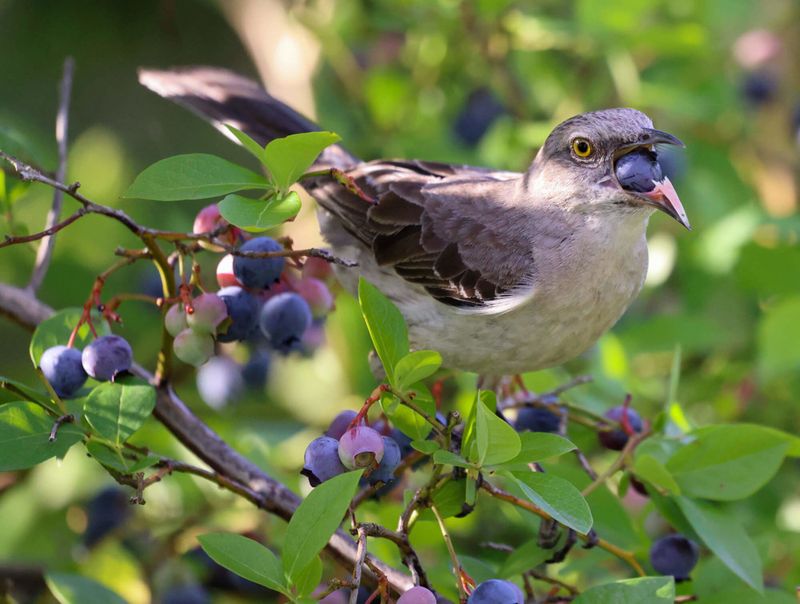
Plant a Highbush Blueberry and you will quickly discover that you are not the only one with your eye on the harvest. Vaccinium corymbosum produces sweet, plump blue berries that birds find just as irresistible as any human gardener does.
Robins, bluebirds, thrushes, and mockingbirds are among the many species that will scout your bushes daily once the berries start turning color.
If sharing the harvest is not part of your plan, lightweight bird netting draped over the shrubs during the ripening period is the most practical solution. Netting protects the fruit while still allowing you to enjoy watching birds explore the rest of the garden.
Without netting, expect birds to claim a generous portion of the crop, which is not a bad outcome if your primary goal is wildlife attraction.
Vaccinium corymbosum demands acidic soil with a pH between 4.5 and 5.5, which aligns naturally with many Michigan soil profiles, especially in sandy areas.
Consistent moisture is important, particularly during fruit development, so mulching around the base of plants helps retain soil moisture and regulate temperature.
Full sun produces the best yields and sweetest fruit. Plants grow four to six feet tall and deliver stunning red and orange fall foliage after harvest season ends, extending their ornamental value well beyond summer.
Planting at least two different varieties improves cross-pollination and dramatically increases berry production.
7. Gray Dogwood
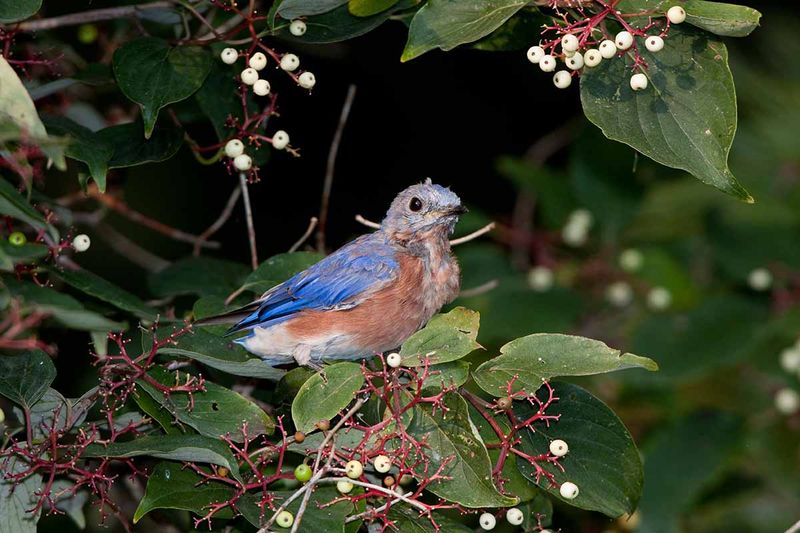
Gray Dogwood might not get the same attention as flashier native shrubs, but birds have known its value for centuries.
Cornus racemosa produces small white berries held on striking bright red stems that ripen in late summer, and over 90 bird species have been documented feeding on the fruit.
That is an extraordinary wildlife record for any single shrub, and it makes Gray Dogwood one of the most ecologically important plants you can grow in a Michigan yard.
The spreading, colonizing growth habit of Cornus racemosa makes it especially useful for naturalized areas, slopes prone to erosion, and woodland edges where a dense, wildlife-friendly thicket is welcome.
It spreads by root suckers and gradually forms broad colonies, which actually benefits birds by creating layered cover and multiple feeding stations.
Regular mowing or pruning around the perimeter keeps the spread in check if space is limited.
Gray Dogwood adapts to a wide range of conditions, tolerating full sun, partial shade, wet soils, and dry soils with equal ease. That flexibility makes it one of the most forgiving native shrubs for Michigan gardeners working with imperfect planting sites.
Spring flowers attract pollinators, fall foliage turns attractive shades of red and purple, and the red fruiting stems persist through winter, adding visual interest even after the berries are gone. Few shrubs deliver this much wildlife value with this little demand.
8. Spicebush
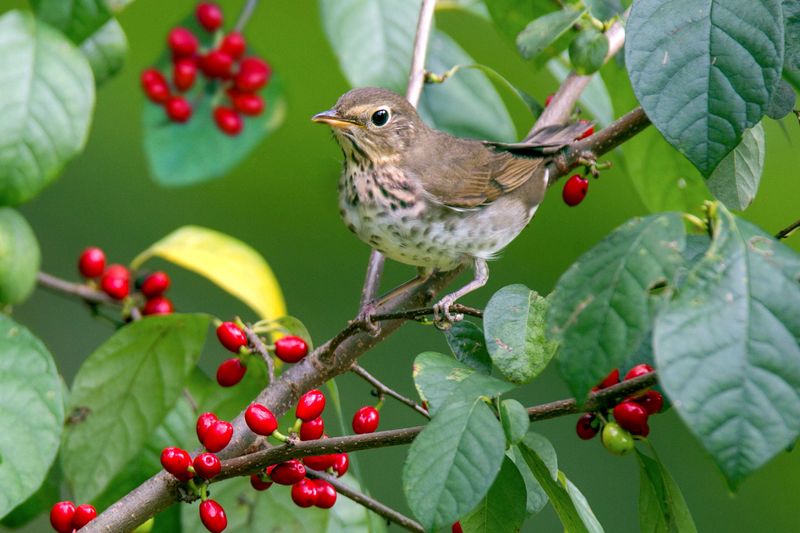
There is something almost magical about Spicebush in autumn. Lindera benzoin lights up the shaded woodland garden with clusters of glossy, oval, bright red berries that practically shine among the golden yellow foliage.
Migrating birds, especially wood thrushes, veeries, and hermit thrushes, are powerfully attracted to these high-fat berries and will make repeated visits to fuel up before continuing their long journeys south.
Like Winterberry Holly, Spicebush requires both male and female plants to produce fruit. Only female Lindera benzoin plants bear berries, but a single male planted nearby provides sufficient pollen for several females.
Plan your planting accordingly and you will be rewarded with a generous berry display every fall. The tiny yellow flowers that appear on bare stems in very early spring are also a valuable early nectar source for native bees emerging on warm days.
Spicebush thrives in partial to full shade, making it one of the few berry-producing shrubs that genuinely performs well under a woodland canopy. It prefers moist, well-drained soils rich in organic matter, conditions that naturally occur in Michigan’s forested landscapes.
Plants grow six to twelve feet tall and fill out beautifully without requiring much attention. The aromatic leaves and stems support native insects including the Spicebush Swallowtail butterfly caterpillar, adding another layer of ecological value.
For a shady corner that needs life, color, and wildlife, Spicebush is truly the perfect answer.