These Are The Native Ohio Groundcovers That Choke Out Crabgrass Without Chemicals
Crabgrass is stubborn, ugly, and laughs in the face of most homeowners every single summer. You pull it, it comes back.
You spray it, your kids and pets pay the price. At some point, you have to ask yourself if there’s a smarter way to fight this battle.
There might be. And native plant world is a good place to start looking.
Certain groundcovers native to Ohio spread thick and crowd out the bare soil crabgrass needs to get a foothold. No chemicals, no repeated treatments.
They are not a magic fix, but for many Ohio yards, they have made a real dent in the problem over time. Nature already built some solid competition for crabgrass in this region.
You just need to know which groundcovers actually work, where to plant them, and what to realistically expect.
1. Plant Pennsylvania Sedge Where Turfgrass Struggles
Thin, struggling turf under a big maple or oak is one of the most common crabgrass entry points in local yards. The grass weakens in the shade, bare patches open up, and weeds move in fast once the soil is exposed.
Pennsylvania sedge, known botanically as Carex pensylvanica, is one of the best native alternatives for exactly that situation.
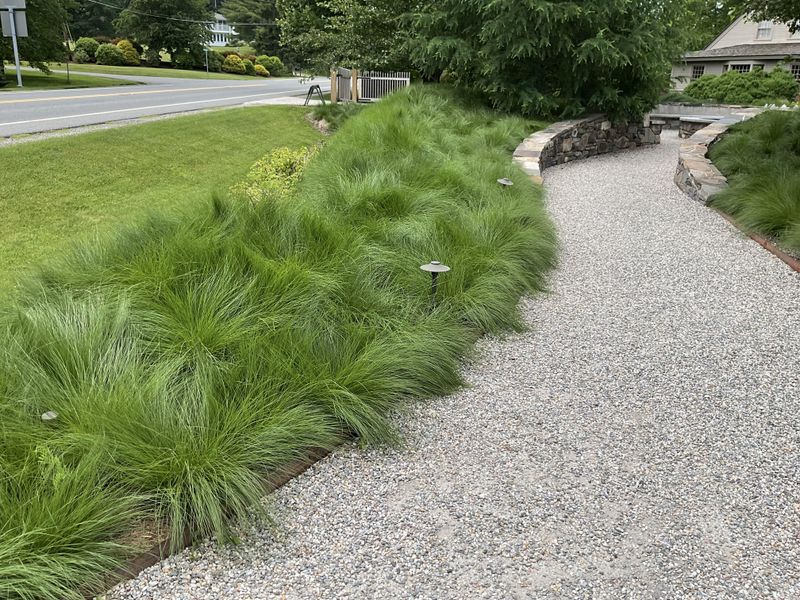
This fine-textured, grasslike plant grows about six to ten inches tall and thrives in dry to average shade. That is the same difficult condition where lawn grass tends to give up.
It is native across much of the eastern United States, including our state. It is also confirmed as a regionally appropriate groundcover by OSU Extension and the Lady Bird Johnson Wildflower Center.
Once it fills in, its soft, arching blades create a low meadow-like carpet that shades the soil below.
Planting it from plugs spaced about six inches apart gives it the best start. It spreads slowly by rhizomes, so patience matters here.
While it is getting established, keep the area weeded by hand and use a light layer of mulch between plugs to reduce open soil. It does not handle heavy foot traffic well, so it works best as a no-mow alternative under trees rather than a main lawn area.
Over two to three seasons, it can fill the gaps where crabgrass once kept coming back.
2. Let Wild Ginger Carpet The Shady Bare Spots
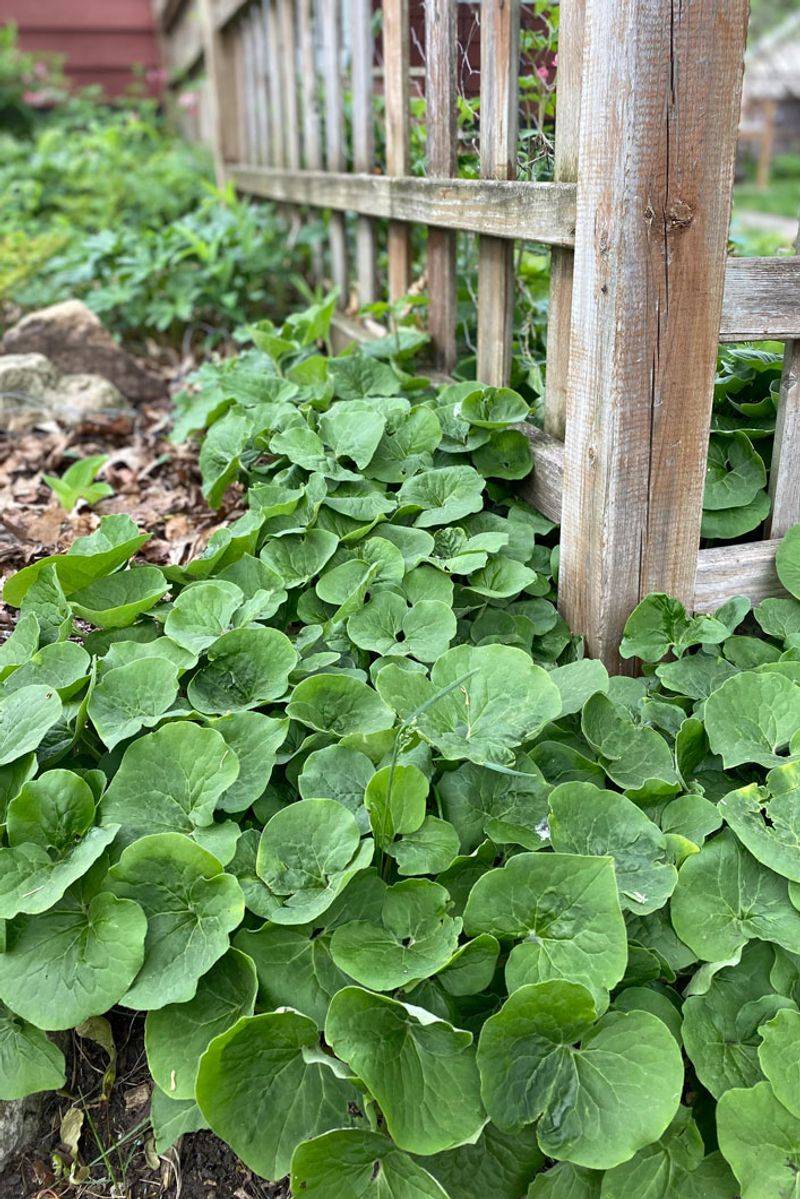
Shady bare spots under shrubs and trees are rarely good candidates for crabgrass because that weed prefers full sun. But they are still vulnerable to other weeds that love disturbed, low-light soil.
Wild ginger, or Asarum canadense, steps in as one of the most effective native solutions for those dim, moist corners where almost nothing else fills in cleanly.
Its broad, heart-shaped leaves grow close to the ground and overlap to form a dense canopy over the soil. That canopy is the key.
By covering exposed earth, wild ginger reduces the light and bare soil that weed seeds need to get started. It is native to rich woodland soils across our state.
The Ohio Department of Natural Resources documents it as a native species well-suited to shaded garden beds and woodland edges.
Your Ohio Garden Changes Every Week. Your Plan Should Too.
Gardening in Ohio changes quickly throughout the season. Every Friday you’ll receive a simple weekly plan showing exactly what to plant, prune, fertilize, harvest, and protect so you never miss the right timing.
This plant works best in moist, humus-rich soil with part to full shade. Do not try to use it in hot, sunny spots or dry, compacted ground – it will struggle and leave gaps that weeds will fill.
Plant it in drifts beneath trees, along shaded borders, or as an understory layer under shrubs. Division or plug planting works well.
Water it regularly during the first season, and pull any competing weeds before they set seed. By year two, it typically starts spreading on its own and filling the bed.
3. Use Golden Ragwort To Fill Damp Open Ground
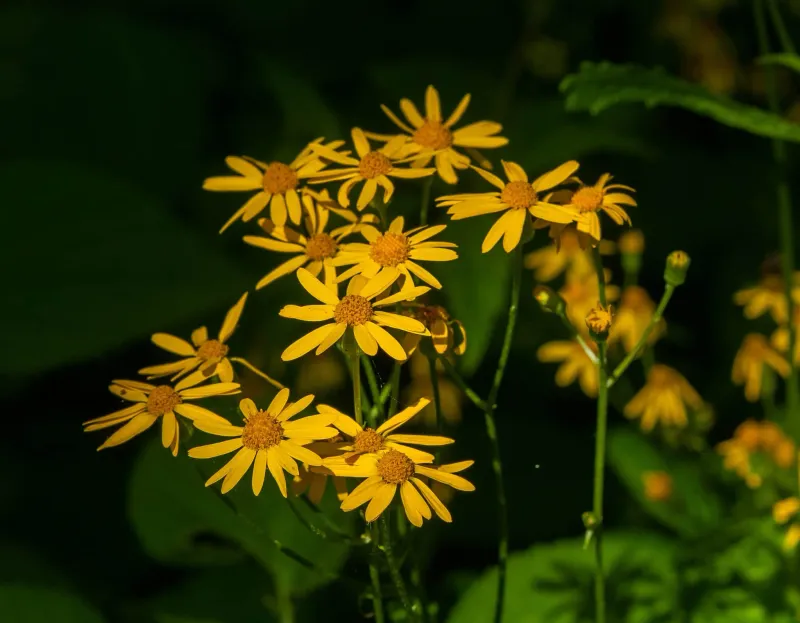
Low spots near downspouts, rain garden edges, and damp shaded borders are tricky places to keep planted. Grass often drowns or thins out, and that open, moist ground can quickly attract a range of opportunistic weeds.
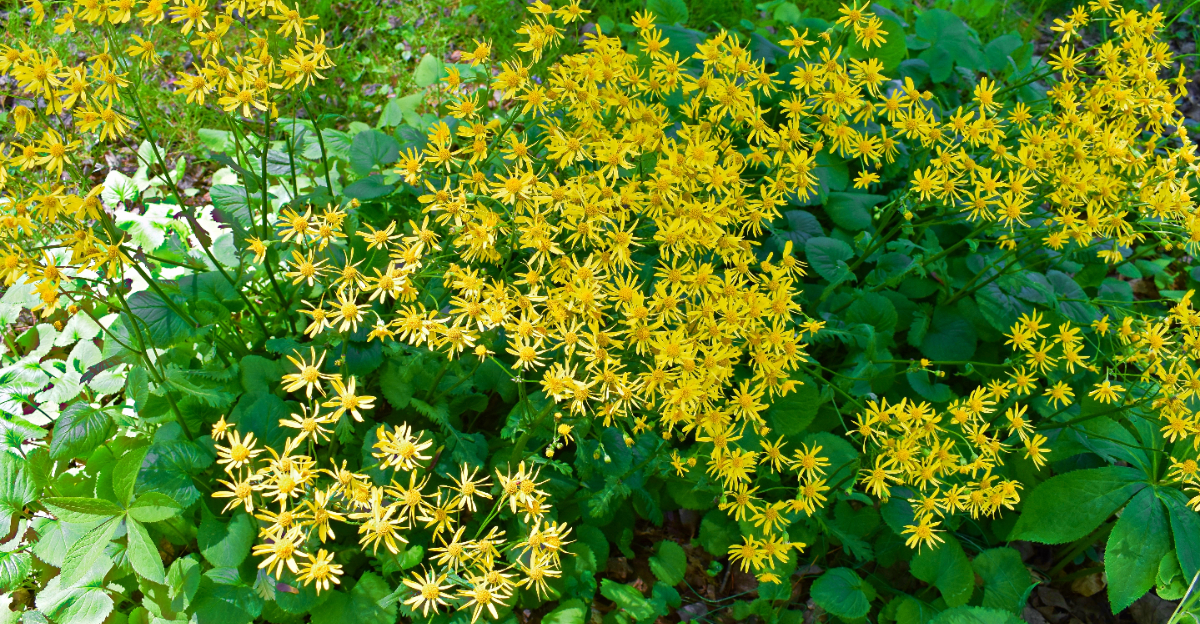
Golden ragwort, Packera aurea, is a native plant that genuinely thrives in those wet-to-average conditions and can spread into colonies that cover the soil over time.
Its basal foliage stays semi-evergreen through much of the year in our state, which means it keeps soil covered even outside the growing season. Come spring, it sends up cheerful yellow flowers that pollinators visit eagerly.
According to OSU Extension and the Lady Bird Johnson Wildflower Center, golden ragwort is native to Ohio. It is well-documented as a spreading, colony-forming groundcover for moist, shaded sites.
It works especially well along the edges of rain gardens, in low borders, and beneath shade trees where the soil stays consistently damp. Crabgrass is less competitive in these shaded, wet areas, but other weeds still exploit open ground.
Planting golden ragwort in groups of three to five and keeping the spaces mulched while it establishes will help it fill in faster. Once a colony gets going, it shades the soil well enough to crowd out many common weed seedlings.
Give it a full season of regular watering and weed removal, and it will do most of the work after that.
4. Spread Creeping Phlox Across Sunny Lawn Edges
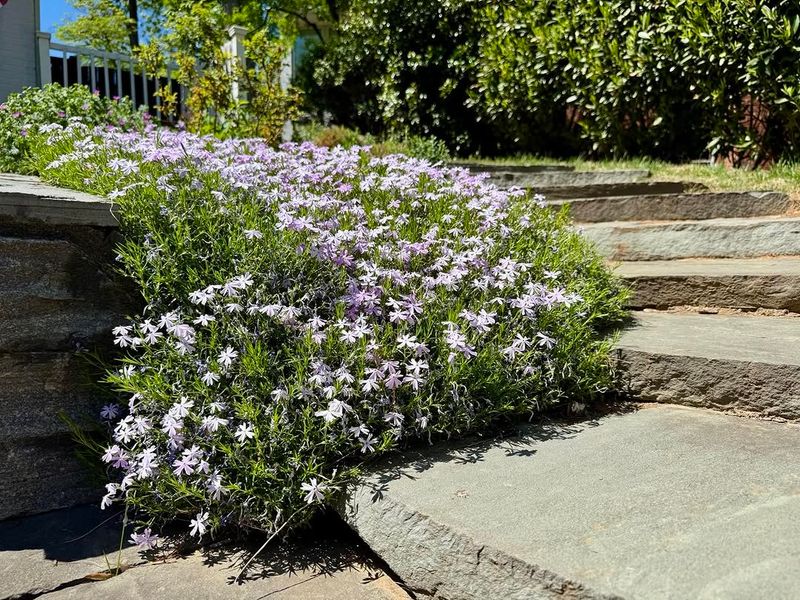
Sunny lawn edges along sidewalks, driveways, and slopes are prime crabgrass territory. The soil heats up fast, turf thins out from foot traffic or mowing stress, and bare patches open up just in time for crabgrass seeds to germinate in late spring.
Creeping phlox, Phlox subulata, is a low-growing native option that can take over those exposed edges and hold the soil with a dense, evergreen mat.
It is native to rocky, well-drained slopes and open areas in the eastern United States. The Lady Bird Johnson Wildflower Center confirms it as a regionally appropriate groundcover for sunny, dry-to-average sites.
Its spring bloom – usually in shades of pink, purple, or white – is eye-catching, and its tight mat of needle-like foliage stays in place year-round. That persistent coverage is what makes it useful for reducing bare soil along borders.
It is not a walkable surface and handles no foot traffic, so it belongs along edges and slopes rather than in the middle of a lawn. Plant it in well-drained soil in full sun, and avoid wet or clay-heavy spots where it tends to rot.
Space plants about twelve inches apart and mulch between them during the first season. Pull any crabgrass or other weeds by hand until the phlox fills in.
Once established, its dense mat shades out most seedlings trying to establish in the same space.
5. Tuck Wild Strawberry Into Thin, Dry Patches
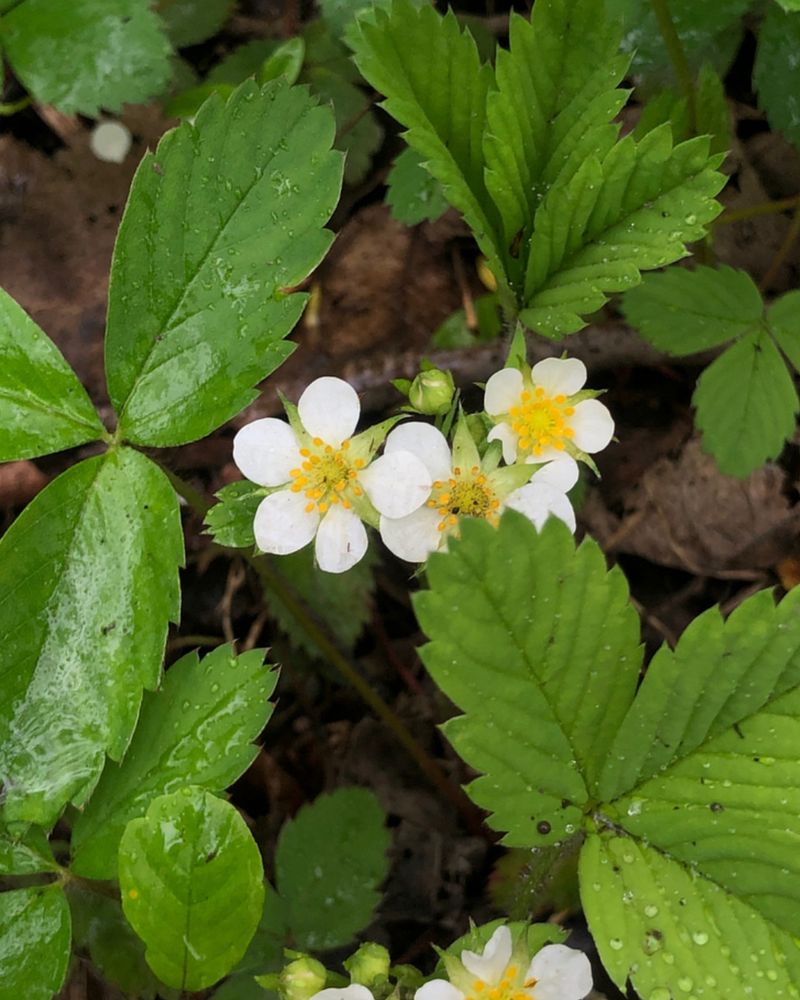
Scattered thin patches in a sunny lawn are exactly where wild strawberry earns its keep. Those include patches near tree roots, along dry slopes, or at the edge of a gravel path.
Fragaria virginiana spreads by runners, filling small gaps and connecting across open soil the way few other low plants can. It is native across the eastern and central United States, including our state.
Both ODNR and the Lady Bird Johnson Wildflower Center document it as a native species suited to a range of sunny to part-shade conditions.
The plant stays low, usually under six inches, and its trifoliate leaves create a green mat that covers soil without blocking views or crowding nearby plantings. Small white spring flowers bring pollinators, and the tiny red fruits attract birds and other wildlife.
That is a practical bonus for anyone trying to make their yard more ecologically useful. It handles average to somewhat dry soil well, which makes it a reasonable fit for the dry edges where crabgrass often appears.
For a tidy yard, keep in mind that runners can spread beyond where you want them and may need occasional trimming. In informal or naturalistic settings, that spreading habit is exactly the point.
Plant plugs or divisions in early spring, water through the first dry spells, and pull competing weeds before they set seed. It typically starts filling gaps noticeably by the second season.
6. Let Common Blue Violets Crowd Small Lawn Gaps
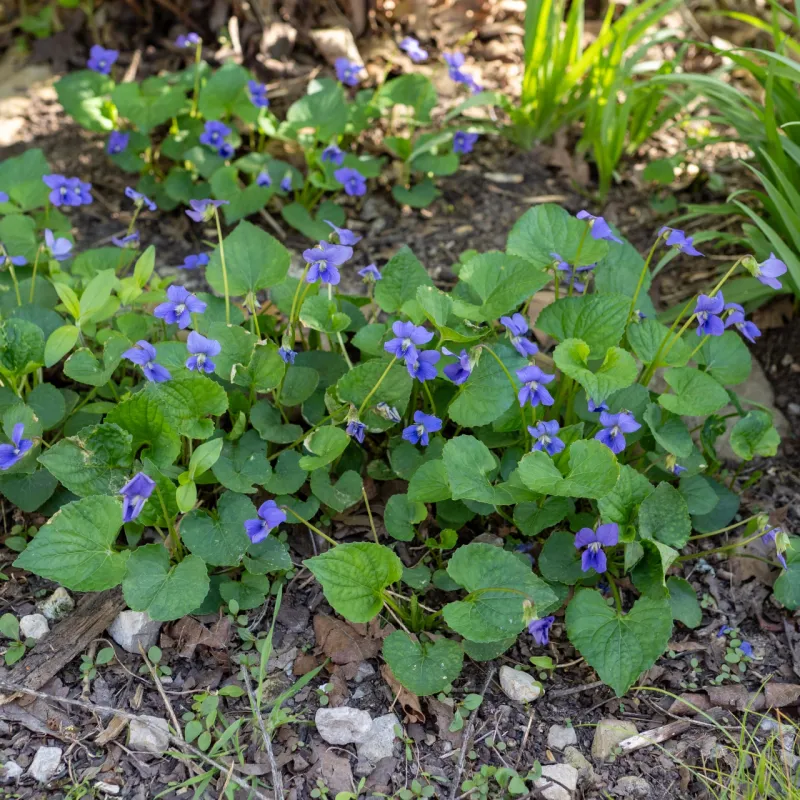
Here is a different way to think about what belongs in a lawn. If a plant is already growing there, is native, and covers the soil without chemicals, maybe it deserves a second look.
Common blue violet, Viola sororia, already lives in millions of local yards across our state. It pops up in part shade, along lawn edges, and in any spot where turf is thin enough to let light reach the soil.
Violets are native to Ohio and documented by ODNR and the Lady Bird Johnson Wildflower Center as a widespread native species.
Their low, spreading habit and heart-shaped leaves can fill small gaps in thin turf, reducing the bare soil that crabgrass seeds need to germinate.
They bloom in early spring with small purple or blue flowers that support early-season pollinators, including native bees. Some butterfly species, particularly fritillaries, rely on violet leaves as a larval food source.
Not every homeowner wants violets in their lawn, and that is a fair preference. But for low-input yards, pollinator-friendly spaces, and part-shade areas where grass struggles anyway, violets offer a no-cost, no-chemical way to keep soil covered.
If crabgrass is the bigger concern, encouraging violets in the thin spots rather than leaving soil bare is a practical trade-off. The key is keeping any bare areas covered so weeds cannot find an easy opening to establish themselves.
7. Plant Dwarf Crested Iris Along Part-Shade Borders
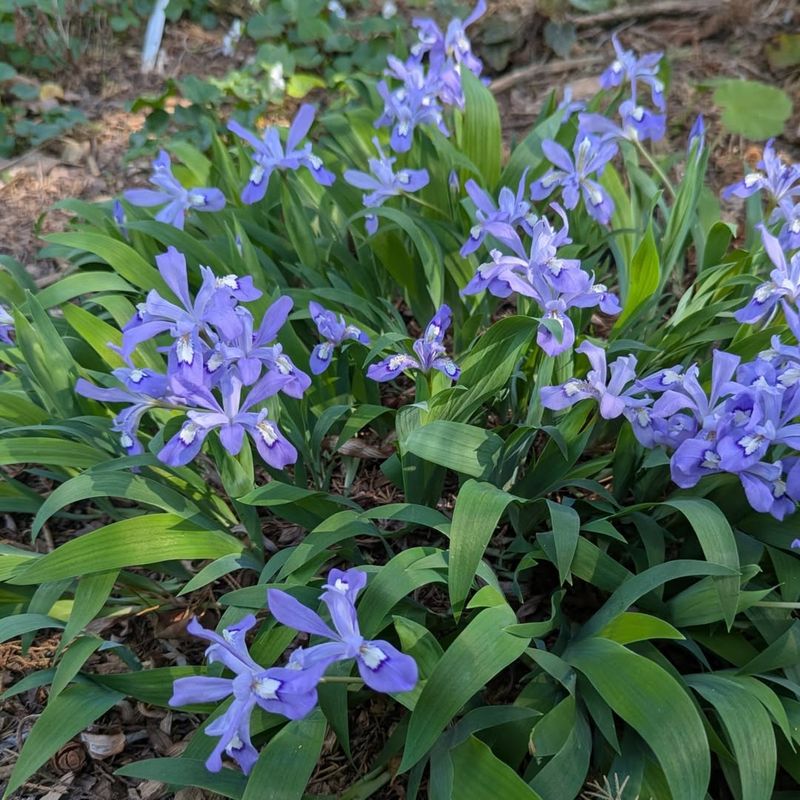
Along the shaded border where a lawn meets a fence, a garden bed, or a wooded edge, turf often fades out and leaves a strip of open soil that weeds colonize quickly. Dwarf crested iris, Iris cristata, fits that narrow, awkward space better than most plants.
It spreads by shallow rhizomes, slowly filling a border with a low, leafy mat that keeps soil from sitting exposed between seasons.
This plant is native to woodland edges and slopes in the eastern United States. OSU Extension and the Lady Bird Johnson Wildflower Center both confirm it as a native species appropriate for part-shade to light-shade sites in our region.
Its spring flowers are small, delicate, and usually lavender-blue with a yellow or white crest. They appear in mid-spring and are genuinely beautiful for a plant this low to the ground.
After bloom, the foliage stays tidy through the growing season.
It prefers well-drained soil with some organic matter and occasional moisture, but it does not like wet feet or heavy clay without amendment. Plant it along borders, path edges, and woodland-style beds rather than in open lawn.
Space rhizomes about eight to ten inches apart and mulch lightly between plants while they spread. Crabgrass rarely thrives in the shaded, part-sun conditions where this iris does best.
But other weeds will exploit any open spots, which is exactly why filling those gaps with a spreading native plant makes practical sense.
8. Use Green-And-Gold As A Low, Leafy Weed Blocker
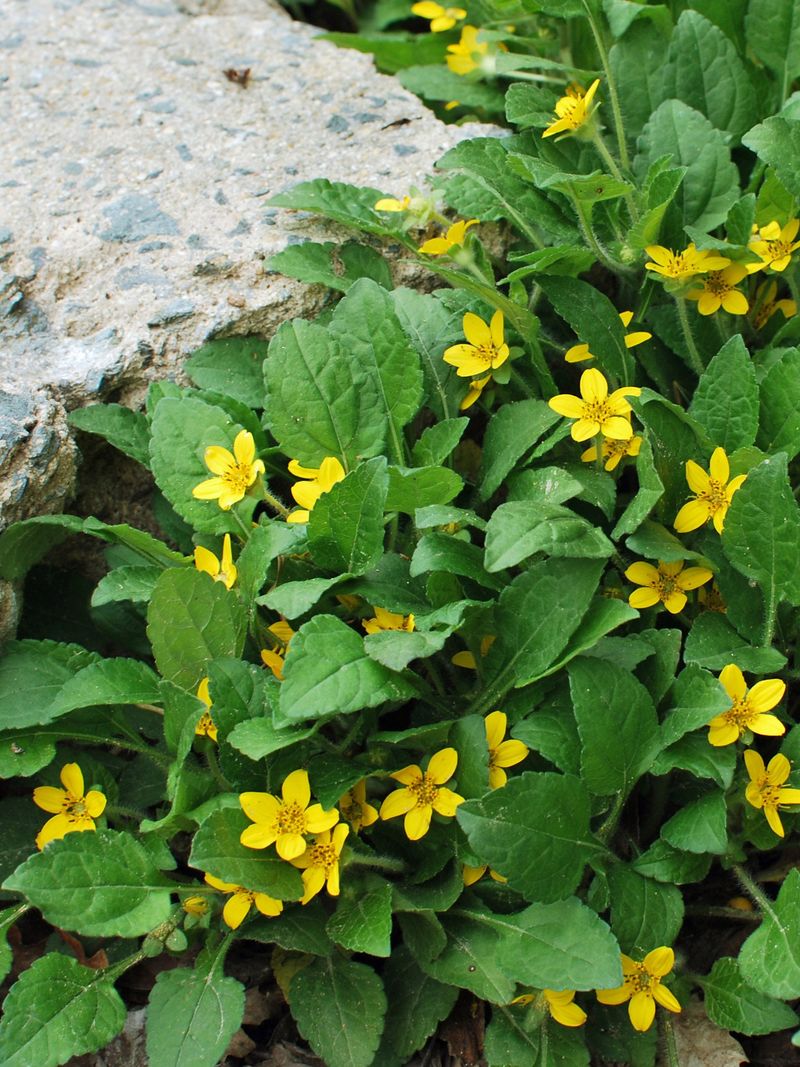
Not many native groundcovers manage to look tidy, spread reliably, and handle the shade under established trees all at once. Green-and-gold, Chrysogonum virginianum, does all three reasonably well.
That is why it shows up regularly in recommendations from native plant nurseries and extension educators across the mid-Atlantic and southeastern states.
It is native to the eastern United States and considered regionally appropriate for use in our state by the Lady Bird Johnson Wildflower Center.
Its cheerful yellow flowers appear in spring and often continue sporadically through summer, adding color to spots where most groundcovers just sit green and quiet.
The plant stays low – usually four to nine inches – and spreads by stolons to form a leafy mat that covers soil and reduces open ground between plantings.
That mat is what makes it useful as a weed blocker: once it fills in, there is simply less exposed soil for weed seeds to land on and germinate.
It grows best in part shade to light shade with average to moist, well-drained soil. Full, baking sun tends to stress it, so avoid planting it along hot south-facing edges.
Space plants about twelve inches apart, mulch between them during the first season, and water during dry spells until the colony fills in. Pull any weeds by hand while the plants are young.
After one to two seasons of establishment, green-and-gold typically holds its ground well and keeps soil covered through most of the growing season.