These Are The Native Ohio Plants To Grow Instead Of Spirea In Foundation Plantings
Spirea is everywhere along Ohio home foundations, and look, it earned its spot. Compact, reliable, blooms without much fuss, and doesn’t ask a lot from you.
That’s a solid shrub. But a growing number of Ohio homeowners are starting to wonder if their foundation beds could be doing a little more.
More wildlife value, more seasonal interest, more of that feeling that the plants actually belong in the landscape rather than just filling space. Native shrubs can deliver all of that, and then some.
Flowers, colorful berries, fall foliage, interesting winter stems, real habitat for birds and pollinators: spirea simply cannot compete on that front.
They’re not perfect one-for-one swaps, and some need a bit more room to stretch out, but when matched to the right spot they make a foundation bed genuinely exciting.
1. Ninebark Brings Easy Native Structure
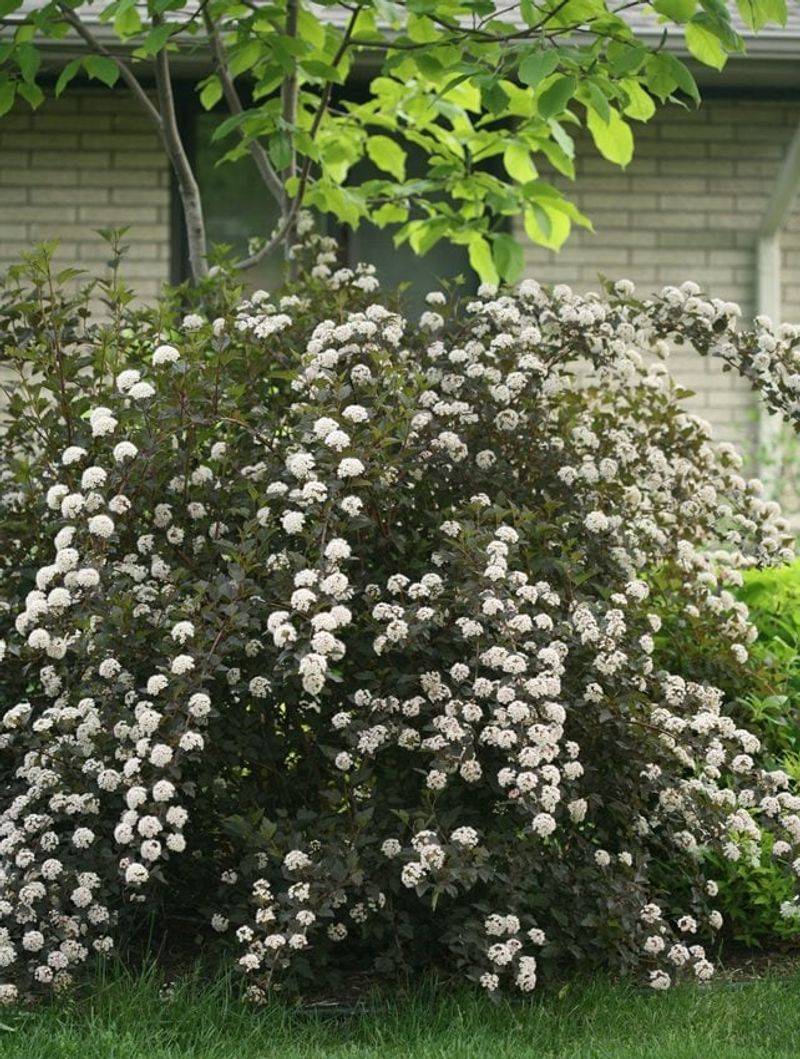
Few native shrubs make a front-yard statement quite like ninebark.
This Ohio-native shrub produces clusters of small white or pinkish flowers in late spring that hover above the foliage like little pom-poms, drawing in bees and other pollinators without any extra effort from the homeowner.
Ninebark gets its name from the way its bark peels away in thin, papery layers, revealing warm reddish-brown tones underneath.
That peeling bark adds winter interest long after the leaves have dropped, which gives the foundation bed something to look at even on a gray January day in Ohio.
Several compact cultivars are available that stay in the four-to-six-foot range, making them more manageable in a mid-sized foundation bed than the straight species, which can reach eight feet or more.
Compact forms like smaller cultivars work well as corner anchors or back-of-bed structure plants.
Ninebark handles a wide range of soils, tolerates some drought once established, and does not need heavy pruning to stay attractive. It is not a low edging shrub like spirea, so give it room to show its natural form.
2. Black Chokeberry Fits Smaller Beds
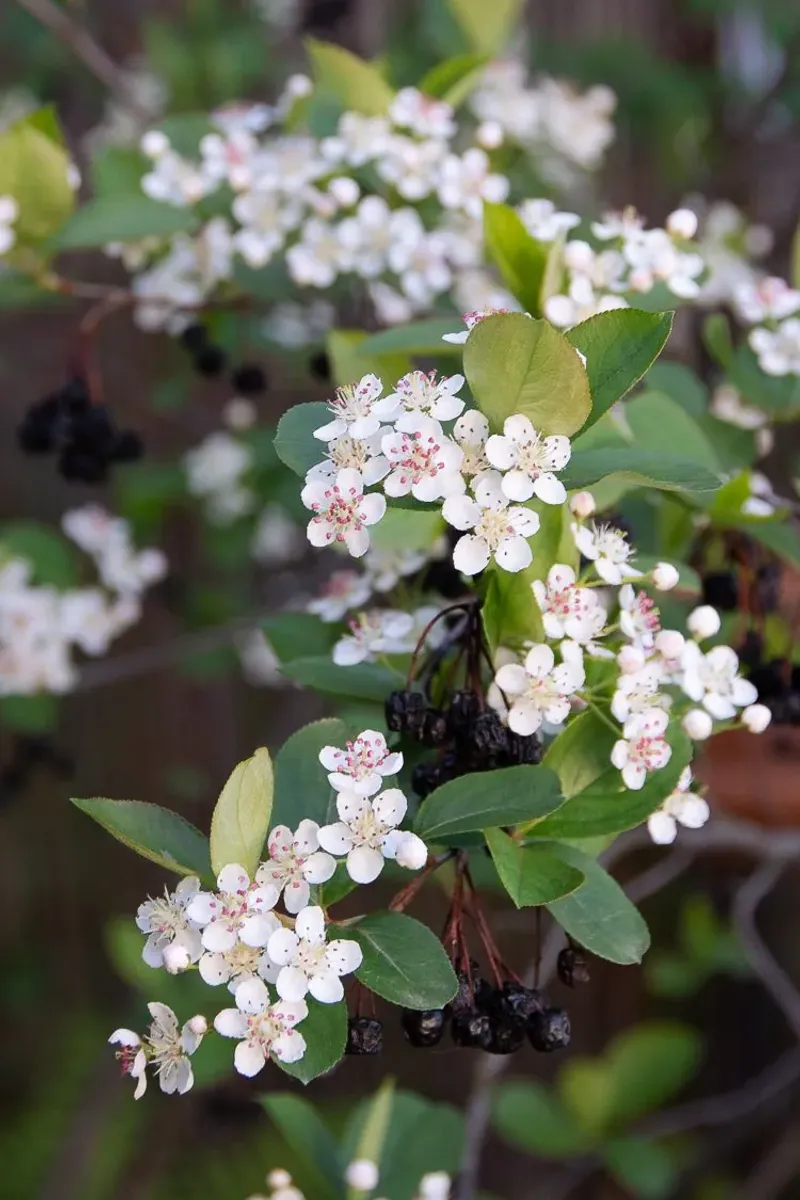
Compact foundation beds along Ohio porches and front walks need shrubs that know how to stay in their lane, and black chokeberry does exactly that.
Aronia melanocarpa typically stays in the three-to-five-foot range, which puts it in a similar size class to many spirea varieties and makes it one of the more practical native swaps for tighter spaces.
Spring brings clusters of small white flowers that attract early pollinators. By late summer, glossy black berries hang in clusters that birds find irresistible, especially cedar waxwings and robins passing through Ohio in fall.
The foliage turns a rich red-orange in autumn, giving the foundation bed a seasonal color punch that most spirea cannot match.
Black chokeberry tolerates wet soil better than many shrubs, which makes it a smart choice for Ohio foundation beds that collect runoff from rooflines or downspouts.
It spreads slowly by suckers, so occasional thinning keeps it tidy without much effort.
Full sun brings out the best fall color, though it handles part shade reasonably well. For homeowners who want wildlife value, seasonal flowers, and a manageable size, this native chokeberry checks a lot of boxes.
Your Ohio Garden Changes Every Week. Your Plan Should Too.
Gardening in Ohio changes quickly throughout the season. Every Friday you’ll receive a simple weekly plan showing exactly what to plant, prune, fertilize, harvest, and protect so you never miss the right timing.
3. Red Chokeberry Adds Seasonal Color
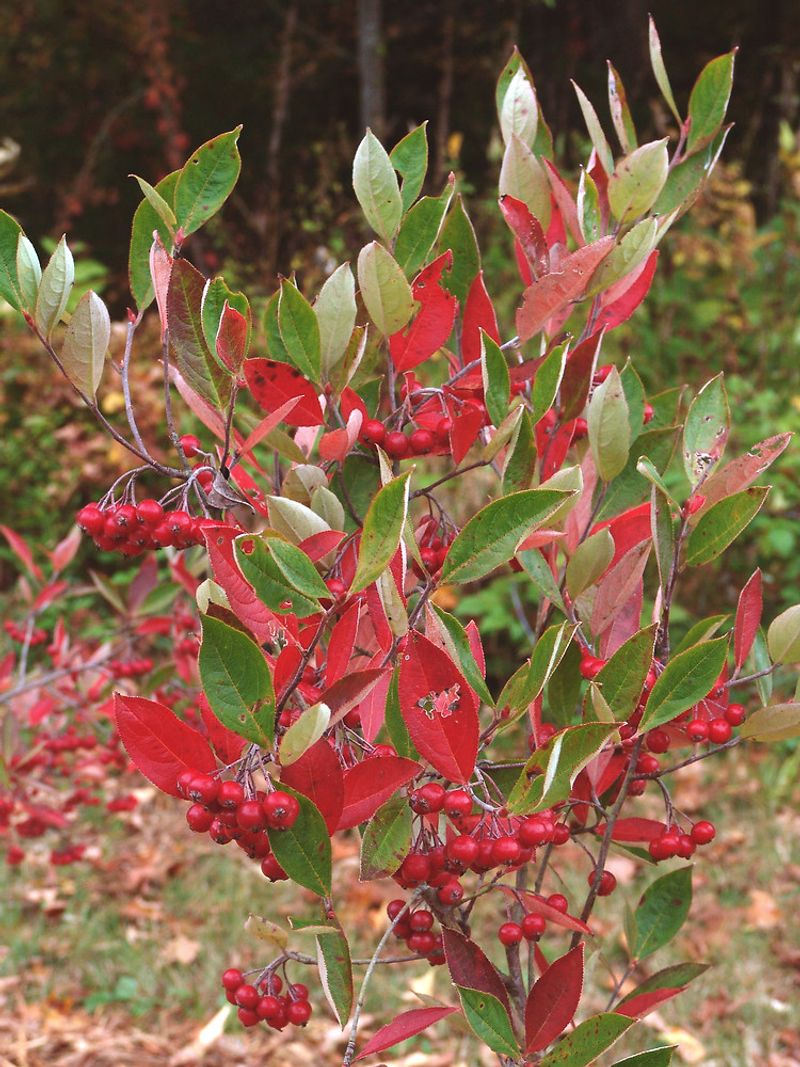
Brilliant red berries hanging in clusters against fiery fall foliage make red chokeberry one of the most visually rewarding native shrubs an Ohio homeowner can plant near the foundation.
Aronia arbutifolia earns its place in the front yard through sheer seasonal drama, delivering white spring flowers, summer green, vivid autumn color, and persistent red fruit that carries interest well into winter.
Red chokeberry tends to grow a bit taller than its black-fruited cousin, often reaching six to eight feet at maturity. That height makes it better suited as a back-of-bed shrub or corner planting rather than a low edging plant.
Ohio foundation beds with enough depth can use red chokeberry to create a layered look with shorter plants in front.
Like black chokeberry, the red species handles moist to wet soil conditions well, which suits many Ohio yards where drainage near the foundation can be unpredictable.
Birds eat the berries enthusiastically once other food sources run low in late winter.
The compact cultivar known for tighter growth habits stays a bit more restrained and works well in residential settings. Matching this shrub to a bed with adequate room lets it show its full seasonal range.
4. New Jersey Tea Stays Neat And Low
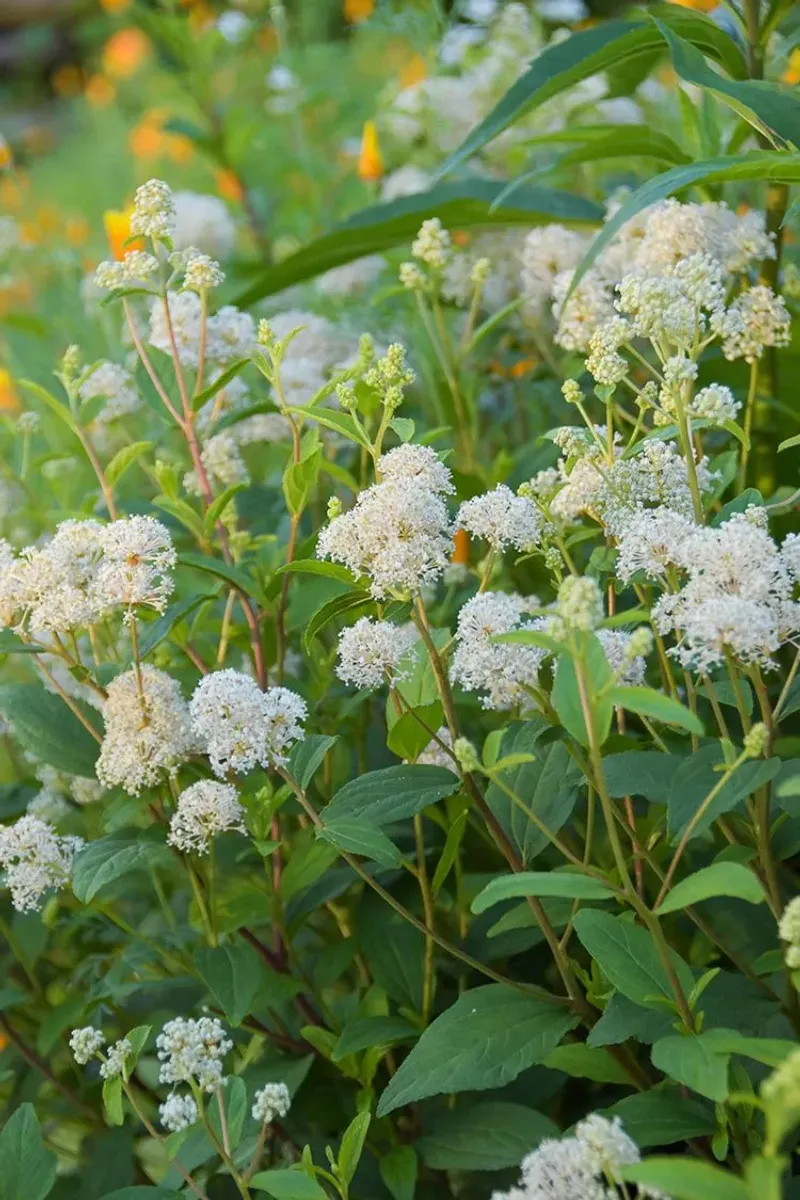
Replacing spirea in a hot, sunny, dry Ohio foundation bed is a challenge that New Jersey Tea handles with surprising ease.
Ceanothus americanus stays low and mounded, typically reaching two to four feet tall, which puts it right in the size range where spirea has long dominated front-yard plantings.
The fluffy white flower clusters that appear in early to midsummer attract a wide variety of native bees, butterflies, and other beneficial insects. The blooms are small but abundant, covering the plant in a soft white haze that reads well from the street.
After the flowers fade, the foliage stays neat and tidy through the rest of the growing season without much intervention.
One of the most practical things about New Jersey Tea is its deep taproot, which makes it genuinely drought-tolerant once established. It does not want wet feet or heavy clay that stays soggy, so well-drained foundation beds in full sun suit it best.
Homeowners dealing with sandy or gravelly soil near the foundation often find this shrub performs better than expected. It does not spread aggressively, which keeps maintenance simple.
New Jersey Tea is one of the truest size-appropriate native alternatives to spirea in the right site.
5. Summersweet Brightens Moist Spots
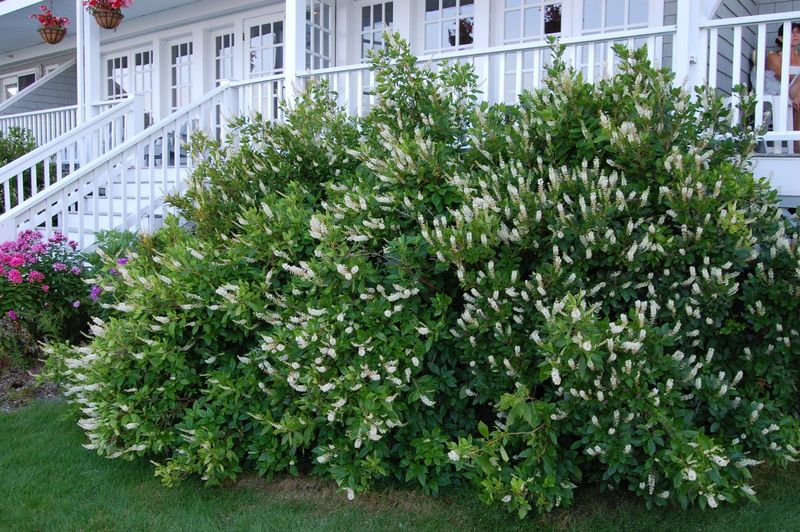
Walk past a summersweet shrub in bloom and the fragrance stops you in your tracks.
Clethra alnifolia produces upright spikes of small white or pale pink flowers in mid to late summer, filling the air around an Ohio front yard with a sweet, spicy scent that few other native shrubs can offer during that time of year.
Summersweet is one of the better native options for Ohio foundation beds that stay consistently moist, particularly on the north or east side of the house where shade keeps the soil from drying out quickly.
It handles part shade to full shade better than most flowering native shrubs, which makes it genuinely useful in spots where spirea would struggle to bloom well.
Most summersweet shrubs reach four to six feet tall, though compact cultivars stay closer to three to four feet, which suits mid-sized foundation beds more comfortably.
Fall foliage turns a warm yellow before dropping, adding a seasonal note as the growing season winds down.
The seed heads that follow the flowers provide some winter texture and attract small birds.
Homeowners with shaded, moist foundation beds that have never supported a satisfying flowering shrub may find summersweet to be a genuinely good match for the site.
6. Gray Dogwood Fills Larger Borders
Wide foundation borders along Ohio ranch homes or long front facades sometimes need a shrub with enough presence to anchor the planting without looking overwhelmed by the scale of the building.
Gray dogwood, Cornus racemosa, brings that kind of structural presence along with wildlife value that few other native shrubs can match in a residential setting.
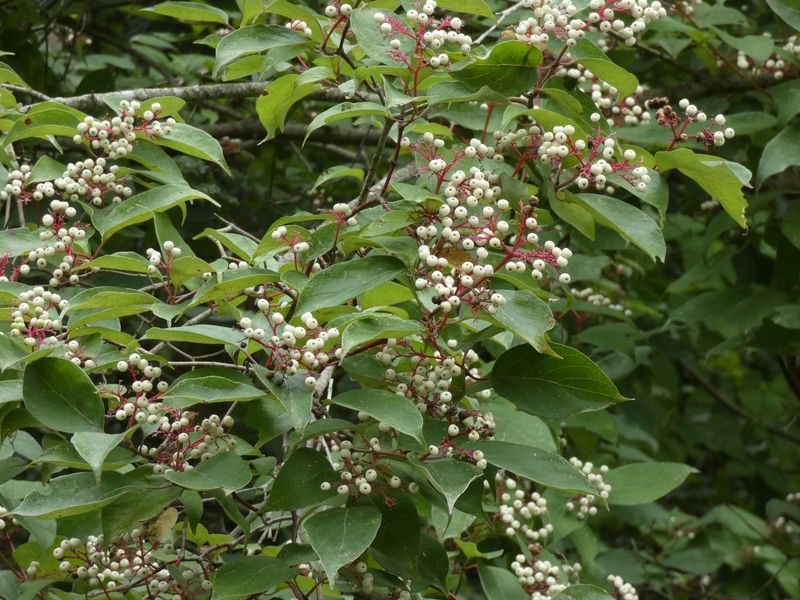
Clusters of small white flowers appear in late spring, transitioning into white berries held on bright red stems by late summer. Birds eat those berries quickly, often stripping the clusters within days of ripening.
Even after the fruit is gone, the red berry stems add color and visual interest as the season moves toward fall.
Gray dogwood spreads by suckers and can form a wide colony over time, which makes it better suited to a spacious foundation border or a corner planting with room to expand than to a tight, narrow bed.
In Ohio landscapes with enough space, that suckering habit creates a dense, informal hedge that provides good cover for nesting birds.
Fall foliage turns reddish-purple before dropping. This shrub is not a compact substitute for spirea, but for homeowners with wider beds who want a low-maintenance, wildlife-friendly native shrub, gray dogwood rewards the investment generously.
7. Red-Osier Dogwood Adds Winter Stems
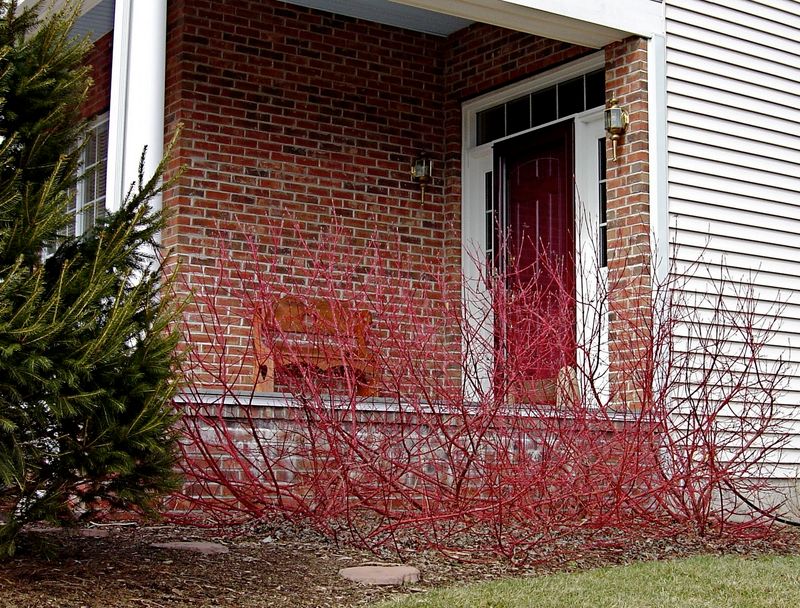
When Ohio winters strip the color from most foundation plantings, red-osier dogwood steps up in a way that very few shrubs can manage.
The bare stems of Cornus sericea glow a vivid red-orange throughout fall and winter, giving the front yard a strong visual anchor during the months when most plants have nothing left to offer.
In the growing season, red-osier dogwood produces clusters of small white flowers in late spring that attract pollinators, followed by white or bluish-white berries that birds consume quickly.
The foliage turns reddish-purple in fall before dropping to reveal those signature winter stems at their most colorful.
Red-osier dogwood grows vigorously and spreads by layering and suckers, so it needs a generous amount of space in a foundation bed.
It handles wet to consistently moist soil very well, which makes it a strong candidate for Ohio foundation beds near downspouts or in low spots where drainage is slow.
Full sun to part shade both suit it reasonably well. Pruning out the oldest stems every few years keeps the new growth coming in with the most vivid stem color.
For homeowners who want year-round interest and can give it room, this native shrub delivers a striking seasonal display.
8. Blackhaw Viburnum Makes A Strong Backdrop
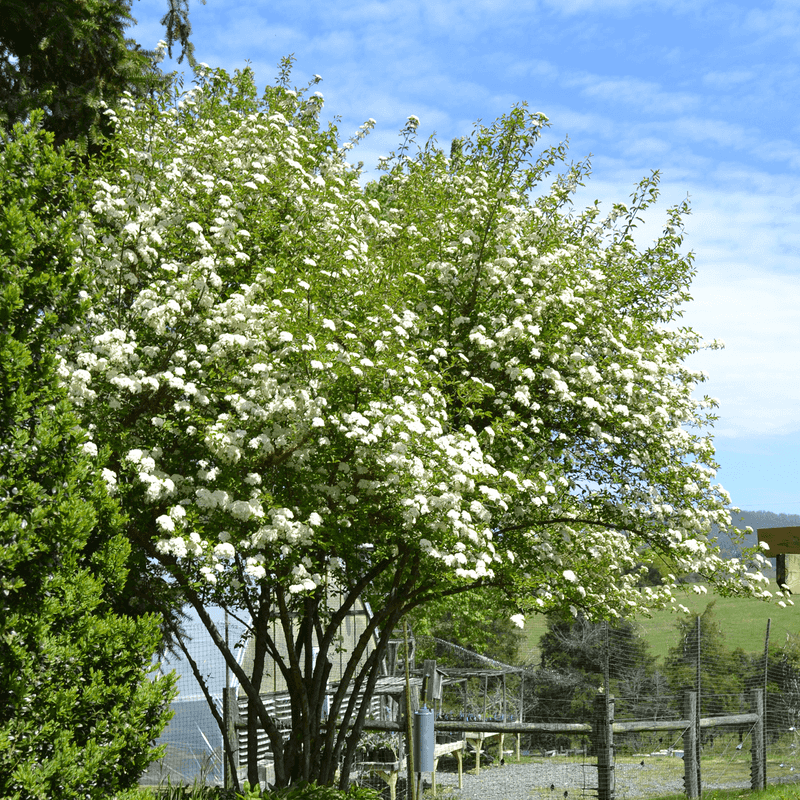
Some foundation plantings need a tall, sturdy shrub at the back of the bed to give the whole design a sense of depth and structure, and blackhaw viburnum fills that role with four-season interest that spirea simply does not offer.
Viburnum prunifolium is a native Ohio shrub that works as a large shrub or small multi-stemmed tree, often reaching eight to fifteen feet at maturity.
Flat-topped clusters of small white flowers open in mid-spring, attracting native bees and early-season pollinators.
By fall, the berries ripen from green to pink to blue-black, and they persist long enough to feed birds and other wildlife well into the colder months.
The foliage turns wine-red to burgundy in autumn, giving the foundation bed a rich seasonal finale before winter arrives.
Blackhaw viburnum adapts to a fairly wide range of Ohio soil conditions, tolerating both dry and moderately moist sites. It handles part shade but flowers and fruits most generously in full sun to light shade.
Because of its mature size, this shrub belongs at the back of a deep foundation bed or as a corner anchor where height is an asset rather than a problem.
Compact plantings near low windows are not the right fit for this native, but in the right spot it becomes a genuinely beautiful long-term landscape plant.
9. Southern Arrowwood Builds A Natural Screen
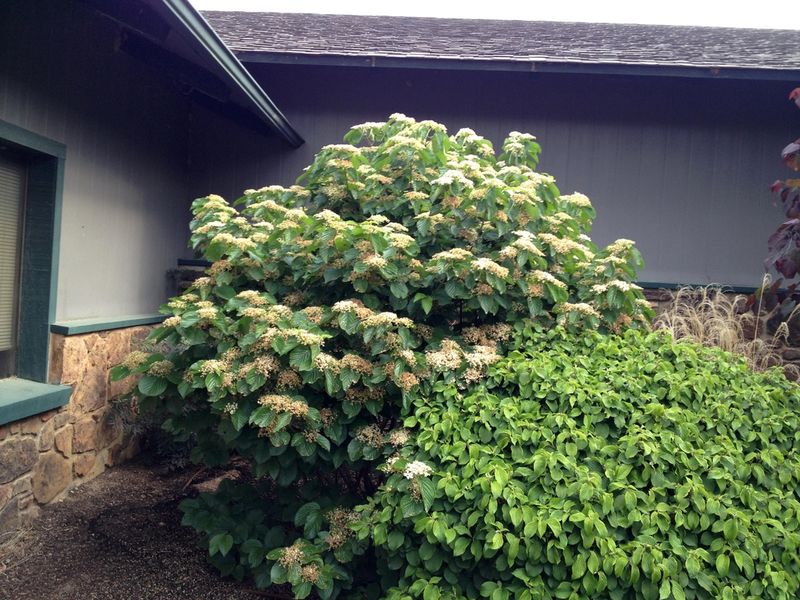
Creating a sense of privacy along a front foundation or screening an unattractive foundation wall is something southern arrowwood viburnum handles naturally and attractively.
Viburnum dentatum grows into a rounded, multi-stemmed shrub typically reaching six to ten feet tall, with a dense branching habit that fills in well over time without needing constant shaping.
Flat clusters of small white flowers bloom in late spring and draw in native bees along with a variety of other pollinators.
By late summer and fall, dark blue-black berries ripen in clusters and attract migrating birds, making the shrub a worthwhile wildlife stop in an Ohio front yard during September and October.
Fall foliage color on arrowwood viburnum ranges from yellow to glossy red depending on the individual plant and site conditions, adding one more seasonal layer of interest before the leaves drop.
The shrub adapts to a wide range of Ohio soils, tolerating both dry and moist conditions reasonably well once it is established.
Full sun to part shade both produce good results, though flowering is most generous with more light. Because of its mature size, arrowwood works best in wider foundation beds or as an informal screen rather than a tight front-of-house edging plant.
It is a reliable, long-lived native shrub worth considering for the right Ohio landscape.