These Are The 8 Ohio Shade Plants That Make Bare Front Yards Look Intentional
Bare front yards under heavy shade have a way of making an otherwise nice house look unfinished. The neighbors with full sun get to pick from half the garden center.
You are working with what the trees left you, and most of what gets recommended simply does not hold up once the canopy closes in for the season. Ohio shade is no joke either.
Dense, persistent, and paired with soil that tends to dry out under tree roots faster than people expect. Plants that look promising in April start struggling by June and look rough by September.
The trick is stopping to think about what actually thrives in those conditions rather than what you hope might survive them. That shift changes everything about how a front yard comes together.
These plants do not just tolerate Ohio shade, they use it. Put them in the right spot and that bare front yard starts looking like someone knew exactly what they were doing.
1. Plant Wild Geranium For Soft Native Spring Color
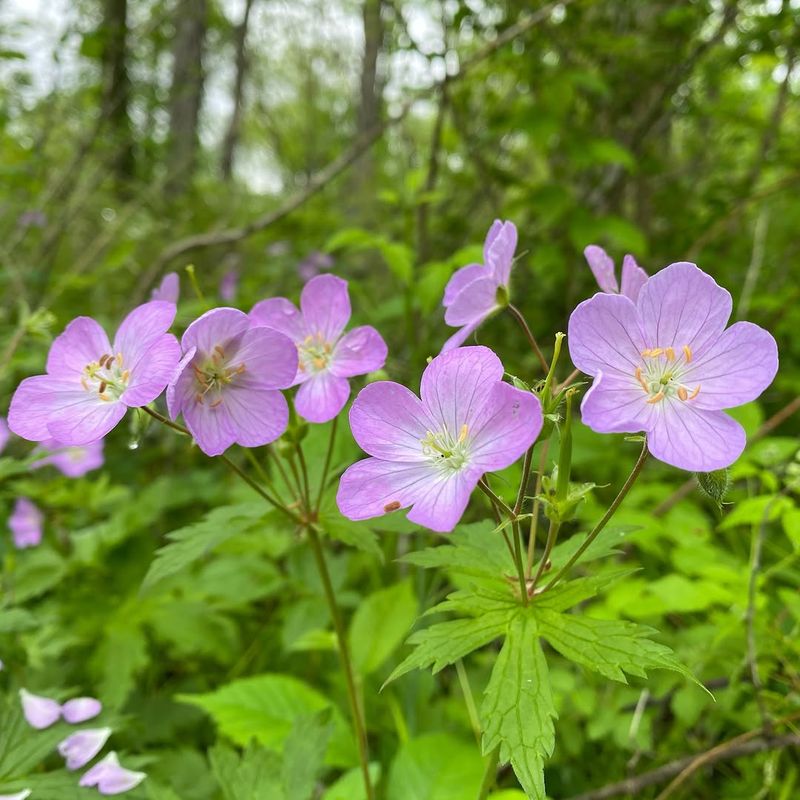
Walking past a front bed filled with wild geranium in late April or early May feels like stumbling onto something quietly beautiful.
The soft pink-to-lavender flowers sit above deeply lobed, hand-shaped leaves that often stay attractive into summer when the soil does not dry out, giving the planting a finished feel even after the blooms fade.
Wild geranium, known botanically as Geranium maculatum, is a native perennial across much of the eastern and Midwestern United States, including Ohio.
It grows naturally in woodland edges and open forest floors, which makes it a natural fit for shaded front yards under high-branched trees or along north-facing borders.
University Extension recognizes it as a dependable native perennial for part shade to shade conditions.
For best results, plant wild geranium in moist, well-drained soil with a good layer of organic matter worked in. It can handle clay soil better than many woodland plants, but it will struggle in standing water or heavily compacted ground.
Space plants about twelve to eighteen inches apart and group at least three to five together for a fuller, more intentional look.
Dry shade under dense maples is one of its harder challenges, so mulching around the base and watering during the first summer helps it get established.
Once settled, it spreads gradually and supports native bees and early pollinators, adding real ecological value beyond its good looks.
2. Use Pennsylvania Sedge To Create A Lawn-Like Base
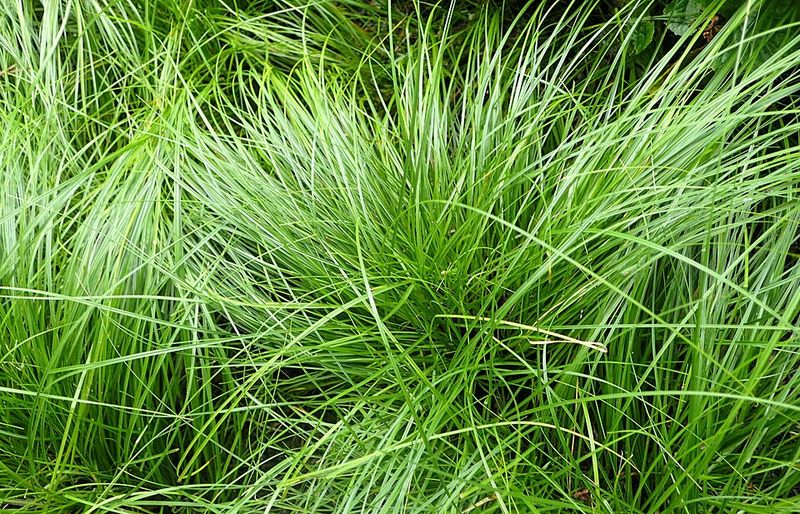
Most turfgrass varieties give up under a dense tree canopy, leaving bare soil that looks rough and unfinished. Pennsylvania sedge, Carex pensylvanica, is one of the better native alternatives for those spots where conventional lawn simply refuses to cooperate.
It forms a low, fine-textured mat of arching green blades that can create a softer, more natural base layer in shaded or partly shaded areas. At around six to ten inches tall, it has a look that reads as intentional groundcover rather than neglected weeds.
Your Ohio Garden Changes Every Week. Your Plan Should Too.
Gardening in Ohio changes quickly throughout the season. Every Friday you’ll receive a simple weekly plan showing exactly what to plant, prune, fertilize, harvest, and protect so you never miss the right timing.
Some gardeners use it under oaks and maples where turf has thinned out, and it can work well along paths or as a matrix around showier shade perennials.
Be realistic about what Pennsylvania sedge can and cannot do. It is not a high-traffic lawn replacement and will not hold up to regular foot traffic or heavy play.
It also needs time to establish, often a full growing season or two before it fills in properly. Weeding during that establishment window is genuinely important because sedge seedlings are no match for aggressive weeds early on.
Plant it in part shade to full shade with reasonably well-drained soil.
It handles dry shade better than many woodland plants once established, which makes it a practical choice under large street trees or in compacted urban front yards.
Mulch lightly between plants at first to help hold moisture and suppress weeds while it spreads.
3. Add Foamflower For A Tidy Woodland Edge
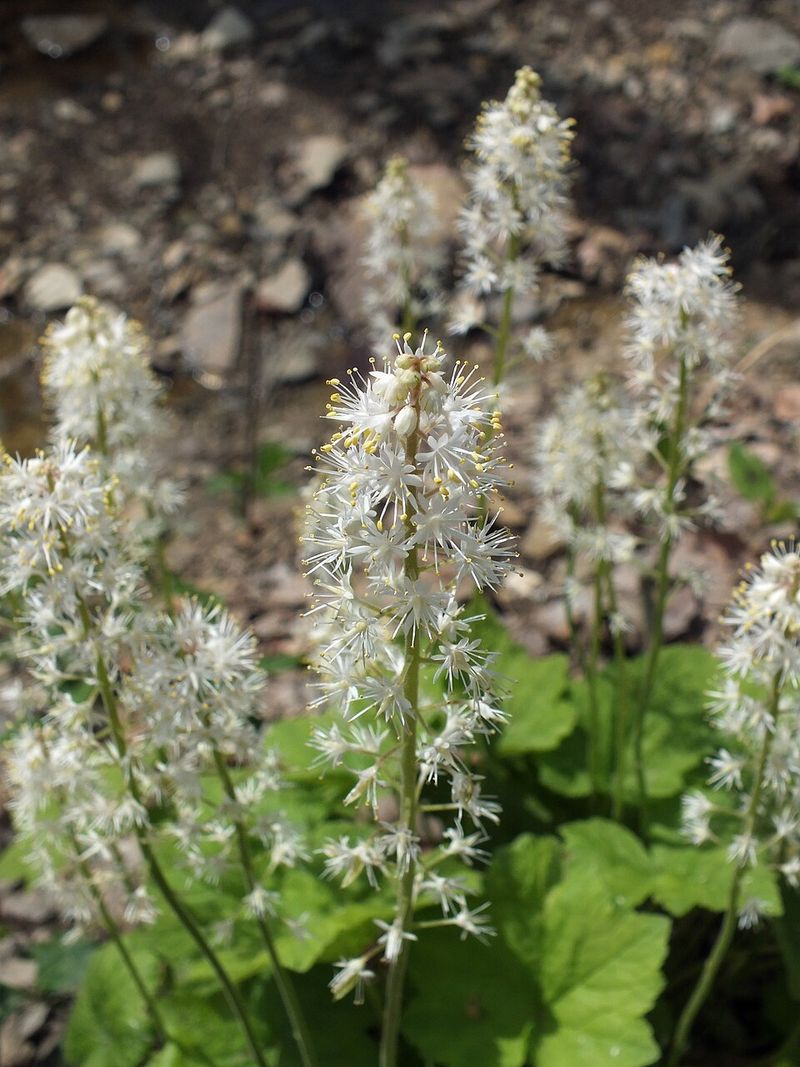
Near a front walkway, a shaded foundation bed, or the edge of a woodland planting, foamflower brings exactly the kind of neat-but-natural look that makes a yard feel designed rather than accidental.
The white to pale pink flower spikes rise up in spring like small candles above a rosette of attractive, maple-like leaves that stay appealing through the growing season.
Foamflower, or Tiarella cordifolia, is native to eastern North American woodlands and is well suited to shade gardens. It generally prefers moist, humus-rich soil and thrives in the kind of conditions found under deciduous trees where leaf litter has built up over years.
In northern and lake-influenced areas where spring stays cool and moist longer, foamflower often performs especially well.
Group plants about twelve inches apart for a fuller look, and pair them with Pennsylvania sedge, wild ginger, or other shade perennials for a layered planting that covers more ground.
Foamflower can struggle in harsh dry shade without consistent moisture, so if the spot under your trees tends to dry out fast in summer, amend the soil with compost and mulch well around each plant.
One practical note: some foamflower spreads by runners and fills in gradually, while other cultivars stay more clumped. Either way, it rarely becomes aggressive, and it supports native insects during its spring bloom period, which is a quiet bonus in a front yard planting.
4. Grow Virginia Bluebells For Early Front Yard Charm
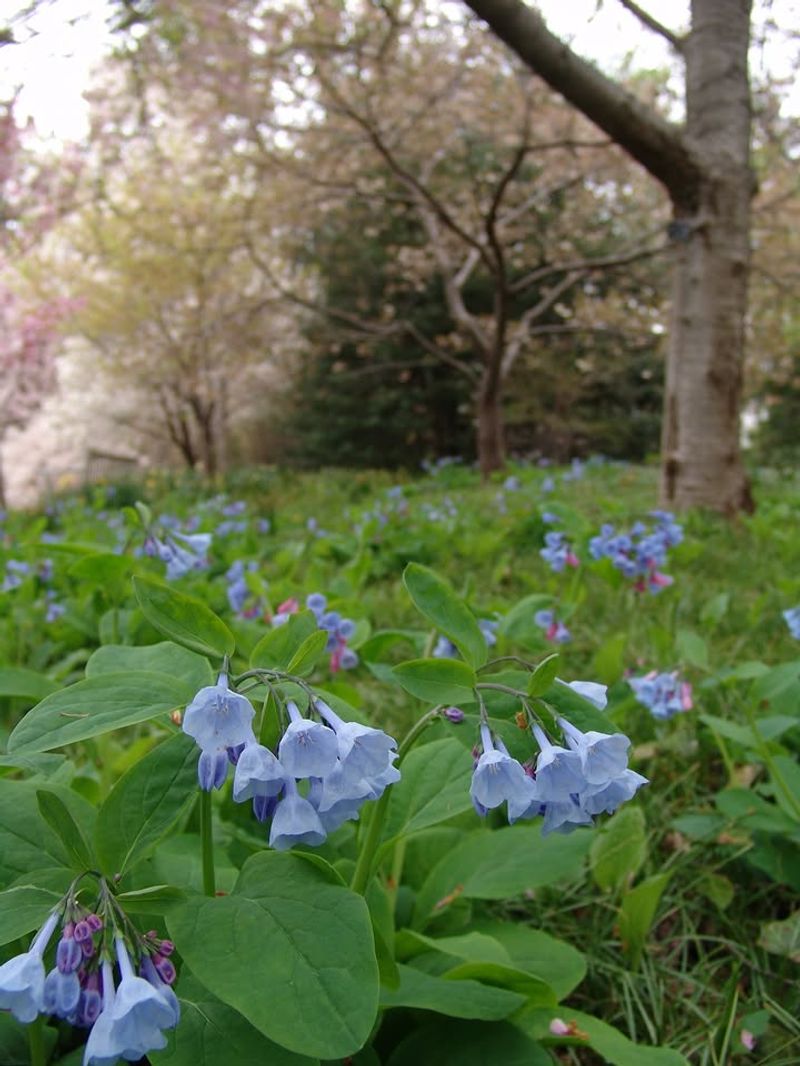
Few things in spring feel as surprising as a patch of Virginia bluebells opening up under bare-branched trees in April or early May.
The soft sky-blue flowers arrive before most other plants have woken up, and they create a genuinely striking display in a front yard that might otherwise look completely empty that time of year.
Virginia bluebells, Mertensia virginica, are a native spring ephemeral, which means they emerge early, bloom beautifully, and then fade back to the ground by early summer. That cycle is worth understanding before planting them in a visible front bed.
The disappearing act they pull in late spring can leave gaps that look unfinished if nothing else is growing nearby.
The practical fix is pairing them with plants that carry the bed forward after the bluebells go dormant. Pennsylvania sedge, wild geranium, or wild ginger all work well as companions because their foliage fills in right around the time bluebells start to fade.
Mark where bluebells are planted so you do not accidentally disturb the dormant roots later in the season.
Virginia bluebells prefer moist, loamy soil and do well under deciduous trees where spring sunlight reaches the ground before the canopy leafs out. They are not a great choice for dry, compacted soil under dense evergreens.
Southern gardeners should note that spring can move quickly there, so the bloom window may be shorter than in cooler northern parts of the state.
5. Choose Coral Bells For Neat Foliage Near Walkways
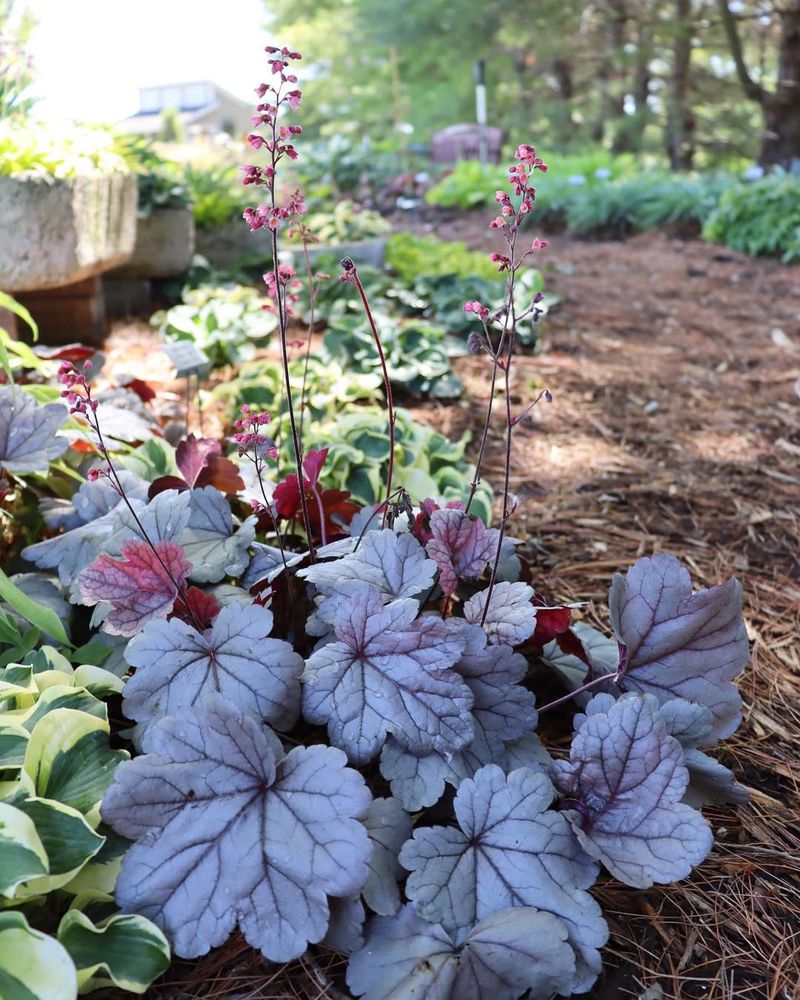
A shaded entry path that looks polished through most of the growing season is a reasonable goal, and coral bells can play a real role in getting there.
The tidy clumps of rounded, often richly colored leaves hold up from spring through fall, giving the bed structure even when nothing is actively blooming.
Coral bells belong to the genus Heuchera, and the group includes both native species and a wide range of cultivated hybrids. Native species like Heuchera americana have genuine wildlife value and are well adapted to eastern woodland conditions.
Many popular cultivars are bred primarily for foliage color and may offer less benefit to native insects, so it is worth noting that difference when choosing plants for a wildlife-friendly yard.
For front-yard use near walkways, steps, or entry beds, coral bells generally prefer part shade rather than deep, dense shade. Morning sun with afternoon shade tends to suit many cultivars well.
Soil drainage matters quite a bit because poorly drained clay can lead to crown rot over time, especially in winters with freeze-thaw cycles.
Space plants about twelve to fifteen inches apart and avoid burying the crown too deeply when planting. During dry stretches in summer, a little extra water goes a long way, especially in the first season.
Heuchera villosa and its cultivars are often noted for better heat and humidity tolerance, which can be useful in southern regions where summer conditions are more intense.
6. Let Wild Ginger Cover Bare Soil Under Trees
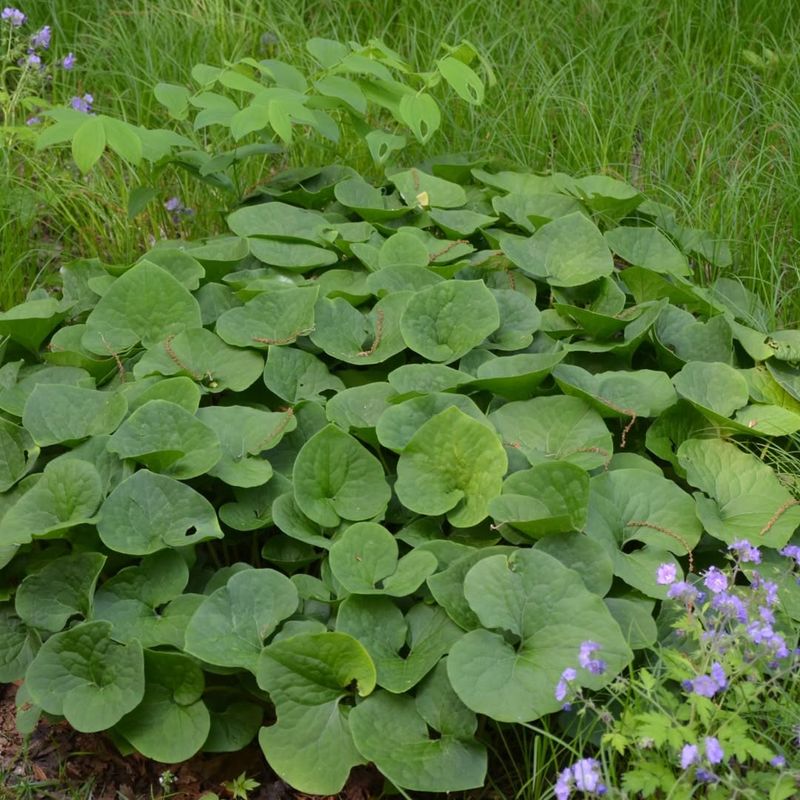
Bare soil under a large tree is one of the most common sore spots in a front yard. Roots make it hard to plant, shade makes it hard to grow grass, and the result is often a patchy, muddy-looking circle that draws the eye for all the wrong reasons.
Wild ginger offers a low, quiet solution that can genuinely change how that space looks.
Asarum canadense, the native wild ginger, forms a dense carpet of large, heart-shaped leaves that cover bare ground effectively and give a shaded bed a calm, finished appearance.
The leaves are a rich medium green and stay attractive through the growing season, creating a simple but satisfying texture under trees or along shaded foundation walls.
Wild ginger prefers moist, rich soil with good organic content, and it establishes more slowly than some other groundcovers. Patience is genuinely required here.
Plants spread by underground rhizomes and may take two to three seasons to fill in well, so mulching lightly between plants in the early years helps suppress weeds while the colony builds.
Because wild ginger stays low, around four to eight inches tall, it is best suited to beds where foot traffic is minimal. It is not a path plant or a play-area plant.
The hidden flowers that bloom at the soil level in spring are pollinated by ground-level insects and have an interesting ecological role, even if most visitors never notice them. It pairs well with taller shade perennials planted behind it for a layered effect.
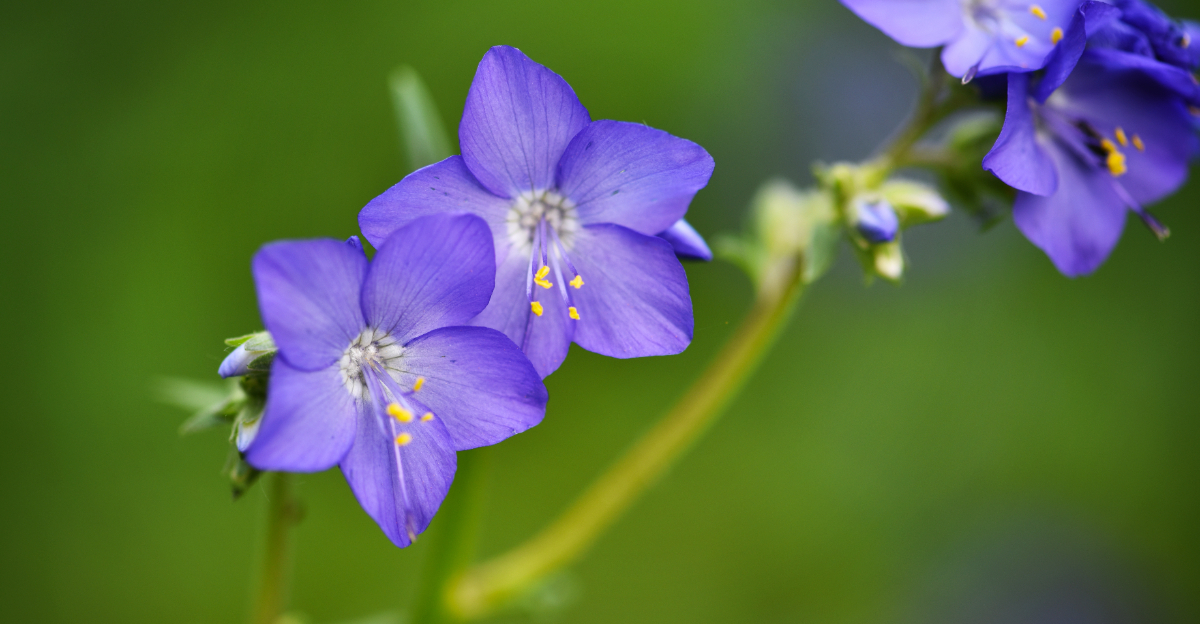
7. Add Jacob’s Ladder For Delicate Texture In Part Shade
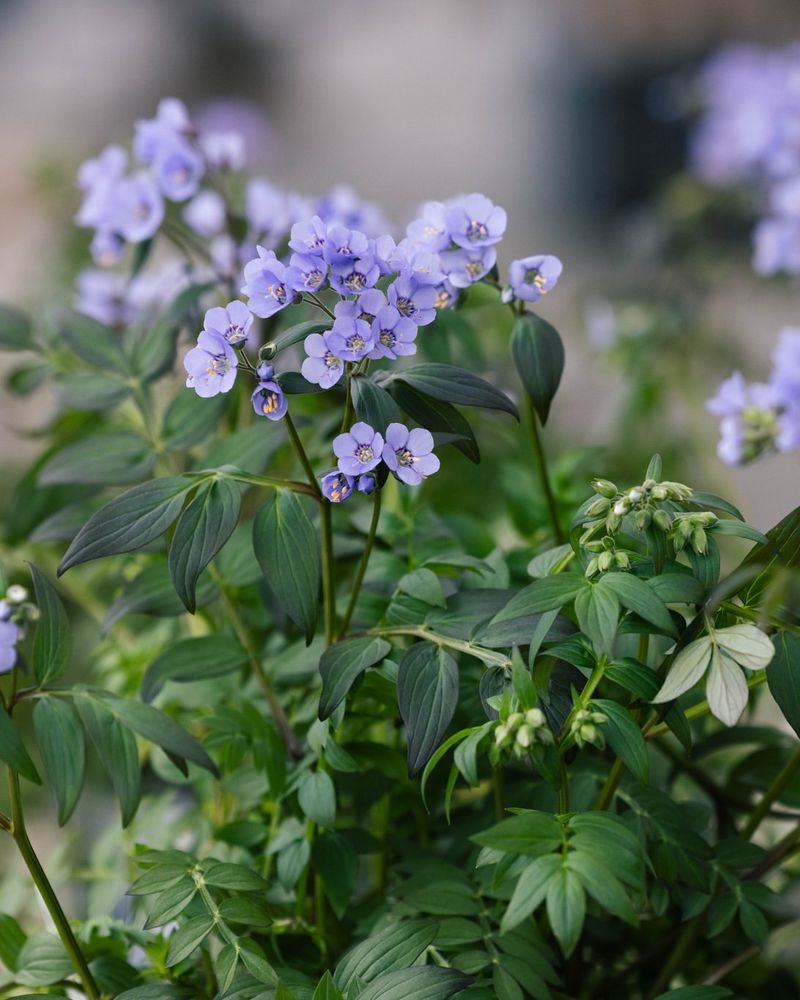
Some shade plants make a statement with big bold leaves or dramatic flowers. Jacob’s ladder takes a quieter approach, and that restraint is exactly what makes it so useful in a front-yard planting that needs texture without drama.
Native Jacob’s ladder, Polemonium reptans, grows naturally in moist woodland slopes and stream edges across much of the eastern and Midwestern United States.
It fits well at the front of a shaded border or tucked among broader-leaved plants where its finely divided, ladder-like foliage creates a soft, feathery contrast.
The small blue-to-lavender flowers that appear in spring add a delicate seasonal accent without overwhelming the overall design.
Part shade with evenly moist, well-drained soil is the sweet spot for Jacob’s ladder. It can handle morning sun well, but hot afternoon exposure in southern summers can stress the foliage and cause early browning.
If the bed tends to dry out quickly, amending with compost before planting and mulching consistently will help it stay comfortable through the season.
Avoid planting it in spots that stay wet after rain, because poorly drained soil can cause problems at the root level over time. Pair it with sturdier plants like wild geranium or coral bells that will carry the bed structure after Jacob’s ladder finishes its main bloom period.
It rarely spreads aggressively, so it stays where you put it, which is a genuine advantage in a tidy front-yard design.
8. Plant Columbine Where Morning Light Reaches The Bed
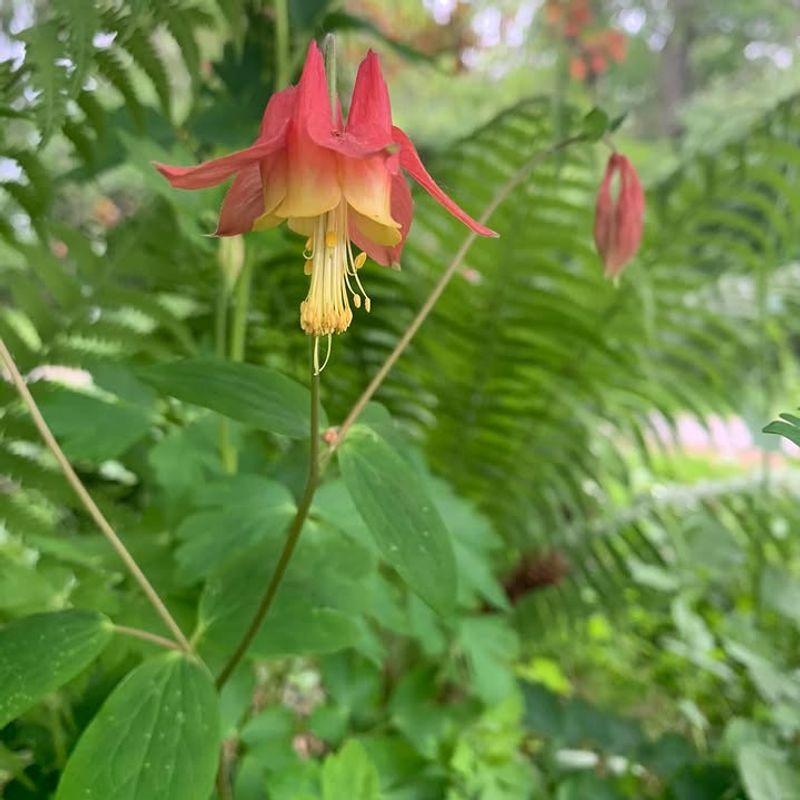
If there is one spot in a shaded front yard where a little morning light breaks through, wild columbine is the plant worth saving it for.
The nodding red and yellow flowers that appear in April and May have an airy, almost weightless quality that feels completely different from the heavier textures of most shade perennials.
Aquilegia canadensis, native wild columbine, grows naturally on rocky slopes, woodland edges, and open forest floors across Ohio and much of eastern North America.
It thrives in part shade and bright indirect light, making it well suited to spots under high-canopied trees, near rocks or steps, or along paths where filtered morning sun reaches the ground.
Ruby-throated hummingbirds and long-tongued native bees are drawn to the flowers, which adds a lively seasonal energy to the front yard.
Soil drainage matters more than soil richness for wild columbine. It handles lean, rocky, or sandy soil reasonably well but struggles in soggy, waterlogged ground.
Avoid planting it in low spots where water pools after heavy spring rains.
Wild columbine may self-seed lightly in conditions it likes, gradually filling nearby gaps in a natural-looking way. That gentle self-seeding is rarely a problem and can actually help a planting look more established over time.
Cut spent flower stems back after blooming if you want to limit spreading. Pair it with wild geranium, foamflower, or sedge for a mixed native planting that covers the bed across multiple seasons.