These Are The Ohio Shrubs Moving From Legal To Illegal
Ohio’s restricted plant list has been quietly expanding, and the shrubs showing up on it are not all obvious candidates. Several have been common in Ohio landscapes for decades.
They lined driveways, anchored foundation beds, and sold reliably at garden centers without anyone questioning whether they belonged here.
That question is getting answered now, and the answers are changing what homeowners can legally plant, sell, and in some cases keep in their yards.
The shift is happening county by county and through state-level regulation, moving faster in some parts of Ohio than others. A shrub that was available last season at the local garden center may be on a restricted list this one.
For anyone with these plants already in the ground, or planning to add them, knowing where the legal lines currently sit is worth figuring out before the next landscaping decision gets made.
1. Start With Common Privet After The Grace Period Ends
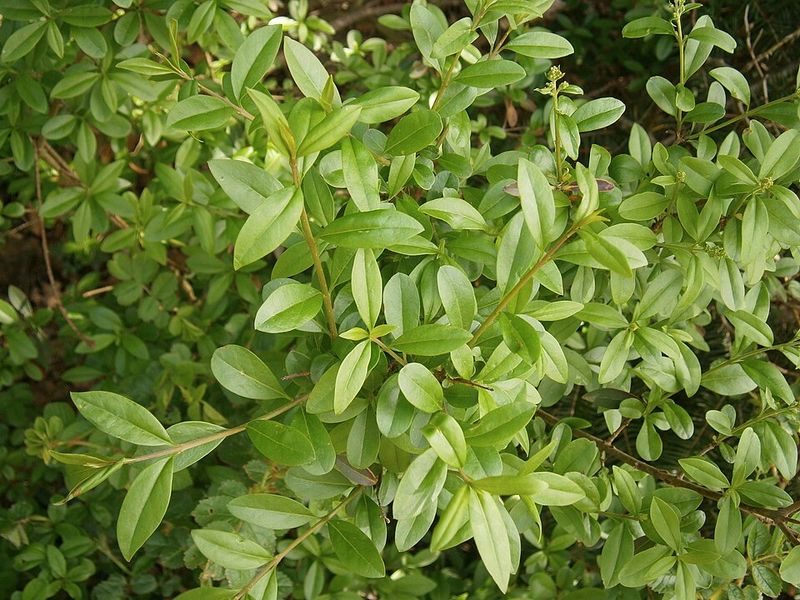
An old hedge along the property line might look harmless. But common privet, known scientifically as Ligustrum vulgare, crossed a legal threshold on January 1, 2026.
Ohio Administrative Code Rule 901:5-30-01 listed common privet as an invasive plant with a temporary exemption that allowed continued sales for a limited time. That exemption has now ended.
The plant should now be treated as prohibited for sale, propagation, distribution, import, and intentional spread under the current rule.
Many yards across the Buckeye State still have established privet hedges, and simply having an old shrub in your yard is not the same as violating the rule.
The rule focuses on commercial and intentional activity, not on penalizing every homeowner with a mature hedge.
Still, it is worth evaluating those hedges carefully and planning for gradual replacement over time.
Do not buy new common privet starts, share rooted cuttings with neighbors, or move seedlings to another part of your property.
Nurseries should no longer be selling it, but mistakes happen, so always check the scientific name on any plant tag before purchasing a privet-type shrub.
OSU Extension and Ohio Department of Agriculture resources can help confirm current status. Replacement shrubs suited to privacy hedges include native viburnums or native hollies, depending on your site conditions.
2. Stop Sharing Bush Honeysuckle With Neighbors
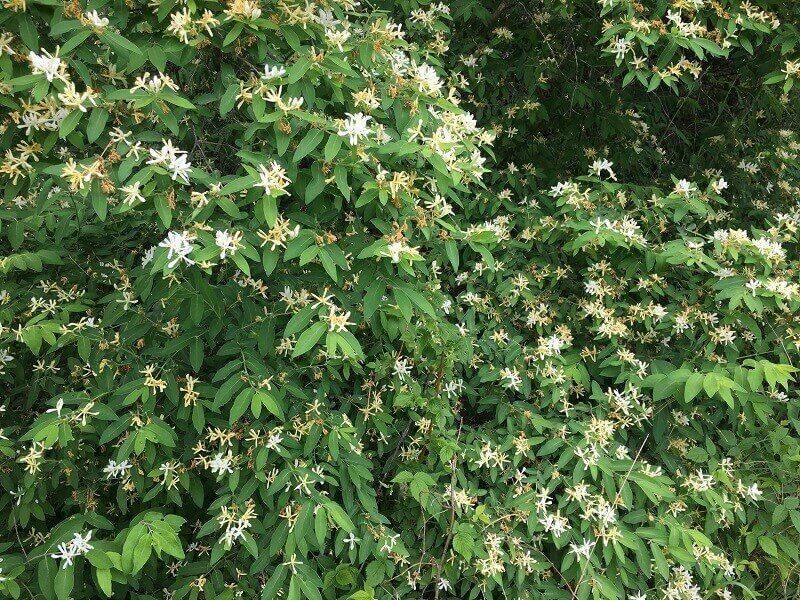
Pass-along plants have a long tradition in neighborhood gardening, but some of the most common ones passed over the fence are now among the most restricted in the state. Invasive bush honeysuckles include Amur, Morrow’s, and Tatarian honeysuckle.
Ohio Administrative Code Rule 901:5-30-01 lists them as invasive plants prohibited from sale, propagation, distribution, import, and intentional spread.
These shrubs produce small, bright berries that birds find irresistible. Ohio Invasive Plants Council guidance says birds spread the seeds widely.
Seedlings can then outcompete native plants in woodlands, forest edges, and open areas. A single shrub near a wooded edge can generate far more seedlings than most homeowners expect.
Practical advice is simple: do not dig seedlings for friends or transplant rooted pieces elsewhere. Do not buy any honeysuckle shrub without confirming its scientific name first.
Your Ohio Garden Changes Every Week. Your Plan Should Too.
Gardening in Ohio changes quickly throughout the season. Every Friday you’ll receive a simple weekly plan showing exactly what to plant, prune, fertilize, harvest, and protect so you never miss the right timing.
Not all honeysuckles are invasive. Native species such as coral honeysuckle (Lonicera sempervirens) are very different plants with very different behaviors.
Learning to tell them apart protects both your yard and nearby natural areas. If you suspect you have invasive bush honeysuckle, OSU Extension resources can help with identification and general management guidance.
3. Remove Autumn Olive From The Backyard Plan
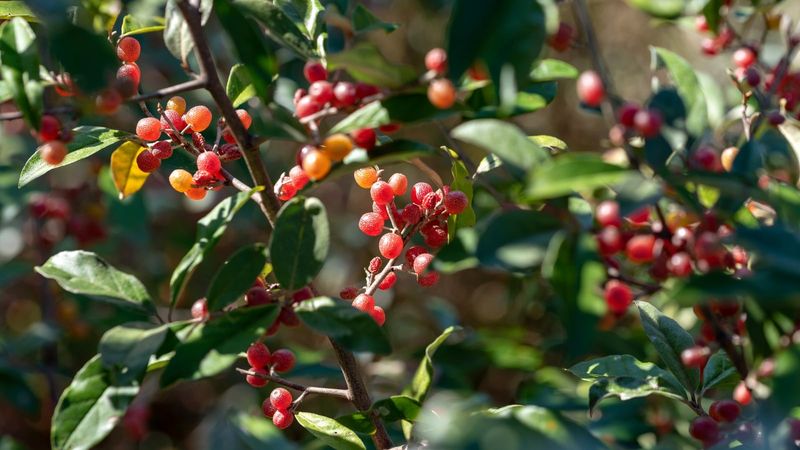
Decades ago, autumn olive was actually promoted for conservation use. Soil stabilization, wildlife habitat, and highway median plantings all once used Elaeagnus umbellata.
That history explains why many older properties still have one in a windbreak or wildlife corner. Ohio Invasive Plants Council and Ohio Department of Agriculture guidance list autumn olive as invasive.
It also appears on the restricted list under Ohio Administrative Code Rule 901:5-30-01.
The plant’s appeal to wildlife is part of what makes it a problem. Birds consume the small red fruits enthusiastically and deposit seeds across open fields, woodland edges, and roadsides far from the original planting.
Once established, autumn olive grows quickly and can crowd out native shrubs and young trees. Its ability to fix nitrogen also changes soil conditions in ways that can favor its own spread.
Skip autumn olive entirely in privacy screens, wildlife plantings, and erosion-control projects. Native alternatives do the same jobs without the invasive risk.
Serviceberry (Amelanchier species) offers wildlife value and seasonal beauty. Native dogwoods and elderberry work well for erosion-prone slopes with the right moisture levels.
When choosing replacements, match the shrub to your specific site conditions, including sun exposure, soil moisture, and available space.
Nursery-propagated native shrubs from reputable local sources are always a safer bet than a fast-growing exotic with a complicated history.
4. Skip Russian Olive Before It Spreads Beyond The Fence
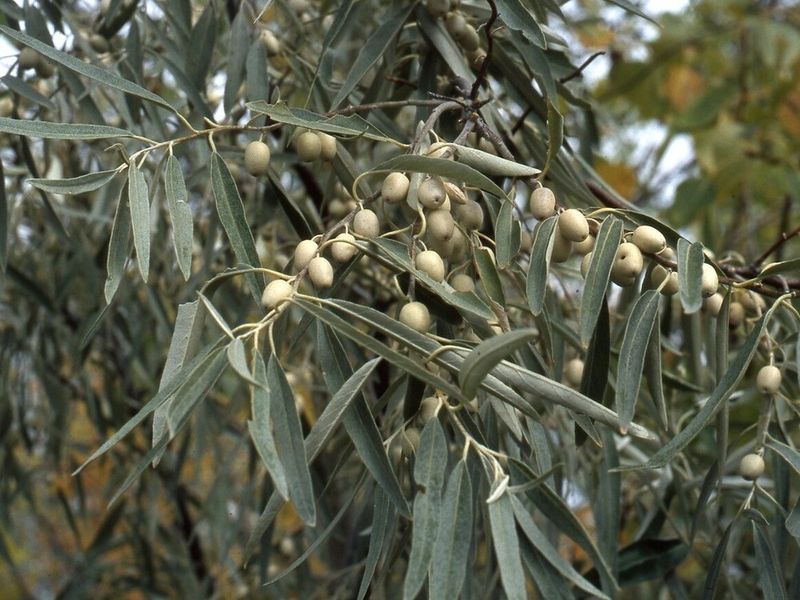
Along old fence lines and rural shelterbelts, you might spot a shrubby tree with narrow, silvery-gray leaves and a somewhat wild appearance.
That could be Russian olive, Elaeagnus angustifolia, a woody plant that was once widely used in windbreaks and ornamental plantings across the Midwest.
Ohio Administrative Code Rule 901:5-30-01 lists Russian olive as invasive. It is restricted from sale, propagation, distribution, import, and intentional spread in this state.
Russian olive can escape cultivation and establish along stream banks, roadsides, and disturbed open areas. Ohio Department of Natural Resources guidance notes that it can alter riparian habitats and outcompete native vegetation in certain conditions.
Rural properties with older shelterbelts or ornamental groupings should be checked for seedlings, particularly near water or open ground.
If you find seedlings coming up under an established Russian olive, do not leave them to grow unchecked and do not move them to another area of the property. Removal of established plants can be challenging and may require a staged approach.
OSU Extension invasive plant resources recommend consulting current guidance before large-scale removal. Any chemical control should follow product labels and local rules strictly.
Replacing Russian olive with a native tree or large shrub suited to your site is a practical long-term step. Native willow species or native plum may work well.
5. Treat Common Barberry As A Bad Bargain
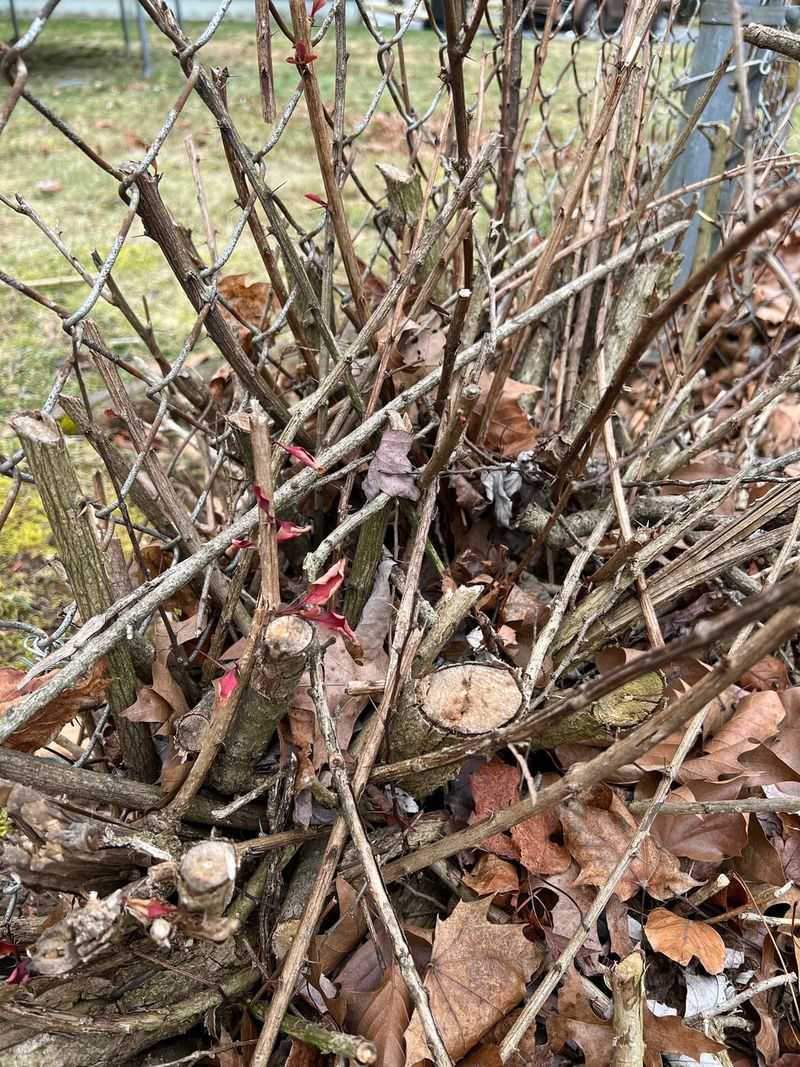
Not every plant sold under the name barberry is the same, and that distinction matters a great deal right now. Common barberry, Berberis vulgaris, is listed as invasive under Ohio Administrative Code Rule 901:5-30-01.
It is restricted from sale, propagation, distribution, import, and intentional spread. Japanese barberry has a separate and evolving status.
Check current Ohio Department of Agriculture guidance carefully before buying or moving any barberry plant.
Common barberry has an additional concern beyond invasive spread. According to university extension sources, Berberis vulgaris serves as an alternate host for wheat stem rust, a fungal disease that can damage cereal crops.
That agricultural concern helped drive earlier restrictions in many states. It also gives homeowners another reason to treat this shrub as a bad bargain.
Always read nursery tags carefully and ask for the full scientific name before purchasing any barberry. A tag that simply says barberry or red barberry does not tell you enough.
If a nursery cannot confirm the exact species, that is a reason to pause and check further. Native alternatives such as native hollies, chokeberry (Aronia species), or native viburnums can fill similar landscape roles without the invasive or disease concerns.
Choosing clearly labeled, non-invasive plants protects your yard and your neighbors’ yards too.
6. Replace Multiflora Rose Instead Of Moving It
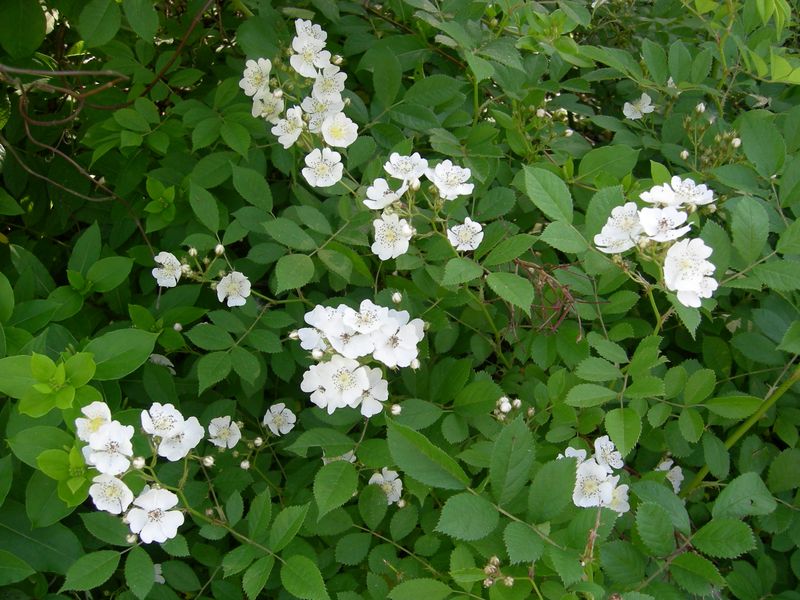
A thorny thicket at the edge of a pasture or along a fencerow might look like useful wildlife cover at first glance. Multiflora rose, Rosa multiflora, has been growing in that role across this state for many years, and some landowners still see it as a free hedge.
The reality is different. Multiflora rose is listed as invasive under Ohio Administrative Code Rule 901:5-30-01.
It is also classified as a noxious weed under Ohio law, which adds restrictions.
OSU Extension invasive plant resources describe multiflora rose as a fast-spreading shrub that can take over pastures, woodland edges, and roadsides when left unchecked.
Birds eat the small red hips and deposit seeds broadly, which helps the plant move well beyond the original site.
Dense infestations can reduce pasture productivity and make land management significantly harder over time.
Do not transplant multiflora rose to a new area, share rooted pieces, or encourage its spread along a property edge. Removal is possible but can be thorough work given the thorny canes and persistent root system.
A staged removal plan using OSU Extension guidance is a sensible approach for larger infestations. Native roses such as pasture rose can provide wildlife value and seasonal interest.
Native shrubs like gray dogwood can do the same without multiflora rose’s aggressive spread.
7. Know European Buckthorn Is Already On The List
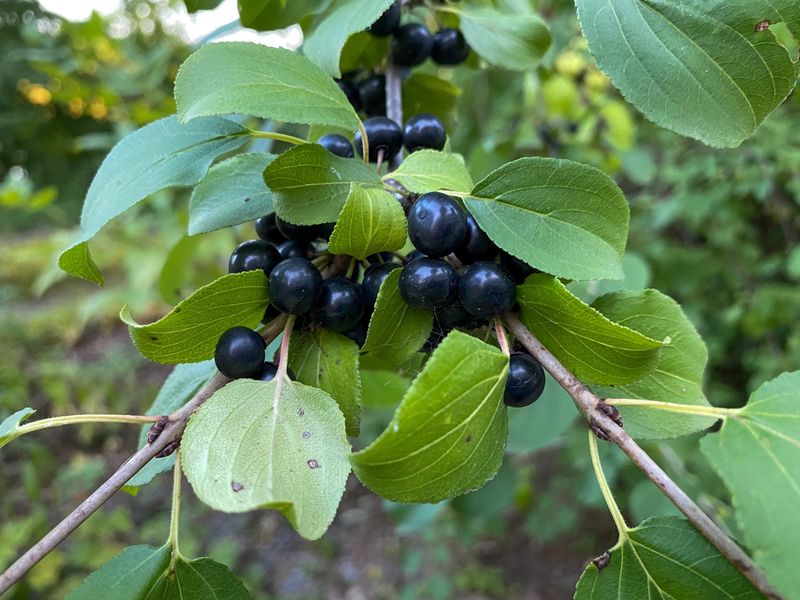
Scattered through older hedgerows and along shaded woodland margins, European buckthorn has been quietly spreading across much of the Midwest for a long time. Rhamnus cathartica is listed as invasive under Ohio Administrative Code Rule 901:5-30-01.
It is restricted from sale, propagation, distribution, import, and intentional spread in this state. It is not a newly discovered problem, but it remains an active one in many parts of the Buckeye State.
Buckthorn invades woodlands, forest edges, and open areas, where it can form dense shade that suppresses native wildflowers and tree seedlings.
Ohio Invasive Plants Council guidance notes that its early leaf-out in spring and late leaf-drop in fall give it a competitive advantage over native plants.
Birds consume the dark berries and spread seeds into natural areas, extending its reach beyond managed landscapes.
Check older hedges and shaded property edges for buckthorn. Watch for shrubs or small trees with slightly thorn-tipped branches and clusters of small black berries in fall.
Beginners sometimes confuse buckthorn with native shrubs, so confirming identification before removing anything is important.
Native alternatives suited to similar spots include native viburnums, native plums, or witch-hazel (Hamamelis virginiana), depending on site conditions.
Nursery-propagated stock from a reputable source is always preferable to digging plants from the wild. Check current state guidance before purchasing any new shrub to fill a gap left by buckthorn removal.
8. Choose Native Shrubs Before The Next Ban Arrives
Smart plant selection now is far easier than emergency removal later. The clearest lesson from Ohio’s invasive plant rule is that shrubs once sold freely at nurseries can end up restricted when their ecological impact becomes undeniable.
Stay ahead by checking Ohio Administrative Code Rule 901:5-30-01 and Ohio Department of Agriculture guidance. Do this before buying any new shrub, not after.
Ask nurseries for the full scientific name of every shrub you consider. A common name like privet, honeysuckle, barberry, or olive can cover both restricted and acceptable species.
Only the scientific name tells you what you are buying. Avoid accepting pass-along mystery plants from neighbors unless you can confirm exactly what they are.
Unknown shrubs dug from an old fence line or wooded corner can turn out to be exactly the plants the rule is designed to stop.
Native shrubs matched to your specific site offer the most reliable long-term value. Serviceberry (Amelanchier species) thrives in many yard conditions and feeds pollinators and birds.
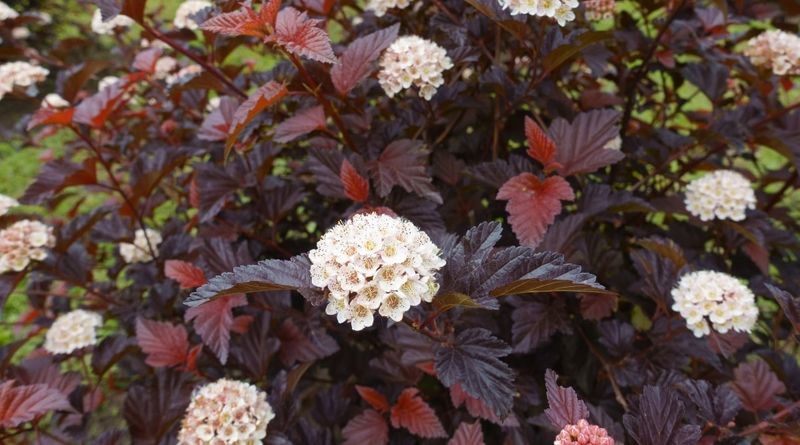
Spicebush (Lindera benzoin) suits shaded or moist spots beautifully. Ninebark, buttonbush, elderberry, chokeberry, gray dogwood, and native viburnums all fill real landscape roles.
They do it without invasive risk. A shrub does not have to be newly banned to be a bad bet.
The best time to choose better plants is always before they become the next problem on the list.