These Are The Pennsylvania Wildflowers That Grow Wild Everywhere And Belong In Every Garden
Pennsylvania has a wildflower lineup that most homeowners walk right past without giving it a second thought, and that is honestly a missed opportunity worth correcting.
Native wildflowers have been brightening roadsides, meadows, woodland edges, and open fields across this state for centuries, doing useful ecological work the whole time without anyone asking them to.
Bees, butterflies, and all kinds of other wildlife depend on them in ways that most garden-center annuals simply cannot replicate.
The genuinely exciting part is that so many of these plants transition into a home garden remarkably well, as long as you take the time to match each one to the right conditions.
Full sun borders, shaded woodland corners, moist low spots, dry sunny slopes, Pennsylvania has a native wildflower that fits nearly every situation a home gardener is likely to encounter.
1. Black-Eyed Susan Brings Sunny Color To Open Beds
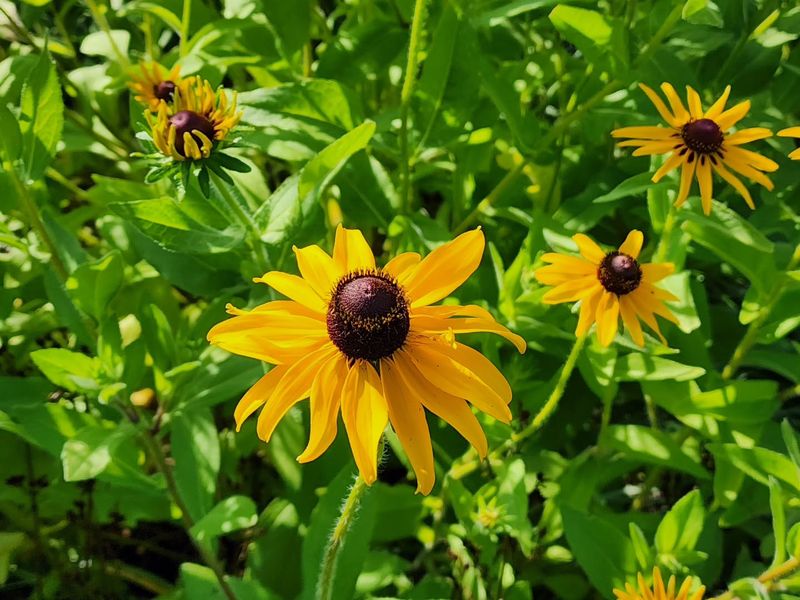
Few wildflowers capture the spirit of a Pennsylvania summer quite like the cheerful, golden blooms of Black-Eyed Susan.
Known botanically as Rudbeckia hirta, this native plant turns roadsides, old fields, and sunny meadows across the state into ribbons of yellow from roughly June through September.
It is one of the most recognizable wildflowers in the region, and for good reason.
In a home garden, Black-Eyed Susan thrives in full sun and tolerates a wide range of soil types, including dry or sandy soils that would challenge less adaptable plants.
Good drainage matters more than soil richness, and this species generally does not need fertilizing.
Plants typically reach one to three feet tall, making them a natural fit for the middle or front of a sunny border.
Pollinators are strongly drawn to these flowers. Native bees, bumble bees, and several butterfly species visit the blooms regularly, and goldfinches often feed on the seed heads in late summer and fall.
Leaving the seed heads standing through winter adds texture to the garden and provides food for birds. Black-Eyed Susan self-seeds readily, so expect it to spread gradually into nearby open areas over time.
Sourcing plants or seeds from a reputable native plant nursery is a responsible way to bring this cheerful Pennsylvania wildflower into your yard without disturbing wild populations.
2. Butterfly Weed Adds Bright Color To Dry Spots
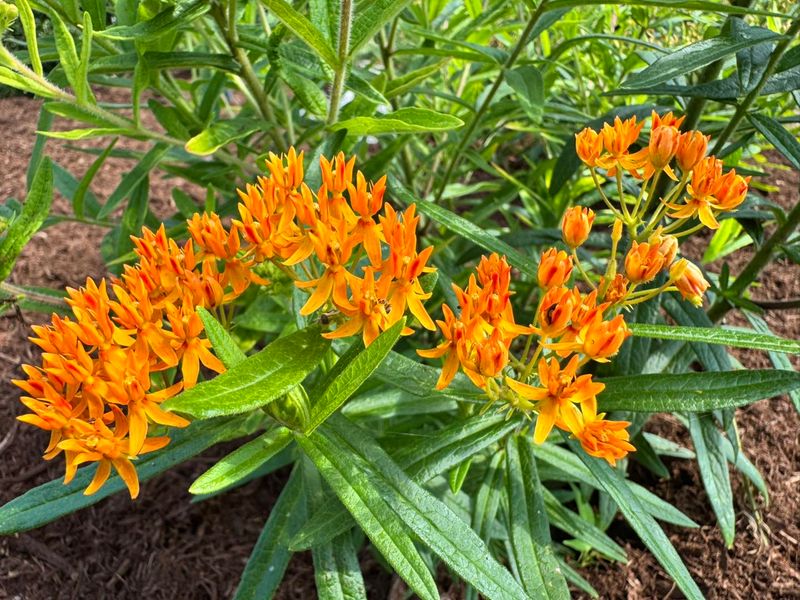
Burnt orange is not a color you see often in native wildflower gardens, which is exactly what makes Butterfly Weed such a standout.
Asclepias tuberosa is a native milkweed species found in dry, sunny habitats across Pennsylvania, including rocky slopes, sandy fields, and open roadsides where the soil drains quickly and competition from other plants is limited.
Unlike many milkweeds, Butterfly Weed does not spread aggressively through rhizomes, which makes it easier to manage in a cultivated bed. It grows one to two feet tall and produces clusters of vivid orange flowers from roughly June through August.
Full sun and well-drained to dry soil are the conditions this plant genuinely prefers. Planting it in heavy, wet soil often leads to trouble, so raised beds or sloped areas with good drainage tend to suit it well.
Your Pennsylvania Garden Changes Every Week. Your Plan Should Too.
Gardening in Pennsylvania changes quickly throughout the season. Every Friday you’ll receive a simple weekly plan showing exactly what to plant, prune, fertilize, harvest, and protect so you never miss the right timing.
Ecologically, Butterfly Weed is a host plant for monarch butterfly larvae and a nectar source for a wide range of native bees, swallowtail butterflies, and other pollinators. Its value to wildlife is well documented.
The plant develops a deep taproot over time, which makes it drought-tolerant but also means it dislikes being moved once established. Starting with nursery-grown plants or seeds gives it the best chance to settle in successfully.
For dry, sunny spots where other plants struggle, Butterfly Weed brings both color and ecological purpose to the Pennsylvania garden.
3. Wild Bergamot Brings Native Charm To Sunny Borders
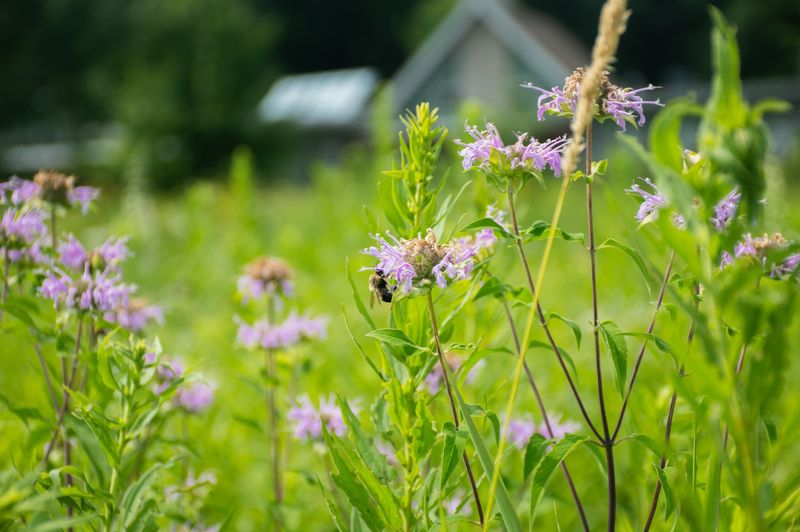
Walk past a sunny Pennsylvania meadow in midsummer and you may catch a faint, pleasant scent drifting from clusters of lavender-purple flowers.
That fragrance belongs to Wild Bergamot, or Monarda fistulosa, a native plant that grows in open fields, roadsides, and dry to medium-moisture woodland edges across much of the state.
Its rounded flower heads are distinctive and easy to recognize once you know what to look for.
In the garden, Wild Bergamot performs best in full sun to light shade with well-drained soil of average fertility. It typically blooms from late June through August and reaches two to four feet in height, giving it enough presence to anchor the middle of a sunny border.
The plant spreads through rhizomes over time, forming loose colonies that can be divided every few years to keep growth in check.
Pollinators are especially fond of Wild Bergamot. Native bees, hummingbirds, and several butterfly species visit the flowers regularly throughout the bloom period.
The dried seed heads also add subtle winter interest to the garden when left standing. Powdery mildew can appear on the foliage in humid conditions, but this rarely affects the overall health of the plant.
Selecting plants from a reputable native nursery ensures you are starting with well-adapted stock suited to Pennsylvania growing conditions.
Wild Bergamot brings both fragrance and pollinator activity to the sunny garden border.
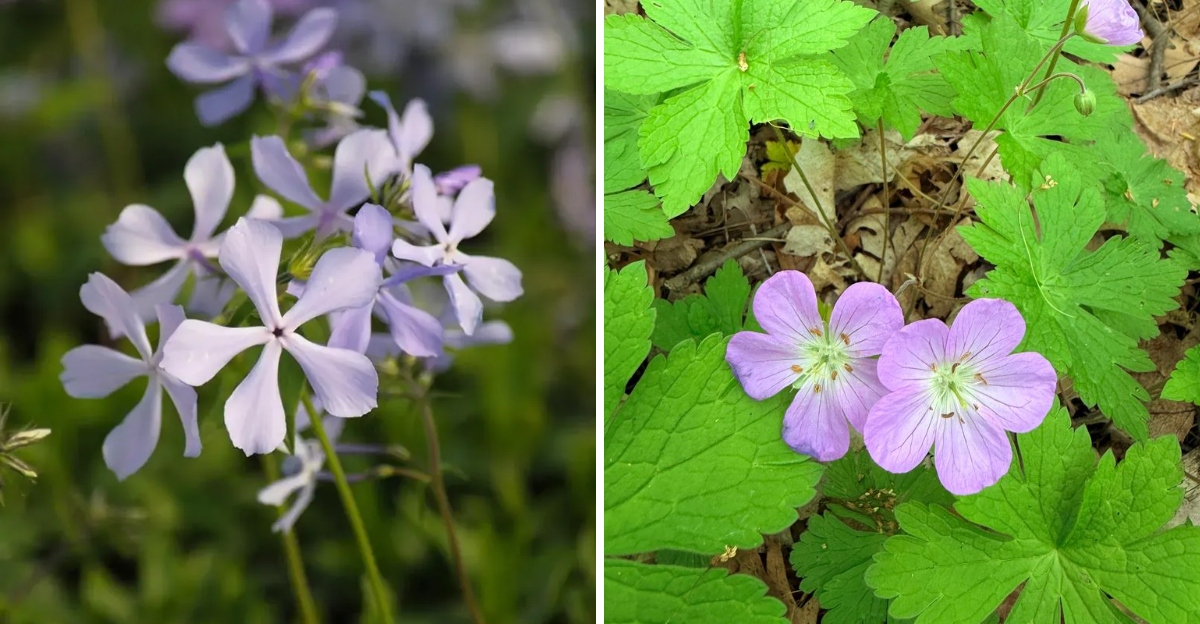
4. Wild Geranium Softens Shady Garden Edges
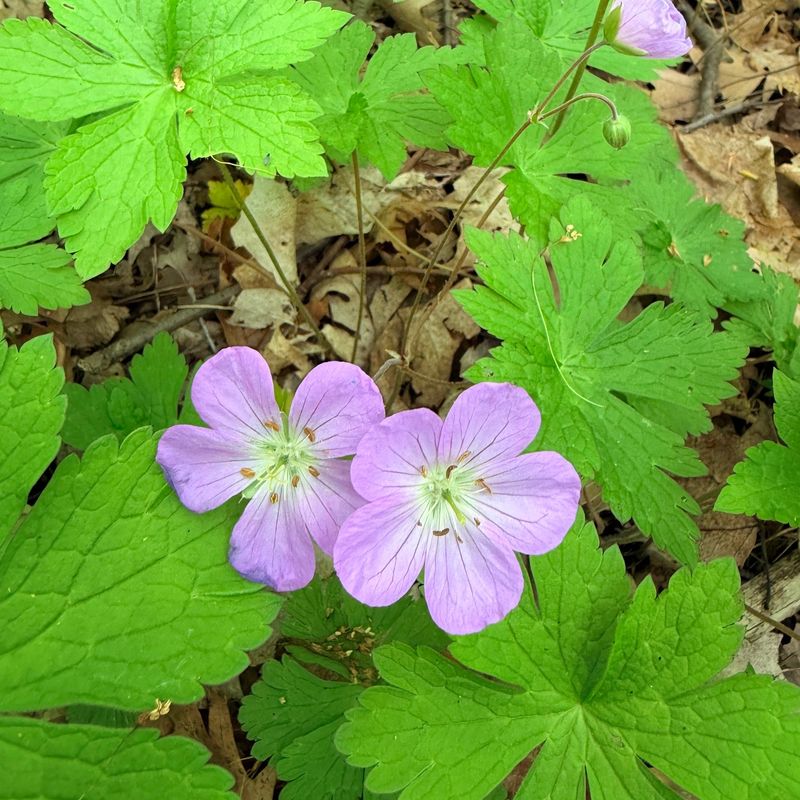
Shaded garden edges can be tricky spaces to fill with color, but Wild Geranium handles them with ease.
Geranium maculatum is a native woodland plant found across Pennsylvania in deciduous forests, shaded roadsides, and the edges of wooded areas where the soil stays reasonably moist and organic matter is plentiful.
In spring, its rose-purple flowers appear in loose clusters above attractive, deeply lobed leaves.
Bloom time generally falls between April and June, making Wild Geranium one of the earlier native plants to flower in Pennsylvania woodlands.
Plants typically grow one to two feet tall and spread gradually to form soft, weed-suppressing clumps that fill in shaded areas gracefully.
Partial to full shade and moist, humus-rich soil suit it well, though it can tolerate somewhat drier conditions once established.
After flowering, the foliage remains attractive through much of the growing season, often turning reddish in fall before going dormant for winter.
Native bees, including mining bees and bumble bees, visit the flowers for pollen in early spring when other native plants are just getting started.
That early bloom timing gives Wild Geranium real ecological value as a spring resource for pollinators. It works beautifully along shaded paths, beneath deciduous trees, or at the front of a woodland border.
Look for nursery-grown plants from reputable native plant sources when adding Wild Geranium to a shade garden.
5. Foxglove Beardtongue Adds Height To Sunny Plantings
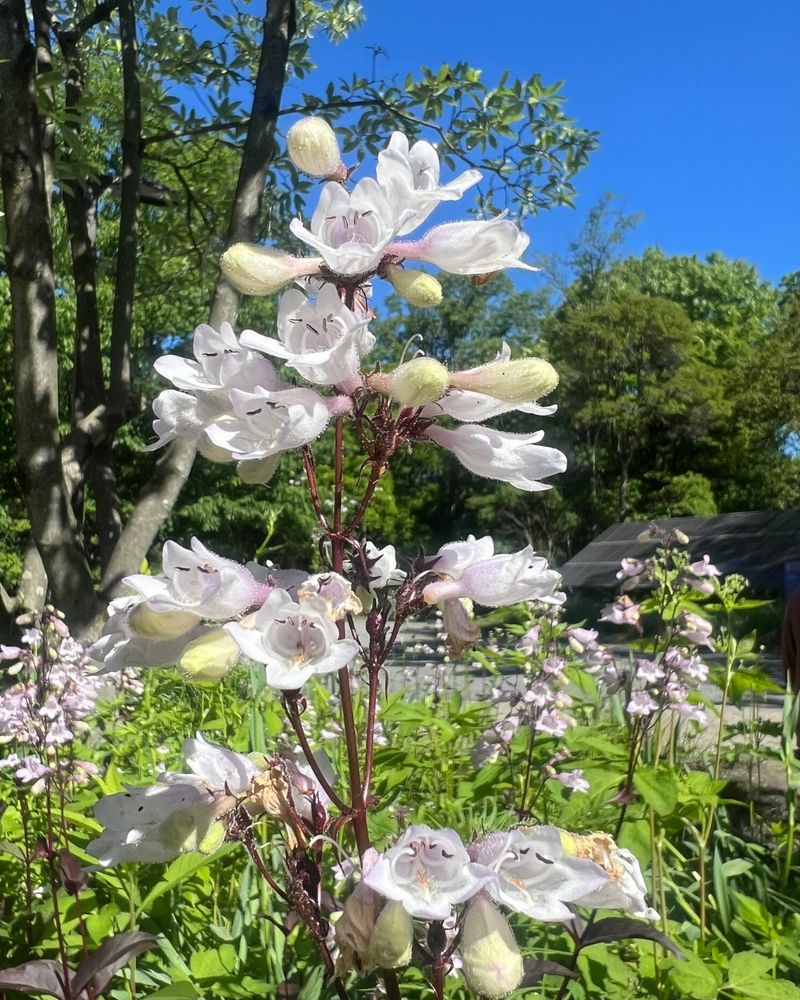
Vertical interest is something many garden beds genuinely benefit from, and Foxglove Beardtongue delivers it with an elegant, upright form.
Penstemon digitalis is a native plant found in meadows, open woodland edges, roadsides, and disturbed areas throughout Pennsylvania.
Its tall stems carry clusters of white to pale lavender tubular flowers that bloom from late May through June, bridging the gap between spring and summer in the garden.
In cultivation, Foxglove Beardtongue grows two to five feet tall and performs best in full sun to light shade with average, well-drained soil. It tolerates clay soil better than many native wildflowers, which makes it a useful choice for gardeners dealing with heavier soils.
Once established, plants are reasonably drought-tolerant and require little supplemental care beyond occasional division to maintain vigor.
Bumblebees and other long-tongued native bees are the primary visitors to Foxglove Beardtongue flowers, and hummingbirds occasionally visit as well.
The tubular flower shape is well-suited to these pollinators, and the plant provides a meaningful resource during its bloom period.
Seed heads that form after flowering add some late-season structure to the planting. Because Penstemon digitalis self-seeds moderately, small colonies can develop over time in favorable spots.
Nursery-grown plants establish reliably and give Pennsylvania gardeners a sturdy, native vertical accent that looks at home in both formal borders and naturalistic meadow-style plantings.
6. New England Aster Extends Color Into Fall
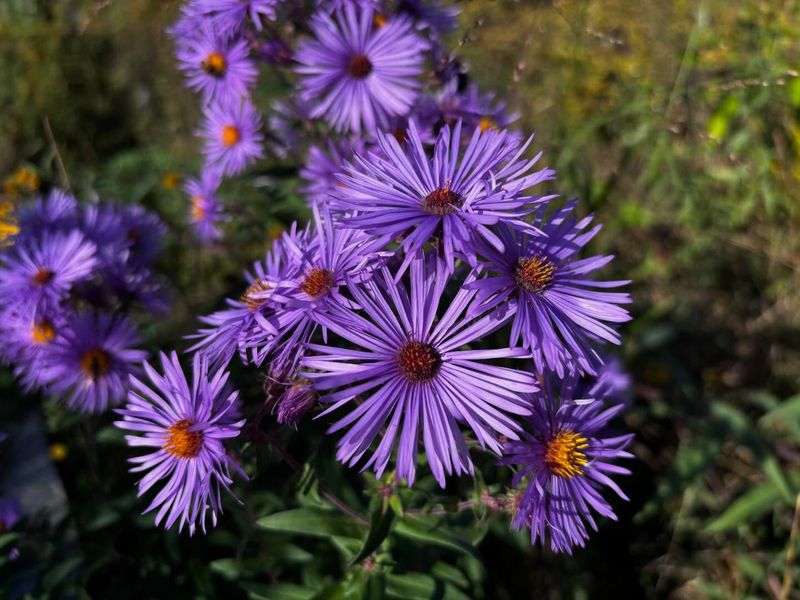
By the time most garden flowers have finished for the season, New England Aster is just hitting its stride.
Symphyotrichum novae-angliae is a native aster found in moist meadows, stream banks, roadsides, and open areas across Pennsylvania, where it produces masses of purple to violet flowers with yellow centers from late August well into October.
The timing alone makes it one of the most valuable native plants a gardener can grow.
In the garden, New England Aster grows best in full sun to light shade with moist to average soil. It can reach three to six feet in height, so placing it toward the back of a border or in a naturalistic planting where its size reads as an asset works well.
Pinching plants back in early summer encourages a bushier, more compact form that may require less staking later in the season.
The ecological value of New England Aster in fall is hard to overstate. Migrating monarch butterflies, native bees, and many other pollinators rely on it as a late-season nectar source when few other flowers are available.
Birds also feed on the small seeds after the blooms fade. The plant spreads by both seed and rhizomes, so some management may be needed in smaller gardens.
Starting with plants from a reputable native nursery gives Pennsylvania gardeners a reliable, long-blooming fall accent that benefits the local landscape well beyond its visual appeal.
7. Golden Alexanders Brighten Moist Garden Borders
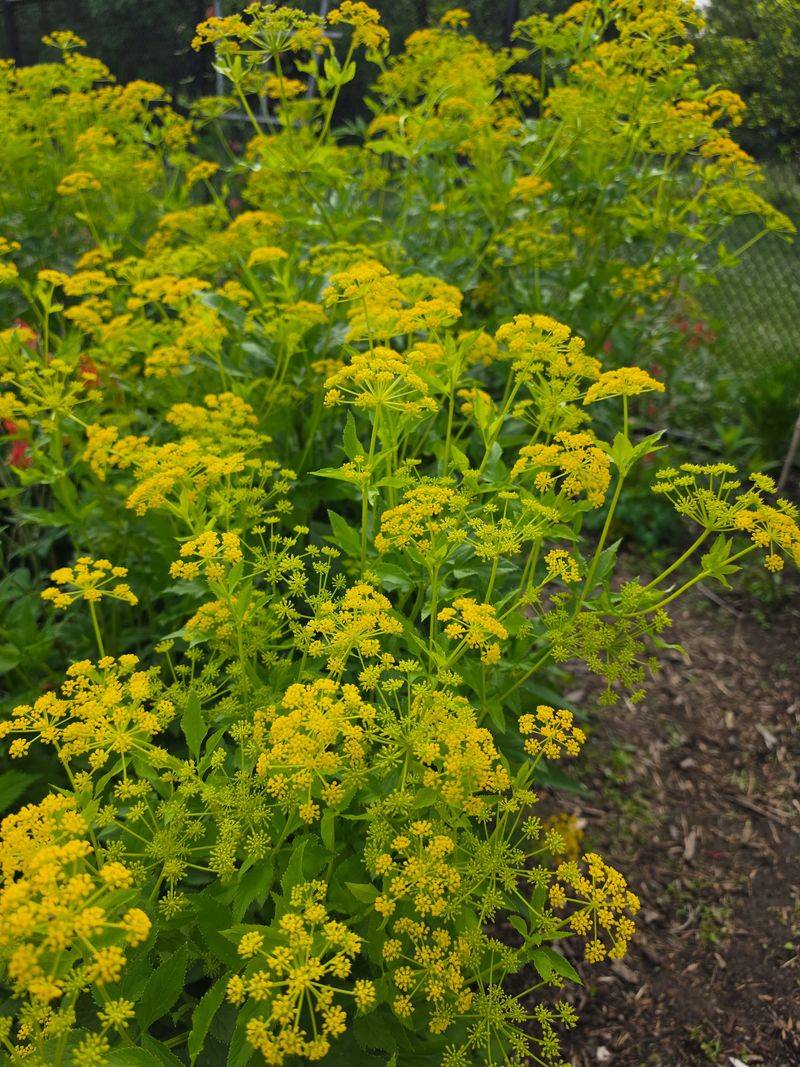
Spring-blooming natives that thrive in moist soil are not always easy to find, which is one reason Golden Alexanders deserves more attention from gardeners.
Zizia aurea is a native plant found in moist meadows, stream edges, wet woodland margins, and low-lying areas across Pennsylvania.
Its flat-topped clusters of bright yellow flowers appear from April through June, offering early-season color at a time when the garden is still waking up.
Golden Alexanders grows one to three feet tall and works well in rain gardens, moist borders, or low areas where water tends to collect after heavy rain. Full sun to partial shade suits it, and it adapts to a range of moist to wet soil conditions.
Plants form clumps over time and can be divided to create additional plantings or share with other gardeners interested in native species.
Ecologically, Golden Alexanders is a host plant for the black swallowtail butterfly, whose larvae feed on the foliage. Early-season native bees and other small pollinators visit the flowers for nectar and pollen during the spring bloom period.
The compound, ferny foliage remains attractive through much of the growing season even after flowering ends.
Golden Alexanders pairs naturally with other moisture-loving Pennsylvania natives like Wild Blue Phlox and Wild Geranium in a shaded or partly shaded border.
Sourcing plants from a responsible native nursery is the best way to add this cheerful spring bloomer to your garden.
8. Wild Blue Phlox Adds Spring Color To Woodland Edges
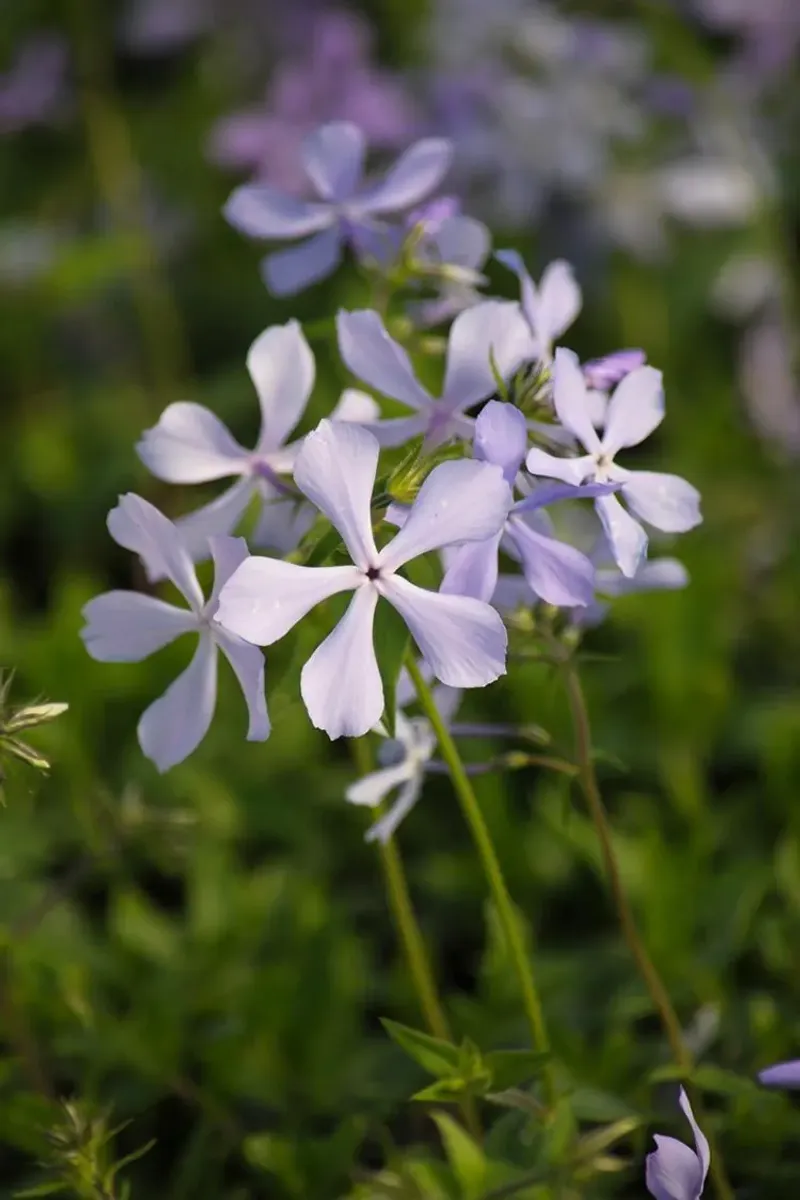
There is something quietly stunning about a drift of Wild Blue Phlox blooming along a shaded Pennsylvania woodland edge in May.
Phlox divaricata is a native wildflower found in moist, rich woodlands and shaded stream banks across the state, where it forms low, spreading mats covered in fragrant blue to lavender flowers each spring.
The soft color and gentle fragrance make it a memorable sight in both wild and garden settings.
In the home garden, Wild Blue Phlox grows four to twelve inches tall and spreads gradually to fill shaded or partly shaded areas with a low, attractive groundcover.
It performs best in moist, humus-rich soil with partial to full shade, making it a natural partner for spring-blooming trees and shrubs.
After flowering ends, the foliage continues to provide a tidy, low mat of greenery through much of the season.
Butterflies and long-tongued bees visit the flowers for nectar, and hummingbirds occasionally stop at the blooms during spring migration.
The fragrance is mild but pleasant, adding a sensory dimension to the shaded garden that few other native plants can match at this time of year.
Wild Blue Phlox combines well with Wild Geranium and Golden Alexanders in a spring woodland border.
When purchasing plants, choose nursery-propagated stock from a reputable native plant source rather than collecting from wild populations, which should always be left undisturbed in Pennsylvania’s natural areas.