These Are The Signs Your Pennsylvania Oak Has Oak Wilt And What To Do Immediately
Oak trees have a way of making a Pennsylvania property feel established, shaded, and genuinely special. They are the kind of trees people plan around, build patios under, and fully expect to outlast everyone.
So when one starts looking wrong in the middle of summer, leaves browning from the top down, foliage dropping ahead of schedule, color changes that just seem off, it gets your attention fast.
Oak wilt is one of those diseases that can move through a tree surprisingly quickly, and red oaks in particular can show dramatic changes in a matter of weeks.
The tricky part is that oak wilt does not always look like a disease at first glance.
It can pass for drought stress, environmental damage, or a handful of other common tree problems, which makes careful observation and a solid diagnosis the smartest place to start.
1. Leaves Brown From The Top Down
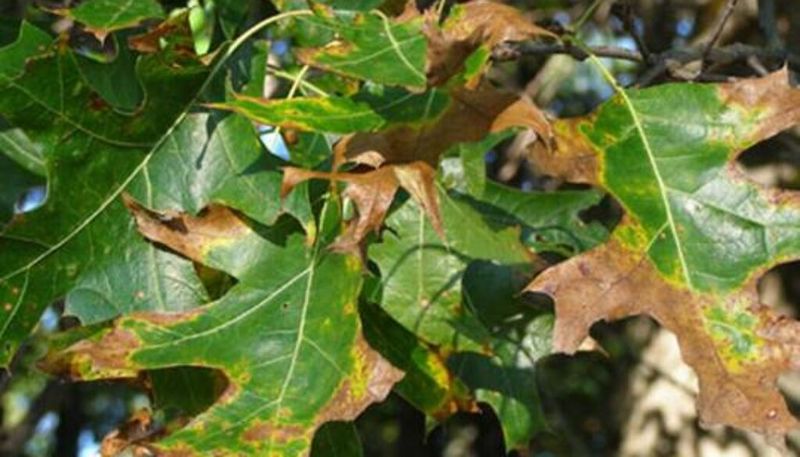
Watching the upper canopy of a yard oak turn brown while the lower branches still look green is one of the more noticeable early signs that something may be wrong.
In Pennsylvania oak trees, this top-down browning pattern is considered one of the key visual clues associated with oak wilt.
The change can happen within a few weeks during warm weather, which makes it stand out from typical seasonal leaf changes.
When oak wilt affects a tree, it interferes with the way water and nutrients move through the wood. The upper branches, being farthest from the roots, tend to show stress first.
Homeowners who notice this pattern on a red oak during summer should take note of how quickly the browning is spreading.
A slow browning that starts at the top could also be related to drought stress, root issues, or other fungal problems. That is why the direction and speed of the change both matter when you are trying to figure out what is going on.
Pennsylvania summers can be dry, and drought symptoms sometimes look similar to early oak wilt signs.
If the browning is moving quickly from the crown downward and the tree is a red oak group species, it is a good idea to contact a certified arborist or reach out to your local Penn State Extension office for guidance.
Getting a professional opinion early gives you the most options for managing the situation.
2. Bronze Or Brown Edges Spread Across Leaves
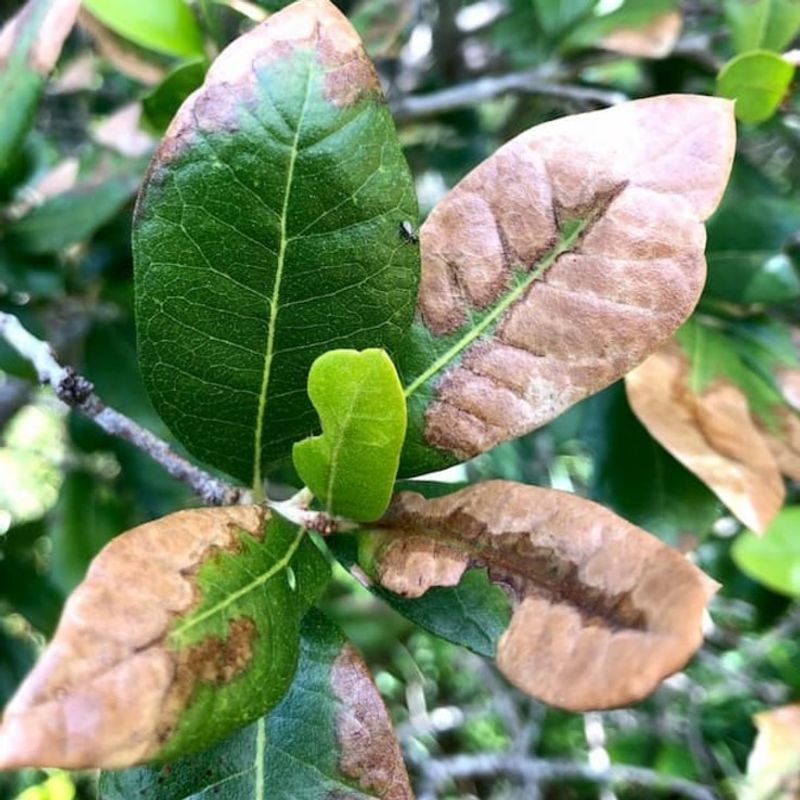
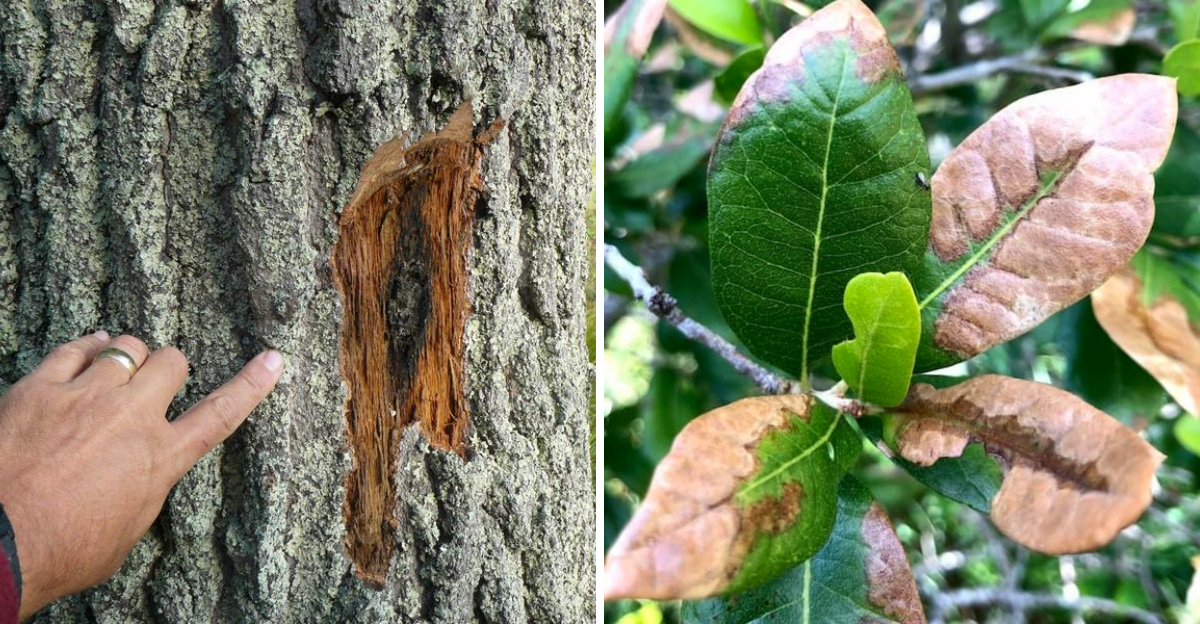
Browning that starts at the leaf tips or outer edges and moves inward toward the center vein is a symptom worth watching closely on Pennsylvania oak trees.
This pattern, sometimes described as bronze or tan discoloration creeping across the leaf surface, can show up on multiple branches at once.
It tends to look different from the clean yellowing or spotting that comes with some fungal leaf diseases.
On red oaks, the browning often moves quickly and may affect large portions of the leaf within a short period. The color change can range from pale tan to a deeper reddish-brown, and the affected leaves may still be attached to the tree rather than falling right away.
Your Pennsylvania Garden Changes Every Week. Your Plan Should Too.
Gardening in Pennsylvania changes quickly throughout the season. Every Friday you’ll receive a simple weekly plan showing exactly what to plant, prune, fertilize, harvest, and protect so you never miss the right timing.
Seeing this kind of edge browning across many leaves at the same time, especially during summer, is a detail that a tree professional will want to know about.
White oaks in Pennsylvania can also show leaf browning, though their symptoms from oak wilt tend to develop more gradually.
The difference in how quickly each group responds is one reason why red oaks tend to attract more concern when these symptoms appear.
Noticing the leaf coloring early gives you a chance to document what you are seeing.
Taking a few clear photos of the affected leaves and noting which part of the tree is showing symptoms can be very helpful when you speak with a certified arborist or extension specialist. A visual record makes it easier to get useful feedback.
3. Green Or Brown Leaves Drop Too Early
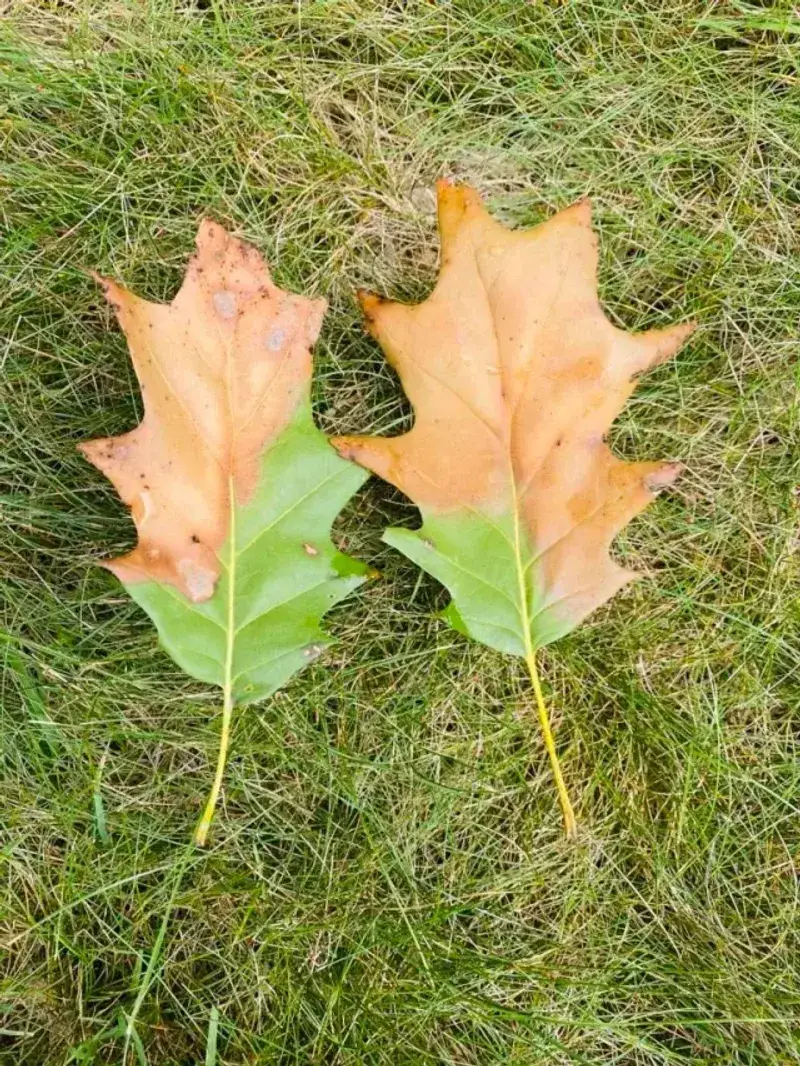
Finding a thick layer of oak leaves on the lawn in the middle of summer is not something most Pennsylvania homeowners expect. Early leaf drop, especially when some of those leaves are still partially green, is a sign that the tree is shedding foliage before it should.
This kind of out-of-season leaf loss can be one of the more visible clues that something is affecting the tree’s health.
Oak wilt can cause leaves to fall while they still have some green color left in them, which is unusual compared to normal autumn leaf drop.
The combination of browning edges and premature falling, happening at the same time, is a pattern that stands out from typical seasonal changes.
On a healthy oak in Pennsylvania, green leaves in July or August should stay firmly attached to the branches.
Of course, early leaf drop can also happen because of other stressors, including insect damage, drought, or other diseases.
Checking whether the drop is happening across the whole tree or just on certain branches can help narrow down what might be causing it.
A localized drop may point to something different than a whole-canopy event.
If you notice significant early leaf drop paired with browning that seems to be spreading, keeping a record of when it started and how fast it is progressing will be useful information.
A local arborist or extension resource can help you interpret what you are seeing and determine whether further evaluation is needed.
4. A Red Oak Changes Fast In Summer
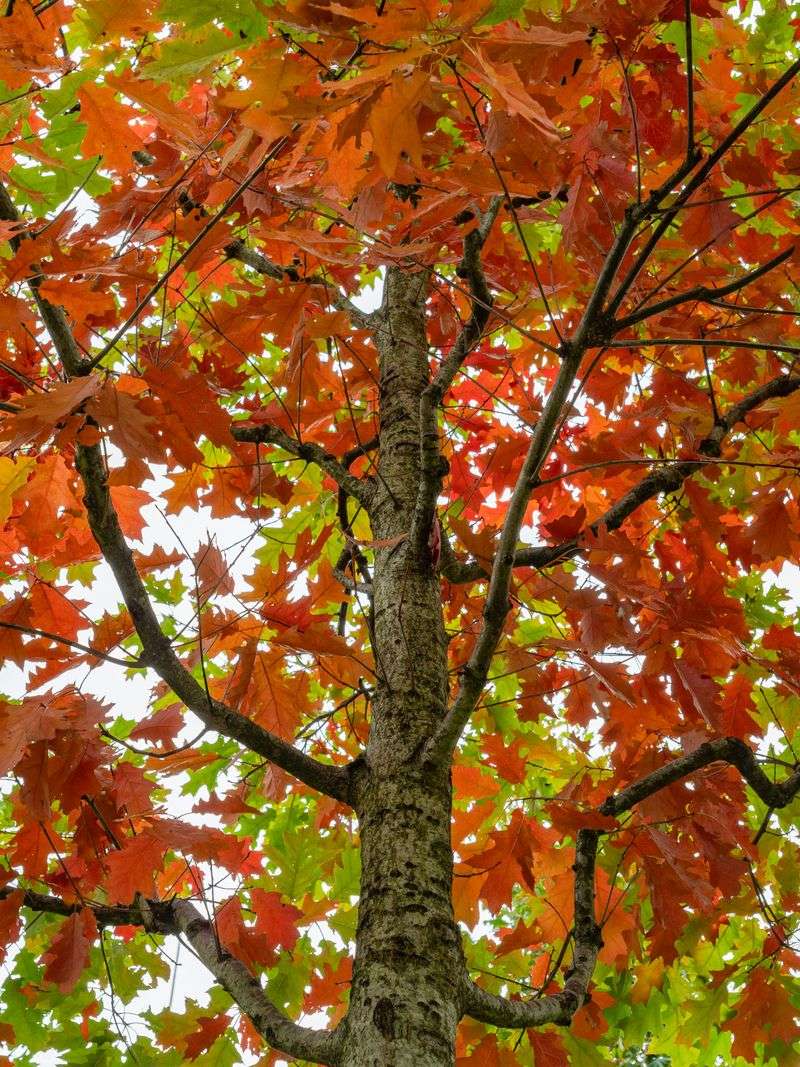
Speed is one of the most alarming aspects of oak wilt in red oaks. A tree that looked healthy at the start of summer can show dramatic canopy changes within just a few weeks.
Pennsylvania homeowners who have red oaks, pin oaks, scarlet oaks, or other members of the red oak group on their property should pay attention to how quickly any symptoms appear and spread.
Red oaks are considered especially vulnerable to oak wilt compared to white oaks. The structure of their wood allows the fungus to move through the vascular system more rapidly, which is why the visible symptoms can escalate so quickly.
Noticing a red oak going from full canopy to significant browning over a short period during warm weather is a situation that warrants prompt attention.
Not every rapid canopy change in a red oak means oak wilt is present. Drought stress, construction damage to roots, or other diseases can also cause fast decline.
However, the combination of speed, top-down browning, and early leaf drop during summer is a pattern that professionals take seriously.
If a red oak on your Pennsylvania property starts changing noticeably fast between June and August, reaching out to a certified arborist sooner rather than later is a reasonable step.
Some diagnostic tools can help confirm whether oak wilt is involved, and early awareness gives you the most realistic picture of what options may be available for the tree and nearby oaks.
5. Nearby Oaks Start Showing Similar Symptoms
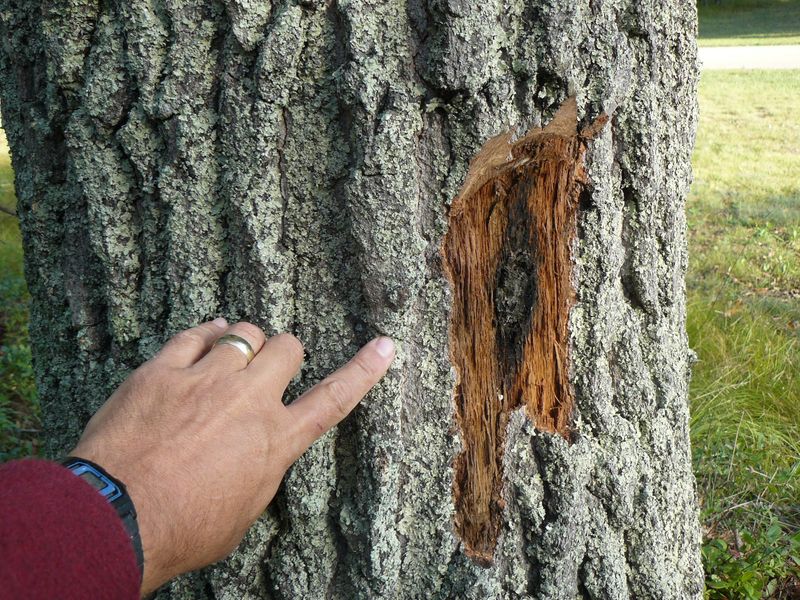
Wooded edges and property lines in Pennsylvania often have clusters of oaks growing close together, and that proximity matters when oak wilt is a concern. One of the ways oak wilt can spread is through underground root connections between neighboring trees.
When oaks grow close enough for their roots to graft together, the fungus can travel from one tree to the next without any above-ground contact.
Seeing a second or third oak near a symptomatic tree start showing similar browning, early leaf drop, or canopy changes is a pattern that tree professionals look for when assessing potential oak wilt spread.
It does not confirm the disease on its own, but it adds important context to the overall picture.
Properties with dense oak stands or tree rows along fences and driveways may be more likely to show this kind of progression.
The distance over which root grafts can occur varies, but oaks within close proximity to each other are generally considered more connected than trees that are widely spaced.
This is one reason why managing a suspected oak wilt situation carefully and early may help reduce the chance of the problem reaching additional trees on the property.
If multiple oaks in the same area of your Pennsylvania yard begin showing symptoms around the same time or in sequence, sharing that observation with a certified arborist or your local extension office is a helpful step.
Describing the layout of the affected trees and the timeline of symptoms can provide useful clues during an assessment.
6. Fresh Wounds Appear During Warm Weather
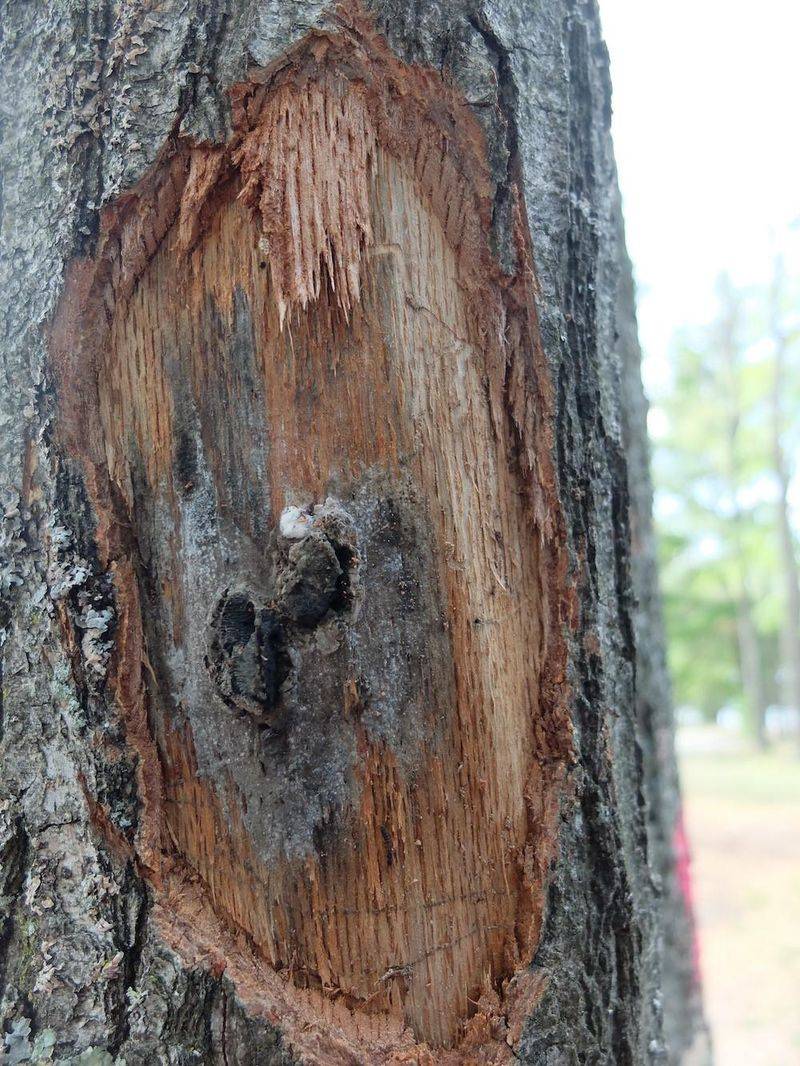
Pruning an oak during warm months in Pennsylvania is something worth thinking carefully about before picking up a saw. Fresh wounds on oak trees during the growing season can attract sap beetles and other insects that may carry oak wilt spores.
This insect-assisted spread is one part of how the disease can move between oaks that are not connected by root grafts.
The concern is not that every pruning cut will lead to oak wilt, but rather that the risk of insect activity around fresh wounds is higher during warmer months.
Late winter and early spring, before the trees fully leaf out, are generally considered lower-risk times for pruning oaks in Pennsylvania.
Waiting for cooler weather or dormant periods can reduce, though not eliminate, the chance of insect visits to open wounds.
Storm damage and accidental wounds are harder to control, but covering fresh cuts with wound sealant during warm weather is sometimes recommended as a precaution in areas where oak wilt is a concern.
It is a relatively simple step that may help reduce exposure while the wound begins to close naturally.
If you recently pruned an oak during summer and are now noticing unusual leaf symptoms, mentioning the timing of that pruning to an arborist can be relevant information.
It does not mean oak wilt is present, but it gives a professional a fuller picture of the tree’s recent history and helps them ask the right questions during an evaluation.
7. Do Not Move Suspect Oak Wood
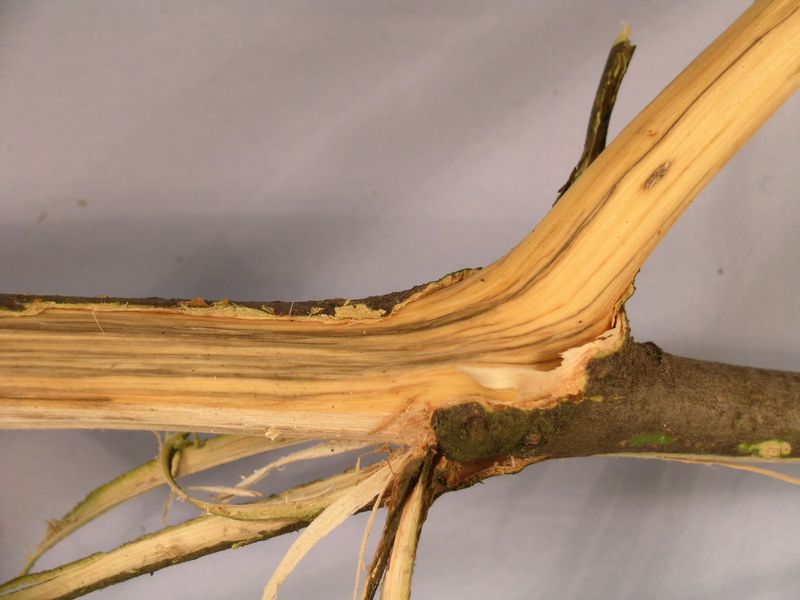
Firewood cut from an oak that may have had oak wilt is something Pennsylvania homeowners should handle with care.
Moving suspect oak wood from one location to another, especially across county lines or to new properties, can potentially carry the fungus to areas where it has not yet established.
This is one of the practical steps that forestry and extension resources often highlight when discussing oak wilt management at the home landscape level.
The concern with firewood is that the fungus can remain in wood for a period of time, and bark-covered logs can still attract the sap beetles that are associated with above-ground disease spread.
Keeping suspect wood on-site, covered with clear plastic to trap heat, or processing it in a way that reduces bark exposure are approaches sometimes suggested for reducing risk.
Pennsylvania has regions where oak wilt has been documented, and being thoughtful about wood movement is a reasonable precaution for any homeowner who is unsure whether a removed oak was healthy.
If you are having a tree removed and you are not certain of its health status, asking the arborist about wood handling recommendations is a good conversation to have before the work begins.
Burning the wood promptly on-site rather than storing it or transporting it is often the most practical option.
The goal is not to create alarm but to make informed choices that reduce the chance of spreading a potential problem to other oaks on your property or in your neighborhood.
8. Confirm Oak Wilt Before Taking Major Steps
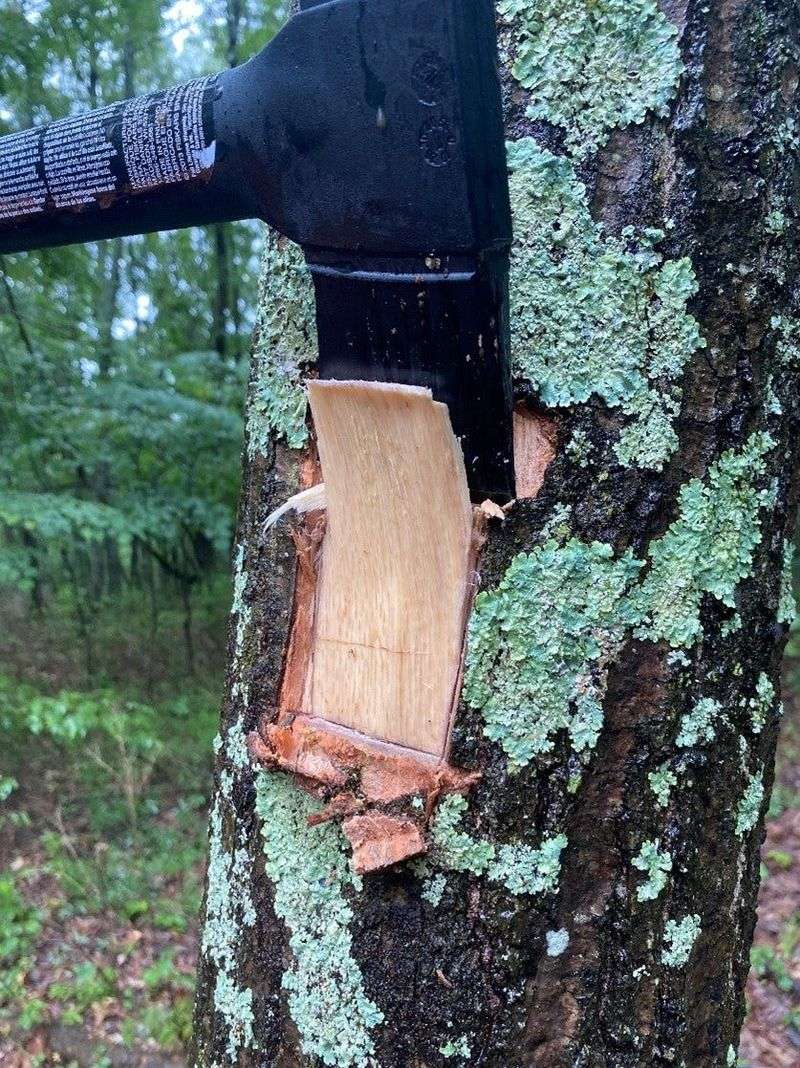
Jumping to conclusions about a struggling oak is understandable, especially when the changes seem to be happening quickly.
However, oak wilt symptoms can look similar to those caused by other problems, including bacterial leaf scorch, Armillaria root issues, drought stress, or certain other fungal diseases.
Getting a confirmed diagnosis before making any major decisions about the tree is genuinely worthwhile.
Laboratory testing through a certified arborist or a university plant disease diagnostic lab can identify whether the oak wilt fungus is actually present.
A professional sample, usually taken from the wood rather than the leaves, gives a much more reliable result than a visual assessment alone.
Pennsylvania homeowners can also connect with their local Penn State Extension office for guidance on how to submit samples and what to expect from the process.
Knowing what is actually affecting the tree helps you make better decisions about next steps.
Some options that may be discussed for managing oak wilt, such as fungicide trunk injections for high-value trees or root barrier trenching to slow underground spread, are most useful when the diagnosis is confirmed and the situation is clearly understood.
Taking the time to confirm the problem also protects you from spending money on treatments that may not address the actual cause.
A thorough assessment by a qualified professional gives you accurate information and a realistic sense of what to expect, which is far more useful than guessing based on leaf symptoms alone.