These Florida Plants Create A Dense Privacy Screen Along Fences Faster Than You’d Think
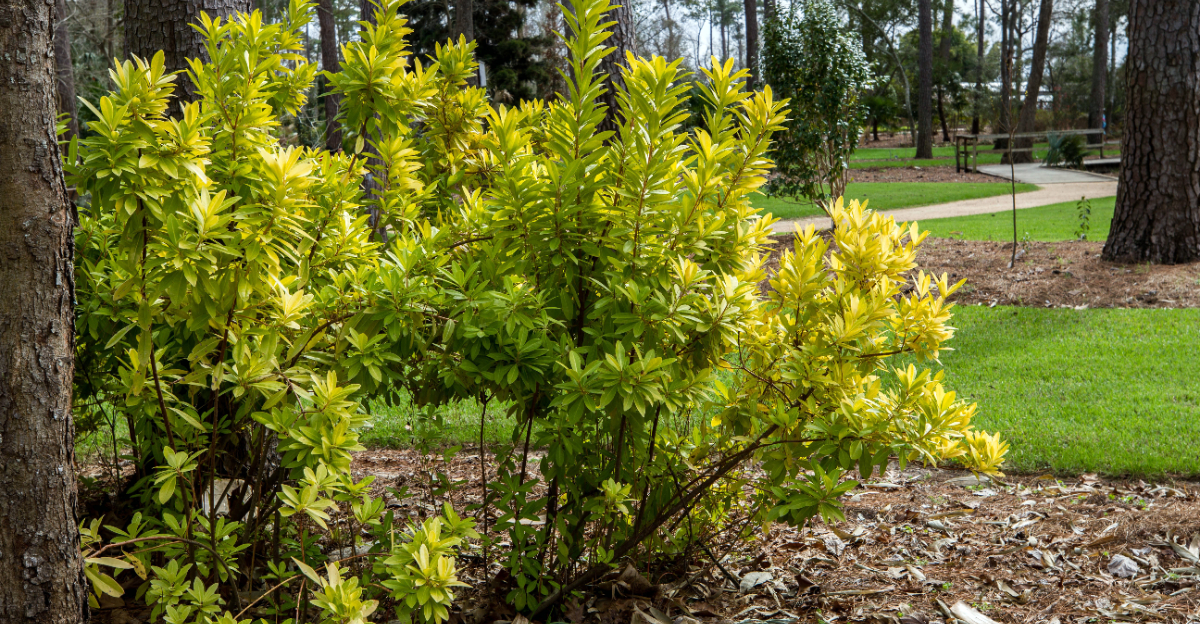
Want a backyard that feels private fast? In Florida, the right plants can turn an exposed fence line into a thick green wall sooner than most people expect.
You do not need a bulky fence upgrade or a yard full of high-maintenance shrubs. A few smart choices can fill in gaps, soften harsh lines, and block curious views without turning your weekends into work.
Some Florida-friendly plants shoot up quickly, spread thickly, and hold their own through heat, humidity, and heavy rain. That means more peace, more shade, and a yard that feels like your own little escape.
The best part? Plenty of these privacy plants look great while they work hard, so your fence does not just disappear behind greenery, it starts to look better than before.
Ready to stop the sightlines and bring in a lush, natural screen that earns its keep?
1. Turn Your Fence Line Into A Dense Green Screen With Cocoplum
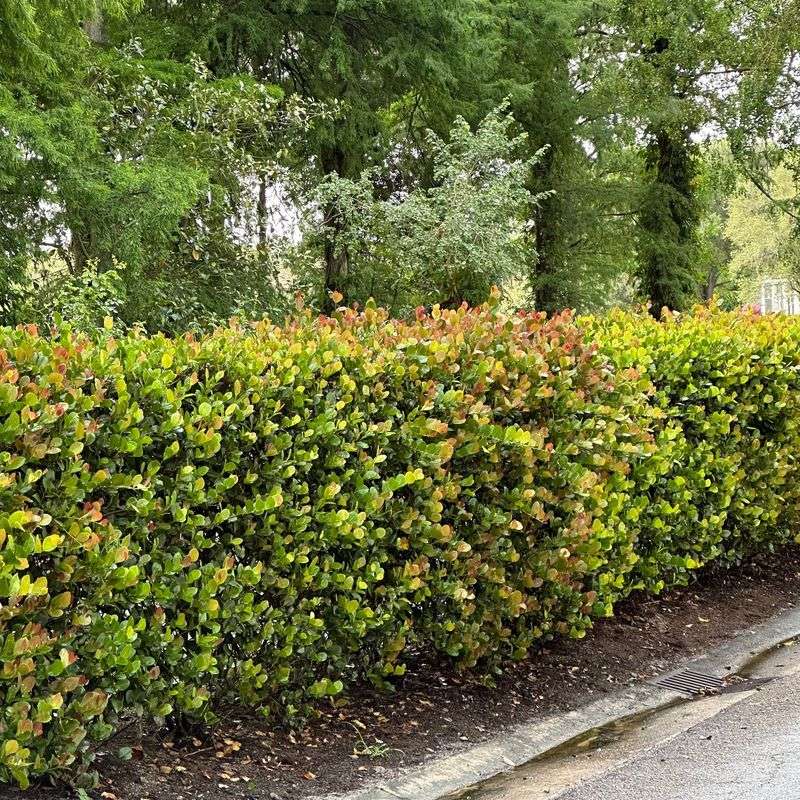
Few plants in Florida earn the reputation cocoplum has built for itself as a rock-solid fence-line performer.
Native to South Florida and coastal areas, cocoplum (Chrysobalanus icaco) produces thick, rounded leaves that overlap so densely you can barely see light through the foliage once the plant fills in.
That kind of coverage is exactly what homeowners want when planting along a fence for privacy.
Cocoplum thrives in full sun to partial shade, and it handles the heat, humidity, and occasional saltiness of coastal Florida landscapes without complaint.
According to the University of Florida IFAS, cocoplum is well suited for hedges and screens in South and Central Florida because of its adaptability to sandy, rocky, and even occasionally wet soils.
That flexibility makes it a dependable choice across a range of yard conditions.
Growth is steady rather than explosive, but plants respond well to pruning, which encourages even denser branching over time. Left to grow naturally, cocoplum can reach 6 to 15 feet tall depending on the variety.
The compact ‘Red Tip’ cultivar stays shorter and is especially popular for formal hedge-style planting along fences. Homeowners who want a polished, manicured look often choose this variety for its tidy growth habit and attractive reddish new growth.
Beyond privacy, cocoplum adds genuine beauty to the landscape. Small plum-like fruits appear after flowering, and those fruits attract birds and other wildlife, making your fence line a bonus habitat strip.
The plant is also low-maintenance once established, needing only occasional trimming to keep its shape. For South and Central Florida homeowners, cocoplum deserves serious consideration as a primary privacy hedge plant.
2. Create A Fuller More Polished Hedge With Simpson’s Stopper
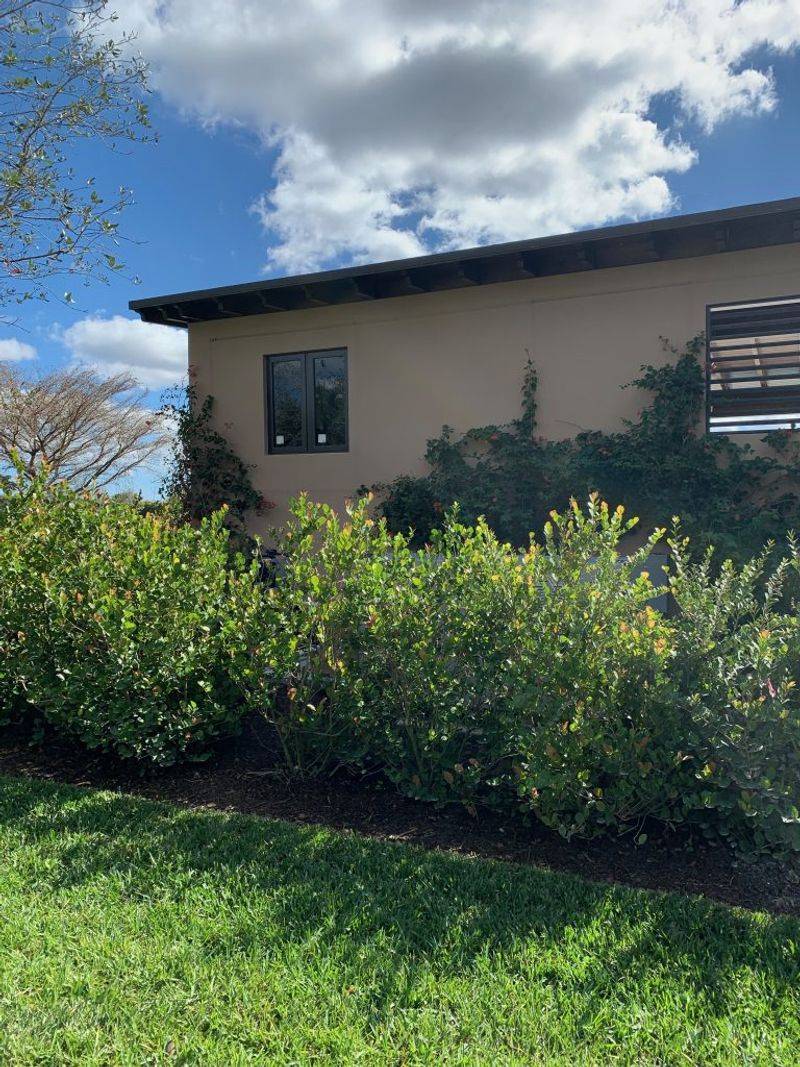
There is something quietly impressive about a Simpson’s stopper hedge in full form. This Florida native (Myrcianthes fragrans) has a naturally dense, multi-branching growth habit that fills in beautifully along a fence without much encouragement.
The small, dark green leaves create a refined, almost formal texture that suits both traditional and contemporary Florida landscapes equally well.
Simpson’s stopper grows at a moderate pace and can reach 6 to 15 feet tall at maturity, though it responds very well to shaping and can be kept shorter for a neater fence-line hedge.
Your Florida Garden Changes Every Week. Your Plan Should Too.
Gardening in Florida changes quickly throughout the season. Every Friday you’ll receive a simple weekly plan showing exactly what to plant, prune, fertilize, harvest, and protect so you never miss the right timing.
According to UF IFAS Extension, it performs best in full sun to partial shade, which gives homeowners flexibility depending on how much light reaches their fence line throughout the day.
One of the standout traits of this plant is its ability to look polished without constant attention. Once established in well-drained soil, it is quite drought-tolerant and does not demand heavy fertilizing or frequent pruning to stay attractive.
That combination of low care and high visual appeal makes it especially popular with busy homeowners who want a beautiful yard without a demanding maintenance schedule.
White flowers appear seasonally and are followed by small orange-red berries that birds find irresistible. So while your fence line gains privacy, it also becomes a lively spot for birdwatching.
The bark has an attractive cinnamon-brown color that adds subtle interest even when the plant is young.
Simpson’s stopper works especially well in South Florida and the warmer regions of Central Florida, where it stays evergreen all year and keeps your fence screened no matter the season.
3. Fill Your Backyard With Lasting Privacy Using Walter’s Viburnum
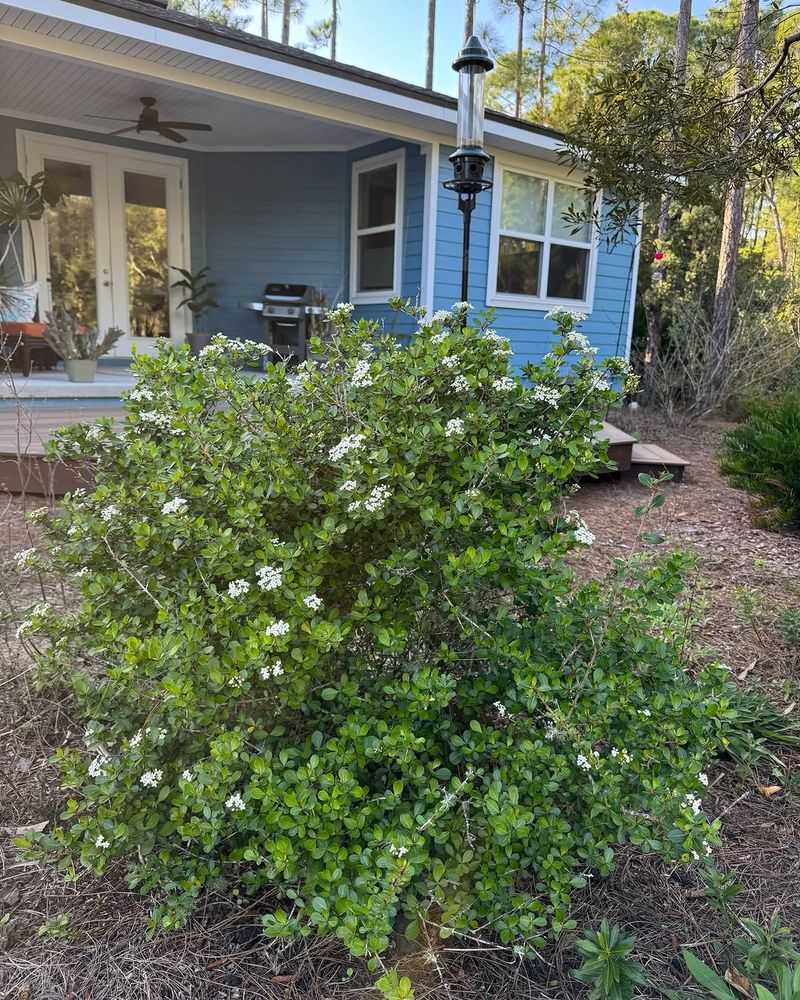
Reliable, adaptable, and genuinely beautiful, Walter’s viburnum (Viburnum obovatum) is a Florida native that has earned a loyal following among homeowners who want lasting privacy without a lot of fuss.
Unlike some fast-growing plants that become scraggly or hard to manage, Walter’s viburnum maintains a naturally tidy, upright form that suits fence-line planting extremely well.
Plants grow to about 6 to 18 feet tall depending on conditions and pruning, and they produce small, dark green leaves so densely packed that the hedge becomes a solid visual barrier within just a couple of growing seasons.
UF IFAS recommends Walter’s viburnum as an outstanding native hedge plant for North and Central Florida, noting its tolerance for a wide range of soil types including poorly drained soils that would trouble many other plants.
The real bonus comes in late winter and early spring when the plant bursts into clusters of tiny white flowers that cover the branches almost completely.
That floral display is genuinely striking along a fence line and makes the plant earn its space in a way that purely functional hedges never quite manage.
After flowering, small dark fruits attract birds and other wildlife, adding ecological value to what is already a practical planting choice.
Walter’s viburnum handles cold better than many Florida privacy plants, making it an especially smart pick for homeowners in the northern two-thirds of the state who worry about occasional freezes thinning out their screen.
Full sun to partial shade suits it well, and once established, it is quite drought-tolerant.
For a long-term, dependable privacy hedge that looks great in every season, this native viburnum is hard to beat.
4. Plant Yaupon Holly For A Tough Evergreen Privacy Screen
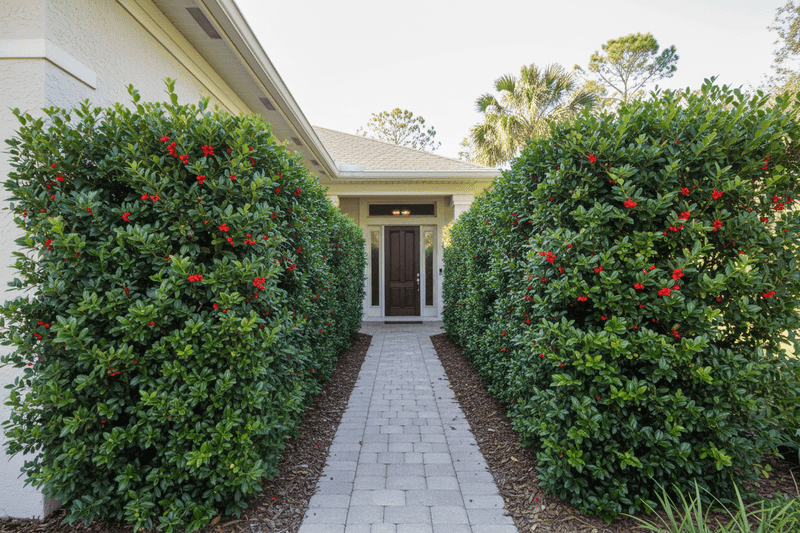
Yaupon holly (Ilex vomitoria) is the kind of plant that earns respect the longer you grow it.
This tough Florida native handles drought, poor soil, coastal salt spray, and occasional flooding without losing its dense, evergreen character, which is exactly what you want from a privacy screen that needs to look good through every season and every weather event Florida throws at it.
The plant grows in a naturally dense, shrubby form and can reach anywhere from 6 to 25 feet tall depending on the variety and how it is managed.
Several compact cultivars are available that stay shorter and bushier, making them ideal for fence-line screens where height control matters.
UF IFAS Extension recommends yaupon holly for use as a hedge or screen across a wide range of Florida landscapes, from the Panhandle all the way down to Central Florida.
Full sun to partial shade suits yaupon holly well, and it adapts to a surprisingly broad range of soil types. Once established, it needs very little supplemental watering, which matters during Florida’s dry season when many other plants struggle.
Pruning is easy and the plant responds by filling in even more thickly, which over time creates an impressively solid barrier along a fence.
Female plants produce small, glossy red berries in fall and winter that make the hedge look festive and attract cedar waxwings and other birds to your yard. That wildlife connection is a genuine perk for homeowners who enjoy seeing birds up close.
The combination of structural toughness, evergreen density, low maintenance, and natural beauty makes yaupon holly a standout choice for Florida fence-line privacy screens that are built to last.
5. Cover Bare Fence Lines Fast With Native Wax Myrtle
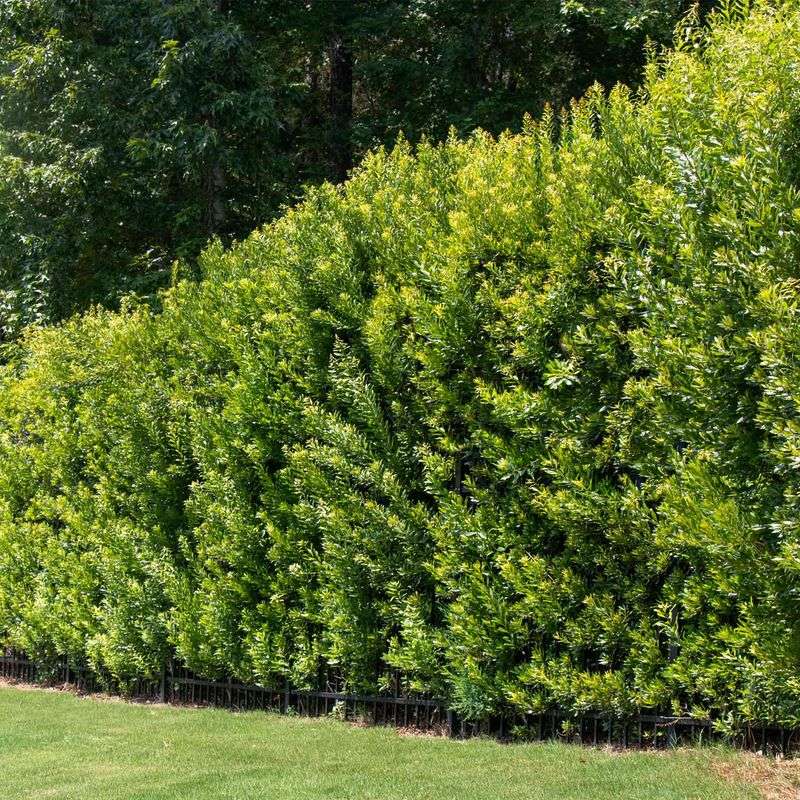
Speed matters when you have a bare fence and want privacy now rather than in three years.
Wax myrtle (Morella cerifera) is one of Florida’s fastest-growing native shrubs, and it delivers that quick coverage with a lush, full appearance that makes a fence line feel like the edge of a forest rather than a boundary wall.
Homeowners who plant wax myrtle are often surprised by how quickly it transforms an exposed yard into something that feels genuinely private and green.
According to UF IFAS, wax myrtle can grow several feet per year under good conditions and can reach 10 to 15 feet tall at maturity, sometimes taller. That growth rate makes it a go-to recommendation for anyone who wants to establish a privacy screen quickly.
It thrives in full sun to partial shade and adapts to wet, dry, sandy, and clay soils, which means it works in most Florida yards without much soil preparation.
The look is softer and more naturalistic than a formally clipped hedge, which suits certain yard styles perfectly.
Homeowners who prefer a garden that feels relaxed and organic rather than manicured often find that wax myrtle fits their vision better than denser, slower-growing alternatives.
The aromatic leaves carry a pleasant fragrance when brushed, adding a sensory element that few other privacy plants offer.
Wax myrtle is also a tremendous wildlife plant. Birds flock to the small waxy berries it produces, and the dense branching provides excellent nesting cover.
It is native throughout Florida, salt-tolerant enough for coastal properties, and requires very little care once established. For anyone who wants fast, natural-looking coverage along a fence, wax myrtle is genuinely hard to pass up.
6. Use Florida Anise To Soften And Screen A Fence Line
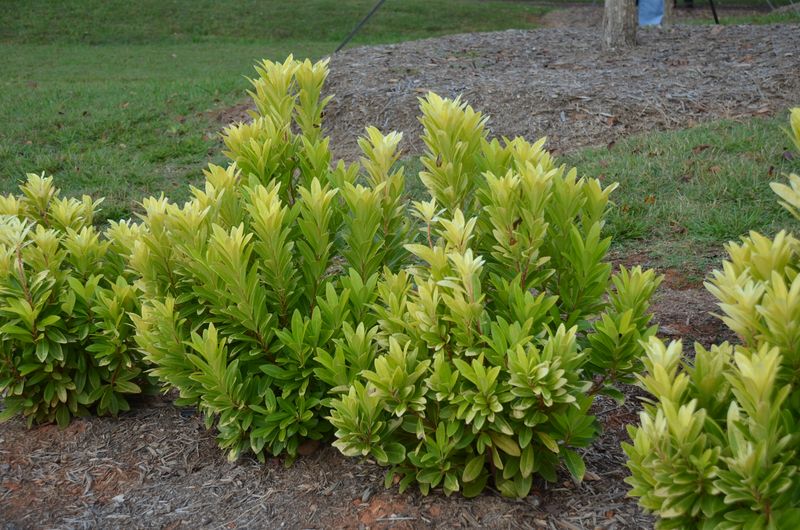
Most privacy plants want full sun, which creates a real problem for homeowners with a shaded fence line and no good solutions.
Florida anise (Illicium floridanum) steps in where other screening plants fall short, thriving in partial to full shade and producing such dense, lush foliage that it creates a solid privacy barrier even in spots that receive only a few hours of direct light each day.
This Florida native grows 6 to 10 feet tall and spreads into a full, rounded form over time. The large, glossy, deep green leaves are striking up close and create a rich, layered look along a fence that feels more like a living wall than a simple hedge.
UF IFAS recommends Florida anise for shaded landscapes across North and Central Florida, noting its adaptability to moist, acidic soils that are common under tree canopies and along shaded fence lines near wooded areas.
The plant produces unusual dark red flowers in spring that have a slightly spidery, exotic appearance. They are not showy from a distance, but up close they add genuine interest to what might otherwise be just a functional screen.
The leaves and stems carry a strong anise-like fragrance when crushed, which is memorable and distinctive in a Florida garden setting.
Florida anise is also deer-resistant, which is a meaningful advantage in suburban areas where deer browsing can seriously damage a newly planted privacy hedge.
It stays evergreen throughout the year, maintaining its screening function even during winter months.
For homeowners who have struggled to find something that performs well in a shadier yard, Florida anise answers that challenge with a combination of beauty, density, and adaptability that is hard to find elsewhere.
7. Give Your Fence Line A Rich Tropical Look With Wild Coffee
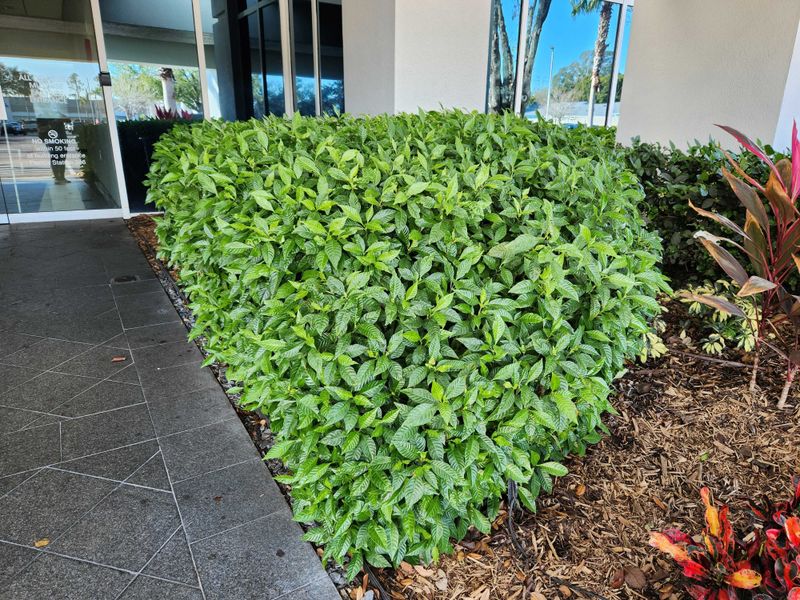
Walk past a mature wild coffee planting and you get the immediate sense that you are somewhere lush, layered, and genuinely tropical.
Wild coffee (Psychotria nervosa) is a Florida native that brings a distinctly rich, jungle-like quality to a fence line, with large, deeply veined, glossy leaves that catch and reflect light in a way that makes the planting look almost ornamental even when it is doing purely practical work.
Native to South Florida and the warmer parts of Central Florida, wild coffee performs best in part shade, making it a valuable option for fence lines that sit under the canopy of larger trees or in areas that receive afternoon shade.
UF IFAS Extension highlights wild coffee as a reliable native hedge plant for shaded South Florida landscapes, noting that it grows 3 to 8 feet tall and fills in with a naturally dense, bushy form that suits privacy planting well.
The plant produces small white flowers followed by clusters of bright red berries that ripen over time and attract mockingbirds, catbirds, and other fruit-eating birds.
That combination of foliage density and wildlife appeal makes wild coffee a genuinely rewarding plant to live with, not just a functional screen you tolerate until something better comes along.
Because it prefers shade and does not demand full sun, wild coffee can fill in spots along a fence where other privacy plants would struggle or look sparse.
It pairs naturally with other shade-tolerant Florida natives to create a layered, multi-textured screen that looks intentional rather than thrown together.
For homeowners in South Florida who want privacy with a tropical personality, wild coffee delivers both in a single, low-maintenance package.