These 8 Flowers Stay Open Late For Evening California Pollinators
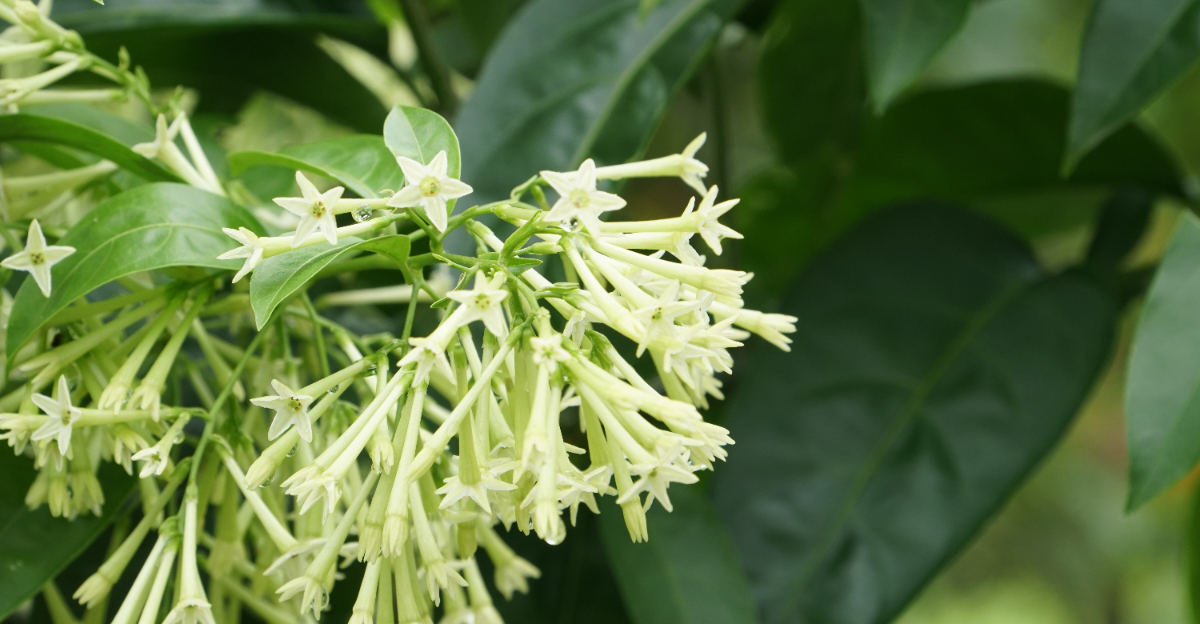
California gardens can look like they are clocking out by late afternoon, but evening pollinators are just getting started.
As the light softens and the heat finally eases up a bit, moths, bees, and other busy visitors head out looking for flowers that are still open for business.
That is where the right blooms really shine. Some flowers keep their petals open well past the hottest part of the day, which makes the garden feel alive right when everything else starts slowing down.
That late-day color is not just pretty to look at. It can help turn a quiet yard into a much more active, interesting space as dusk rolls in.
For California gardeners, that means a chance to support pollinators and enjoy a yard that still feels vibrant after sunset starts creeping in.
Honestly, there is something a little magical about flowers that refuse to call it a day. They keep the show going just when the evening crowd arrives.
1. Sacred Datura
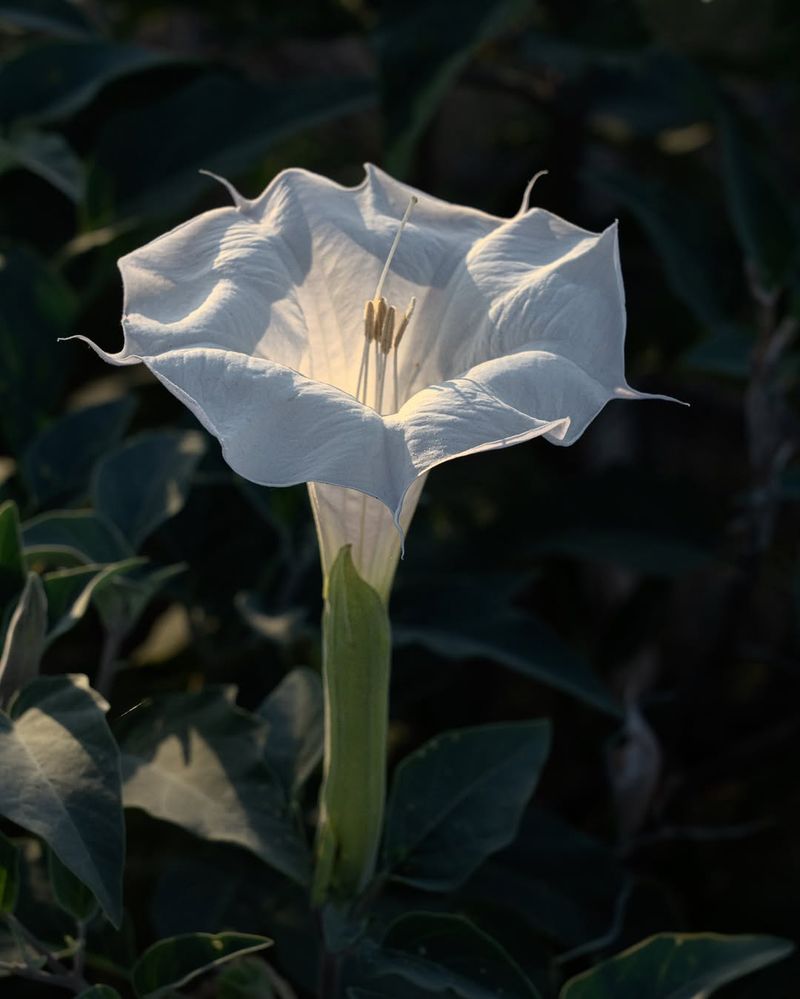
Few plants command attention quite like Sacred Datura, a native California beauty that saves its best performance for after sundown. Its large, white trumpet-shaped flowers can stretch up to eight inches wide, and they release a rich, sweet scent that drifts through the warm evening air.
Hawk moths are its most famous visitors, hovering like tiny helicopters as they reach deep into the blooms for nectar.
Found naturally in sandy, dry areas across Southern California, Sacred Datura thrives in warm climates with well-drained soil. It spreads low along the ground, with dusty green leaves that create a striking contrast against those bright white flowers.
Gardeners love it because it asks for very little water once established.
Planting Sacred Datura near a patio or walkway lets you enjoy both its beauty and its fragrance on warm California evenings. Just keep in mind that all parts of the plant are toxic, so it is best placed away from young children and pets.
It is a showstopper that truly belongs to the night.
2. Evening Primrose
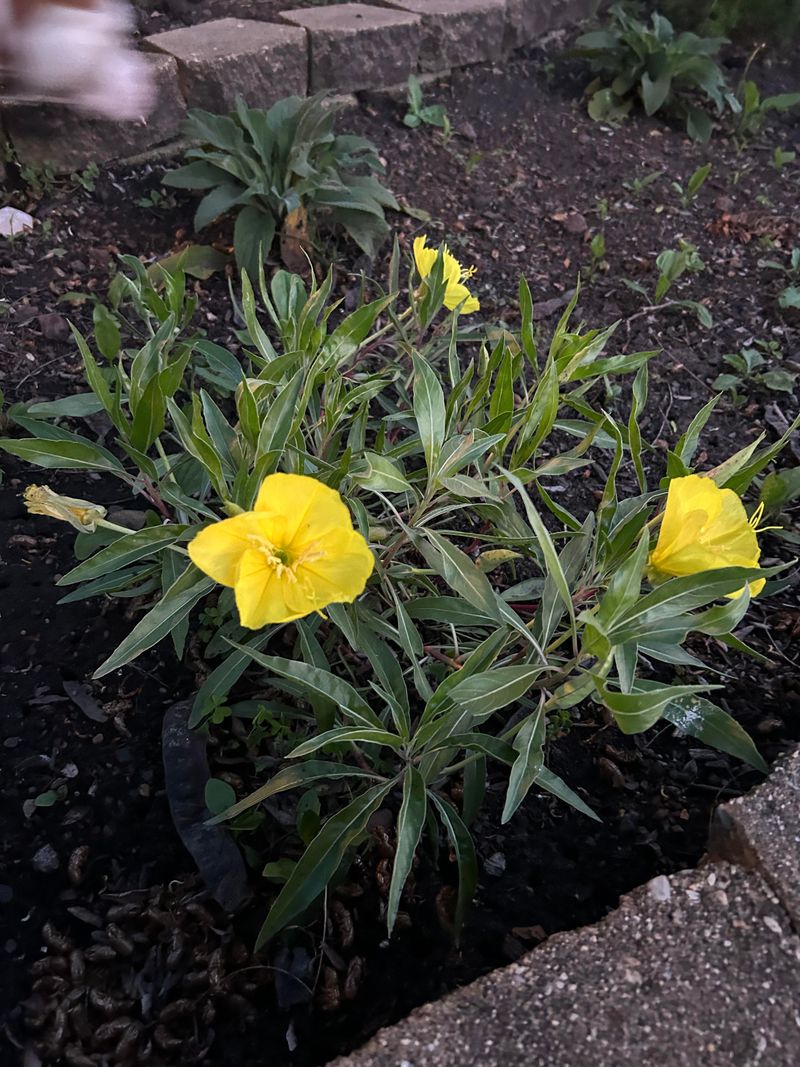
Watch closely at dusk and you might catch something magical. California Evening Primrose (Oenothera avita) actually opens its petals in real time, almost like watching a slow-motion video.
Within just a few minutes, tightly closed buds unfold into delicate white flowers that glow softly against the fading light. It is one of nature’s most fascinating evening shows.
This perennial herb grows naturally in dry, rocky soils across California and is perfectly built for the state’s warm summers. The white flowers attract a range of nocturnal pollinators, especially sphinx moths that are drawn to both the color and the light fragrance.
By morning, the blooms begin to close again, making their evening appearance feel even more special.
For gardeners looking to support local wildlife, Evening Primrose is a smart and low-maintenance choice. It does not need much water, making it a great fit for California’s drought-prone regions.
Plant it along borders or in wildflower patches where its nightly bloom can be easily enjoyed. It also reseeds itself, so once you have it growing, it tends to stick around season after season without much effort on your part.
Your California Garden Changes Every Week. Your Plan Should Too.
Gardening in California changes quickly throughout the season. Every Friday you’ll receive a simple weekly plan showing exactly what to plant, prune, fertilize, harvest, and protect so you never miss the right timing.
3. Four O’Clocks
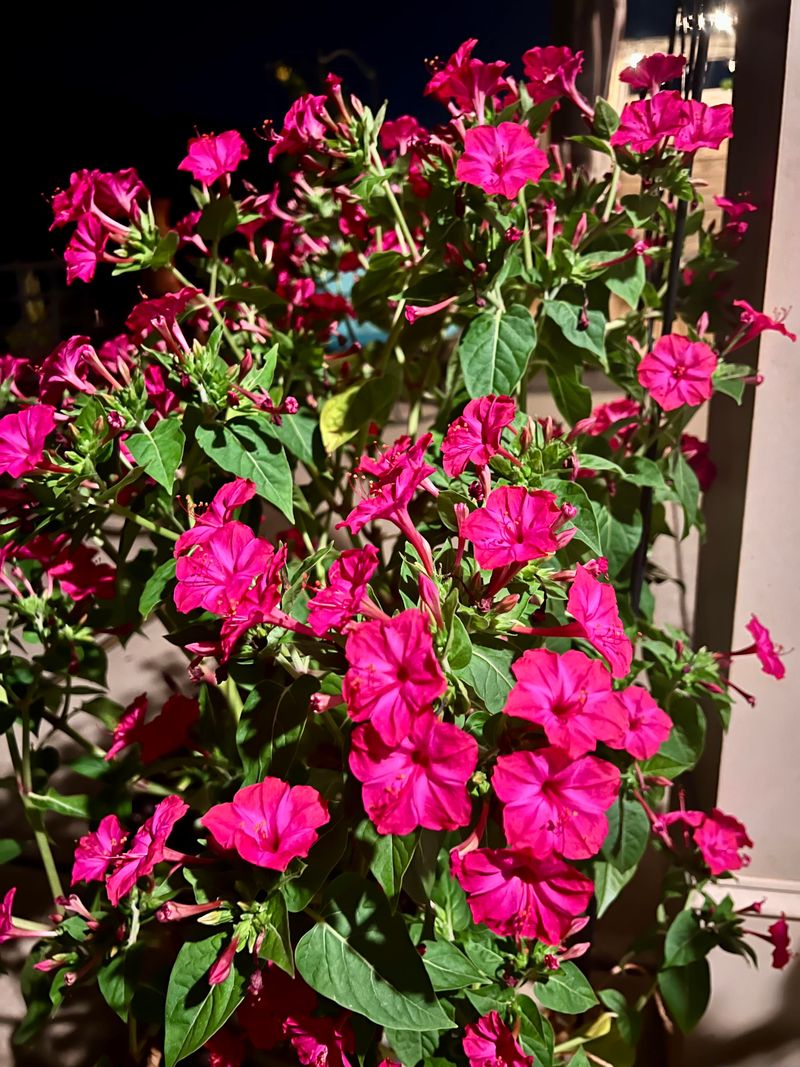
Right on schedule, every single day, Four O’Clocks open their trumpet-shaped blooms in the late afternoon, usually around four in the evening. That natural timing is how they earned their charming name.
These cheerful flowers come in shades of pink, red, yellow, white, and even multicolored combinations, making them one of the most visually exciting evening bloomers you can grow in California.
Mirabilis jalapa, their scientific name, is easy to grow and incredibly tough. They handle heat well, which makes them a solid choice for California’s warmer inland regions.
The flowers stay open through the night, welcoming moths and other nocturnal pollinators before closing again in the morning light.
One fun fact about Four O’Clocks is that a single plant can produce flowers of different colors at the same time. That quirky trait makes them a conversation starter in any garden.
They grow from tuberous roots, so they tend to come back year after year in mild California climates. Plant them in a sunny or partly shaded spot, give them regular water, and they will reward you with a reliable evening color show from summer all the way through fall.
4. Moonflower
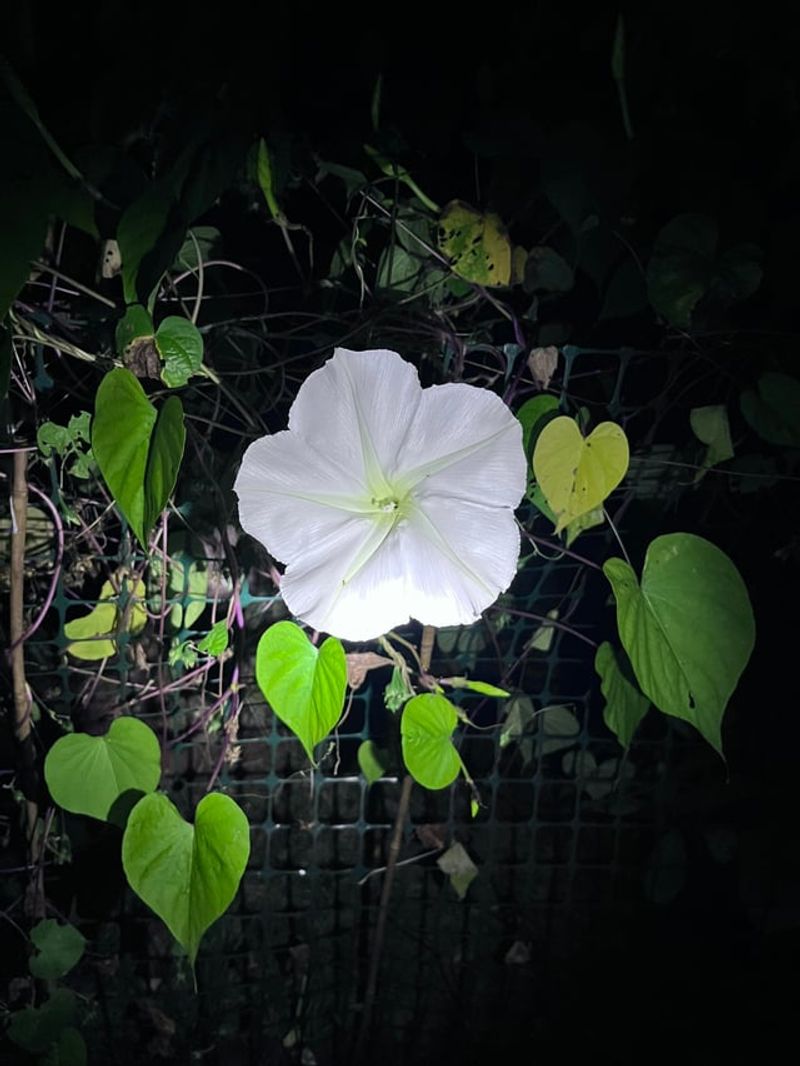
There is something almost dreamy about a Moonflower vine in full bloom. As the sky darkens, its large, round, pure-white flowers open wide, releasing a sweet fragrance that carries across the garden.
Each bloom can reach up to six inches across, and they practically glow in low light, making them easy to spot even on a dark evening.
Moonflower (Ipomoea alba) is a fast-growing vine that loves climbing trellises, fences, and arbors. In California’s mild coastal and inland climates, it thrives through the warm months, sending out new blooms almost every night.
Moths are its primary pollinators, drawn to its bright color and strong nighttime scent.
Growing Moonflower from seed is straightforward. Soak the seeds in water overnight before planting to speed up germination.
Give them a sunny spot, something to climb, and consistent moisture, and they will take off quickly. Pair them with morning glories on the same trellis for a fun trick: Moonflowers open at night while morning glories open by day, giving you blooms around the clock.
It is a simple and stunning way to keep your California garden active from sunrise to well past sunset.
5. Angel’s Trumpet
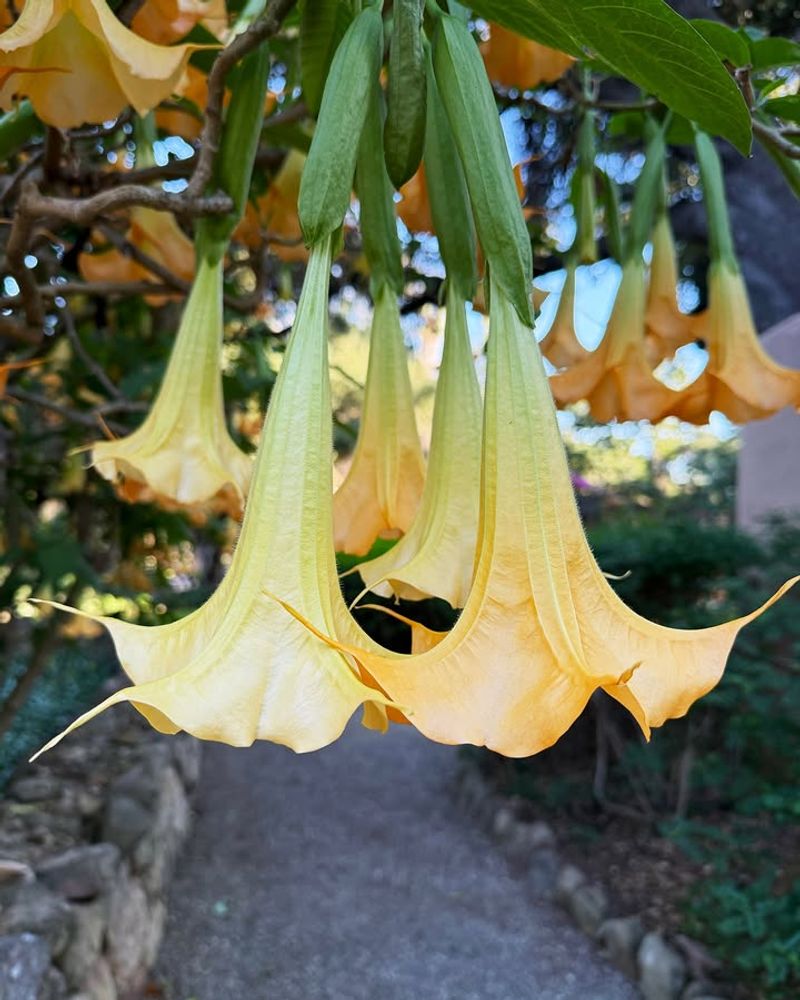
Hanging like elegant chandeliers from arching branches, Angel’s Trumpet flowers are impossible to miss. These large, pendulous blooms can grow up to a foot long and come in shades of white, yellow, peach, and pink.
As evening falls in California, they release a rich, intoxicating fragrance that fills the surrounding air. It is no wonder moths and other night pollinators find them so irresistible.
Brugmansia, the scientific genus for Angel’s Trumpet, grows into a large shrub or small tree. In California’s frost-free coastal zones, it can stay evergreen year-round.
Inland gardeners may need to protect it during cold snaps, but it bounces back quickly in spring with fresh growth and new blooms.
Angel’s Trumpet grows best in rich, well-draining soil with regular watering and occasional fertilizing during the growing season. It responds well to pruning, which helps keep the shape tidy and encourages more flowering.
Like Sacred Datura, all parts of this plant are toxic, so thoughtful placement in the garden is essential. Despite that caution, it remains one of the most dramatic and rewarding evening bloomers a California gardener can grow, especially near outdoor seating where the fragrance can be fully appreciated on warm nights.
6. Flowering Tobacco
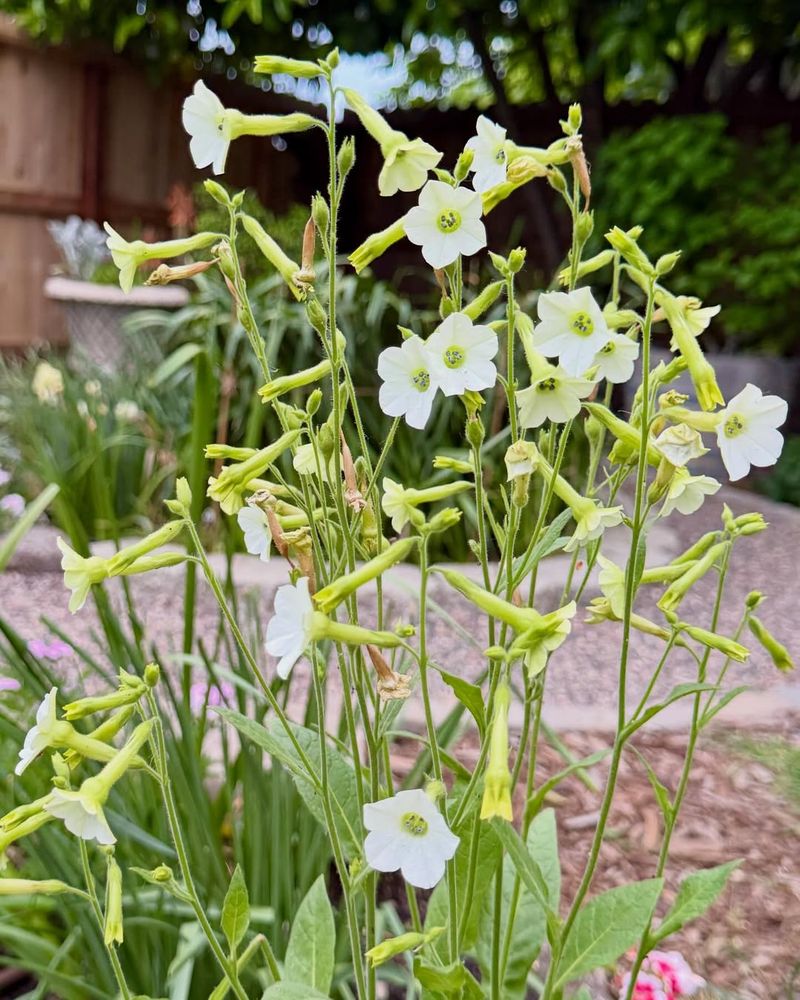
Modest during the day, Flowering Tobacco truly comes alive after sunset. The star-shaped flowers of Nicotiana alata stay half-closed in the afternoon heat, but as evening temperatures drop, they open wide and release a jasmine-like scent that is genuinely hard to walk past without stopping.
In California gardens, this plant earns its place by delivering fragrance and beauty when you actually spend time outdoors.
Flowering Tobacco grows as an annual in most California regions, reaching about two to four feet tall. It comes in white, pink, red, and lime green varieties, though the white-flowered types tend to have the strongest evening fragrance.
Sphinx moths and hummingbirds are both regular visitors, making it a pollinator powerhouse from dusk through the night.
Growing it from seed or transplant is simple. It prefers full sun to partial shade and moist, well-drained soil.
Deadheading spent blooms encourages the plant to keep producing new flowers throughout the season. Try planting Flowering Tobacco near windows, patios, or garden paths where you can catch that lovely evening scent without going far.
It layers beautifully with other evening bloomers and adds a soft, cottage-garden feel to any California outdoor space.
7. Night-Blooming Jessamine
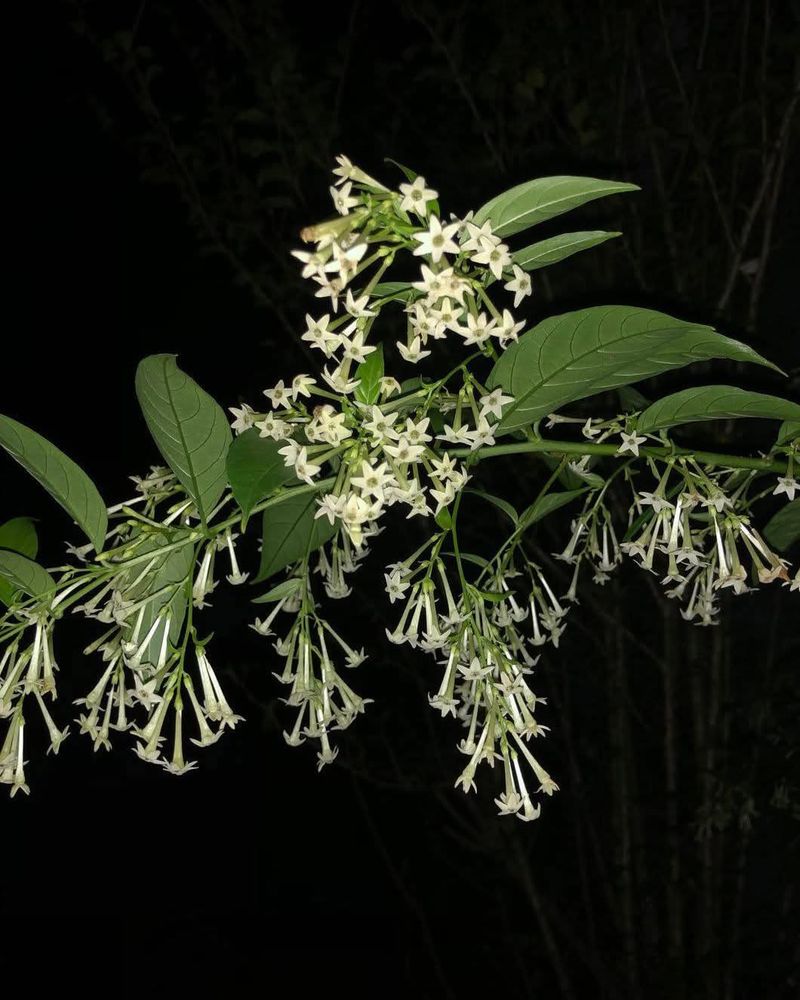
Ask any California gardener about the most powerfully scented plant they have ever grown, and Night-Blooming Jessamine often tops the list. Cestrum nocturnum produces small, tubular, greenish-white flowers that look fairly plain during the day.
But at night, those unassuming blooms unleash a fragrance so strong and sweet that it can travel more than 100 feet through the evening air.
This fast-growing shrub thrives in California’s warmer regions, especially in Southern California where winters stay mild. It can grow quite large if left unpruned, so regular trimming helps keep it manageable in smaller garden spaces.
The flowers attract moths and other night-flying insects that depend on scent rather than color to locate nectar sources.
Night-Blooming Jessamine does best in full sun to partial shade with moderate watering. It is drought-tolerant once established, which makes it a practical choice for water-conscious California gardeners.
Plant it near a bedroom window or along a garden fence where the evening fragrance can drift indoors. One thing to note: the berries it produces are toxic, so keep it out of reach of curious kids and pets.
With a little attention, this shrub becomes a nighttime garden centerpiece that you will look forward to every single evening.
8. Evening-Scented Stock
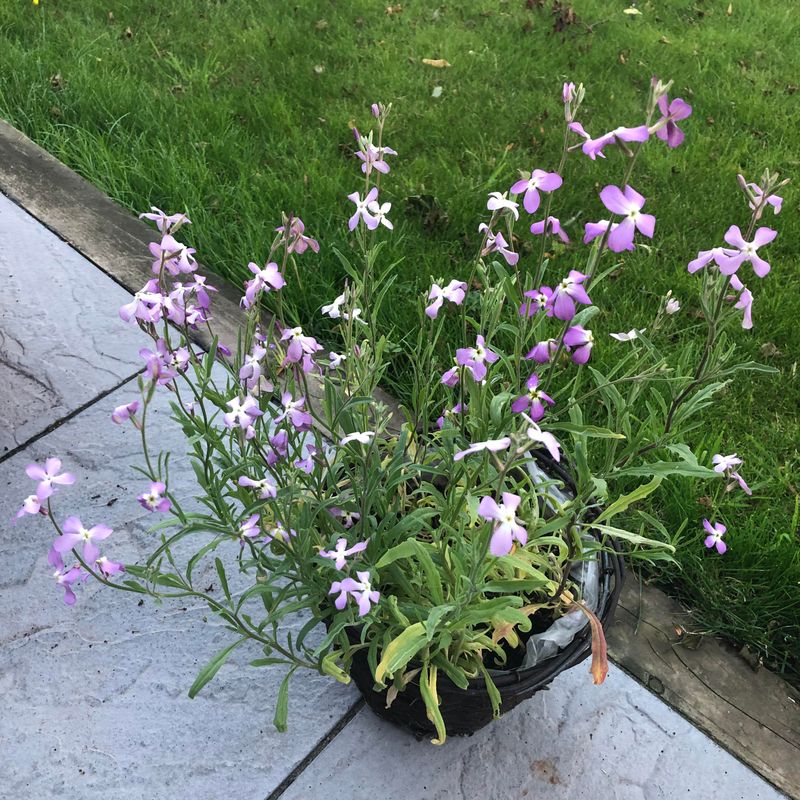
Do not judge Evening-Scented Stock by its daytime looks. The small, pale flowers of Matthiola longipetala close up and look a bit dull during daylight hours, which sometimes makes gardeners underestimate them.
But as soon as evening arrives, those modest blooms open wide and release one of the sweetest, most clove-like fragrances in the plant world. One small patch can perfume an entire section of your California garden.
This cool-season annual grows best in California during spring and fall, when temperatures are mild. It prefers full sun and well-drained soil, and it does not need heavy watering to perform well.
The flowers are typically shades of purple, pink, and white, and they attract a variety of night-flying moths that rely on fragrance to find food.
Scatter seeds directly into garden beds or containers for an easy, low-effort planting. Evening-Scented Stock mixes well with other spring bloomers and adds a lovely fragrance layer to any mixed planting.
Because it thrives in cooler weather, it is ideal for California’s coastal areas and mountain foothills where evenings stay refreshingly cool. Grow it near seating areas or along pathways so you can enjoy that unforgettable evening scent every time you step outside after dark.