These Low-Water Flowers Make Your Arizona Agaves and Cactus Stand Out
Agaves and cactus look bold on their own, but a yard full of spikes and gravel can feel a little empty. The right low-water flowers add color, soft texture, and a steady stream of hummingbirds, bees, and butterflies.
Best of all, these picks handle Phoenix and Tucson heat without draining your water bill. Here are ten desert-tough bloomers that make your succulents pop while turning your yard into working habitat.
1. Desert Marigold
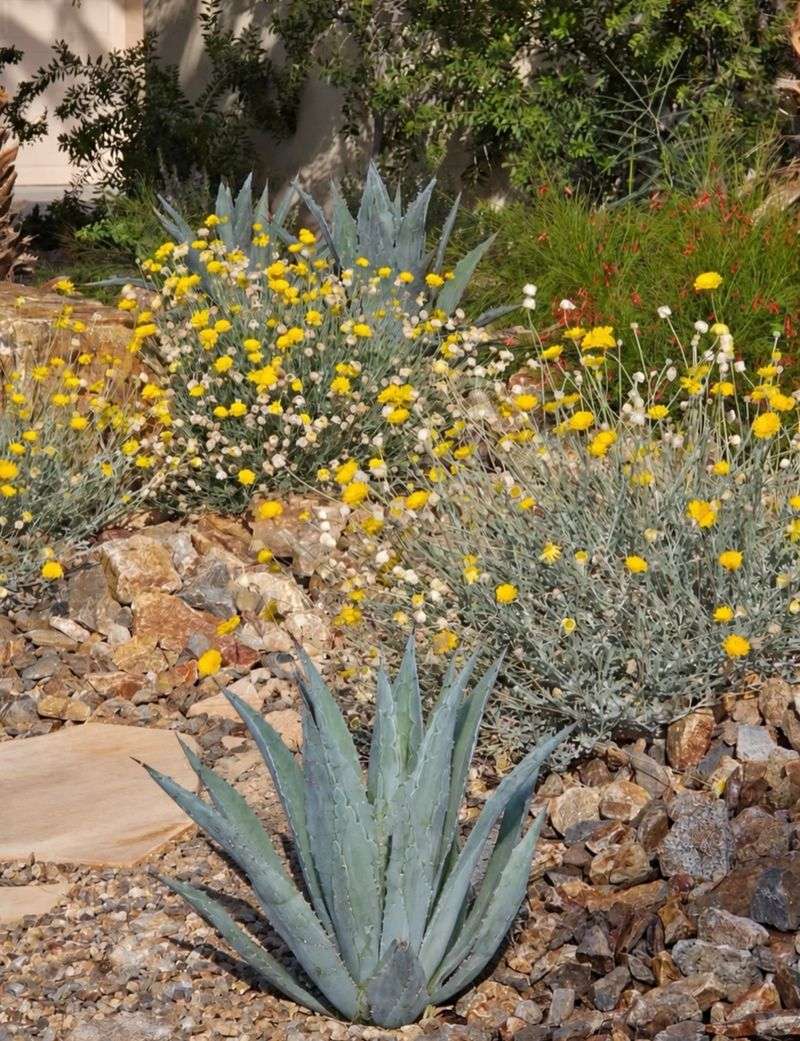
Picture a pile of sunshine sitting at the foot of a blue agave. Desert marigold pulls off that look for months, pushing out button-bright yellow daisies on silvery, fuzzy stems.
The gray foliage echoes the cool tones of many agaves, while the blooms add instant warmth.
Bees and small butterflies visit the flowers often, so your gravel bed starts to buzz. Once the petals fade, the seeds may draw doves, sparrows, and finches, which can turn a quiet corner into a busy snack bar.
More birds in the yard can mean more eyes on garden insects too.
Toughness is the real selling point. Desert marigold thrives in poor, dry soil and handles summer heat that sends other flowers into retreat.
Rich soil and extra water actually work against it, leading to floppy growth and a shorter life.
Plants tend to be short-lived, but they reseed freely when conditions suit them. Let a few seed heads stay on, and new plants usually pop up between your cactus on their own.
Sow seed or set out transplants in fall, from October to November, and water lightly until roots settle in.
2. Globe Mallow
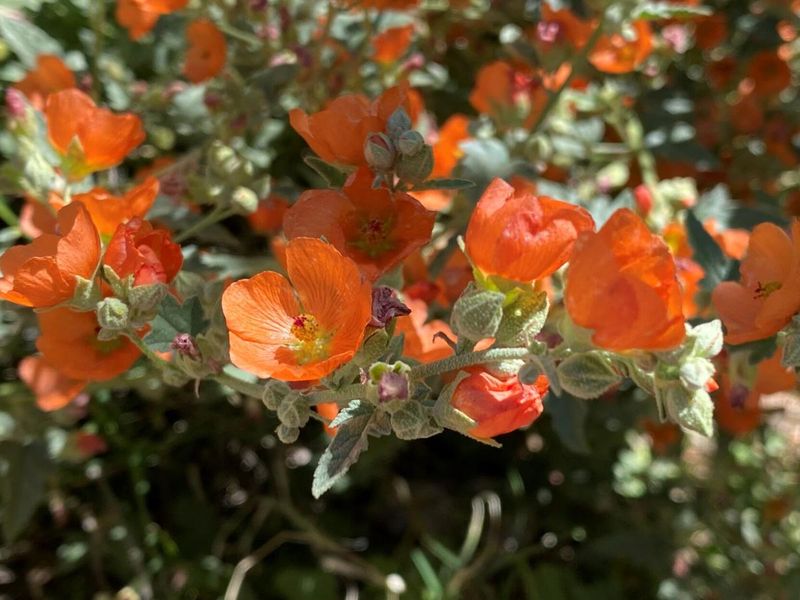
Ask any Tucson gardener about spring color, and globe mallow comes up fast. Its cup-shaped flowers glow in apricot orange, though you can also find pink, red, and fuchsia types.
Against a golden barrel or a spiky agave, those soft petals look almost like paper lanterns.
Hummingbirds and butterflies stop by regularly, and the leafy base can give small critters a bit of shelter. Native bees love it, too.
Some specialized bees in the Southwest depend heavily on mallows, which makes this plant a quiet hero for local pollinators.
Here is the honest part. Globe mallow often looks scraggly in the hottest stretch of summer, slowing down or going semi-dormant.
Cut it back by about a third after spring bloom, and it usually returns with fresh growth once temperatures ease.
Water needs are low once the plant is established. A deep soak every few weeks during summer is plenty in most low-desert yards, and winter rain often covers the rest.
Give it full sun and well-drained soil, and avoid planting it right against walkways, since the fuzzy leaves can irritate sensitive skin. Fall planting gives roots a head start before the heat returns.
3. Blackfoot Daisy
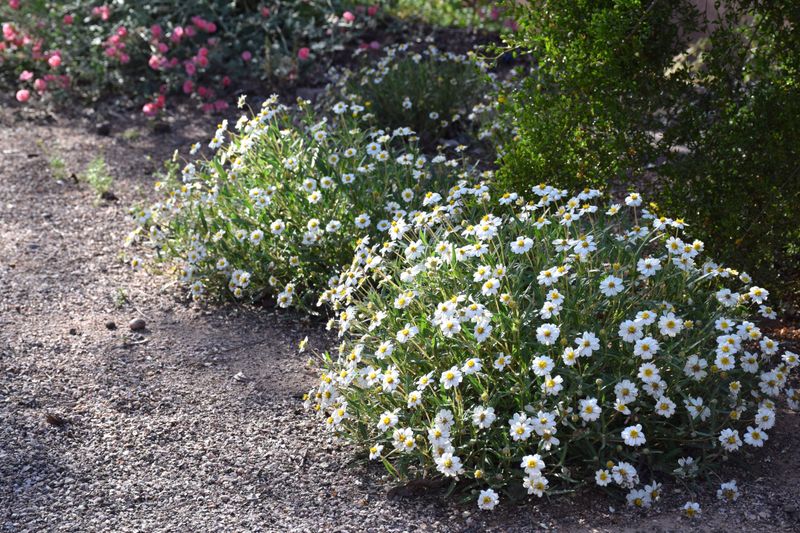
Small but scrappy, blackfoot daisy is the plant that keeps smiling when August hits 115 degrees. It forms a neat, rounded mound about a foot tall, covered with honey-scented white flowers and sunny yellow centers.
Your Arizona Garden Changes Every Week. Your Plan Should Too.
Gardening in Arizona changes quickly throughout the season. Every Friday you’ll receive a simple weekly plan showing exactly what to plant, prune, fertilize, harvest, and protect so you never miss the right timing.
The crisp white reads beautifully against dark green agaves and sculptural cactus pads.
Why does it earn a spot here? Few flowers bloom for so much of the year with so little help.
In many Phoenix yards, it flowers from spring through fall, giving pollinators a reliable stop when other plants take a break.
Drainage matters more than anything else. Blackfoot daisy loves rocky, lean soil and hates soggy roots, which can lead to crown rot.
Tuck it between boulders, along a gravel border, or on a slight slope where water moves away quickly.
Skip the fertilizer and rich compost, since pampering tends to shorten its life. Keep decomposed granite mulch a few inches away from the stem, and water deeply but rarely once it settles in.
Fall is the best time to plant, giving roots several cool months to grow. A row of these along a path makes a clean edge that frames your bigger succulents nicely.
4. Parry’s Penstemon
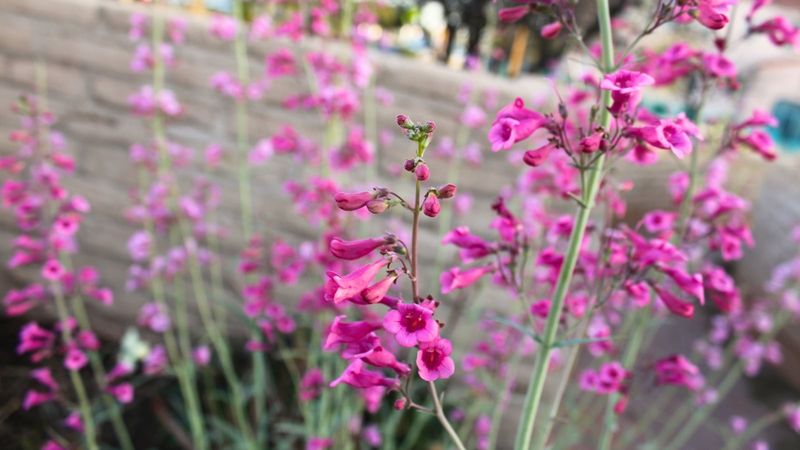
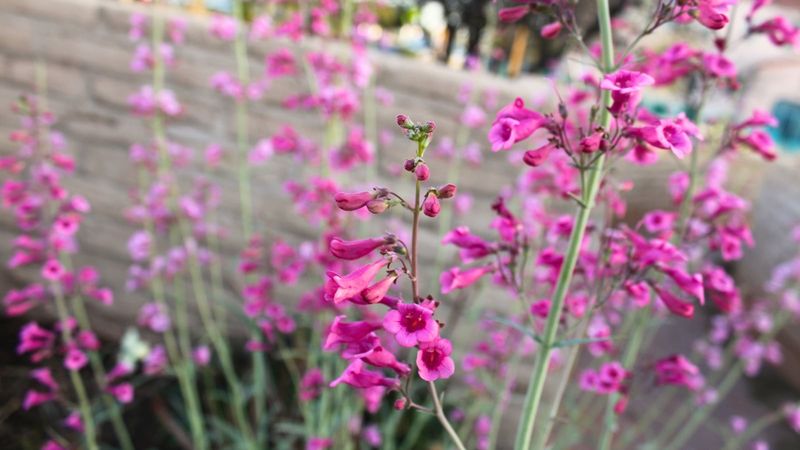
February in the low desert can feel gray, then Parry’s penstemon shoots up rosy pink spikes two to four feet tall. Suddenly your yard has fireworks.
Those vertical stems are a perfect contrast to the low, chunky rosettes of agaves.
Hummingbirds treat it like a buffet. The tubular flowers fit their beaks just right, and you will often see them darting from spike to spike during the late winter and spring bloom, roughly February through April.
Bees join in as well.
Growing it is pretty easy. Parry’s penstemon wants full sun, sharp drainage, and very little water after the first year.
It handles alkaline soil without complaint, which helps in caliche-heavy neighborhoods.
Plants are usually short-lived, lasting a few years, but they reseed readily. Leave spent stalks up for a while so seeds drop, then trim them back.
Before long, you may have a natural drift of pink weaving between your cactus.
Plant transplants in fall so roots can build strength through winter. For more color later in the year, pair it with firecracker penstemon, which blooms red from late spring into early summer and keeps those hummingbirds coming back.
5. Chuparosa
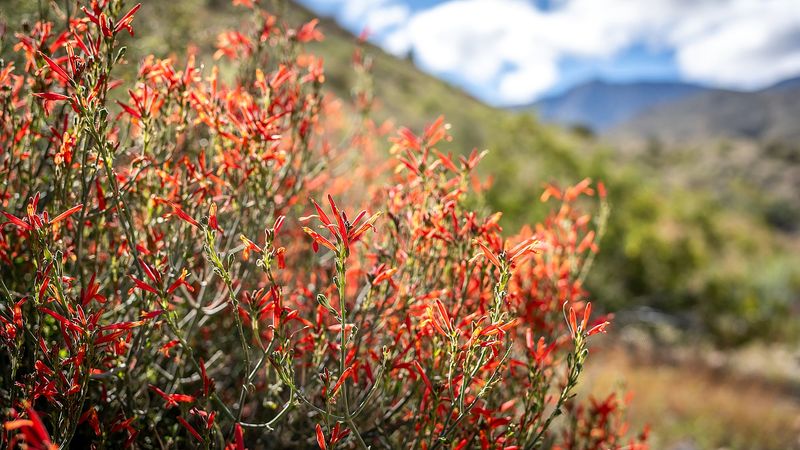
The Spanish name means hummingbird, and this shrub truly lives up to it. Chuparosa sends out bright red, trumpet-shaped flowers along a tangle of blue-green stems.
In winter, when much of the yard is resting, it can be one of the few nectar sources around.
Bloom timing is the big draw. Plants often flower from fall into winter, then again in spring and early summer, which helps resident hummingbirds get through the cooler months.
Watching them battle over a single shrub is better than TV.
The leaves are small and drop during drought, but the green stems keep doing the work of photosynthesis. Quick rains bring leaves and flowers back fast.
It handles poor soil, full sun, or light shade, and reflected heat from a wall is usually fine.
Plan for space. Chuparosa can reach three to four feet tall and wider, so set it a few feet from agaves to keep the spines from getting crowded.
Its loose, airy shape softens the stiff outline of prickly pear or columnar cactus.
Frost may nip tips during a cold snap, so wait until spring to prune damaged growth. Fall planting works best.
6. Fairy Duster
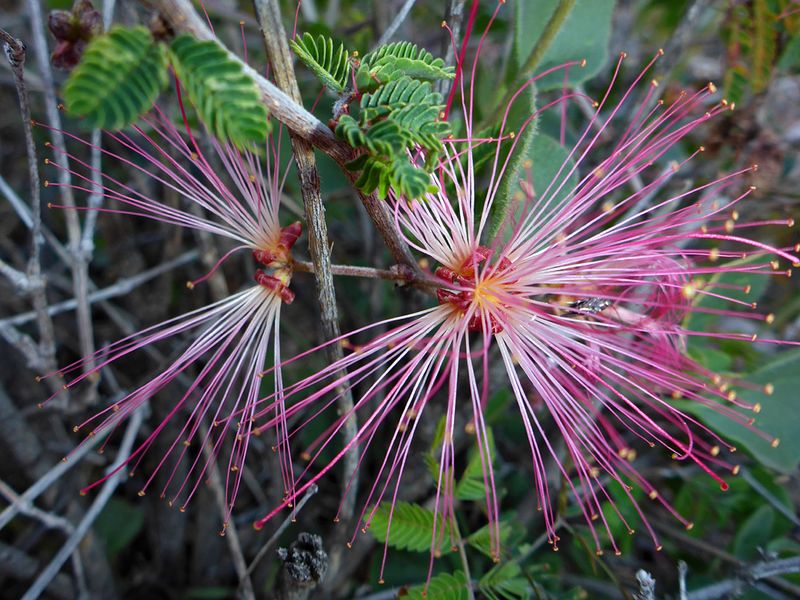
Kids call them pink pom-poms, and honestly, that is the best description. Fairy duster produces fluffy blooms made of long, silky stamens that seem to float above fine, fern-like leaves.
Next to a stiff agave, it looks almost playful.
That soft texture is its secret weapon. Desert gardens can lean heavy on hard edges, and fairy duster brings a lighter feel without needing extra water.
It stays fairly compact, usually around two to three feet tall, so it fits nicely in smaller beds.
Hummingbirds, bees, and butterflies all visit the flowers, which appear mostly in late winter and spring, with a few scattered blooms after rain. The seed pods that follow may feed quail and other ground birds.
A yard with quail running through is always a good sign.
Care is simple. Give it full sun or a touch of afternoon shade, good drainage, and a deep drink every couple of weeks in summer.
Once established, it shrugs off heat and drought with ease.
Avoid shearing it into a ball. Light thinning keeps the natural, airy shape.
Plant in fall, and group three together for a fuller look around larger succulents.
7. Desert Milkweed
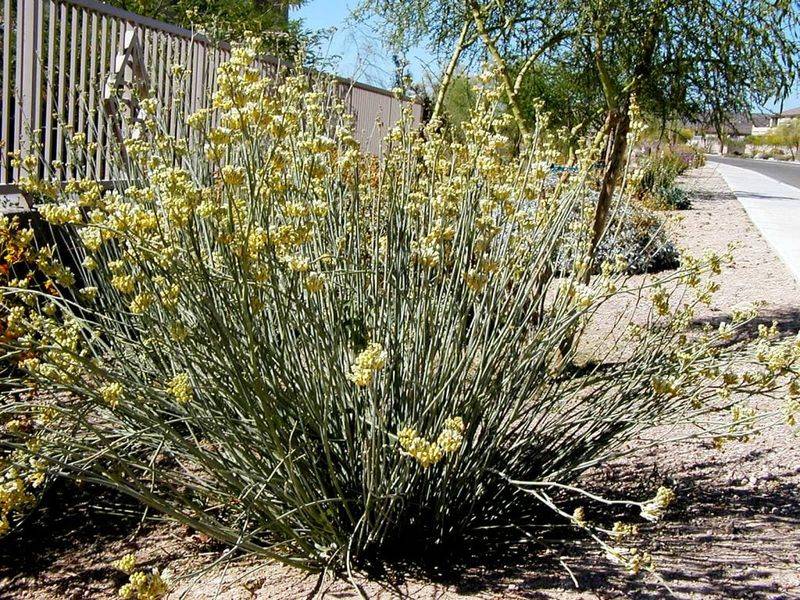
At first glance, desert milkweed barely looks like a flower plant. It grows as a clump of slim, nearly leafless gray-green stems that stand upright like a bundle of reeds.
Then creamy white flower clusters appear at the tips, and the butterflies arrive.
Queen butterflies, and sometimes monarchs, lay eggs on milkweed because their caterpillars feed on it. If you want butterfly habitat rather than just pretty petals, this is the plant to add.
Seeing striped caterpillars munching away means your yard is truly working.
Its form fits right in with succulents. The vertical stems echo the lines of cactus and give a modern, architectural feel next to round agaves.
It handles full sun and blasting reflected heat that would scorch softer plants.
Water needs are low after establishment, though occasional summer soaks keep it looking fresh. Do not panic when caterpillars chew it down.
It usually regrows.
One caution: the milky sap is toxic if eaten and can irritate skin, so place it away from spots where curious pets or small children play. Wear gloves when trimming.
Fall or early spring planting gives it the best start.
8. Desert Willow
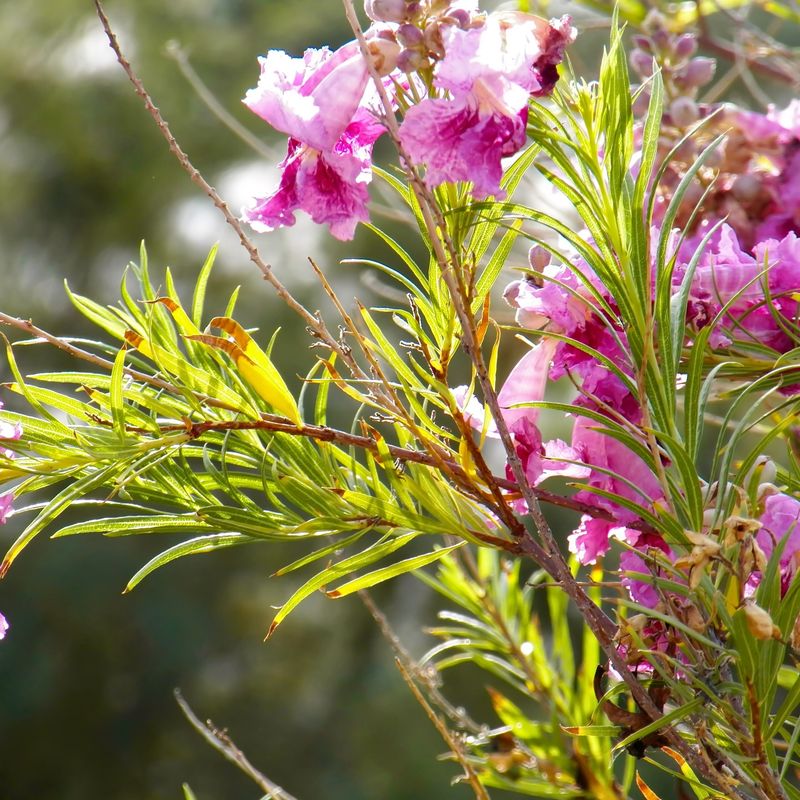
Not a true willow at all, this small native tree got its name from narrow, willowy leaves. What it really offers is orchid-like flowers in pink, lavender, or white during the hottest months.
When most of the yard looks tired in June, desert willow is just getting started.
It also solves a big Arizona problem: shade. Many agaves and cactus appreciate a little filtered relief from afternoon sun, and the airy canopy provides just enough without blocking light completely.
You get a cooler patio corner too.
Carpenter bees and hummingbirds work the blooms from about May through summer. Insects drawn to the tree may feed lizards and birds, which adds more life to your landscape.
Once established, desert willow gets by on surprisingly little water, though a deep monthly soak in summer keeps blooms coming. It reaches roughly 15 to 25 feet tall, so plan placement with mature size in mind.
Seedless varieties like Bubba or Burgundy cut down on hanging pods.
The tree loses its leaves in winter, letting sun warm the ground below. Plant in fall or early spring, and use it as a living backdrop for your boldest succulents.
9. Autumn Sage
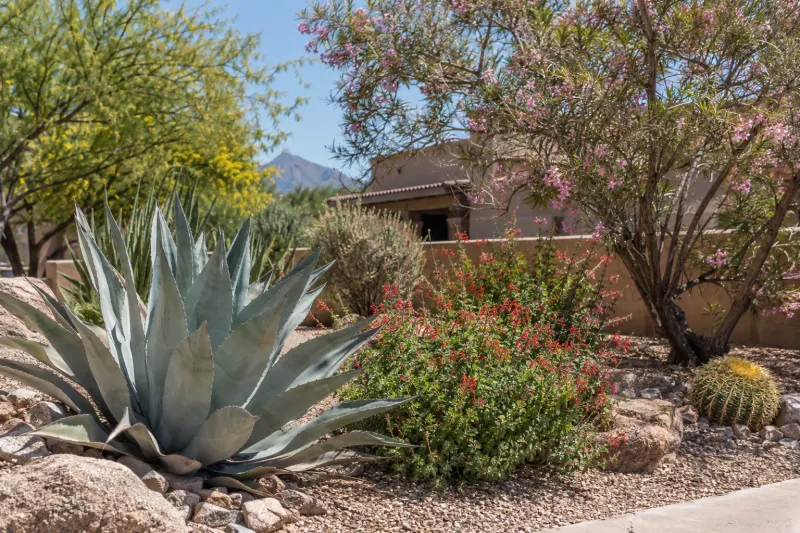
Here is a shrub that refuses to quit. Autumn sage, also called Salvia greggii, keeps putting out small red, pink, or coral flowers from fall through spring, with bursts after summer rains.
In a cactus bed, those little sparks of color fill the gaps between bigger plants.
Hummingbirds rank it near the top of their list. Bees visit too, so the plant pulls double duty for pollinators.
The leaves smell fragrant when brushed, and many gardeners find rabbits and javelina tend to leave it alone.
Layering is where salvias shine. Use them to fill the middle space between low groundcovers and taller agaves or columnar cactus.
They grow two to three feet tall and wide, creating a soft mound that ties the whole bed together.
In the low desert, a spot with some afternoon shade keeps autumn sage looking its best through July and August. Water deeply every week or two in summer, then back off in cooler months.
A light trim in late winter keeps it compact and full. Other salvias worth trying include Mexican bush sage and Cleveland sage, which add blues and purples to the mix.
10. Firecracker Penstemon
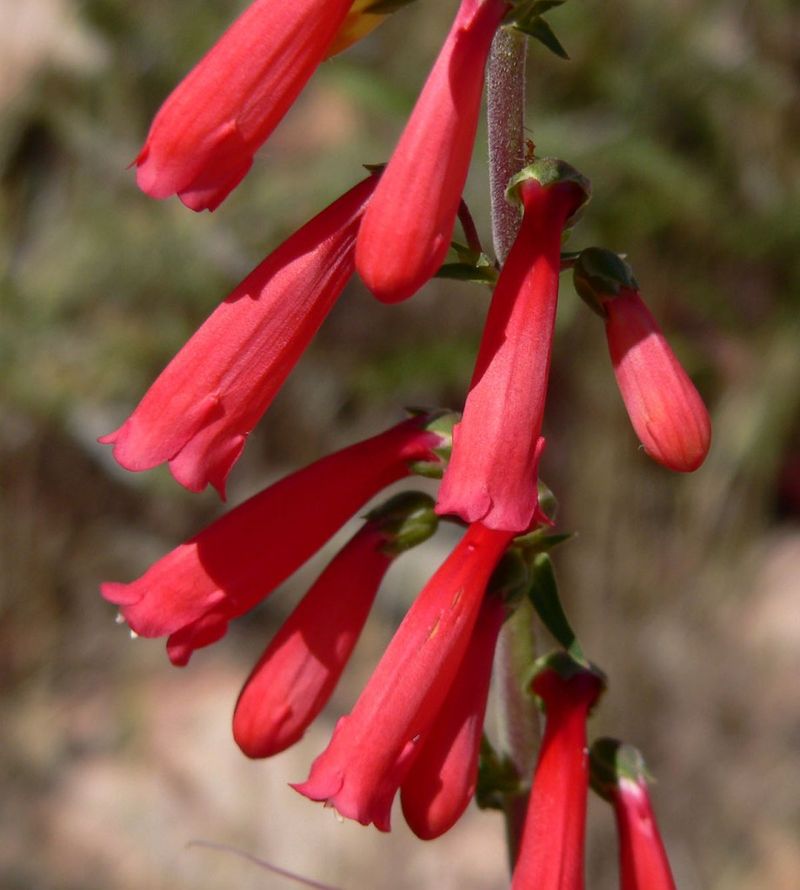
Red is the color hummingbirds notice first, and firecracker penstemon delivers it in tall, glowing spikes. Each stem is lined with narrow scarlet tubes, perfectly shaped for long beaks.
Next to a pale gray agave, the contrast is striking.
Timing makes it a smart partner for Parry’s penstemon. While Parry’s peaks in late winter, firecracker usually blooms from spring into early summer, stretching the nectar season for visiting birds.
Planting both gives you weeks of extra color.
The foliage stays low as a green rosette for much of the year, so it will not hide your succulents. When flower stalks rise, they add a burst of height that breaks up flat gravel areas.
Like most penstemons, it wants full sun, lean soil, and fast drainage. Too much water or heavy soil can cause the crown to rot, so tuck it near rocks or on a gentle mound.
A light drink every couple of weeks in summer is usually enough once settled.
Cut flower stalks after seeds drop to keep things tidy. Plant in fall, and expect hummingbirds to claim the spot as their own by spring.