The Colorful Little Bird Arizona Yards Only Get To Enjoy During The Cool Months
A bird smaller than your palm can cross a whole region and still bounce through your shrubs like it owns them. In Arizona, some tiny winter visitors do just that, and many people miss them.
I have to admit, I only noticed mine after a friend pointed at a flicking wing. Today we will sort out who this little guest might be, and what you can reasonably expect.
Which Small Winter Visitor Might You Be Seeing?
A title that promises a colorful little bird does not actually name one. Plenty of small, lively birds show up in Arizona yards when the weather cools, and the title gives no clues like size, song, or behavior to rank them.
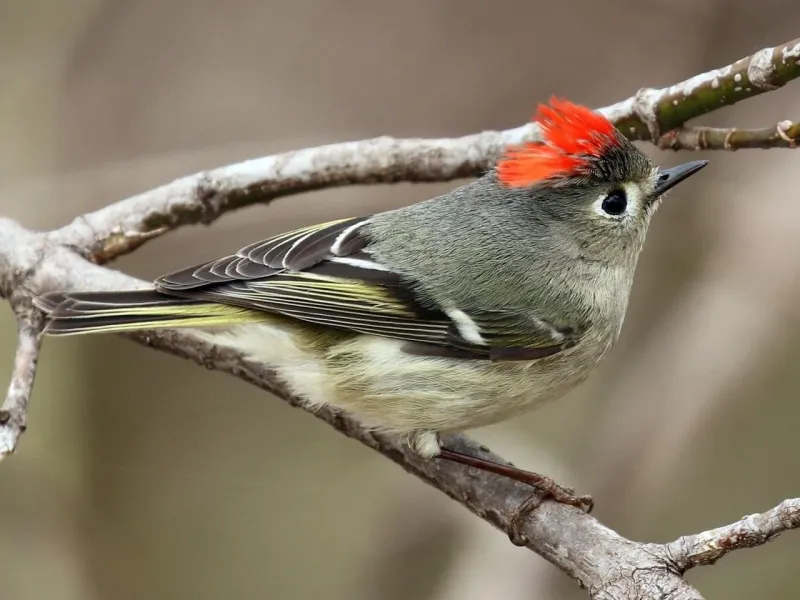
The Ruby-crowned Kinglet is one plausible match. It is a tiny, restless songbird, and Cornell Lab of Ornithology says it forages through shrubs and trees and may visit backyards when food is available.
The Yellow-rumped Warbler is another strong candidate. Cornell notes that it uses residential areas and fruiting shrubs in winter, and it may also stop at feeders.
Since we cannot say which bird you are watching, treat this article as a guided look at the kinglet. It is a possibility worth checking, not a confirmed identification, and the clues in the next sections will help you decide for yourself.
Elevation Shapes the Kinglet’s Arizona Seasons
Where you live matters a lot here. In a lower-elevation yard, a Ruby-crowned Kinglet may be a cool-season visitor, but that is a local experience rather than a statewide rule.
The species also nests in the state’s high-elevation forests. Arizona State University describes summer nesting at higher elevations and a wider range of forested habitats in winter.
Breeding records back this up. The Texas Breeding Bird Atlas, citing Arizona atlas work, reports confirmed breeding evidence in June and July.
So a winter kinglet in a low-desert yard does not make it a winter-only bird for Arizona. Readers in higher towns may see a very different seasonal pattern, and no yard is guaranteed a visit.
Look for a Muted Bird and a Hidden Crown
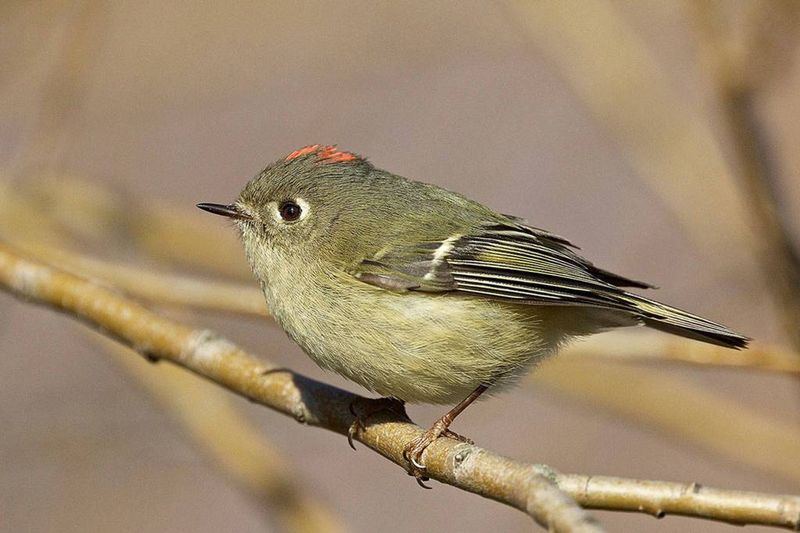
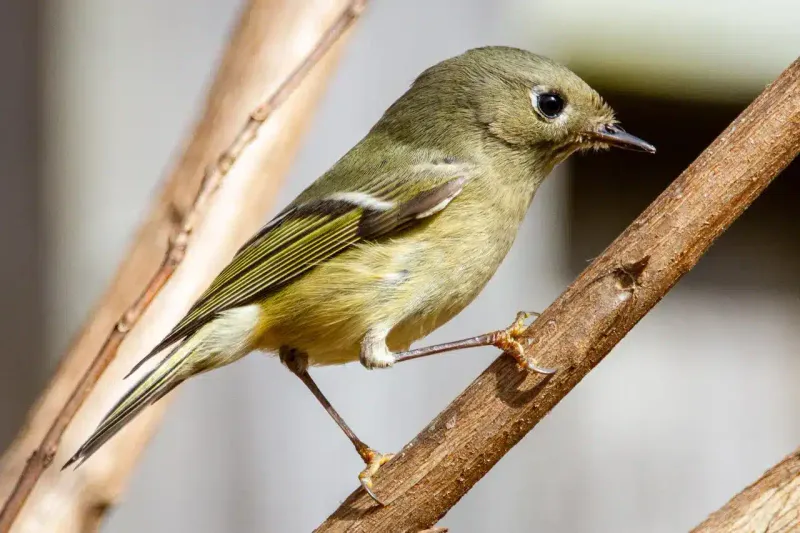
Forget the idea of a bird glowing red. A kinglet is about four inches long and mostly green-gray, so it looks soft and plain at first glance.
Look for the white eye ring and the pale wing bar. Cornell describes both sexes this way, and these marks are better clues than color.
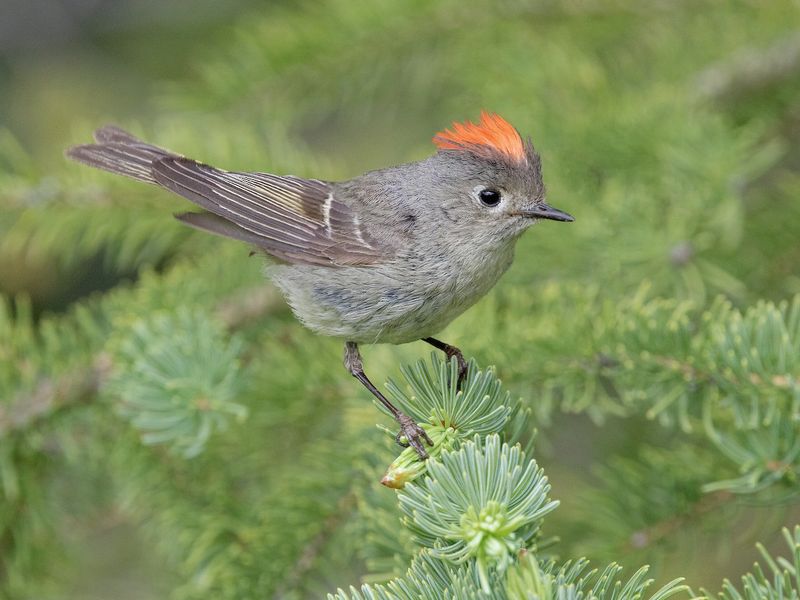
The ruby crown belongs only to adult males. It is usually hidden, and may show when the bird is excited, as the Audubon field guide notes.
Females do not have it, so a kinglet without red is still a kinglet. If a bird shows a bright yellow patch near the tail, think warbler instead.
Watch the Foliage for Fast Foraging
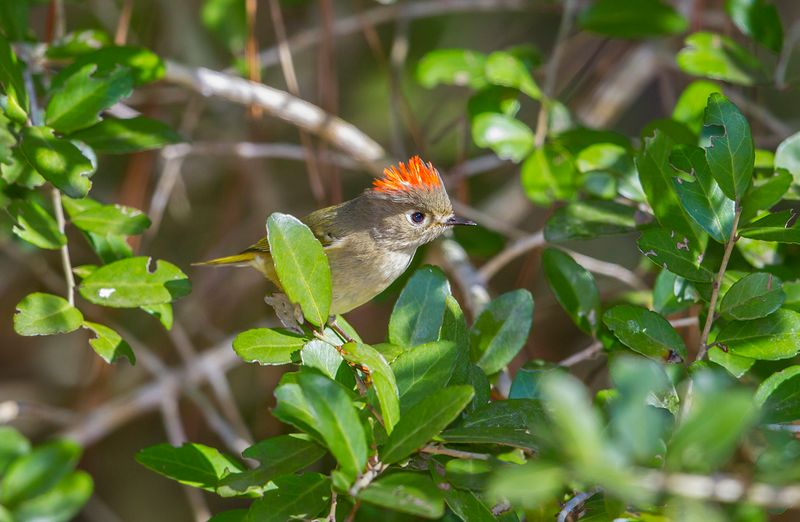
Kinglets rarely sit still, and that is your best clue. They flit through leaves, flick their wings, and snatch tiny prey as they go.
Their diet is mostly insects and other small invertebrates, according to Arizona State University. That means they pay attention to foliage more than to open spaces.
In winter they may be found lower in trees and shrubs than in summer, a point also made in the Audubon field guide. Scan the middle and lower layers of leafy plants, and watch for quick movement rather than a perched bird.
A morning with a cup of coffee and a patient eye might work. Still, no plant or yard guarantees a sighting, so enjoy whatever small birds do appear.
Make Room for Useful Yard Habitat

Good bird yards start with plants, not gadgets. Preserving or adding suitable native vegetation gives birds cover and seasonal food, and it fits Arizona’s varied settings.
University of Arizona Cooperative Extension covers these habitat elements for wildlife landscaping. Match plants to your own elevation and soil, and ask a local nursery what fits.
Clean water helps too. Extension’s Backyard Birds guide presents native plants, cover, and water as the foundation of bird viewing.
These steps support birds in general. They will not summon a kinglet on demand, but they make your yard more useful to many species.
Feed Responsibly and Reduce Avoidable Risks
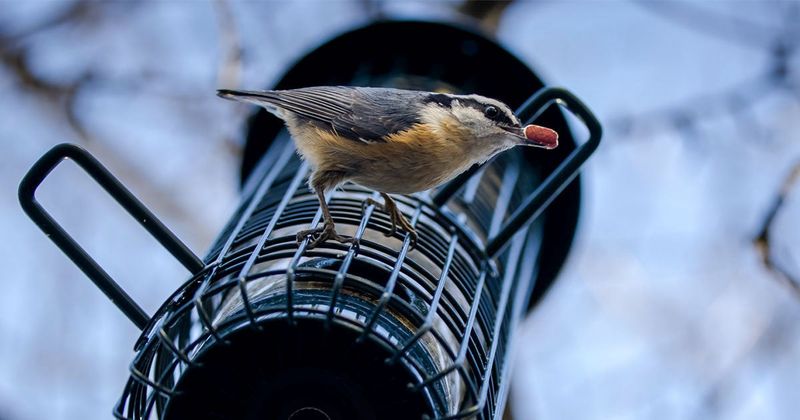
Feeders are optional extras. Quality seed can add to your bird viewing, but kinglets do not need it to survive, and a feeder cannot promise a visit.
University of Arizona Cooperative Extension names window collisions, predation, and disease exposure as risks. Its Backyard Birds guide advises cleaning feeders and birdbaths twice monthly, refreshing bath water daily, and clearing spilled seed and hulls.
Avoid crowding feeders, and keep seed off the ground and out of reach of other wildlife. Arizona Game and Fish treats bird feeding as an exception to its wildlife-feeding rules, but local rules may also apply.
Check with your city or neighborhood association before you hang anything. Do not feed wildlife in general.
Let Seasonal Visits Follow Their Own Course
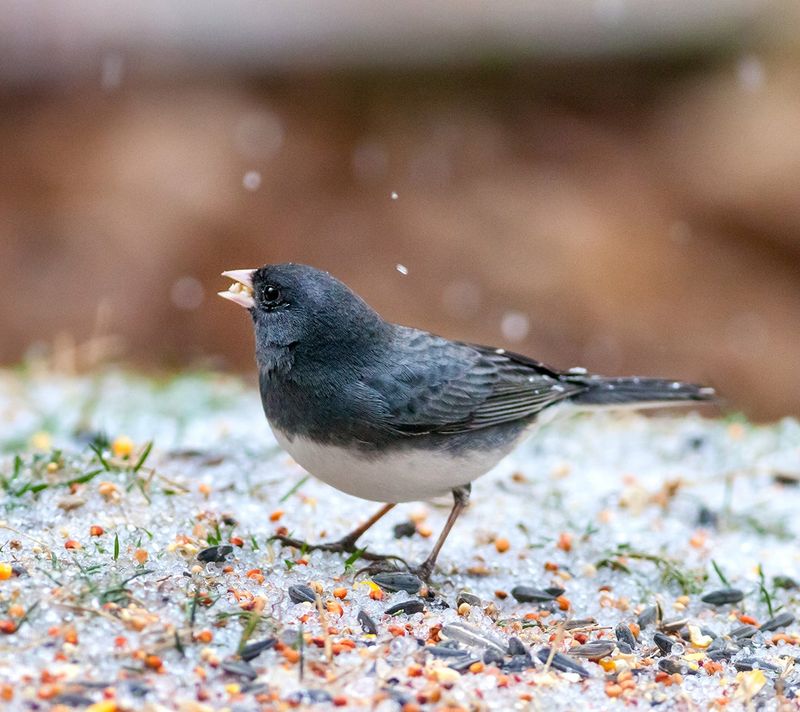
If a small visitor shows up in your yard, enjoy it for what it is. A bird that comes and goes is following its own schedule, not rejecting your landscaping.
Audubon’s bird FAQ explains that migratory birds follow their own timing, and feeding does not stop them from migrating. So there is nothing to fix when one leaves.
Keep realistic hopes. You may see a kinglet, a warbler, or neither, depending on where you live and the season.
Watch, note what you find, and let the birds keep their calendar. A fleeting guest is often the best kind.