These Native Arizona Plants Make Your Yard Look Expensive — And They Practically Take Care Of Themselves
There is a reason certain yards immediately catch your attention. The plants look healthy, the colors feel balanced, and the whole landscape has a finished look that makes everything seem more polished.
It is easy to assume a yard like that requires constant work and a much bigger budget than most people want to spend.
The reality is often much simpler. Some of the most impressive landscapes rely on plants that are perfectly suited to their surroundings.
Instead of demanding extra water, frequent replacement, or endless maintenance, they settle in and do what they were meant to do.
That difference becomes especially noticeable during the hottest months, when struggling plants start showing signs of stress while others continue looking right at home.
Many native Arizona plants combine beauty, durability, and low maintenance in a way that can completely change the look of a yard.
Once established, they do much of the work themselves while continuing to make a strong visual impact.
1. Blue Palo Verde Creates A Striking Focal Point
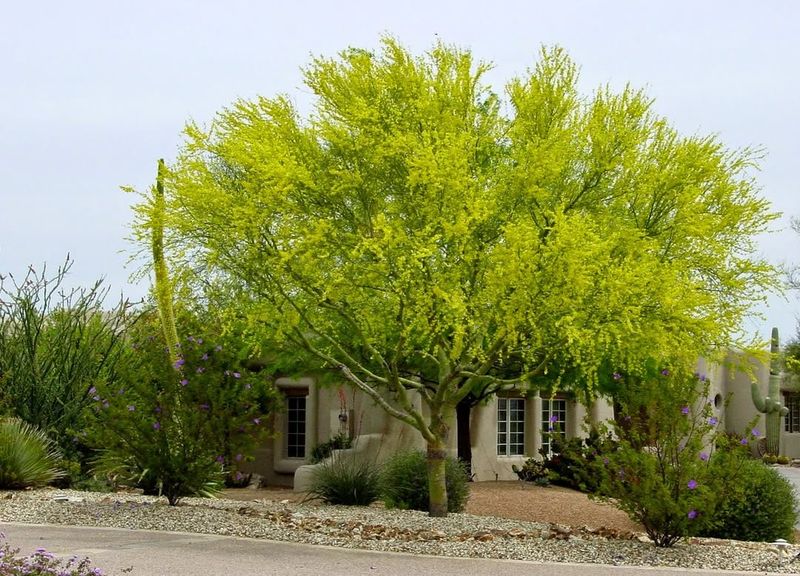
Few trees stop people in their tracks quite like a Blue Palo Verde in full bloom. Every spring, the entire canopy erupts in bright yellow flowers that cover the branches completely.
Neighbors will ask what it is before you even finish watering.
Native to the Sonoran Desert, this tree is built for heat. Its green trunk and branches actually photosynthesize, so it keeps working even when its tiny leaves drop during drought.
That green bark is part of what makes it look so unusual and polished.
Blue Palo Verde grows fast compared to most desert trees. Expect 15 to 30 feet tall at maturity, with an airy, open canopy that casts light shade.
It pairs well with gravel mulch and large boulders for a clean, modern look.
Watering deeply once or twice a month during the first two summers helps roots establish well. After that, rainfall usually handles most of its needs.
Avoid overwatering, since soggy soil causes root problems over time.
Pruning should be minimal. Remove only crossing or damaged branches, and let the natural shape develop.
Its graceful, slightly weeping form looks intentional without any extra effort from you.
During bloom season, the flowers are so abundant that the branches can almost disappear beneath the bright yellow color.
2. Red Yucca Adds Color With Very Little Effort
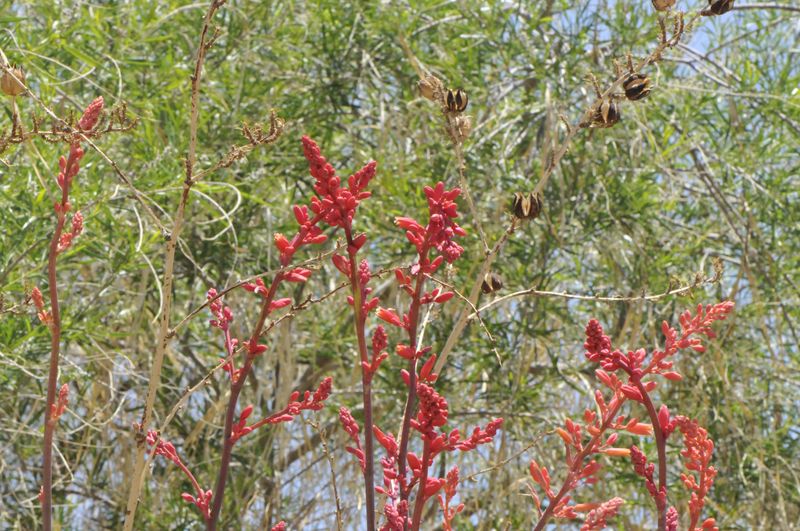
Red Yucca is one of those plants that earns its place in any yard by doing almost everything right. Tall coral-pink flower spikes shoot up from the center in late spring and last well into summer.
Hummingbirds cannot resist them.
Despite the name, Red Yucca is not a true yucca. It belongs to the agave family and lacks the sharp leaf tips that make other yuccas tricky to plant near walkways.
Soft, grass-like foliage makes it safe and attractive near patios.
Full sun and well-drained soil are all it really needs. Once roots are set after the first season, supplemental watering becomes optional in most parts of the desert Southwest.
Sandy or rocky soil actually suits it better than rich garden soil.
Your Arizona Garden Changes Every Week. Your Plan Should Too.
Gardening in Arizona changes quickly throughout the season. Every Friday you’ll receive a simple weekly plan showing exactly what to plant, prune, fertilize, harvest, and protect so you never miss the right timing.
Each clump slowly spreads over time, producing offsets around the base. These can be divided and replanted elsewhere in the yard, giving you more plants for free.
A single plant can become three or four within a few years.
Flower stalks can reach four to five feet tall, making a bold vertical statement without taking up much ground space. Cut old stalks down at the base once blooming finishes.
New growth comes back reliably the following year with no extra help needed.
Even when it is not blooming, the evergreen foliage keeps the plant looking neat and attractive throughout the year.
3. Desert Spoon Brings Structure Year Round
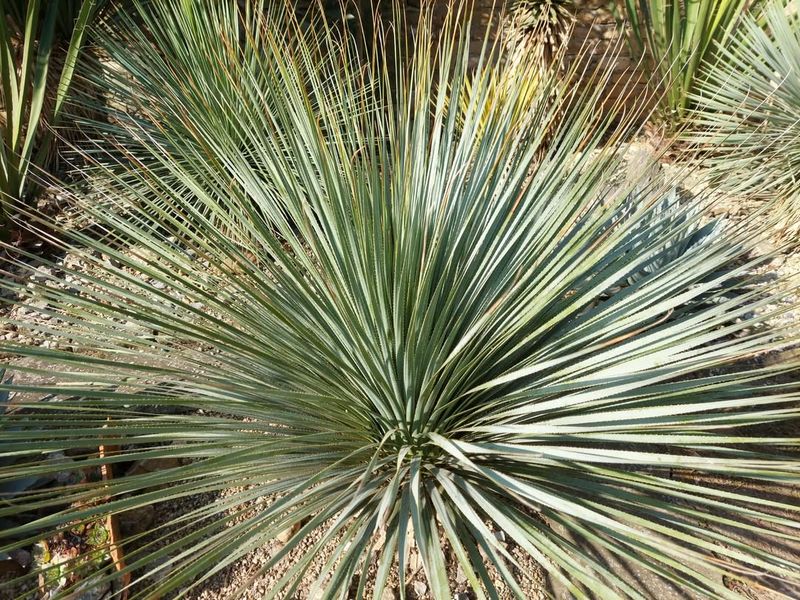
Structure is something most desert gardens struggle with, and Desert Spoon solves that problem without asking much in return. Its tight, symmetrical rosette of long blue-gray leaves looks architectural even in the middle of summer.
Plant one near a front entrance and it immediately upgrades the whole space.
Desert Spoon, also called Dasylirion wheeleri, grows slowly but steadily. Over several years it forms a rounded mound that can reach three to four feet tall and just as wide.
The leaves have small teeth along the edges, so give it a little room away from foot traffic.
Every few years a single flower stalk shoots up dramatically, sometimes reaching ten feet or more. Birds and insects visit the tiny flowers along the stalk.
Once it finishes blooming, the stalk can be cut or left standing for visual interest.
Established plants handle full sun and reflected heat from walls or pavement with no trouble. Watering once or twice a month during summer keeps it looking its best.
In cooler months, rainfall alone is usually enough.
It pairs especially well with boulders, decomposed granite, and other rosette-forming plants. Grouping three plants of different sizes creates a layered, professional look.
Low maintenance does not mean low impact with Desert Spoon.
Its distinctive shape keeps the landscape interesting even when nearby plants are not in bloom.
4. Chuparosa Fills The Yard With Seasonal Color
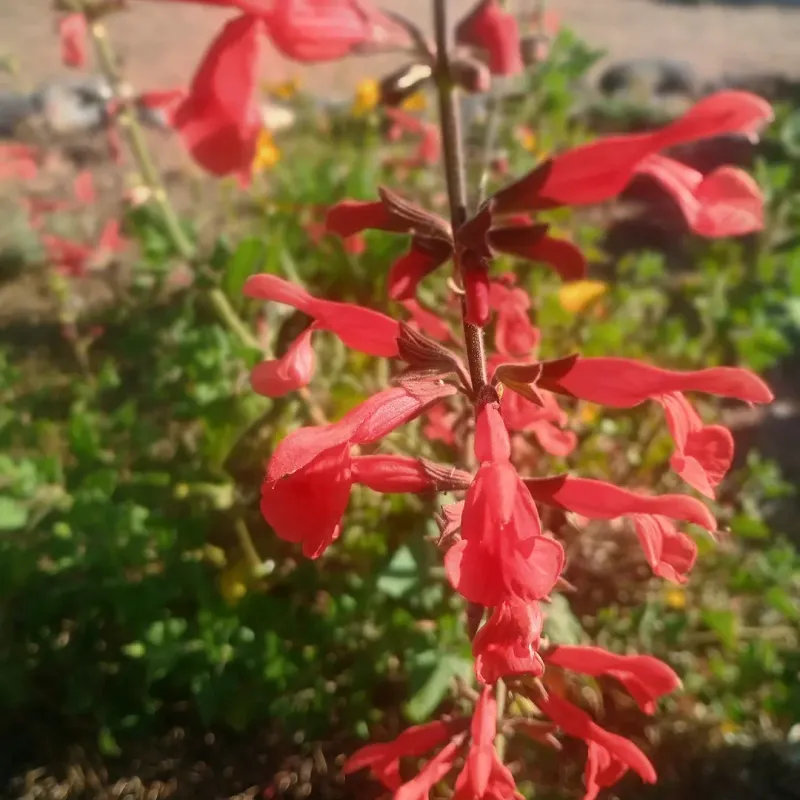
Walk past a Chuparosa in bloom and you will likely hear it before you see it. Hummingbirds swarm the tubular red flowers from late winter through spring, and sometimes again in fall.
Few plants attract that kind of wildlife activity so reliably.
Chuparosa, which translates roughly to hummingbird feeder in Spanish, is a native shrub that grows along desert washes and rocky slopes across the Southwest. Its relaxed, arching form fills space naturally without looking overgrown or messy.
Bright red blooms pop against gray-green stems even when leaves are sparse.
Drought tolerance is one of its strongest qualities. After the first year, Chuparosa rarely needs supplemental watering during cooler months.
A deep soak every two to three weeks in summer keeps it productive and blooming longer.
It works well as a filler between larger shrubs or along a wall where you want seasonal color without a formal hedge look. Mature plants reach three to five feet tall and wide, giving good coverage without crowding smaller neighbors.
Hard frost can knock it back temporarily, but healthy plants recover quickly once temperatures rise. Light pruning after the main bloom cycle keeps the shape tidy.
Skip heavy pruning, since most flowers form on older wood and cutting too much reduces next season’s show.
Another benefit is the way the bright flowers stand out from a distance, making the shrub easy to notice even in a large landscape.
5. Angelita Daisy Blooms For Months In The Heat
Most flowering plants tap out once temperatures climb above 100 degrees. Angelita Daisy keeps going like nothing happened.
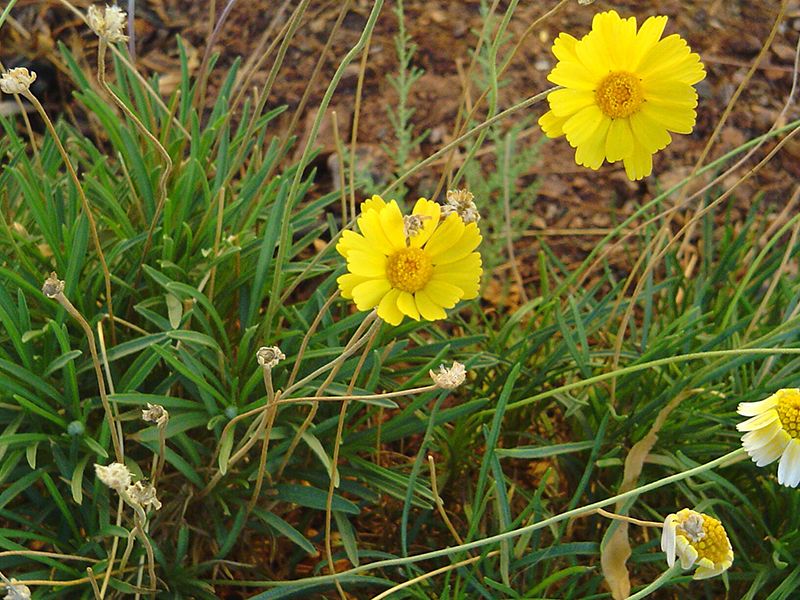
Cheerful yellow flowers cover the mounded foliage from spring through fall, and sometimes even into winter during mild years. It is one of the most reliable bloomers for hot, dry conditions.
Botanically known as Tetraneuris acaulis, Angelita Daisy stays compact, usually reaching about one foot tall and one to two feet wide. That small footprint makes it useful in tight spots, along pathways, or as a border plant in front of taller shrubs.
Well-drained soil matters more than anything else with this plant. Standing water or heavy clay can cause problems, but gravel-amended or sandy soil keeps it thriving.
Plant it in full sun for the densest bloom coverage.
Watering every one to two weeks during summer is typically enough once established. Overwatering is a more common issue than underwatering with Angelita Daisy.
Lean toward less water rather than more if you are unsure.
Deadheading spent flowers is optional since new blooms come in steadily regardless. A light trim in late winter removes old growth and encourages a fresh flush of new foliage and flowers.
Pair it with Red Yucca or Desert Marigold for a bold, layered color combination that holds up through the hottest months.
6. Brittlebush Brightens Dry Landscapes Each Spring
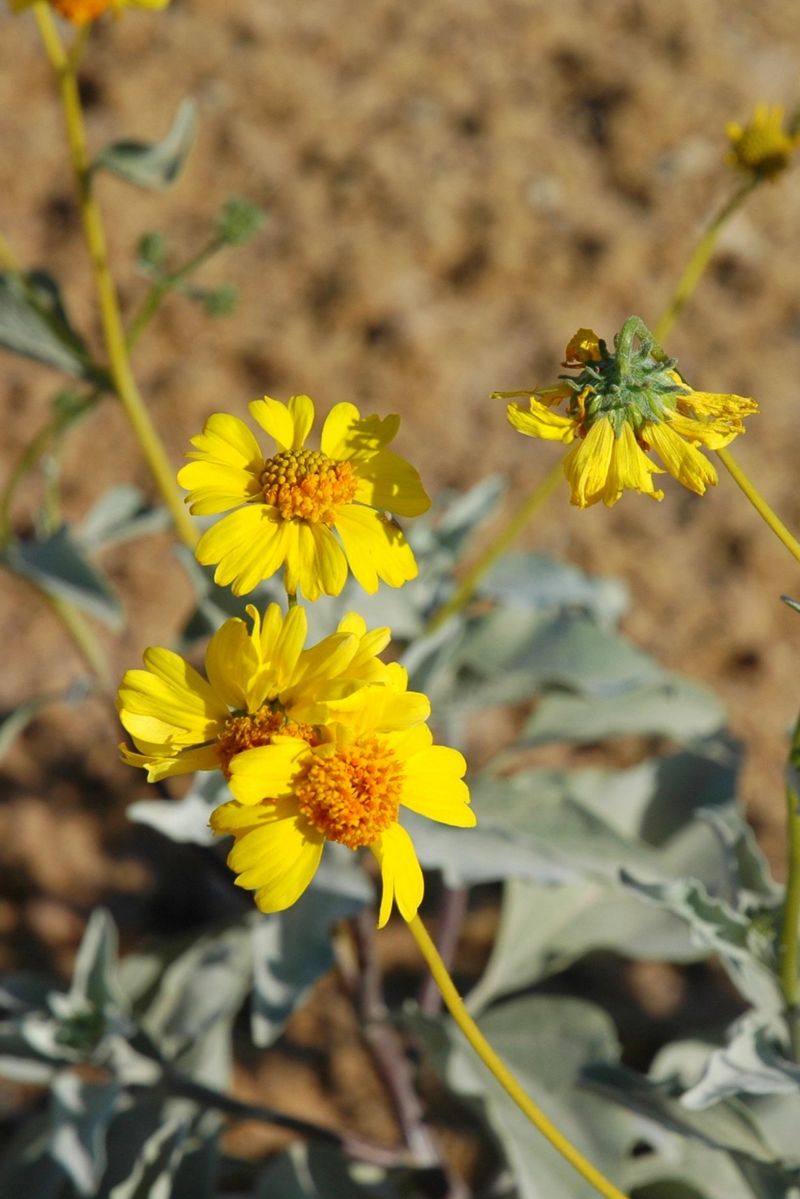
Brittlebush puts on one of the most dramatic spring shows of any native shrub in the desert Southwest. Hillsides and roadsides across the region turn gold when it blooms, usually from late February through April.
Planted in a home yard, it creates that same bold effect on a smaller scale.
Silver-gray foliage is its other standout feature. Even when not in bloom, the soft, rounded leaves give the plant a pale, almost luminous quality that contrasts beautifully with darker rocks or soil.
That silver tone stays consistent through summer even when flowers are long gone.
Brittlebush grows fast. A young plant can reach two to three feet tall and wide within a single season under good conditions.
Crowded planting slows it down, so give each plant at least three feet of space on all sides.
Water every two weeks during its first summer, then taper off as roots establish. Mature plants survive on rainfall alone in most low-desert areas, though a monthly summer soak extends the bloom season slightly.
Rich soil or too much fertilizer causes leggy, weak growth.
Cut plants back by about half in late spring once blooming finishes. Hard pruning keeps the shape compact and prevents the woody base from becoming too exposed.
New growth comes in quickly, and the plant looks refreshed within a few weeks of trimming.
7. Firecracker Penstemon Stands Out In Low-Water Gardens
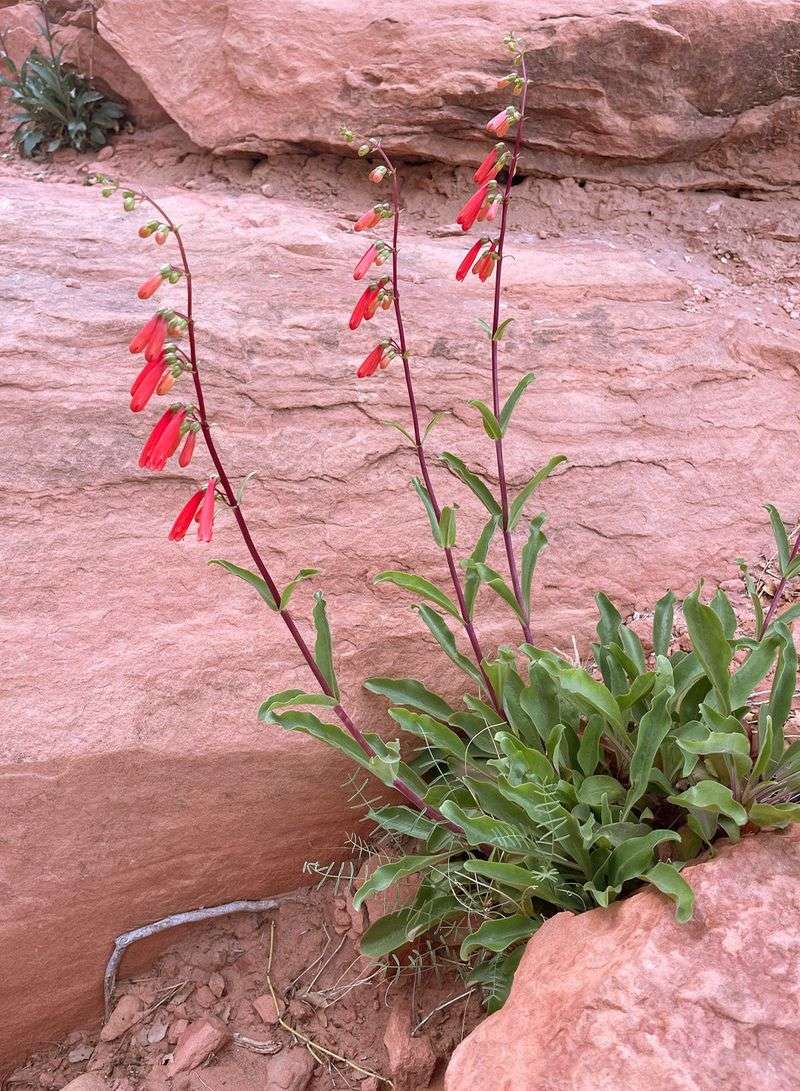
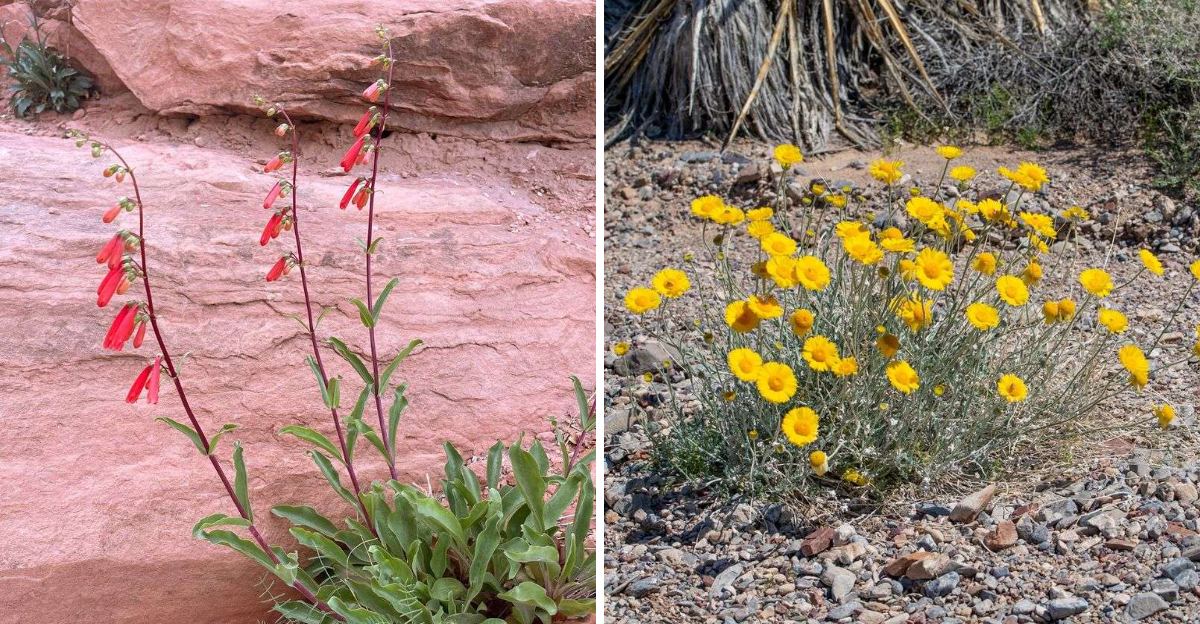
Bright red and tubular, Firecracker Penstemon looks like it belongs in a tropical garden, not a dry rocky landscape. Yet it thrives on minimal water and blooms reliably in spring and early summer without much fuss.
That contrast between its showy appearance and tough nature is exactly what makes it so valuable.
Hummingbirds treat Firecracker Penstemon like a preferred stop on their route. Plant several together along a fence or border and you will have regular visitors throughout the bloom season.
The vertical flower spikes reach two to three feet and add strong height contrast to lower-growing plants around them.
Full sun and fast-draining soil are non-negotiable for this plant. Clay-heavy or compacted soil holds moisture too long and leads to root rot.
Raised beds or slopes with amended gravel soil work especially well for getting it established successfully.
Water once or twice a week for the first month after planting, then stretch intervals to every two weeks once new growth appears. Established plants in Arizona often survive on rainfall alone outside of summer.
During July and August, a deep soak every ten days keeps them from going completely dormant.
Cut flower stalks back to the base after blooming finishes. Side shoots often produce a second, smaller flush of blooms later in the season.
Clumps expand gradually over time and can be divided every few years to refresh the planting.
8. Desert Marigold Returns Year After Year
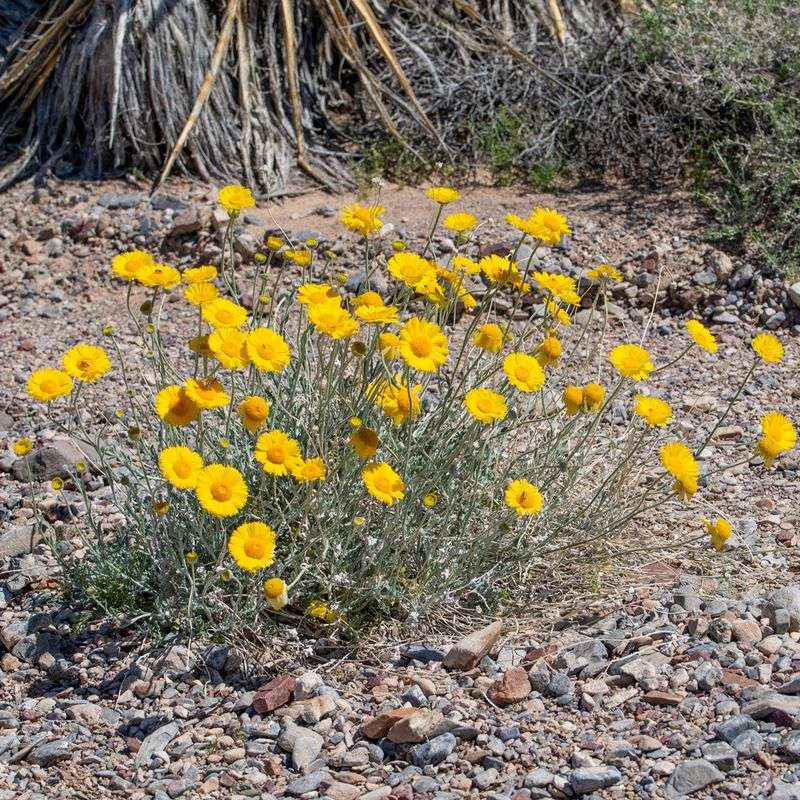
Golden yellow and nearly unstoppable, Desert Marigold is one of those plants that rewards neglect more than attention. Clusters of bright yellow blooms appear in spring, take a short break in midsummer heat, then return again in fall.
That two-season bloom cycle is rare in plants that require so little water.
Baileya multiradiata is the botanical name, and it grows as a short-lived perennial or biennial depending on conditions.
Plants often reseed themselves naturally, so a small patch can spread into a full ground cover over two or three years without any extra effort on your part.
Sandy or gravelly soil with excellent drainage suits it best. Amended beds with added decomposed granite work well if your native soil runs heavy.
Avoid planting in low spots where water collects after rain.
Water once a week for the first few weeks after planting to help roots settle in. After that, every two weeks during summer is usually enough.
Plants that receive too much water often produce fewer flowers and softer, weaker stems.
Spent flower heads can be left on the plant to encourage self-seeding. Removing them regularly extends the bloom period but reduces natural spreading.
A light cutback in late winter clears old growth and prepares the plant for a strong spring flush of new stems and flowers. Pair it with Brittlebush or Angelita Daisy for a long-lasting yellow-toned border that practically manages itself.