These 7 Native Florida Ground Covers Are Replacing Sod In Shaded Backyards This Year
Florida backyards are changing, especially the shady ones. The old goal used to be simple: keep the grass alive at any cost.
Now? More homeowners are asking why they are fighting so hard for sod in places it never wanted to grow.
Under oaks, along fence lines, beside patios, and in those dim corners that stay thin no matter what, native ground covers are starting to make a lot more sense. They do not try to copy a perfect lawn.
They offer something softer, wilder, and often far more interesting. Some creep between stepping stones, some brighten the shade with small blooms, and some turn bare soil into a green, living layer.
For Florida gardeners tired of forcing turf where it keeps failing, these seven native ground covers offer a smarter way to fill the shade.
1. Lyreleaf Sage Brings Spring Color To Shady Spots
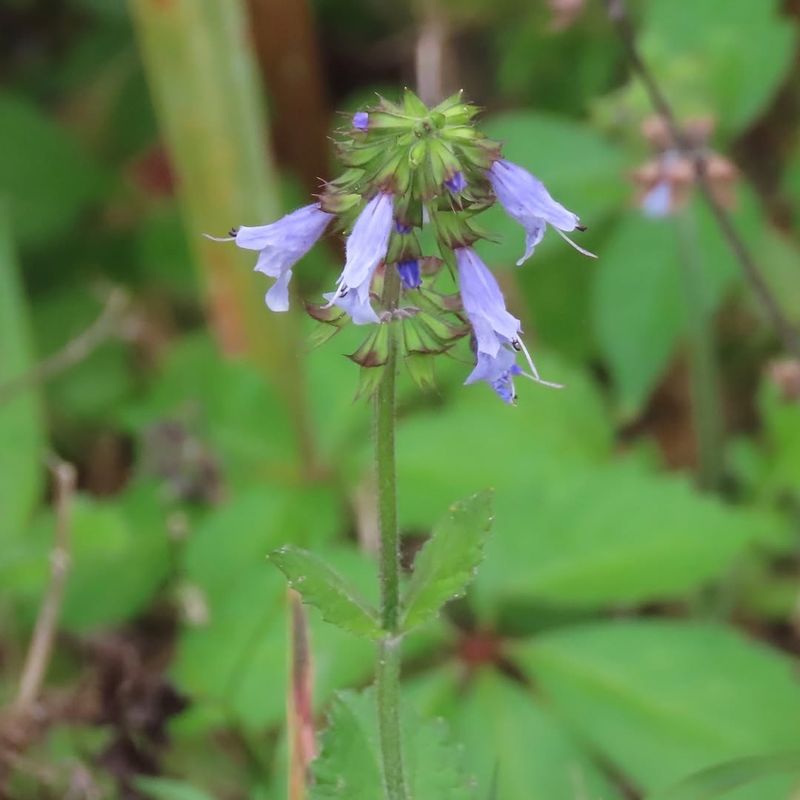
Few native plants put on a spring show quite like lyreleaf sage does in a shaded corner of the yard. This low-growing perennial forms a flat rosette of deeply lobed, dark green leaves that hug the ground through winter.
Then, as temperatures warm up, tall flower spikes shoot up and open into clusters of soft lavender-blue blooms that pollinators absolutely love.
Lyreleaf sage, known botanically as Salvia lyrata, is native to much of the eastern United States, including a wide range of Florida habitats. It tends to thrive in part shade or filtered shade, the kind you get under a tree canopy where dappled light still reaches the ground.
It is not well-suited to deep, lightless shade, so placement matters. UF/IFAS Extension notes that it grows in a range of soil types and tolerates both dry and moderately moist conditions once established.
One thing to know upfront: lyreleaf sage reseeds readily where it feels at home. That quality makes it a great fit for naturalized areas, informal garden beds, and woodland-style plantings where a relaxed, spreading look is welcome.
It is not the right choice if you want a tidy, controlled edge. Bees and other native pollinators are drawn to those spring flowers, which adds real ecological value beyond just good looks.
It is not a walkable ground cover, so keep foot traffic away. Think of it more as a low-maintenance filler that rewards you with color in spring and stays green and tidy the rest of the year.
Match it to a spot with decent light filtering through the canopy and reasonably well-drained soil for the best results.
2. Twinflower Creates A Soft Native Lawn Look
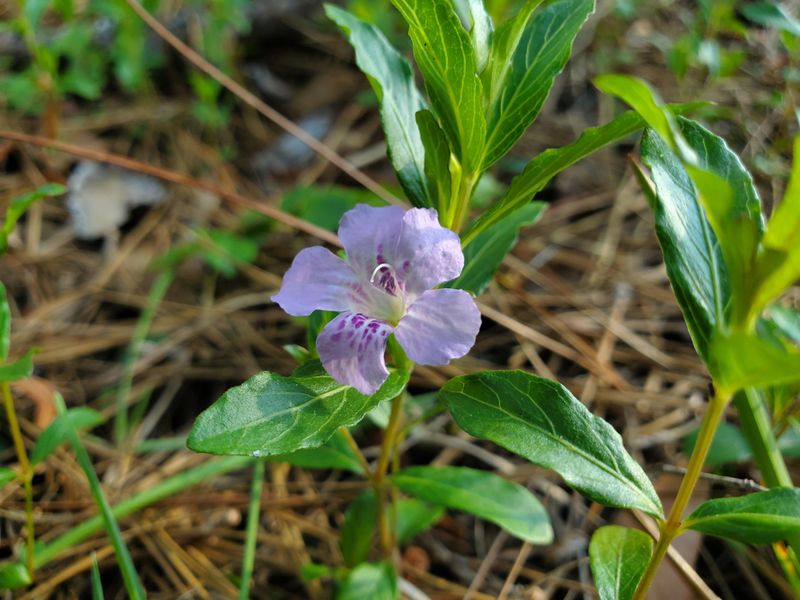
There is something quietly charming about a plant that mimics the look of a lawn without actually being one. Twinflower, or Dyschoriste oblongifolia, is a low-growing native perennial that spreads softly across the ground.
It produces pairs of small lavender blooms through much of the warmer months. The overall effect is a soft, fine-textured mat that reads almost like turf from a distance.
According to the Florida Wildflower Foundation, twinflower is native to the southeastern United States and grows well in part shade to filtered shade conditions.
Your Florida Garden Changes Every Week. Your Plan Should Too.
Gardening in Florida changes quickly throughout the season. Every Friday you’ll receive a simple weekly plan showing exactly what to plant, prune, fertilize, harvest, and protect so you never miss the right timing.
It performs best in sandy, well-drained soils, which makes it a natural fit for many Central and North Florida yards.
In shadier spots under trees, it can spread gradually to fill gaps where grass has given up. It is not a fast colonizer, so patience is part of the deal with this one.
Matching it to your site moisture is important. Twinflower does not love consistently wet feet, and it also struggles in deep shade where very little light reaches the ground.
A spot with morning light or bright, filtered shade through the afternoon tends to suit it best. It handles dry periods reasonably well once it has settled in, which is a real advantage under trees where roots compete for moisture.
The small flowers attract native bees and other beneficial insects, so it pulls double duty as both a ground layer and a pollinator resource. It is not built for foot traffic, so keep it away from busy paths.
Along a garden edge, under a shade tree, or in a tricky transition zone, twinflower brings soft native charm that sod cannot offer.
3. Partridgeberry Stays Low Under Trees
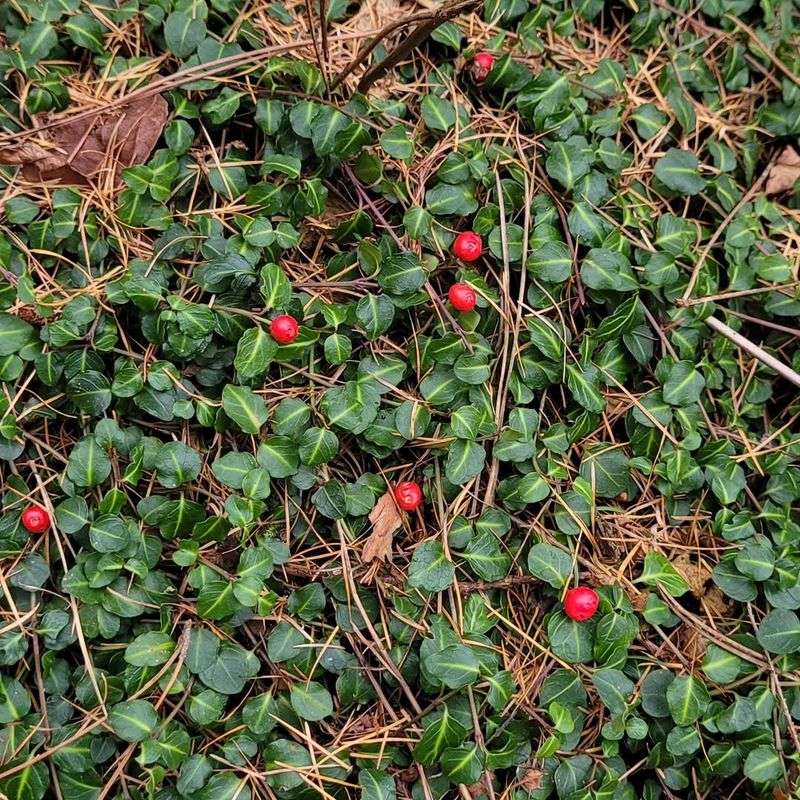
Walk through a shaded hammock or woodland in northern parts of the state and you might spot a delicate little vine creeping quietly across the ground.
That is partridgeberry, Mitchella repens, one of the most genuinely low-growing native evergreen ground covers available for shaded, woodland-style spaces.
Its paired white flowers are tiny and tubular, and they eventually give way to small, bright red berries that persist into winter and attract birds.
Partridgeberry is native to eastern North America, including the northern and central regions of the state. It strongly prefers acidic, humus-rich soils with consistent moisture and shade.
This is not a plant that tolerates dry, compacted, or alkaline conditions well. Sandy soils with good organic matter and a layer of leaf mulch come closest to replicating its natural habitat.
Deep to moderate shade suits it well, which makes it genuinely useful under dense tree canopies where almost nothing else fills in.
It is a slow spreader. Do not expect it to carpet a large area quickly.
Partridgeberry works best in smaller naturalized patches, around the base of trees, or alongside other low woodland plants. Its fine, trailing stems root lightly as they spread, building coverage gradually over time.
It has a quiet, refined look that suits cottage gardens and native woodland plantings well.
Foot traffic will damage it, so it is purely a visual ground layer, not a lawn substitute. The red berries provide food for several bird species, adding genuine wildlife value to a shaded corner.
For the right spot in a North or Central yard with suitable soil and moisture, it is a rewarding and distinctive native choice.
4. Frogfruit Handles Light Shade With Tiny Blooms
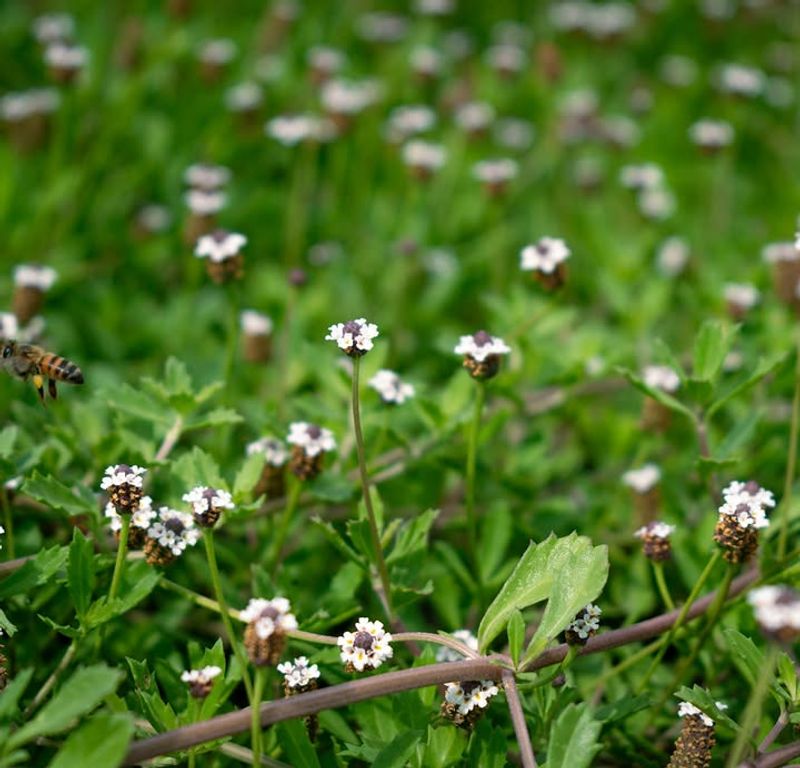
Frogfruit has one of the best common names in the native plant world, and it backs that name up with real performance.
Phyla nodiflora is a mat-forming native perennial that spreads low to the ground and produces clusters of tiny white-to-pink flowers nearly year-round in warmer months.
Those small blooms are a surprisingly big deal for pollinators, especially native bees and butterflies, including the white peacock and phaon crescent.
Here is where it is critical to be specific: frogfruit performs best in full sun to light shade. It is not a deep-shade plant.
Under a dense tree canopy where very little sunlight reaches the ground, it will struggle and thin out. But along lawn edges, in transition zones, or under a tree with a higher canopy that lets in filtered morning or afternoon light, it can spread nicely and hold its own.
That distinction matters when you are planning your planting.
According to UF/IFAS Extension, frogfruit tolerates a range of soil conditions and handles both moist and moderately dry sites once established. It spreads by runners and can knit together into a reasonably dense mat over time.
It handles light foot traffic better than many other native ground covers, which makes it practical for informal paths or areas where occasional stepping is unavoidable.
It is native to much of the southeastern United States and widely recognized as a valuable plant for wildlife gardens. If your shaded backyard has areas that receive at least a few hours of direct or bright filtered light each day, frogfruit is worth serious consideration.
Just be honest about how much shade your site actually gets before you plant it.
5. Swamp Fern Fills Moist Shade With Lush Texture
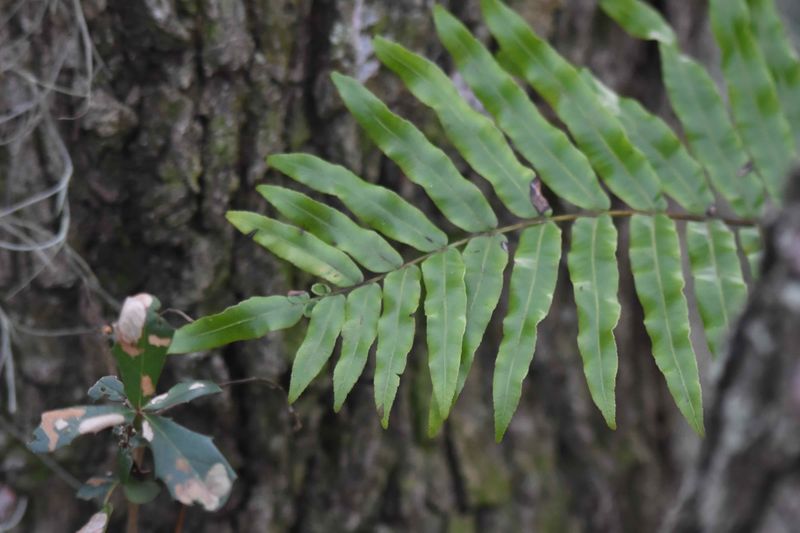
Some backyards have a wet corner that seems impossible to plant. Water collects there after rain, the soil stays soggy for days, and nothing seems to want to grow.
Swamp fern, Blechnum serrulatum, was practically made for that kind of spot. This native fern thrives in consistently moist to wet, shaded conditions.
Its bold, arching fronds create a lush, layered texture that turfgrass simply cannot offer.
Swamp fern is native to Florida and found naturally in freshwater wetlands, swamp edges, and moist woodland margins across much of the state. UF/IFAS recognizes it as a useful native plant for wet, shaded landscapes.
It spreads by rhizomes and can expand gradually to fill a moist area. In the right conditions, that spreading habit is an asset.
It builds a dense, weed-suppressing layer that low-maintenance gardeners appreciate.
The important caveat here is moisture. Swamp fern is not suited to dry shade, average garden beds, or sites with well-drained sandy soil.
If your shaded backyard is dry or only occasionally wet, this is not the right match. It also grows large enough that it does not suit tight, formal spaces well.
Think of it as a bold, naturalistic filler for a rain garden edge, a low-lying shaded corner, or a damp transition zone near a pond or drainage area.
It offers no foot-traffic tolerance and is purely a visual and ecological ground layer. Birds and small wildlife use the dense fronds for cover, which adds habitat value to those otherwise difficult wet spots.
Matched to the right moist, shaded site, swamp fern delivers texture and fullness that few other native plants can match in those conditions.
6. Coontie Adds Evergreen Structure Where Grass Struggles
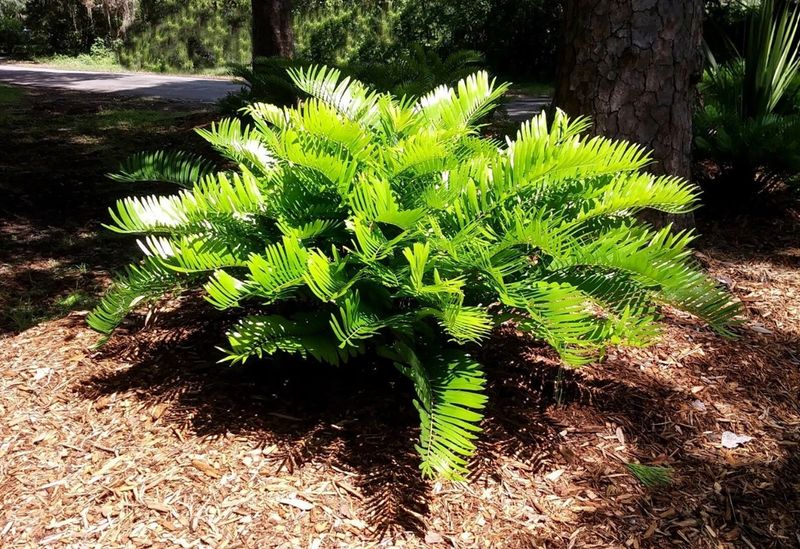
Coontie is in a category of its own. It is technically a cycad, one of the most ancient plant groups on Earth, and it is the only cycad native to the continental United States.
That alone makes it a standout. Beyond its fascinating backstory, coontie, Zamia integrifolia, earns its place in shaded backyards for its toughness and evergreen structure.
It is also the sole larval host plant for the atala butterfly, a once-rare species making a comeback in South and Central yards.
Coontie grows slowly into a low, dense mound of dark green, feathery fronds. It tolerates shade, part shade, and even dry conditions once established.
That makes it one of the more adaptable native plants for spots under trees where grass has completely given up. UF/IFAS Extension recommends it as a durable landscape plant suited to a range of soil types, including sandy and rocky soils found across much of the state.
Be clear about what coontie is and is not. It is not a walkable lawn replacement.
You cannot mow it or step on it regularly. It works best as a mass planting in a defined bed, along a foundation, under a tree canopy, or bordering a shaded path.
Its slow growth means it takes time to establish full coverage, so patience and proper spacing matter when planting a larger area.
No serious pest problems typically bother it, and it needs very little supplemental water once rooted in. For a shaded backyard that needs structure, low care, and real ecological purpose, coontie is a reliable native choice.
It works especially well where grass has failed and evergreen texture is needed.
7. Wild Coffee Softens Deep Shade With Native Foliage
Deep shade is the hardest site condition to work with in any yard. Most ground covers thin out, most grasses give up entirely, and even some natives struggle when the canopy is dense and the light is minimal.
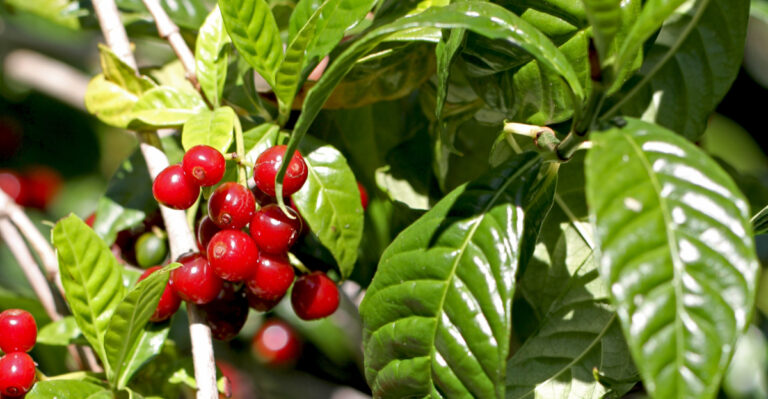
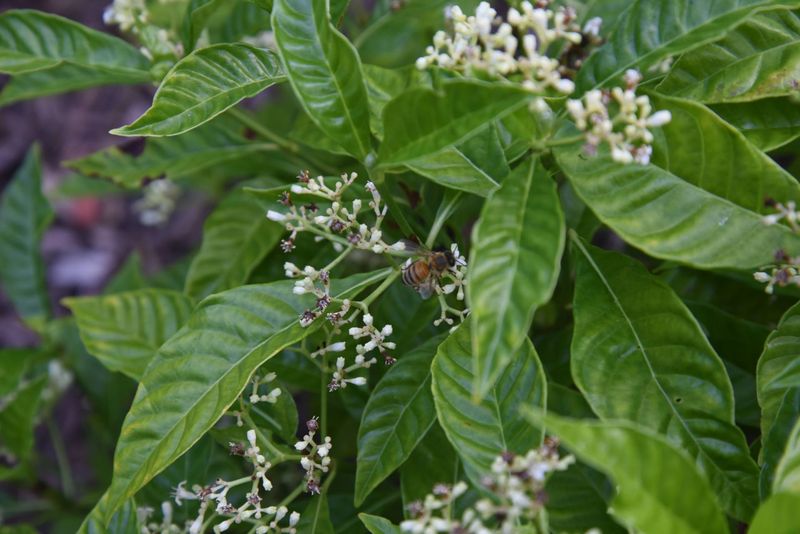
Wild coffee, Psychotria nervosa, is one of the few native plants that genuinely embraces those conditions. Its glossy, deeply veined leaves stay rich green in deep shade, and the plant forms a lush, layered presence under large trees that few other choices can replicate.
Wild coffee is native to South and Central portions of the state and is commonly found as an understory plant in hammocks and shaded coastal areas.
It is technically a shrub rather than a traditional ground cover, but it functions beautifully as a low understory layer in shaded backyards.
Small white flower clusters appear seasonally, followed by red berries that birds find attractive. The Florida Native Plant Society recognizes it as a valuable native for shaded, low-maintenance landscapes.
This plant is not meant for foot traffic and should not be treated as a turf substitute. It works best as a planted layer beneath trees, near shaded foundations, or filling a deeply shaded corner where nothing else has succeeded.
Spacing plants appropriately and allowing them to fill in gradually produces a natural, cohesive look over time.
Wild coffee prefers well-drained to moderately moist soils and does not tolerate prolonged flooding. It is not reliably cold-hardy in the Panhandle, so gardeners in northern parts of the state should check local hardiness before planting.
For shaded South and Central yards looking for a glossy, wildlife-friendly, low-effort ground layer, wild coffee is a genuinely excellent native option.