That Purple Weed Creeping Into Your Michigan Lawn Is Actually A Native Gem
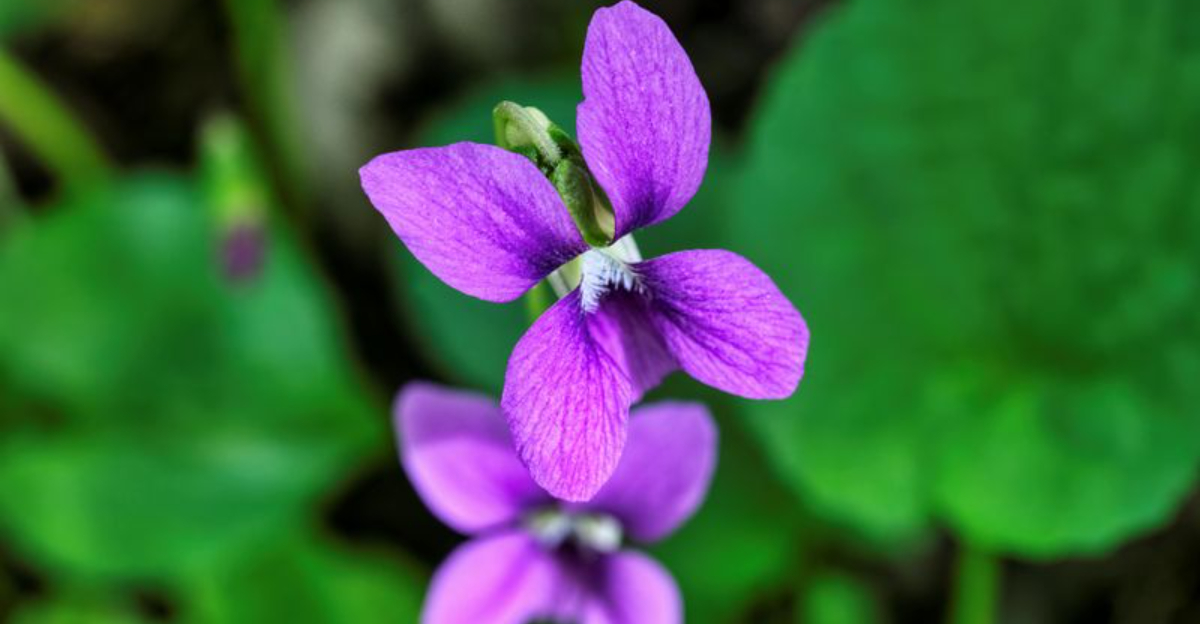
Every spring, lots of homeowners in Michigan start fighting against a plant that has been thriving in this state for thousands of years.
The plant they target is a small, heart-shaped one with tiny purple flowers that appear unexpectedly in lawns before many people even think about gardening. The usual reaction is to pull it out, spray it, or dig it up completely.
However, most people don’t take a moment to find out what it really is. It’s a true native of Michigan, recognized by Michigan State University Extension for its ecological importance, its resilience, and its ability to grow where most lawn grasses struggle.
So, you don’t have a lawn issue. You have a native wildflower, and there’s a good reason to let it be.
1. Meet The Native Plant Hiding In Your Grass
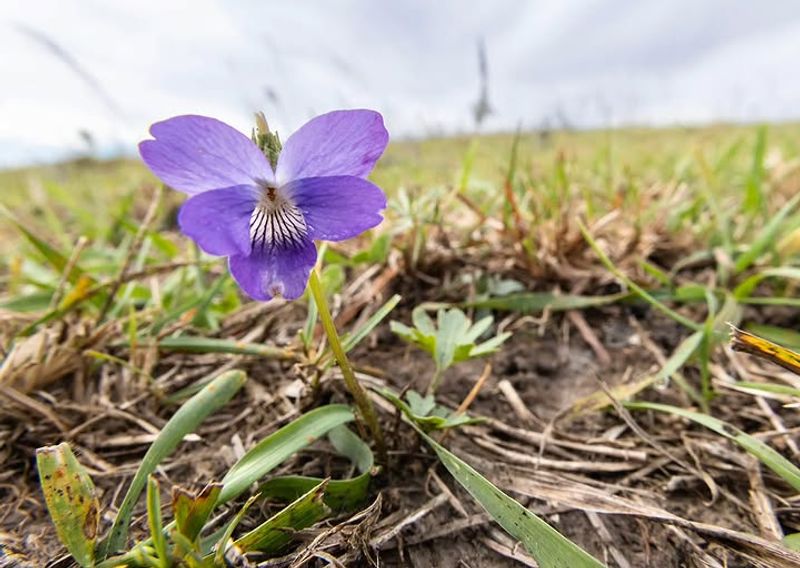
In the shady parts of Michigan lawns, the common blue violet has been quietly doing its thing for a really long time, and it doesn’t feel the need to apologize. Scientifically known as Viola sororia, this little plant is as Michigan as it gets.
It didn’t sneak in on a bag of grass seed or come over from the neighbor’s messy corner. It truly belongs here. It has for thousands of years.
Homeowners often pull it out as soon as they see it, thinking it’s just another unwanted guest with bad timing. That reaction makes sense. A patch of wild violet in an otherwise neat lawn can feel like a tiny act of rebellion.
But calling it a weed says a lot more about our obsession with a perfect green lawn than it does about the plant itself. The violet isn’t the issue, but our expectations might be.
Michigan State University’s turfgrass resources describe wild violet as a low-growing perennial that spreads in shaded, moist lawn areas. On paper, that sounds like a villain’s backstory.
In reality, it describes a tough, quietly determined native that simply knows where it grows best. Unlike non-native invasives, it evolved here, though it can still spread persistently in lawns.
Recognizing it for what it really is the first step toward figuring out what role it plays in your yard. And spoiler alert: it might deserve more appreciation than your lawnmower has been giving it.
2. Let Wild Violets Brighten The Lawn
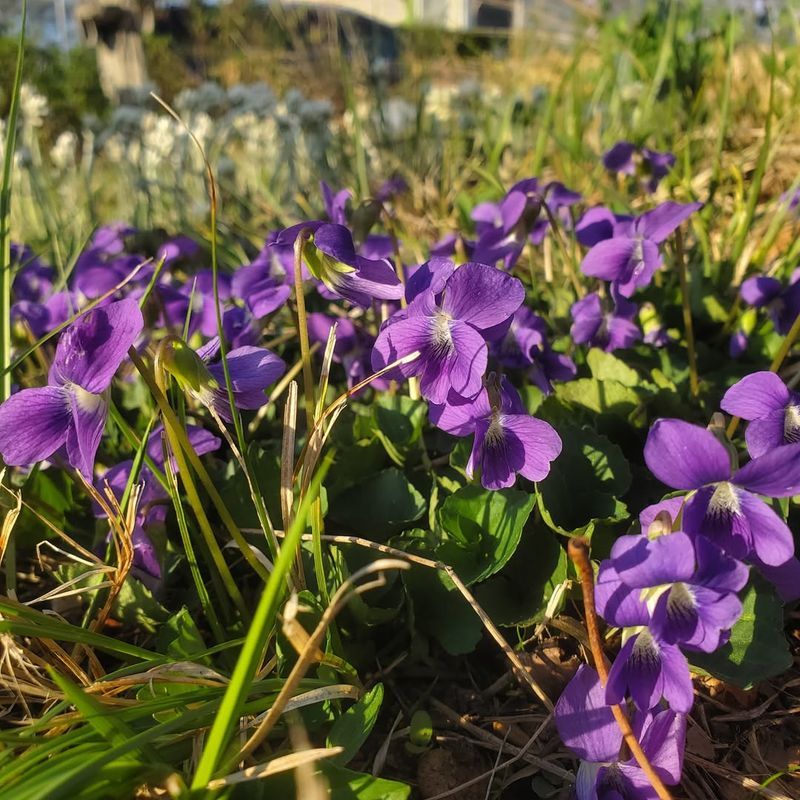
Few lawn plants can show off in spring like the wild violet. From late April to May, the common blue violet produces small but bright purple to blue-violet flowers that really pop against the fresh green grass of spring.
In a shady part of the yard where the grass often looks thin and worn out, a cluster of blooming violets can actually make that area seem intentional and lively.
For homeowners who’ve struggled to grow anything decent under a big oak or maple, wild violets offer what grass simply can’t: color.
The flowers are delicate and beautiful, with five petals that come in colors from light lavender to deep blue-purple. Some plants even have flowers that are almost white with purple veins.
Your Michigan Garden Changes Every Week. Your Plan Should Too.
Gardening in Michigan changes quickly throughout the season. Every Friday you’ll receive a simple weekly plan showing exactly what to plant, prune, fertilize, harvest, and protect so you never miss the right timing.
The blooming period is short, lasting only a few weeks in spring. However, the leaves remain green and low through fall, helping to keep shaded areas looking neat.
If you’ve been frustrated by a bare spot under a tree, wild violet is the easy solution you never realized you had.
3. Spot The Heart-Shaped Leaves Before Spring Blooms
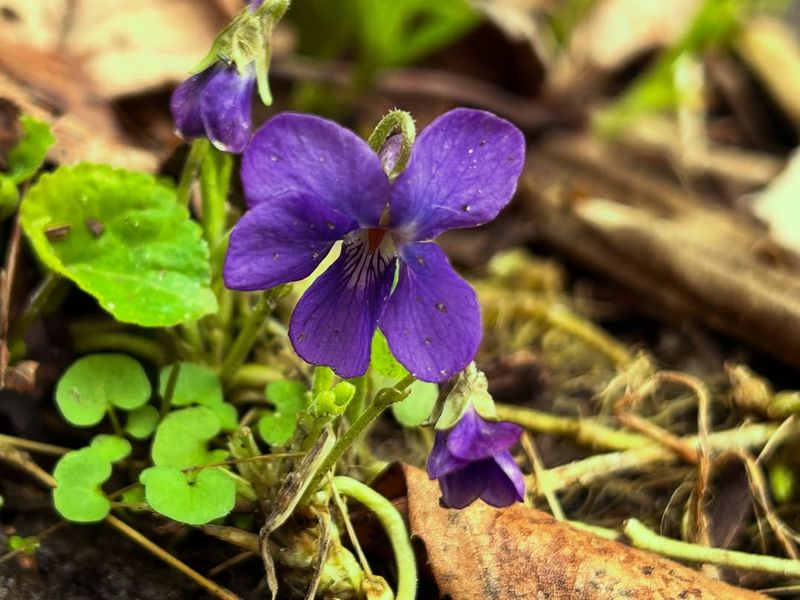
You don’t need to wait for the flowers to realize that wild violet is in your lawn. Figuring out how to recognize it early can help you avoid accidentally pulling out something valuable.
The plant leaves many hints, and once you know what to look for, you’ll start spotting it everywhere.
Begin with the leaves, which are really the main focus. Common blue violet has clearly heart-shaped leaves with slightly scalloped or jagged edges, growing on long thin stalks that rise straight up from the base of the plant.
They stay low to the ground, usually just a few inches high. Before the blooms show up, keep an eye out for tiny groups of rounded, dark green leaves that are taking over the shadier, wetter spots in the yard.
When the flowers finally appear, they deserve a good look. With five petals arranged in a slightly uneven pattern, the lower ones often have faint purple lines, and each flower sits on its own thin stem separate from the leaves.
It’s a neat, well-organized little plant that clearly has its life sorted out. Don’t you agree?
4. Give Pollinators A Spring Nectar Stop
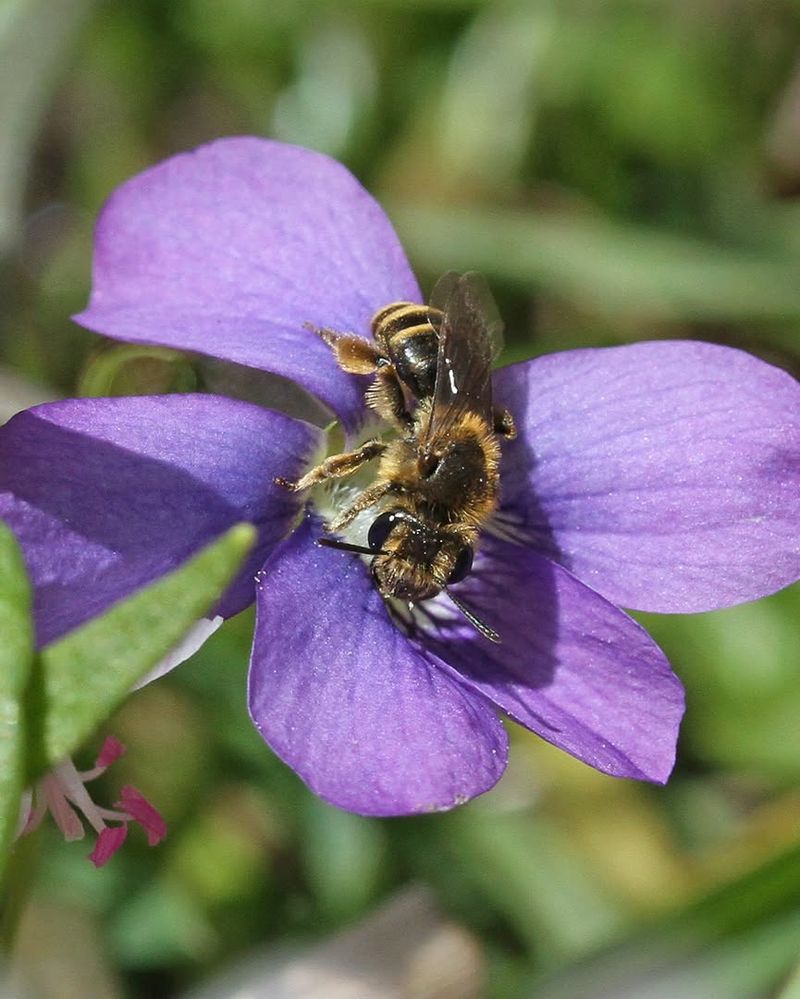
Spring can be a tough time for bees. Many native bee species wake up early, shaking off winter before most garden flowers even think about blooming, and they start off hungry.
The early-season nectar buffet is known to be pretty sparse, and whatever is available gets visited a lot. Common blue violet is one of the plants that helps provide for this limited spring feast.
MSU Extension identifies Viola sororia as a source of early-season nectar, making it one of the more quietly important things you might be pulling out of your lawn every April.
To be honest, a patch of wild violet isn’t going to save the bees all by itself. It won’t turn your quarter-acre into a buzzing paradise for pollinators or fix decades of habitat loss on its own.
But that’s not really the main idea. When combined with other native plants, less pesticide use, and a bit of habitat variety, a few square feet of blooming violet in spring is a small, real, and genuinely helpful contribution.
Native bees are among the insects that make a point of visiting violet flowers during this tough time. The blooms are open and easy to reach just when most other food sources are still weeks away from appearing.
It’s a small contribution, sure. But small and real is still better than neat and empty.
5. Turn Shady Moist Spots Into Violet Territory
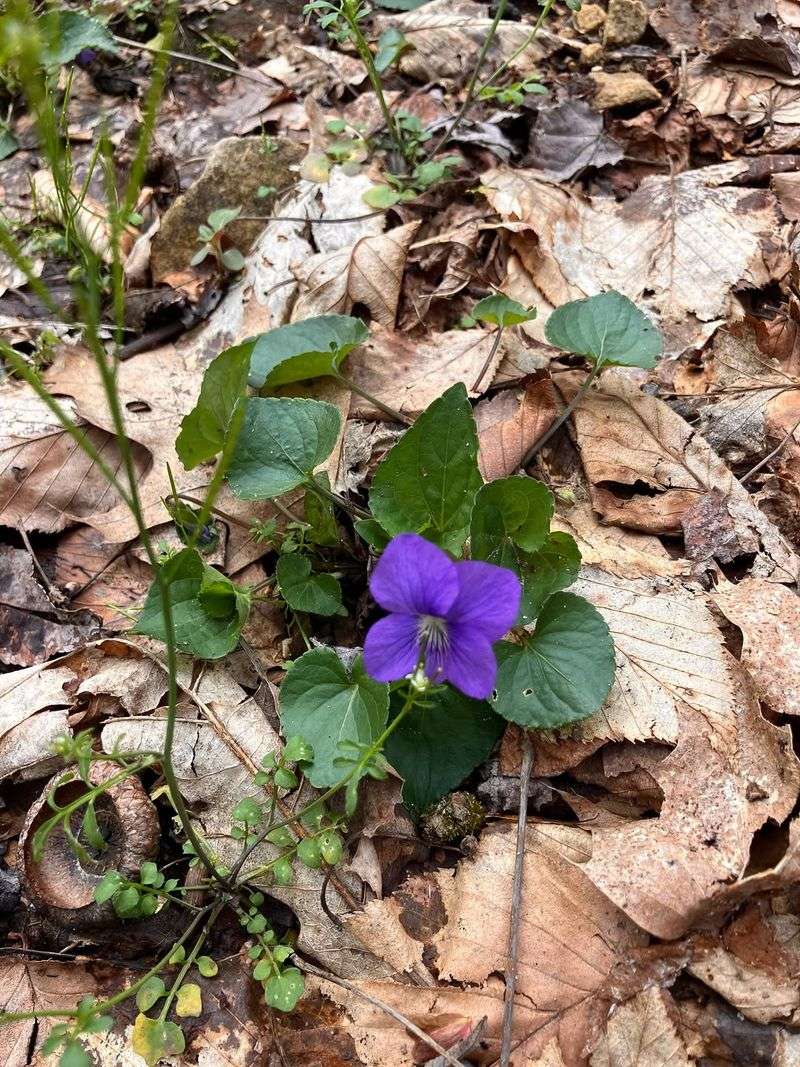
Ask any Michigan homeowner what the most frustrating part of their lawn is, and a shaded spot under a large tree will come up regularly. Grass thins out, bare patches appear, and no matter how much seed you throw down in fall, spring reveals the same problem all over again.
Wild violet has a very different relationship with those spots. According to Michigan State University’s turfgrass information, wild violet prefers shaded, fertile, moist sites and can colonize shaded, moist lawn areas. That is not a warning so much as a description of a plant that has found its niche.
Where turfgrass struggles, wild violet often settles in comfortably. The same conditions that make a spot inhospitable to grass, shade, moisture, and rich organic soil, are exactly what common blue violet is adapted to handle.
For homeowners dealing with perpetually thin or bare patches under trees, this is actually useful information. Rather than reseeding the same spot every year with grass that will not perform well, consider allowing wild violet to establish there instead.
It will stay low, stay green through the growing season, and produce flowers in spring. It will not solve every shady lawn problem, and it will spread over time, so some management may be needed to keep it contained to the areas where you want it.
But as a ground cover for genuinely difficult spots, it is a native option that works with your site conditions rather than against them.
6. Skip The Fight And Enjoy The Flowers
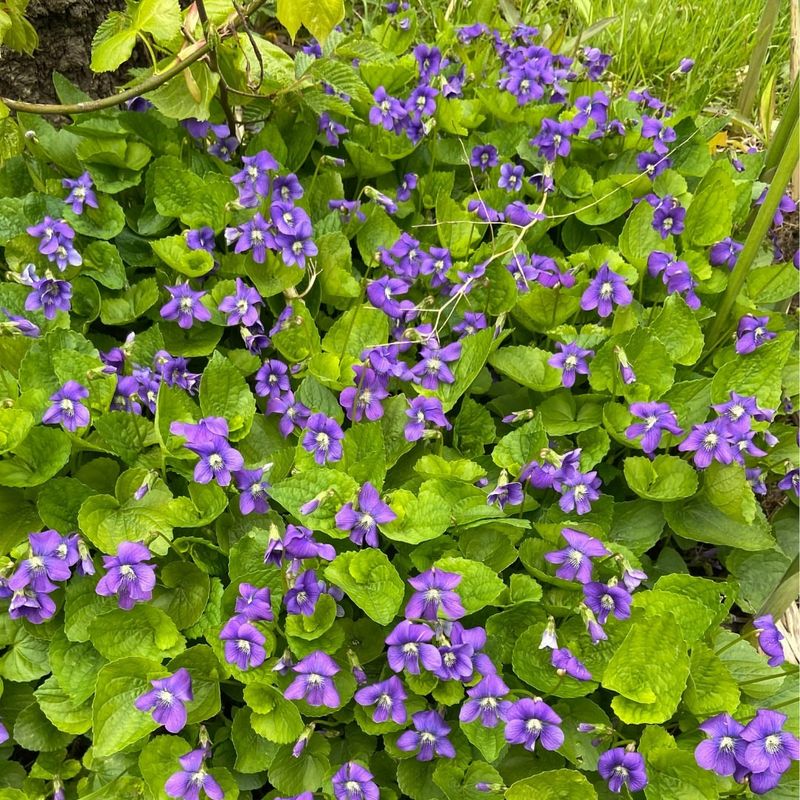
Trying to completely remove wild violet from a lawn where conditions favor it is a frustrating and often ongoing project. The plant spreads by both rhizomes and seed, it tolerates shade that limits other lawn plants, and it tends to return season after season in spots where the soil and moisture levels suit it.
Some homeowners spend years working to reduce it with limited success, particularly in areas where the conditions keep calling it back.
There is another approach worth considering: tolerance. Not every part of a yard needs to meet the same standard.
A formal front lawn that is highly visible might be a place where you want a cleaner, more uniform look. But a shaded back corner, a strip along a fence line, or the area under a large tree might be perfectly fine with a mix of grass and wild violet coexisting.
Many gardeners have made peace with this kind of zone thinking, where different parts of the yard are managed with different expectations.
Letting wild violet stay where it has already established, especially in areas that are hard to maintain anyway, removes a source of ongoing frustration and replaces it with something that actually looks pleasant in spring. The flowers are genuinely pretty.
The low foliage stays tidy. You are not giving up on lawn care.
You are simply choosing your battles thoughtfully and deciding that a native flowering plant is a reasonable trade-off for a difficult patch of ground that was never going to look like a golf course anyway.
7. Watch This Tough Little Plant Spread
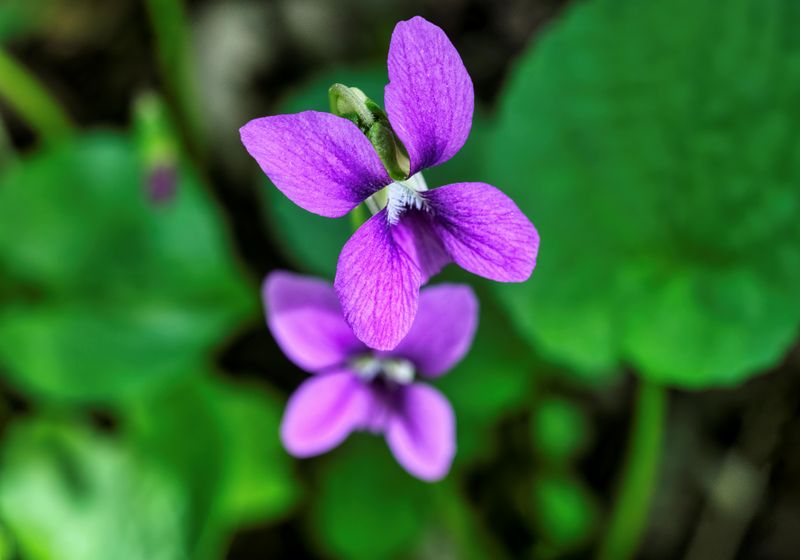
One reason wild violet keeps coming back in lawns year after year is that it is really good at spreading. It usually spreads through both rhizomes and seeds, which gives it two different ways to grow into new areas.
Rhizomes are underground stems that creep out from an established plant and send up new growth nearby. Seed dispersal adds another way to spread that can carry the plant further across a lawn or to a new spot.
If the conditions in a certain part of your lawn are good, like being shaded, moist, and having decent soil, wild violet will keep coming back. Just removing individual plants without changing the conditions usually only slows it down for a little while.
For homeowners who want to control where wild violet grows, the best way is to pay attention early on before a patch gets too big. Hand-pulling young plants from the edges of a growing patch can help stop it from spreading into areas where you want regular grass.
It is not a non-native invasive, but it can be persistent and spread steadily where conditions suit it.
8. Let Your Lawn Go A Little Wild
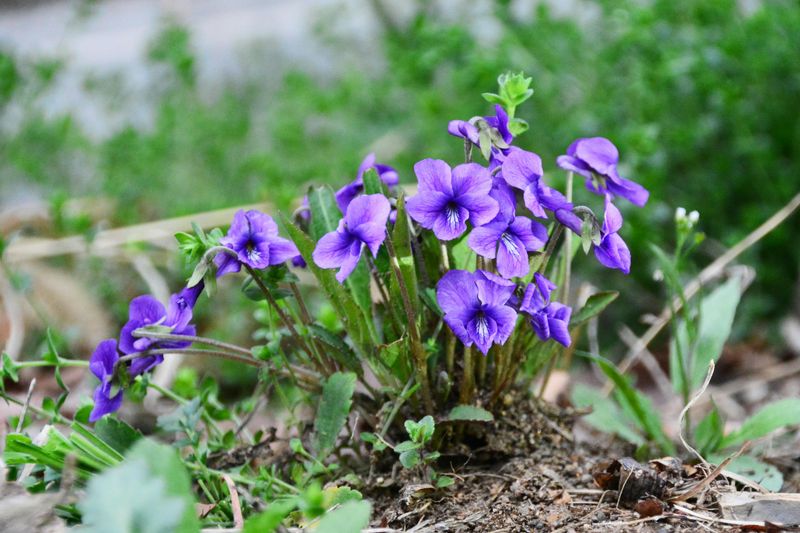
Your lawn doesn’t have to be a monoculture to be attractive. Letting native plants like common blue violet grow in corners, shady spots, and tough areas is a simple step towards this, and it doesn’t mean you have to change your whole yard.
The goal isn’t to stop caring for your lawn. It’s about caring for it in a smarter way.
A yard that has some native flowers mixed in with well-kept grass can still look nice and inviting. The trick is figuring out where you want a classic lawn look and where you’re okay with letting things grow a bit wild.
Shady areas, low-traffic corners, and natural borders along fences or trees are ideal spots for wild violet to do its thing without messing up your yard’s neat look. They’re also a perfect starting point to consider native plants as part of a healthy local ecosystem.
This plant has been around in our area for a long time, and giving it some room in your yard is an easy way to connect your outdoor space to something bigger. You don’t have to pick between having a pretty lawn and a yard that helps native plants.
With a little careful planning, you can enjoy both.