These Native Oregon Groundcovers Outperform Flammable Bark Mulch All Summer
Bark mulch can look neat at first, but a hot Oregon summer may expose its biggest weakness. Once it dries out, that tidy layer can become less reassuring than it seemed in spring.
Native groundcovers offer a very different approach. They cover bare soil with living growth and keep the landscape connected to the region instead of dressed in another layer of bark.
Their value goes beyond appearance. A well-chosen plant can shade the soil and hold its place through dry weather.
It can also reduce the need for constant mulch replacement. The wheelbarrow may finally get a vacation.
That does not mean every low plant belongs near a home. Some spread too fast, while others struggle once the heat settles in.
The best native choices stay useful all season and ask for less attention after they establish. In the right spot, they can make bark mulch feel like the outdated option.
1. Kinnikinnick Stays Evergreen Without Bark Mulch
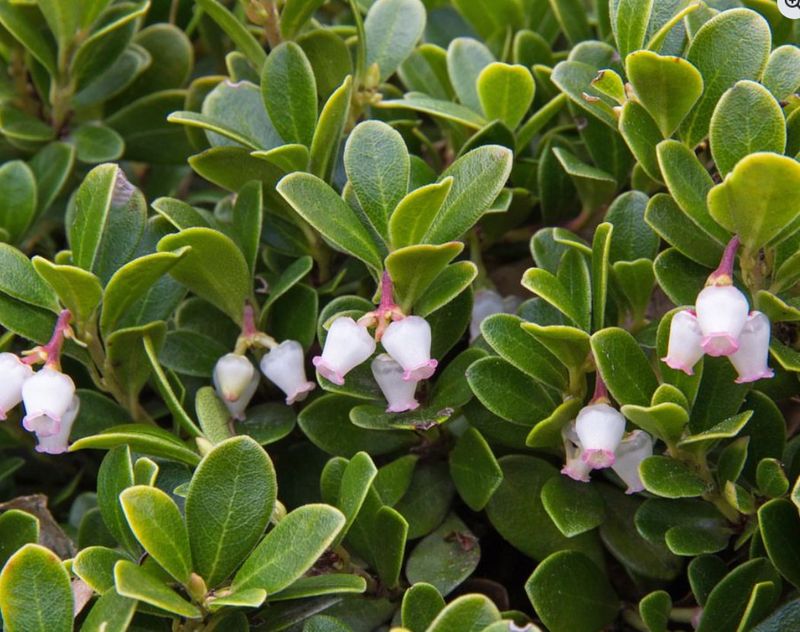
Few plants can match the year-round dependability of Kinnikinnick. Also called bearberry, this low-growing native plant stays green through every season.
It forms a dense, carpet-like mat that hugs the ground and crowds out weeds without any bark mulch underneath it.
Kinnikinnick thrives in dry, sunny spots where other plants struggle. It handles poor, sandy, or rocky soil with ease.
Once it gets established, it barely needs any water at all. That makes it a top choice for slopes, rock gardens, and sunny beds that dry out quickly in summer.
The leaves are small, shiny, and tough. They do not dry out and crumble like bark mulch does.
Instead, they stay flexible and green even during hot stretches. Small pink flowers appear in spring and attract native bees.
By late summer, bright red berries form and feed birds well into winter.
Kinnikinnick spreads slowly but steadily. Plant it about two feet apart and give it a season to settle in.
After that, it takes care of itself. It roots along its stems as it creeps across the ground, which helps it anchor soil on slopes and prevent erosion.
This plant is also fire-resistant compared to dry bark mulch. Its thick, waxy leaves hold moisture and resist ignition.
For anyone living in fire-prone areas of this state, that is a major benefit worth considering when planning a safe and low-maintenance landscape.
2. Woodland Strawberry Covers Soil With Living Green
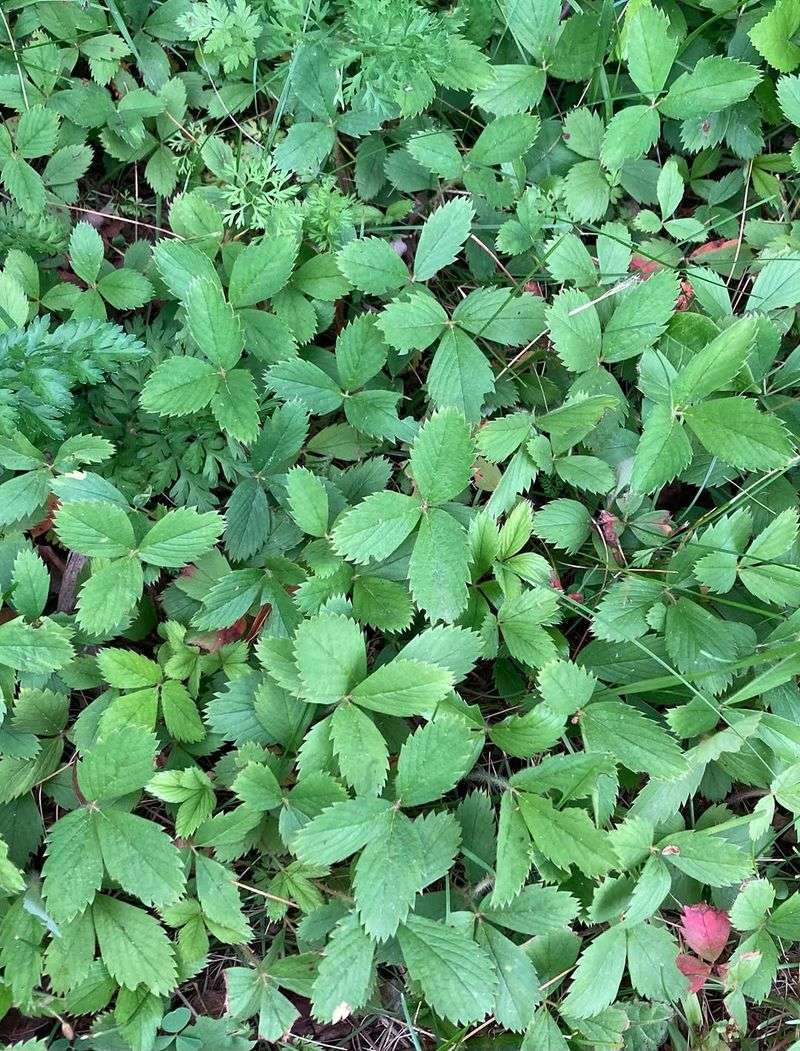
Most people think of strawberries as something you grow in a garden patch for food. But woodland strawberry does double duty.
It works as a beautiful, spreading groundcover and still produces small, sweet berries that wildlife loves.
Native to forests and open meadows across this state, woodland strawberry sends out runners that root into the soil as they spread. Over one growing season, a few starter plants can fill in a surprising amount of bare ground.
The result is a lush, living carpet that stays green through summer and into fall.
The leaves are bright green and slightly textured. They stay close to the ground and form a thick layer that shades the soil, keeping it cooler and moister than bare dirt or dry bark mulch ever could.
Your Oregon Garden Changes Every Week. Your Plan Should Too.
Gardening in Oregon changes quickly throughout the season. Every Friday you’ll receive a simple weekly plan showing exactly what to plant, prune, fertilize, harvest, and protect so you never miss the right timing.
That moisture retention helps nearby plants too, reducing how often you need to water the whole bed.
White flowers appear in spring and early summer. They attract pollinators quickly and look cheerful against the green foliage.
After the flowers fade, tiny red fruits appear. Birds and small mammals appreciate them, which makes this plant a magnet for backyard wildlife.
Woodland strawberry works well in partial shade or dappled sunlight. It tolerates a range of soil types, from sandy to loamy.
Plant it six to twelve inches apart for faster coverage. It spreads naturally and fills gaps without much effort, making it a reliable, fire-safe alternative to flammable bark mulch.
3. Self-Heal Fills Low Gaps Through Summer
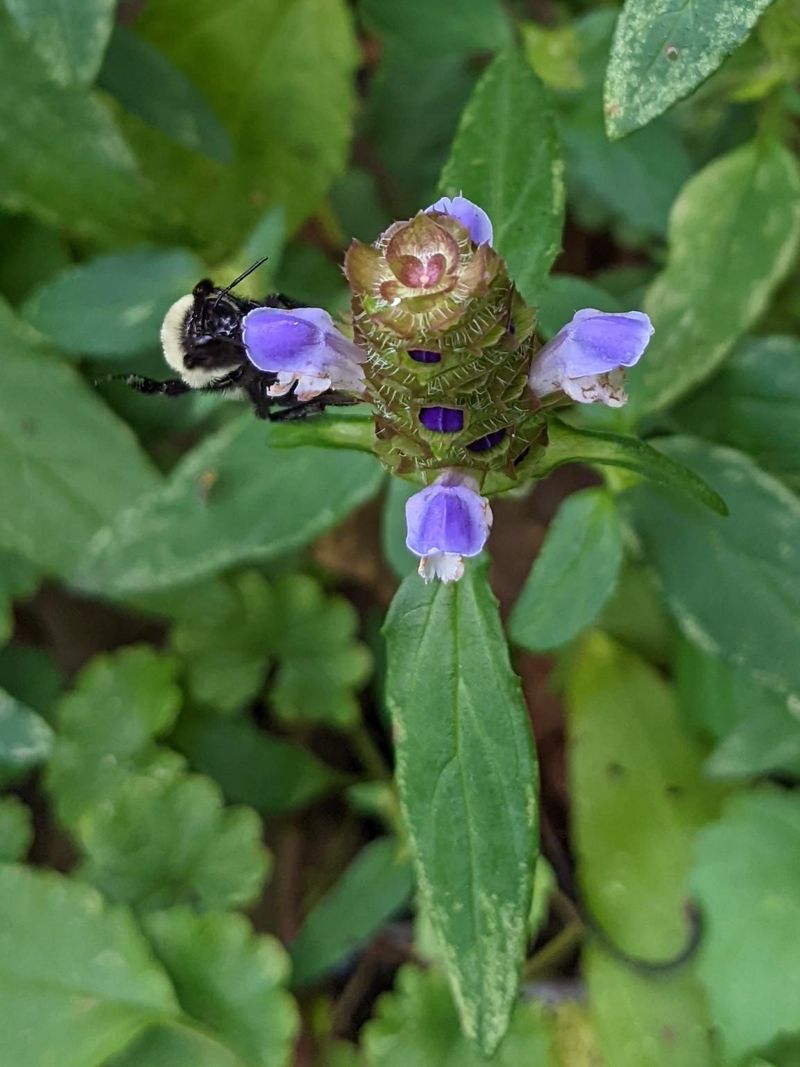
There is a tough little plant that has been growing in Pacific Northwest meadows and lawns for centuries, and most people walk right over it without noticing.
Self-heal, known by the botanical name Prunella vulgaris, is a low-growing native herb that fills bare spots with dense, green coverage all summer long.
It stays short, usually under six inches tall. That means it works well between stepping stones, along path edges, or in any low spot where you want green coverage without height.
It tolerates foot traffic better than most groundcovers, which makes it especially useful in high-traffic areas of the yard.
The leaves are oval and slightly wrinkled. They stay green through dry spells and recover quickly after rain.
Small purple flower spikes appear from late spring through summer and attract bumblebees, which are important pollinators in this region. Even when the flowers are not in bloom, the plant looks tidy and full.
Self-heal grows in sun or partial shade. It handles both moist and somewhat dry conditions, though it looks its best with occasional watering during the driest weeks of summer.
It spreads by seed and by creeping stems, so it fills gaps on its own over time.
Unlike bark mulch, self-heal does not dry out and become a fire risk. It stays moist and flexible throughout the season.
For low-traffic edges, lawn alternatives, or shaded gaps between larger plants, it is one of the most practical native groundcovers available in this state.
4. Oregon Stonecrop Handles Hot Dry Edges
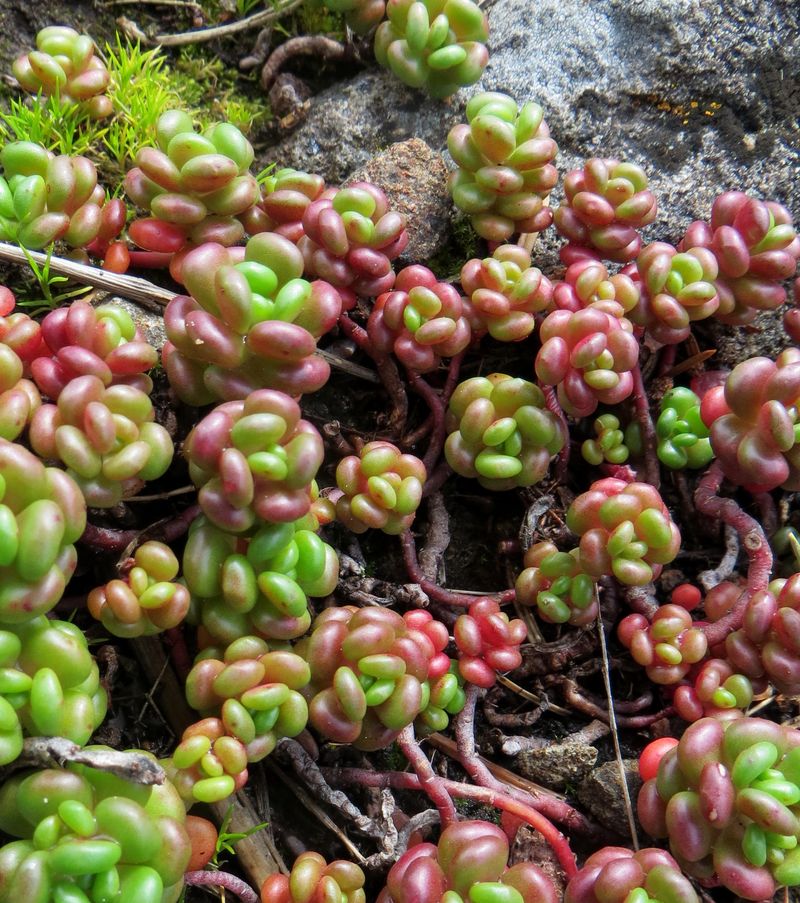
When summer heat bears down and the soil turns to dust, most plants wave a white flag. Not Oregon stonecrop.
This tough native succulent thrives in exactly those conditions, making it one of the most reliable groundcovers for the hottest, driest edges of a yard or garden.
Oregon stonecrop, or Sedum oreganum, stores water in its thick, fleshy leaves. That built-in water supply keeps it looking full and green even when rainfall disappears for weeks.
The leaves are small, round, and slightly glossy. They cluster together to form a dense mat that covers soil efficiently and keeps it from drying out completely.
In late spring and early summer, bright yellow star-shaped flowers cover the plant. They are small but eye-catching, and they draw in native bees and other pollinators.
After the flowers fade, the foliage often takes on reddish tones in full sun, adding a warm splash of color to rocky beds and sunny borders.
This plant is a natural fit for rocky slopes, wall tops, container edges, and any spot where water drains fast and the sun is relentless. It asks for very little.
No fertilizer, no regular watering once established, and no bark mulch underneath it. The plant handles its own needs once it settles in.
Stonecrop also resists fire far better than dry bark mulch does. Its water-filled leaves do not catch and spread flames easily.
For fire-conscious gardeners in the drier parts of this state, that quality alone makes it worth planting along exposed sunny edges.
5. Creeping Oregon Grape Adds Evergreen Groundcover
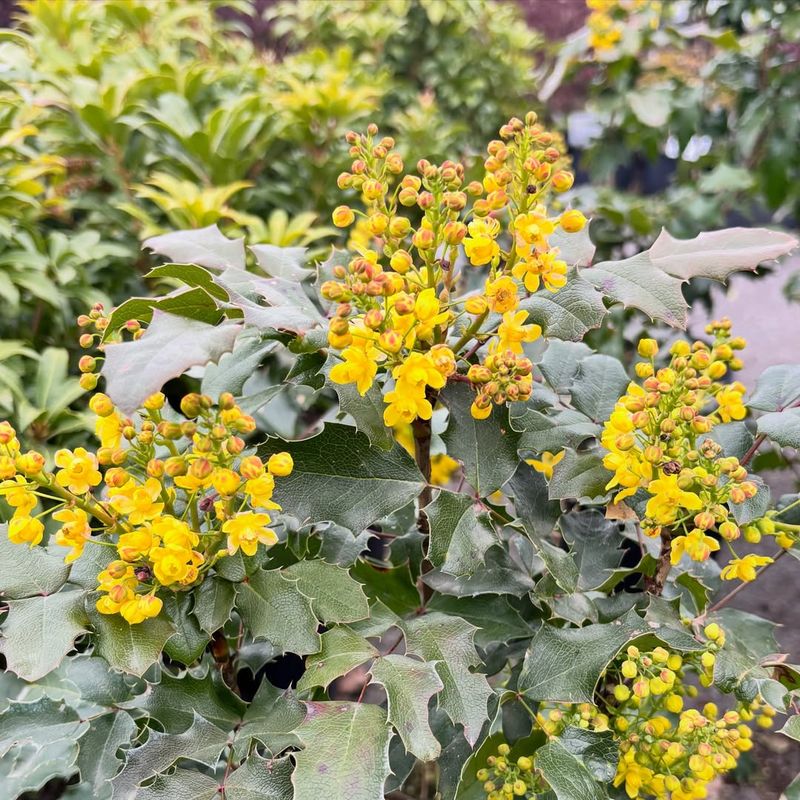
Bold, glossy leaves that look like miniature holly and stay green all year long make creeping Oregon grape one of the most striking native groundcovers in this state.
It grows low to the ground, usually under one foot tall, and spreads outward in a slow but steady pattern that fills garden beds beautifully.
Unlike the taller Oregon grape shrub, the creeping variety stays compact and ground-hugging.
It works well under trees, along shaded fences, or anywhere you need evergreen coverage that does not require constant attention.
The leaves are stiff and slightly spiny, which also helps deter deer from browsing through your beds.
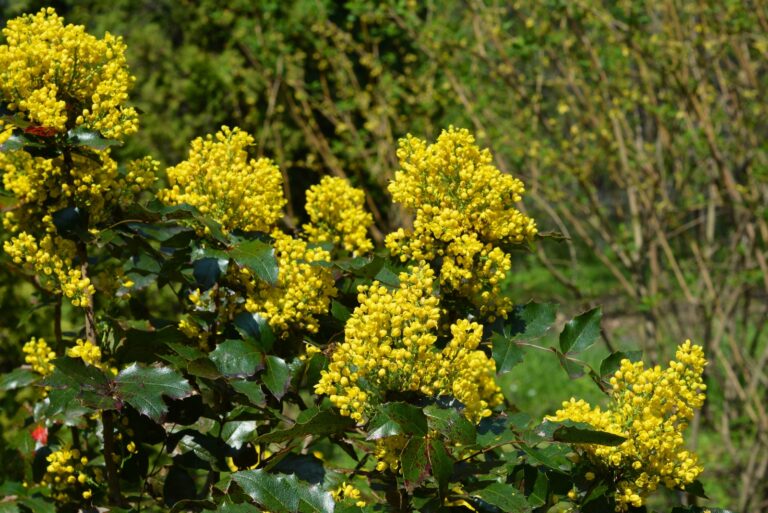
Clusters of small yellow flowers appear in early spring. They have a faint sweet scent and attract early-season pollinators before many other plants have even leafed out.
After the flowers, small blue-purple berries form. Birds eat them eagerly, and the berries can also be used to make jelly or juice if you get to them first.
Creeping Oregon grape tolerates deep shade, dry soil, and compacted ground. It handles conditions that would challenge most other plants.
Once established, it needs very little water and no fertilizer. Planting it two to three feet apart gives it room to spread naturally.
From a fire safety standpoint, its thick evergreen leaves hold moisture well into summer. They do not dry out and crumble the way bark mulch does.
That makes this plant a smart, fire-conscious choice for shaded areas in yards across this state.
6. Yerba Buena Softens Shady Bare Soil
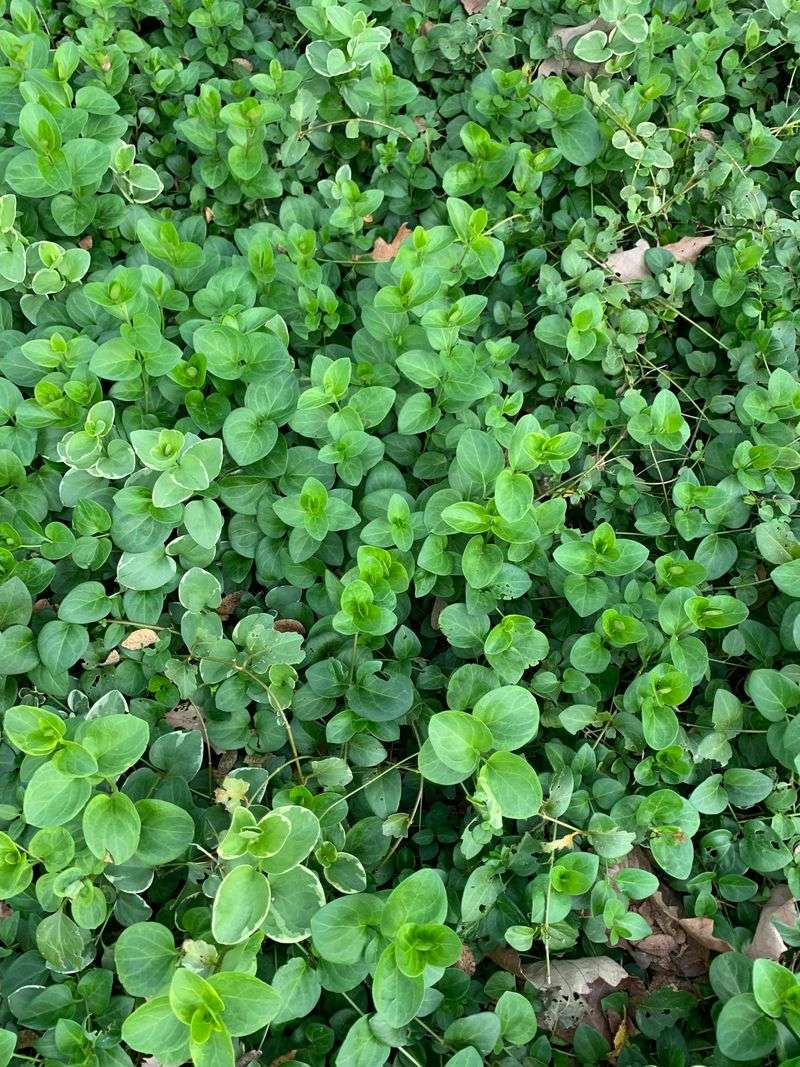
Walk past a patch of yerba buena on a warm day and you will catch a faint, minty scent drifting up from the ground. This delicate-looking but surprisingly tough native plant has been used by Indigenous peoples of this region for centuries.
It creeps along the ground in shaded spots, covering bare soil with a soft, fragrant mat of tiny rounded leaves.
Yerba buena, known botanically as Clinopodium douglasii, is a member of the mint family. Like its relatives, it spreads by creeping stems that root as they travel across the soil.
It stays very low, rarely exceeding a few inches in height. That low profile makes it perfect for filling the bare ground beneath trees, along shaded paths, or in corners that never seem to grow anything useful.
The leaves are small, round, and bright green. They stay green through most of the year in mild parts of this state.
Tiny white flowers appear in summer and attract small native bees and beneficial insects. The plant asks for very little in return, just shade, decent moisture, and a bit of patience while it establishes.
Yerba buena does not tolerate heavy foot traffic or full sun exposure for long periods. Keep it in shaded, protected spots for best results.
It fills gaps that other plants ignore and brings a calming fragrance to shaded garden corners.
Compared to bark mulch, it holds soil moisture better and stays green instead of drying into a fire risk. It is a quiet but capable performer in any shaded native plant landscape.
7. Coastal Strawberry Works In Brighter Oregon Beds
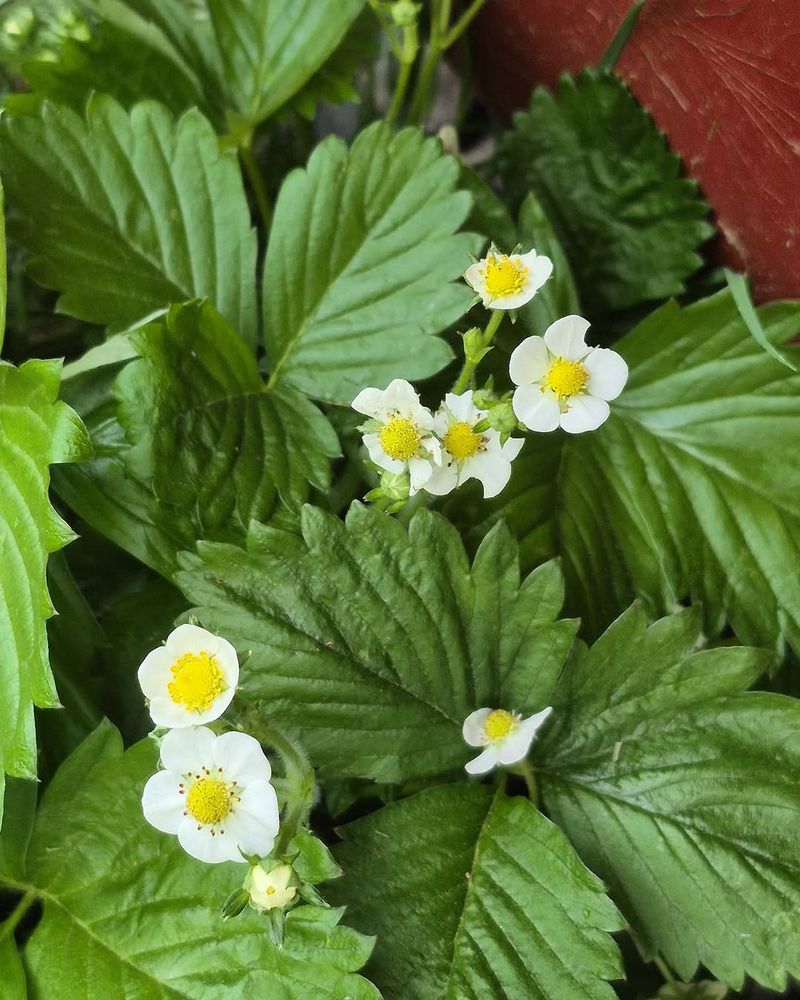
Brighter garden beds near the coast or in open sunny yards deserve a groundcover that can handle the heat and still look great. Coastal strawberry, or Fragaria chiloensis, is exactly that plant.
It is the wild ancestor of the garden strawberry and brings a natural, lush look to sunny spots that need reliable coverage all season.
The leaves are thick, glossy, and deeply veined. They stay green through summer even when the sun is intense.
Unlike bark mulch, which fades and dries out under direct sun, coastal strawberry holds its color and keeps the soil beneath it cool and moist. That makes a real difference for other nearby plants trying to survive the driest weeks of summer.
White flowers with yellow centers appear in spring and early summer. They attract bees and butterflies and add a cheerful look to beds and borders.
Small red fruits follow and feed birds, ground squirrels, and other small wildlife throughout the season. The plant spreads by runners, filling bare spots without any extra effort from the gardener.
Coastal strawberry grows well in sandy or loamy soil with decent drainage. It tolerates salt spray, which makes it a strong performer in coastal gardens along this state’s shoreline.
Plant it about twelve inches apart for moderate coverage, or closer together for faster results.
Once established, it needs little water and no fertilizer. It handles sun, wind, and dry spells without complaint, making it one of the most practical and fire-safe alternatives to bark mulch in open, sunny landscapes.
8. False Lily-Of-The-Valley Covers Damp Shade
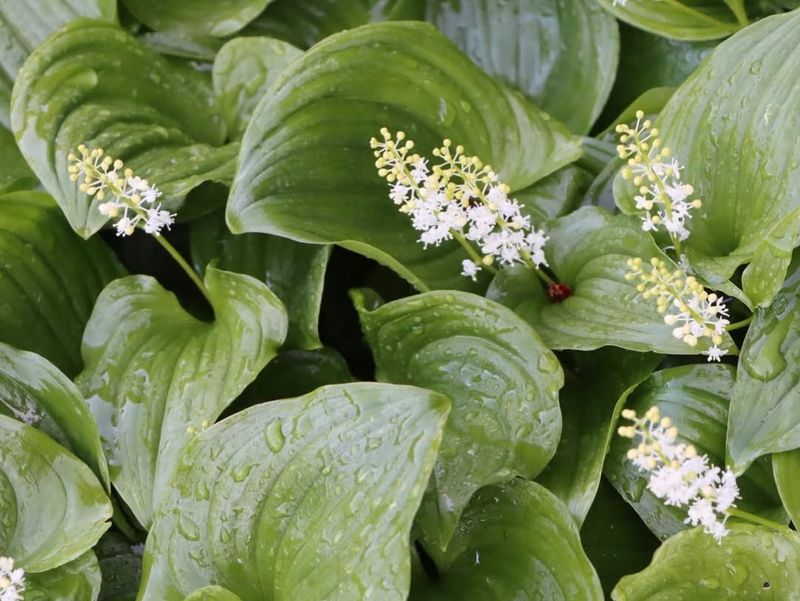
Some of the most beautiful groundcovers thrive in the spots most gardeners find hardest to plant. False lily-of-the-valley, known as Maianthemum dilatatum, loves damp shade.
It spreads eagerly under tall trees, beside streams, and in moist corners where few other plants bother to go.
The leaves are broad, heart-shaped, and a rich, deep green. They overlap as the plant spreads, forming a dense, weed-suppressing mat that covers the ground completely.
In spots where bark mulch would sit wet and grow mold, this plant thrives and looks genuinely beautiful. The contrast between the lush leaves and dark forest soil creates a striking, natural look.
Tiny white flowers appear in late spring on upright stems. They have a light, sweet fragrance and attract small pollinators.
After blooming, small red-speckled berries form and ripen through summer. Birds and small mammals find them irresistible, which adds wildlife activity to even the quietest shaded corners of a yard.
False lily-of-the-valley spreads by underground rhizomes. Once planted in the right conditions, it expands on its own season after season.
It does best in consistently moist, humus-rich soil with little to no direct sun. Do not plant it in dry or exposed spots, as it will struggle without adequate moisture and shade.
For gardeners dealing with wet, shaded areas where bark mulch rots and looks messy, this plant is a genuine solution.
It covers ground beautifully, supports wildlife, and stays green and fire-safe throughout the summer months without any extra care.
9. Bunchberry Makes Cool Beds Look Lush
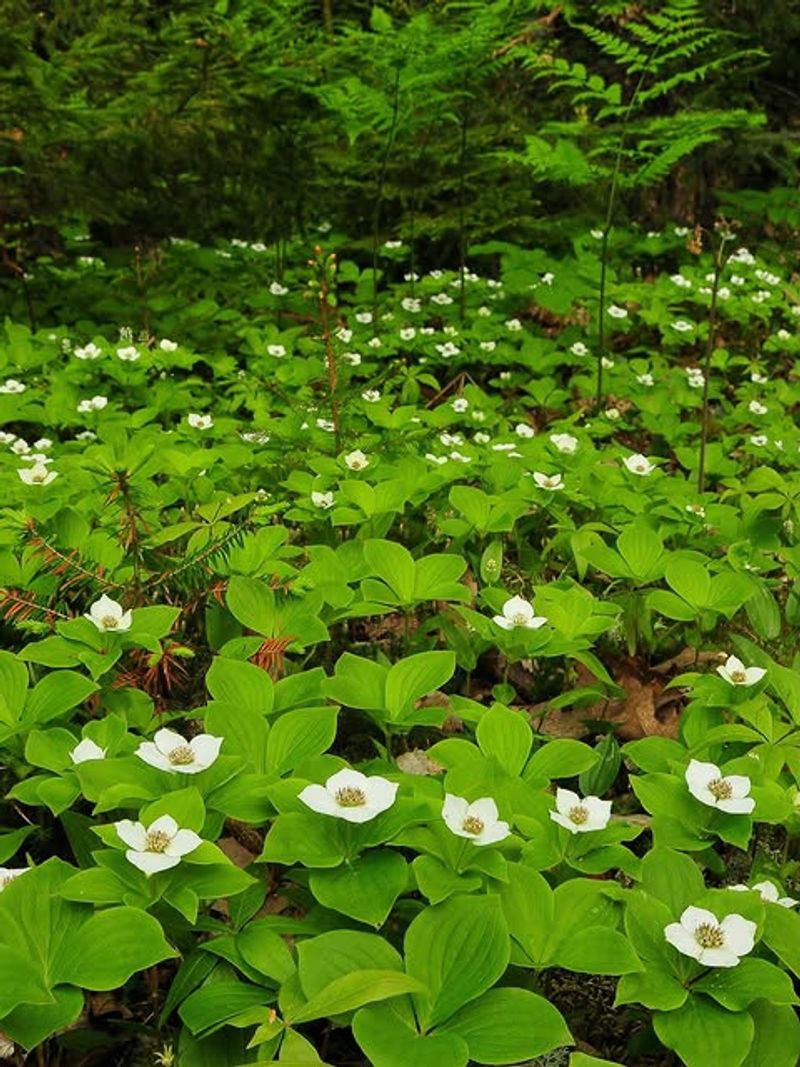
Cool, shaded beds in northern regions of this state have a secret weapon, and it goes by the name bunchberry.
This low-growing native plant belongs to the dogwood family, and it brings the same elegant look as its tall tree relatives but stays just four to six inches off the ground.
The leaves grow in neat whorls of four to six around each stem. They are oval, deeply veined, and bright green.
In fall, they turn deep red before the plant goes dormant, giving the garden a burst of color before winter arrives. In spring, the whole process starts fresh, and the plant comes back just as full and green as before.
White four-petaled flowers appear in late spring. They look just like miniature dogwood blooms and add a refined, woodland elegance to shaded beds.
After the flowers, clusters of bright red berries form. Birds love them, and the clusters give the plant its common name.
The berries are technically edible for humans too, though they are quite bland on their own.
Bunchberry needs cool, moist, acidic soil and consistent shade to perform well. It does not tolerate heat or drought, so it is best reserved for protected northern exposures or spots under dense tree canopy.
Plant it in groups for the most visual impact. Compared to bark mulch, bunchberry keeps the soil underneath it cool, moist, and stable.
It never dries into a fire hazard, and it adds genuine beauty to the shaded corners of any Pacific Northwest landscape.