These Native Oregon Shrubs Are So Dense Weeds Simply Can’t Break Through
Bare soil in an Oregon garden does not stay bare for long, and unfortunately it is never the plants you actually wanted that show up first.
Weeds are fast, opportunistic, and remarkably good at finding every gap, thin patch, and open stretch of ground you forgot to cover.
It is one of those garden frustrations that feels like a full-time job if you let it get ahead of you. Native shrubs that spread naturally, form dense layers, or sucker outward over time are one of the more satisfying long-game solutions to this problem.
They are not instant and they are not magic, but give them the right site, some early mulching, and a little patience, and they gradually close off the open ground that weeds depend on.
In the process, those same problem spots turn into something genuinely useful for local wildlife at the same time.
1. Salal Forms Dense Evergreen Thickets
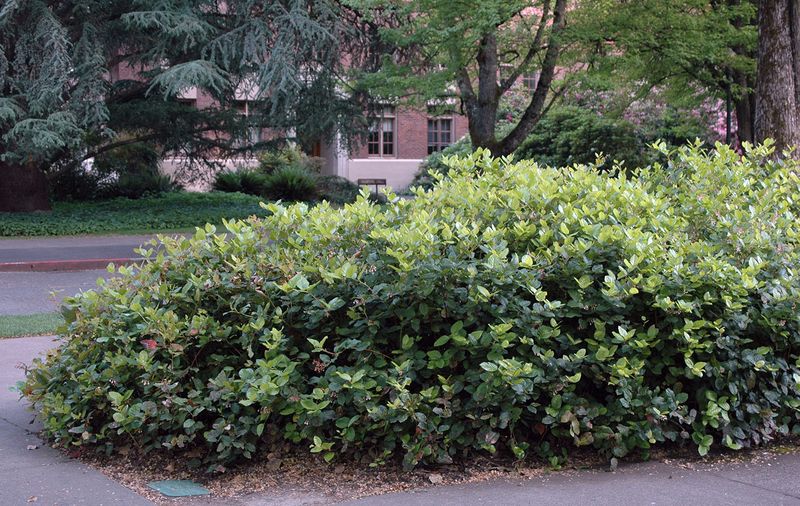
Shaded ground under Oregon conifers often stays bare for years because few plants can handle the deep root competition and low light. Salal is one of the native shrubs that genuinely thrives in those difficult spots.
It spreads by underground rhizomes and can develop into broad, dense evergreen thickets over time.
As a high groundcover or shrub mass in woodland-style plantings, salal creates a layered canopy of glossy leaves that shades the soil beneath it. That shade makes it harder for weed seeds to germinate and get established.
Once a salal colony fills in, open soil gaps become less common.
Salal grows well in partial to full shade and prefers well-drained, acidic soil with consistent moisture during establishment. It is not a fast grower, so young plantings need mulch and early weeding while the colony fills in.
In western Oregon, salal is a reliable choice for woodland edges, shaded slopes, and foundation beds under large trees. It supports pollinators, provides berries for wildlife, and keeps its leaves year-round.
Patience is key, but the payoff is a low-maintenance evergreen layer that gradually reduces the bare soil weeds love to colonize.
2. Common Snowberry Suckers Into Loose Colonies
Weeds creeping into an informal shrub border can feel like a never-ending battle, especially when plants are spaced too far apart and soil stays exposed between them. Common snowberry offers a different approach.
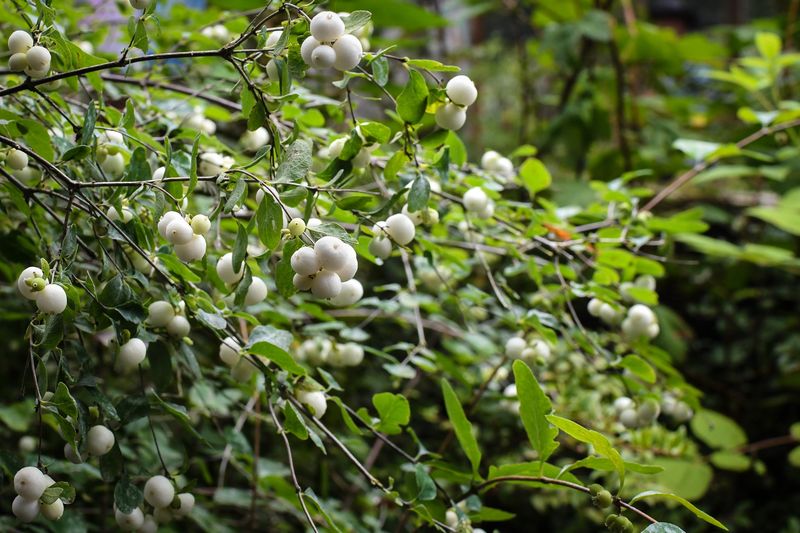
It suckers freely from its root system and spreads into loose colonies that gradually fill open ground.
Snowberry is a deciduous native shrub, so it does not provide year-round leaf cover the way an evergreen would. During winter, the bare stems leave soil exposed, which means weeds can still move in during cooler months.
It works best as part of a mixed native planting rather than as a standalone weed barrier.
In Oregon, snowberry fits naturally along woodland edges, informal hedgerows, and low-maintenance borders where spreading is welcome.
It tolerates a range of conditions, including dry shade, which makes it useful under established trees where irrigation is limited.
The white berries it produces in fall are a valuable food source for birds. Young plantings benefit from mulch and some early hand-weeding while the colony establishes.
Your Oregon Garden Changes Every Week. Your Plan Should Too.
Gardening in Oregon changes quickly throughout the season. Every Friday you’ll receive a simple weekly plan showing exactly what to plant, prune, fertilize, harvest, and protect so you never miss the right timing.
Once snowberry fills in, the suckering growth helps crowd out new weed seedlings by occupying the soil space they would otherwise colonize. It is a practical, low-care native for informal Oregon landscapes.
3. Salmonberry Fills Moist Ground Fast
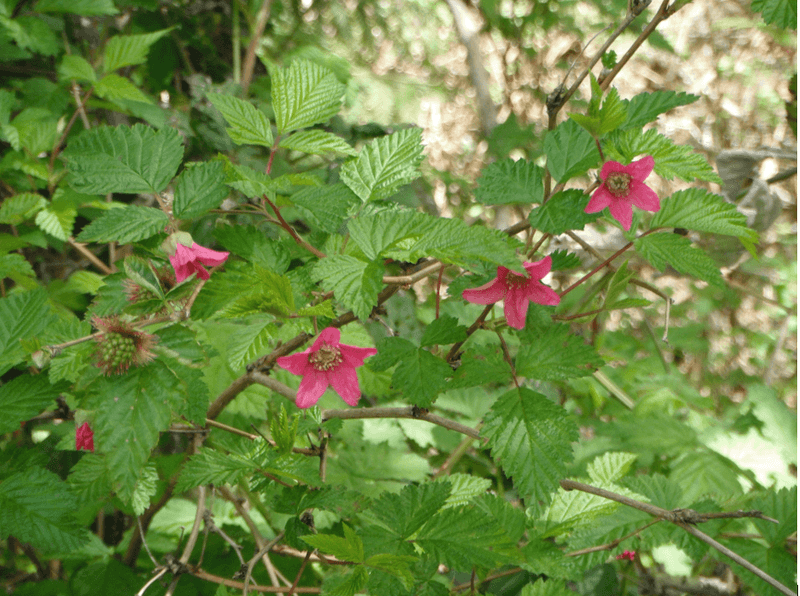
Few native shrubs move as quickly into wet, open ground as salmonberry. Along Oregon stream banks, moist slopes, and soggy garden edges, it can develop into large, dense thickets that shade soil deeply and leave little room for weeds to get started.
That vigor is exactly what makes it useful in the right setting.
Salmonberry spreads by both seed and rhizome, which means it can colonize open moist areas fairly quickly. In roomy spots where spread is welcome, that trait works in a gardener’s favor.
In tight formal beds or small yards, that same energy can become a management challenge. This shrub belongs in generous spaces where it has room to do what it naturally does.
It thrives in full sun to partial shade and needs consistent moisture to perform well. Western Oregon rain gardens, wet borders, and moist native hedgerows are ideal placements.
Salmonberry also supports hummingbirds and other wildlife with early-season flowers and summer fruit. Young plants establish quickly with regular water, and mulch helps retain the moisture they prefer.
Once a colony is growing well, the dense canes and spreading root system make it genuinely difficult for most weeds to break through and claim open soil.
4. Nootka Rose Colonizes Informal Borders
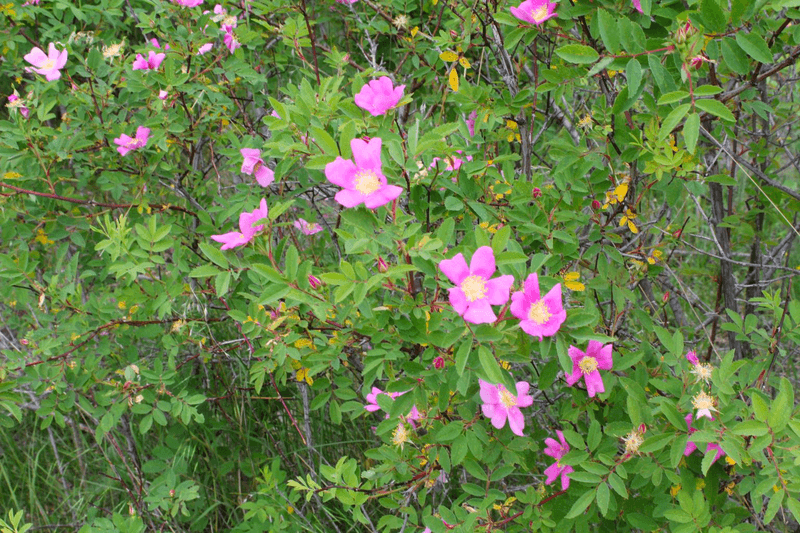
Thorny canes, fragrant pink flowers, and bright red hips make Nootka rose one of the most recognizable native shrubs along Oregon roadsides and woodland edges.
It is also one of the more effective colonizers in the native shrub toolkit, spreading by root suckers to gradually fill informal borders and habitat edges.
Because it spreads laterally over time, Nootka rose can close the open gaps in a hedgerow or slope planting that weeds typically exploit. The arching, thorny canes also create a physical barrier that discourages foot traffic and browsing animals.
For habitat-focused plantings, it provides nesting cover, insect forage, and winter berries for birds.
Nootka rose grows well in full sun to partial shade and adapts to a range of Oregon soils, including heavier clay types.
It handles seasonal moisture variation reasonably well once established, which makes it a practical choice for informal borders, rural hedgerows, and wildlife-focused slopes.
Tight formal gardens are not the right fit because the spreading habit is part of what makes it work. Mulch and early weeding during establishment help the colony get ahead of competition.
Once it fills in, the dense suckering mass and thorny structure make it much harder for opportunistic weeds to move in and take hold.
5. Red-Osier Dogwood Builds A Spreading Shrub Layer
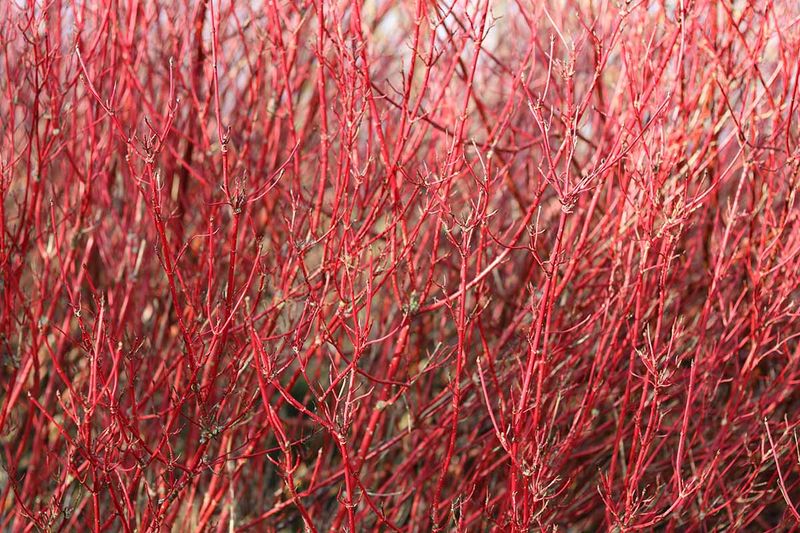
Bright red stems in winter make red-osier dogwood one of the most visually striking native shrubs in Oregon, but its value in the landscape goes well beyond seasonal color.
This shrub builds a broad, multi-stemmed layer that spreads over time in moist sites, gradually filling open ground and reducing the soil exposure that weeds need.
Red-osier dogwood spreads by layering and suckering, which means established plants slowly expand outward and fill gaps in a shrub border.
That spreading habit makes it a useful anchor in moist native plantings along Oregon stream edges, wet swales, rain garden margins, and low-lying borders.
It is not a dry-slope solution, as it genuinely needs consistent moisture to perform well and look its best.
In the right site, the dense multi-stemmed growth shades soil and makes it harder for weeds to establish in the gaps between plants. White flower clusters in spring attract pollinators, and the berries support birds through fall.
Young plants establish quickly with regular watering and benefit from a layer of mulch to retain soil moisture. As the shrub layer matures and spreads, it creates a connected mass of stems and roots that competes effectively with weeds in moist-border plantings.
Early weeding during establishment is still worthwhile.
6. Douglas Spirea Thickens Wet Garden Edges
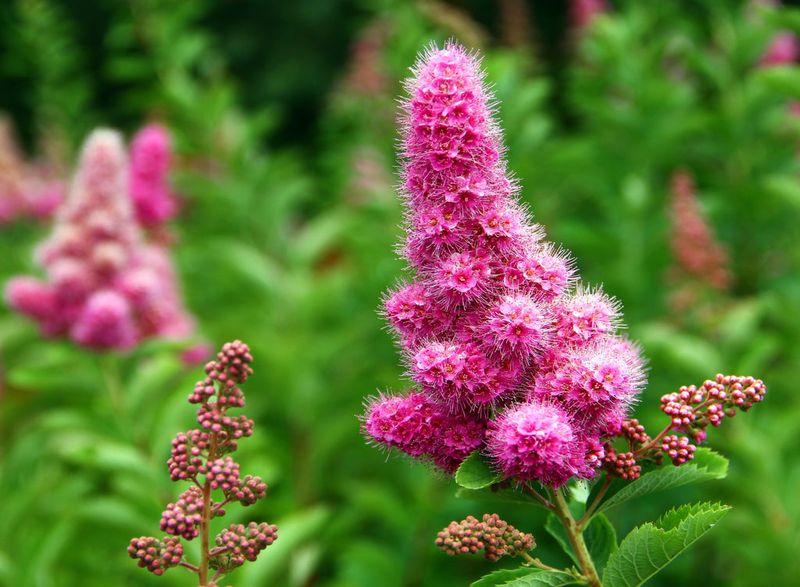
Wet edges, soggy borders, and stream-bank-style plantings in Oregon can be tricky to manage because many common landscape shrubs simply do not tolerate standing water or saturated soil.
Douglas spirea is a native shrub that genuinely belongs in those conditions, and it brings a suckering, colony-forming habit that can help fill open wet ground over time.
It spreads freely by root suckers, which means a young planting gradually thickens into a connected mass of stems. That dense colony structure shades the soil beneath the canopy and reduces the open ground that weed seeds need to germinate and grow.
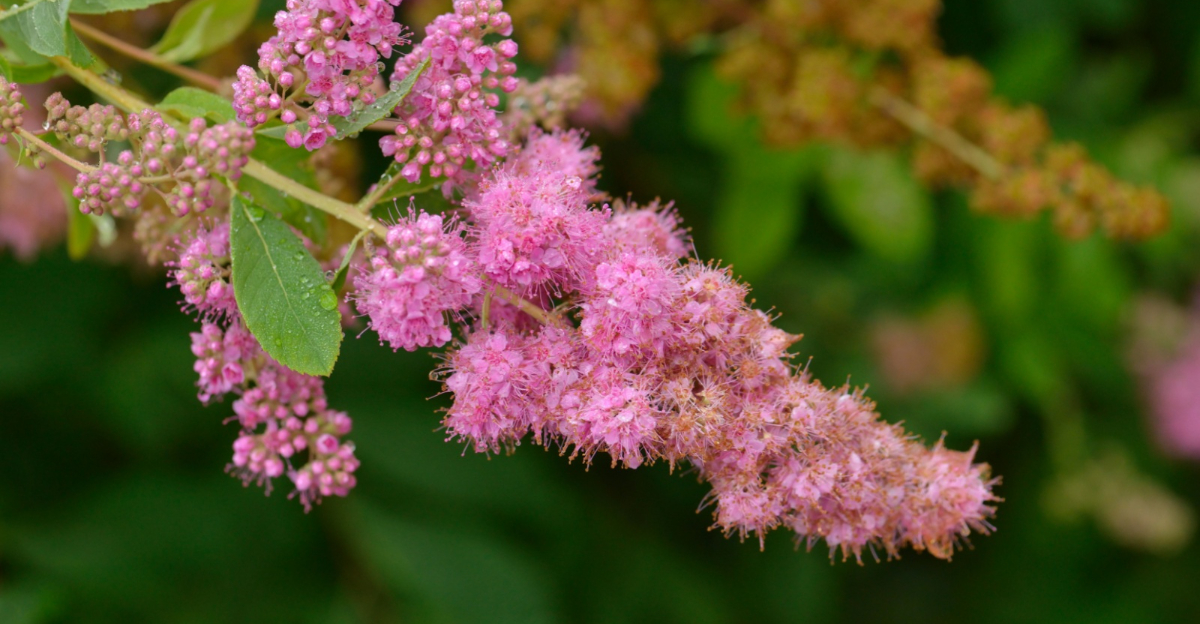
Pink flower spikes in summer add color while also supporting native bees and other pollinators.
Douglas spirea works well along rain garden edges, wet swales, pond margins, and damp Oregon borders where few other shrubs thrive. It tolerates full sun to partial shade and grows best with consistent to high soil moisture.
Because it suckers actively, it can spread beyond its original planting space, so placing it where spread is welcome makes management easier. Mulch helps during establishment, and early weeding keeps competition low while the colony fills in.
Once Douglas spirea thickens into a full stand, the connected root system and leafy canopy create a genuinely difficult environment for most weeds to penetrate.
7. Pacific Wax Myrtle Creates Evergreen Screening
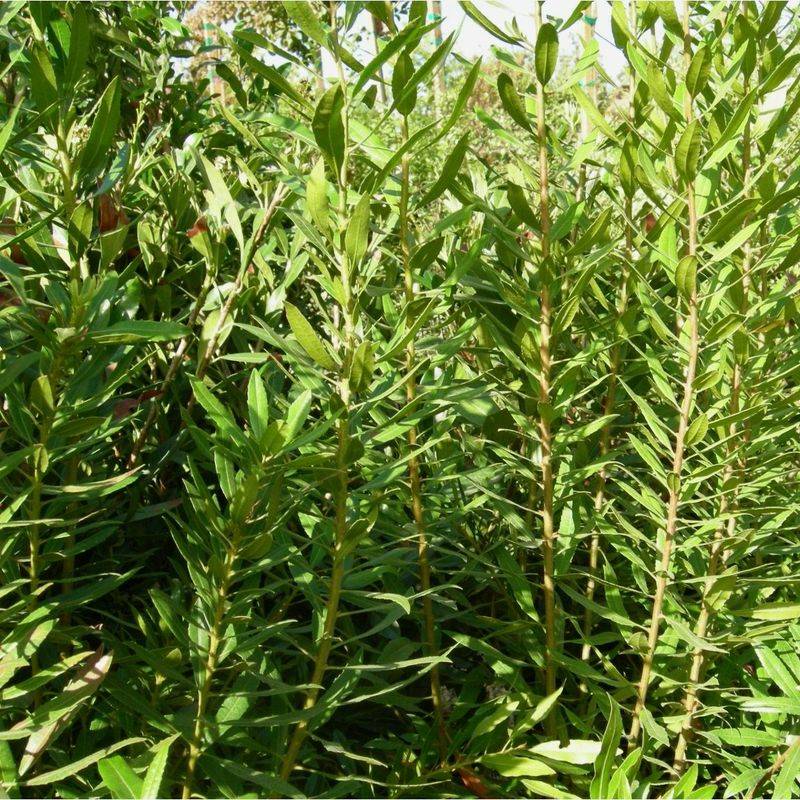
Gardeners looking for a tall evergreen screen along an Oregon property edge often turn to non-native options without realizing that Pacific wax myrtle can do the job with more ecological value.
This native evergreen shrub can grow into a dense hedge or multi-stemmed screen that shades the soil beneath it and reduces light reaching the ground.
That shade effect is where wax myrtle helps with weeds. Under a well-developed screen or hedge, soil stays shaded for much of the day, which limits germination for many common weed species.
It is not a low groundcover that smothers weeds at ground level, but as a tall screening shrub it removes a lot of the light that weeds depend on in open border areas.
Pacific wax myrtle grows best in full sun to partial shade and tolerates a range of Oregon soils, including moist or seasonally wet conditions. It is a reliable choice for western Oregon coastal sites, valley borders, and informal screens along property lines.
The aromatic foliage is an added bonus, and the small waxy berries support birds. Young plants benefit from mulch and regular watering during the first two Oregon summers.
Once established, wax myrtle grows steadily and fills in to create a dense, connected evergreen layer that reduces weed pressure in the border below.
8. Evergreen Huckleberry Shades Soil Slowly
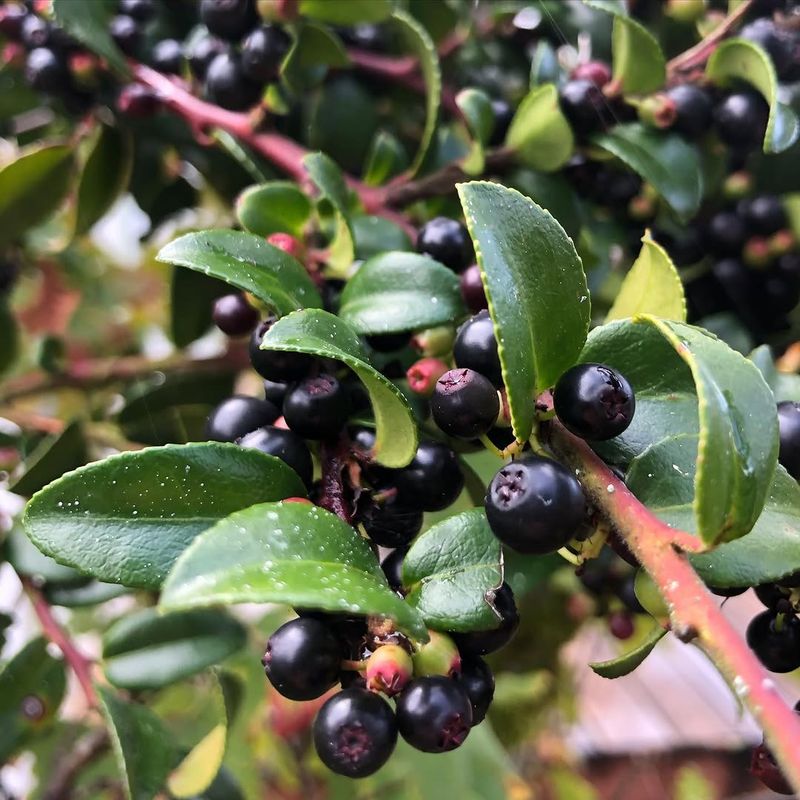
Not every native shrub needs to be a fast spreader to earn a place in an Oregon garden. Evergreen huckleberry is compact, tidy, and genuinely evergreen, which means it holds its leaves year-round and keeps shading soil even through winter.
That consistent leaf cover is part of what makes it useful in spots where weed pressure is ongoing.
The trade-off is time. Evergreen huckleberry is a slower grower than salal or Douglas spirea, so young plants need mulch and regular weeding while they fill in.
Once established, the dense evergreen canopy shades soil well and makes it harder for weed seeds to find the light they need to germinate. The payoff is a low-maintenance shrub that rarely needs pruning and looks good year-round.
It grows best in partial to full shade with well-drained, acidic, moisture-retentive soil, which makes it a natural fit for woodland edges and shaded Oregon borders. The dark berries are edible and popular with birds and other wildlife.
In western Oregon, evergreen huckleberry works well as a foundation planting, a low informal hedge, or a layered understory shrub beneath taller natives.
Patience during establishment is the main requirement, but the result is a reliable, long-lived evergreen shrub that earns its keep in shaded Oregon landscapes.
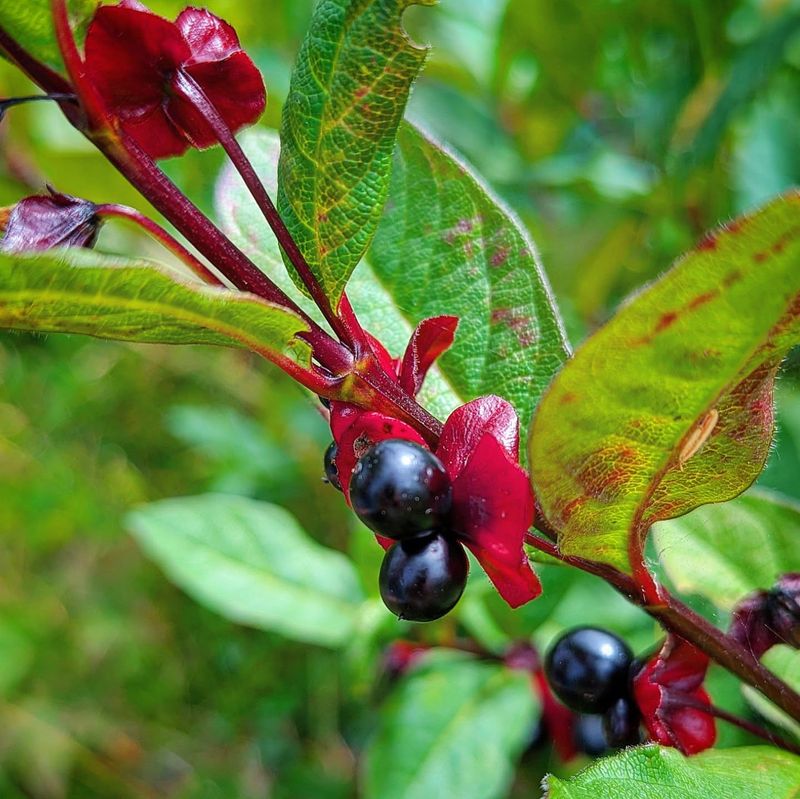
9. Twinberry Fills Moist Part-Shade Borders
Moist, partly shaded borders in Oregon can be surprisingly hard to plant well. Many shrubs that tolerate shade do not handle wet feet, and many that handle wet soil need more sun than a woodland edge provides.
Twinberry is a native shrub that fits naturally into that overlap, growing well in moist to wet conditions with partial shade.
It can fill a shrub layer in mixed native plantings, especially along damp edges, shaded stream margins, and moist Oregon hedgerows.
The paired yellow flowers are attractive to hummingbirds, and the twin black berries that follow are a food source for several bird species.
As part of a mixed native planting, twinberry contributes to the overall density of the shrub layer, which helps reduce the open soil gaps that weeds exploit.
Twinberry is less of a dense weed-suppressing thicket former than salal or Douglas spirea, so it works best when planted alongside other natives that fill space more aggressively. It is a good mid-layer shrub in a mixed border rather than a standalone weed solution.
Mulch and early weeding during establishment are helpful, especially in partly shaded spots where weed competition can still be significant.
In the right Oregon site, twinberry adds wildlife value, visual interest, and useful shrub volume to moist native plantings.
10. Tall Oregon Grape Adds Spiny Evergreen Cover
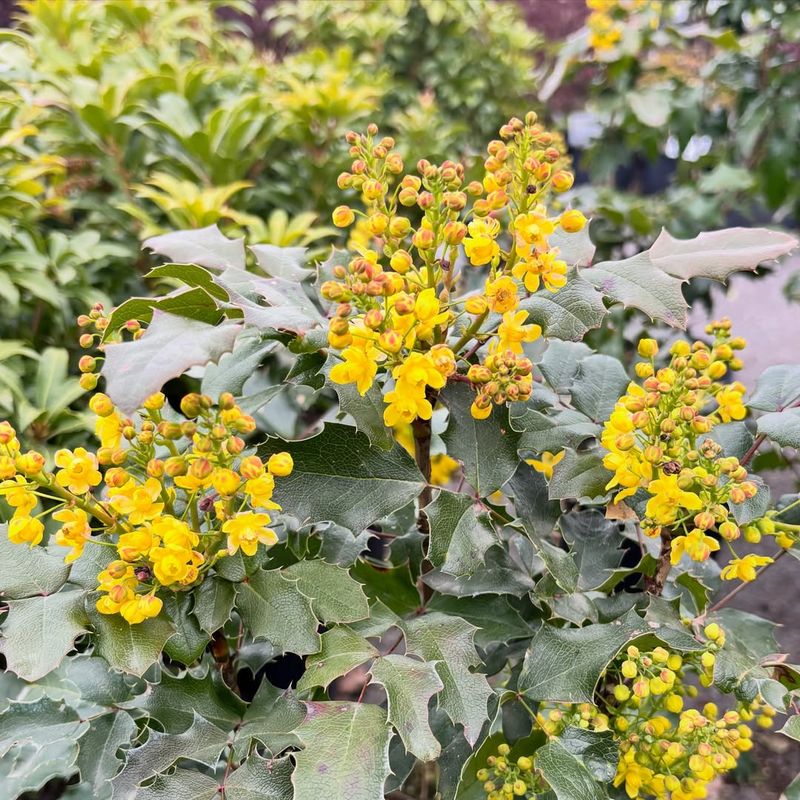
Anyone who has accidentally brushed against tall Oregon grape knows those spiny leaflets mean business.
That prickly texture is not just for show – it creates a physical deterrent that keeps foot traffic, browsing animals, and opportunistic weeds from moving easily through an established planting.
As the state flower of Oregon, it also carries a lot of native plant credibility.
Tall Oregon grape is a shade-tolerant evergreen shrub that works as a layered understory plant in woodland-style gardens.
It does not spread into wide thickets the way salal or snowberry does, but its upright, multi-stemmed structure and dense evergreen foliage shade the soil around each plant and reduce light reaching the ground.
That shade effect helps limit weed germination in the immediate area.
It grows well in partial to full shade and tolerates dry to moderately moist, acidic soil, making it one of the more versatile native shrubs for challenging Oregon sites under established trees.
Yellow flower clusters in early spring attract native bees, and the blue-purple berries support birds and can be used for homemade jelly.
Young plants establish steadily with mulch and occasional watering. Tall Oregon grape works best as part of a layered native planting where it contributes spiny evergreen structure and shade-tolerant cover alongside more spreading companions.