The Mowing Mistake That Turns Minnesota Lawns Brown During Drought

Your grass was fine on Monday. By Friday, it looked like something was quietly falling apart underneath it, and nothing you did seemed to matter.
Minnesota summers do not forgive small mistakes, and the one that wrecked your lawn is probably sitting in your garage right now. It does not look dangerous. You have used it a hundred times.
Most homeowners walk right past it without a second thought, and that is exactly the problem. Something is happening underground that no amount of watering will fix fast.
The roots stop growing. The plant burns through its last energy reserves. What happens when the crown tissue suddenly gets cooked in direct sun it was never built to handle?
Most Minnesota homeowners repeat this mistake every single summer and blame the heat. The answer has been under your feet the whole time, and it changes everything.
The Mowing Mistake That Turns Minnesota Lawns Brown Within Days
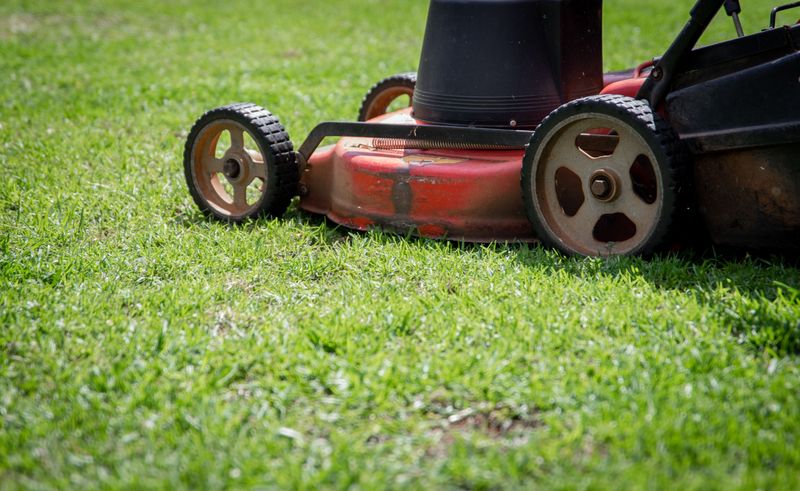
Brown patches appear fast when drought hits. Mowing too short speeds up that damage within days.
Grass blades are not just decoration. They act like solar panels, capturing sunlight and turning it into food for the roots.
When you cut those blades too short, the plant loses its ability to feed itself. Roots weaken fast without that energy supply.
Shallow roots cannot reach deep soil moisture. That means even a small dry spell can push your lawn into full stress mode.
Cool-season grasses like Kentucky bluegrass and tall fescue dominate most yards in the upper Midwest. These grasses are already sensitive to summer heat without adding a scalping on top.
Scalped lawns also lose moisture faster. Short blades expose bare soil to direct sun, and that soil dries out in hours.
The connection between mowing height and lawn color is direct. Cut too short, and your lawn pays the price before the next rainfall even arrives.
Many homeowners blame the heat or lack of rain first. The real trigger is often the mowing mistake that happened three days before the brown showed up.
Why Short-Cut Grass Fails Fast Without Rain

Grass roots follow the blade. Short grass means short roots, and short roots are a disaster during dry weather.
When blades are cut too low, the plant redirects energy upward to regrow leaves instead of pushing roots deeper. Roots stop growing down and stay shallow.
Shallow roots sit in the top inch or two of soil. That thin layer dries out within hours on a hot summer afternoon.
Deep roots, by contrast, can tap into moisture hiding several inches below the surface. That reservoir keeps grass green even when the top soil is bone dry.
Short-cut grass also loses water faster through a process called transpiration. Less leaf surface means less shade over the soil, and exposed soil bakes under the sun.
Soil temperature spikes when it has no canopy cover. Grass roots suffer when soil temps climb above 85 degrees Fahrenheit.
The damage compounds quickly. Heat stress plus water loss plus shallow roots creates a combination that accelerates browning fast.
Your Minnesota Garden Changes Every Week. Your Plan Should Too.
Gardening in Minnesota changes quickly throughout the season. Every Friday you’ll receive a simple weekly plan showing exactly what to plant, prune, fertilize, harvest, and protect so you never miss the right timing.
Raising your mower deck by just one inch can make a dramatic difference. Taller blades shade the soil, keep roots cooler, and give the grass a fighting chance when rain is scarce.
The Right Mowing Height For Minnesota Drought
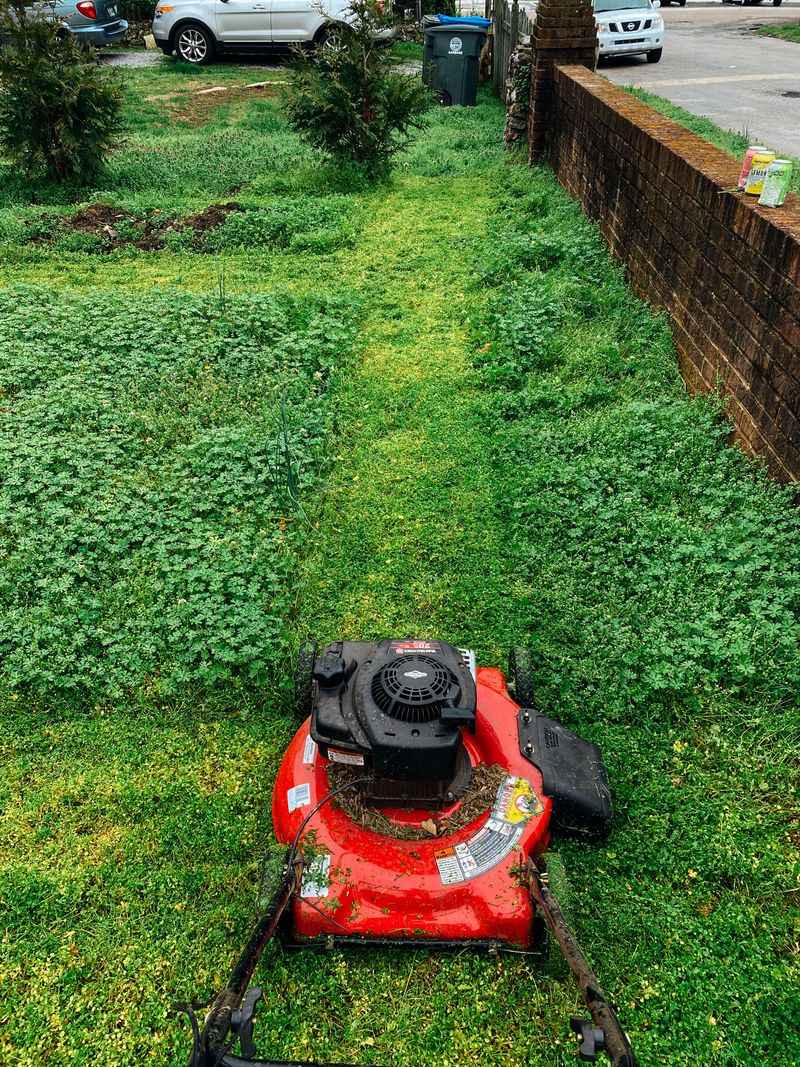
Four inches sounds tall, but that height could save your lawn this summer. Most lawn care experts recommend keeping cool-season grasses between 3.5 and 4 inches during dry stretches.
At that height, grass blades shade the soil below them. That shade can lower soil temperature significantly on a hot afternoon.
Cooler soil holds moisture longer. That extra moisture is what keeps roots alive when rain skips your neighborhood for two or three weeks.
Bluegrass and fescue both perform better at taller heights during summer stress. Cutting them shorter than 2.5 inches during a drought puts your lawn at serious risk.
Raise the deck on your mower before the heat season begins. Most walk-behind mowers have simple lever adjustments on each wheel.
Check your mower deck height before every cut, especially if someone else uses the equipment. A single low cut during a dry week can set back your lawn significantly.
Taller grass also competes better against weeds. Crabgrass and other summer invaders struggle to sprout when a thick canopy of grass blocks their sunlight.
The mowing mistake that turns Minnesota lawns brown during drought is almost always about cutting too low. One simple adjustment to your deck height changes everything.
How Mowing Timing Makes Things Worse
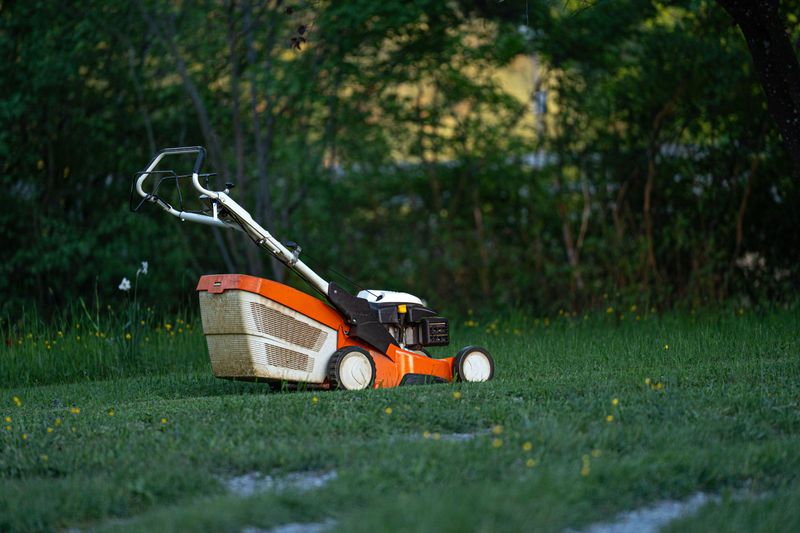
Timing your mow wrong can significantly increase the stress on already struggling grass. Cutting during the hottest part of the day adds heat shock on top of drought damage.
Grass loses moisture quickly through freshly cut blade tips. When you mow at noon in July, that moisture loss happens at the worst possible moment.
Morning mowing is better, but early morning has its own catch. Wet grass from overnight dew can clump and clog your mower deck, leaving uneven cuts.
Late afternoon or early evening is often the sweet spot. Temperatures are dropping, dew has not yet formed, and the grass has a full night to recover before the next day’s heat.
Avoid mowing drought-stressed grass at all if possible. If your lawn has already gone dormant and turned tan, leave it alone until rain returns.
Dormant grass is alive but resting. Mowing it disrupts that rest and forces the plant to spend energy it does not have.
Frequency matters too. Cutting every five to seven days during a drought is far better than a weekly schedule that does not adjust to conditions.
Watch your grass before you mow it. If blades are already curling or folding lengthwise, that is a sign the plant is conserving water and needs rest, not a trim.
Other Mowing Habits That Speed Up Browning
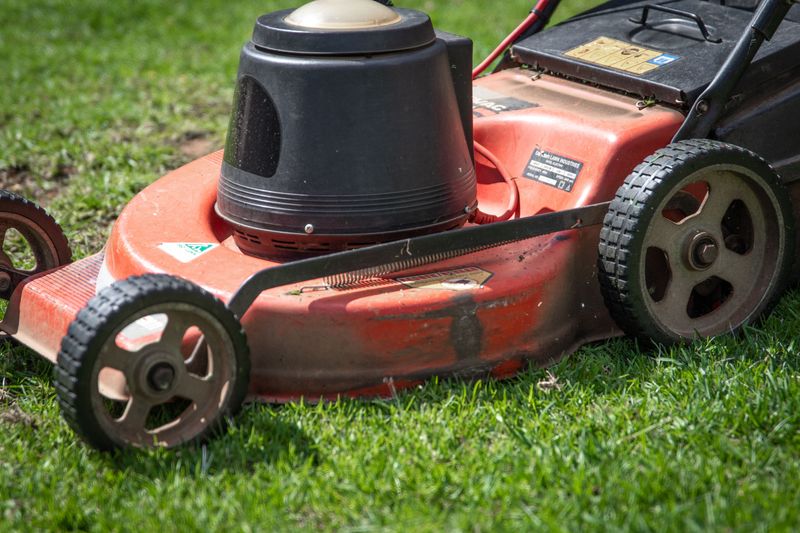
Dull blades tear grass instead of cutting it cleanly. Torn tips turn brown within hours and open the door to disease and moisture loss.
Sharp blades slice through the grass blade with one clean cut. That clean edge heals faster and loses less water during recovery.
Sharpen your mower blade at least once per season, and twice if you mow a large area. A sharp blade is one of the easiest upgrades you can make.
Bagging clippings during a drought is another habit that hurts. Clippings left on the lawn act as a natural mulch, returning moisture and nutrients to the soil.
Grasscycling, which means leaving clippings in place, can reduce your watering needs by up to 25 percent. It also feeds your lawn with free organic material.
Mowing wet grass is another problem. Wet clippings clump together and block sunlight from reaching the turf below, leaving bare patches that struggle to recover.
Overlapping your mowing rows by a few inches ensures no strip of grass gets missed or double-cut. Double-cutting adds unnecessary stress during dry conditions.
Each of these habits stacks on top of the original mowing mistake that turns Minnesota lawns brown during drought. Fixing all of them together gives your lawn the best chance to recover.
Mowing Stress And Other Causes Of Brown Lawn
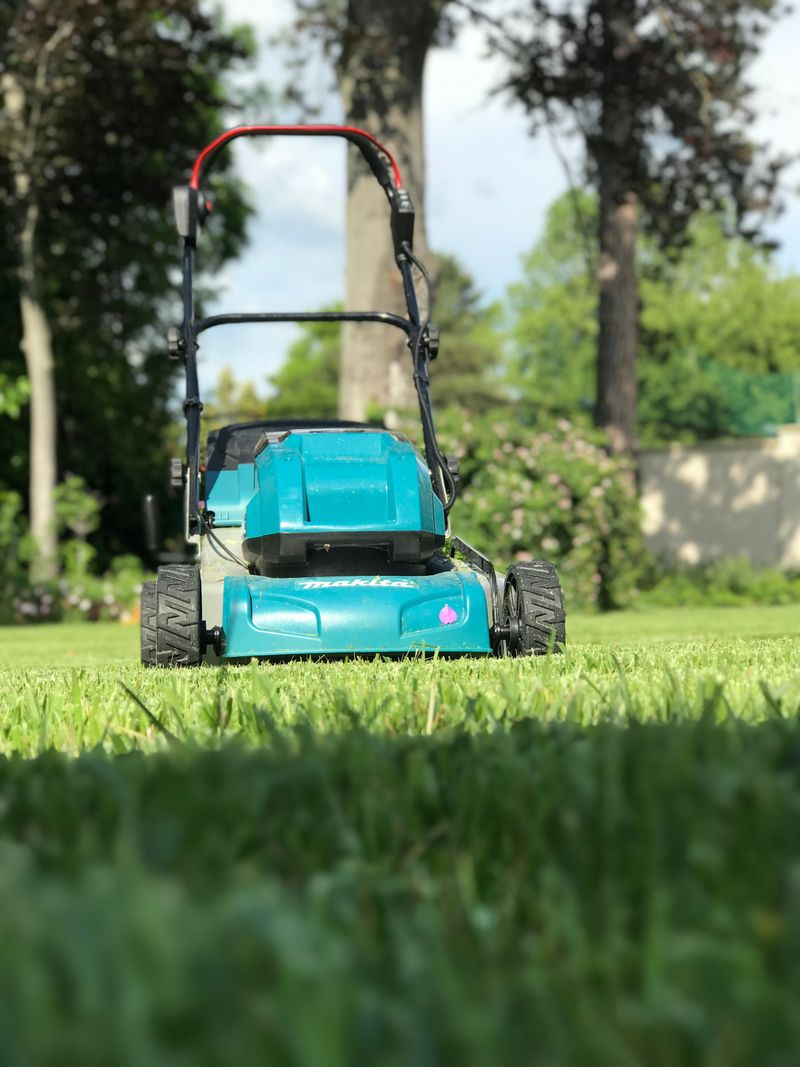
Not every brown lawn is a mowing victim. Knowing the difference between mowing stress and true drought dormancy saves you from wasting time on the wrong fix.
Drought dormancy turns the whole lawn a uniform tan color. The grass goes quiet, conserving energy until water returns, but it is still alive beneath the surface.
Mowing damage tends to show up in streaks or patches. You might see brown lines that match your mowing rows, or bare spots where the deck scraped too low.
Grub damage is another impostor. Grubs eat grass roots underground, and the turf peels back like a loose carpet when you tug on it.
Fungal disease creates circular brown rings or irregular blotches. It often appears after humid nights followed by hot days, not just during dry spells.
Dog spots leave small, round, dark green rings with a bare center. The nitrogen in dog urine burns the grass in a very specific pattern.
Compacted soil causes thin, struggling turf that browns in high-traffic areas. Aerating in fall helps break up that compaction before the next summer season arrives.
Diagnosing correctly means you fix the right problem first. Raising your mower deck addresses mowing stress, but it will not fix grubs, fungus, or a broken sprinkler head.
How To Recover Your Lawn After The Mistake
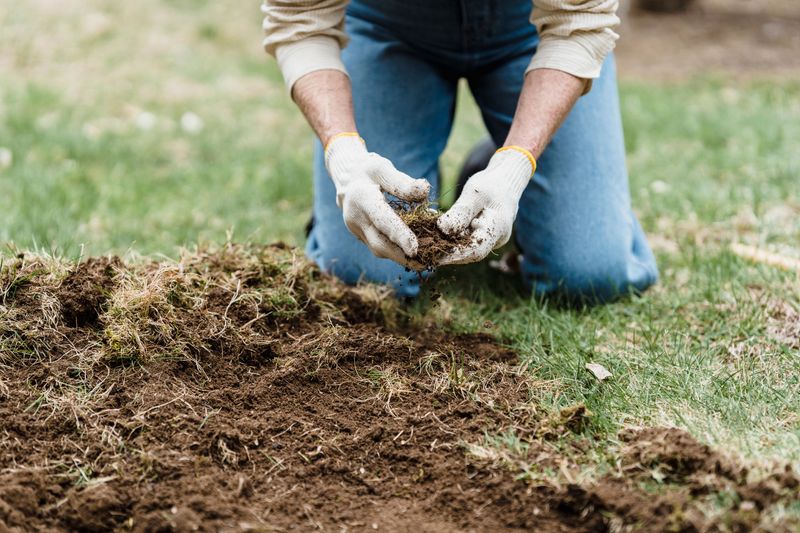
Recovery is possible, and it starts with one simple step. Raise your mower deck to at least 3.5 inches and do not lower it again until fall.
Next, water deeply and infrequently instead of lightly every day. One inch of water applied twice a week encourages roots to grow deeper into cooler soil.
Water early in the morning so the grass surface dries before nightfall. Wet grass overnight invites fungal problems that compound the original damage.
Avoid fertilizing a drought-stressed lawn with high-nitrogen products. Pushing rapid leaf growth when roots are weak and water is scarce stresses the plant further.
A light application of slow-release fertilizer in early fall helps the lawn rebuild root strength. That is when cool-season grasses naturally enter their strongest growth phase.
Overseeding thin or bare spots in late August or early September gives new grass time to establish before winter. Use a variety suited to your light conditions and soil type.
Keep foot traffic off recovering areas as much as possible. Stressed grass needs every bit of energy directed toward root recovery, not repairing trampled blades.
Avoiding the mowing mistake that turns Minnesota lawns brown during drought is easier than fixing the damage after the fact. A little patience and a higher deck setting go a long way.