These Overlooked Native North Carolina Trees Stay Small And Look Stunning All Year
Most trees marketed for small spaces are ornamental imports that look appealing at the nursery and perform adequately in the landscape.
Native North Carolina trees that stay genuinely small are a different category entirely.
They bring seasonal interest that shifts from spring flowers to summer foliage to fall color and winter structure, and they do it while supporting local birds, pollinators, and insects in ways that introduced ornamentals simply cannot match.
These trees are overlooked mostly because they do not get the same marketing attention as imported varieties, not because they fall short in any meaningful way.
North Carolina’s climate suits them perfectly, and once established they ask for very little while delivering consistent beauty across every season of the year.
1. American Fringe Tree
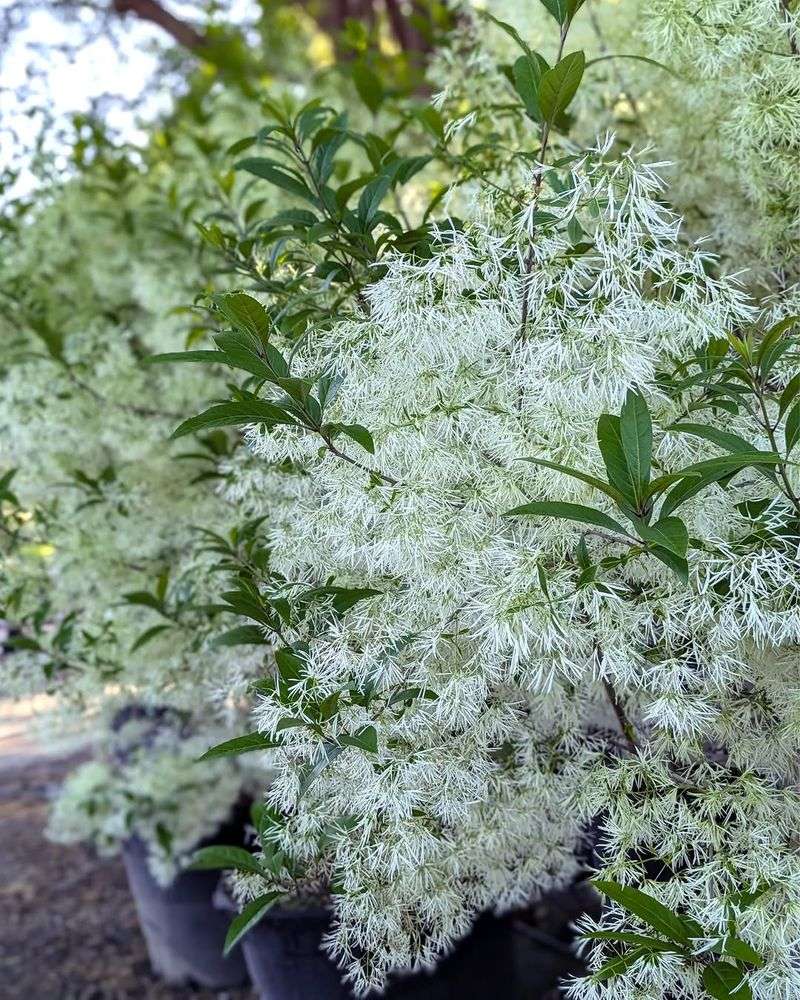
Few spring bloomers stop people in their tracks quite like the American Fringe Tree.
Known botanically as Chionanthus virginicus, this native understory tree earns its name from the long, thread-like white flower clusters that drape over its branches each spring like soft, fragrant lace.
That floral display alone is worth planting it, but this tree keeps giving long after the blooms fade.
Mature trees typically reach 12 to 20 feet tall, making them a perfect fit for smaller North Carolina yards where a full-sized shade tree would simply overwhelm the space.
It grows well in full sun to part shade, and it adapts to a wide range of soil conditions found across the state.
Spring flowers give way to blue-black fruit on female trees, which songbirds absolutely love during late summer and early fall.
Fall color is another reason gardeners are falling for this tree. The leaves shift to a warm yellow that brightens up the yard before winter sets in.
Even in winter, the branching structure looks clean and sculptural, giving the landscape an architectural quality that most ornamental trees cannot match.
Chionanthus virginicus is also notably tough once established, tolerating both occasional drought and periods of wet soil without complaint.
Planting one near a patio or walkway lets you enjoy the sweet fragrance up close when it blooms in April and May. It works beautifully as a specimen tree or planted in small groupings along a woodland edge.
For North Carolina gardeners who want four-season interest without a lot of fuss, this native fringe tree truly delivers.
2. Eastern Redbud
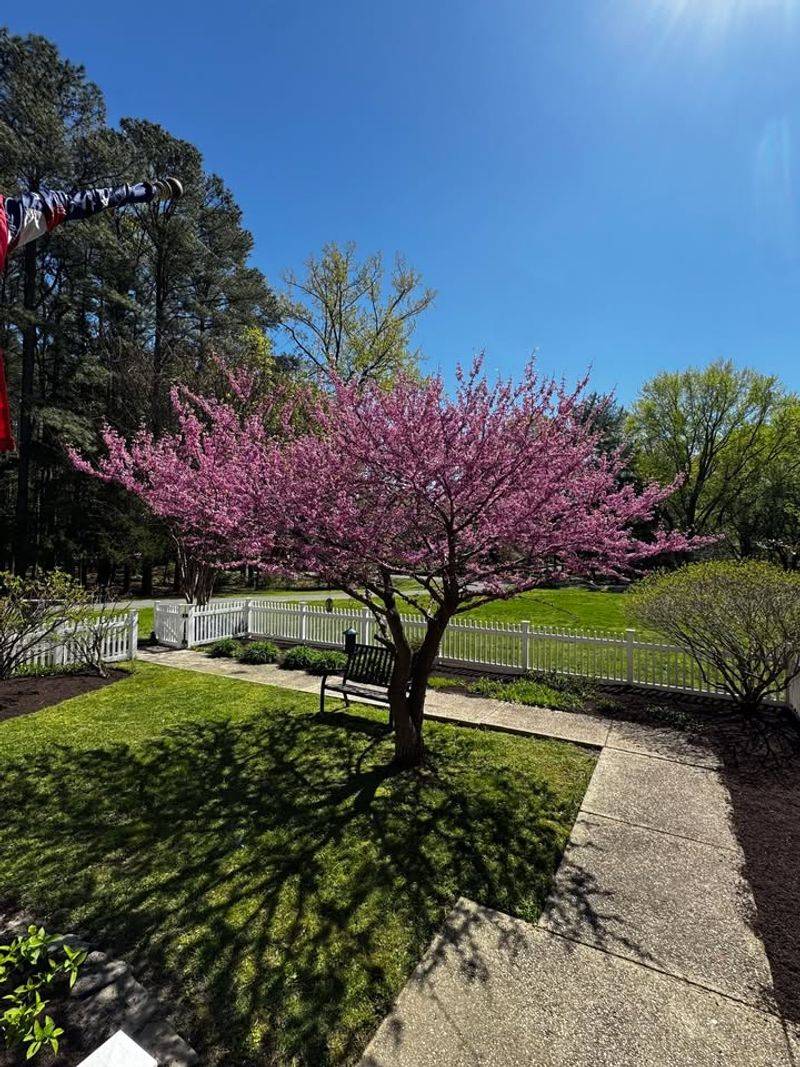
Before a single leaf appears, the Eastern Redbud puts on one of the most dazzling flower shows in the entire plant world.
Cercis canadensis bursts into bloom in late February through April across North Carolina, coating every branch in clusters of rosy pink to magenta flowers that seem almost too vivid to be real.
It is the kind of tree that makes neighbors stop their cars just to admire it. Beyond that spectacular spring display, the Eastern Redbud keeps earning its place in the yard all year long.
Heart-shaped leaves emerge with a reddish-purple tint, then mature into a rich green that creates wonderful summer shade.
Come fall, those same leaves turn a clear, buttery yellow that glows in the afternoon light.
Your North Carolina Garden Changes Every Week. Your Plan Should Too.
Gardening in North Carolina changes quickly throughout the season. Every Friday you’ll receive a simple weekly plan showing exactly what to plant, prune, fertilize, harvest, and protect so you never miss the right timing.
The branching pattern in winter is graceful and interesting, with a slightly zigzag structure that adds personality to the winter landscape.
Mature size typically lands between 20 and 30 feet tall with a similar spread, which keeps it well-suited for smaller properties.
It thrives across all regions of North Carolina, from the mountains to the coast, adapting easily to different soil types as long as drainage is reasonable.
Full sun to part shade both work well, though trees in part shade often develop a more graceful, open shape.
Wildlife gardeners love Cercis canadensis because its flowers are an early and important nectar source for native bees emerging in early spring.
The seedpods that follow provide food for birds and small mammals. Planting an Eastern Redbud near a window gives you a front-row seat to one of the most rewarding seasonal shows a native yard can offer.
3. Pawpaw
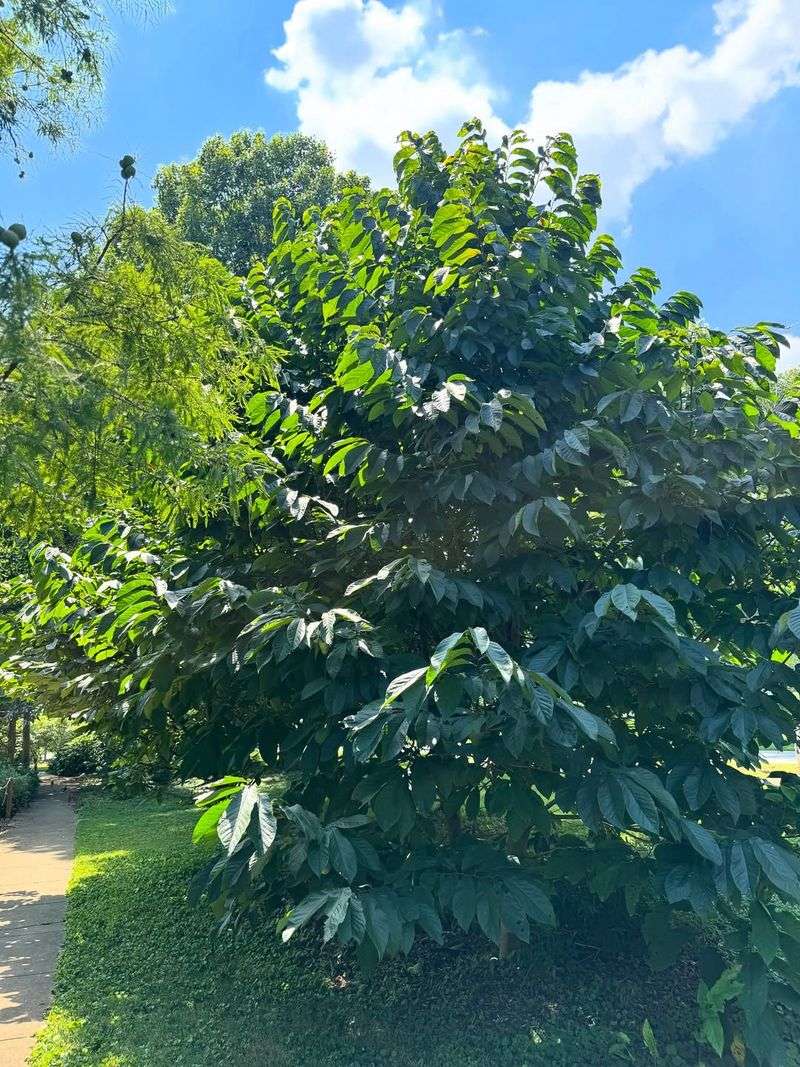
There is something wonderfully surprising about finding a tree with tropical-looking foliage growing natively in North Carolina.
The Pawpaw, known scientifically as Asimina triloba, carries enormous, drooping leaves that can reach 12 inches long, giving any landscape a lush, almost exotic feel that is hard to find in a cold-hardy native plant.
It looks like it belongs in a rainforest, but it grows naturally across much of the eastern United States.
Pawpaws prefer a spot with morning sun and afternoon shade, making them ideal for woodland garden settings or the shadier edges of a yard.
They naturally grow as understory trees, typically reaching 15 to 25 feet tall, and they often form small colonies through root sprouts, which can be managed or encouraged depending on your goals.
Moisture-retentive, rich soil produces the healthiest growth and the best fruit production. Speaking of fruit, the Pawpaw produces the largest edible fruit native to North America.
The creamy, custard-like flesh tastes like a cross between banana and mango, and gardeners who grow them often become completely devoted to the harvest.
To get fruit, you generally need two or more genetically different trees nearby for cross-pollination, so plan to plant at least a small grouping for best results.
Wildlife value is outstanding. Asimina triloba is the only host plant for the Zebra Swallowtail butterfly, making it an irreplaceable addition to any pollinator-friendly garden.
The maroon, nodding spring flowers are unusual and eye-catching up close. For NC gardeners wanting something genuinely different that also feeds people and wildlife alike, Pawpaw is a tree worth getting excited about.
4. American Hornbeam
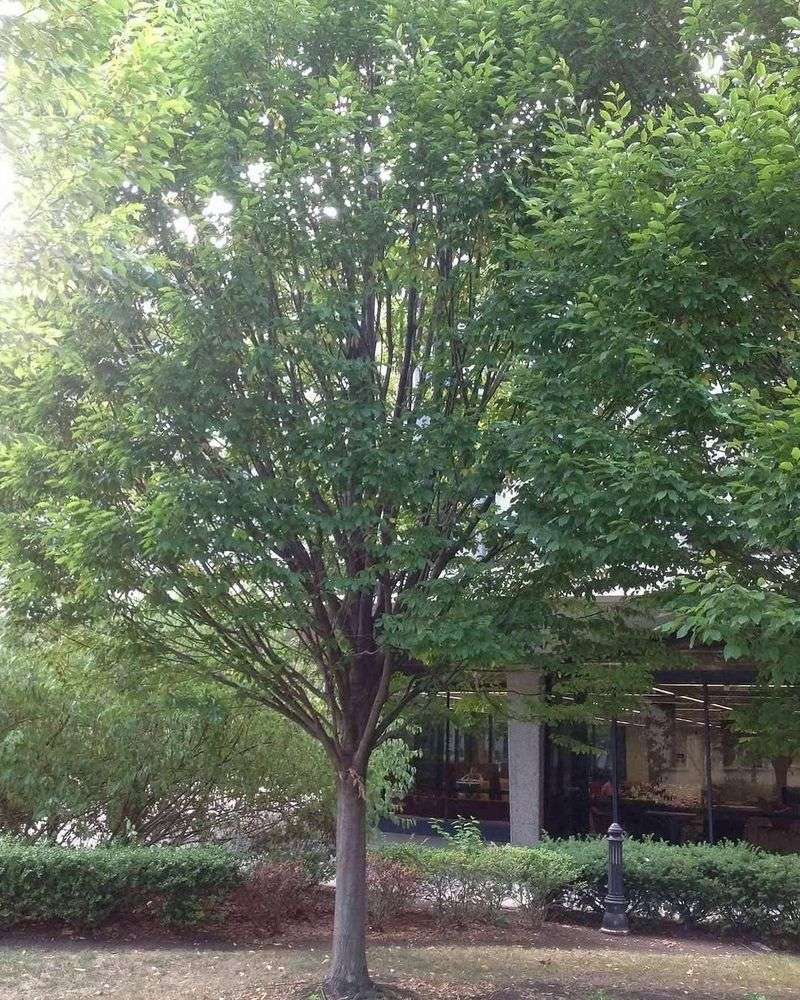
Run your hand along the trunk of an American Hornbeam and you will immediately understand why it is sometimes called musclewood.
The smooth, gray bark ripples and bulges in a way that looks exactly like flexed muscle beneath skin, giving this tree one of the most distinctive trunks of any plant in the North Carolina landscape.
Even in the middle of winter, Carpinus caroliniana is genuinely beautiful to look at. This compact native tree typically grows 20 to 30 feet tall, though many specimens stay smaller, especially in shadier conditions.
It is one of the most shade-tolerant native trees available, thriving comfortably under the canopy of larger oaks and maples where few other ornamental trees can survive.
It also handles wet, poorly drained soils exceptionally well, making it a smart choice for low spots, streamside plantings, and rain gardens across North Carolina.
Fall color ranges from orange to red to yellow, often producing multiple shades on a single tree at once.
The effect is genuinely stunning in October and November, especially when morning light filters through the leaves.
Hop-hornbeam-like fruit clusters hang on through early winter, adding texture and providing food for native birds including turkeys, ruffed grouse, and various songbirds.
Carpinus caroliniana grows slowly, which means it rarely needs pruning and stays tidy without much intervention.
Its smaller size makes it a practical choice for urban yards, shaded patios, and narrow planting strips where larger trees would create problems.
For gardeners who want a truly four-season native tree that handles shade and moisture with ease, American Hornbeam is a genuinely underappreciated gem worth seeking out.
5. Sparkleberry
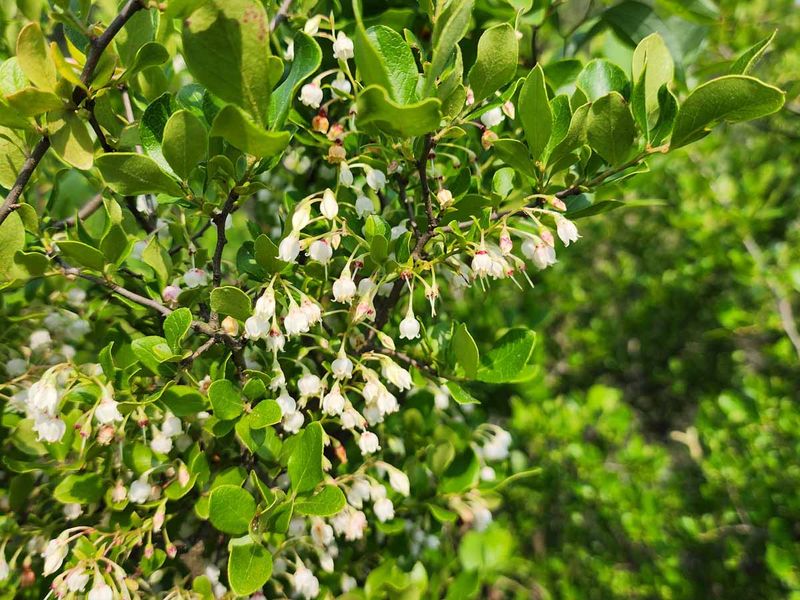
Most people know blueberries, but far fewer have heard of their tall, tree-form cousin that lights up North Carolina landscapes with four full seasons of beauty.
Sparkleberry, or Vaccinium arboreum, is technically the largest native blueberry relative in the eastern United States, growing into a multi-trunked small tree that reaches anywhere from 10 to 26 feet tall depending on its conditions.
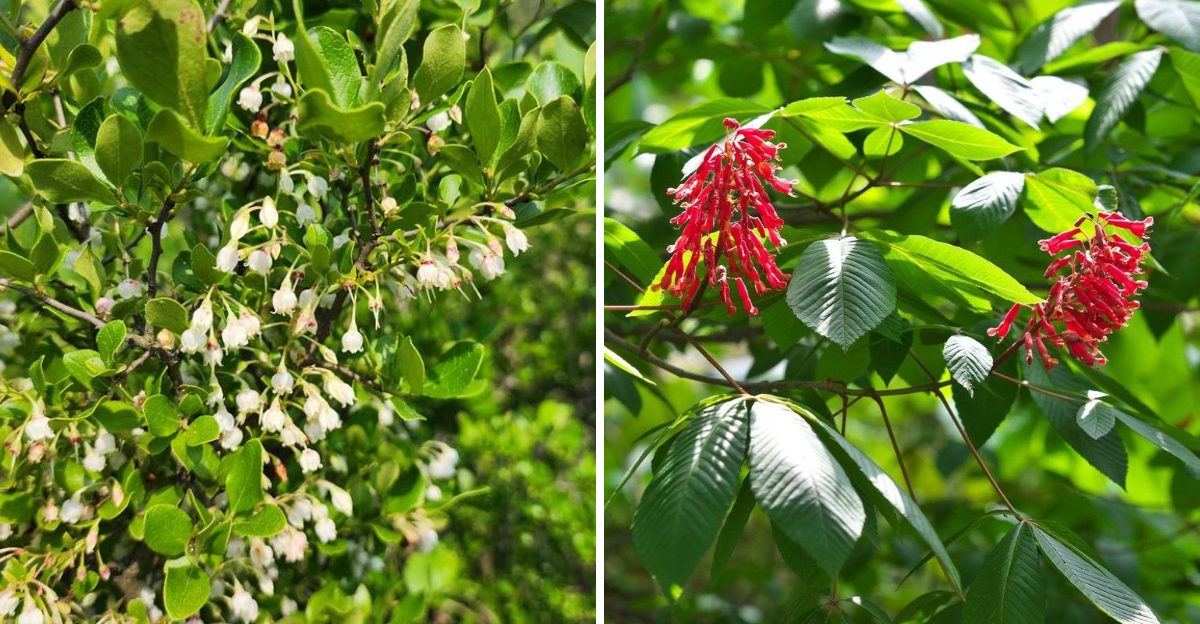
What it offers gardeners is genuinely remarkable from January through December. In spring, clusters of small, white bell-shaped flowers cover the branches and attract native pollinators in impressive numbers.
By late summer and fall, those flowers become small, shiny black berries that birds absolutely cannot resist.
Species like robins, cedar waxwings, and bluebirds return to Sparkleberry trees repeatedly during fall migration, making it one of the best wildlife trees you can plant in a North Carolina yard. The bark deserves special attention.
As Vaccinium arboreum matures, its reddish-brown bark begins to peel and flake in attractive patterns, giving the trunk a sculptural, artistic quality that looks beautiful even in the coldest months.
Fall foliage turns shades of red, orange, and burgundy before many leaves persist into winter, adding even more seasonal interest to the display.
One of the biggest practical advantages of Sparkleberry is its drought tolerance once established.
It thrives in acidic, well-drained soils that are common across much of the Piedmont and Sandhills regions of North Carolina.
Full sun brings out the best flowering and berry production, though it tolerates light shade reasonably well.
For a native tree that rewards you in every season while asking very little in return, Sparkleberry is hard to beat.
6. Red Buckeye
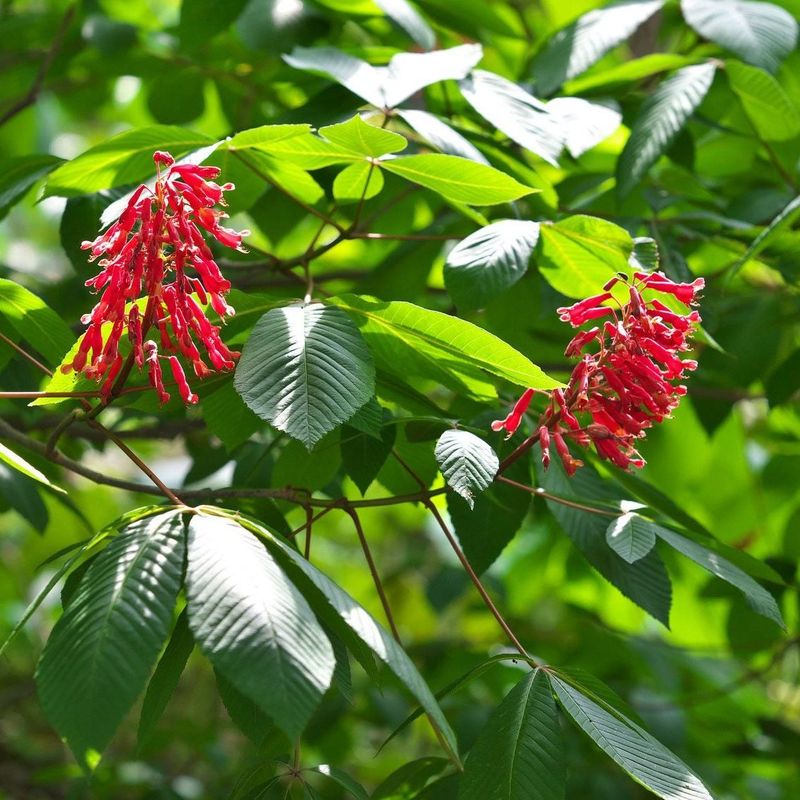
Every spring, the Red Buckeye puts on a show so vivid and targeted that it seems almost designed with hummingbirds in mind.
Aesculus pavia produces upright clusters of bright red, tubular flowers in April and May that are perfectly shaped for the long bills of ruby-throated hummingbirds, which arrive in North Carolina right as the blooms open.
Watching hummingbirds work through a Red Buckeye in full flower is one of the most rewarding moments a native garden can offer.
This small native tree typically grows 10 to 20 feet tall, which keeps it comfortably sized for most residential yards.
It performs best along woodland edges and in partly shaded spots where it naturally grows across the state.
Morning sun with afternoon shade suits it particularly well, and it appreciates consistently moist, organically rich soil, though it can handle brief dry periods once well established.
One thing to know about Aesculus pavia is its summer dormancy habit. When temperatures peak in July and August, the leaves often yellow and drop earlier than most trees, which can surprise gardeners who are not expecting it.
This is completely normal behavior and not a sign of stress or poor health. Planting it behind other shrubs or perennials that fill in during summer keeps the garden looking full even when the Buckeye goes quiet.
The large, glossy seeds that follow the flowers are visually interesting and carry a certain old-fashioned charm that many gardeners find nostalgic. Buckeye seeds are not safe to eat, but they pose no real concern for most adult gardeners.
For a compact native tree that feeds hummingbirds, fits smaller spaces, and brings genuine spring drama to shaded yards, Red Buckeye is a standout choice.