These 8 Plants Replace Liriope In Georgia Yards With A More Natural Look
Liriope often ends up in Georgia yards as an easy fill, lining edges and walkways with a look that feels reliable at first. It holds its shape and stays green, so it rarely gets questioned early on.
Over time, though, the space can start to feel a little too uniform, and the texture no longer blends as naturally with the rest of the planting.
That shift shows up in subtle ways, where one area feels dense while another lacks movement, even though everything is technically doing fine. The yard still works, but it does not feel as relaxed or balanced as expected.
This is usually the point where a different approach makes a noticeable difference, and swapping in the right plants can create a softer, more natural look without making the space harder to manage.
1. Dwarf Mondo Grass Creates A Similar Low Growing Border
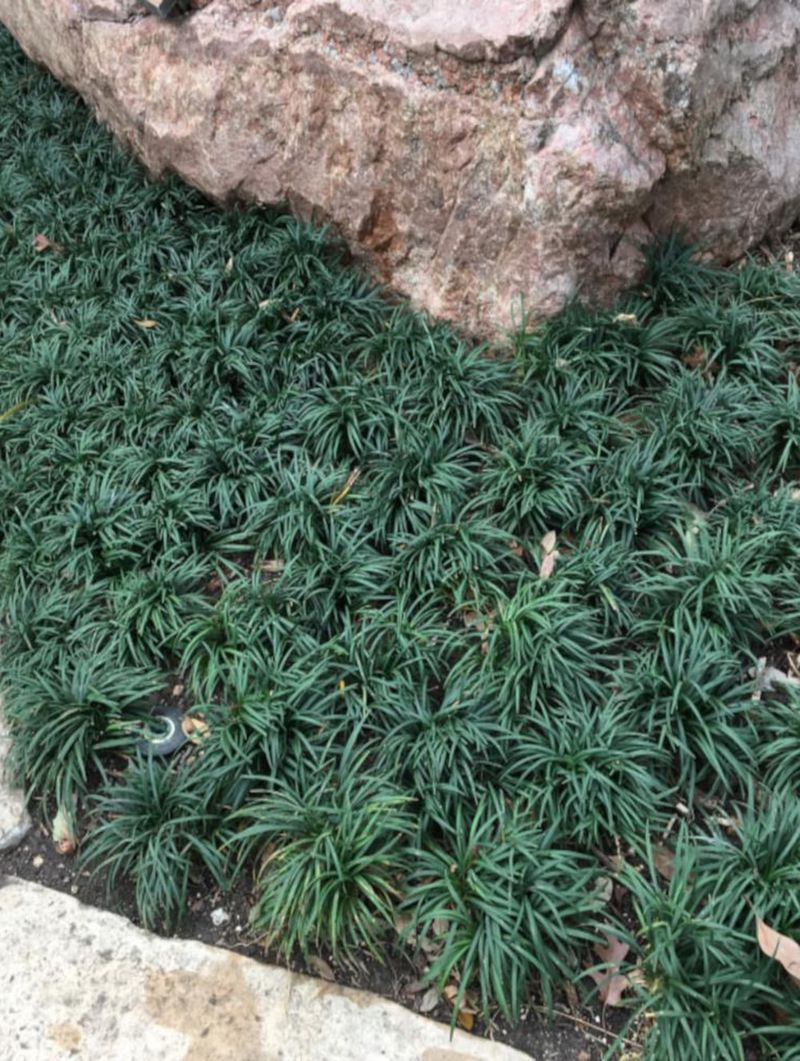
Swap out liriope and most people will not even notice right away — that is how similar dwarf mondo grass looks at first glance. Both plants form tidy, grass-like clumps close to the ground.
But dwarf mondo grass has a softer, finer texture that gives a garden edge a more relaxed and natural appearance rather than that stiff, commercial look liriope often creates.
Dwarf mondo grass stays genuinely small, usually no taller than three to four inches. That compact size makes it ideal for tight borders, stepping stone edges, or filling in gaps between pavers in a Georgia garden.
It spreads slowly by rhizomes, so it fills in gradually without taking over surrounding plants the way liriope sometimes does.
In Georgia, it handles both shade and partial sun reasonably well, though deep shade tends to suit it better than full afternoon sun. Heavy clay soils can slow its growth, so loosening the soil and adding compost before planting will help it settle in.
It stays evergreen through Georgia winters in most years, though a hard freeze can cause some browning. Patience is key — dwarf mondo grass spreads at its own pace, and rushing it with heavy fertilizer often does more harm than good.
Give it a season or two to fill in naturally.
Keep weeds out early on, since young clumps do not compete well until they have had time to spread and knit together.
2. Carex Grass Adds A Softer And More Natural Look
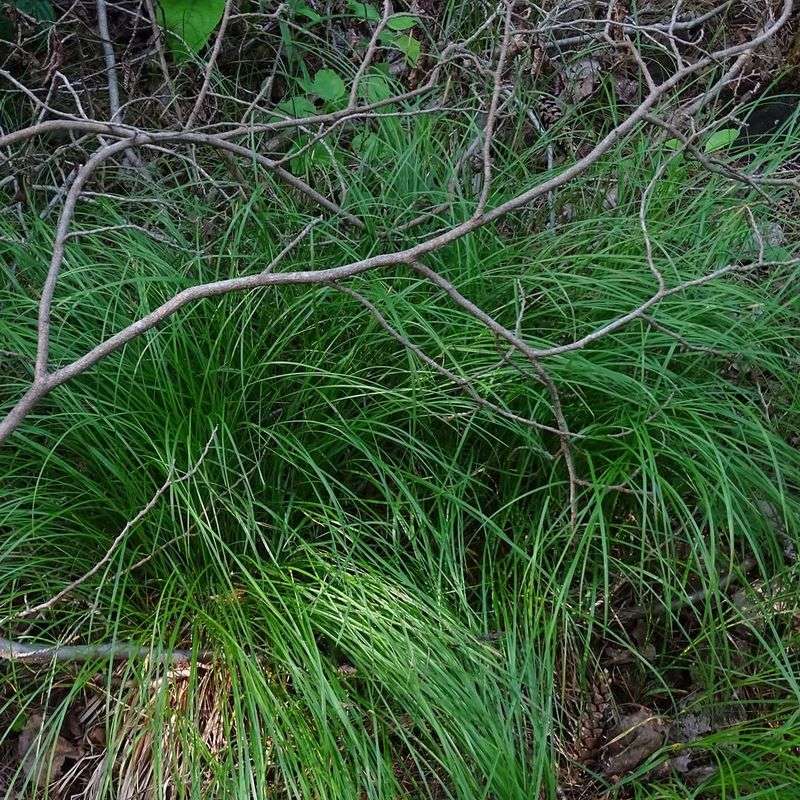
Walk through almost any natural woodland in Georgia and you will find sedges growing along creek banks, under oaks, and in the low spots where moisture lingers. Carex is that plant — and bringing it into a home landscape just makes sense.
It has a loose, flowing habit that liriope simply cannot match, with blades that arch outward rather than standing stiff and upright.
Several Carex varieties work well in Georgia conditions. Pennsylvania sedge stays low and spreads into soft, meadow-like patches.
Appalachian sedge handles dry shade better than most groundcovers. Both look far more at home under a canopy of Georgia pines or dogwoods than a row of clipped liriope ever would.
Your Georgia Garden Changes Every Week. Your Plan Should Too.
Gardening in Georgia changes quickly throughout the season. Every Friday you’ll receive a simple weekly plan showing exactly what to plant, prune, fertilize, harvest, and protect so you never miss the right timing.
Carex does best in spots that get morning light and afternoon shade, which describes a lot of Georgia yards. It is not a heavy feeder — rich soil can actually make it flop and look untidy.
Lean, well-drained soil with some organic matter suits it better. Unlike liriope, Carex will not crowd out smaller native wildflowers growing nearby.
Planting it alongside native ferns or foamflower creates a layered, natural look that feels genuinely regional. Trim back any winter-worn foliage in late February before new growth emerges to keep the planting looking fresh heading into spring.
Give it a little extra water during the first summer, especially in dry spells, to help roots settle in before it starts handling Georgia conditions on its own.
3. Foamflower Works Well In Shaded Areas With A Woodland Feel
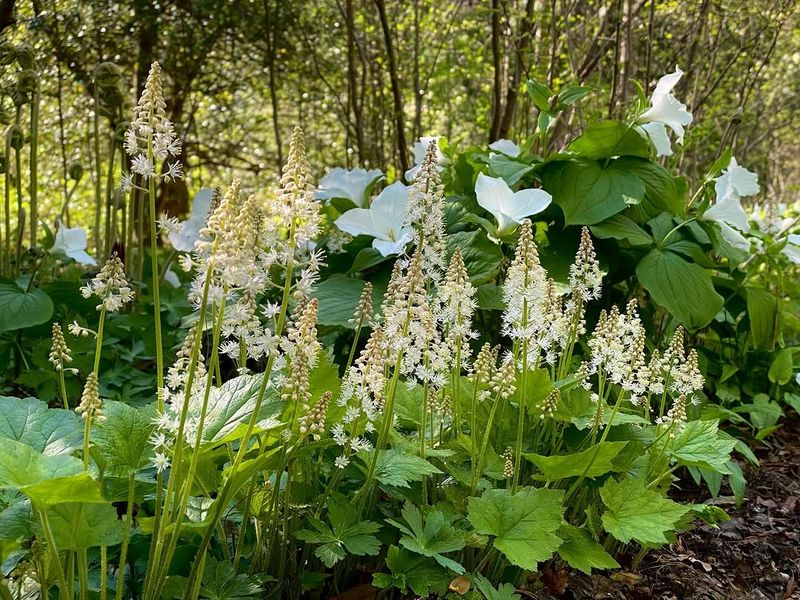
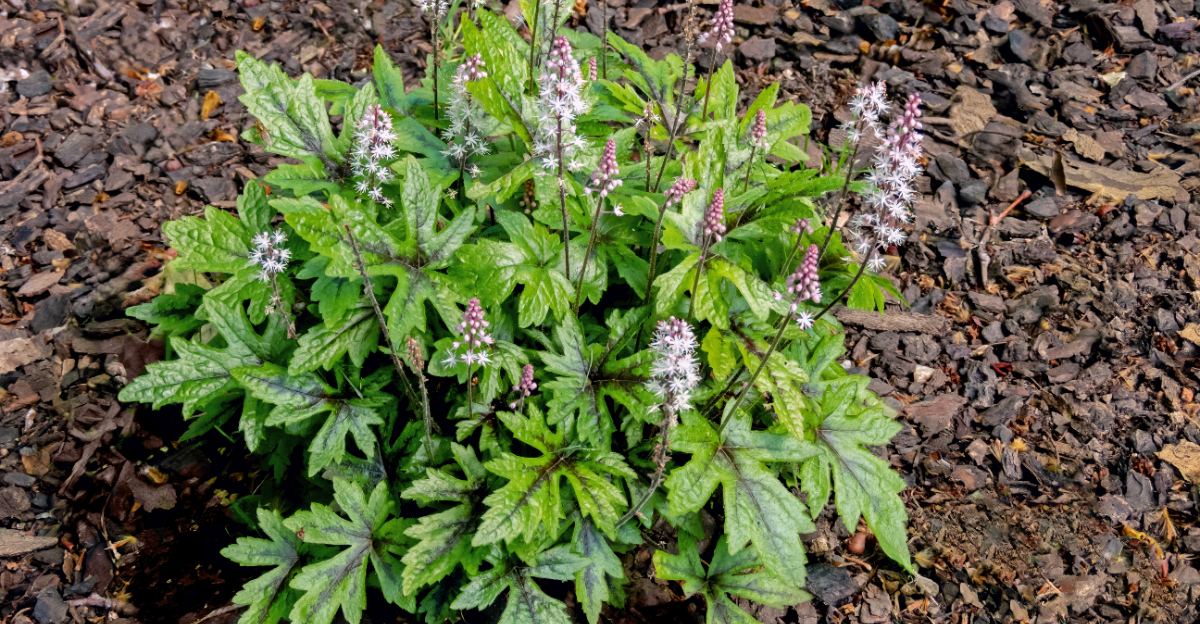
Few plants capture the feeling of a Georgia woodland floor quite like foamflower. When it blooms in spring, those frothy white flower spikes rise just above the foliage and create a soft, almost misty effect that no amount of liriope could replicate.
It is the kind of plant that makes a shaded corner feel genuinely alive rather than just covered.
Foamflower, known botanically as Tiarella, is native to the eastern United States and grows naturally in rich, moist woodland soils — conditions that describe many shaded Georgia yards, especially those near mature trees.
The leaves are deeply lobed and often show attractive burgundy markings along the veins, which means the plant earns its keep even when it is not in bloom.
Planting foamflower in groups rather than individual plants creates a more natural, spreading effect. It spreads by stolons, slowly filling in gaps without becoming aggressive.
Average moisture and good organic matter in the soil will keep it looking its best through the summer. Georgia summers can be tough on shade plants, so avoiding spots with reflected heat or dry, compacted soil is worth the effort.
Pairing it with native ferns or Carex creates a layered groundcover combination that looks far more natural than a single-species planting of liriope ever would.
4. Golden Ragwort Spreads Naturally And Supports Pollinators
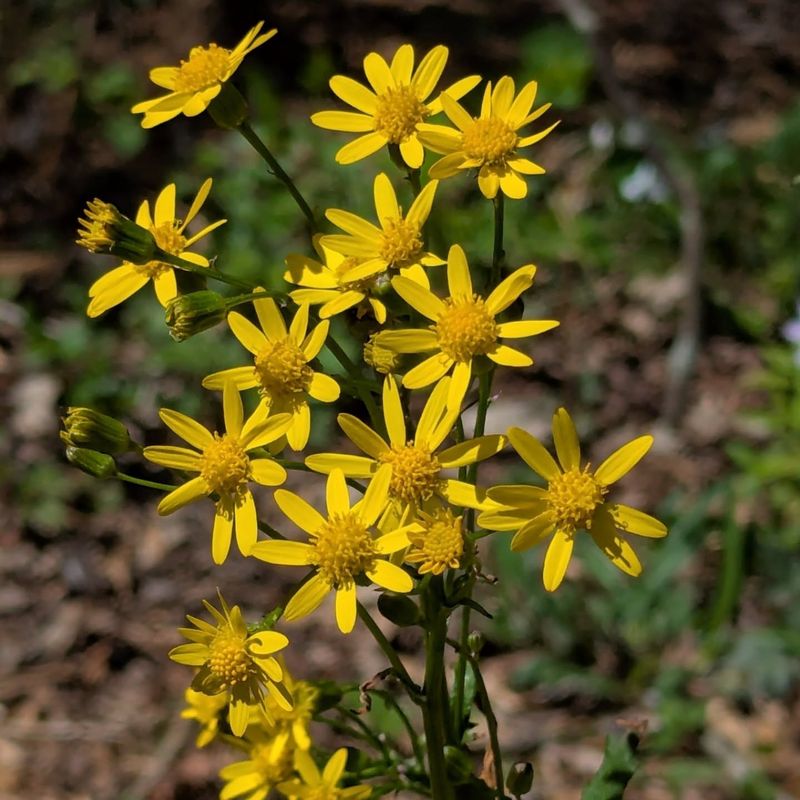
Bright yellow flowers in early spring from a plant that practically takes care of itself — golden ragwort delivers that without much fuss.
It blooms when most of the garden is still waking up, which makes it genuinely useful for early pollinators like native bees that are searching for food in March and April across Georgia.
Golden ragwort, or Packera aurea, forms a low basal rosette of heart-shaped leaves that stay green through winter in most of Georgia. When spring arrives, flower stalks shoot up to about eighteen inches and open into clusters of small, daisy-like yellow blooms.
After flowering, the stalks fade back and the foliage settles into a tidy, low mat that covers ground effectively through the warmer months.
It spreads by both seed and rhizomes, which means it can fill in a large area over several seasons without needing to be replanted. Moist, partially shaded spots suit it well — rain gardens, low areas, or the north-facing side of a house are all solid locations in a Georgia yard.
Dry, sunny spots tend to stress the plant and reduce its spread. One thing worth knowing: golden ragwort contains compounds that are toxic to livestock, so it is not a good fit near pastures or properties with grazing animals.
In an ornamental Georgia garden, though, it performs reliably and honestly looks beautiful in spring.
5. Green And Gold Forms A Low Growing Native Groundcover
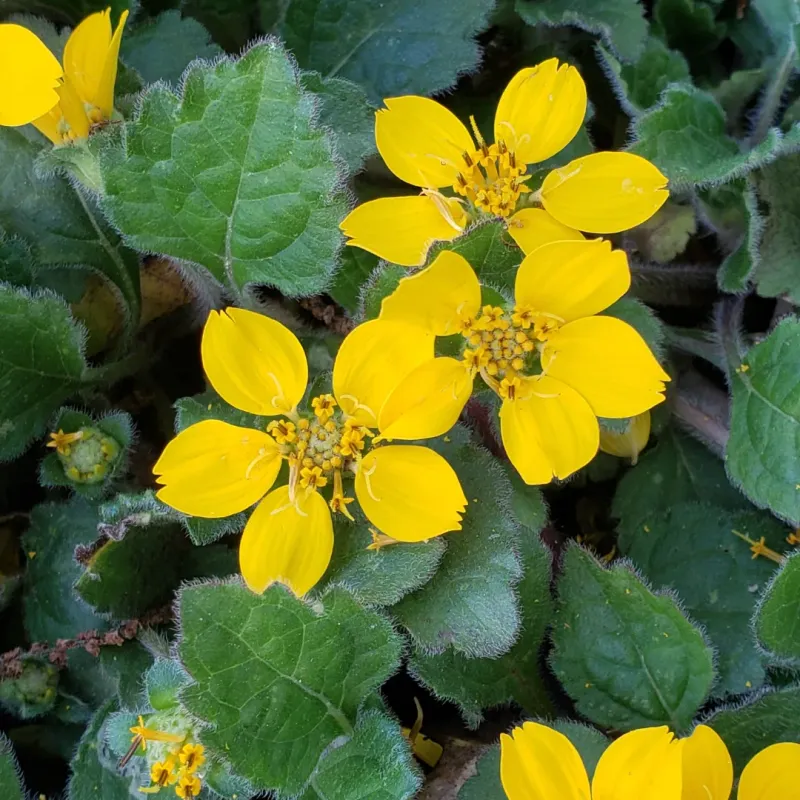
Not many native groundcovers bloom as reliably or as cheerfully as Green and Gold. Chrysogonum virginianum pushes out small, bright yellow flowers from early spring through early summer, and in Georgia it often reblooms in fall when temperatures cool back down.
That is a long season of color from a plant that stays under six inches tall.
Green and Gold spreads by short runners, forming a dense mat that crowds out weeds reasonably well once it gets established in a spot it likes. It is native to the eastern United States and shows up naturally in open woodlands and along forest edges — exactly the kind of setting many Georgia yards mimic.
Partial shade is ideal, though it tolerates more sun than many groundcovers if the soil stays reasonably moist.
Georgia clay can be a challenge for this plant if it stays waterlogged. Raised beds or areas with amended, well-draining soil will give it a better start.
Dividing clumps every few years helps keep the planting vigorous and prevents the center from thinning out. Compared to liriope, Green and Gold has a warmer, more cottage-garden quality — the yellow flowers add life and color that plain green groundcovers simply cannot offer.
Planting it along a shaded path or beneath a dogwood tree in a Georgia yard creates a combination that feels genuinely native and intentional rather than default.
6. Allegheny Spurge Works Well In Shade With A Natural Look
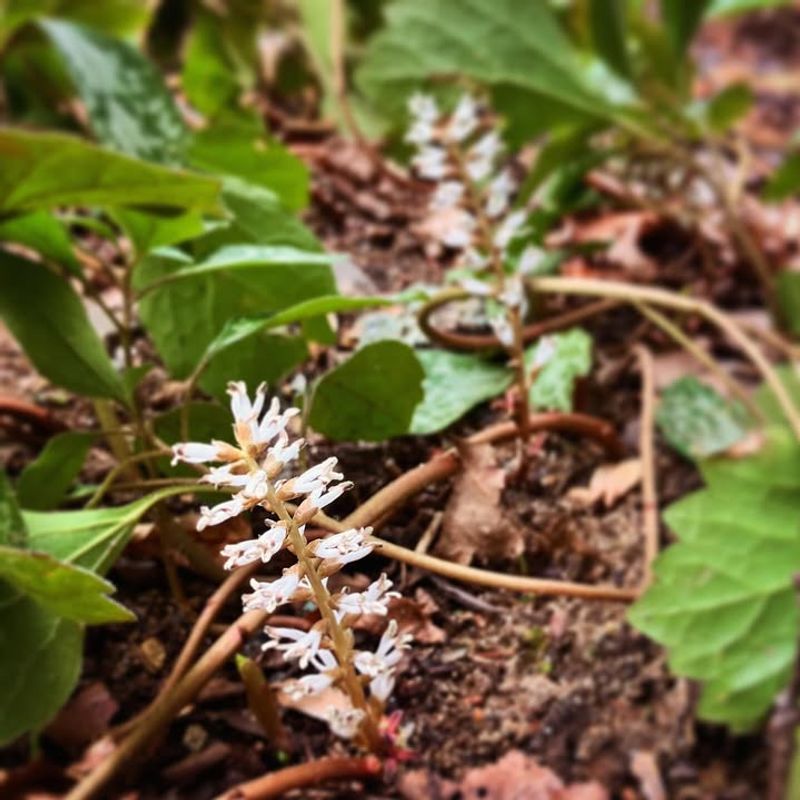
Most people who know Japanese pachysandra have no idea the native American version exists — and Allegheny spurge is genuinely better suited to Georgia landscapes than its overused Asian cousin.
Pachysandra procumbens has matte, patterned leaves with silvery markings that give it a much more interesting appearance than the glossy, monotonous look of the Japanese species.
It belongs here, and it shows.
Allegheny spurge handles deep shade well, making it one of the more useful plants for those dark spots under large oaks or beside north-facing foundations in Georgia yards. In early spring, small, lightly fragrant white flower spikes emerge close to the ground before the new foliage fully expands.
Most people walk right past them, but up close they are genuinely attractive.
Growth is slow, which requires patience. Planting in generous groups rather than scattered individuals helps create impact faster and allows the colony to fill in within a few seasons.
Rich, slightly acidic soil with consistent moisture suits it well — conditions that already exist in many Georgia woodland gardens. Unlike Japanese pachysandra, it does not tend to form a monoculture that excludes everything else.
Smaller native wildflowers can coexist with it fairly comfortably. If liriope currently lines a shaded bed in your Georgia yard, Allegheny spurge is one of the most direct and natural-looking replacements you can plant in its place.
7. Native Violet Fills Spaces With A Soft Natural Appearance
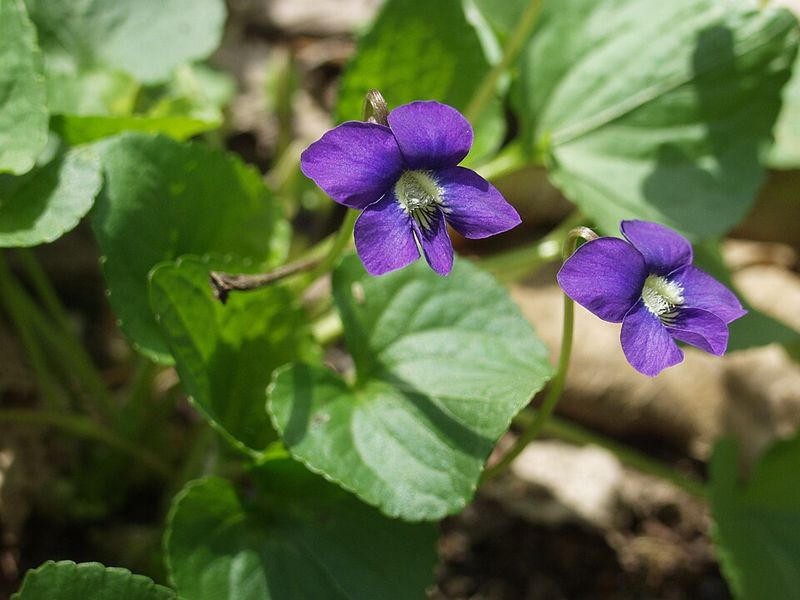
Native violets get pulled as weeds in a lot of Georgia yards, which is a shame because they are doing exactly what a good groundcover should do.
Viola sororia and its relatives spread into open spaces, flower reliably in early spring, and provide food for several native butterfly larvae — including the fritillary species that are common across Georgia.
Pulling them out and planting liriope instead is a trade that does not favor the garden.
The foliage is rounded, heart-shaped, and stays relatively low, forming loose patches rather than a tight, uniform mat. That informal quality is actually an advantage when the goal is a natural-looking yard.
Violets blend easily with other plants rather than competing aggressively, and they fill in bare spots under trees where grass struggles to grow.
Spring flowers range from deep purple to pale lavender and white depending on the variety, and the bloom period runs from late February through April in most Georgia locations. After flowering, the foliage continues to cover ground through summer and into fall.
Violets prefer moist, partially shaded spots but adapt to a range of conditions across Georgia. They do reseed, so some management may be needed if they spread into areas where you do not want them.
Treated as a deliberate groundcover rather than a weed, though, native violets create a soft, natural appearance that liriope simply cannot replicate.
8. Partridgeberry Creates A Low Evergreen Groundcover
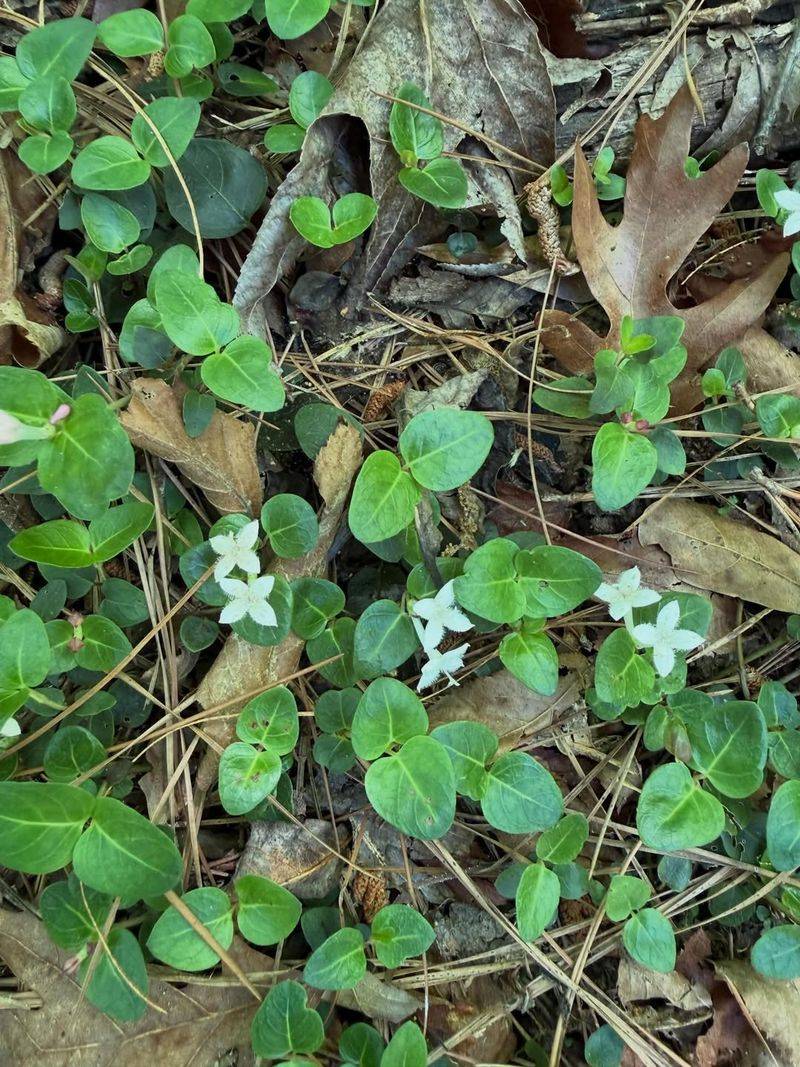
Partridgeberry is the kind of plant that rewards people who look closely. Mitchella repens creeps along the ground in thin, wiry stems with small, paired, glossy leaves, and by fall it produces bright red berries that sit on the forest floor like tiny ornaments.
It is genuinely beautiful in a quiet, understated way that liriope never manages.
In Georgia, partridgeberry grows naturally in moist, acidic woodland soils under mature hardwoods and pines. Replicating those conditions in a home landscape is straightforward if you have the right spot — a shaded area with well-drained, humus-rich soil and consistent moisture.
It will not perform in hot, sunny locations or compacted clay without significant soil improvement.
Growth is slow, and partridgeberry will not fill a large area quickly.
It works best as a detailed groundcover in smaller shaded spaces — around the base of a tree, along a woodland path, or in a naturalized corner of a Georgia yard where you want something that looks like it has always been there.
White tubular flowers appear in late spring and are pollinated by bumblebees. The red berries that follow persist through winter and attract birds.
Planting partridgeberry alongside native ferns or foamflower creates a layered woodland floor effect that looks far more authentic than any row of liriope could achieve in a Georgia landscape.