These 10 Plants Thrive On Neglect And Still Fill Your Michigan Garden Borders
Not every gardener has hours to spend maintaining perfect beds, and not every plant requires that kind of attention to look good.
Some of the most reliable performers in Michigan gardens are the ones that get planted, get established, and then largely take care of themselves season after season.
These are not dull plants filling space. Many of them bloom boldly, spread with purpose, and create the kind of full, layered border that looks like it received a lot more attention than it actually did.
Michigan’s climate does the filtering work here. Plants that cannot handle cold winters, clay soil, summer humidity, or the occasional dry stretch simply do not last, which means the ones that stick around and keep performing have already proven something.
This list focuses on plants that ask very little and still deliver genuine visual impact along borders, edges, and beds where consistent growth and seasonal interest matter more than constant care.
1. Wild Bergamot (Monarda fistulosa)
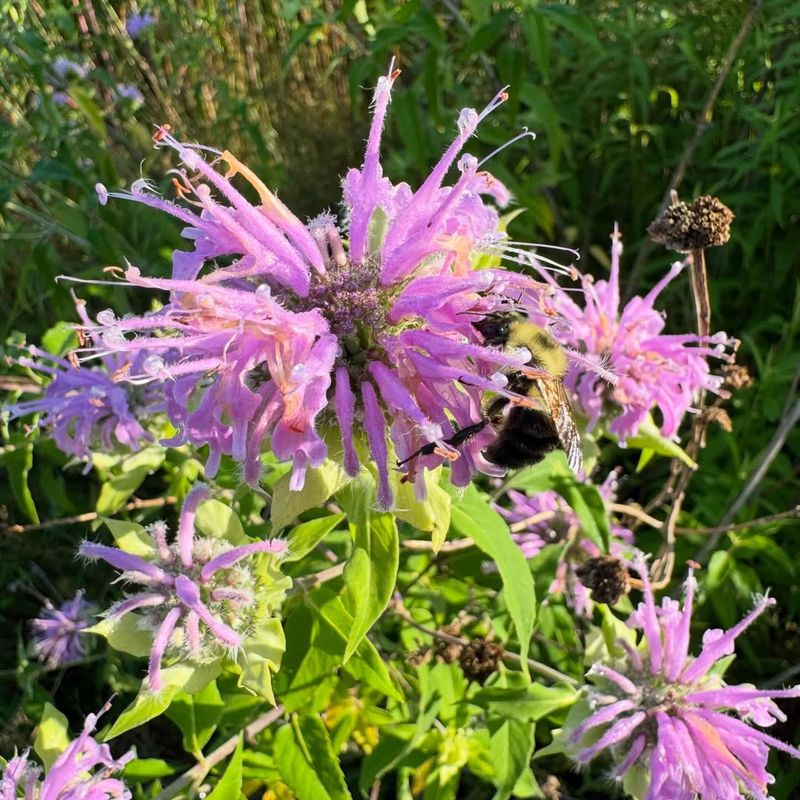
There is something almost magical about Wild Bergamot in full bloom. The soft lavender-purple flower clusters look like little fireworks frozen in time, and they attract hummingbirds, bumblebees, and butterflies all at once.
Native to Michigan, this plant brings serious pollinator energy to any garden border without asking for much in return.
Unlike its showier cousin scarlet bee balm, Wild Bergamot handles dry and average soils far better, making it a smarter choice for Michigan gardeners who want reliability over drama.
It spreads gradually through underground rhizomes, slowly filling border gaps in a natural, relaxed way.
One important tip: give it good airflow by not crowding it too tightly, especially during Michigan’s humid summers, to keep powdery mildew at bay.
The foliage has a pleasant oregano-like scent when brushed, which adds a sensory bonus to your garden walk. Bloom time runs from midsummer into early fall, bridging the gap between early-season flowers and late-season asters.
Wild Bergamot grows to about two to four feet tall, making it a strong mid-border choice. Pair it with Little Bluestem grass or coneflowers for a stunning native combination that practically takes care of itself.
Michigan’s native plant enthusiasts have championed this plant for years, and once you grow it, you will quickly understand why.
2. Black-Eyed Susan (Rudbeckia hirta)
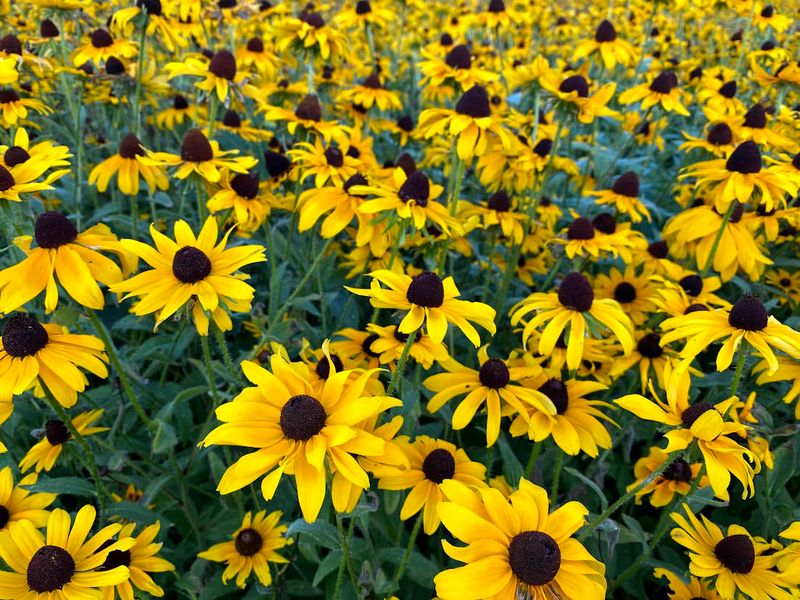
Few flowers say “Michigan summer” quite like the cheerful golden blooms of Black-Eyed Susan. Native to the state, this plant practically grows itself once you get it settled into a sunny spot with average, well-drained soil.
It handles short dry spells without missing a beat, which makes it a favorite for gardeners who forget to water.
The blooms appear from midsummer well into fall, giving your borders weeks of reliable color when other plants start to fade. Butterflies and bees absolutely love these flowers, so you get a bonus wildlife show on top of the visual appeal.
The dark brown centers create a bold contrast against the bright yellow petals that is hard to miss from across the yard.
Over time, Black-Eyed Susan spreads into full, satisfying clumps that fill gaps in your garden borders naturally. You can divide the clumps every few years to keep things tidy and share starts with neighbors.
Your Michigan Garden Changes Every Week. Your Plan Should Too.
Gardening in Michigan changes quickly throughout the season. Every Friday you’ll receive a simple weekly plan showing exactly what to plant, prune, fertilize, harvest, and protect so you never miss the right timing.
Plant it alongside grasses or coneflowers for a layered, cottage-style look that feels effortless. Michigan gardeners have relied on this plant for generations, and it never seems to disappoint.
Just give it sun, skip the heavy fertilizing, and watch it reward you every single summer.
3. Purple Coneflower (Echinacea purpurea)
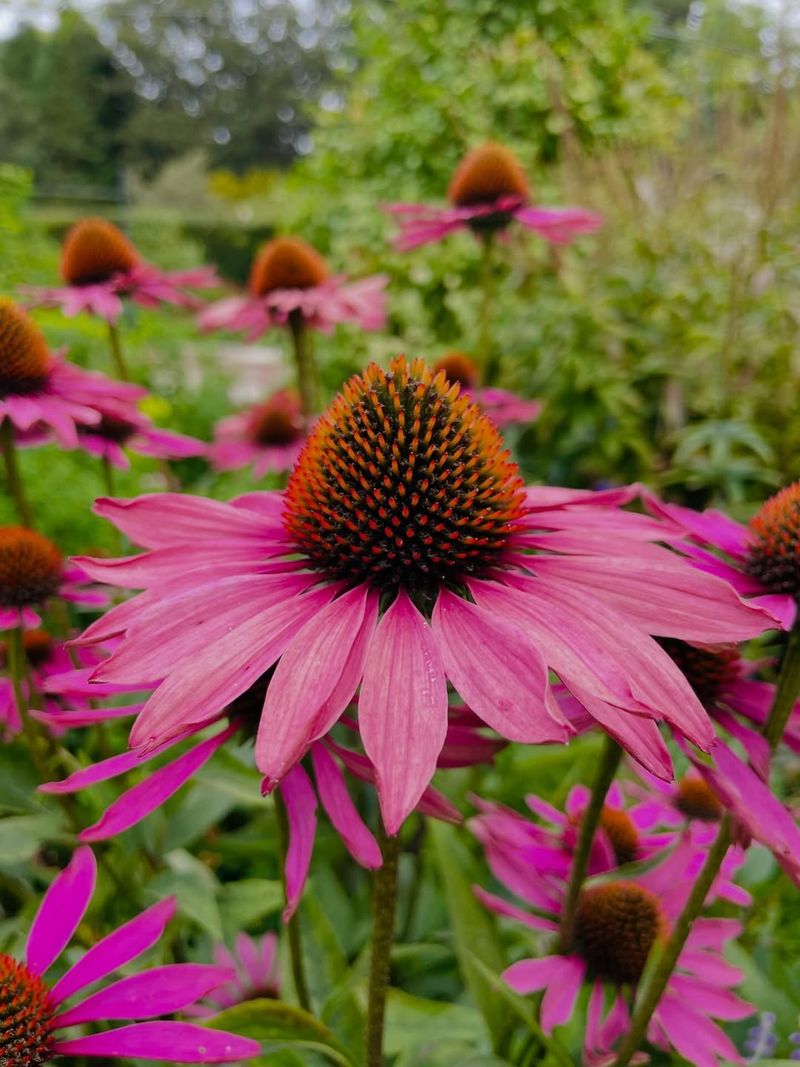
Purple coneflower is the kind of plant that earns its place in a Michigan garden and then some. Originally native to the eastern United States, it has proven itself completely at home in Michigan borders for decades.
Once established in full sun with well-drained soil, it shrugs off drought like a champ and keeps blooming through the heat of summer.
The rosy-purple petals with their signature spiky orange-brown cones are eye-catching from the moment they open in early summer.
Goldfinches are especially drawn to the seed heads in fall, so skipping the deadheading actually does double duty by feeding wildlife and adding textural interest to your winter garden. That is a pretty sweet deal for doing less work.
Echinacea also has a long history as a medicinal herb, which gives it an extra layer of appeal for curious gardeners. In Michigan, it pairs beautifully with Black-Eyed Susan and ornamental grasses for a natural prairie-style border.
The plants spread slowly by self-seeding, meaning your patch gradually fills in without any effort from you. Avoid overwatering or adding heavy compost, because lean conditions actually bring out its best performance.
Tough, beautiful, and wildlife-friendly, Purple Coneflower is one of the most rewarding plants you can grow in Michigan borders.
4. Butterfly Weed (Asclepias tuberosa)
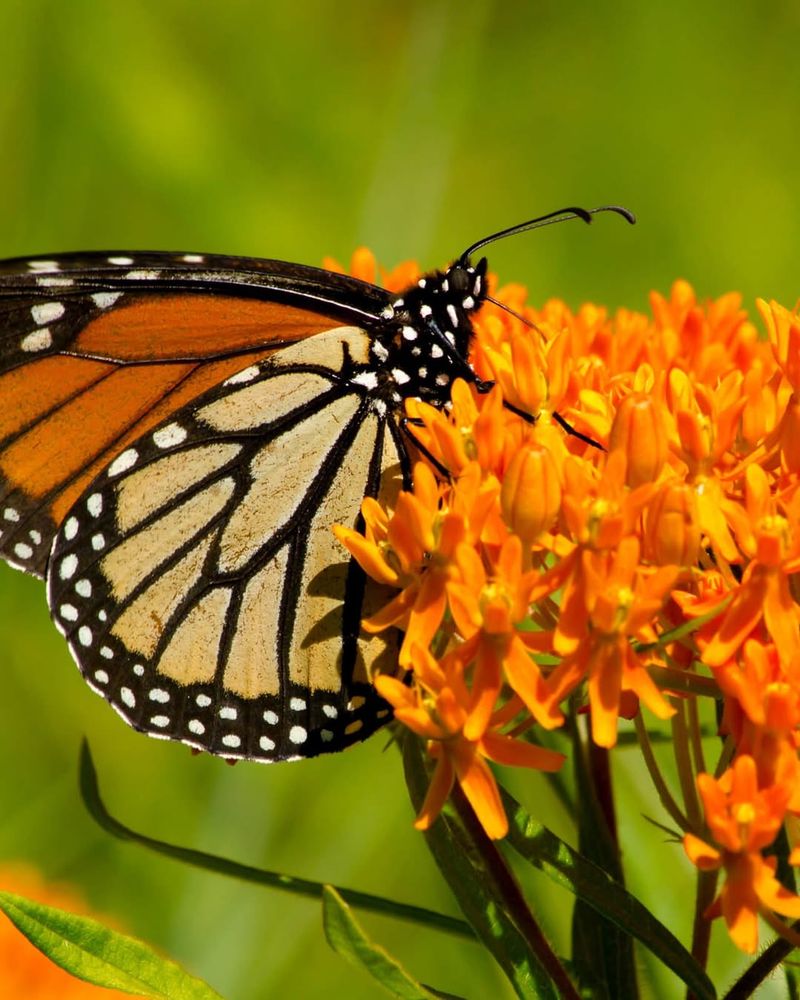
Bright orange flowers and monarch butterflies go hand in hand with Butterfly Weed, and Michigan gardeners lucky enough to have this native plant in their borders know exactly how spectacular that combination looks.
Asclepias tuberosa is one of the toughest plants you can put in a sunny, dry spot, thriving in conditions that would stress most other flowering perennials.
The deep taproot is the secret behind its drought tolerance, reaching far into the soil to pull up moisture even during dry Michigan summers. Because of that taproot, Butterfly Weed really does not like being moved once it settles in, so choose your planting spot carefully from the start.
It is slow to emerge in spring, so marking its location helps you avoid accidentally digging it up before it wakes.
Butterfly Weed is a critical host plant for monarch butterflies, providing both nectar and a place for caterpillars to feed. Beyond monarchs, it draws a wide range of native bees and other pollinators throughout its long summer bloom period.
The seed pods that form in late summer are architecturally beautiful, splitting open to release silky white fluff in fall. Plant it at the front to mid-section of your Michigan garden border in full sun and lean, well-drained soil.
Forget the fertilizer, skip extra watering, and simply enjoy the show it puts on every year.
5. Little Bluestem (Schizachyrium scoparium)
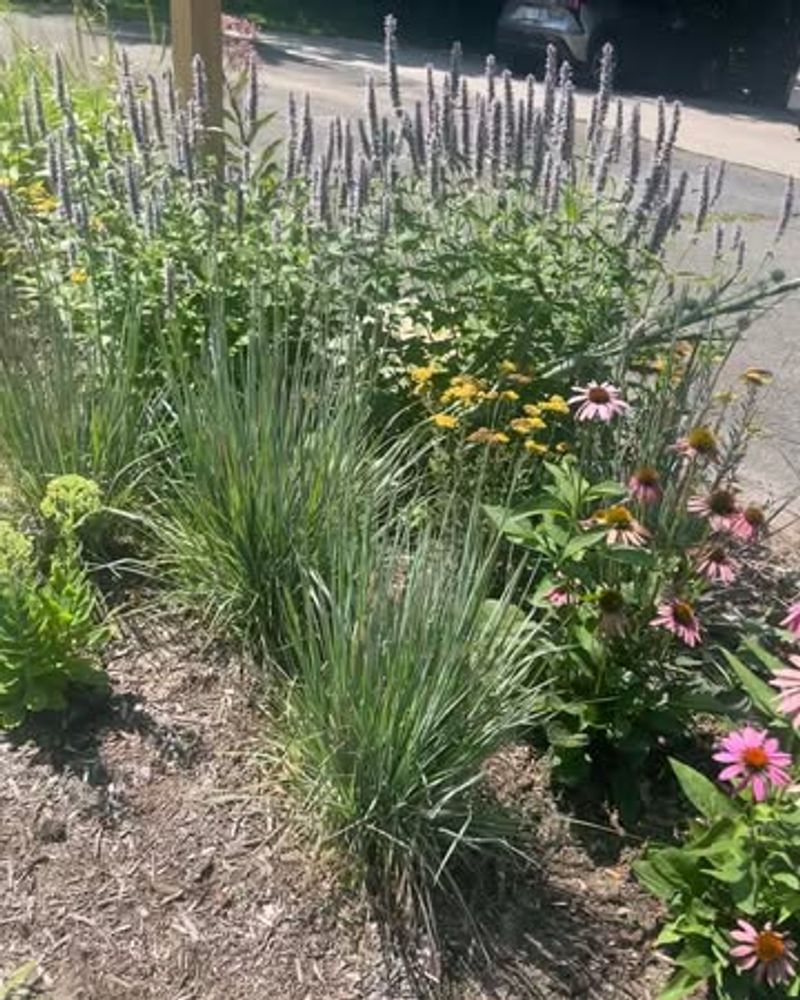
Most grasses fade into the background, but Little Bluestem demands a second look. In summer, its blue-green blades create a cool, airy texture that plays beautifully against bold flowers like coneflower and Black-Eyed Susan.
Then fall arrives and something remarkable happens: the foliage transforms into rich shades of copper, orange, and burgundy that glow in the Michigan autumn sun.
Native to Michigan and across the Great Plains, this grass is built for tough conditions. It performs best in full sun with lean, well-drained soil, and it actually looks better when you do not fuss over it.
Avoid planting it in wet clay, because standing moisture will cause the clumps to flop and lose their upright, sculptural form.
Little Bluestem holds its structure well into winter, giving your garden borders visual interest long after most perennials have gone quiet. The fluffy white seed heads catch the light on cold Michigan mornings and look stunning against a backdrop of snow.
Birds feed on the seeds throughout the winter months, adding wildlife value to its already long list of strengths. At two to four feet tall, it works well in the middle or back of a border.
Once established, it needs almost no supplemental water or fertilizer, making it one of the most rewarding low-effort plants a Michigan gardener can grow.
6. Switchgrass (Panicum virgatum)
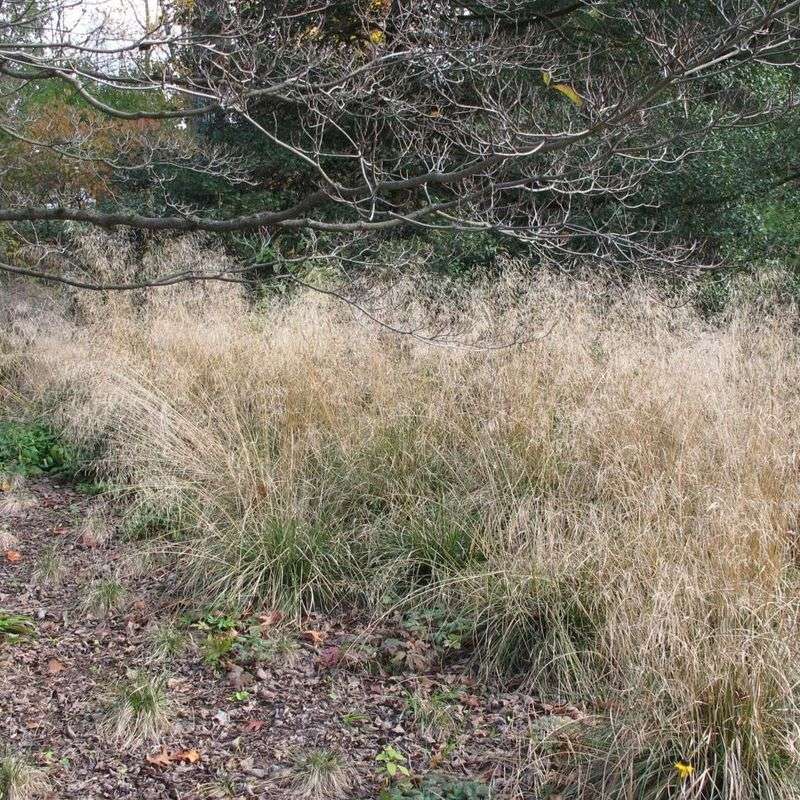
Switchgrass is the kind of plant that earns your trust fast. Native to Michigan and much of North America, it handles an impressive range of conditions including full sun, clay soil, humidity, and periodic dry stretches once it gets established.
That combination of toughness and adaptability makes it one of the most dependable grasses for Michigan garden borders.
In summer, the fine-textured foliage creates a soft, billowing effect that adds movement and lightness to your planting design. Airy seed heads appear in late summer and shimmer in the breeze, catching morning light in a way that makes your whole border look more dynamic.
Several compact cultivars like Shenandoah and Rotstrahlbusch are especially well-suited to border use, staying tidier than the wild species without losing any of their natural charm.
Fall brings a stunning color change as the foliage shifts to shades of red, orange, and gold depending on the cultivar. The seed heads persist through winter, providing food for birds and structural interest during Michigan’s coldest months.
Switchgrass grows anywhere from three to six feet tall depending on variety, so it works best toward the middle or back of a border planting. Cut it back hard in late winter before new growth emerges.
Beyond that, it truly asks for very little, which is exactly what makes it so popular with Michigan gardeners who want maximum impact for minimum effort.
7. Yarrow (Achillea millefolium)
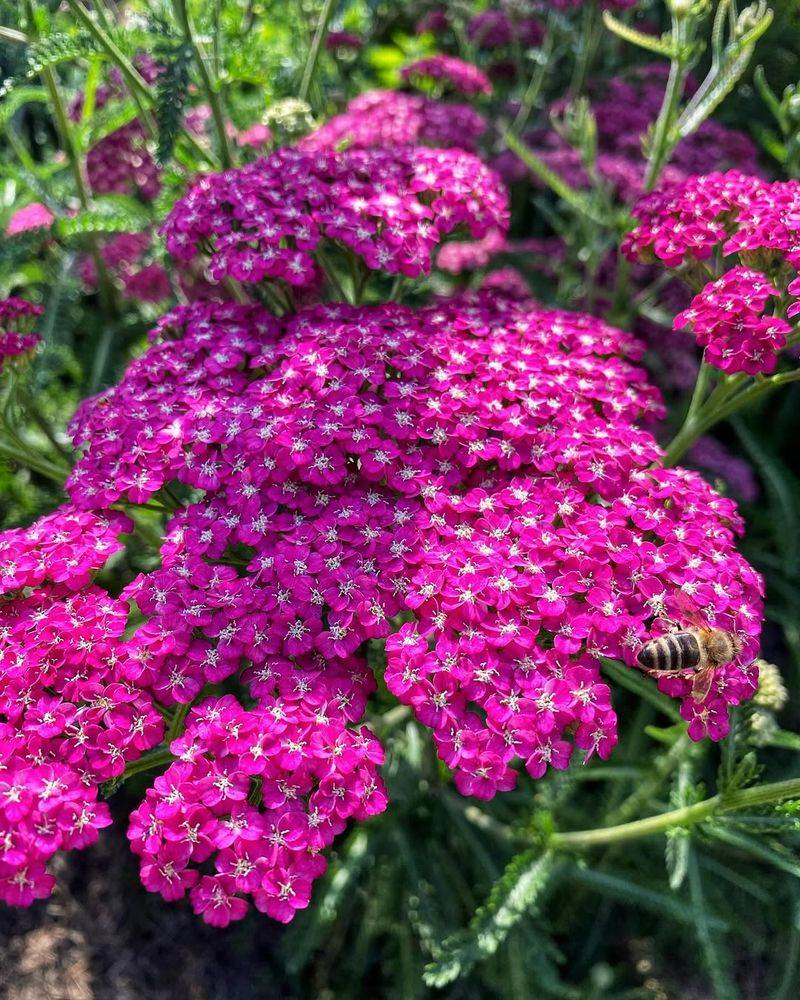
Yarrow has been growing in gardens for thousands of years, and there is a very good reason it has stuck around.
The flat-topped flower clusters come in shades of white, yellow, pink, and red, and they bloom from early summer well into fall if you trim spent flowers occasionally.
The feathery, fern-like foliage stays attractive even when the plant is not in bloom, giving your Michigan border texture and depth all season long.
Native forms of yarrow do occur in Michigan, though most garden cultivars are selected varieties bred for better color and form. All of them share the same rugged personality: full sun, lean and well-drained soil, and minimal watering once established.
One thing to keep in mind is that over-fertilizing causes yarrow to grow tall and floppy, so hold back on the compost and let the soil stay on the lean side.
Yarrow spreads gradually by rhizomes and can be divided every few years to keep clumps vigorous and well-shaped. The flowers are excellent for cutting and drying, making them a bonus crop for indoor arrangements.
Pollinators absolutely swarm yarrow blooms throughout summer, which adds real energy to your garden. It pairs well with salvias, ornamental grasses, and coneflowers in a sun-drenched Michigan border.
Plant it, mostly ignore it, and enjoy the season-long payoff that very few plants can match.
8. Sedum (Hylotelephium spp.)
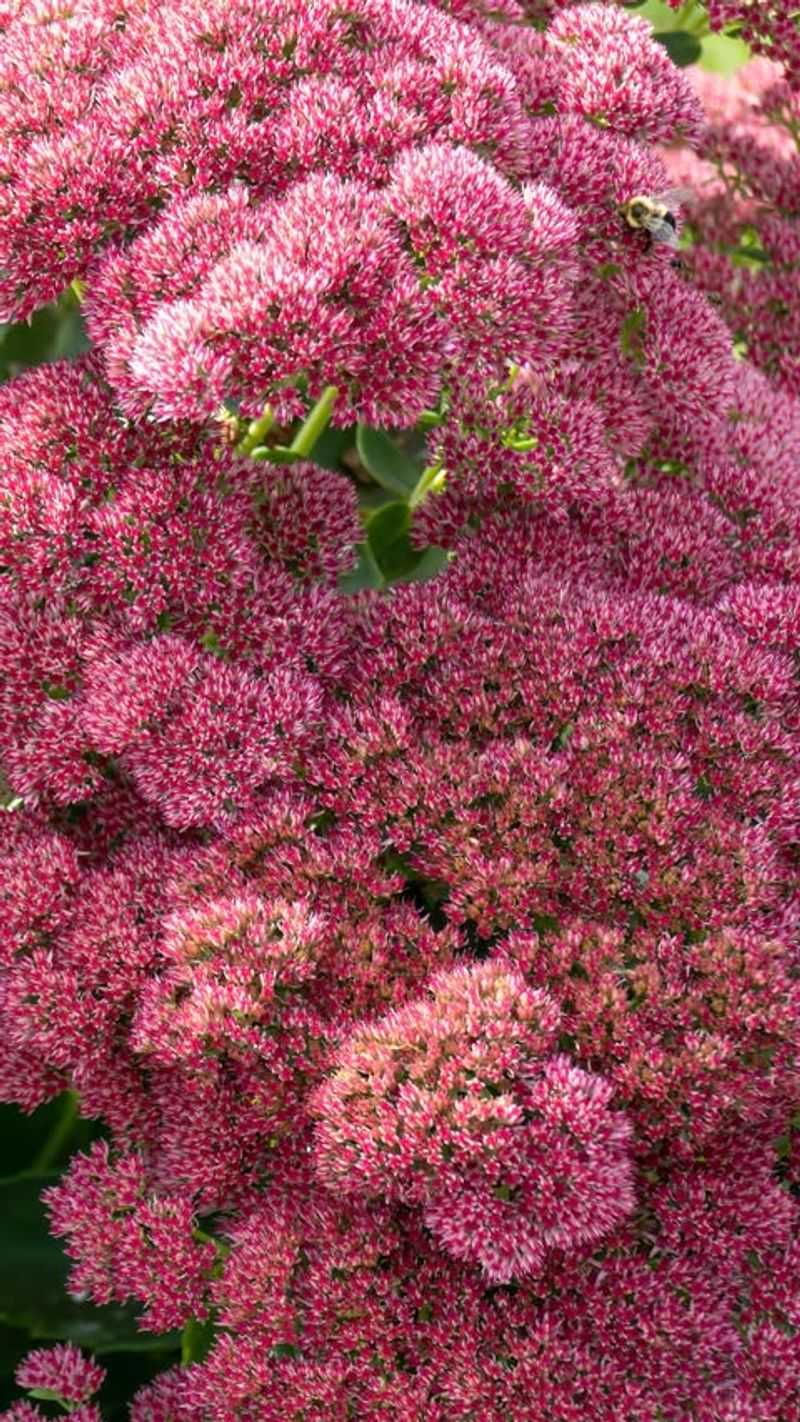
Sedum, now officially reclassified as Hylotelephium, is one of those plants that earns its keep from the moment it pushes up in spring to the last days of winter.
The thick, succulent-like foliage looks tidy and attractive all season even before the flowers open, which is a rare quality in a perennial.
In Michigan gardens, it fills border spaces with architectural structure that other soft-stemmed plants simply cannot provide.
The flower heads emerge as tight, broccoli-like buds in late summer and gradually open into broad, flat clusters of tiny pink or rosy-red blooms.
Butterflies and late-season bees absolutely flock to the flowers, making sedum one of the most important pollinator plants for Michigan’s fall garden.
After the blooms fade, the rust-colored seed heads remain on stiff stems well into winter, adding beauty during Michigan’s quieter months.
Sedum is one of the most drought-tolerant perennials you can grow in Michigan, storing water in its thick stems and leaves.
The key to keeping it upright and attractive is good drainage and full sun; too much shade or moisture causes the stems to flop outward by midsummer.
Avoid splitting clumps too aggressively, and resist the urge to fertilize heavily. Popular cultivars like Autumn Joy and Matrona are proven performers across Michigan.
Plant it at the border’s front edge for a bold, reliable statement that looks great through every season.
9. Prairie Dropseed (Sporobolus heterolepis)
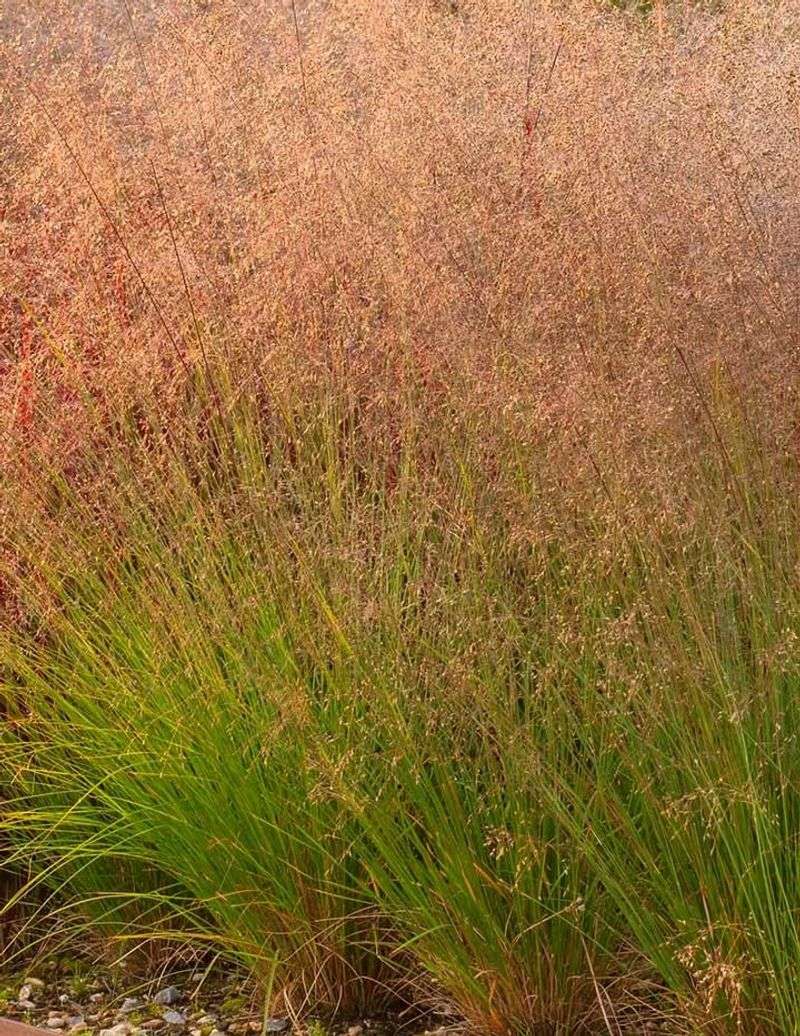
Prairie Dropseed might be the most underappreciated native grass in Michigan, and that is a shame because it is genuinely spectacular once you know what to look for.
The incredibly fine, hair-like blades form a perfectly rounded mound that looks almost like a fountain frozen in mid-flow.
In late summer, delicate, cloud-like seed heads float above the foliage and release a surprisingly sweet, almost buttery fragrance when the wind moves through them.
This grass is native to Michigan and the broader Midwest prairie region, and it is extremely well-adapted to the state’s variable climate. It does take a couple of seasons to fully establish, growing slowly at first while it puts energy into developing a deep root system.
Once it settles in, though, it becomes one of the most low-maintenance plants in your entire border, needing no supplemental watering, no fertilizing, and almost no attention at all.
Prairie Dropseed performs best in full sun with well-drained soil, and it stays compact at about two feet tall and wide, making it ideal for the front or middle of a Michigan garden border. The foliage turns golden-orange in fall and persists attractively through winter.
It pairs beautifully with coneflowers, Wild Bergamot, and Black-Eyed Susan in a native plant border. For Michigan gardeners who want elegance without effort, Prairie Dropseed is one of the finest choices available.
10. New England Aster (Symphyotrichum novae-angliae)
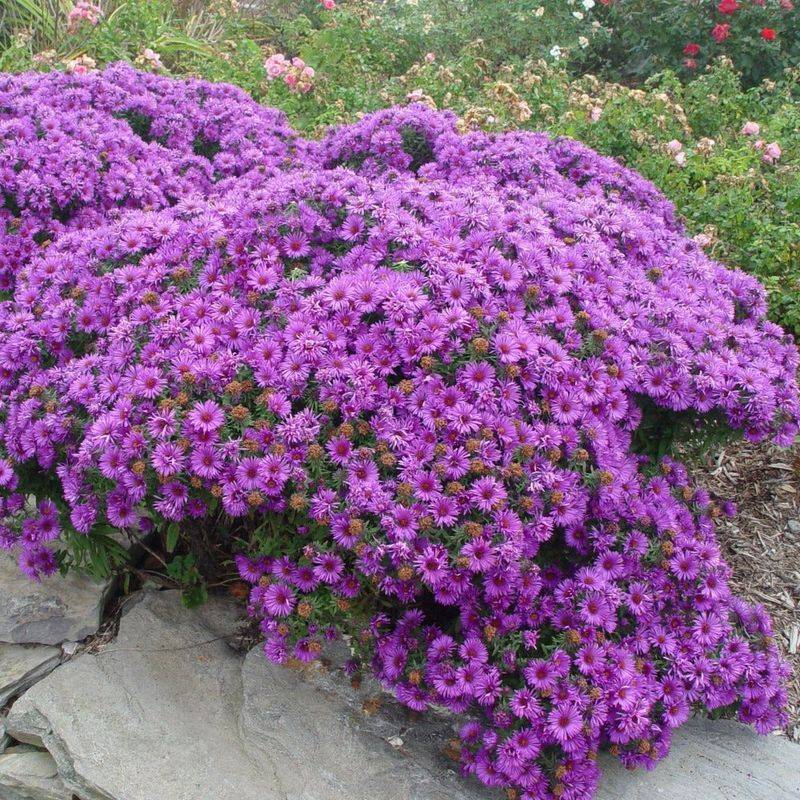
When most of your garden is winding down for the season, New England Aster is just getting started.
Native to Michigan, this late-season powerhouse bursts into bloom from late August through October, covering itself in vivid purple, pink, or lavender flowers with bright yellow centers.
At a time when pollinators are desperately searching for food before winter, these blooms are genuinely life-giving for bees and butterflies across Michigan.
New England Aster can grow quite tall, sometimes reaching four to six feet by bloom time, which can make it look a bit unruly in a neat border. A simple trick solves that: cut the stems back by about one-third in early summer, around late June or early July.
That one easy step produces a shorter, bushier plant that blooms just as heavily but fits much better into a tidy Michigan garden border.
This plant loves full sun and tolerates a wide range of soil types, including the heavier clay soils common in many parts of Michigan. It spreads gradually over time, forming robust clumps that you can divide every few years to share or reposition.
The fall color show it provides is simply unmatched by nearly any other perennial in the Michigan garden. Pair it with ornamental grasses and sedum for a border combination that holds strong color and interest all the way into November.
For a reliable fall finish, nothing beats New England Aster.