8 Things Your North Carolina Geraniums Need In August To Keep Blooming Until Frost
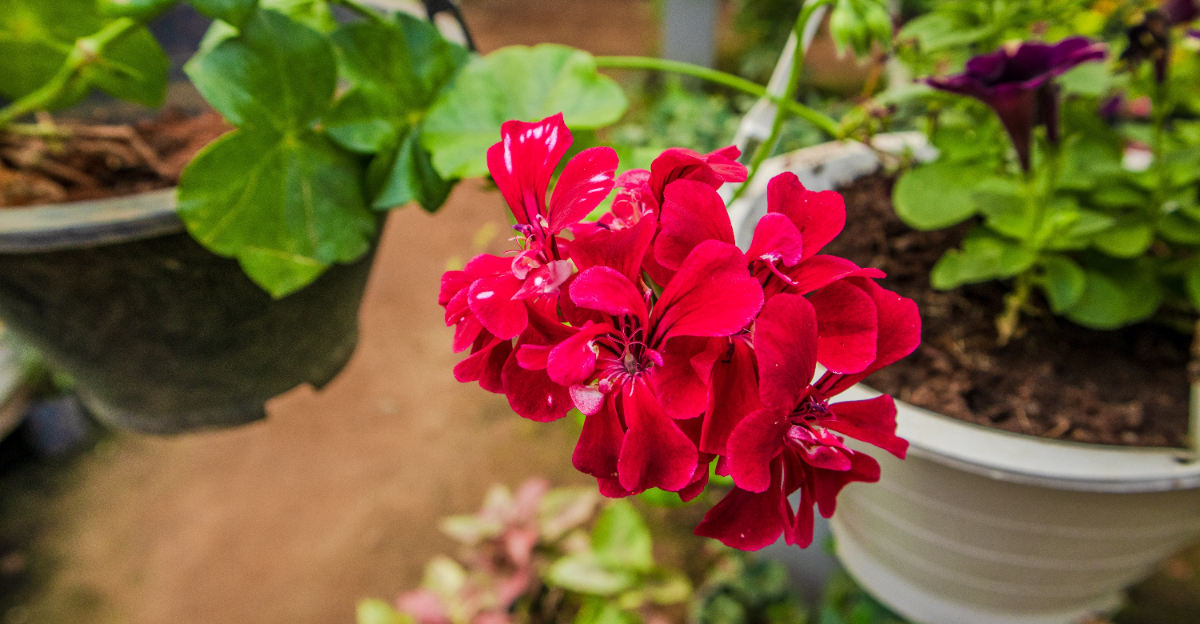
Geraniums often start looking tired by August, their once vibrant blooms fading just as gardeners hope for a few more months of color.
Most people assume this slowdown simply means the plant’s best days are already behind it for the season. But a handful of specific adjustments can completely change that outcome, pushing blooms all the way through to the season’s first frost.
None of these steps require major effort, yet most gardeners have never tried more than one or two of them together.
Understanding the full list could be the difference between geraniums that quit early and ones that keep performing for months longer. Many gardeners are surprised by how much of a difference these small changes make when combined.
This is the kind of care that pays off in a very visible way right through fall.
1. Remove Faded Flowers
Spent blooms may look harmless, but they quietly steal energy from your geraniums. Once a flower fades, the plant starts pouring its resources into making seeds instead of pushing out fresh color.
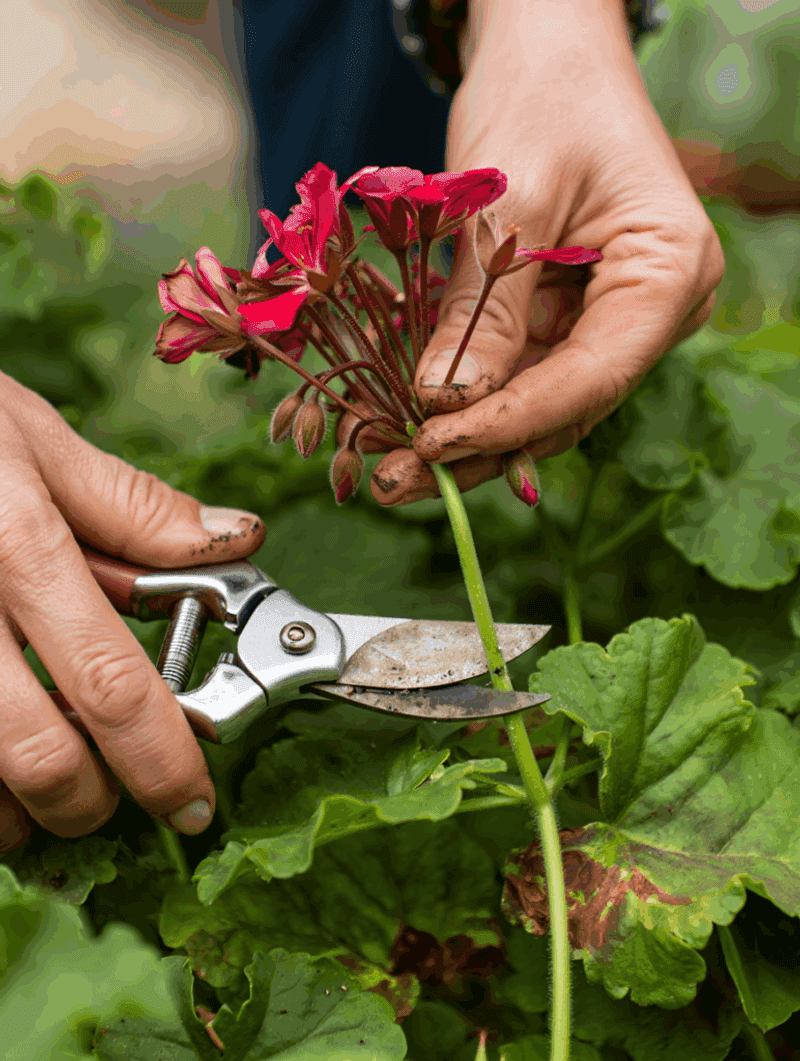
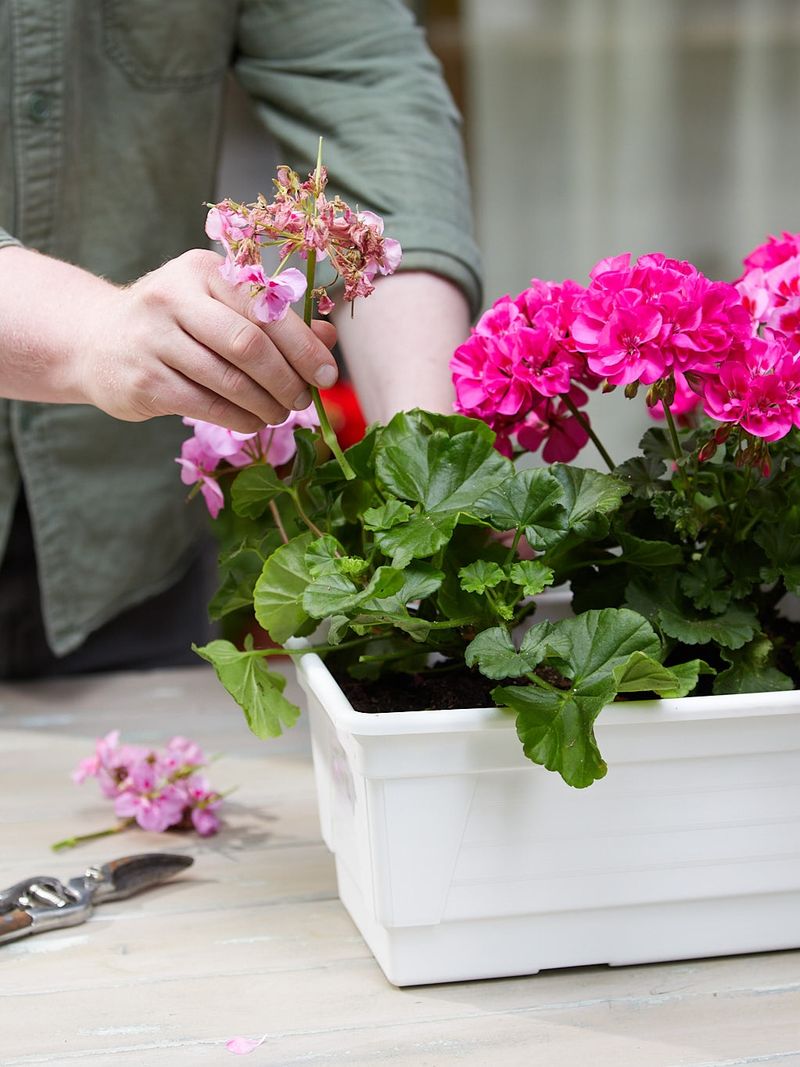
Snipping off those tired blossoms is called deadheading, and it works like magic. When you remove the old flower, the plant gets the message that its job is not finished yet. So it responds by sending up new buds to try again.
Grab a clean pair of scissors or just pinch with your fingers. Follow the flower stem down to where it meets a main branch, then cut it there. Do not leave a bare stalk sticking up, since those stubs can rot in humid weather and invite trouble.
Try to check your plants every few days during August. A quick two-minute walk around your containers or beds is usually enough to catch the blooms that have finished. The more often you do it, the more flowers you will see.
Geraniums are especially generous when they feel cared for. Regular deadheading keeps them looking neat, full, and colorful rather than leggy and faded.
Think of it as trading one wilted flower for several new ones. That is a pretty great deal for such a small chore.
By staying on top of it now, you set your plants up to keep blooming steadily right through the cooler weeks ahead, giving your porch or garden a burst of color long after summer ends.
2. Keep The Soil Moderately Moist
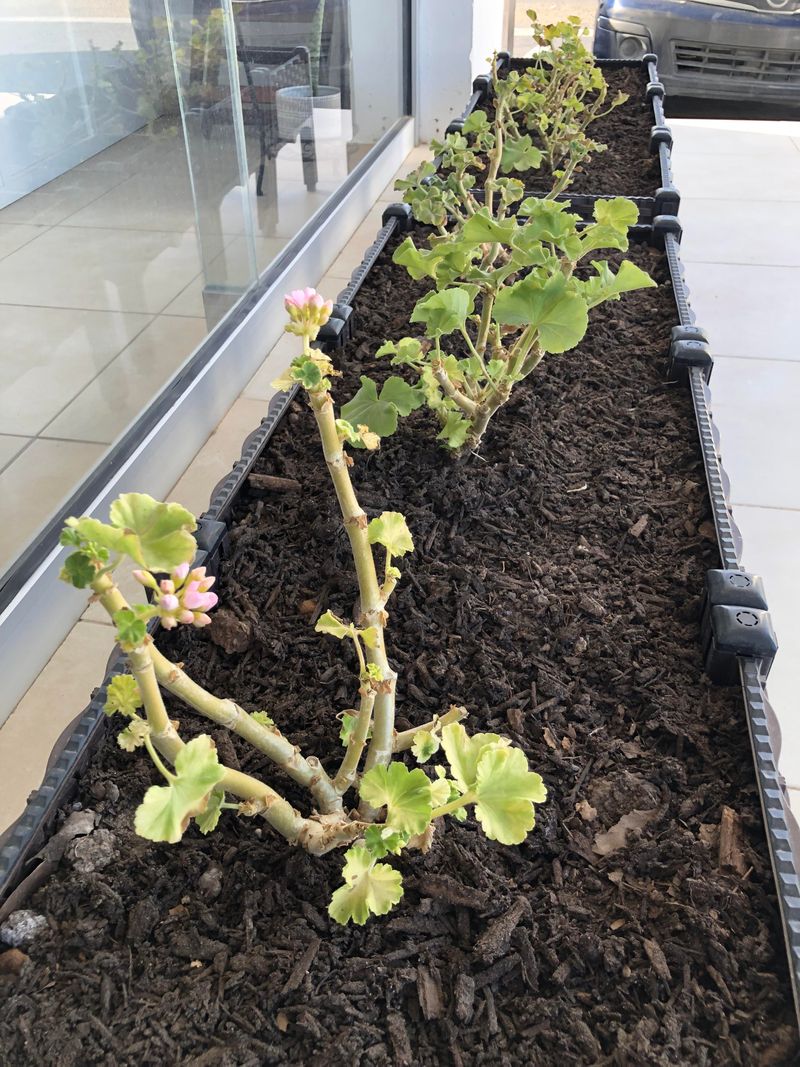
Water is the fuel behind every bloom, but geraniums like a steady sip rather than a flood. When the soil stays evenly moist, the roots can drink freely and the plant keeps making flowers.
The trick is finding that middle ground. Soil that dries out completely stresses the plant and causes buds to drop before they open. Roots sitting in soggy mud, on the other hand, cannot breathe and start to rot.
A simple finger test tells you everything. Push your finger about an inch into the soil, and if it feels dry at your fingertip, it is time to water. If it still feels damp, wait another day and check again.
Your North Carolina Garden Changes Every Week. Your Plan Should Too.
Gardening in North Carolina changes quickly throughout the season. Every Friday you’ll receive a simple weekly plan showing exactly what to plant, prune, fertilize, harvest, and protect so you never miss the right timing.
During hot August days, containers may need water every morning because pots dry out fast. Plants in the ground usually need less, so watch them closely and adjust as the weather changes.
Water early in the day whenever you can. Morning watering lets the leaves dry off before evening, which helps keep fungus and mildew away in North Carolina’s muggy climate.
Try to aim the water at the base of the plant instead of splashing it all over the foliage. Wet leaves stay damp longer and can spread disease.
Keeping moisture steady also prevents the wild swings between bone-dry and soaked that geraniums hate.
A consistent routine keeps them calm and blooming. Give them that reliable rhythm now, and your plants will reward you with color that lasts well into the cooler fall days.
3. Let The Soil Drain
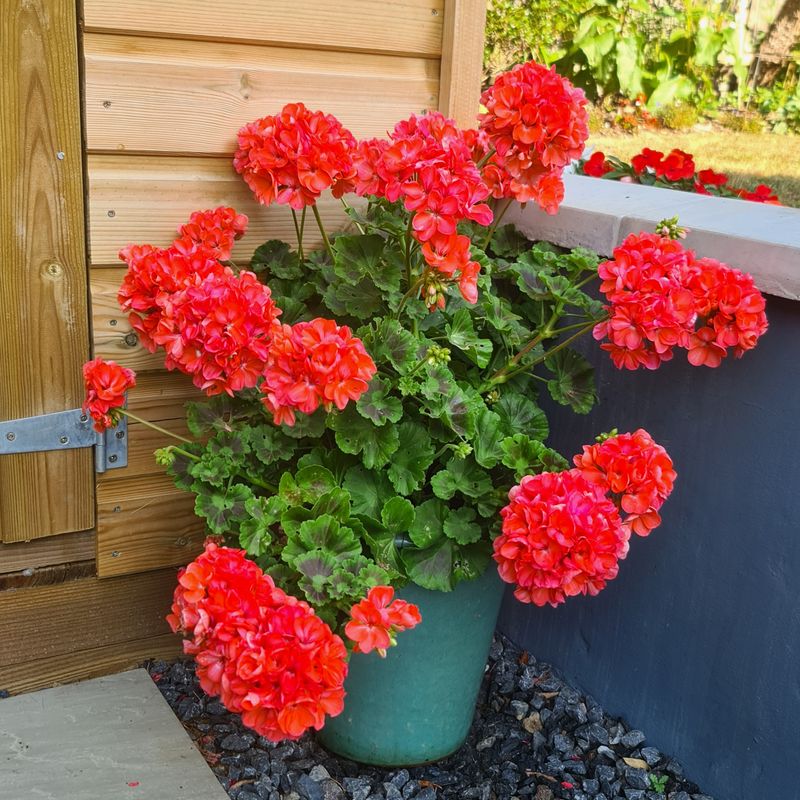
Good drainage might be the most overlooked secret to healthy geraniums. In August, when storms roll through North Carolina and dump heavy rain, water needs somewhere to go.
Roots that sit in standing water quickly run into trouble. They cannot pull in oxygen, and soggy conditions become the perfect home for root rot and other problems that stall your blooms.
Start by checking that every container has holes in the bottom. If your pots are missing them, drill a few or move your plants into ones that drain. A pot without holes turns into a bucket during a downpour.
The soil itself matters too. Heavy, sticky dirt holds water like a sponge, so mix in some perlite, sand, or a quality potting blend to help extra moisture flow through. Loose, airy soil lets roots breathe even after a big rain.
For geraniums planted in the ground, choose a spot that does not stay puddled. Raised beds or slightly mounded soil give water an easy path away from the roots.
After a heavy storm, take a quick look at your containers. If any are sitting in saucers full of water, empty them right away so the roots are not stuck in a bath.
Humid weather makes drainage even more important because the air stays damp and soil dries slowly.
When water moves freely through the soil, your geraniums stay healthy and keep pushing out flowers. Give them that escape route, and heavy August rains become far less of a worry.
4. Give Them Plenty Of Sun
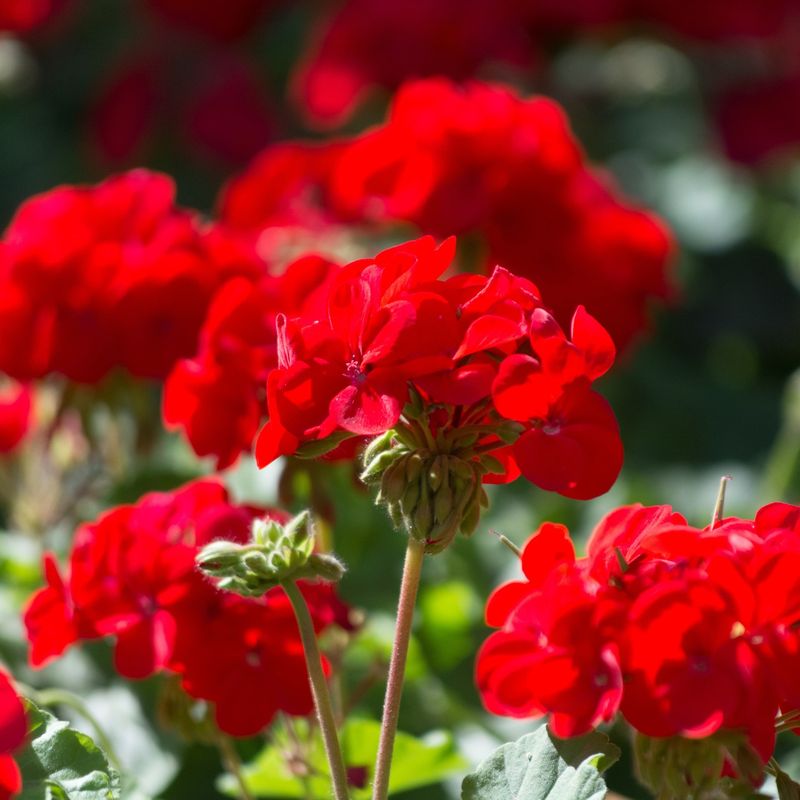
Sunshine is what turns geraniums into blooming machines. These plants love bright light, and the more they soak up, the more flowers they produce.
Aim for at least six hours of direct sun each day. A sunny porch, patio, or garden bed that catches the morning and midday light is ideal for keeping your plants full and colorful.
When geraniums do not get enough light, they start to stretch. The stems grow long and floppy as the plant reaches toward brighter spots, and the flowers become few and far between. That leggy, tired look is a clear sign your plant is hungry for more sun.
Plenty of light does the opposite. It keeps growth compact, sturdy, and bushy, with lots of buds forming close together. Strong stems mean the plant can hold up all those blooms without flopping over.
North Carolina summers bring intense afternoon heat, so a little balance helps. In the hottest part of the day, a bit of light afternoon shade can keep the leaves from scorching while still giving plenty of energy for flowers.
If your plants live in containers, you have a big advantage. Just slide them to a brighter spot whenever they seem to be stretching or slowing down on blooms.
Watch how the sun moves across your yard as the season shifts. Spots that were shady in June may open up in late summer. Chasing that good light now keeps your geraniums thriving and blooming steadily until the first frost.
5. Do Not Overfeed Them
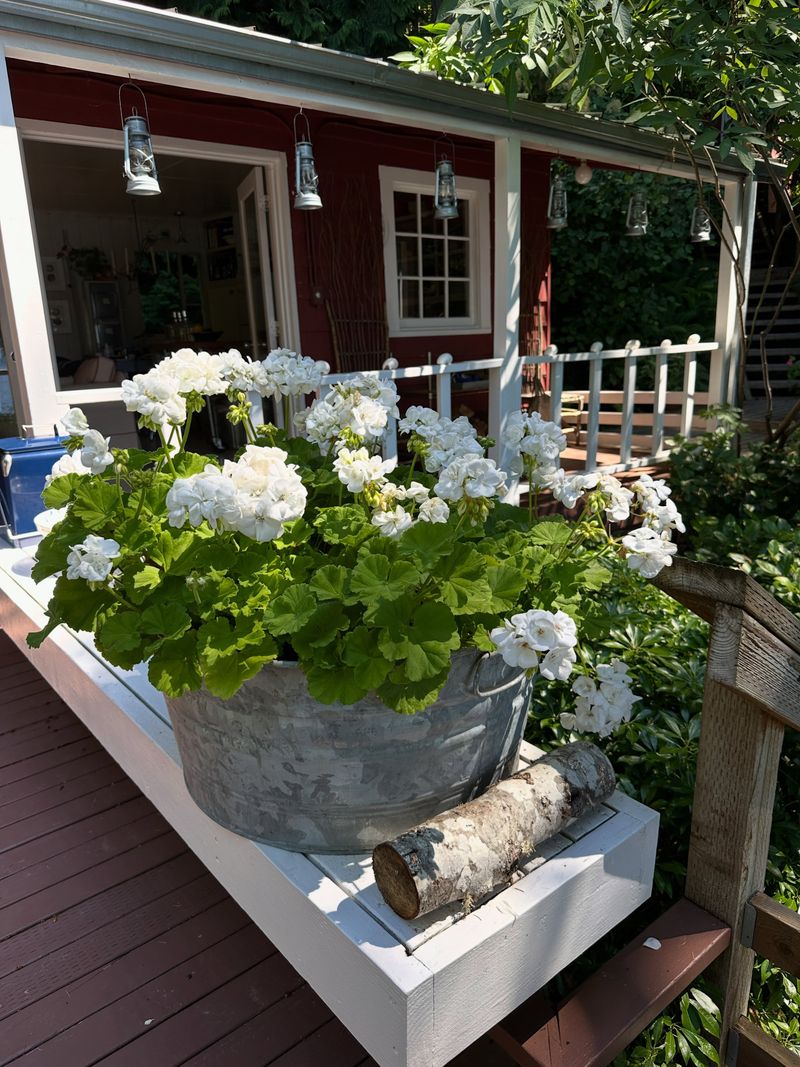
It feels natural to think more food means more flowers, but geraniums do not work that way. Too much fertilizer actually backfires and gives you the opposite of what you want.
When you overfeed, especially with a product high in nitrogen, the plant gets a signal to grow lots of leaves. You end up with a big, bushy green plant that puts on hardly any blooms.
The goal is a balanced approach. Feed your geraniums lightly, using a fertilizer made for flowering plants roughly every two to four weeks during the growing season. That steady, gentle rhythm supports blooms without pushing wild leafy growth.
Always follow the directions on the label, and when in doubt, use a little less than suggested. Geraniums are not heavy feeders, so a light hand keeps them balanced and happy.
Look for a fertilizer with more phosphorus, the middle number on the package, since that nutrient supports flowers. A blend meant for blooming plants usually hits the right mix.
Watering the plant before you feed helps too. Dry roots can be burned by fertilizer, so moist soil protects them and lets the nutrients spread evenly.
If your plant looks lush and green but shy on blooms, ease up on the feeding. Sometimes doing less is exactly what the plant needs to switch back into flower mode.
Moderate feeding keeps your geraniums strong without spoiling them. Give them just enough, and they will spend their energy on the colorful show you actually want, right up through the cooler fall weeks.
6. Clean Out Tired Leaves
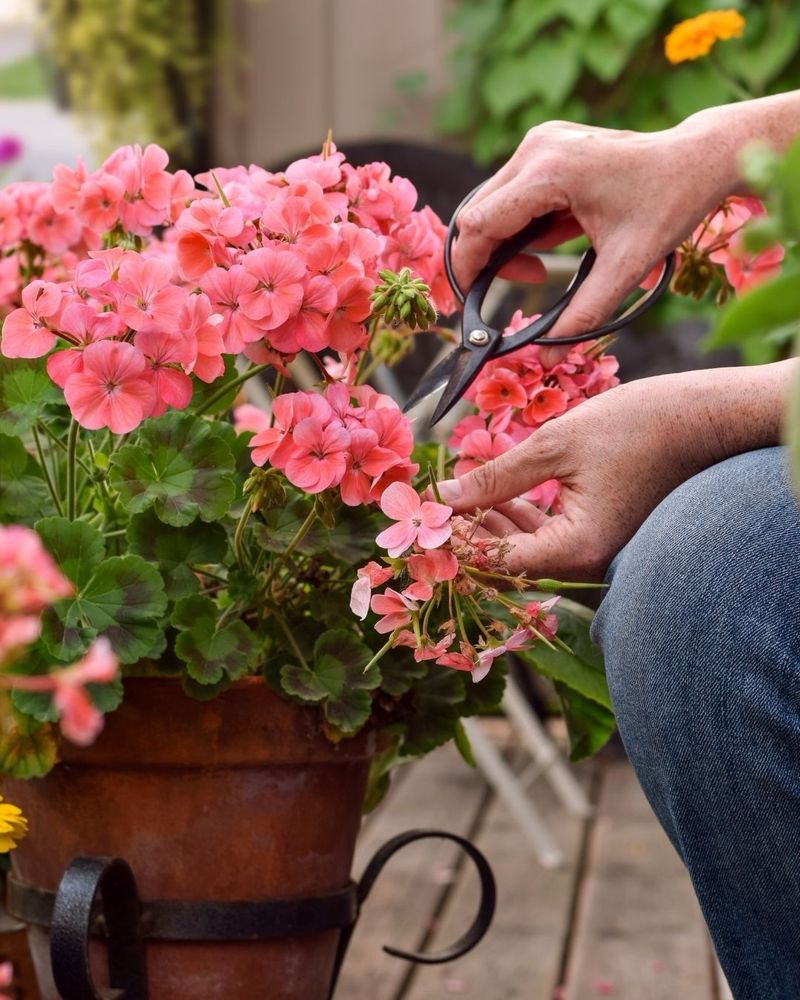
Every plant collects a few worn-out leaves over the summer, and geraniums are no exception. Those yellow, spotted, or damaged leaves are not doing much good, so it pays to clear them away.
Old foliage tends to gather near the bottom of the plant. When leaves pile up and crowd together, air cannot move freely between them, and that trapped, still air becomes a breeding ground for fungus and disease.
Removing tired leaves opens things up. Better airflow keeps the plant drier after rain and dew, which makes it much harder for mildew and spots to take hold in North Carolina’s humid weather.
Cleaning up is easy. Gently pinch or snip off any leaf that has turned yellow, brown, or ragged, and pull away any bits that have fallen onto the soil surface.
Getting rid of dropped leaves matters just as much. Debris sitting on top of the soil can hide fungus and pests, so a tidy base keeps problems from starting.
While you are at it, take a good look at the whole plant. A quick leaf cleanup is the perfect time to spot early signs of bugs or disease before they spread.
Always use clean tools, and wash them if you move between plants that look unhealthy. That simple step stops you from carrying problems from one geranium to the next.
A neat, open plant not only looks better but stays healthier too. Keep the foliage fresh and airy, and your geraniums will put their energy into new growth and blooms instead of fighting off trouble.
7. Check For Summer Pests
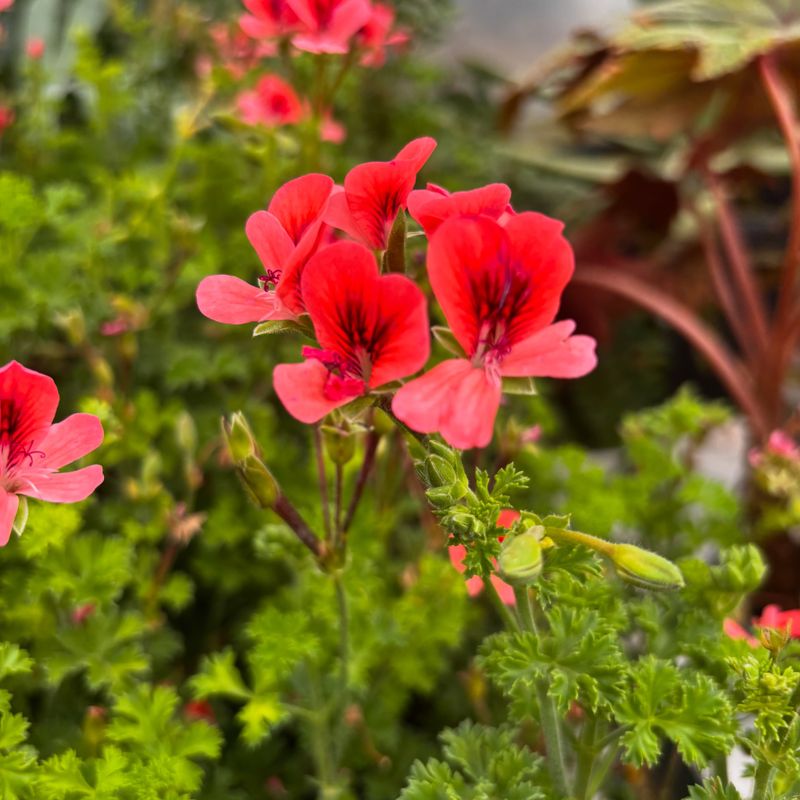
Warm August weather does not just help flowers grow. It also brings out hungry little pests that would love to make a meal of your geraniums.
Spider mites are among the sneakiest. These tiny specks hide on the undersides of leaves and leave behind faint webbing and pale, speckled foliage. They multiply fast in hot, dry conditions.
Caterpillars are easier to spot because they leave chewed holes and dark droppings behind. A single caterpillar can munch through a lot of leaves in just a few days, so catching them early saves your plant.
Mealybugs look like small cottony white blobs tucked into stems and leaf joints. They suck the juices from the plant and slow it down, leaving it weak and less able to bloom.
The best defense is a regular checkup. Flip a few leaves over and look closely once or twice a week, because finding pests while their numbers are small makes them far easier to handle.
For minor problems, a strong spray of water often knocks bugs right off. For tougher cases, insecticidal soap or neem oil works well and stays gentle on the plant.
Always treat in the cooler part of the day, since spraying in blazing sun can stress the leaves. Repeat every few days if the pests keep coming back.
Staying watchful is the whole trick here. A small colony is easy to manage, but a large one can overwhelm a plant quickly. Keep an eye out, act fast, and your geraniums will stay strong and blooming.
8. Give Them Time To Rebound
Late summer heat can leave geraniums looking a little tired, and that is completely normal. When the air is muggy and the nights stay warm, many plants slow their flowering just to cope with the stress.
Do not give up on them during this sleepy stretch. A geranium that seems worn out in August often has plenty of blooms left in it once conditions improve.
The change comes with the calendar. As North Carolina slides into fall, temperatures cool and the humidity eases, and geraniums usually respond with a happy burst of fresh flowers.
Cooler weather is simply more comfortable for them. The plant no longer has to fight the intense heat, so it can put its energy back into making buds and blooms instead of just surviving.
Your job in the meantime is to keep up the good habits. Steady watering, regular deadheading, light feeding, and pest checks all keep the plant healthy and ready to bounce back.
A geranium that stays cared for through the rough patch has everything it needs to rebound strongly. Neglect it now, and it may not have the strength to recover later.
Patience really pays off with these plants. That mid-summer slowdown is not the end of the show, just a short intermission before the encore.
When frost finally arrives, your geraniums can keep blooming right up until that first cold snap. Stick with your routine, trust the cooler days ahead, and you will enjoy fresh color long after most summer flowers have faded.