Think Twice Before Planting These Marigold Varieties (Gardeners Wish They Knew Sooner)
Aztec gardeners grew towering golden flowers for ceremonies centuries ago, and some of their descendants still trip up modern gardeners. I learned that lesson the hard way, staring at a floppy, mildewed row in my sticky, humid backyard.
Those cheerful blooms carry a reputation for being foolproof, yet certain types struggle when summer humidity settles in thick. Fungal spots and toppling stems can appear faster than you can find your pruners in the shed.
After I tested several popular picks, a clear pattern showed up between the easy growers and the fussy ones. None of them are truly terrible, but some demand far more babysitting than a busy gardener can give.
You might notice familiar names on the list below, maybe even a few sitting in your cart right now. Which troublemakers deserve a second thought before your next trip to the garden center this season?
1. Crackerjack African Marigold
Three-foot stems topped with fist-sized blooms sound like a dream until the first summer storm rolls through. I once walked outside after a thunderstorm and found half my row lying flat across the mulch.
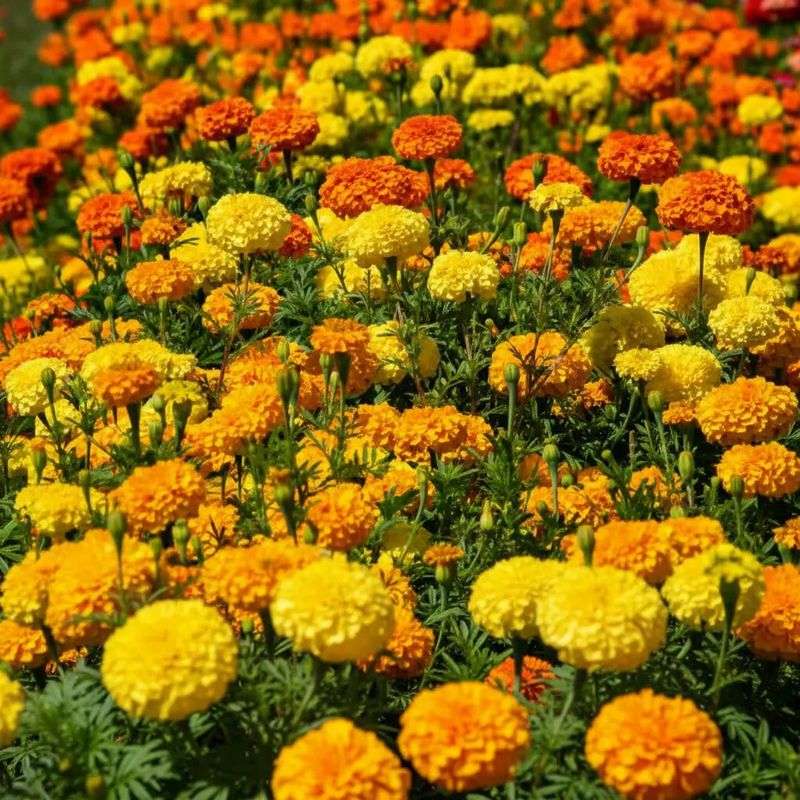
‘Crackerjack’ is a classic African marigold, Tagetes erecta, with double pom-pom flowers in warm shades of orange and gold. Those heavy heads sit high on slender stems, which turns every gust of wind into a real problem.
Staking helps a lot, but pushing bamboo canes beside dozens of plants gets old fast in July heat. Planting them tightly together lets neighbors lean on each other, though crowding can trap moisture around the leaves.
That trapped moisture matters in humid places, because tall dense marigolds often struggle with leaf spots and gray mold. Humid summers serve up both heat and muggy air, a combo fungal problems seem to love.
Spider mites also find these giants appealing during dry spells, leaving leaves speckled and dull looking. A strong spray of water under the leaves every few days can knock those tiny pests back.
If you adore big blooms, look for shorter African types that reach about a foot or two. Compact varieties give you similar showy flowers without the constant leaning and staking chores all season.
If you still want ‘Crackerjack’ this year, tuck it beside a sturdy fence that blocks the strongest winds. Good airflow between plants and morning watering at the base will keep foliage healthier through late summer.
2. Antigua African Marigold
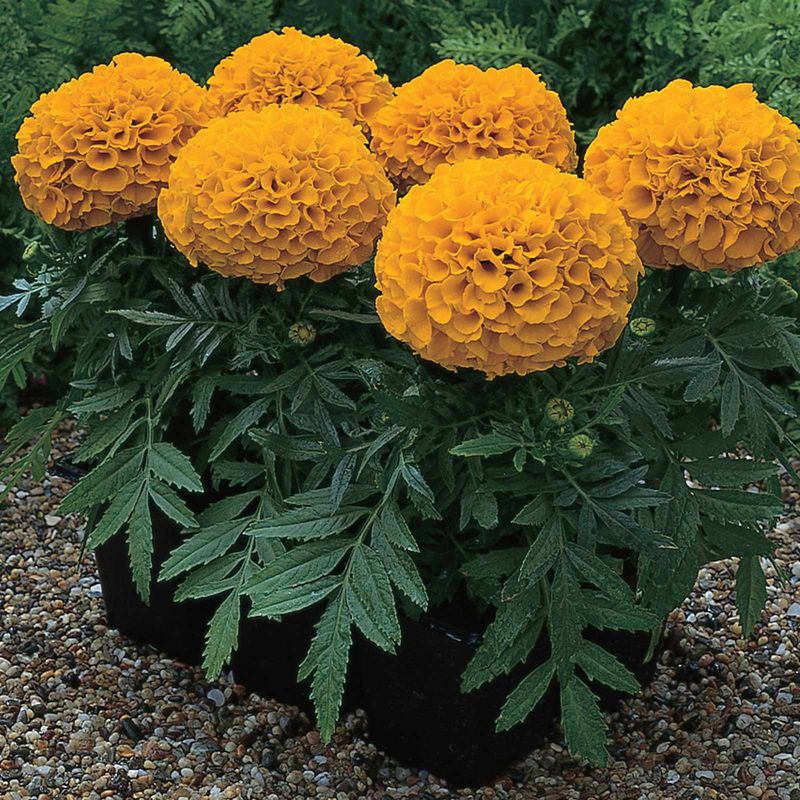
Neat rows of ‘Antigua’ marigolds look like they were planted by a ruler-wielding perfectionist with lots of free time. Their compact African form, usually around a foot tall, packs big double blooms onto tidy little plants.
Honestly, I was smitten the first time I saw a flat of them glowing at the nursery. The catch shows up later, when the plants sit in hot sun and dry soil for weeks.
Commercial grower guides list spider mites and thrips among the pests that commonly bother this series. Aphids and whiteflies can join the party too, especially in greenhouses before plants ever reach your yard.
Disease shows up in the same guides, with Alternaria leaf spot and botrytis listed as concerns. Both thrive when leaves stay wet for long stretches, which happens easily with evening sprinkler runs.
Before buying, flip a few leaves over and look for fine webbing or tiny moving specks. Silvery streaks on petals can signal thrips, and those plants are best left on the store shelf.
Once home, water at the soil line in the morning so foliage dries before the sun sets. Removing faded flowers also helps a lot, since old soggy blooms can host gray mold during rainy weeks.
To be fair, ‘Antigua’ is not a lost cause for patient gardeners who check their beds often. Just know that its tidy looks come with a bit more pest patrol than the label suggests.
3. Naughty Marietta French Marigold
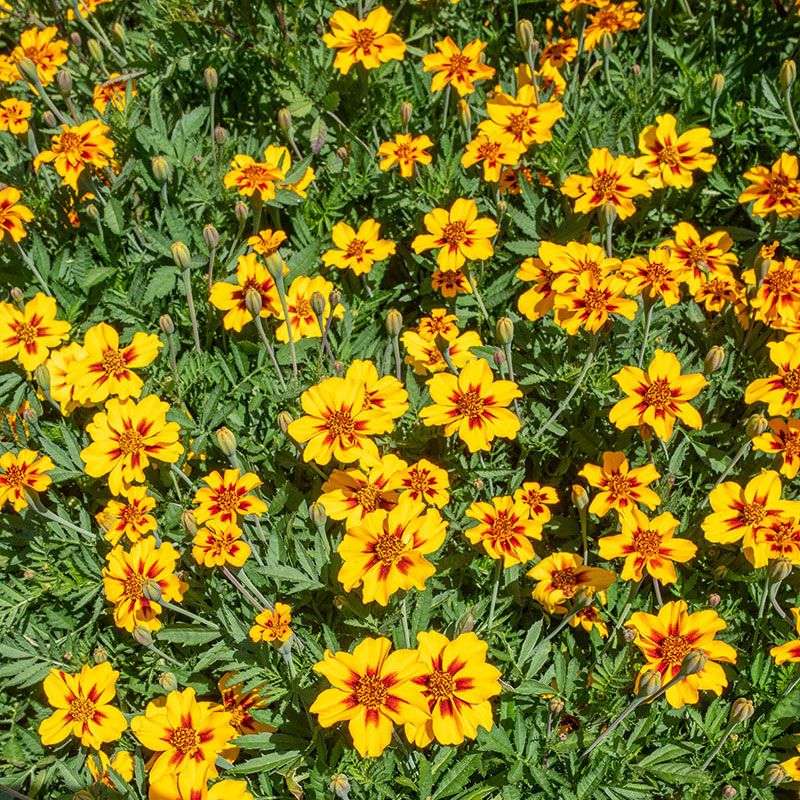
Golden petals splashed with a deep maroon blotch make ‘Naughty Marietta’ look like it dressed up for a party. This single-flowered French marigold, Tagetes patula, has charmed gardeners for decades with its old-fashioned, simple look.
My first batch looked fantastic in May, and I bragged about them to anyone who would listen. By late July, the show had slowed down a lot, and the leaves looked tired and spotted.
French marigolds often slow their flowering during long stretches of intense heat, especially when nights stay warm. In the Deep South, that midsummer pause can leave a sunny border looking oddly bare for weeks.
Fungal trouble adds to the frustration, with powdery mildew and botrytis appearing during humid or wet spells. Leaf spot can also creep in when plants stand too close together and air barely moves around them.
Some people also get itchy skin after handling marigold foliage, so gloves are a smart move. Not everyone reacts this way, but sensitive gardeners should take care while trimming or pulling the plants.
A light trim in midsummer can encourage fresh growth once temperatures ease up in early fall. Keep watering steady during that rest period, because drought stress invites spider mites to move in.
I still have a soft spot for this heirloom, but I now plant it in afternoon shade. That small change gave my second batch a longer season and far fewer spotted, droopy leaves.
4. Queen Sophia French Marigold
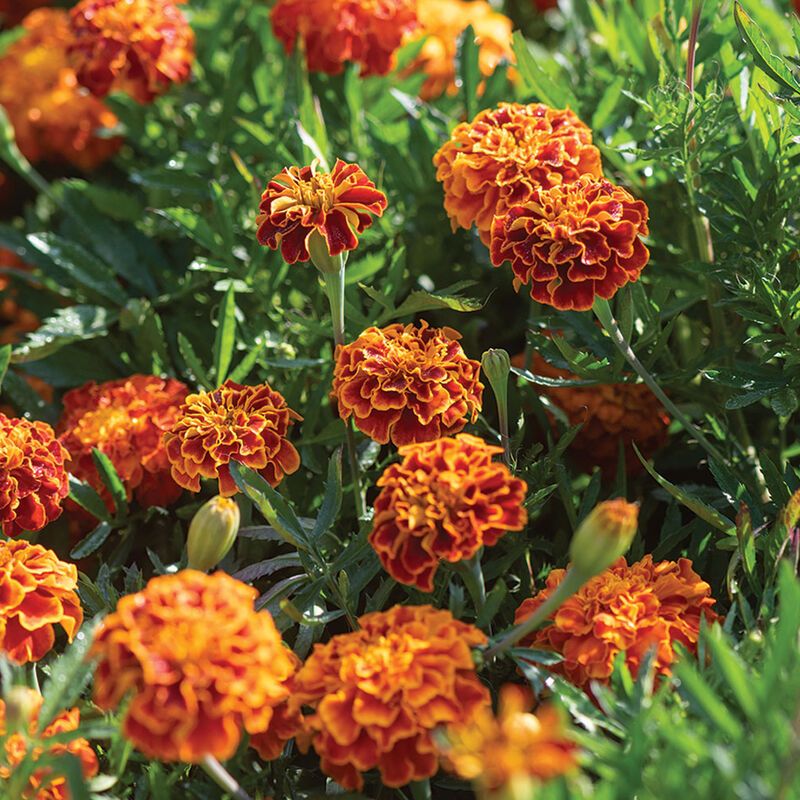
Rusty red petals rimmed with gold give ‘Queen Sophia’ a look that seems almost too fancy for a vegetable bed. This double French marigold earned an All-America Selections award, and it still sells well today.
Royal looks do not guarantee easy living, as I found after one especially rainy June in my garden. Gray mold coated several blooms, and the lower stems turned mushy where water pooled near the roots.
Root rot is a real risk for marigolds sitting in heavy clay or soggy, poorly drained beds. Many gardens have dense clay soils, so mixing in compost or using raised beds helps tremendously.
Powdery mildew and leaf spot can also show up, especially when leaves stay damp overnight for several hours. Spacing plants about eight to ten inches apart gives breezes room to dry foliage after storms.
Spider mites and thrips are other unwelcome guests, and they tend to increase during hot, dry stretches. Look for pale stippling on leaves or brown streaks on petals, then rinse plants with water quickly.
Flower production can also dip during the hottest part of summer, much like other French marigolds. Removing spent blooms regularly encourages new buds and keeps the plant from looking ragged in August.
Grow ‘Queen Sophia’ if you love its colors, but give it sharp drainage and plenty of morning sun. Treat it like a pampered guest instead of a tough roadside flower, and the results improve noticeably.
5. Sparky Mix French Marigold
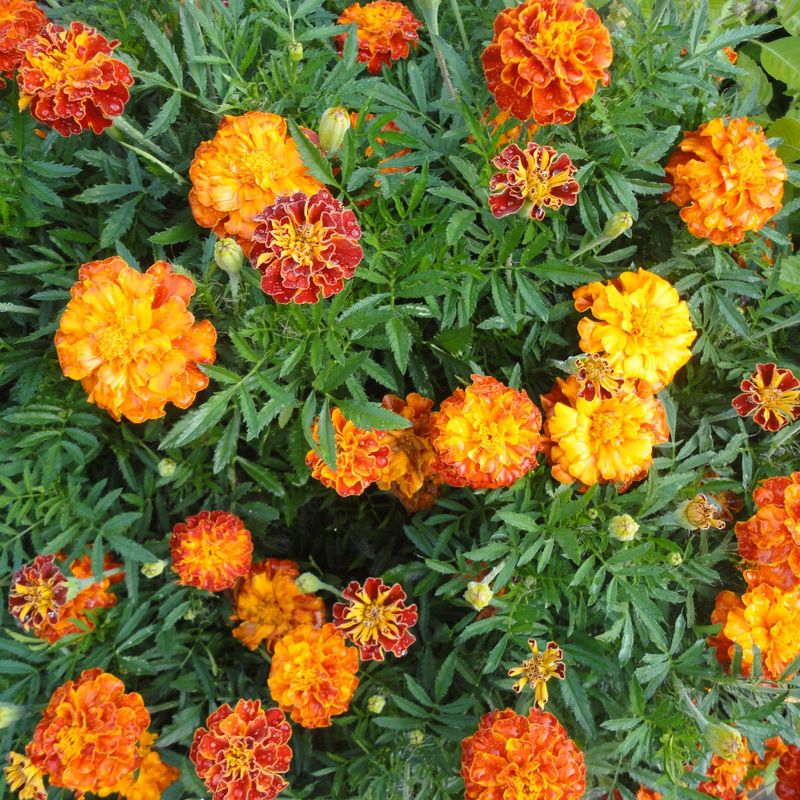
Opening a packet of ‘Sparky Mix’ feels a bit like ordering a surprise box of bright, fiery flowers. Each plant might bloom red, gold, orange, or yellow, which makes the mix popular with kids and container fans.
Sadly, the fun can fizzle before it starts if you begin seeds indoors without good airflow. Seedlings of this mix are prone to damping off, a fungal problem that topples tiny stems overnight.
I lost an entire tray once after keeping the soil too wet and the room too still. Now I use fresh seed-starting mix and a small fan, letting the surface dry slightly between waterings.
Outdoors, ‘Sparky Mix’ still asks for well-drained soil and steady air movement around its bushy foliage all season. Without those conditions, powdery mildew and botrytis blight can quickly spoil those cheerful little blossoms in humid weather.
Containers are a smart option, since you control the soil and can move pots out of soggy spots. Choose pots with real drainage holes, and skip saucers that hold water around the roots after rain.
Direct sowing outdoors after your last frost date often sidesteps the damping off issue altogether for many gardeners. In most regions, that window opens sometime in spring once soil feels warm to the touch.
I still grow this mix most years, because those random colors make every morning walk feel like a treasure hunt. It simply rewards gardeners who respect its need for drainage more than those who water on autopilot.
6. Lemon Gem Signet Marigold
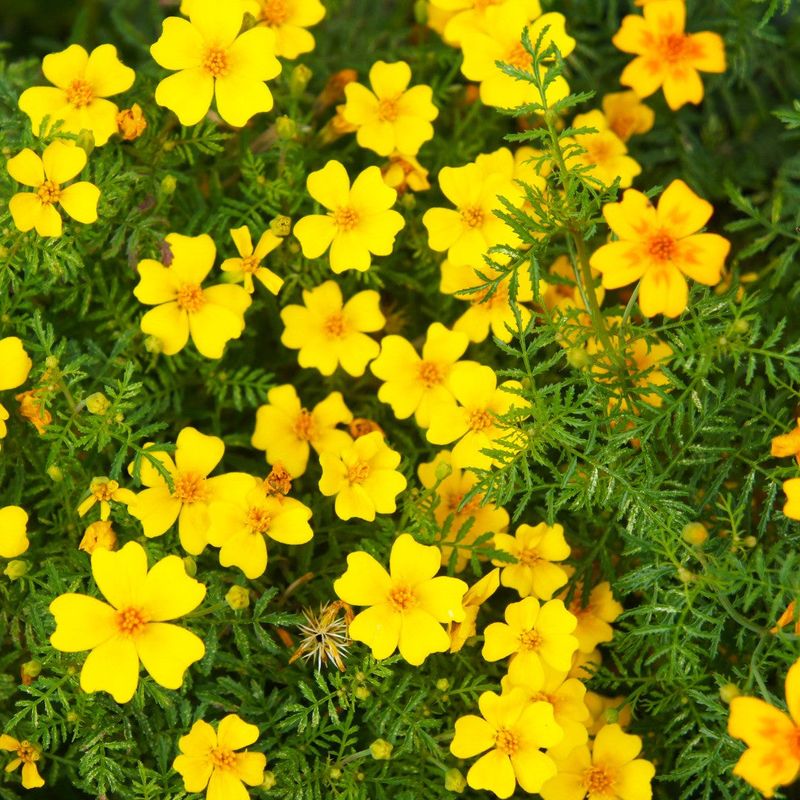
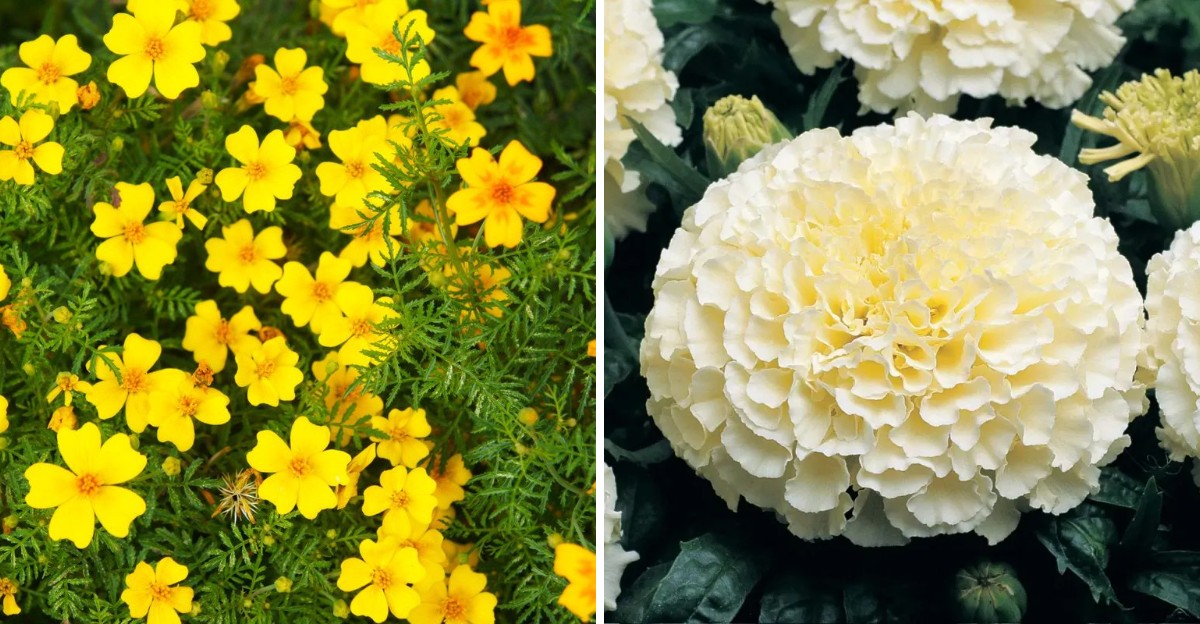
Brush your hand across ‘Lemon Gem’ and a fresh citrus scent drifts up, nothing like the musky smell of bigger marigolds. Tiny yellow single blooms cover its lacy, fern-like foliage, and the petals are even edible in salads.
Signet marigolds belong to the species Tagetes tenuifolia, and they form soft mounds roughly a foot tall. I fell for this one at a farmers market, mostly because a vendor tossed the petals into lemonade.
That delicate foliage can be a magnet for pests, which surprised me given its reputation as a protector. Spider mites and aphids may gather underneath, while slugs and snails chew holes after rainy nights.
Check plants every few days, flipping leaves over to catch small colonies before they spread down the row. A firm blast from the hose handles aphids, and boards laid on soil can trap hiding slugs overnight.
Fertilizer is another trap, since rich feeding pushes lush leaves at the expense of those charming flowers. Lean soil and a light hand with plant food usually produce the most blossoms on signet types.
Skip spraying pesticides if you plan to eat the petals, because edible flowers need clean growing conditions. Insecticidal soap labeled for edibles is a gentler choice, but read the label carefully before using it.
In my yard, ‘Lemon Gem’ performs best along a sunny path where I notice trouble right away. Keep it close and watched, and its sweet scent becomes a reward instead of a headache.
7. Kilimanjaro White African Marigold
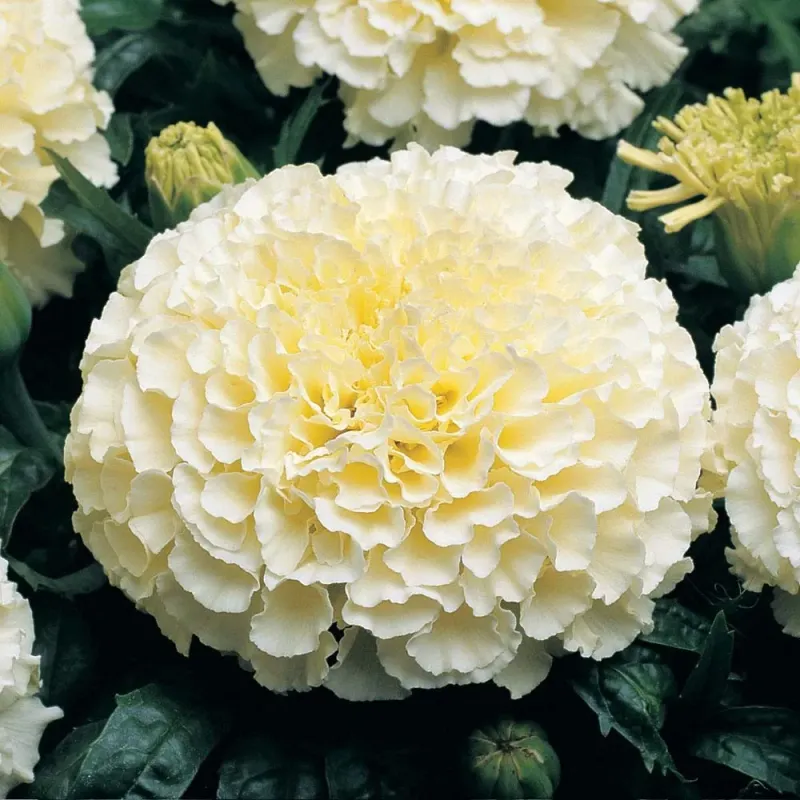
Creamy white marigolds sound like a gardening myth, yet ‘Kilimanjaro White’ delivers big, vanilla-toned pom-poms on sturdy stems. Seed company Burpee once offered a ten thousand dollar prize for a pure white marigold, awarded in 1975.
That pale color comes with a downside, because every chewed petal and brown spot stands out sharply. On an orange bloom, small damage hides easily, but on cream petals it looks like a coffee stain.
Japanese beetles reportedly favor lighter flowers, and they can leave ragged holes in those pristine heads within days. Hand-picking beetles into soapy water each morning works well when they are sluggish and easy to grab.
Rain also browns white petals faster than darker ones, and soggy heads can develop gray mold. Snipping off fading flowers right away keeps the plants looking crisp and lowers the chance of rot.
Like other tall African types, this variety can reach about two feet, so wind support helps. A ring of shorter plants in front hides any staking and frames those creamy blooms nicely.
The scent is milder than many African marigolds, yet it still carries that recognizable earthy aroma. Some people dislike it near patios, so plant it where noses will not meet it every evening.
I think this one is worth growing if you enjoy a challenge and want something unusual. Just place it where you can watch closely, since spotless white blooms rarely stay that way unattended.
8. Inca II African Marigold
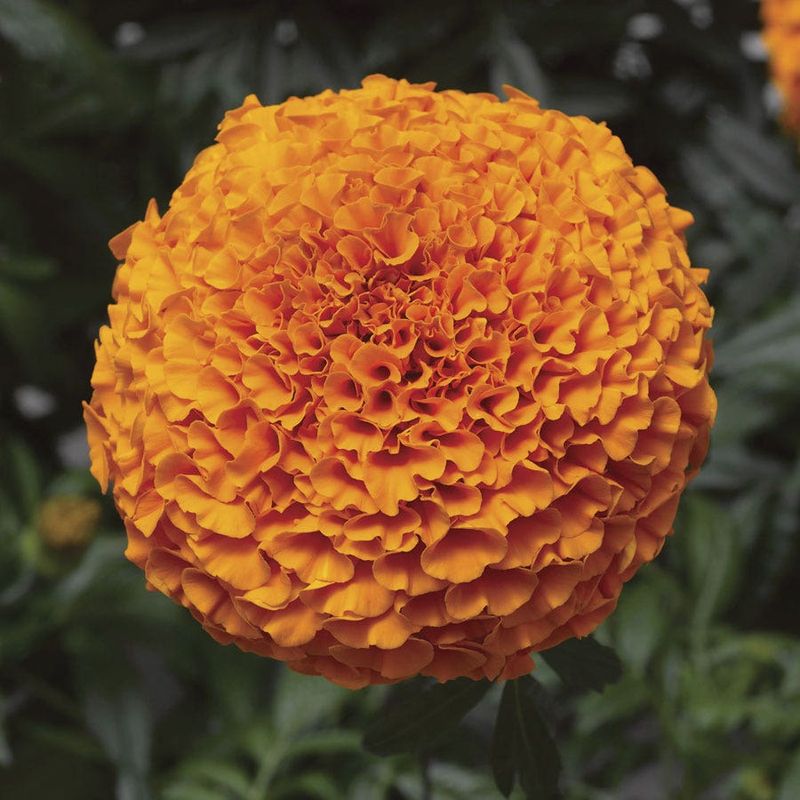
Four-inch blooms on compact plants make the ‘Inca II’ series look like it was built for show ribbons. These African marigolds stay shorter than giants like ‘Crackerjack,’ yet their flowers look nearly as bold.
Underneath that bold display hides a sensitivity to wet roots that catches many gardeners off guard. Root rot can strike in heavy soil, causing plants to wilt even though the ground feels damp.
Once roots begin rotting, recovery is unlikely, so prevention matters much more than any rescue attempt later on. Raised beds and careful watering give these plants their best chance to stay healthy through humid summers.
Aster yellows is the bigger worry, a disease caused by a phytoplasma and spread by feeding leafhoppers. Infected marigolds show yellowed, stunted growth and strange green, twisted flowers that refuse to look normal.
Sadly, there is no cure, and university extension experts recommend pulling infected plants right away to protect neighbors. Leaving them in place gives leafhoppers a chance to carry the problem to nearby plants like coneflowers.
Aster yellows can affect many flowers, so ‘Inca II’ is not uniquely cursed, just a noticeable target. Keeping weeds down around beds helps, because some weeds can host the disease through the winter months.
I still grow a few ‘Inca II’ plants, but I check them weekly for odd, greenish blooms. Catching symptoms early has saved the rest of my bed more than once, and that habit costs nothing.