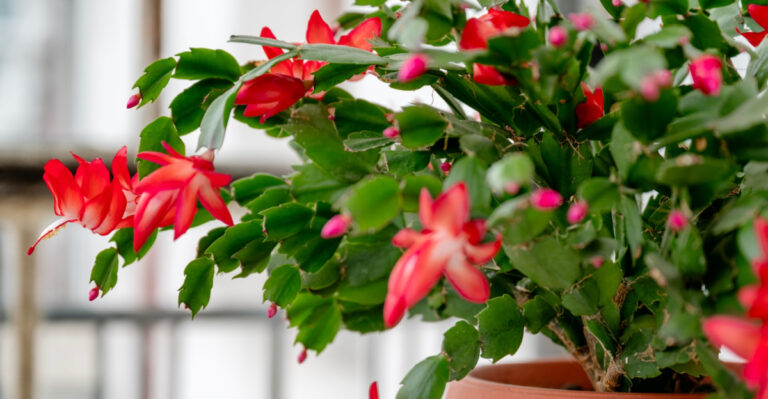
Christmas Cactus Or Thanksgiving Cactus? How To Tell Which One You Have
The plant on your windowsill may be living under a fake name. Growers ship huge numbers of these holiday bloomers each fall, and many wear a tag that is simply wrong.
I learned this the hard way in my kitchen. My so-called December beauty kept opening pink flowers right before the turkey hit the table. I figured it was confused, but it was right on time.
The truth hides in plain sight on the stems. Run a fingertip along one flat green segment and you will feel either soft curves or tiny pointed teeth. Even the color of the pollen inside each bloom drops a hint.
Those tiny details told me more than any store label did. Now I check every one I spot at a friend’s house, and nobody is safe. So which one has been quietly fooling you on your own windowsill?
Those Flat Green Stem Segments On Your Holiday Cactus Are Hiding A Big Clue
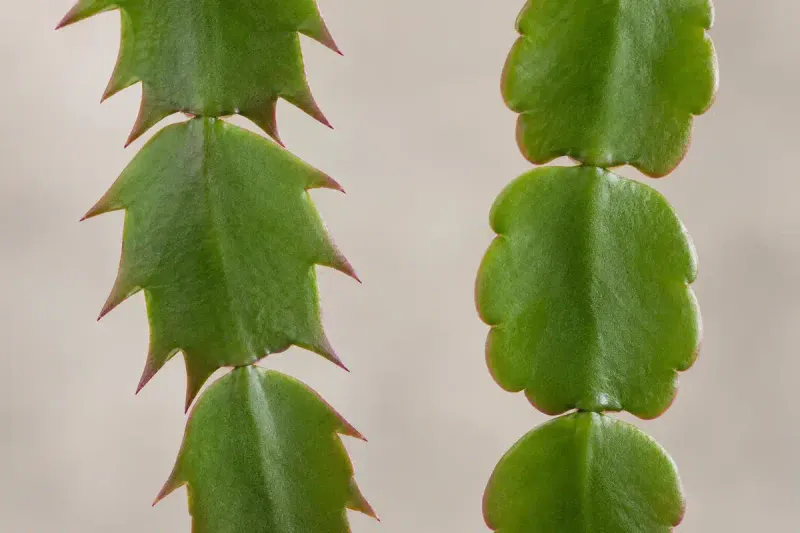
Those chunky green pieces you call leaves are not leaves at all. Botanists call them cladodes, which are flattened stems that do the job leaves usually handle. They store water, make food from sunlight, and link together like a chain.
Both the Christmas cactus and the Thanksgiving cactus belong to the same plant group, called Schlumbergera. In the wild, they grow in the coastal mountain forests of southeastern Brazil.
Instead of sitting in desert sand, they perch on tree branches and mossy rocks, soaking up moisture from humid air.
That forest lifestyle explains why the stems look so different from a spiny desert cactus. You will not find sharp needles here, just smooth green links with tiny fuzzy spots where new growth and flowers appear.
I love this part because it means you can identify your plant any day of the year. No flowers are needed. No special tools either, just your eyes and maybe a fingertip.
The shape of each segment edge is the single most reliable clue you have. Store tags can be wrong, and bloom times can shift, but those stem edges stay true. Grab your plant, find a mature segment near the middle, and get ready to look closely.
Pointy Claws Or Smooth Scallops On The Christmas Cactus Stem Edges
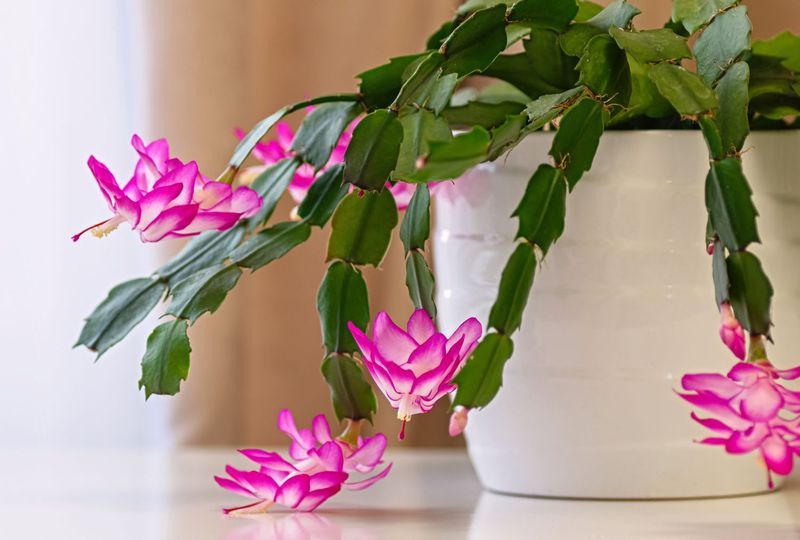
Here comes the moment of truth, so pick a healthy segment and trace its outline. You will notice one of two shapes, and each one tells a clear story.
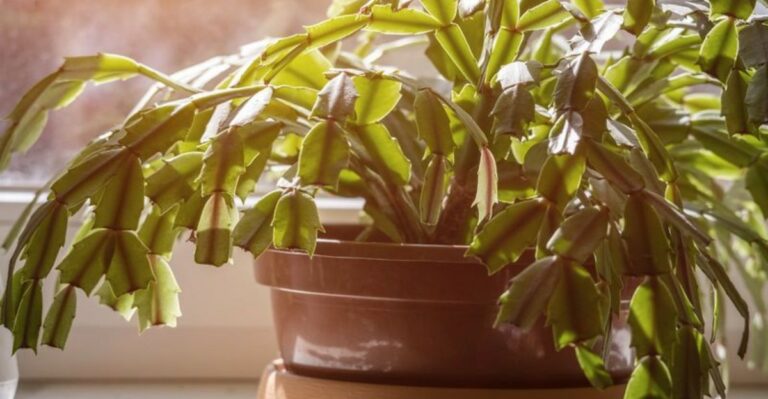
A Thanksgiving cactus, known to scientists as Schlumbergera truncata, has sharp little points along its edges. Most segments show two to four pointed teeth on each side, and the tip often ends in a hooked claw.
That jagged look earned it the nicknames crab cactus and lobster claw cactus. A true Christmas cactus, Schlumbergera x buckleyi, looks much gentler. Its segment edges are rounded and scalloped, like the curvy trim on a pie crust.
You will not feel any sharp points when you run a finger along the side. My trick is to check several segments, not just one. Young growth at the tips can look a bit soft and unclear, so older middle segments give the best answer.
You might also bump into hybrids with features from both parents. Some show slightly pointed edges that are less dramatic than a true crab claw.
If your plant falls in between, the flowers can help settle the question. Still, for most homes, this quick stem test solves the mystery in seconds.
Peek Inside Holiday Cactus Blooms And Check The Pollen Color
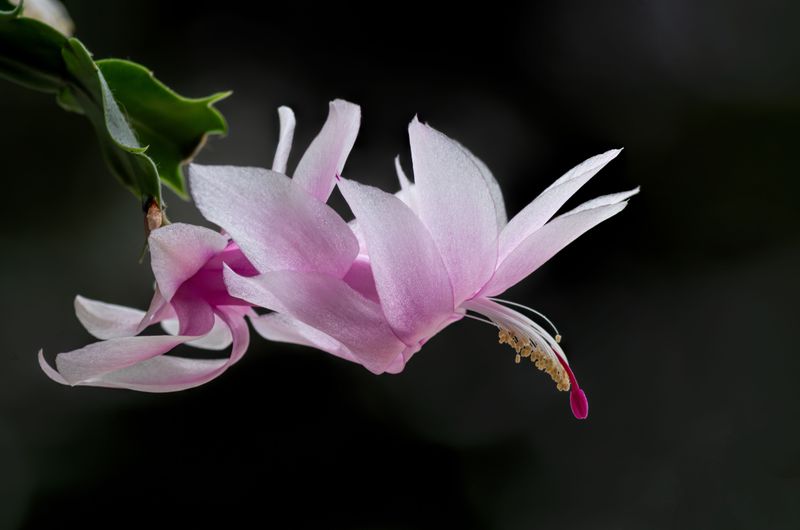
Sometimes the tiniest detail does the loudest talking. Once your plant opens its flowers, lean in and look at the very center of a bloom.
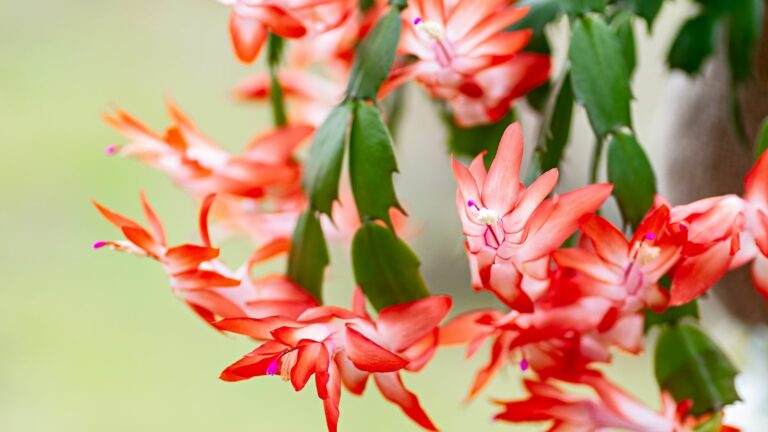
You will see a cluster of long, thin stalks called stamens. At the tip of each one sits an anther, the little part that holds pollen. That pollen color is a handy clue.
On a Thanksgiving cactus, the anthers and pollen are usually yellow. On a true Christmas cactus, they tend to be purplish brown or pinkish purple. It is a small difference, but once you notice it, you cannot unsee it.
I keep a cheap magnifying glass near my plants every fall just for this. It turns a simple check into a fun little science moment, and kids love joining in.
A few words of caution help here. Modern hybrids can blur the lines, and some flowers have pale anthers that are hard to read. Use the pollen test as a second opinion that backs up what the stem edges already told you.
When both clues agree, you can feel confident. Pointed stems plus yellow pollen strongly suggest a Thanksgiving cactus. Rounded stems plus purplish pollen point to the Christmas kind.
Sideways Or Drooping Flowers Reveal A Lot About Your Holiday Cactus
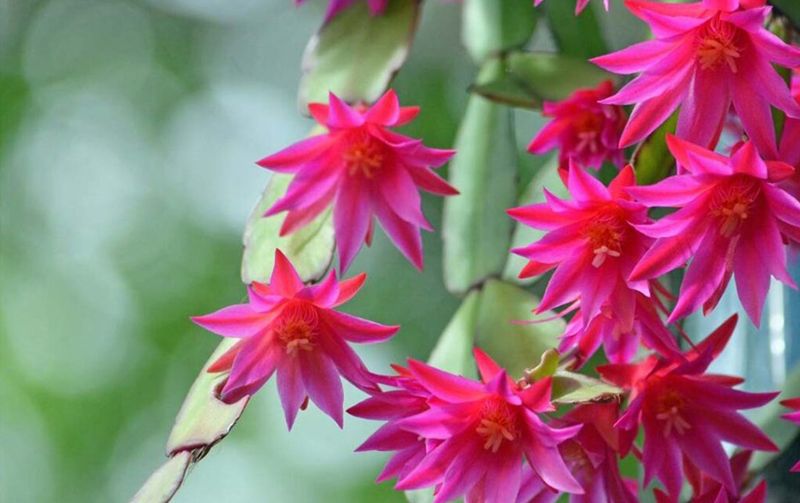
Flowers have body language too, and holiday cactus blooms are surprisingly expressive. Watch how they hang off the stem tips and you may spot another clue.
Thanksgiving cactus flowers usually stick out sideways, almost level with the ground, or even tilt a little upward. They look lopsided in a pretty way, with petals that flare more on one side.
Botanists call this shape zygomorphic, which simply means it is balanced only from one direction.
Christmas cactus blooms tend to hang downward like little lanterns. Their shape is more even all the way around, giving them a softer, droopier look. On a full plant, they can resemble a gentle waterfall of color.
The overall plant shape often follows the same pattern. Thanksgiving types usually grow more upright with stiffer stems at first. Christmas types arch over sooner, which makes them a favorite for hanging baskets.
I find this clue easiest to spot from across the room. You do not need to get close, just step back and look at the silhouette.
Keep in mind that a heavy load of flowers can pull any stem down. Use posture as a supporting hint, not the final word.
A November Bloom Usually Means You Own A Thanksgiving Cactus
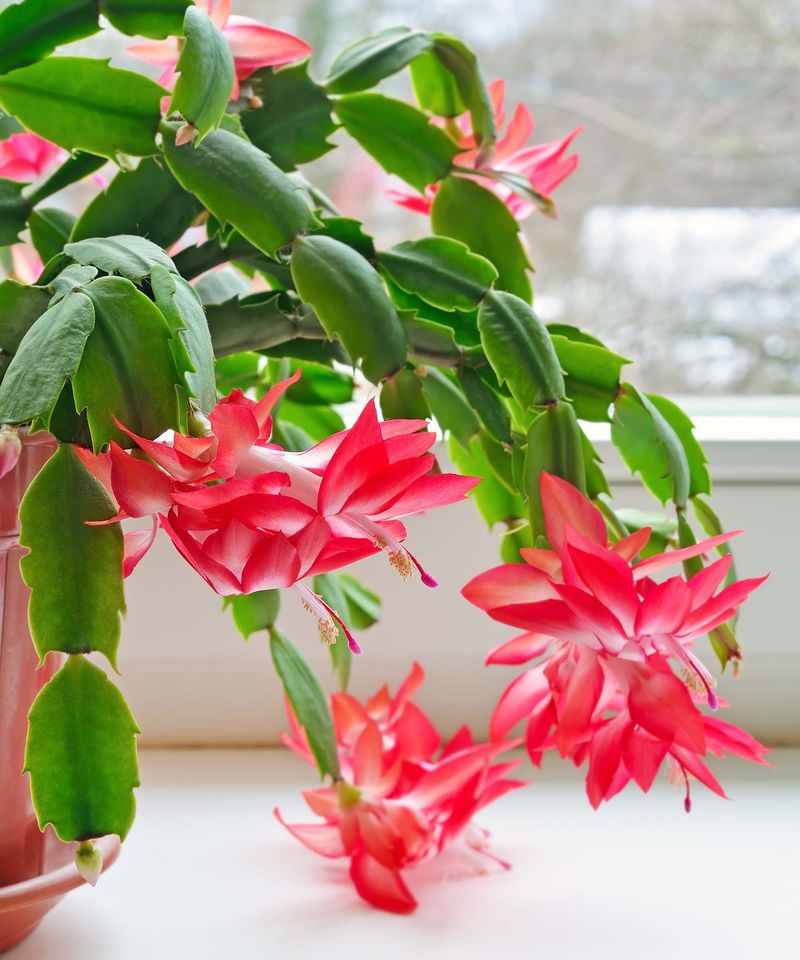
Plenty of people bring home a plant labeled Christmas cactus, then watch it burst into color weeks early. If that sounds familiar, your plant is probably not confused at all.
Thanksgiving cactus plants often bloom from about mid November into early December. True Christmas cactus plants usually follow later, from mid December into January. The names really do match the calendar in many homes.
Here is the funny twist. Most of the plants sold at garden centers each fall are actually Thanksgiving cactus or hybrids with that parentage.
Growers like them because they bloom earlier, ship well, and fill store shelves for the whole holiday season.
That means the tag on your pot might say Christmas while the plant inside behaves like a Thanksgiving type. Do not feel bad about it, since it happens to almost everyone.
Bloom timing can shift, though. Room temperature, nearby lamps, and the amount of darkness each night all affect when buds form.
A Christmas cactus in a cool, dark spot might bloom earlier than expected, while a warm room can delay a Thanksgiving type. So treat bloom time as a helpful hint. Pair it with the stem edges for a confident answer.
Bristly Easter Cactus Is The Sneaky Third Lookalike
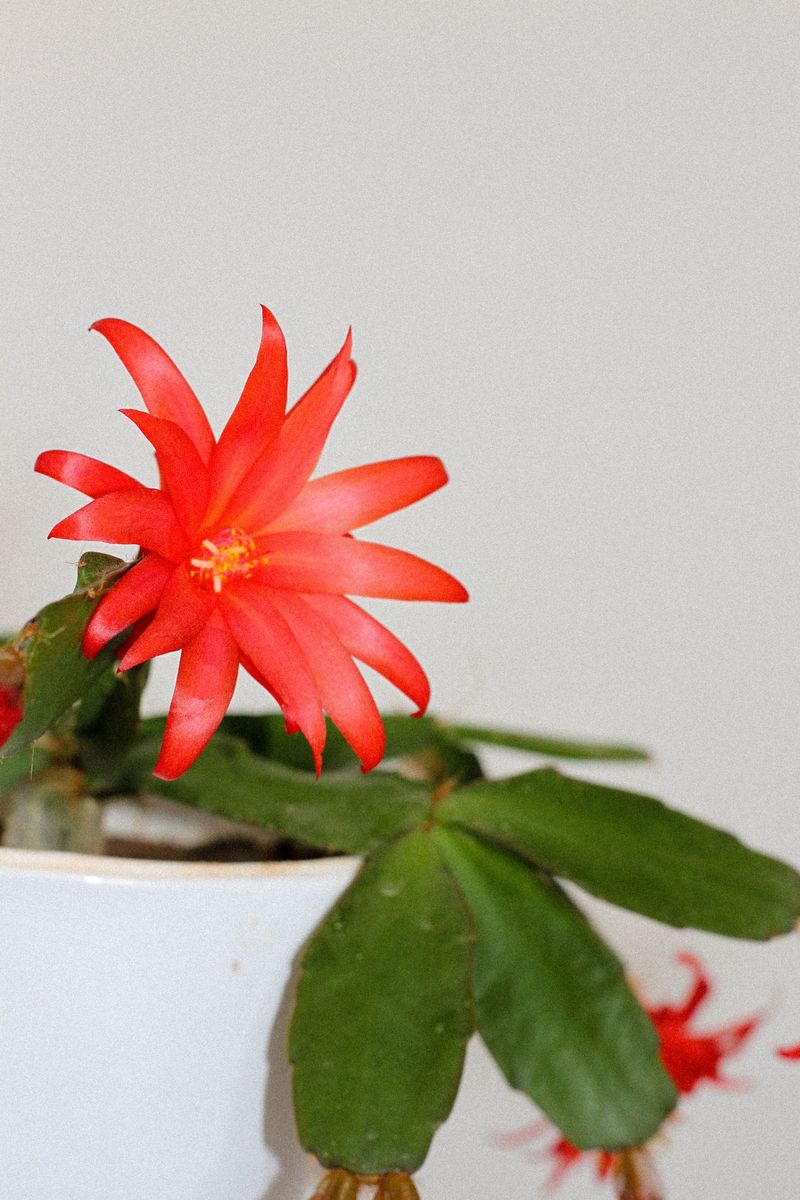
Just when you think the puzzle is solved, a third cousin shows up for the party. Meet-and-greet time belongs to the Easter cactus, a plant that looks similar but follows its own schedule.
Easter cactus blooms in spring, often around March through May. Its scientific name has changed over the years, and you may see it listed as Rhipsalidopsis gaertneri, Hatiora gaertneri, or Schlumbergera gaertneri.
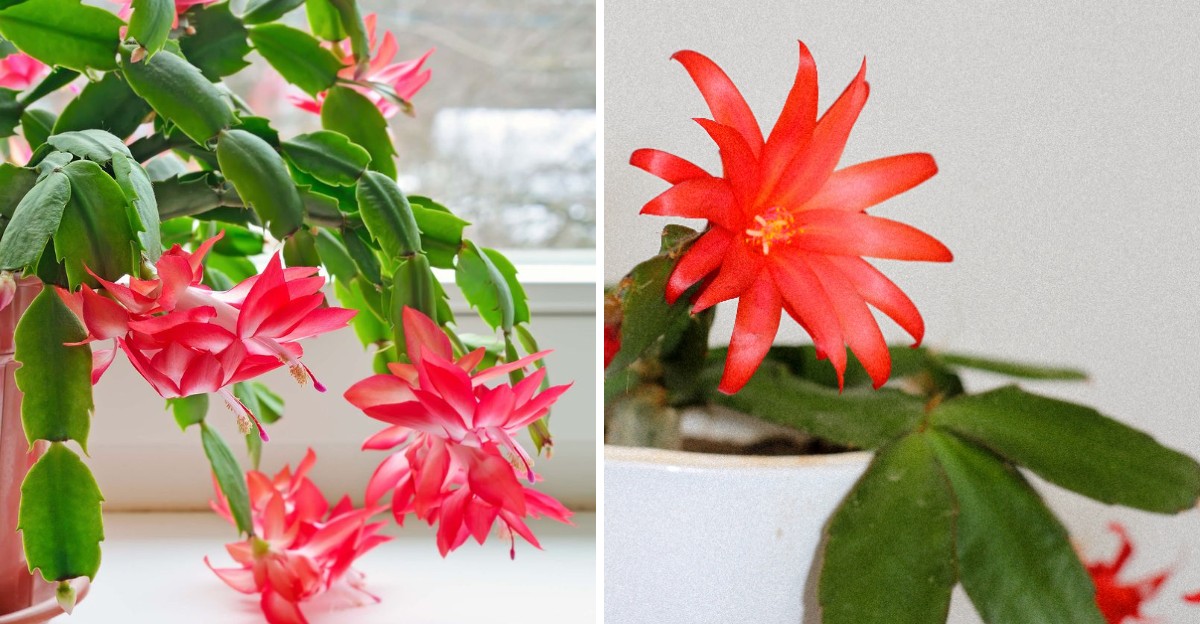
Spotting it is easier than you might expect. The stem segments have rounded edges, a bit like a Christmas cactus, but you will often notice tiny brownish bristles at the joints and tips.
Those little hairs are a clear giveaway compared to the smooth tips on the holiday types. The flowers look different too. Easter cactus blooms open wide into a star or daisy shape, rather than the long, tubular form of its cousins.
They come in shades of red, pink, orange, lavender, and white. I adore having all three, because something blooms in fall, winter, and spring. It feels like a relay race on the windowsill.
Care is a little different, since Easter cactus usually needs a cool rest period in late winter to set its spring buds.
Cool Nights And Long Darkness Bring Holiday Cactus Buds Back Each Year
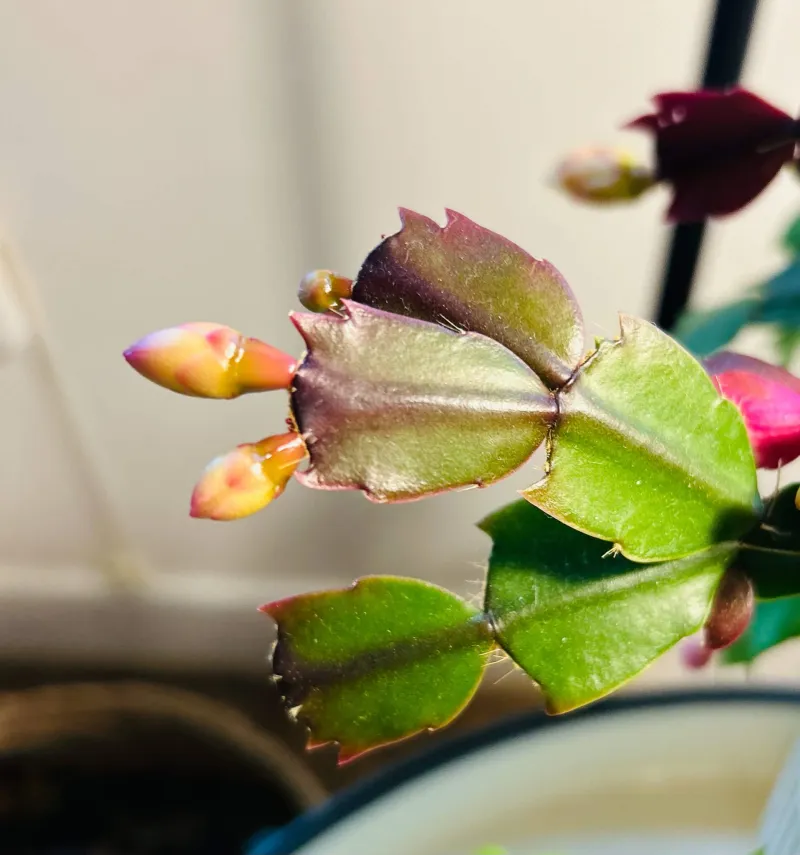
Whichever plant you own, the bloom recipe is nearly the same. Both Christmas and Thanksgiving types set buds in response to cool temperatures and long nights.
Starting in early fall, give your plant about 12 to 14 hours of uninterrupted darkness each night for roughly six weeks. A spare room with no lamps works well.
Cool nights around 50 to 55 degrees Fahrenheit can also trigger buds, even without strict darkness.
Once buds appear, keep things steady. Sudden moves, chilly drafts, hot air vents, and soil that swings from soaking wet to bone dry can cause buds to drop. I learned to leave mine in one spot and resist the urge to show it off in every room.
For everyday care, bright indirect light keeps the stems healthy. Harsh summer sun can turn them reddish or pale. Use a fast-draining potting mix, and water when the top inch feels dry.
These plants can live for decades with simple attention, and many families pass them down for generations. Now that you know which one you have, you can time your care perfectly.
Snip a few healthy segments in late spring and share starts with friends, labeled correctly this time.