Think Twice Before Spraying A Six Spotted Tiger Beetle In Your Georgia Garden
Not every unfamiliar beetle on your property deserves the same response. One shiny green visitor can actually be worth leaving alone when you notice it nearby.
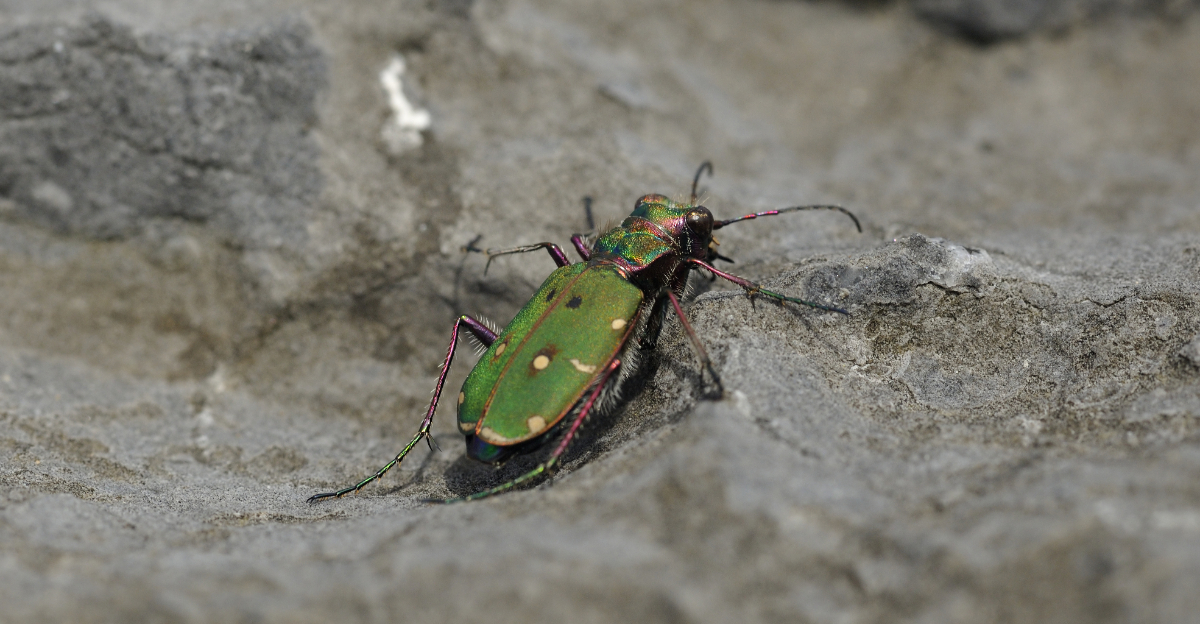
The six-spotted tiger beetle stands out with its metallic body and impressive speed. It hunts other small creatures rather than settling onto your favorite plants for a meal.
You may encounter this active hunter in sunny parts of Georgia, especially near open ground. Its unusual appearance can easily make it seem more concerning than it really is.
Reaching for a spray too quickly means overlooking what this beetle is doing there. Give yourself time to identify it correctly before taking further action.
That small choice can make your garden a better place for helpful insects.
Once you understand this beetle, its bright green appearance becomes much easier to welcome.
1. That Bright Green Beetle May Be Helping Your Garden
Reaching for a spray bottle the moment you see a bug is a habit worth breaking. Not every insect in your garden is a threat.
Some are quietly working in your favor, and the six spotted tiger beetle is one of them.
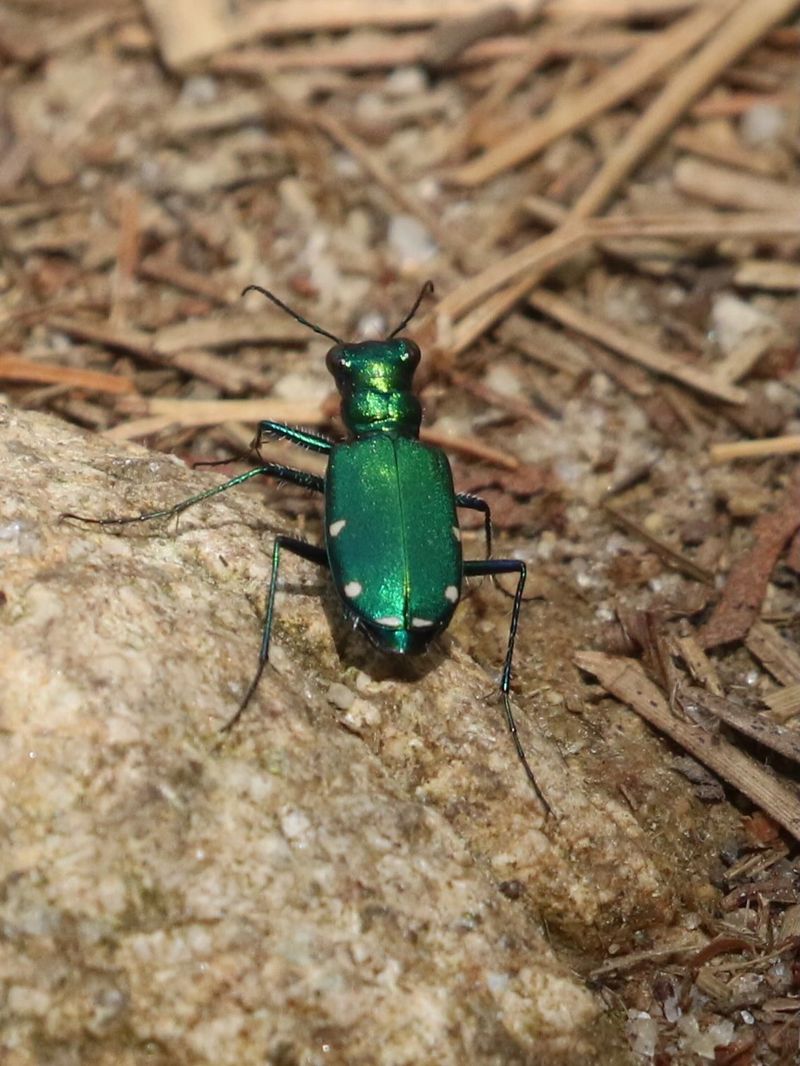
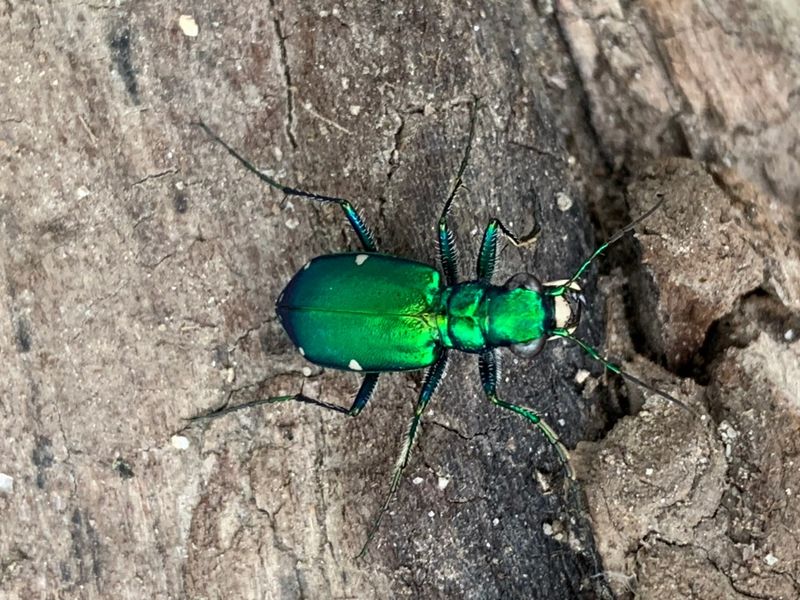
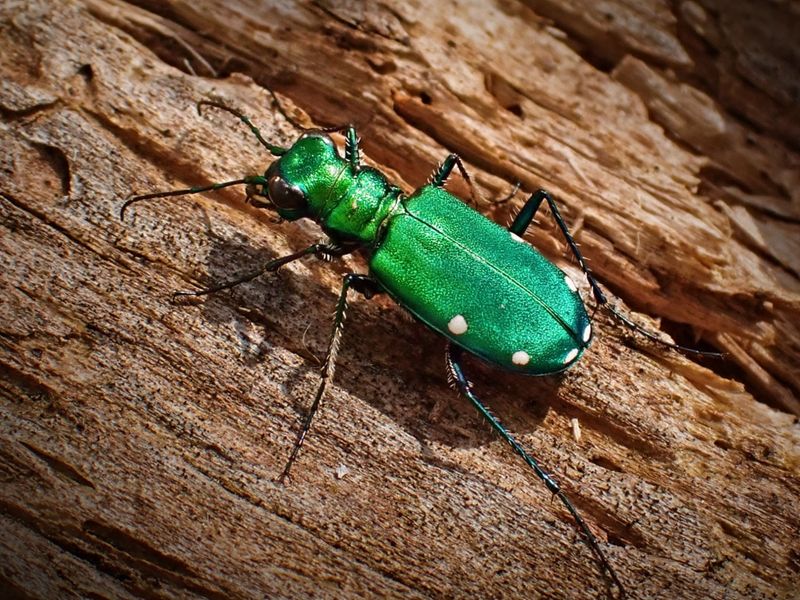
Up close, this beetle is actually stunning. Its body shines with a metallic blue-green color that catches sunlight in a way that seems almost unreal.
Gardeners who slow down long enough to notice it are usually surprised by how beautiful it looks.
Beyond appearance, this beetle earns its place in any yard. It actively hunts soft-bodied insects that would otherwise chew through your plants.
Aphids, small caterpillars, and other garden pests are fair targets for this quick predator.
Spraying pesticides near this beetle can remove one of your most helpful garden allies. Broad-spectrum insecticides do not distinguish between harmful and helpful insects.
Once a beneficial predator is gone, pest populations can bounce back faster without natural checks in place.
Recognizing which insects support your garden takes a little learning, but it pays off. Encouraging natural predators reduces how often you need to intervene with chemicals.
2. Look For More Than Six White Spots
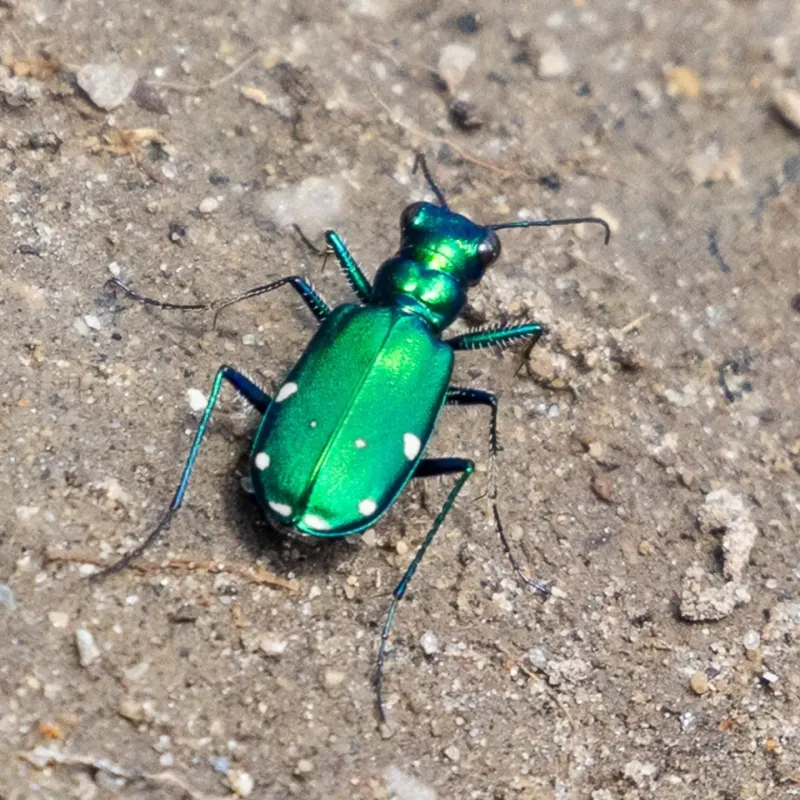
Counting spots on this beetle can actually fool you. Despite the name, the number of white spots on a six spotted tiger beetle varies.
Some individuals show fewer than six spots, and others may show more. The name is a general reference, not a precise count.
What stays consistent is the overall color. That bright, metallic green is the most reliable feature to look for.
It almost glows when sunlight hits it at the right angle, making it stand out against soil, mulch, or leaf litter.
Body shape matters too. Tiger beetles have a slightly flattened look with long, slender legs built for speed.
Their heads are large in proportion to their bodies, and their mandibles are noticeable even without magnification.
Size is another clue. Six spotted tiger beetles typically measure around half an inch in length.
They are not the biggest beetles you will encounter, but their speed and bright color make them easy to notice once you know what to look for.
Your Georgia Garden Changes Every Week. Your Plan Should Too.
Gardening in Georgia changes quickly throughout the season. Every Friday you’ll receive a simple weekly plan showing exactly what to plant, prune, fertilize, harvest, and protect so you never miss the right timing.
Watching how a beetle moves can help confirm your identification. Tiger beetles sprint in short bursts, stop suddenly, then sprint again.
3. Its Speed Gives Away Its Hunting Style
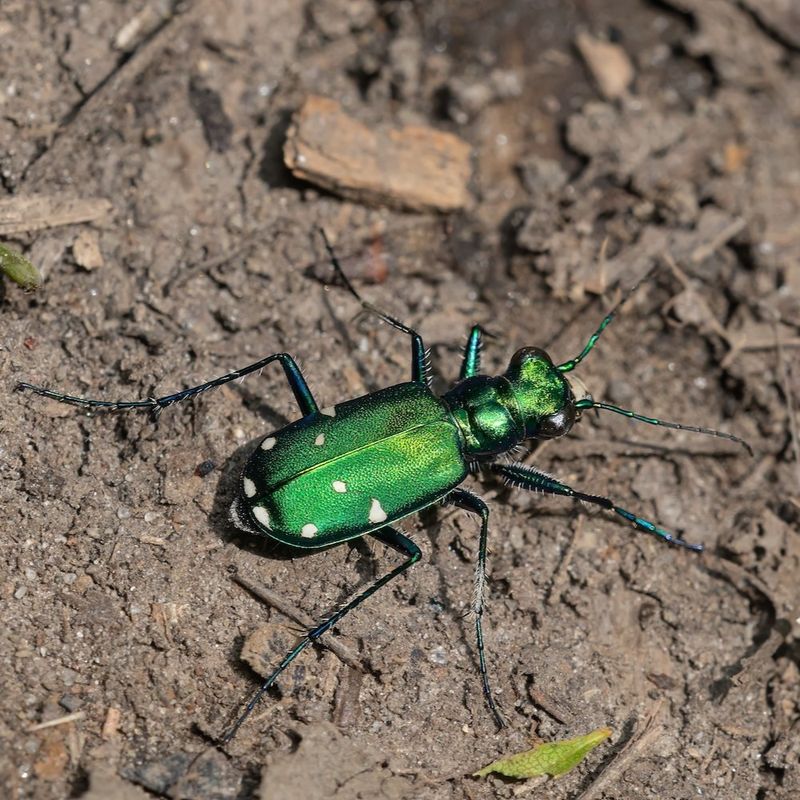
Few garden insects move as fast as a six spotted tiger beetle. Watching one chase prey is almost disorienting because the movement happens so quickly.
These beetles are among the fastest running insects relative to their body size.
Speed is not just for escape. It is the core of how this beetle hunts.
Rather than waiting on a plant or hiding under debris, it chases prey directly across open ground. That active pursuit style makes it especially effective at catching fast-moving insects.
Interestingly, the beetle runs so fast that it temporarily loses sight of its target during a chase. Its visual system cannot keep up with its own speed.
So it stops, reorients, then accelerates again. That jerky, sprint-and-pause movement is a direct result of how its eyes and legs work together.
Open, sunny ground is the preferred hunting zone. Packed soil, sandy paths, and bare garden edges are prime territory.
If you notice one near a garden bed, it is likely patrolling for prey rather than damaging your plants.
Leaving open soil patches near garden borders can actually support these beetles. Removing every bit of ground cover eliminates their preferred hunting habitat.
4. This Beetle Chases Other Insects For Food
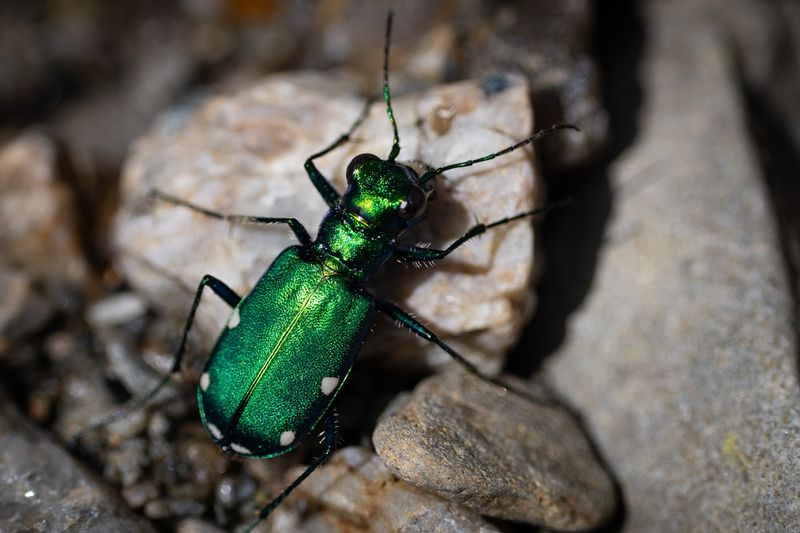
Predator is not a word most gardeners associate with beetles, but it fits this one perfectly. Six spotted tiger beetles are active hunters, and their diet is made up almost entirely of other insects.
That makes them genuinely useful in a garden setting.
Ants, small flies, aphids, and soft caterpillars are among the prey they pursue. Any small, ground-level insect moving across open soil is a potential target.
Beetles do not discriminate much, so they tend to reduce a wide range of pest species over time.
No bait or trap is needed to bring this predator to your yard. Providing the right habitat is enough.
Bare, sunny patches of ground near garden beds give these beetles the open terrain they need to run down prey effectively.
Avoiding broad-spectrum sprays near these beetles is one of the simplest things you can do. Chemical applications that target caterpillars or aphids can also affect the tiger beetles hunting them.
Losing the predator can allow pest numbers to climb without natural pressure keeping them in check.
Across Georgia, gardeners who rely more on natural pest control tend to see more biodiversity in their yards over time. Encouraging hunters like this beetle does not require much effort.
5. Even The Larvae Hunt From The Soil
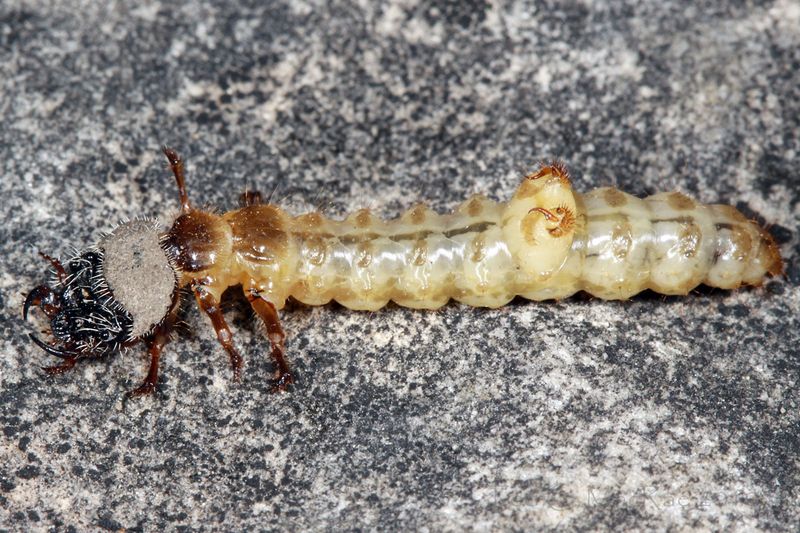
Adult beetles get most of the attention, but the larvae are just as interesting. Baby six spotted tiger beetles live underground, inside narrow vertical burrows they dig themselves.
From there, they wait near the surface for unsuspecting prey to wander by.
When a small insect steps too close to the burrow opening, the larva lunges upward and grabs it. Hooks on its abdomen anchor it inside the burrow so prey cannot pull it out during a struggle.
It is a surprisingly effective ambush strategy for such a small creature.
Larval burrows are often found in the same open, sunny soil where adults hunt. If you notice small, round holes in bare garden soil, a tiger beetle larva may be living just below the surface.
Digging up that area or applying soil drenches can disturb them.
Larvae spend a significant portion of their life underground before emerging as adults. During that time, they continue reducing surface insect populations in a quiet, low-visibility way.
Most gardeners never realize the soil is doing part of the pest control work for them.
Protecting the soil near garden edges matters more than many people think. Compacting or repeatedly disturbing bare patches removes the habitat these larvae depend on.
6. Wooded Areas Are Where You May Spot Them
Shaded lawns and dense plantings are not where this beetle prefers to spend its time. Six spotted tiger beetles tend to favor areas where sunlight reaches the ground directly.
Forest edges, woodland paths, and open clearings near trees are common spots to find them.
Gardens that back up to wooded areas in Georgia are well positioned to attract these beetles naturally. Where trees thin out and sunlight hits the ground, the conditions line up well for hunting and breeding.
Transitional zones between lawn and woods are particularly productive habitat.
Sandy or clay-heavy soil along garden edges supports their burrowing needs. Soft enough to dig but firm enough to hold a tunnel, those soil types suit larvae well.
Gardeners near natural areas may find tiger beetles appearing without any special effort to attract them.
Mulched paths within a garden can also work as habitat if some bare soil remains exposed. Completely covering every surface with thick mulch eliminates the open ground these beetles rely on.
Leaving some sections uncovered near wooded borders gives them room to operate.
Seasonal timing matters too. Six spotted tiger beetles are most active during warmer months, typically spring through early fall.
7. Leaving This Hunter Alone Has Its Benefits
Restraint is underrated in garden care. Choosing not to spray every insect you see can lead to a more balanced yard over time.
Six spotted tiger beetles are a clear example of why patience with unfamiliar insects can pay off.
Natural pest control through predatory insects is not instant, but it is sustainable. A tiger beetle working through your garden over several weeks can reduce local pest numbers without any chemical input from you.
That kind of slow, steady pressure adds up across a full growing season.
Pesticide use affects more than the target pest. Spray drift, soil absorption, and contact exposure can reach non-target insects nearby.
Beneficial predators like tiger beetles are vulnerable to the same products used against harmful pests, so collateral exposure is a real concern.
Attracting and keeping beneficial insects requires a shift in how you think about a tidy garden. Bare soil patches, leaf litter edges, and natural debris are not always signs of neglect.
Sometimes they are signs of a functioning habitat that supports the insects keeping your pest pressure low.
Across Georgia, more gardeners are moving toward lower-intervention approaches that work with natural predator populations. Letting a six spotted tiger beetle go about its business costs nothing and asks very little from you.