Think Twice Before Touching This Bright Green Caterpillar In Illinois Gardens
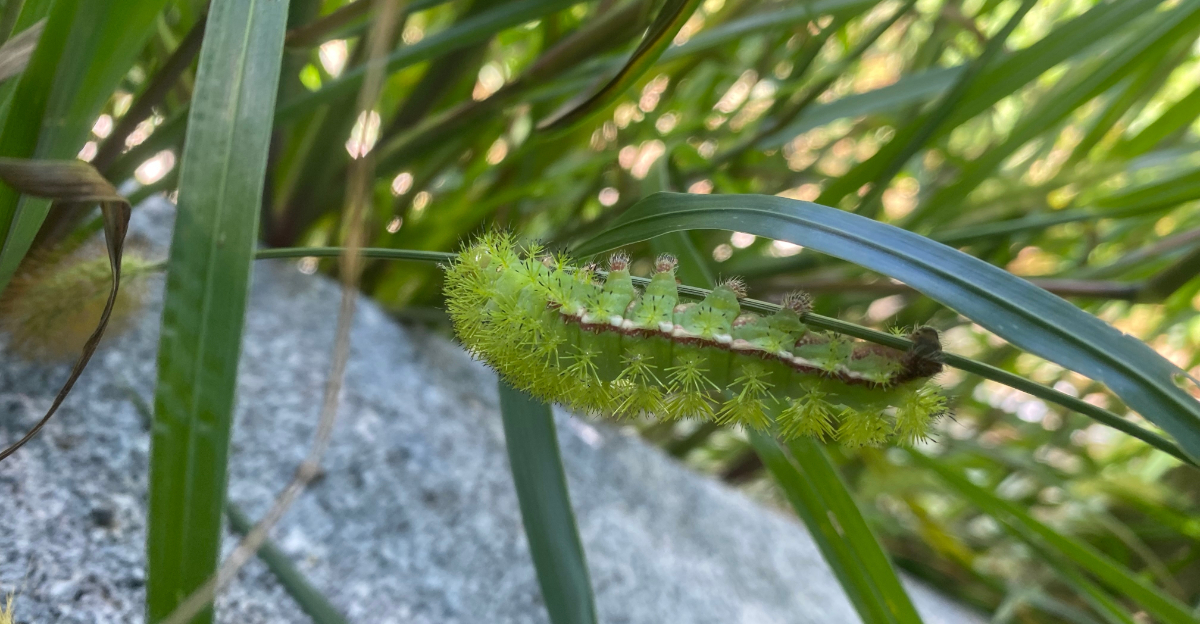
There’s a flash of neon green moving through Illinois yards this month, and it’s easy to mistake for something harmless. The color alone stops people mid-step, almost begging to be touched.
That instinct is exactly what gets gardeners in trouble. Underneath all those soft-looking spines sits a defense system built purely to hurt.
One accidental brush against a leaf, and the reaction hits fast. Skin reddens, swells, and burns in a way that lingers far longer than expected.
Before your hands go anywhere near that flower bed or veggie patch again, here’s what every Illinois gardener needs to spot this creature before it finds them first.
A Colorful Visitor Hiding In Plain Sight
Spotting something electric green on a leaf can stop you cold. The Io moth caterpillar is one of the most striking insects you will ever find crawling through an Illinois garden.
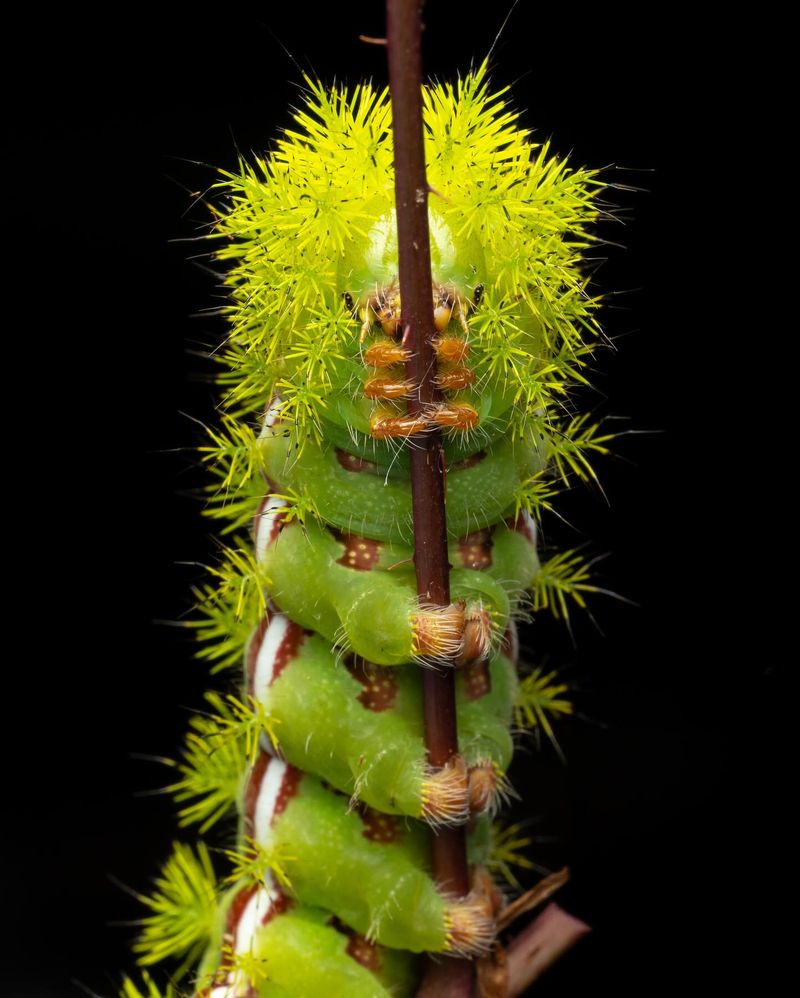
This caterpillar shows up in a brilliant lime-green color that practically glows against dark soil or green foliage. Its body is lined with clusters of sharp, bristly spines that radiate outward like tiny green sunbursts.
Along its sides, you will notice bold red and white stripes running the full length of its body. Those stripes are not just for show, they are a clear message from nature telling predators to back off.
Most gardeners first notice this caterpillar in late summer, usually between July and September. That is peak feeding season, and the caterpillars are at their largest and most venomous during this window.
Adults can grow up to two inches long, which makes them surprisingly easy to spot once you know what to look for. Many people mistake them for a harmless species because the color seems almost tropical and exotic.
The bright green caterpillar blends into leafy plants better than you might expect, especially on broad-leafed shrubs and garden trees. One moment you see nothing, and then suddenly a whole cluster of them appears right in front of you.
Once you have seen an Io moth caterpillar up close, you will never forget it. Recognizing it fast is your first and best line of defense.
Its Bright Color Serves As A Warning
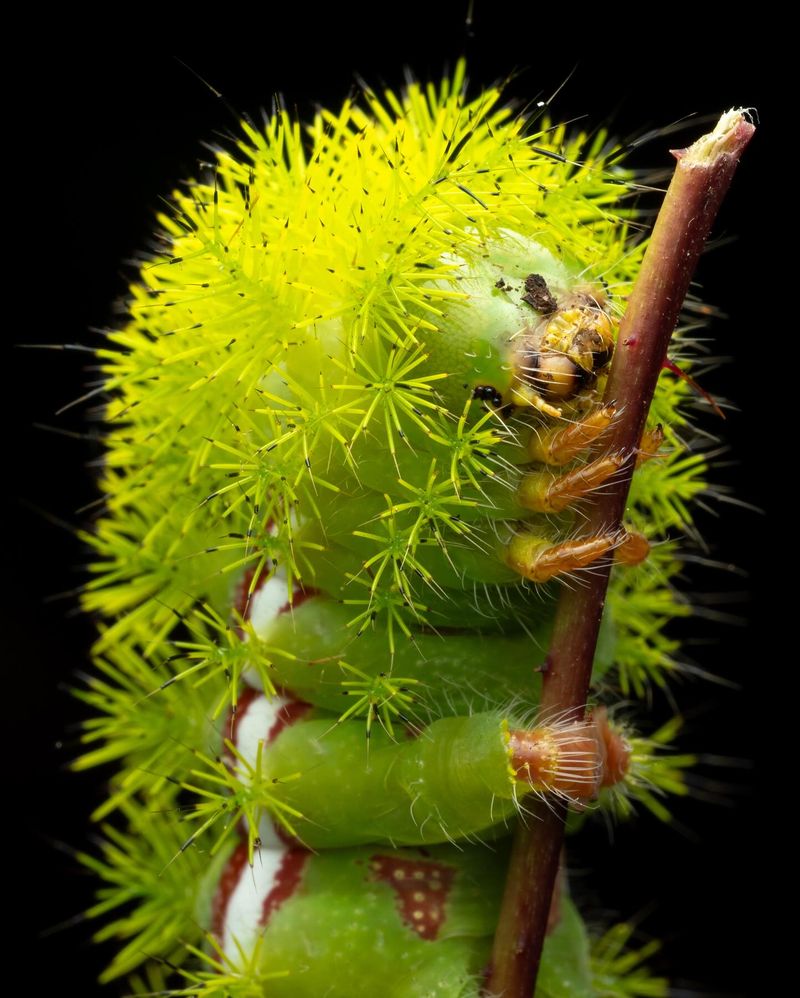
Nature has its own warning system, and bright colors are the alarm bell. The Io moth caterpillar uses its vivid green body as a biological stop sign aimed at anything that might try to eat it.
Scientists call this strategy aposematism, which basically means advertising danger through color. Predators like birds quickly learn that anything this bright usually means trouble.
The red and white side stripes add another layer to the warning display. Together with the green base color, those stripes create a visual pattern that screams “do not touch” in every direction.
What makes this caterpillar especially clever is that the warning works on humans too, even if we do not consciously recognize it. Something in our brain registers that combination of neon green and sharp spines as a threat worth avoiding.
Most animals that have encountered this caterpillar once tend to avoid a second try. The memory of the sting is usually enough to make a predator steer clear afterward.
Your Illinois Garden Changes Every Week. Your Plan Should Too.
Gardening in Illinois changes quickly throughout the season. Every Friday you’ll receive a simple weekly plan showing exactly what to plant, prune, fertilize, harvest, and protect so you never miss the right timing.
Interestingly, young Io moth caterpillars start out orange before they mature. They develop that bold green warning coloration as they grow larger and their spines become more venomous.
The bright green caterpillar earns its striking appearance through a gradual process tied directly to its growing defensive power. The more dangerous it becomes, the more boldly it advertises that fact to the world around it.
Color, in this case, is not vanity. Color is survival.
Identifying The Io Moth Caterpillar
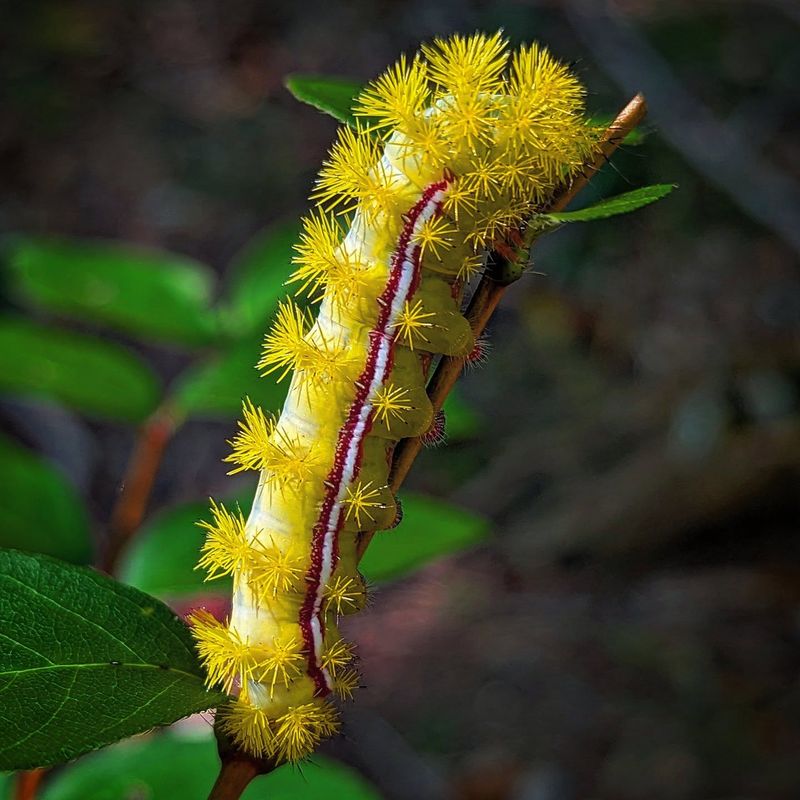
Getting the ID right matters more than most people realize. Misidentifying this caterpillar could mean the difference between a close call and a very painful afternoon in your Illinois garden.
The Io moth caterpillar, known scientifically as Automeris io, belongs to the giant silkworm moth family. It is one of the few caterpillars in the Midwest with genuinely venomous spines.
Look for a plump, cylindrical body covered in dense clusters of green spines. Each cluster, called a scoli, holds multiple sharp bristles that break off easily on contact with skin.
The red stripe running along its lower side is one of the most reliable field markers. Above that stripe, a thinner white line separates the red from the main green body color.
The head is small and often tucked slightly under the front of the body. You may also notice faint yellowish tones near the base of the spine clusters on older caterpillars.
Do not confuse this species with the luna moth caterpillar, which is also green but lacks the vivid side stripes and venomous spines. The luna moth caterpillar is smooth, round, and completely harmless to the touch.
Size is another helpful clue when making a positive ID. Fully grown Io moth caterpillars are noticeably chunkier and more bristled than most other green caterpillars you will encounter in a typical garden setting.
When in doubt, photograph it and step back. Your phone camera is safer than your fingertips.
The Painful Reaction After Skin Contact
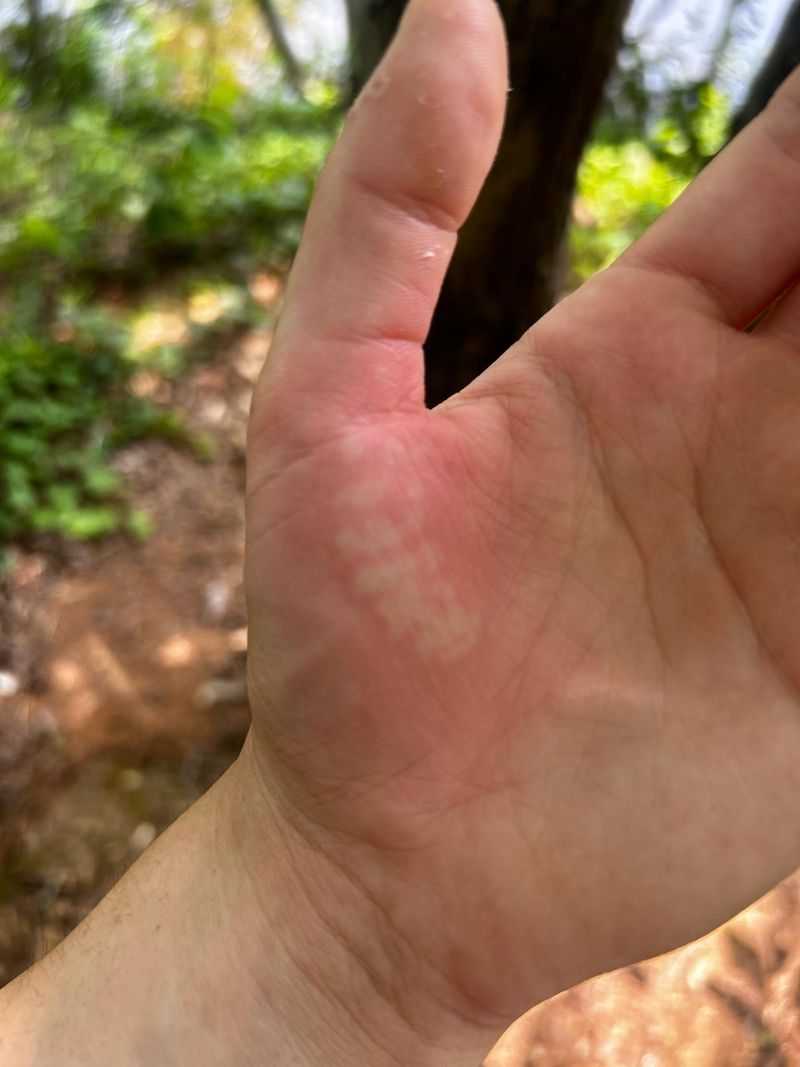
Brushing against this caterpillar feels like touching a hot stove wrapped in thorns. The reaction happens instantly, and the burning sensation can last for several hours without treatment.
When the spines make contact with skin, they snap off and release venom directly into the surface layers. Your body responds with a sharp, stinging burn that spreads quickly across the affected area.
A red rash typically forms within minutes of contact. Swelling, itching, and a raised welt pattern often follow, similar in appearance to a nettle sting but more intense.
For most healthy adults, the reaction stays localized and fades within a few hours. Applying tape over the area first can help pull out broken spine tips still embedded in your skin.
After removing the spines, washing the area with soap and water is a smart next step. A cold compress can help reduce swelling and bring some relief to the burning sensation.
Over-the-counter hydrocortisone cream or an antihistamine can manage the itch and inflammation effectively. Most reactions do not require a doctor visit, but monitoring the site for worsening symptoms is always a good idea.
Children and people with sensitive skin or allergies may experience stronger reactions than the average adult. If swelling spreads significantly or breathing feels difficult, seek medical attention right away without hesitation.
The bright green caterpillar may look like a garden novelty, but the sting it delivers is anything but fun. Respect the spines, and you will avoid a very uncomfortable lesson.
Plants Where It Is Most Commonly Found
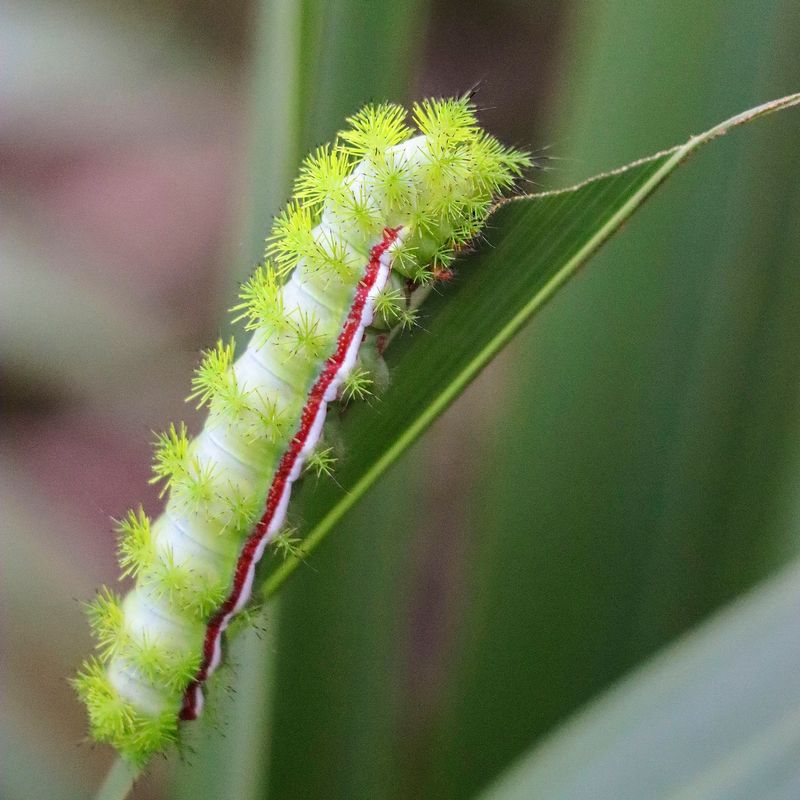
Knowing where to look changes everything about staying safe in your Illinois garden. The Io moth caterpillar is not picky about its food source, which makes it a frequent visitor across a wide range of plant types.
Corn is one of its favorite hosts, so vegetable gardeners growing sweet corn should check their stalks and leaves regularly during late summer. The caterpillars tend to cluster on the upper portions of the plant where fresh growth is most abundant.
Rose bushes are another common hangout for this species. Gardeners who tend roses bare-handed are especially at risk of an accidental encounter hidden beneath a cluster of leaves.
Cherry, apple, and other fruit trees also attract Io moth caterpillars in large numbers. Orchard growers and backyard fruit tree enthusiasts should inspect branches carefully before reaching in to harvest or prune.
Willows, oaks, and maples serve as host trees in more naturalized or wooded garden settings. If your yard borders a tree line or wooded area, the chances of encountering this caterpillar increase noticeably.
Clover and other low-growing ground cover plants can also harbor young caterpillars early in the season. Walking barefoot through clover patches is one surprisingly common way people get stung without ever seeing the culprit.
Checking the undersides of leaves is the most important habit you can build for avoiding contact. These caterpillars often rest on leaf undersides during the hottest parts of the day, tucked out of sight.
Safer Ways To Handle An Encounter
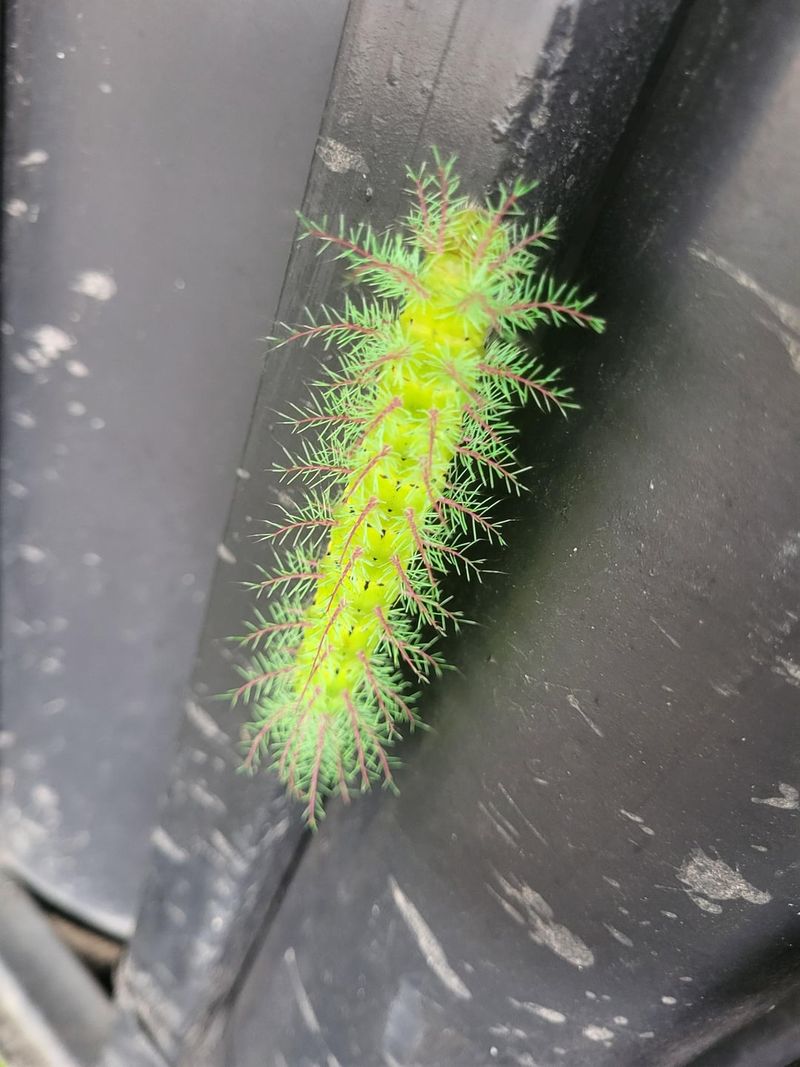
Panic is never the right response when you spot one of these caterpillars in your Illinois garden. Staying calm and keeping your hands to yourself is the single most effective strategy you have.
Avoid using your bare hands to move or relocate this caterpillar. Even a brief, light touch against the spines can trigger an immediate and painful skin reaction.
Thick gardening gloves offer decent protection if you need to move the caterpillar away from a high-traffic area. Choose gloves with a textured rubber surface rather than thin fabric, which the spines can still penetrate.
A pair of long kitchen tongs or a sturdy stick can also help you guide the caterpillar off a plant without any direct contact. Slow, gentle movements work better than quick swipes that might agitate the insect.
If you find several caterpillars on a single plant, consider leaving them alone rather than attempting a full removal. Io moth caterpillars are temporary visitors, and they will naturally move on or transform into pupae within a few weeks.
Wearing long sleeves and closed-toe shoes while gardening during late summer is a simple habit that reduces accidental exposure. Tucking pants into socks adds another small but meaningful layer of protection near ground-level plants.
Teaching children to recognize the bright green caterpillar before they ever encounter one is one of the best protective steps a parent can take. A little knowledge goes a long way toward preventing a very memorable sting.