This Is Why Carpenter Bees Are Drawn To Your Illinois Porch Every Spring
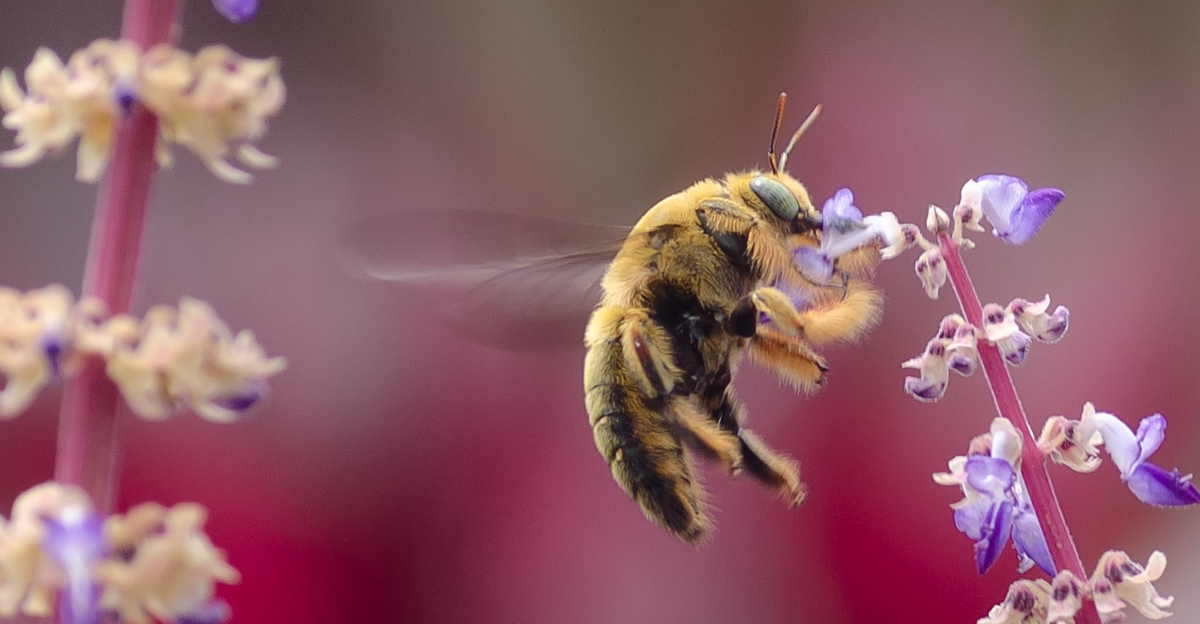
Your porch has been chosen. Not by chance, and not randomly. Something specific is pulling carpenter bees back every spring, and it starts with details you have never thought to question.
Wood type, sun exposure, nearby blooms, all of it adds up to an open invitation. They are not wandering. These bees follow a blueprint, often returning to the same spots their parents found first.
Over time, those spots quietly grow deeper and wider. Most homeowners across Illinois only notice when the sawdust shows up.
Knowing what attracts them changes everything. Soft, unpainted wood draws them in first. Certain flowers nearby confirm the choice. Your porch layout does the rest.
None of this is accidental. Every feature of your outdoor space tells a story these bees know how to read. Illinois porches face this pattern more than most. This spring, your porch fights back.
1. Untreated Or Unpainted Wood Is Perfect For Nesting
Bare wood is one of the strongest attractors for carpenter bees. If your porch has untreated or unpainted lumber, you have made your porch significantly more inviting to these persistent insects.
Carpenter bees do not eat wood like termites. They bore into it to create smooth, perfectly round tunnels where they lay their eggs.
Untreated wood offers zero resistance to their strong mandibles. Painted or sealed surfaces, on the other hand, are much harder to penetrate and far less appealing to a nesting female.
Softwoods left bare are especially vulnerable. Fascia boards, deck railings, and porch overhangs are common targets when they have not been sealed properly.
The fix is simpler than most homeowners think. A few coats of exterior paint or a quality wood sealant can make your porch dramatically less attractive to carpenter bees looking for a nesting spot.
Staining alone is not always enough. You need a thick, hard surface coat to truly discourage them from starting a new tunnel.
Inspect your porch each late winter before the bees return. Catching bare spots early and sealing them before spring arrives can stop the problem before it starts.
Protecting your wood is the single most effective way to redirect carpenter bees away from your Illinois porch for good.
2. Softwoods Like Pine And Cedar Are Easy To Bore Through
Not all wood is created equal in the eyes of a carpenter bee. Softwoods are their absolute favorite material for nesting, and your porch may be full of it.
Pine and cedar are two of the most popular building materials for porches across the Midwest.
They are affordable, widely available, and unfortunately, incredibly easy for carpenter bees to chew through.
A female carpenter bee can bore a perfectly circular half-inch hole in soft lumber in just a few hours. After that initial entry, she turns and tunnels parallel to the grain, creating a long gallery for her eggs.
Hardwoods like oak or pressure-treated lumber are far less appealing. The density makes the boring process much more difficult and time-consuming for the bee.
Your Illinois Garden Changes Every Week. Your Plan Should Too.
Gardening in Illinois changes quickly throughout the season. Every Friday you’ll receive a simple weekly plan showing exactly what to plant, prune, fertilize, harvest, and protect so you never miss the right timing.
If your porch was built with pine railings or cedar fascia boards, you are working with highly suitable nesting material for carpenter bees. Replacing those materials is one long-term option, but sealing them works well too.
Fresh sawdust beneath your eaves or railings is a telltale sign that boring has already begun. Act fast when you spot it.
Switching to composite or PVC trim for future porch projects eliminates this vulnerability entirely. Carpenter bees simply cannot bore into synthetic materials, making them a smart upgrade for Illinois homeowners.
3. Illinois Spring Temps Align Perfectly With Nesting Season
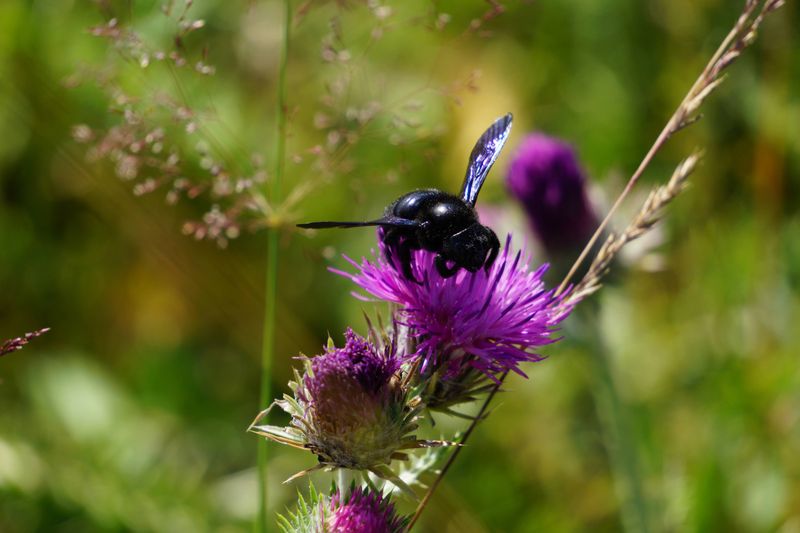
Timing is everything in nature, and Illinois spring weather lines up almost perfectly with carpenter bee nesting season. When temperatures consistently hit around 70 degrees Fahrenheit, these bees wake up and get to work.
In Illinois, that warming trend typically arrives in late April through May. That is exactly when homeowners start noticing bees hovering aggressively around their porches and decks.
Male carpenter bees emerge first and immediately begin patrolling territory. They hover, dart, and even buzz at humans, though they cannot sting and are mostly just putting on a show.
Females emerge shortly after and start scouting nesting locations. Warm temperatures signal that the season is right, and your sun-warmed porch boards are incredibly inviting to a bee ready to nest.
The Illinois climate also means these bees have a reliable food window. Spring flowers bloom right as the bees are most active, giving them easy access to pollen and nectar nearby.
Cold snaps can delay activity by a week or two, but the bees simply wait it out. Once warmth returns, they pick up right where they left off.
Understanding this seasonal rhythm helps you prepare ahead of time. Seal and paint your wood before mid-April and you will stay one step ahead of carpenter bees every single year.
4. Overhanging Eaves Mimic Their Natural Hollow-Tree Habitat
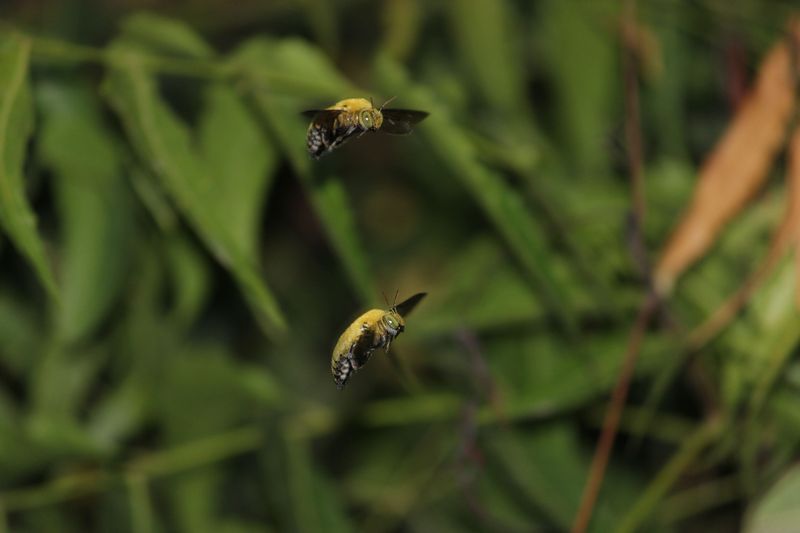
Carpenter bees evolved to nest in dead trees with protected overhangs. Your porch eaves accidentally recreate that environment almost perfectly, and the bees notice immediately.
In nature, these insects seek spots that are sheltered from rain and direct sun. The underside of a porch overhang checks every single box on their nesting checklist.
Eaves provide a dry, protected surface that stays stable through spring rain showers. For a bee laying eggs, that kind of consistent shelter is non-negotiable.
The angle of the wood matters too. Carpenter bees prefer to bore upward at a slight angle before tunneling horizontally. Eave boards and fascia panels offer exactly that geometry.
Many Illinois homeowners never look up at their eave boards until the tunnels are already well established. By then, a female bee may have already laid multiple eggs inside a six-inch tunnel.
Inspecting your eaves each March can save you a lot of grief. Look for perfectly round holes about the size of a dime and fresh sawdust below the entry point.
Filling old holes with steel wool and caulk before spring removes the invitation entirely. Carpenter bees prefer fresh starts over fighting through blocked tunnels, so sealed eaves become far less tempting targets.
5. Weathered Wood Releases Scents That Signal A Good Nesting Site
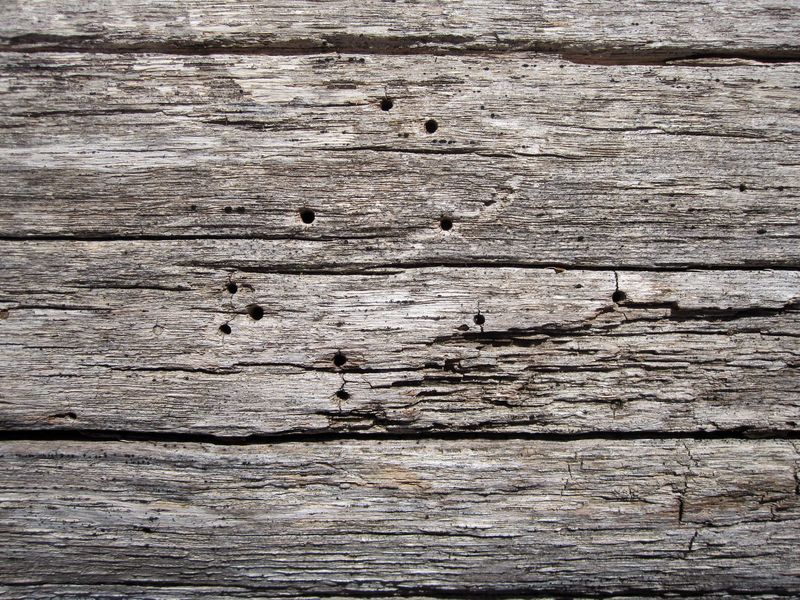
Your nose cannot detect it, but a carpenter bee absolutely can. Weathered wood may release subtle chemical compounds that draw nesting females toward softer, more workable surfaces.
As wood ages and breaks down from sun and moisture, the fibers loosen and the surface becomes easier to penetrate. Bees seem to sense this structural softness through smell and touch.
Old wood also tends to have existing cracks and checks in the grain. Those tiny gaps give carpenter bees an easier starting point for boring, which makes weathered lumber twice as attractive.
Fresh, well-maintained wood simply does not emit the same chemical signals. That is one more reason why annual maintenance on your porch is such an effective deterrent.
Sanding down weathered boards and applying a fresh coat of exterior paint changes the surface chemistry entirely. You are changing the surface properties that may have drawn the bees in the first place.
Some homeowners use citrus-based sprays on weathered wood as an added deterrent. Carpenter bees dislike strong citrus scents, and these sprays can buy you extra protection between paint jobs.
Think of your porch maintenance routine as pest prevention, not just aesthetics. A fresh-looking porch is also a less attractive target for carpenter bees returning to Illinois each spring.
6. Porch Flowers Offer A Close And Reliable Pollen Source
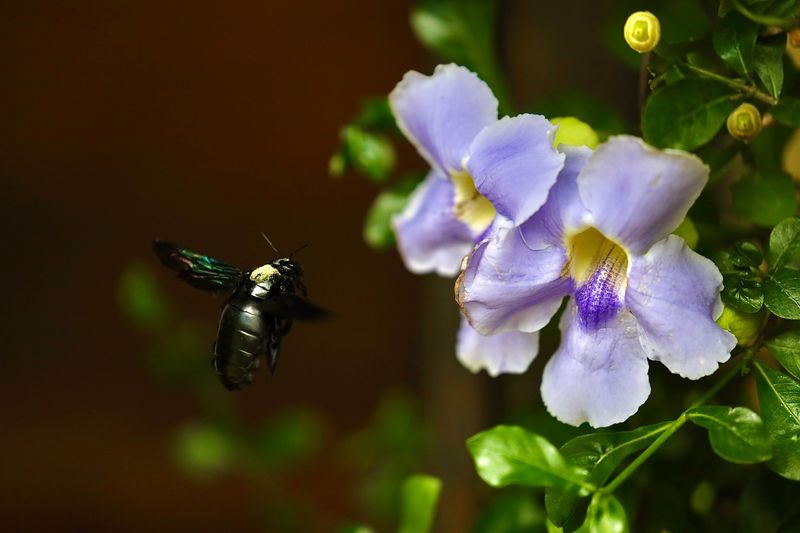
If you have flower boxes, hanging baskets, or potted plants on your porch, you may be offering an ideal combination of food and shelter for carpenter bees.
Carpenter bees are important pollinators, and they actively seek out reliable pollen sources close to their nesting sites. Your porch blooms make the location feel like prime real estate.
They are especially drawn to open flowers like lavender, wisteria, and black-eyed Susans. These plants offer easy pollen access and are common choices for Illinois porch gardens.
Having flowers within a few feet of wooden structures creates a powerful combination. The bees feed, then immediately look around for a nearby nesting spot, and your porch railings are right there.
You do not have to give up your garden to fix this problem. Simply moving planters and flower boxes away from the house can reduce how much time bees spend hovering near your wood.
Planting bee-friendly flowers in a dedicated garden bed further from the porch can redirect their attention. Give them a better option and they may leave your structure alone.
Strategic planting is a low-effort, high-reward move for any Illinois homeowner dealing with carpenter bees. A little garden rearrangement can make a noticeable difference by the second week of spring.
7. Old Tunnels Draw Females Back Season After Season
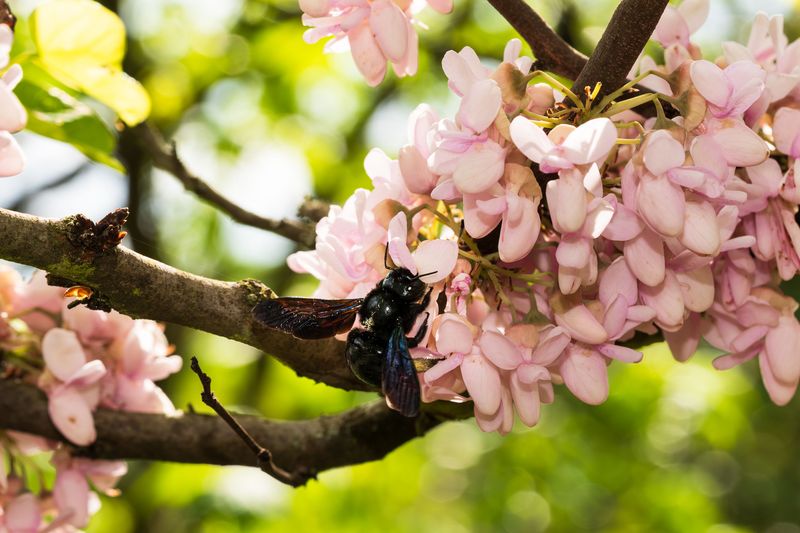
Once a carpenter bee has bored a tunnel in your porch, that spot becomes a ready-made nesting site that females actively seek out each season.
Females will inspect existing holes before deciding whether to expand them or start fresh nearby. A tunnel that is already six inches deep saves her significant time and energy.
This is why carpenter bee problems tend to get worse every year when left unaddressed. Each season, more females return and either reuse or extend the existing galleries inside your wood.
Over time, these tunnels can branch and spread, weakening structural boards from the inside out.
What starts as a cosmetic issue can, in cases of prolonged and heavy infestation, become a real structural concern over several seasons.
Filling old holes is critical and should happen every fall after the bees have left for the season. Use wood putty or a dowel rod with exterior caulk to seal each tunnel completely.
Simply plugging the holes in spring while bees are active can trap them inside, causing more damage as they bore a new exit. Timing your repairs correctly matters a great deal.
Breaking the cycle of tunnel reuse is the key to long-term control of carpenter bees on your Illinois porch, and it starts with a thorough inspection every single fall.
8. Old Woodpecker Activity Makes A Carpenter Bee Problem Look Far Worse
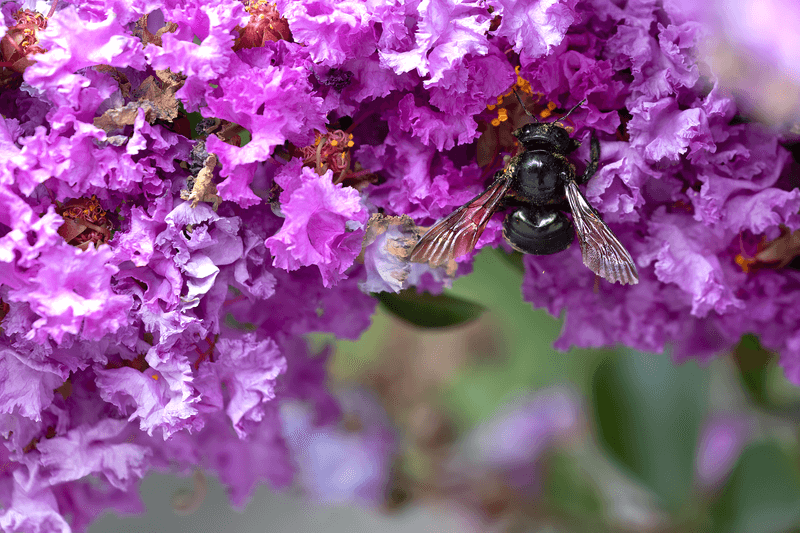
Carpenter bees rarely work alone for long. Once tunnels are established inside your porch wood, woodpeckers arrive next, and what they leave behind shocks most homeowners.
Woodpeckers can hear larval movement inside sealed wood. They will hammer directly into your fascia boards and railings chasing that sound.
The holes they create look nothing like carpenter bee entry points. Carpenter bees drill clean, round openings roughly half an inch wide.
Woodpeckers leave jagged, splintered craters that can be several inches across. Both can appear on the same board within a single season.
That combination confuses homeowners trying to measure the true extent of the damage. A moderate carpenter bee infestation with heavy woodpecker activity can look like a structural emergency when it is not.
The damage does compound quickly though. Woodpeckers do not stop at exposing existing tunnels.
They split and splinter the surrounding wood, weakening boards that carpenter bees alone would have left largely intact.
Illinois homeowners dealing with both problems at once often focus only on the bees. That is a mistake.
Woodpeckers will return every season as long as larvae are present inside the wood. Reflective tape or hanging deterrents near active areas can discourage woodpeckers while you address the underlying infestation.
Treating both problems at the same time is the only way to stop the damage from escalating further each spring on your Illinois porch.
9. South-Facing Porch Boards Wake Up Carpenter Bees Weeks Early
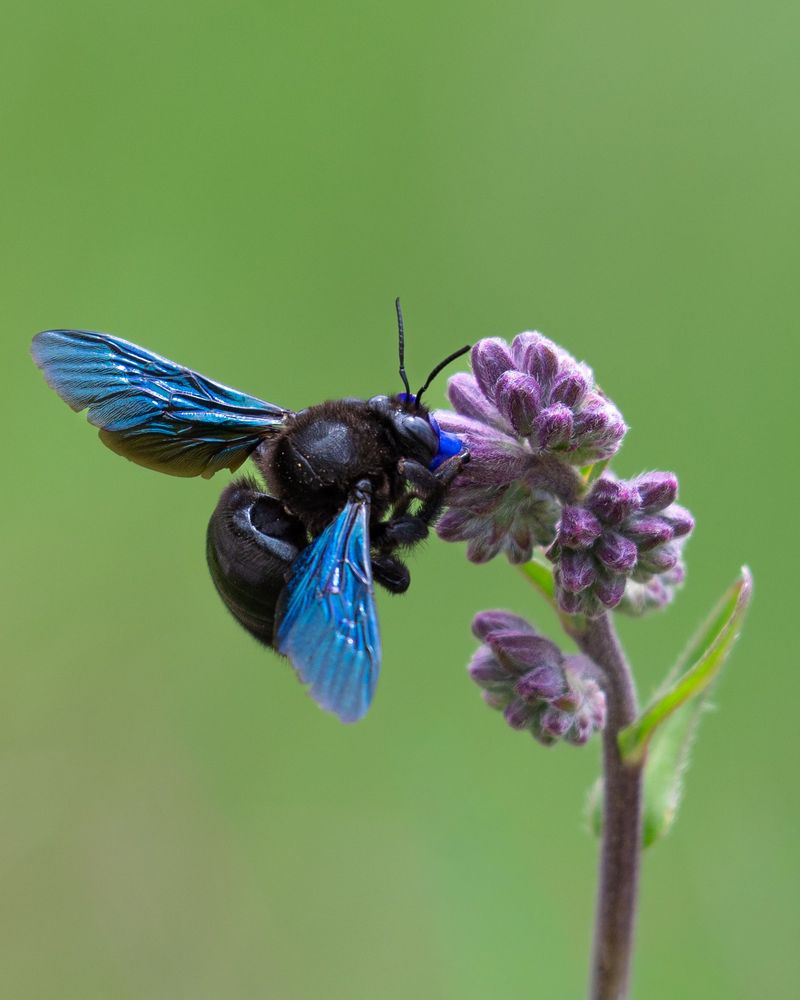
Direction matters more than most homeowners think. A south-facing porch absorbs direct sunlight longer than any other orientation, and that extra heat changes everything in spring.
Carpenter bees are highly sensitive to surface temperature. When they emerge from overwintering, they are not just looking for warm air. They are looking for warm wood.
South-facing boards heat up faster and stay warm longer into the evening. That consistent warmth signals to a scouting female that conditions are stable enough to begin nesting.
North and east-facing porches stay cooler well into April. Their owners often assume they have avoided the problem entirely. They have not. They simply have more time to prepare.
South-facing porches in Illinois can see active boring two full weeks earlier than other orientations. That is two weeks of tunneling before most homeowners even realize the season has started.
The sun does not just attract the bees. It softens the wood surface slightly over time, making it marginally easier to penetrate.
That combination of warmth and workability is exactly what a nesting female is looking for. Your preparation timeline needs to reflect this. Do not wait until you see hovering bees to seal and paint your wood.
If your porch faces south, early April is already cutting it close. Finish your treatments in late March and you stay ahead of the season before it starts working against you.