This Blue-Tailed Lizard Is Showing Up In Arkansas Gardens All Summer
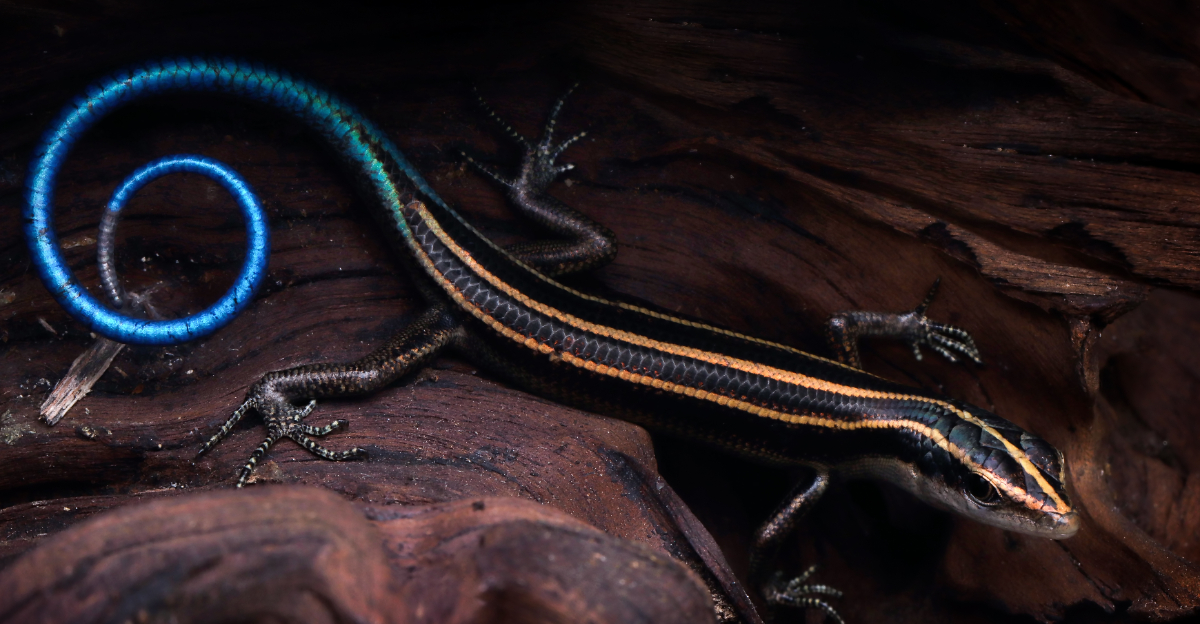
Something darted under your tomato plants just now, quick and low to the ground. That flash of electric blue is hard to forget.
Your first thought might be a snake, and your stomach drops a little at the idea. Take a breath, because this visitor is nothing to fear.
This small reptile shows up in gardens across Arkansas all summer long. That bright blue tail is actually a clever trick, built to distract predators and keep the body safe.
Once you know what you are looking at, the surprise turns into curiosity. Having one nearby is honestly a good sign for your Arkansas garden, not a problem to solve.
This Lizard Is a Common Sight in Arkansas Gardens
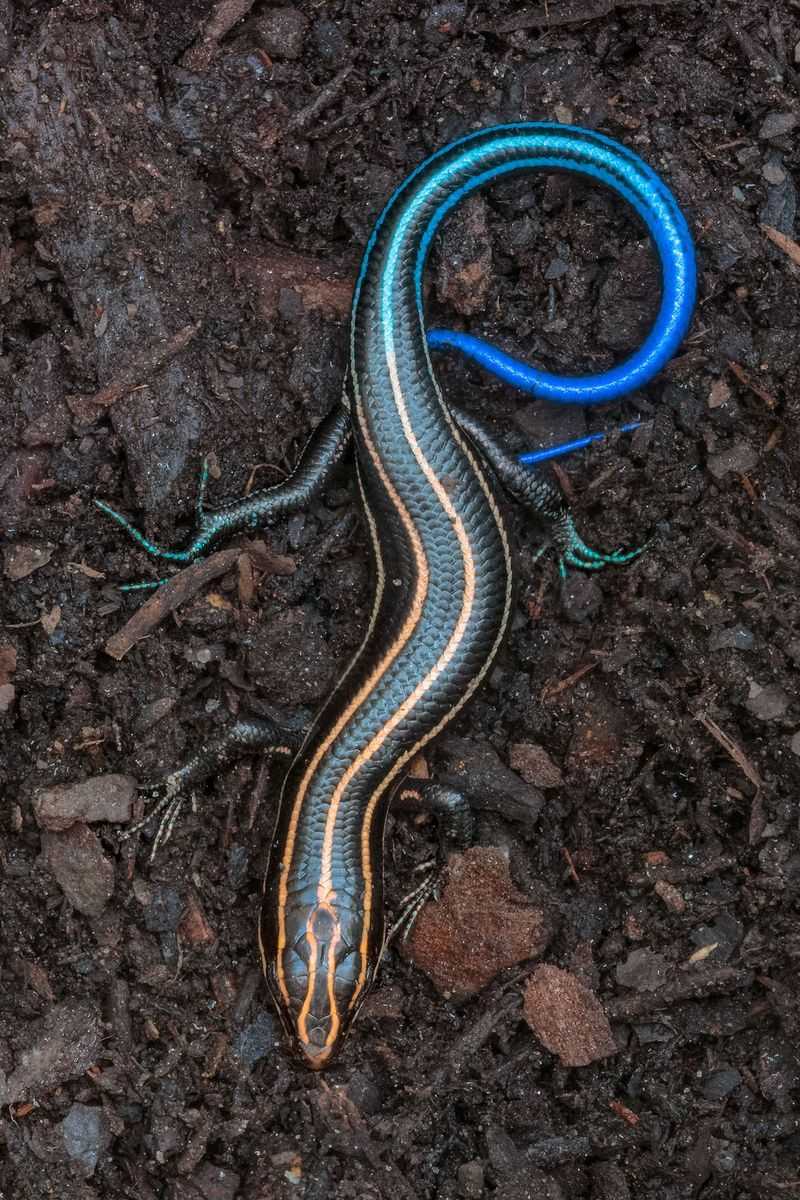
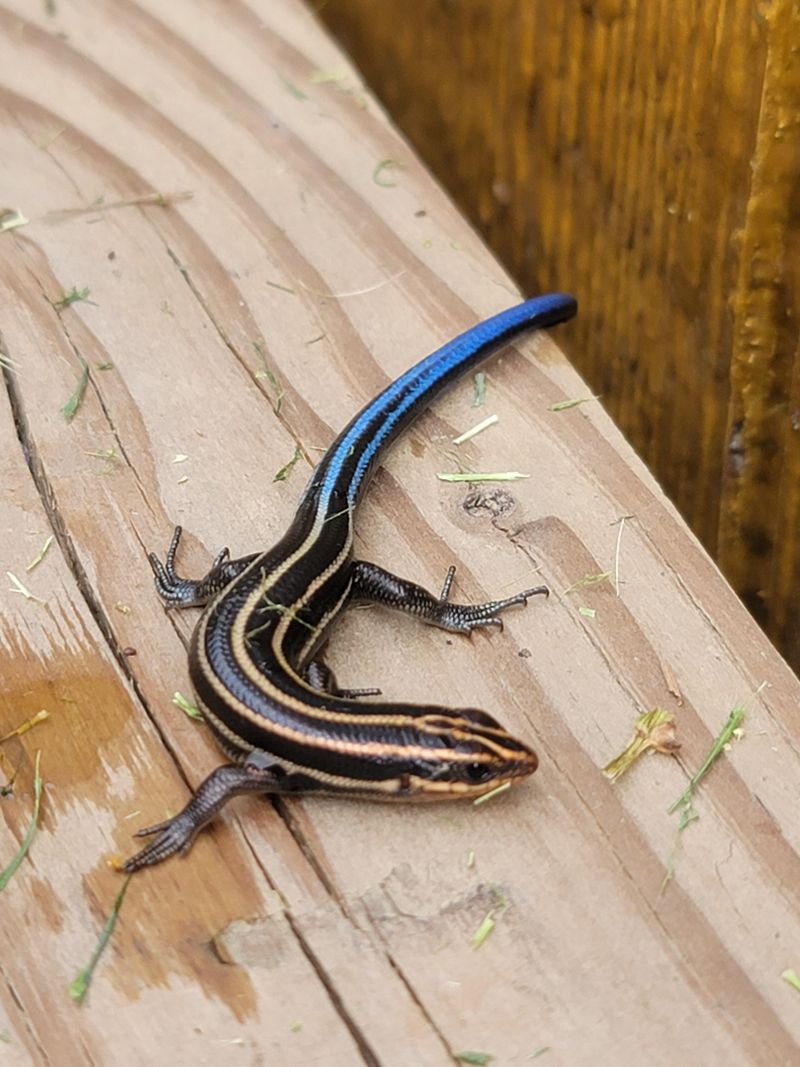
Flash of blue, gone in a second. That is usually your first encounter with a five-lined skink in your Arkansas garden. This blue-tailed lizard is one of the most common reptiles found across Arkansas, showing up in backyards from spring through early fall.
Five-lined skinks belong to the Plestiodon genus and thrive in warm, humid climates. Arkansas summers give them exactly the heat and moisture they need to stay active and well-fed.
You will often spot them near garden beds, wood piles, or rock borders. They love edges, places where open ground meets cover, so they can bask and bolt at the same time.
Many gardeners mistake them for small snakes at first glance. Once you catch that brilliant blue tail though, there is no mistaking what you are looking at.
These lizards are not aggressive and will not approach you on purpose. They are shy, fast, and focused entirely on finding food and staying warm.
Sightings peak during mid-summer when temperatures are highest. If you have mulched beds, leaf litter, or loose bark anywhere in your yard, you have probably already created perfect skink habitat without even trying.
Knowing what this creature is makes the whole experience less alarming and a lot more interesting. Once you understand the blue-tailed lizard, you might actually start looking forward to seeing it dart across your garden path.
The Blue Tail Serves a Clear Survival Purpose
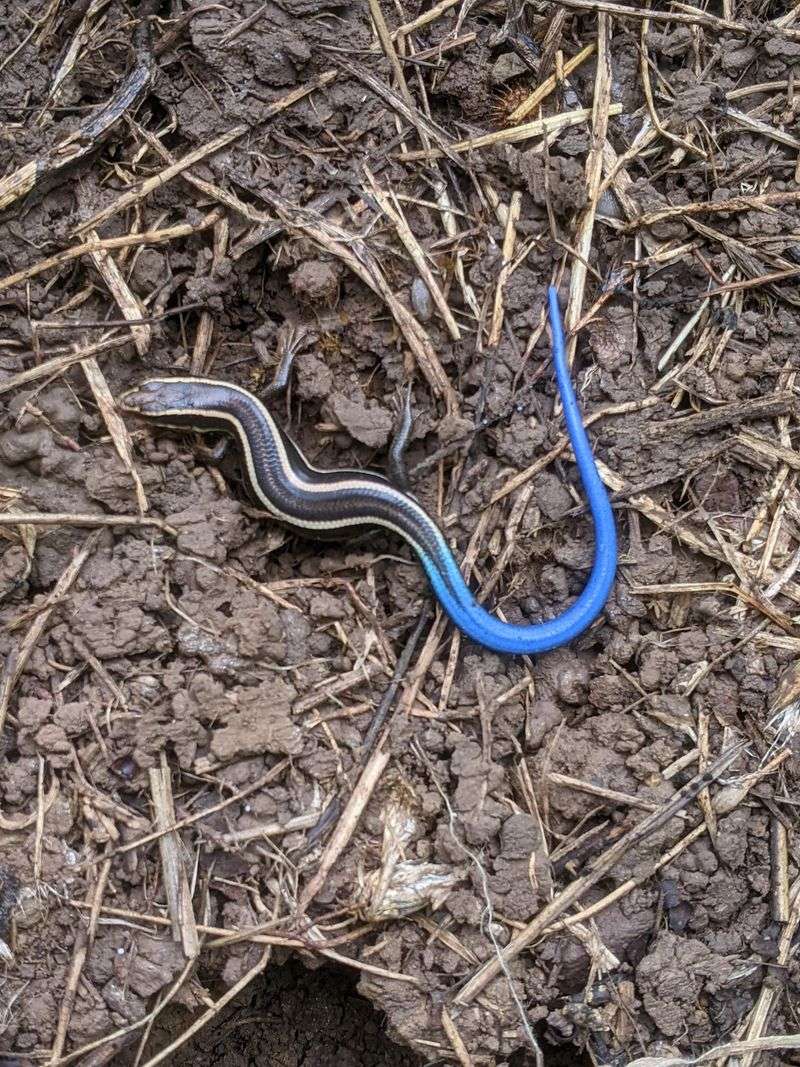
That tail is not just for show. The electric blue color on a skink’s tail is one of nature’s smartest tricks, and it works surprisingly well against predators.
When a hawk, cat, or snake zeroes in on a skink, the bright tail pulls all the attention. The predator lunges for the colorful end, which is exactly what the lizard wants.
Five-lined skinks can detach their tails on purpose through a process called autotomy. The tail keeps wiggling after it detaches, distracting the predator long enough for the skink to escape.
Here is the wild part: the tail grows back. It takes a few weeks, and the replacement is cartilage rather than bone, but the lizard survives and recovers.
The blue color is most intense in younger skinks. As they age, the tail fades toward gray or brown, which tells researchers a lot about a lizard’s age just from a quick look.
Your Arkansas Garden Changes Every Week. Your Plan Should Too.
Gardening in Arkansas changes quickly throughout the season. Every Friday you’ll receive a simple weekly plan showing exactly what to plant, prune, fertilize, harvest, and protect so you never miss the right timing.
Scientists believe the fading happens because adult skinks rely more on camouflage than distraction. Younger ones are smaller and slower, so the decoy tail gives them a better survival edge.
Watching a skink in your garden means you are watching a survival strategy shaped over millions of years. That blue tail is not decoration, it is a survival system that has kept this species thriving long before your Arkansas garden ever existed.
Pretty impressive for something smaller than your hand.
Juveniles Look Different Than Fully Grown Adults
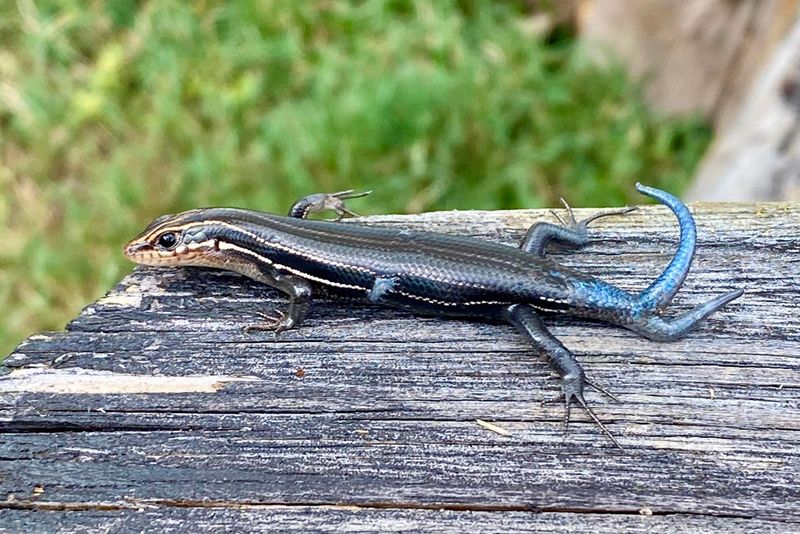
Young skinks look almost like a completely different species. The juveniles are dark brown or black with five bold cream stripes running from nose to tail, plus that signature glowing blue tail.
Adult males, on the other hand, develop a reddish-orange head during breeding season. That orange head can startle people who have only ever seen the striped youngsters darting around the mulch.
Female adults keep some of their striping but lose much of the tail color over time. They tend to be slightly smaller than males and less bold about basking in open spots.
The transformation from juvenile to adult takes roughly two to three years. During that time, the lizard slowly shifts its coloring as its body chemistry changes with age and hormones.
Gardeners sometimes panic when they see the orange-headed adult, thinking it is a separate or dangerous species. It is the same harmless skink you have been watching all along, just older and dressed differently.
Knowing the difference between age groups helps you understand what you are actually looking at. A bright blue tail means young and freshly hatched, while a faded or brownish tail suggests a more seasoned adult.
Both age groups are equally harmless and equally useful to your garden. No matter what stage of life you spot, the blue-tailed lizard is doing its job and asking for nothing in return except a safe place to hide and hunt.
Garden Conditions That Attract This Lizard
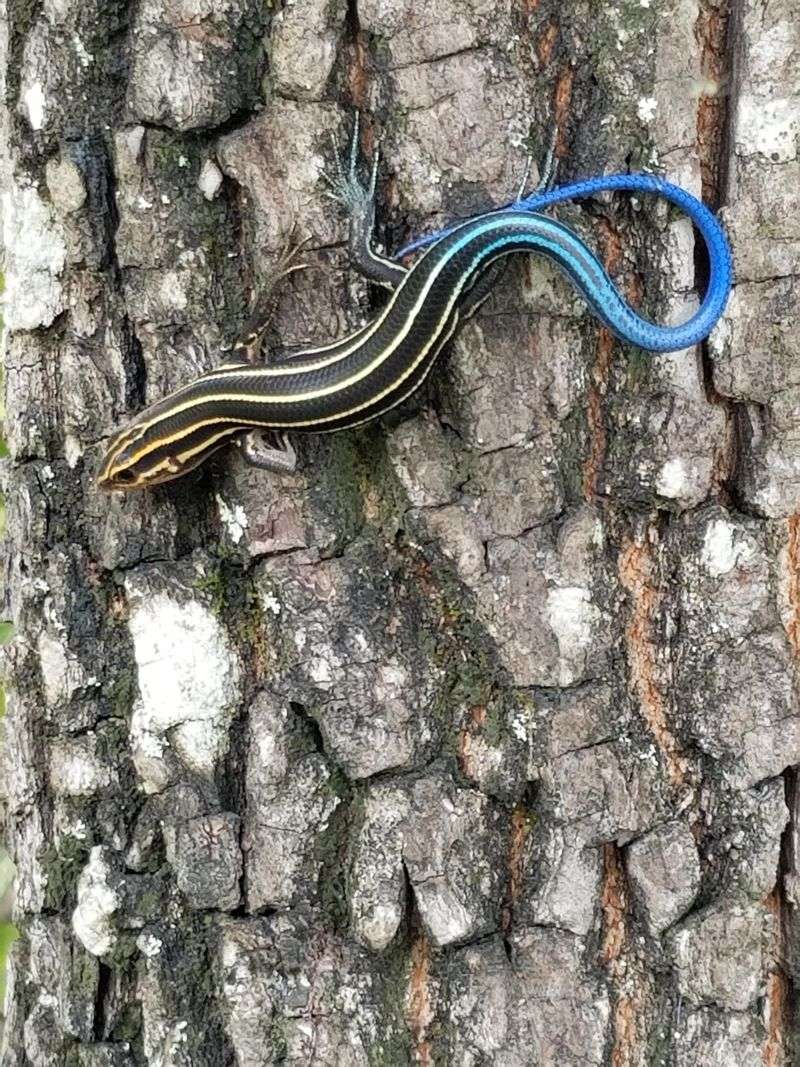
Skinks do not show up randomly. Your Arkansas garden is probably offering them something they need, and a few specific conditions make your yard far more appealing than your neighbor’s.
Mulched garden beds are a top draw. Loose organic mulch stays moist underneath and harbors the insects and worms that skinks hunt throughout the day.
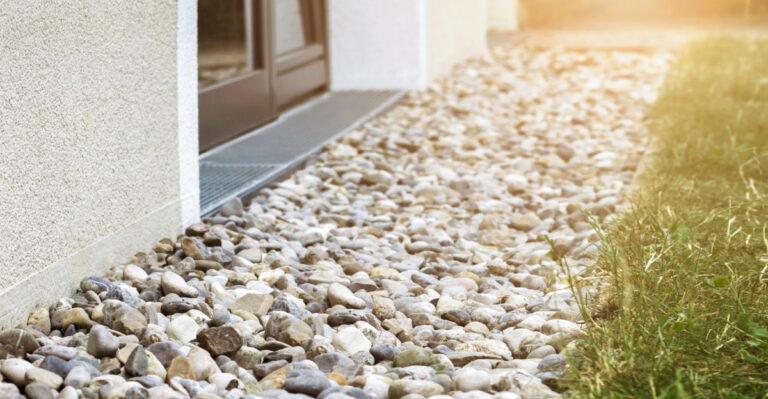
Rock borders and retaining walls are another magnet. Stones absorb heat from the sun and hold warmth into the evening, giving skinks a reliable basking surface that also doubles as a hiding spot.
Fallen logs, old lumber piles, and stacked firewood create ideal shelter. These spots stay cool and damp on the inside while the surface warms up nicely in direct sunlight.
Dense ground cover plants like hostas, ferns, or creeping thyme give skinks protected corridors to move through without being exposed to aerial predators. They love edges where plants meet open soil.
Standing water sources nearby also help, since skinks need to drink and tend to hunt near moisture. A bird bath or drip irrigation system can quietly turn your garden into prime skink territory.
If you want fewer skinks, reduce ground clutter and keep mulch thinner. If you want to encourage them, let a corner of your yard stay a little wild and untidy.
Either way, understanding what pulls them in gives you control over your garden environment. The blue-tailed lizard is responding to what you have already built.
This Lizard Helps Control Garden Pests
Before you shoo one away, consider what it is doing for you. The blue-tailed lizard is a natural pest controller, and it works for free all summer long without any chemicals involved.
Skinks eat a wide range of insects including crickets, beetles, grasshoppers, and roaches. They also consume spiders, small slugs, and the kind of soft-bodied larvae that chew through garden roots.
A single skink can cover a surprisingly large territory each day while hunting. Studies on similar species suggest they eat dozens of insects daily during peak activity periods in warm weather.
For vegetable gardeners especially, this is a big deal. Soft soil and dense planting attract exactly the bugs that skinks are built to hunt, making a kitchen garden a natural feeding ground.
Skinks hunt by sight and smell, using their forked tongue to detect chemical signals in the air. That tongue flick you see is not aggression, it is data collection for finding the next meal.
Unlike some pest-control methods, skinks do not damage plants, disturb roots, or leave behind anything harmful. They move through the garden quietly and efficiently, taking what they need.
Gardeners who learn to appreciate reptile visitors often report fewer slug and beetle problems over time. Correlation is not always causation, but having a hungry skink patrolling your beds certainly does not hurt.
The blue-tailed lizard earns its place in your garden every single day it shows up to hunt.
Simple Ways to Coexist With It Safely
Living alongside skinks is easier than most people expect. A few simple habits make the relationship smooth for both you and the blue-tailed lizard visiting your space.
First, do not handle them if you can avoid it. Skinks bite when cornered, and while the bite is not dangerous, it is uncomfortable and completely unnecessary.
Keep cats indoors or supervised when possible. Domestic cats are a major threat to skink populations in suburban yards, and they take far more than they actually eat.
Avoid using broad-spectrum pesticides in areas where you have spotted skinks. Removing the insect population takes away their food source and forces them to move on or go hungry.
If a skink somehow gets inside your home, stay calm. Guide it toward an open door using a broom or a piece of cardboard, and it will head back outside on its own.
Children are naturally curious about these lizards, which is a great teaching moment. Explain that watching from a distance is more respectful than chasing, and the skink will stick around longer.
You can also create a dedicated skink-friendly corner in your garden using a small rock pile, some leaf litter, and a shady plant cluster. It gives them a home base away from high-traffic areas.
Sharing your Arkansas garden with the blue-tailed lizard is one of those small, satisfying wins that makes outdoor spaces feel alive. Let it do its thing, and your garden will be better for it.