This Colorful Lizard Is Showing Up In More Arizona Yards
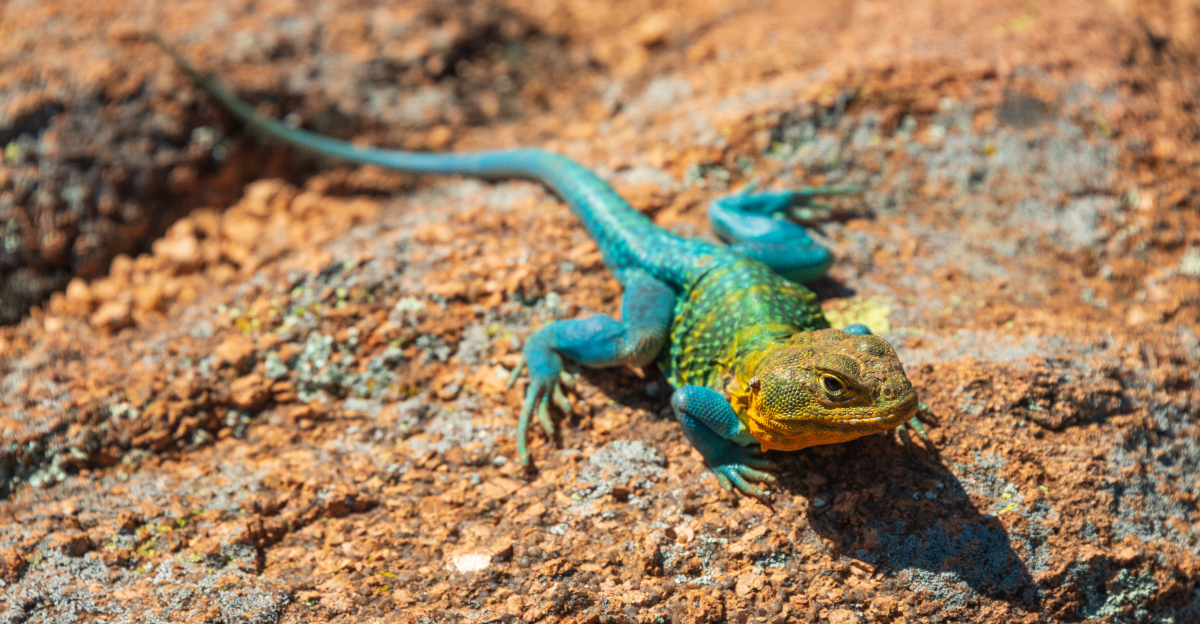
Bright colors usually make a backyard feel more welcoming, but this unexpected visitor often leaves people wondering what they just spotted.
More Arizona yards are attracting a striking blue tailed lizard, and many sightings happen without warning.
One quick dash across a patio or garden wall is enough to grab anyone’s attention. There is a good reason these colorful reptiles are appearing more often.
Your landscape may already offer everything they need to settle in. Don’t mistake their arrival for a problem before you know the full story.
Learning what draws them in can change the way you see your outdoor space.
The next time one races across your yard, you’ll understand why it chose your property and what its appearance could really mean for your landscape.
1. Meet The Colorful Collared Lizard
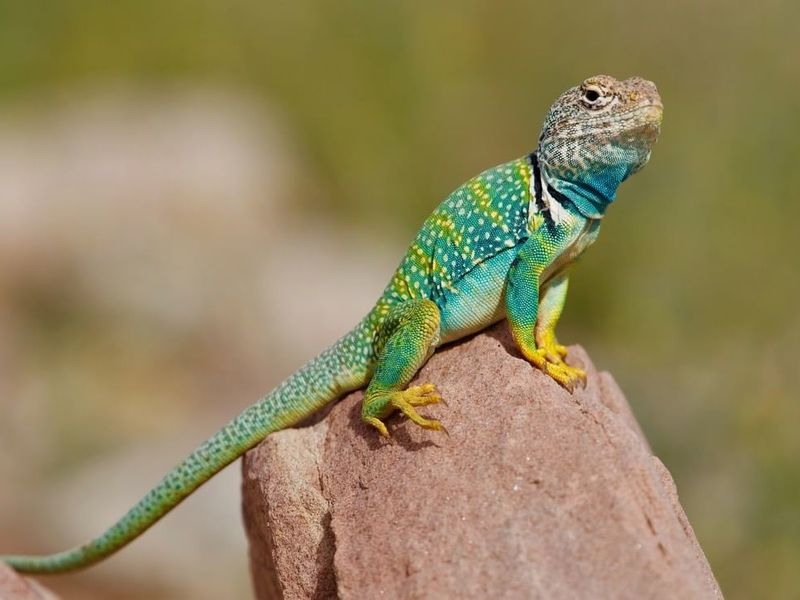
Bright colors and bold attitude make the collared lizard one of the most eye-catching reptiles in the Southwest. Males can display brilliant shades of green, yellow, orange, and turquoise, especially during breeding season.
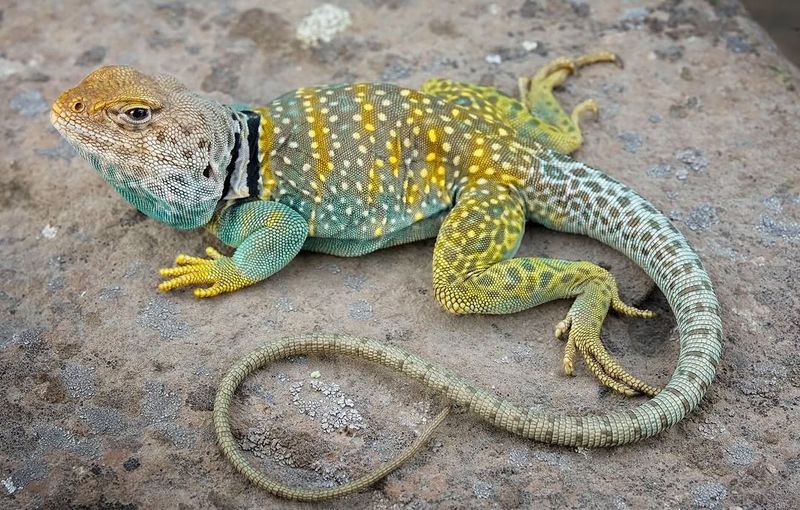
Females tend to be more muted in color, though they can develop orange patches when carrying eggs.
Named for the two black bands around their neck that resemble a collar, these lizards are hard to mistake once you know what to look for. Adults typically reach between 8 and 14 inches long, including the tail.
Their large heads and powerful jaws give them a slightly prehistoric look that many people find fascinating.
One of their most remarkable behaviors is running on their hind legs when moving at full speed. Watching one sprint across open ground is genuinely surprising.
They can reach speeds of around 16 miles per hour, which helps them escape predators and chase down prey.
Collared lizards belong to the family Crotaphytidae and are native to much of the central and western United States and Mexico. In Arizona, they tend to favor open, rocky desert terrain.
Seeing one in a residential yard usually means the surrounding habitat has qualities that match what they naturally prefer, which is actually a good sign for local biodiversity.
2. Rocky Areas Provide Ideal Habitat
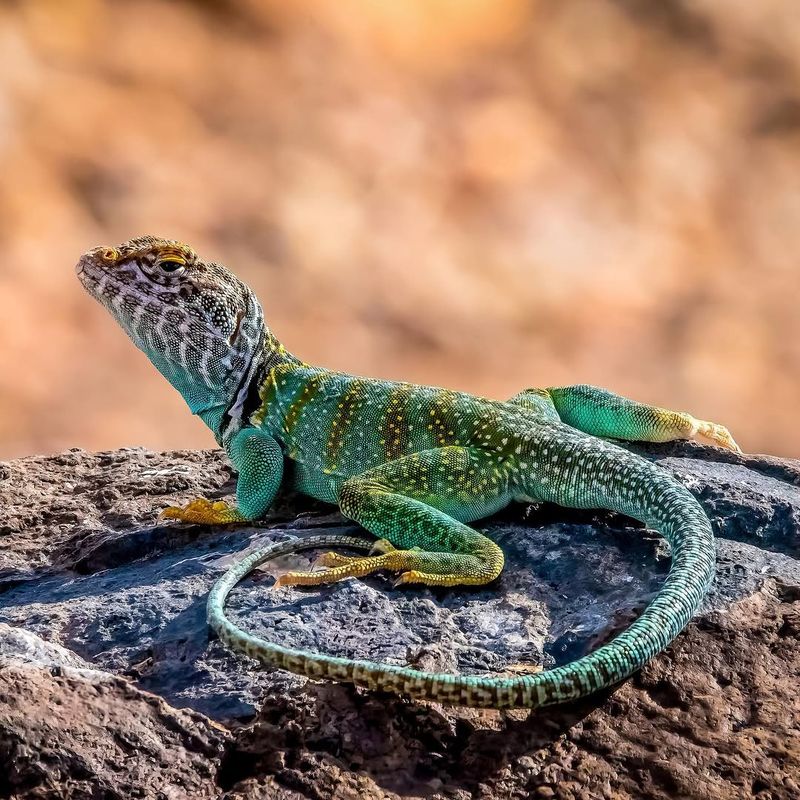
Rocks are not just decoration in a collared lizard’s world. They are shelter, lookout posts, and heat sources all rolled into one.
Without rocky structure nearby, these lizards rarely stick around for long.
Boulders and flat stones absorb heat from the sun throughout the day. Lizards use this stored warmth to regulate their body temperature, since they rely on external heat sources to stay active.
A yard with large rocks or a stacked stone wall can easily attract these reptiles without any extra effort on your part.
Rocky outcroppings also give collared lizards high vantage points. Perching on top of a rock lets them scan for insects, spot rivals, and watch for predators from a safe distance.
You might notice one sitting very still on a boulder for long stretches before suddenly bolting after something.
Open ground between rocks matters too. Collared lizards prefer areas with a mix of exposed rock and open sandy patches where they can sprint freely.
Your Arizona Garden Changes Every Week. Your Plan Should Too.
Gardening in Arizona changes quickly throughout the season. Every Friday you’ll receive a simple weekly plan showing exactly what to plant, prune, fertilize, harvest, and protect so you never miss the right timing.
Dense vegetation or thick ground cover tends to discourage them from settling in.
If your yard has a natural rock garden, a dry creek bed lined with stones, or even a gravel area with larger rocks mixed in, you may be providing better habitat than you realize.
3. Insects Make Up Most Of Their Diet
Few backyard hunters are as enthusiastic as a collared lizard on the trail of a grasshopper. Watching one stalk and snatch an insect is like seeing a miniature predator in action, fast, precise, and surprisingly powerful for its size.
Grasshoppers make up a major part of their diet, especially during summer months when these insects are abundant. Collared lizards also eat beetles, crickets, caterpillars, and other invertebrates they can overpower.
Occasionally, larger individuals will eat smaller lizards as well.
Their strong jaws allow them to crunch through hard-shelled insects that other small reptiles might avoid. A well-fed collared lizard with access to plenty of prey can grow noticeably larger and more vibrant in color compared to one in a resource-poor area.
Yards that attract insects naturally tend to attract collared lizards too.
Flowering plants that draw pollinators, outdoor lights that pull in moths and beetles at night, and areas with leaf litter or mulch that harbor beetles and grubs all support the prey base these lizards depend on.
Avoiding broad-spectrum pesticide use in your yard helps maintain this prey population. When insect numbers drop significantly, lizards move on to find better feeding grounds.
4. Warm Sunny Days Keep Them Active
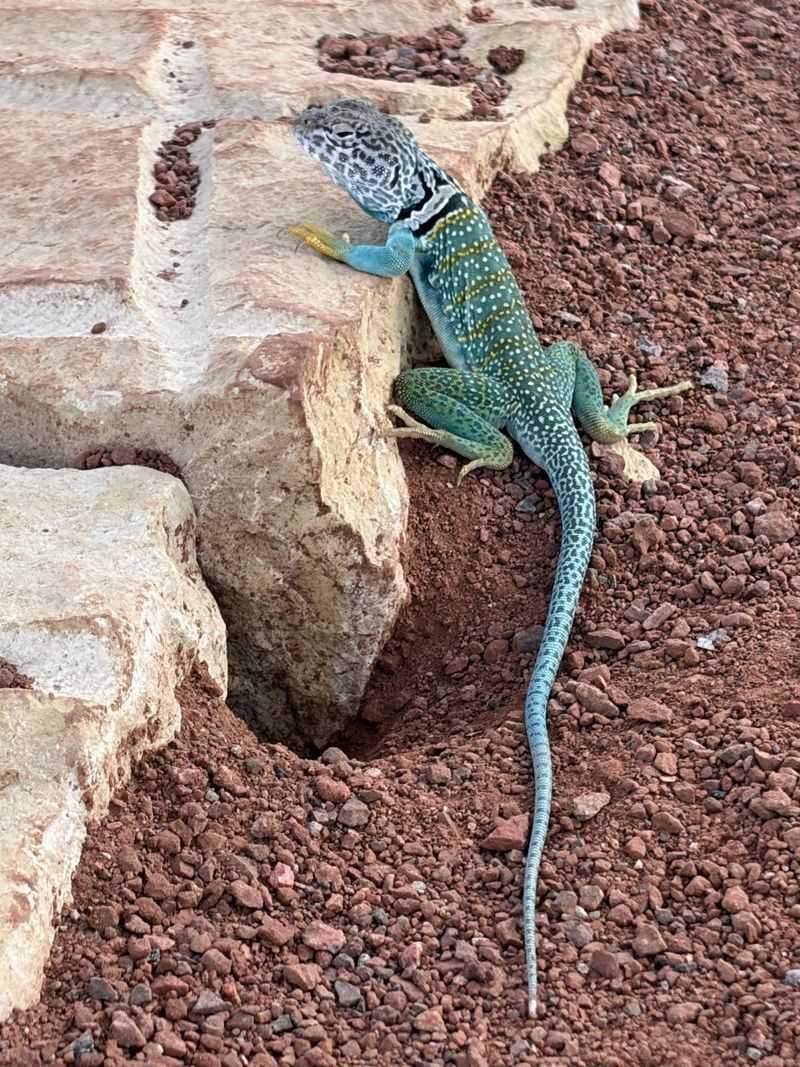
Cold mornings mean quiet yards. Once the sun climbs and surface temperatures rise, collared lizards shift into full gear.
Their activity patterns follow the heat almost like clockwork.
As ectotherms, they depend entirely on environmental heat to power their metabolism. On cooler days, even in summer, they may stay hidden or remain sluggish.
On hot, sunny days, they can be extremely active from mid-morning through early afternoon before retreating during peak afternoon heat.
Spring and early summer tend to be peak activity periods. Males become especially visible during breeding season as they display their colors and defend territory.
You might see them doing push-up motions on rocks, which is a territorial display, not exercise.
By late fall, activity slows considerably as temperatures drop. Collared lizards brumate during colder months, entering a dormant or semi-dormant state in sheltered spots under rocks or in burrows.
Brumation is similar to hibernation but not identical, since lizards may emerge briefly on unusually warm winter days.
In Arizona, warm weather stretches across a long portion of the year, which is part of why collared lizards thrive here. A yard that gets strong, direct sun for most of the day naturally supports their temperature needs.
5. Leave Natural Hiding Places Undisturbed
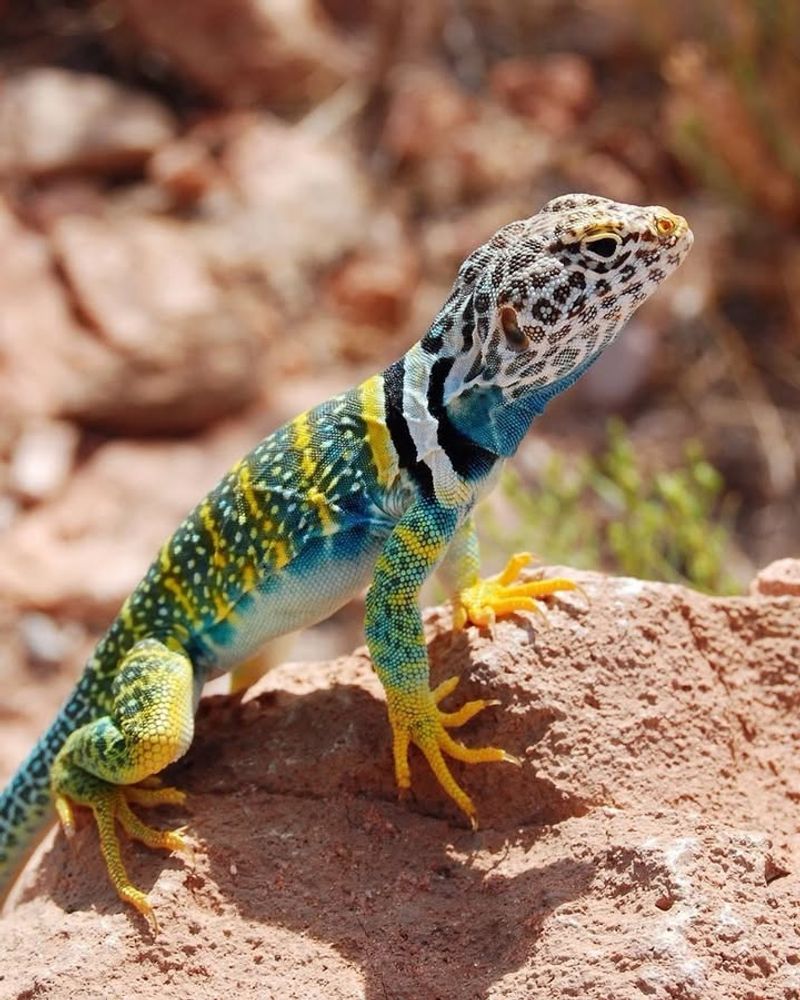
Shelter matters more than most people realize when it comes to keeping lizards around. Collared lizards need places to retreat quickly when threatened, and they scout out these spots before committing to an area.
Flat rocks with gaps underneath, loose stone piles, old wood stacks, and dense low shrubs all serve as potential hiding spots. Removing or constantly disturbing these features sends lizards searching for safer ground nearby.
Stability in the landscape is something they respond to strongly.
Resist the urge to tidy up every corner of your yard. A slightly wilder section with undisturbed rocks or natural debris can serve as a refuge zone.
You do not need a large space. Even a modest rock pile in a corner provides enough cover to make a lizard feel secure.
Predator pressure also influences how much cover they seek out. Hawks, roadrunners, and some snake species prey on collared lizards.
A yard with good hiding spots reduces the stress these lizards experience and makes extended stays more likely.
If you want to actively support them, consider adding flat flagstones with small gaps beneath them or stacking a few larger rocks in a sunny corner of the yard. Position these features where they will receive direct morning sun.
6. Keep Pets Away From These Lizards
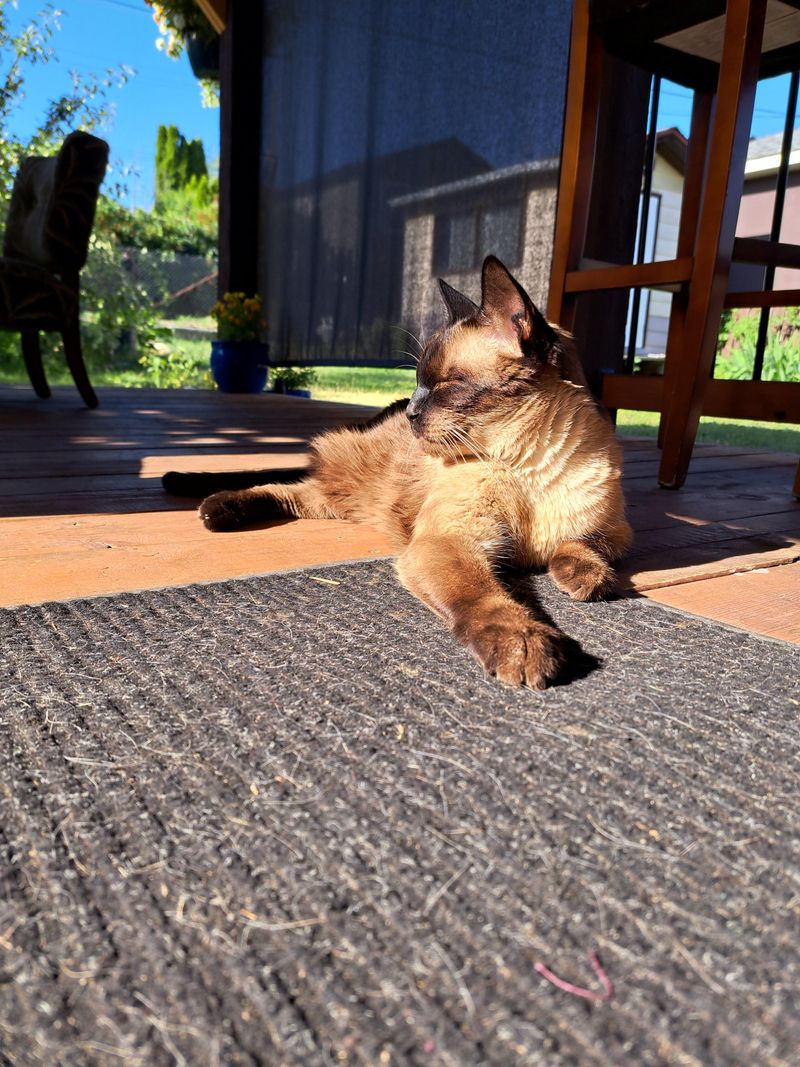
Dogs and cats are enthusiastic hunters, even when they are well-fed and have no real need to chase anything. A collared lizard darting across a patio is almost impossible for most pets to ignore, and that instinct can cause real problems for the lizard.
Even a playful swipe from a cat or a rough grab by a dog can injure a lizard seriously. Tail loss is one possible outcome, and while lizards can survive losing a tail, it takes energy to regrow and leaves them more vulnerable in the short term.
More serious injuries can be much harder to recover from.
Keeping pets indoors during the warmest parts of the day, when lizards are most active, reduces these encounters significantly. Supervised outdoor time is another practical approach, especially in yards where lizards have been spotted regularly.
Cats in particular can pose a consistent threat to lizards in residential areas. Free-roaming cats can create problems for local wildlife in suburban environments.
Limiting outdoor cat access, especially in the morning and early afternoon, can help reduce these encounters.
Beyond injury risk, repeated chasing stresses lizards enough to drive them away from an otherwise suitable yard. If your pets routinely patrol the yard during peak lizard hours, the lizards will likely relocate over time.
7. Why They Keep Returning To The Same Area
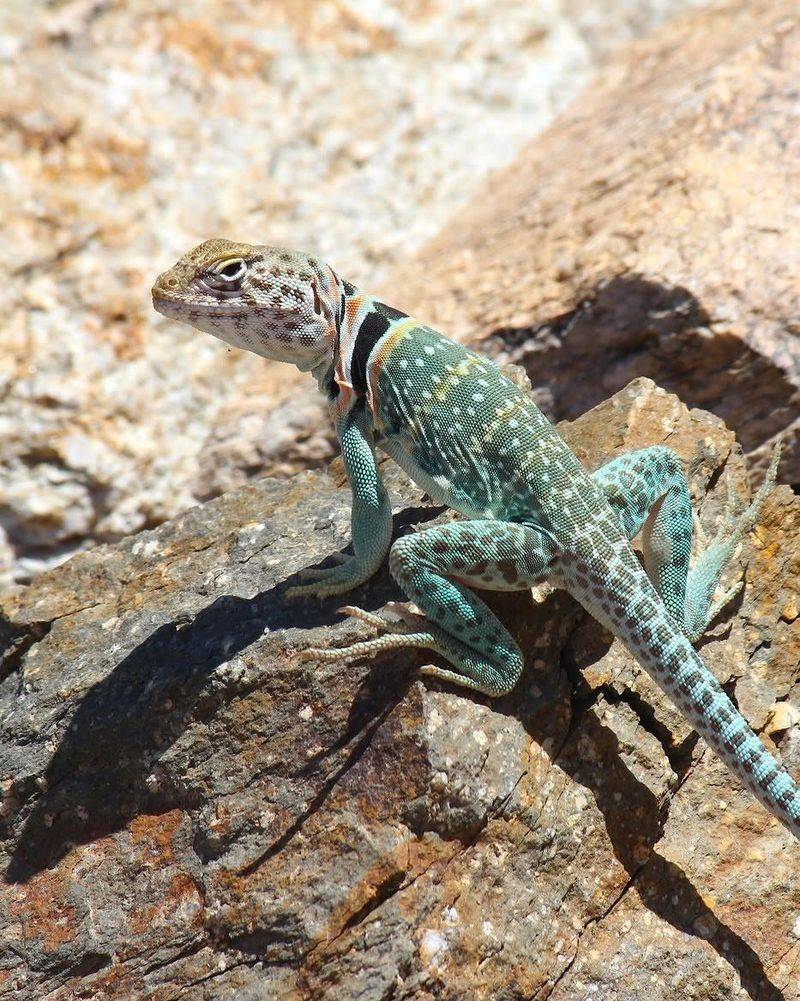
Loyalty to a territory is a strong trait in collared lizards, particularly among males. Once a male claims a stretch of rocky terrain with good sun exposure, reliable food, and adequate shelter, he tends to defend and return to that same area repeatedly.
Territory size varies depending on available resources, but males will actively chase off rivals and perform visible displays to assert their claim. Seeing the same lizard on the same rock day after day is not unusual at all.
Residents in Arizona sometimes recognize individual lizards by their markings or size over an entire season.
Females also show site fidelity, returning to areas where conditions have proven favorable for egg-laying and feeding. Nesting sites in warm, sandy soil near rocky cover are especially valued and may be revisited across multiple seasons when conditions remain stable.
Food consistency plays a big role in return visits. A yard that reliably supports a healthy insect population gives lizards a strong reason to stay.
Disruptive changes like heavy pesticide use, large-scale landscaping overhauls, or removal of rock features can break this cycle and discourage return visits.
Stability is essentially what keeps them coming back. Minimal disturbance, steady prey availability, good sun exposure, and accessible shelter create a combination that collared lizards recognize as worth defending.