This Fast Growing Vine Can Quietly Take Over Georgia Shrubs And Trees
Some vines look harmless when they first appear along a fence or at the edge of a garden bed. Give them enough time, however, and that small patch can begin climbing into nearby shrubs and trees.
That is where the problem becomes harder to ignore. Fast growth can carry a vine through branches before you realize how much ground it has covered.
In Georgia, several aggressive vines thrive during the warm growing season and use surrounding plants for support. Once tangled through a canopy, removing them becomes much more difficult.
Watch unfamiliar vines closely instead of assuming they belong there.
Early growth near the ground is much easier to address than thick stems overhead.
Learning which vine you have is the first step toward protecting your landscape.
1. Pretty Purple Blooms With A Hidden Agenda
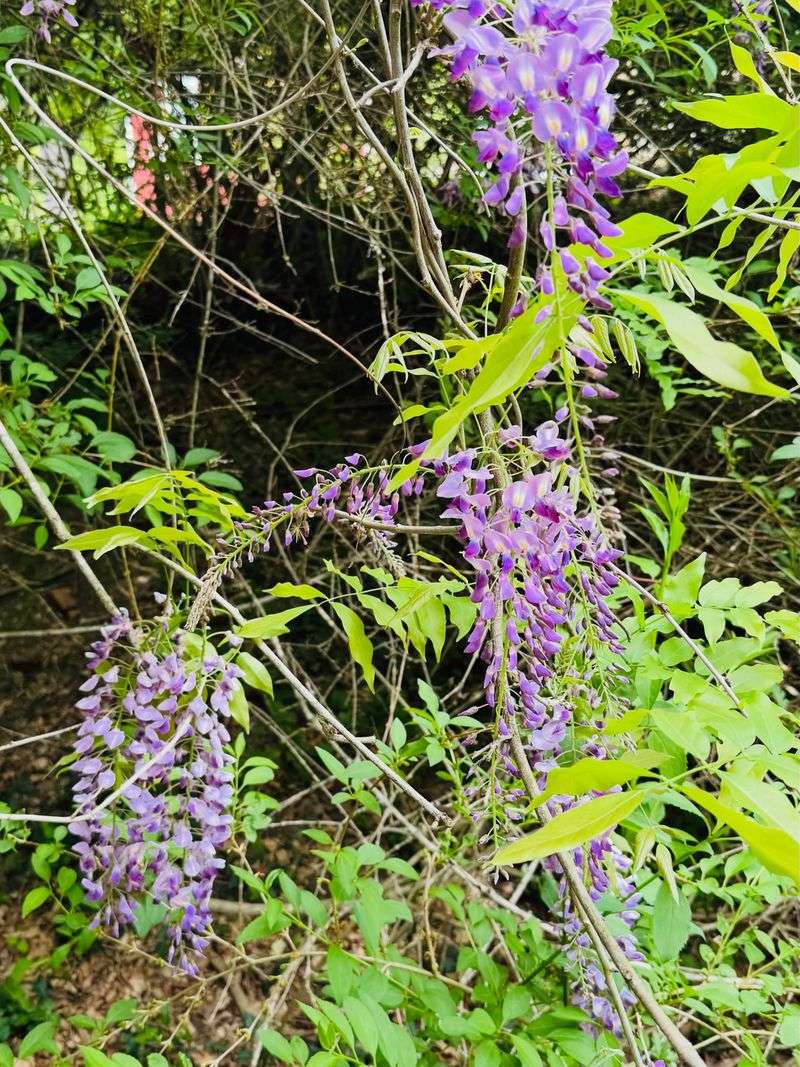
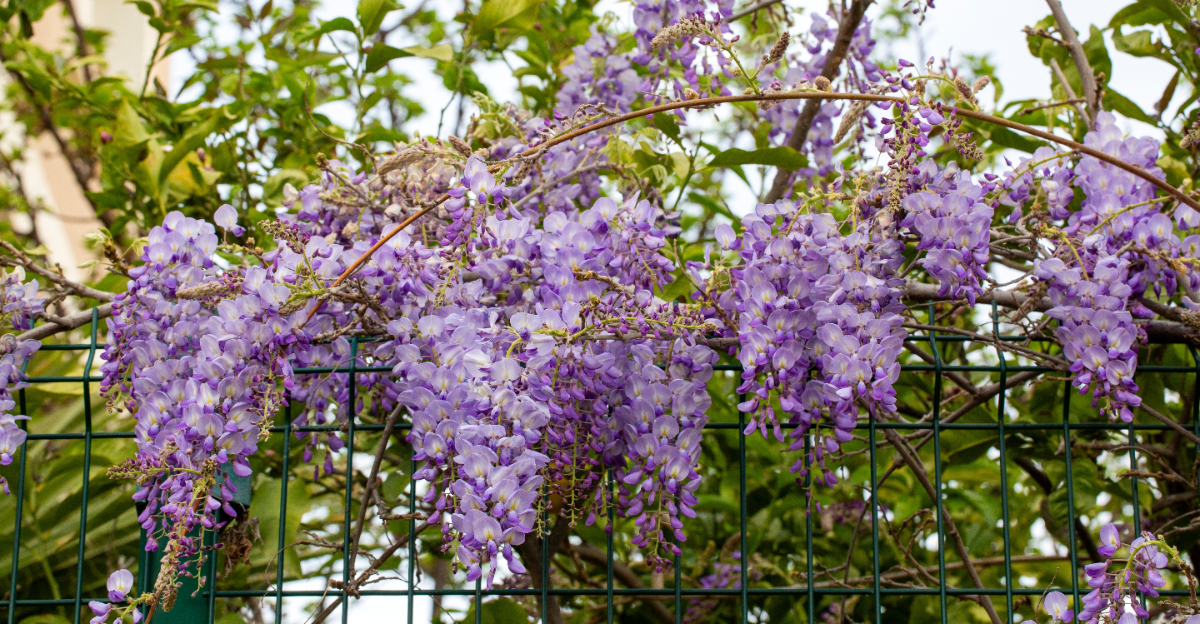
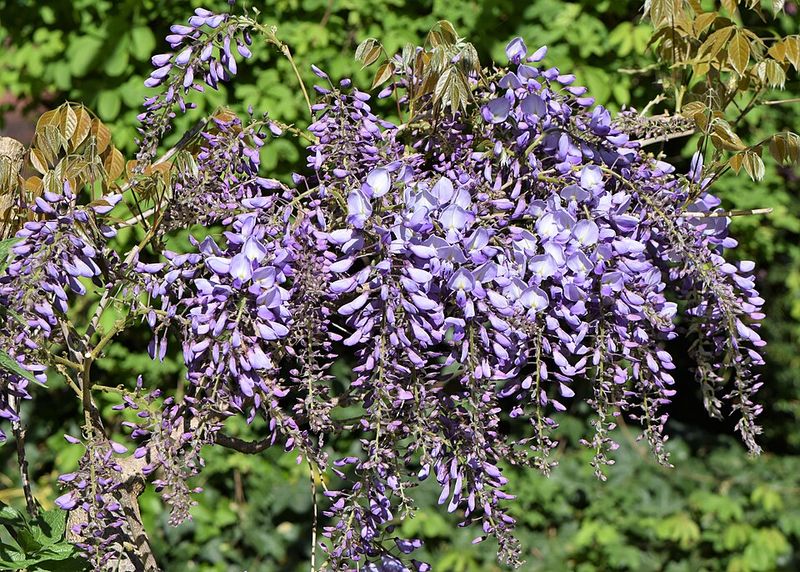
That gorgeous purple curtain along Georgia roadsides and old homesites is very often Chinese wisteria, a woody climbing vine introduced from Asia in the early 1800s as an ornamental.
It arrived as a garden showpiece, and for a while it behaved. Then it escaped fences, jumped into woodlots, and settled in across the Southeast.
What makes it so tricky is how gentle it seems at first. A young plant looks like a slim, twiggy vine with soft green leaflets, nothing that screams trouble.
Homeowners often inherit it. You buy a house, admire the blooms in April, and assume someone planted it on purpose years ago.
Georgia lists Chinese wisteria among its invasive plants, and for good reason. Once established, it spreads by twining stems, underground runners, and seed pods that split open and toss beans a short distance from the parent plant.
The fragrance is genuinely lovely, which is part of why people hesitate to remove it. Nobody wants to be the neighbor who takes out the pretty flowers.
Here is the practical takeaway. Learn to recognize the plant while the stems are still thin and flexible, because that is when management takes the least effort.
Check fence lines, shed corners, and the edges of wooded areas each spring. Catching a single young vine now saves you from wrestling a rope-thick trunk later.
2. Woody Stems That Wrap Trunks Like Rope
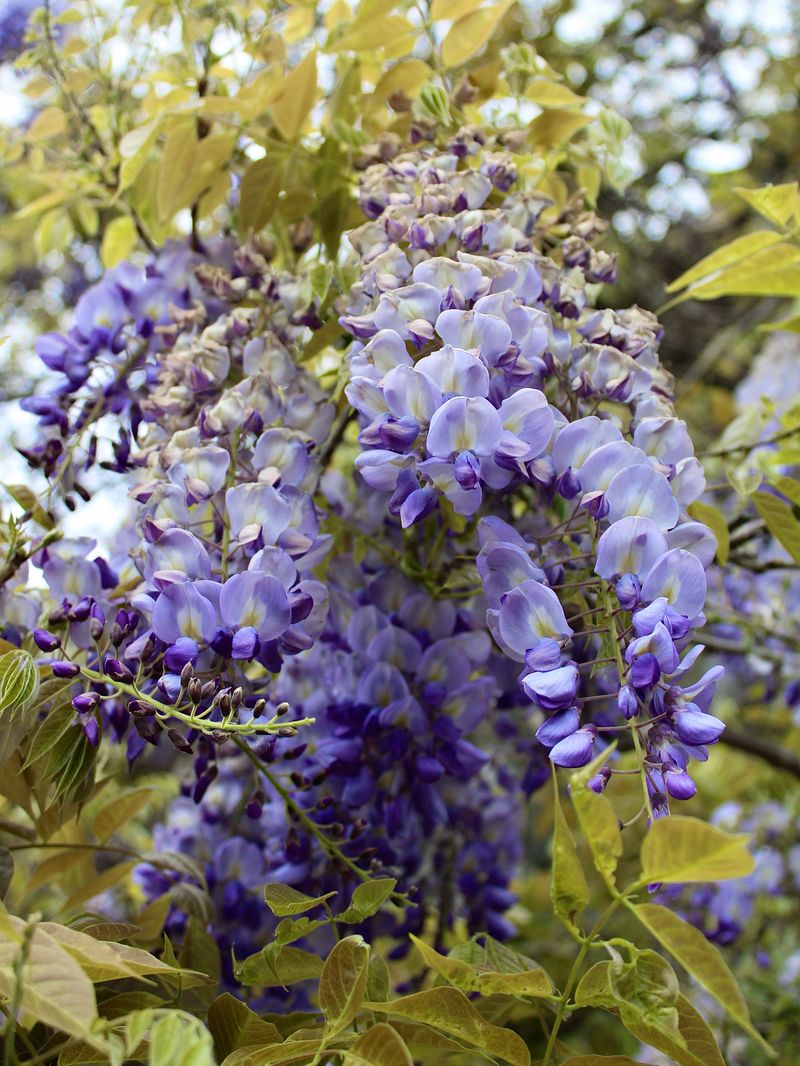
Run your hand along an older wisteria stem and it feels less like a vine and more like a cable.
Chinese wisteria twines. Instead of using suction pads or clinging roots, it spirals its stems around whatever it touches, tightening as it thickens.
Shrubs take the first hit. Azaleas, hollies, viburnums, and young dogwoods get wrapped, then squeezed as the vine adds girth season after season.
On tree trunks, those coils can press into the bark and leave a spiral groove. Bark carries water and food between roots and leaves, so damage there weakens the whole tree over time.
Older stems can reach several inches thick, which is why removal turns into a saw job rather than a snip job.
Something worth watching for is the direction of the twist. Chinese wisteria usually spirals counterclockwise, while Japanese wisteria goes the other way, a handy detail for plant nerds trying to tell them apart.
Your Georgia Garden Changes Every Week. Your Plan Should Too.
Gardening in Georgia changes quickly throughout the season. Every Friday you’ll receive a simple weekly plan showing exactly what to plant, prune, fertilize, harvest, and protect so you never miss the right timing.
If you find a wrapped shrub, unwind the vine while it is still young and bendable. Older coils often need to be cut in sections and eased off carefully.
Give tree trunks a yearly look, especially near the base where new shoots start climbing.
A five minute walk around your yard in late winter, when leaves are down, makes those twisting stems much easier to spot.
3. Climbing Straight Into The Treetops
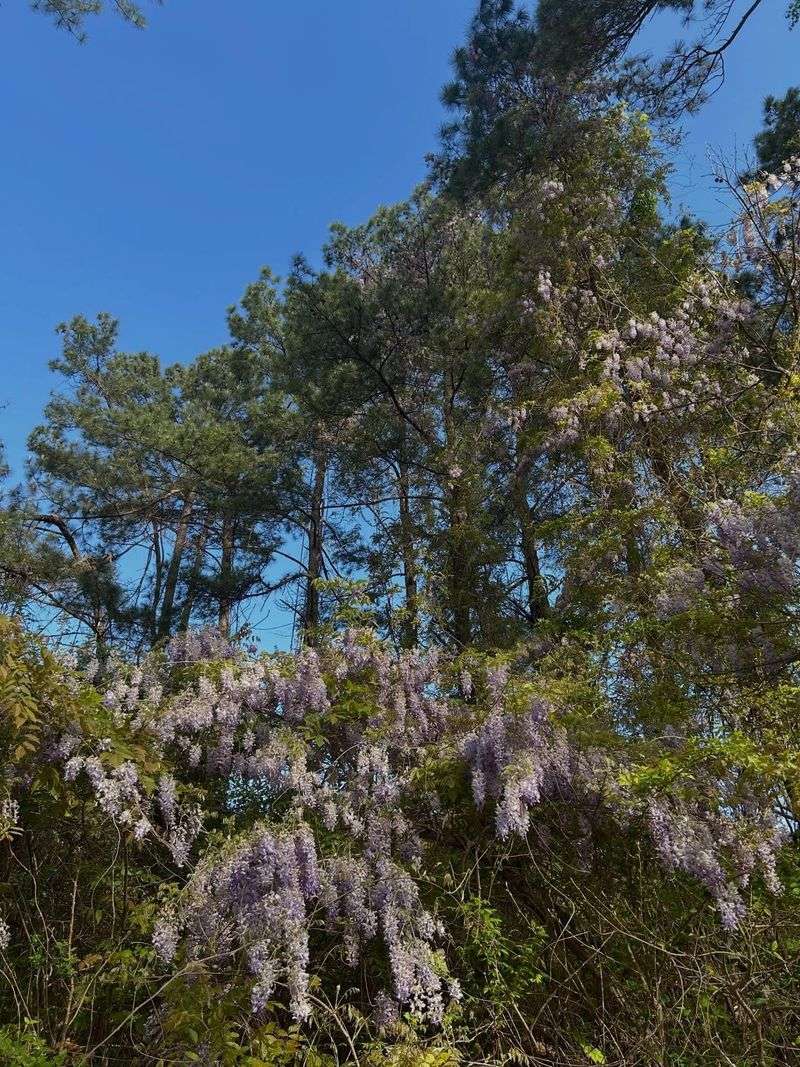
Look up in an old Georgia woodlot in April and you may see purple blooms hanging thirty feet overhead. That is wisteria that found a ladder.
Chinese wisteria is a strong climber, and mature vines can reach well into tree canopies where they spread across branches.
All that growth adds weight. A canopy loaded with vines catches more wind and ice, which raises the odds of limbs breaking during a storm.
Pines and young hardwoods along field edges are common targets, since the vine gets plenty of sun there and plenty of trunks to grab.
Once the vine reaches the top, it flowers heavily, which means more seed pods scattered over a wider area.
Reaching those high vines with pruners is not realistic for most homeowners. The workable approach is cutting the climbing stems near the ground and then dealing with the stumps and roots.
Vines left up in the canopy will fade over time without a root connection. They can be brittle, so stand clear when they start dropping pieces.
For very large vines in big trees, calling a certified arborist is a reasonable move, especially near a house, driveway, or power line.
The lesson most gardeners learn the hard way is simple. Vines are far easier to handle at eye level than at rooftop height.
4. A Leafy Blanket That Steals The Light
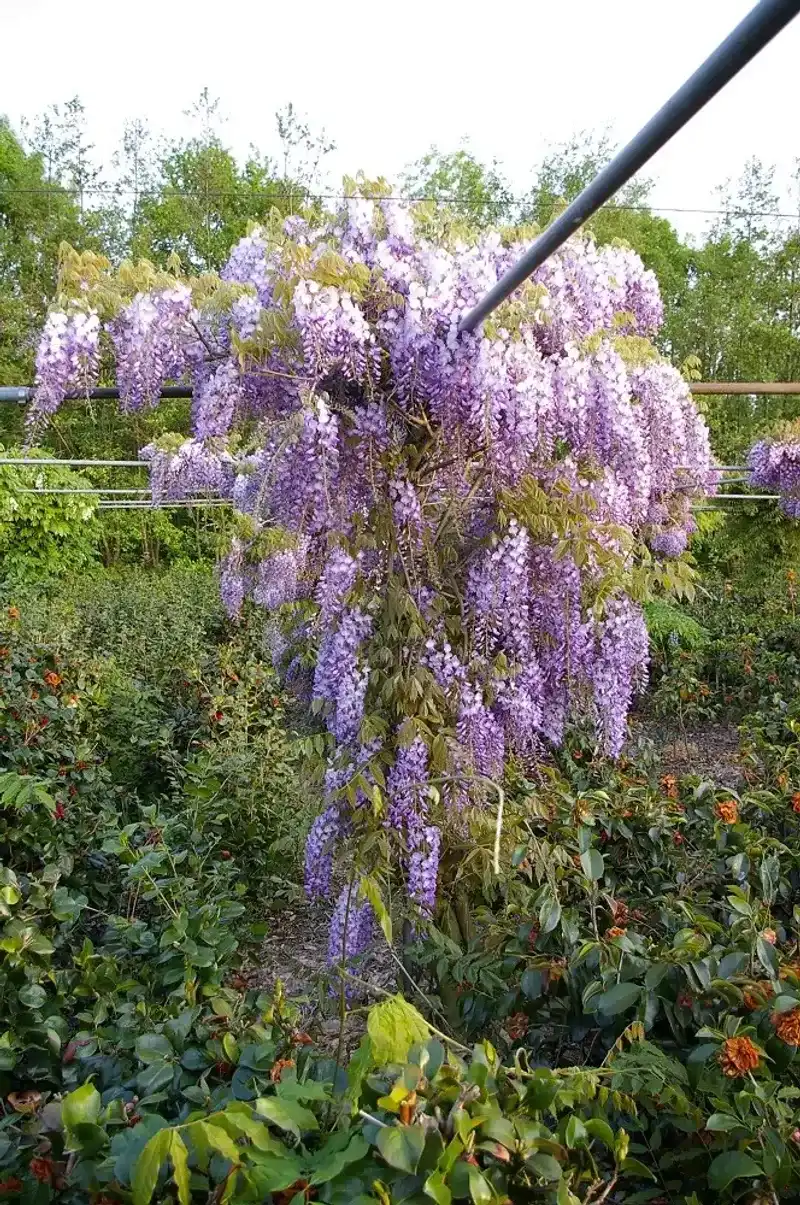
Photosynthesis needs sunshine, and wisteria is very good at taking the best seats.
Mature Chinese wisteria produces layers of compound leaves that overlap into a thick green blanket. Plants underneath end up in deep shade for most of the growing season.
Azaleas that stop blooming, camellias that thin out, and native wildflowers that fade from a wooded edge are all clues that something above is hogging light.
Tree saplings suffer the most. A young oak or maple trying to grow into a shaded, vine-covered patch has a rough go of it.
Over years, heavy wisteria cover can shift a small woodland from a mix of species toward a tangle dominated by one vine.
Wildlife feels that change too, since fewer native shrubs and flowers means fewer food sources for local insects and the birds that rely on them.
A useful test is to stand under the vine at midday. If you can barely see bright sky through the leaves, the plants below are getting shortchanged.
Start removal at the edges and work inward so you avoid dumping a huge pile of debris at once.
After clearing, watch the ground closely. Sudden sunlight often wakes up both native seeds and leftover wisteria sprouts, so follow-up checks matter.
5. Runners That Sneak Off And Start New Colonies
Wisteria does not only climb. It crawls.
Long horizontal stems, sometimes called runners, stretch across the ground and can root where they make good contact with soil.
Each rooted spot becomes a new plant with its own hold on the ground. That is how one vine by the mailbox turns into a patch behind the shed.
Underground, the plant also spreads by suckering roots that send up fresh shoots at a distance from the main stem.
Mulched beds, leaf litter, and tall grass hide these runners well. You often find them by accident while weeding.
Seed pods add another route. Velvety brown pods split open in fall and fling flat beans nearby, and water can carry them a bit farther downhill.
Practical advice for the weekend gardener is to trace every stem back to its source before cutting. Otherwise you may remove one shoot and leave three rooted spots behind.
Pull runners while the soil is damp so more of the root comes along with the stem.
Keeping mowed strips or clean bed edges around your property line also helps, because runners that creep into short grass get clipped before they can root and settle in.
Mark spots where you find runners so you remember to check them again next season.
6. Snip It Back And It Answers With More Shoots
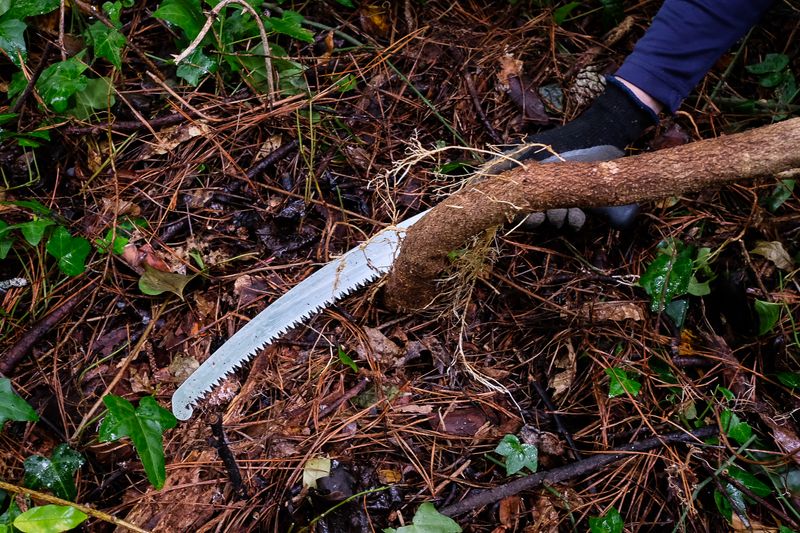
Plenty of Georgia gardeners have cut a wisteria to the ground in spring and felt victorious, only to find a bouquet of new shoots by summer.
Cutting removes the top, but the root system stores energy and responds by pushing out replacement growth.
Those new shoots often come up faster and in greater numbers than the original stem. It can feel like the plant is answering back.
Repeated cutting can still work, but it takes patience. Each round of shoots drains a bit more of the stored reserves in the roots.
Many land managers pair cutting with a targeted herbicide applied to the fresh stump surface, following the product label exactly and choosing calm, dry conditions.
If you would rather skip chemicals, plan on cutting new sprouts several times per growing season for a few years and keeping notes on progress.
Digging helps on small plants. Getting the crown and as much root as you can reach makes regrowth much lighter.
Whatever method you pick, follow-up is the real secret. One big clearing day without return visits usually ends with the vine right back where it started.
Bag or pile the cut stems away from soil contact, since fresh pieces sitting on damp ground can sometimes take hold again.
7. American Wisteria Gives You Purple Without The Wrestling Match
Good news for anyone who loves the look but not the takeover. There is a wisteria native to the Southeast, and it plays much nicer.
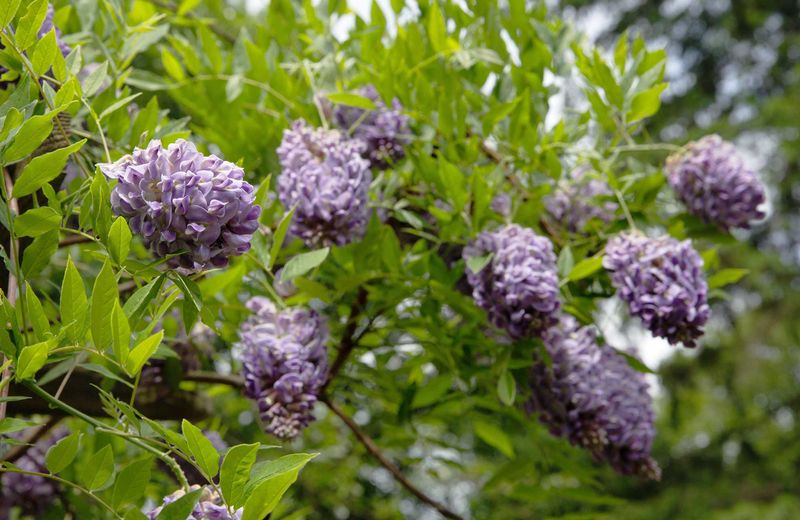
American wisteria, or Wisteria frutescens, grows naturally in the eastern United States, including wet woods and stream edges across parts of Georgia.
Its flower clusters are shorter and rounder than the long dangling chains of the Asian species, with a soft lilac to blue-purple color.
Growth habit is the big selling point. It climbs and twines, but it stays noticeably less aggressive and easier to keep on a trellis or arbor.
Blooming usually comes a little later in spring, often after leaves appear, and some plants offer a lighter repeat flush in summer.
Popular selections such as Amethyst Falls are widely available at garden centers and tend to flower while still young.
Give it full sun to part shade, decent drainage, and something sturdy to hold onto. A yearly trim after flowering keeps the shape tidy.
Native bees and other pollinators visit the blooms, which is a nice bonus over a plant that mostly shades out everything nearby.
Swapping in the native version lets you keep those purple spring photos without spending future weekends fighting rope-thick stems in your trees.