This Is How To Identify Kudzu Before It Takes Over Your Texas Yard
If you’ve ever driven through Texas, you may have seen fast-growing green vines covering trees, fences, and open spaces. Kudzu is one of the most aggressive plants in the state, spreading quickly and overtaking gardens, yards, and natural areas if left unchecked.
For homeowners, spotting it early is key to keeping it under control. Kudzu can look harmless at first. Its leaves are lush and green, and it climbs anything in its path.
But that rapid growth is deceptive. A small patch can expand aggressively, smothering shrubs, trees, and flower beds, and making it hard to reclaim your yard later.
Recognizing its distinctive leaves, vine structure, and growth patterns helps you identify it before it becomes a major problem.
Early detection combined with consistent removal or containment can save time, money, and your landscape’s health. Knowing what to look for ensures you stay ahead of this invasive invader and protect your Texas yard.
1. Look For Fast-Moving Vines That Climb Everything
Picture waking up one morning and noticing that your backyard fence has nearly disappeared under a wall of green.
That is exactly the kind of surprise kudzu (Pueraria montana var. lobata) is known for delivering, and it happens faster than most Texas homeowners expect.
Kudzu is one of the fastest-growing plants in the world. Under the right conditions, it can grow up to a foot in a single day during peak summer heat.
In Texas, warm temperatures and humid summers create the perfect environment for this vine to push into overdrive. It does not just grow along the ground either.
Kudzu actively climbs fences, trees, utility poles, sheds, and anything else it can wrap itself around.
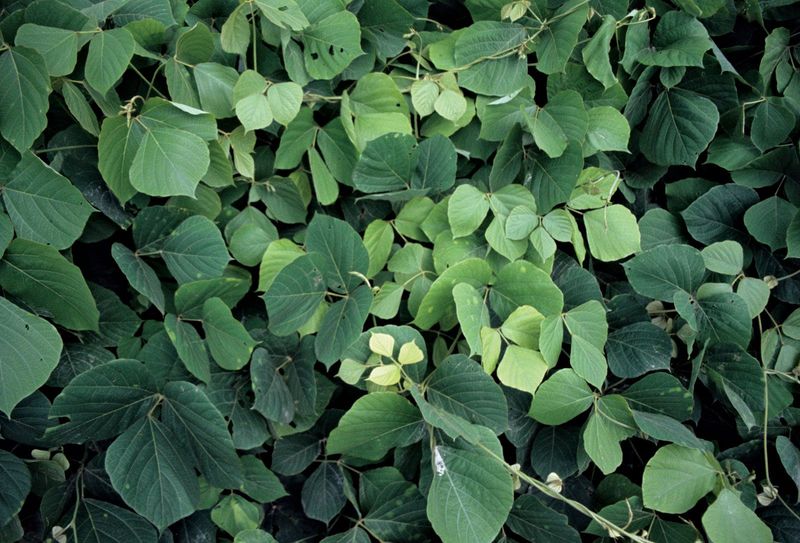
What makes this so alarming is how quickly a small patch turns into a massive problem. Within just a few weeks, kudzu can form thick, layered mats that completely cover structures and smother everything underneath.
Many Texas homeowners mistake it for a fast-growing ornamental vine at first glance, which gives it precious time to spread even further.
The key warning sign here is speed and coverage. If you notice a vine that seems to be swallowing your yard at an almost unbelievable rate, do not wait.
Walk over and take a closer look. Kudzu does not slow down on its own, and the longer it goes unchecked, the harder it becomes to manage.
Early action is everything when dealing with this aggressive invader. Keep a close eye on any rapidly spreading vines appearing along the edges of your Texas property, especially near wooded areas or fence lines.
2. Check The Leaves: Three Broad Leaflets
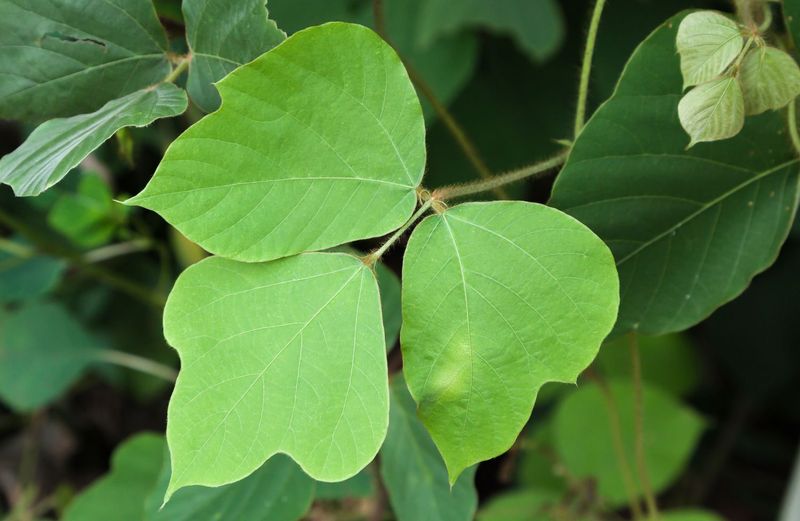
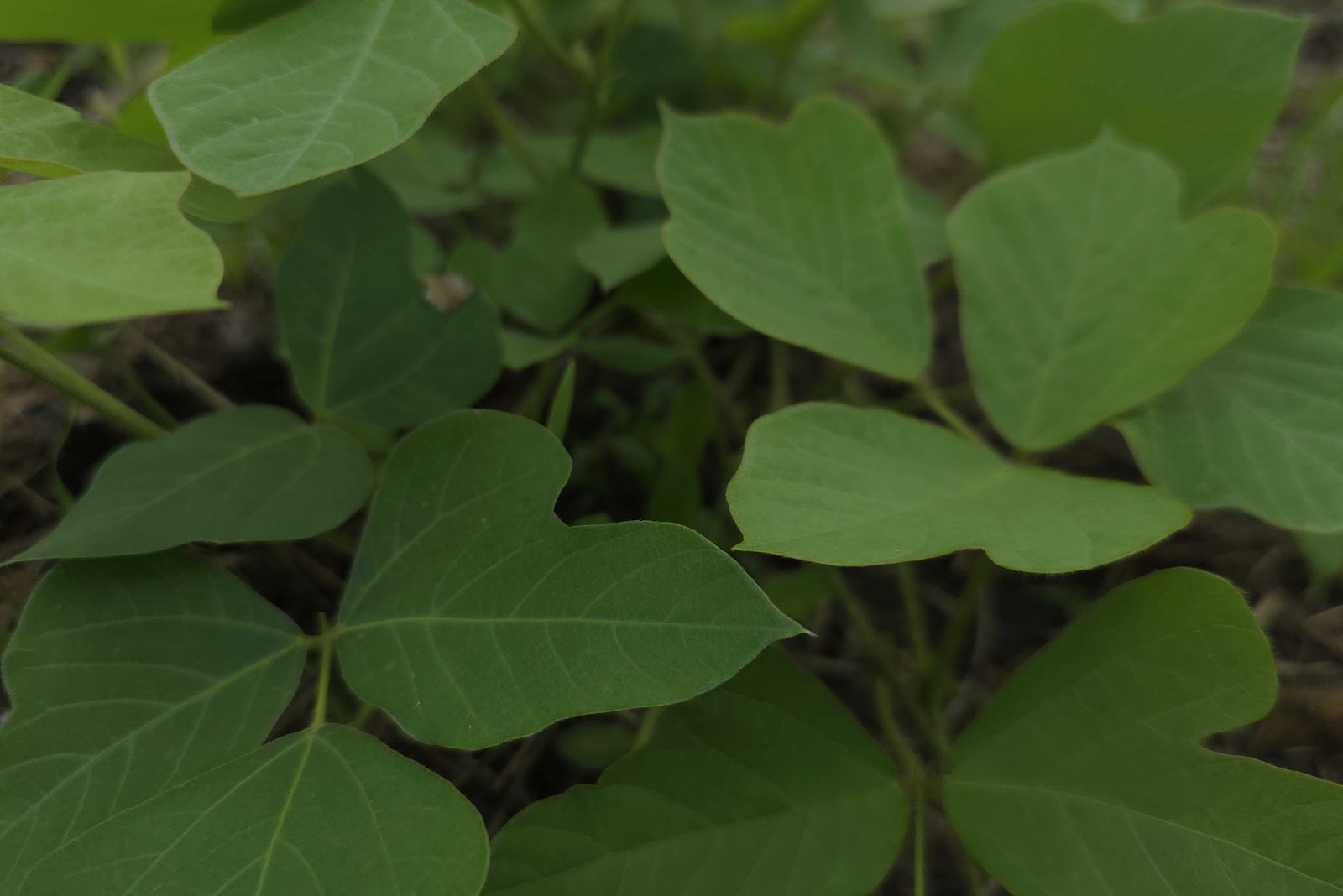
One of the most reliable ways to identify kudzu is by getting up close and studying the leaves. Kudzu leaves grow in groups of three leaflets, a pattern that plant experts call trifoliate.
Each leaflet is broad, slightly lobed along the edges, and can grow surprisingly large, sometimes reaching the size of a human hand or bigger.
If you have ever seen a bean plant or a soybean leaf, the shape will feel somewhat familiar. Kudzu is actually a legume, which puts it in the same plant family as beans and peas.
The leaflets tend to have a soft, slightly fuzzy texture on both sides. Running your fingers gently across the surface, you will notice a subtle fuzziness that feels almost velvety.
This texture is one of the small details that sets kudzu apart from other climbing vines you might find in Texas yards.
The three-leaflet pattern is one of the most important identifiers to remember. Texas has many native vines, but few combine the trifoliate leaf shape with the rapid climbing habit and large leaf size that kudzu displays.
Some people confuse it with poison ivy at first, since poison ivy also grows in groups of three. However, kudzu leaflets are significantly larger and have a rounder, more lobed appearance compared to poison ivy.
When you are inspecting a suspicious vine in your Texas yard, always start with the leaves. Count the leaflets and check their size and texture.
If the pattern of three large, fuzzy, slightly lobed leaflets keeps repeating along the vine, you are likely looking at kudzu and should take action right away.
3. Notice The Thick, Twining Stems
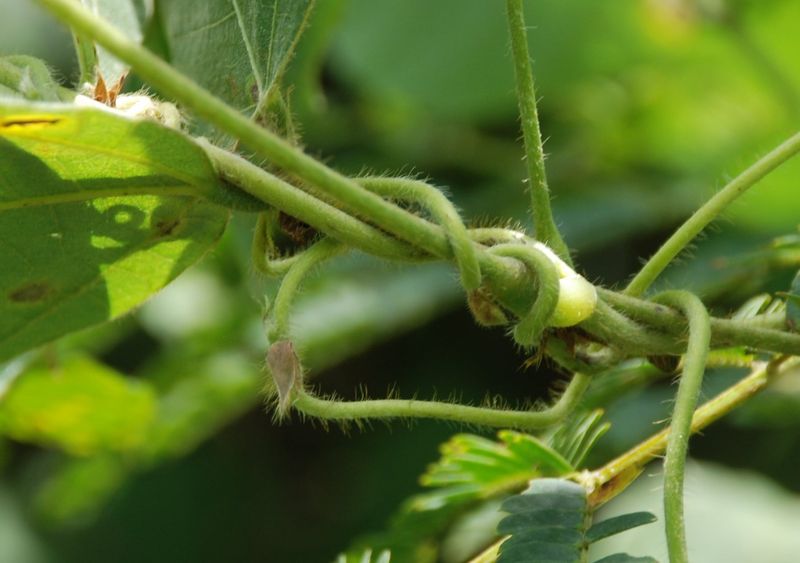
Young kudzu vines can look pretty harmless at first. They start out slender and green, almost delicate in appearance.
But do not let that fool you. Over time, kudzu stems become something else entirely, thick, woody, and strong enough to actually damage trees and structures they wrap around.
Kudzu stems grow by twining, which means they spiral and twist tightly around whatever object is nearby. A fence post, a tree trunk, a porch railing, nothing is off limits.
As the vine matures, those stems harden and become rope-like. Some established kudzu stems in older infestations can grow several inches thick.
At that point, the vine is not just covering a surface, it is physically gripping it with serious force.
This twining growth pattern is a helpful clue when you are trying to identify kudzu in your Texas yard. Most delicate ornamental vines do not develop this kind of structural strength.
If you find a vine that has wrapped itself around a tree or post so tightly that it seems almost fused to the surface, and the stem feels thick and woody rather than thin and flexible, kudzu is a strong possibility.
Fun fact: kudzu stems can sometimes be mistaken for small tree branches because of how thick and rigid they become. Pull gently on one and you will feel real resistance.
In Texas, where summer heat speeds up plant growth dramatically, kudzu stems can reach impressive thickness in just one or two growing seasons.
Checking the stem thickness and growth style is a smart step in confirming whether you are dealing with this invasive plant before it gets any stronger.
4. Watch For Purple, Grape-Like Flowers In Late Summer
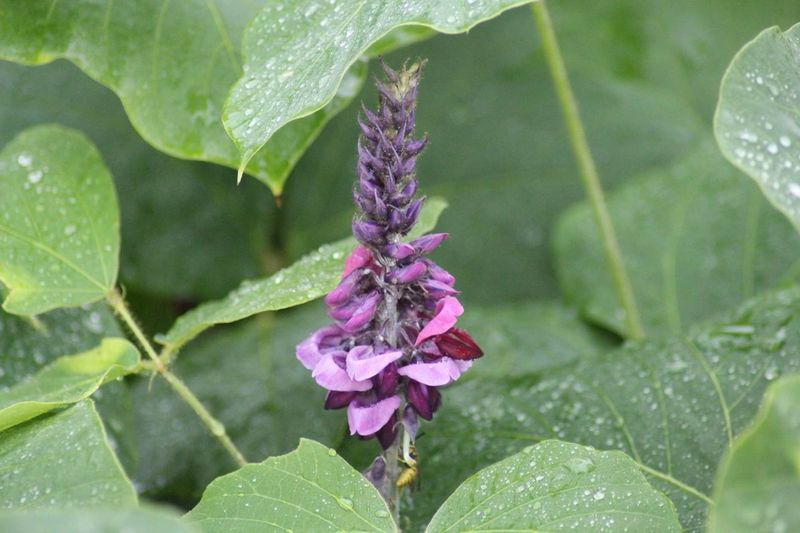
Here is a detail that surprises many people: kudzu actually produces beautiful flowers. In late summer, typically from July through September in Texas, kudzu vines bloom with clusters of small, purple, pea-shaped flowers that hang in drooping bunches.
The visual effect looks a lot like wisteria, which is another reason kudzu sometimes gets mistaken for a desirable garden plant.
Beyond their appearance, kudzu flowers have a distinctive scent. Many people describe it as sweet and grape-like, almost like artificial grape candy.
If you catch a pleasant fruity smell drifting through your yard on a warm Texas evening and cannot figure out where it is coming from, follow your nose toward any climbing vines nearby. That sweet fragrance might be your first real clue that kudzu has settled in.
It is worth knowing that flowers are not always present, especially in younger or recently established patches. A kudzu vine in its first or second year may not bloom at all.
So while the purple flowers are a great confirmation tool, their absence does not rule kudzu out. You still need to check the leaves, stems, and growth rate for a full picture.
When flowers do appear, they are genuinely helpful for locking in an identification. The combination of purple, grape-scented, wisteria-like flower clusters on a fast-climbing vine with trifoliate leaves is a very strong indicator that you are looking at kudzu.
In Texas, late summer is the best time to catch this seasonal clue. If you spot these blooms on an aggressive vine near your home, start planning your management approach without delay.
5. Inspect The Base For Large Root Crowns
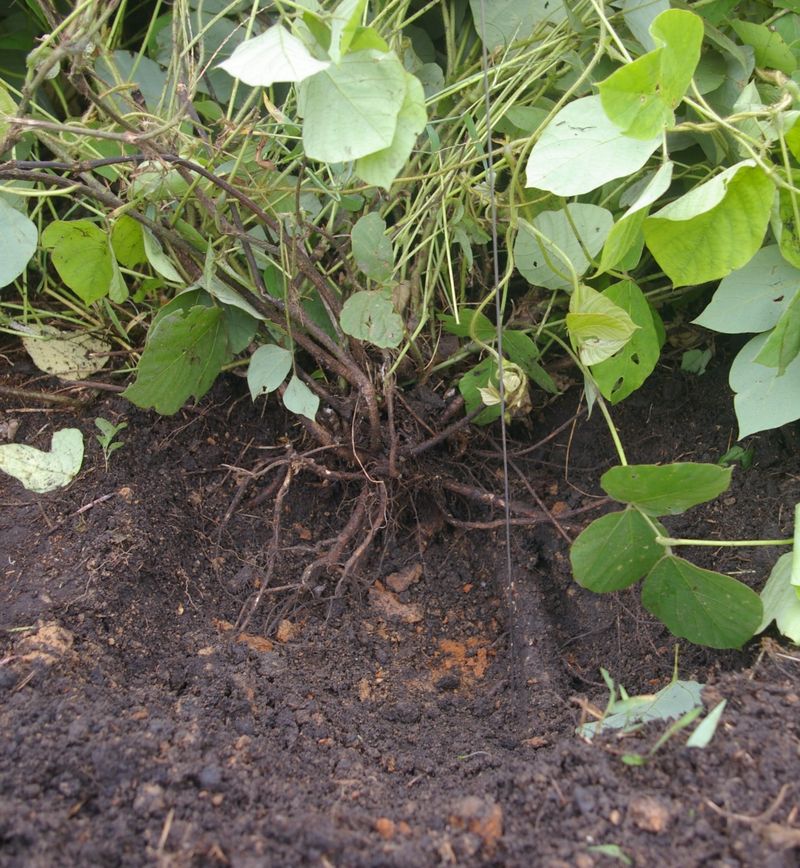
Most people focus on what they can see above ground when trying to identify kudzu, but what is happening underground is just as important. Kudzu develops a massive central root crown, sometimes called a root crown or root ball, that sits at or just below the soil surface.
From this central point, the plant pushes out multiple vines in every direction each growing season.
Over time, the underground root system of a mature kudzu plant can become enormous. The tuber-like roots store energy and nutrients, allowing the plant to survive through winter and come back stronger the following spring.
In Texas, where winters are relatively mild, kudzu root systems can grow even larger and more established than in colder northern states. Some root crowns found in older infestations can weigh dozens of pounds.
When you are checking a suspicious vine in your Texas yard, trace the stems back to their base. If multiple thick vines seem to be radiating outward from a single, swollen, knobby central point at or near ground level, that is a major red flag.
Dig just slightly around that base and you may find thick, fleshy roots extending deep into the soil.
Early detection at the root level is one of the most powerful strategies for stopping kudzu before it spreads further. A small root crown is much easier to address than a massive, years-old system that has spread across an entire section of your yard.
Getting familiar with what a kudzu root crown looks and feels like puts you ahead of the problem and gives you a real advantage in protecting your Texas property from this persistent invader.
6. Notice If Other Plants Are Being Smothered
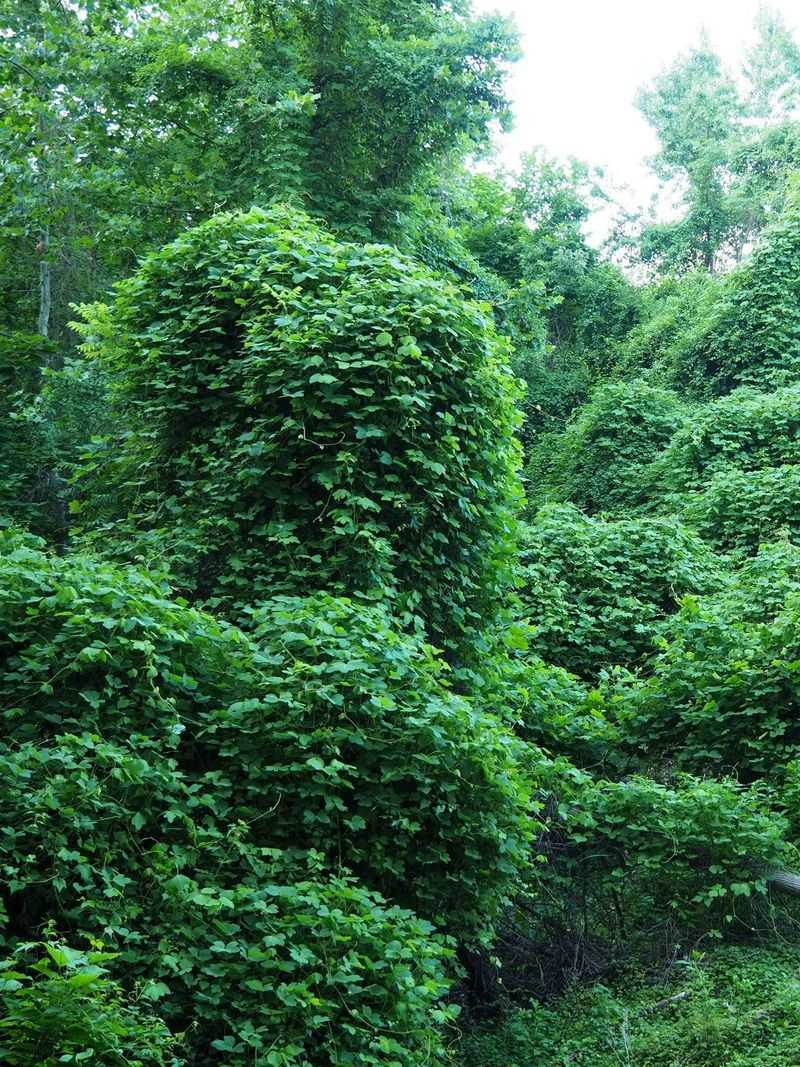
Sometimes the easiest way to spot kudzu is not by looking at the vine itself, but by noticing what is happening to the plants around it. Kudzu is a fierce competitor for sunlight, and it uses that competition to its full advantage.
As it spreads across shrubs, small trees, and garden plants, it creates a dense, layered canopy of leaves that blocks sunlight from reaching anything underneath.
Native Texas plants that once thrived in your yard may start to look weak, pale, or stunted when kudzu moves in overhead. Without enough sunlight, they cannot photosynthesize properly and begin to decline.
What you end up seeing from a distance is a smooth, solid-looking green blanket draped over what used to be a diverse mix of plants and trees. That uniform, carpet-like appearance is a classic visual sign of a kudzu infestation.
Texas has a rich variety of native shrubs, grasses, and wildflowers that support local wildlife and pollinators. When kudzu moves in and smothers those plants, the ecological ripple effect can be significant.
Birds lose nesting spots, pollinators lose food sources, and the natural balance of your yard begins to shift in a negative direction.
Walk around your property and look for areas where vegetation seems to have flattened out under one continuous layer of large green leaves. Check if the plants underneath appear to be struggling.
If the answer is yes, and the covering vine matches the other signs described in this article, kudzu is almost certainly the cause. Acting quickly to manage it can help restore your yard and protect the native Texas plants that belong there.